
Anglepod (Matelea gonocarpos)
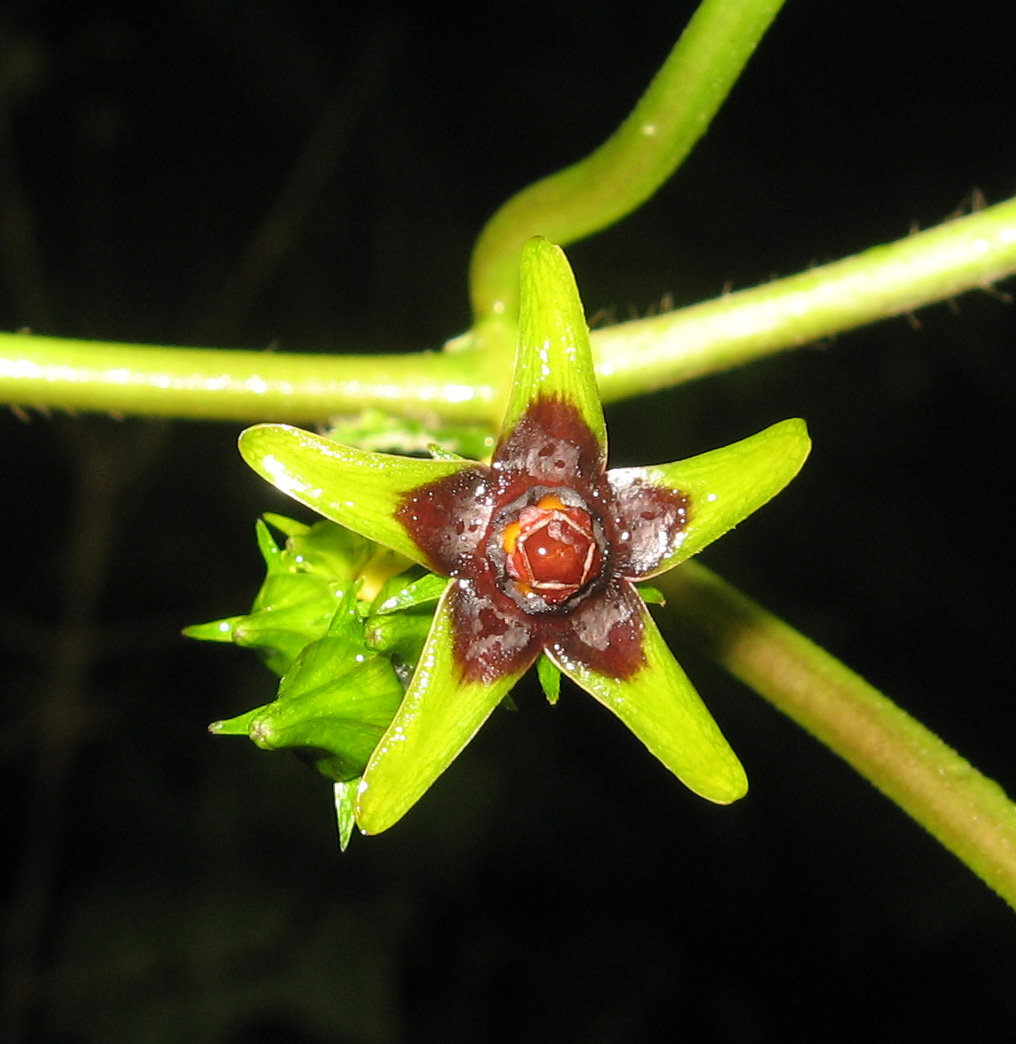
Matelea gonocarpos, known as Anglepod or angularfruit milkvine (its USDA common name), is a twining, herbaceous perennial vine in the milkweed subfamily of the dogbane family (Apocynaceae). It climbs over shrubs and fences to 10 feet or more, with heart-shaped leaves, milky sap and small, star-shaped flowers that range from greenish-yellow to deep purple-brown. Its most distinctive feature is its smooth, sharply angled seed pod.
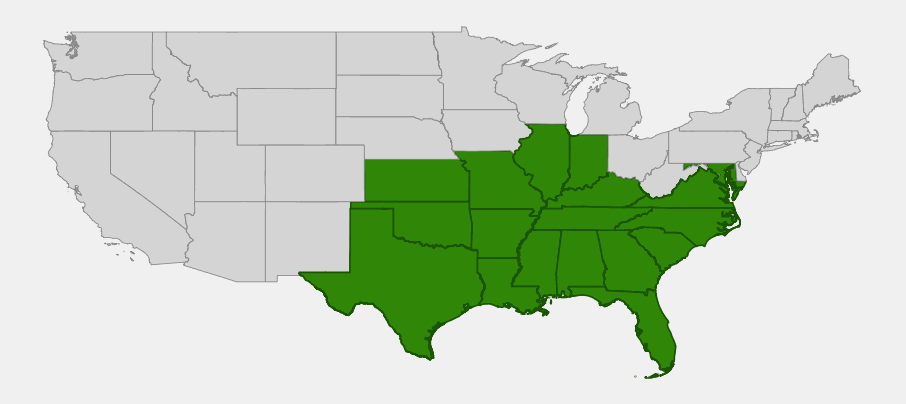
Anglepod is native to the Southeast and south-central United States, from Maryland, Virginia and the Carolinas to Florida, west to Illinois, Indiana, Missouri, Kansas, Oklahoma and Texas. It grows in moist woods, floodplains and stream banks, thickets, woodland edges and fencerows, and it often turns up in suburban yards and greenbelts.
Although it is easy to overlook, anglepod is a fascinating native vine with an intricate flower structure shared with milkweeds. Like many of its relatives, its milky sap is toxic and can irritate the skin and eyes, so it should not be eaten.
Identification
Look for a twining vine with milky sap, paired heart-shaped leaves and small, five-pointed star flowers in clusters at the leaf joints, followed by smooth pods with sharp ridges.
Growth Habit
Anglepod is a perennial vine that dies back to the ground in winter and regrows each spring from a thick root. Its slender, hairy stems twine around other plants, fences and trellises and can reach 10 to 15 feet in a season. All parts produce milky sap when broken.
Leaves
The leaves are opposite, heart-shaped to broadly oval, 3 to 6 inches long, with a pointed tip, a deeply notched base and a long stalk. They are thin, soft and finely hairy.
Flowers
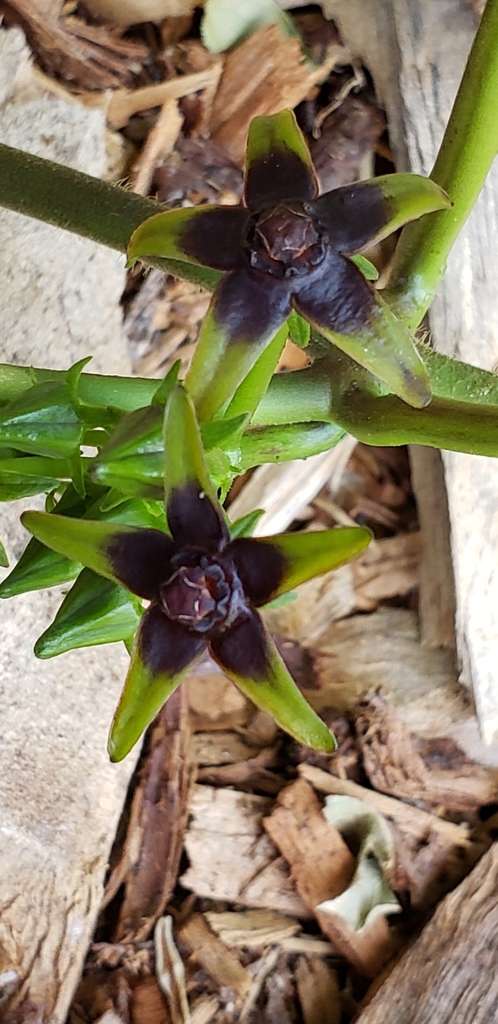
Small clusters of flowers grow from the leaf axils from about May to August. Each flower is about 1/2 to 3/4 inch across, with five narrow, pointed petals that spread like a star. The color varies from greenish-yellow to bronze, maroon or nearly black-purple, and the petals are often darker toward the center. In the middle is a small, fleshy corona and the fused central column typical of milkweeds, which holds the pollen in waxy packets (pollinia).
Fruit
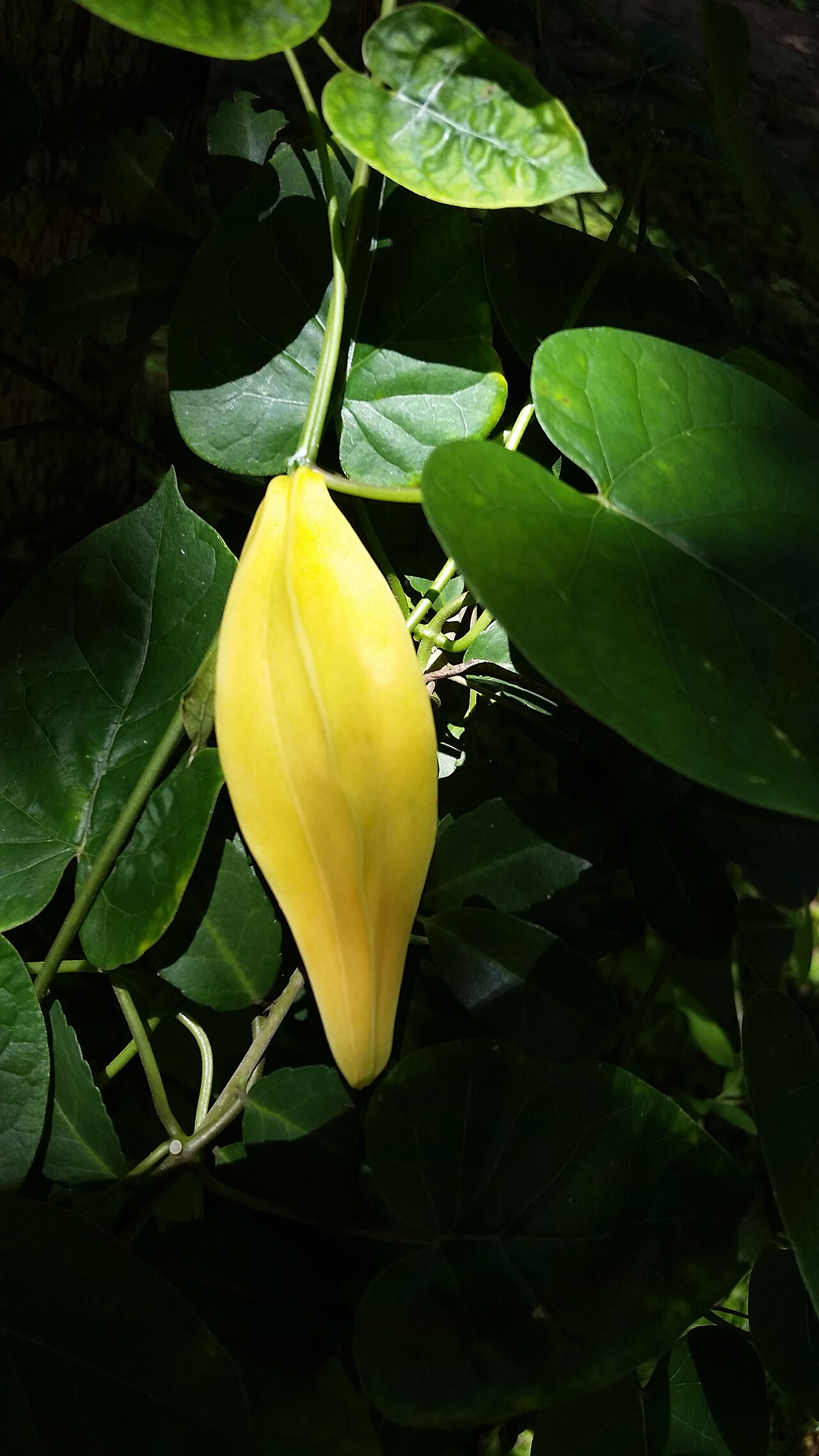
The fruit is a pod (follicle) 3 to 5 inches long, with several sharp, lengthwise angles or ridges, which gives the plant its common name. It ripens from green to yellowish or tan in late summer and fall and splits along one side to release flat seeds tipped with tufts of silky white hairs that float on the wind.
Names and Taxonomy
USDA PLANTS includes Gonolobus suberosus, Matelea suberosa and several Vincetoxicum names as synonyms of Matelea gonocarpos. Some botanists, and iNaturalist, use the name Gonolobus suberosus for this group. Others keep two species: anglepod in the strict sense, with smooth, angled pods, and Matelea suberosa (or Gonolobus suberosus), with warty or corky ridged pods. Plants with warty pods in East Texas are sometimes called western anglepod (Gonolobus suberosus var. granulatus).
Look-alikes
Pearl milkweed (Matelea reticulata) of Texas has green, net-veined flowers with a shiny pearl-like center. Climbing milkweed (Cynanchum laeve, also called Ampelamus albidus) has heart-shaped leaves but small white flowers in round clusters and smooth, unridged pods. Wild yam (Dioscorea villosa) has similar leaves but no milky sap, with curved parallel veins.
Quick Facts
| Scientific Name | Matelea gonocarpos |
| Family | Apocynaceae (dogbane family; milkweed subfamily) |
| Plant Type | Twining herbaceous perennial vine |
| Mature Height | 10–15 ft (vine length) |
| Mature Spread | Climbs or sprawls over supports |
| Growth Rate | Fast |
| Sun Exposure | Part shade to full sun |
| Water Needs | Medium |
| Soil Type | Moist, rich loam, alluvial or clay soils |
| Soil pH | Slightly acidic to slightly alkaline (about 6.0–7.5) |
| Bloom Time | May–August |
| Flower Color | Greenish-yellow to bronze or dark purple-brown |
| Fall Color | None; dies back in winter |
| Fruit | Smooth, sharply angled pods, 3–5 in |
| Deer Resistant | Yes; toxic milky sap |
| USDA Hardiness Zones | 6–9 |
Native Range
USDA PLANTS lists anglepod as native in 18 states: Alabama, Arkansas, Florida, Georgia, Illinois, Indiana, Kansas, Kentucky, Louisiana, Maryland, Mississippi, Missouri, North Carolina, Oklahoma, South Carolina, Tennessee, Texas and Virginia.
It is most common in the Coastal Plain and Piedmont of the Southeast, the Mississippi Valley and the Gulf states. In the north it reaches southern Illinois, southern Indiana and southeastern Kansas, and on the Atlantic side it reaches Maryland. In Texas it grows in the eastern forests and the Blackland Prairie region, including the Dallas–Fort Worth area, and west along the Balcones Escarpment into the eastern Hill Country around Austin, San Marcos and Wimberley.
Typical habitats are moist, rich woods, floodplain and bottomland forests, stream banks, thickets, woodland edges, fencerows, old fields and roadsides. It also persists in shady suburban yards, greenbelts and vacant lots.
📋 Regional plant lists featuring Anglepod: Ohio & Indiana · Kentucky & Tennessee · Nebraska, Kansas & Eastern Colorado · Maryland, Virginia & West Virginia · Illinois, Iowa & Missouri · Alabama, Georgia & Mississippi · North & South Florida · North & South Carolina · Arkansas, Louisiana, Eastern Oklahoma & Eastern Texas · South & West Texas
Growing & Care Guide
Anglepod is rarely sold, but it is an interesting, low-maintenance vine for naturalistic gardens, woodland edges and fences within its native range. It often arrives on its own from wind-blown seed.
Light
Part shade is ideal, as at a woodland edge. It also grows in full sun if the soil stays reasonably moist, and in fairly deep shade, where it blooms less.
Soil & Water
It prefers moist, rich, well-drained soil but tolerates clay and periods of drought once established. Water young plants during dry spells in their first summer.
Planting Tips
Give it a fence, trellis, shrub or small tree to climb. It is not heavy enough to damage sturdy supports, but it can drape over small shrubs. Plant it where people will not be bothered by the milky sap, and away from vegetable gardens and play areas.
Pruning & Maintenance
Little care is needed. The stems die back in winter; cut them down in late winter if you want a tidier look. Wear gloves when handling broken stems, because the sap can irritate skin.
Propagation
Grow it from seed collected from pods as they begin to split in fall. Sow the seed outdoors in fall or cold-stratify it for a few weeks before spring sowing. Seedlings develop a thick root and are best moved while small.
Landscape Uses
- Woodland edges: a native vine for fences and shrubs in part shade
- Naturalistic gardens: interesting star flowers and unusual pods
- Fences and trellises: light enough not to smother its support
- Wildlife gardens: supports specialist native insects and flies
- Teaching gardens: shows the intricate flower structure of the milkweed family
Wildlife & Ecological Value
Anglepod is part of the milkweed subfamily, with flowers built to transfer pollen in waxy packets that stick to visiting insects.
For Pollinators
The flowers are visited mainly by flies and small bees, which pick up the sticky pollen packets on their legs or mouthparts and carry them to other flowers. The dark, fleshy flowers of milkvines are thought to attract flies in particular.
For Birds
Birds make little direct use of it, but its tangles add cover along woodland edges and fencerows, and some birds use the silky seed fluff for nest lining.
For Mammals
Its toxic, milky sap makes it unpalatable, and deer and rabbits usually leave it alone.
Ecosystem Role
As a native vine of edges and floodplains, anglepod supports specialized insects that feed on milkweed relatives, and its wind-dispersed seeds let it colonize openings and thickets.
Cultural & Historical Uses
The genus name Matelea comes from an Indigenous name used in South America, recorded by the French botanist Aublet. The species name gonocarpos combines the Greek words for “angle” and “fruit,” the same idea as the common name anglepod.
Milkvines and anglepods were long placed in the milkweed family (Asclepiadaceae), which botanists have since merged into the dogbane family (Apocynaceae). Their flowers, with fused stamens and pistils and pollen held in waxy packets, are among the most complex of any North American wildflowers.
Safety note: Like many members of the milkweed group, anglepod has milky sap that can irritate the skin and eyes, and the plant is likely to contain compounds that are toxic if swallowed. Do not eat any part of it, wash your hands after handling broken stems, and keep children and pets from chewing it.
Frequently Asked Questions
Why is it called anglepod?
For its seed pods, which have several sharp, lengthwise angles or ridges instead of the smooth or warty pods of most milkweeds.
Is anglepod a milkweed?
It is a close relative. It belongs to the milkweed subfamily of the dogbane family and has the same milky sap, complex flowers and silky, wind-blown seeds, but it is a vine rather than an upright plant.
Is anglepod poisonous?
It should be treated as poisonous. Its milky sap can irritate skin and eyes, and milkweed relatives often contain toxic compounds. Do not eat any part of it.
Is Gonolobus suberosus the same plant?
USDA PLANTS treats Gonolobus suberosus and Matelea suberosa as synonyms of anglepod, and iNaturalist uses Gonolobus suberosus. Some botanists separate plants with warty, corky pods as a different species.
Will anglepod take over my garden?
No. It is a modest vine that dies back each winter. It can self-seed, but seedlings are easy to pull.

Looking for a nursery that carries Anglepod?
Browse our native plant nursery directory: Alabama & Arkansas · Florida & Georgia · Illinois, Indiana & Kansas · Kentucky, Louisiana, Maryland, Mississippi & Missouri · North Carolina & Oklahoma · South Carolina, Tennessee, Texas & Virginia