
Hooker’s Onion (Allium acuminatum)
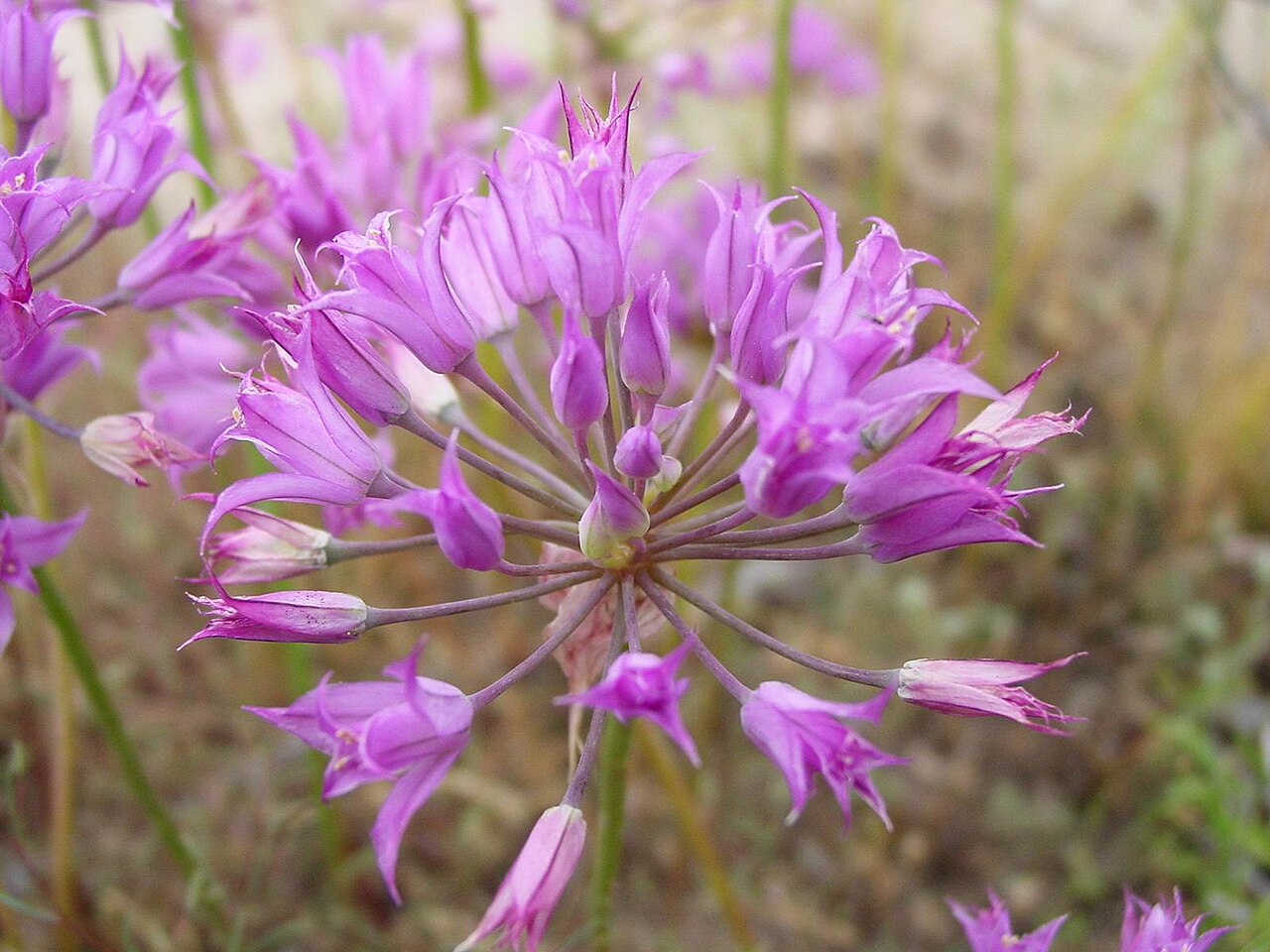
Allium acuminatum, known as Hooker’s Onion or tapertip onion, is one of the most widespread wild onions of the western United States. It is a small bulb perennial, usually 4 to 12 inches tall, that sends up a single slender stalk topped by a loose, rounded cluster of rose-pink to deep magenta flowers in late spring and early summer.
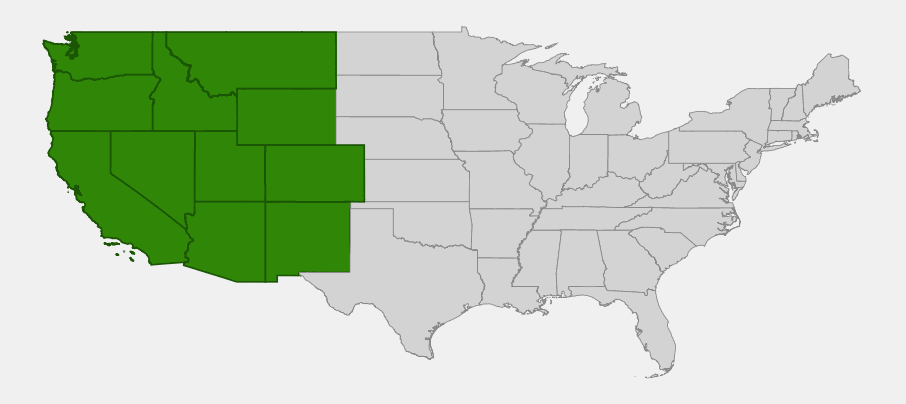
It grows from southern British Columbia through Washington, Oregon and Idaho to California, and east across the Great Basin and Colorado Plateau to western Montana, Wyoming, Colorado, Arizona and New Mexico. You will find it on dry, open, often rocky slopes in sagebrush steppe, grassland, oak savanna, pinyon-juniper woodland and open pine forest, from near sea level on the Puget Sound islands to high mountain slopes.
Like other wild onions it has a strong onion smell, and its small bulbs were a traditional spring food for many Indigenous peoples. Gardeners value it as a tough, drought-adapted bulb for rock gardens and dry meadows. Anyone tempted to taste wild onions should know that the deadly death camas grows in the same places and can look similar before it flowers.
Identification
Look for a single leafless-looking stalk with a loose umbel of pink to magenta, star-shaped flowers whose pointed tepal tips curl outward, and a clear onion smell when the plant is crushed.
Growth Habit
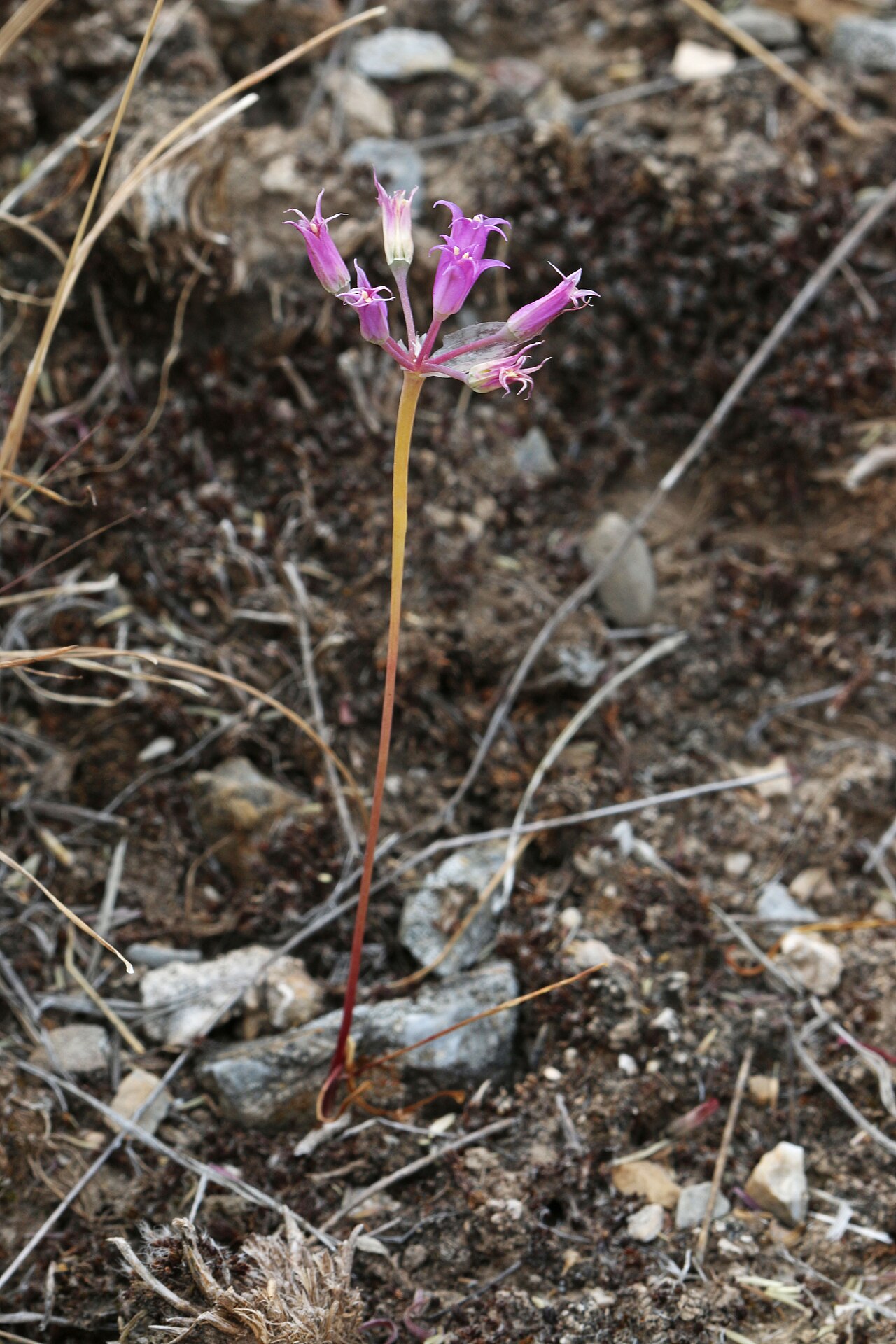
Hooker’s onion grows from a small, egg-shaped bulb about 1/2 to 3/4 inch across. Each bulb produces one flower stalk (scape), usually 4 to 12 inches tall and occasionally taller. Plants often grow scattered rather than in dense clumps.
Leaves
There are usually two to four narrow, grass-like, channeled leaves, shorter than the flower stalk. They appear in early spring and usually wither and dry by the time the flowers open, so blooming plants often look leafless.
Flowers
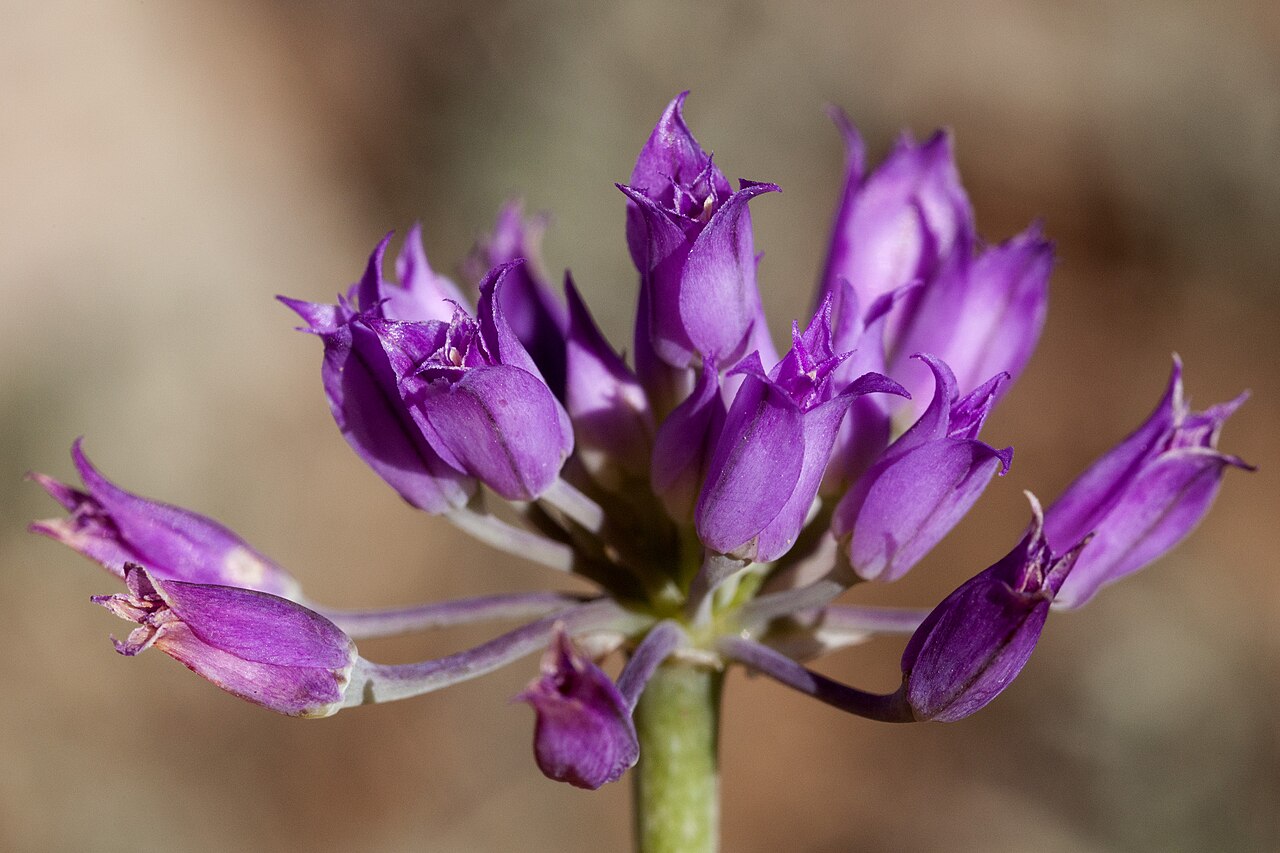
The flowers form a loose, rounded umbel of about 10 to 40 flowers at the top of the stalk, held on slender stalks of their own. Each flower is about 1/2 inch long, with six rose-pink to deep magenta (rarely white) tepals that taper to sharp, slender tips that flare and curl outward. The inner three tepals often have finely toothed edges. Two papery bracts sit beneath the umbel. It blooms from about April to July, earlier at low elevations.
Bulb
The outer bulb coat has a distinctive net-like pattern of small squarish or hexagonal cells, visible with a hand lens. This is one of the features botanists use to separate it from similar western onions.
Look-alikes
Narrowleaf onion (Allium amplectens) has a tighter, rounder head of white to pale pink flowers with blunter tepals. Nodding onion (Allium cernuum) has a nodding head of smaller pink bells. Several other western onions are similar and are separated by bulb-coat patterns and leaf details.
Death camas caution: Meadow death camas (Toxicoscordion venenosum) and its relatives grow in the same habitats and have similar grass-like leaves and bulbs, but every part of them is highly poisonous to people and livestock. Death camas has creamy white flowers in a spike-like cluster and, most importantly, no onion smell. Never eat a wild bulb unless you are certain of its identity and it smells clearly of onion.
Quick Facts
| Scientific Name | Allium acuminatum |
| Family | Amaryllidaceae (amaryllis family; onion subfamily) |
| Plant Type | Perennial bulb (summer-dormant) |
| Mature Height | 4–12 in (occasionally to about 16 in) |
| Mature Spread | 2–4 in |
| Growth Rate | Slow |
| Sun Exposure | Full sun to part shade |
| Water Needs | Low; moist in spring, dry in summer |
| Soil Type | Rocky, gravelly, sandy or clay loam; well-drained |
| Soil pH | Slightly acidic to alkaline (about 6.0–8.0) |
| Bloom Time | April–July |
| Flower Color | Rose-pink to deep magenta, rarely white |
| Fall Color | None; dormant by summer |
| Fruit | Small three-lobed capsule with black seeds |
| Deer Resistant | Generally yes; onion scent deters most browsing |
| USDA Hardiness Zones | 4–9 |
Native Range
USDA PLANTS lists Hooker’s onion as native in eleven western states: Washington, Oregon, California, Idaho, Montana, Wyoming, Nevada, Utah, Colorado, Arizona and New Mexico. In Canada it grows in southern British Columbia.
It is common east of the Cascades in Washington and Oregon and across southern Idaho, the Great Basin and the Colorado Plateau, reaching western Colorado, northern Arizona and western New Mexico. It also grows west of the Cascades, on dry rocky balds and prairies of the Puget Sound region and San Juan Islands, in the Willamette Valley and Columbia River Gorge, and in the mountains and foothills of northern and central California.
Its habitat is dry, open ground that is moist in spring and dry in summer: rocky slopes and ridges, sagebrush steppe, bunchgrass prairie, oak savanna, chaparral openings, pinyon-juniper woodland and open ponderosa pine forest, from near sea level to roughly 9,000 feet.
📋 Regional plant lists featuring Hooker’s Onion: Idaho, Eastern Oregon & Eastern Washington · Montana & Wyoming · Utah & Western Colorado · Arizona & New Mexico · Western Oregon & Western Washington · California & Nevada
Growing & Care Guide
Hooker’s onion is easy to grow if you respect its natural cycle: it grows and blooms in the cool, moist spring, then goes fully dormant through the dry summer.
Light
Full sun is best and gives the strongest flowering. It tolerates light or part shade, such as the edge of open pines or oaks.
Soil & Water
Plant in well-drained, rocky, gravelly or sandy soil; it also grows in heavier soils on slopes where water does not stand. Water in spring if rains fail, then let the soil dry out once leaves wither. Summer watering is not needed and can rot the bulbs, so keep it away from irrigated lawns and beds.
Planting Tips
Plant nursery-grown bulbs in fall, about 2 to 3 inches deep and 3 to 4 inches apart, in groups of a dozen or more so the small flowers make a show. Mark the spot, because the plants disappear in summer. It looks best among bunchgrasses, low wildflowers and rocks.
Pruning & Maintenance
Let the leaves wither naturally; they feed next year’s bulb. Seed heads can be left to scatter seed. Otherwise it needs no care. Avoid heavy mulch that keeps the soil wet in summer.
Propagation
Sow fresh seed outdoors in fall, or give it a cold, moist period over winter; seedlings take a few years to reach flowering size. Established clumps can be divided while dormant in late summer or fall. Buy bulbs from native plant nurseries that propagate their own stock rather than digging wild plants.
Landscape Uses
- Rock gardens: a compact, colorful bulb for gravelly, dry spots
- Dry meadow and steppe plantings: pairs well with bunchgrasses and spring wildflowers
- Pollinator gardens: early-summer nectar for bees and butterflies
- Low-water gardens: needs no summer water once established
- Habitat restoration: a native component of sagebrush and prairie restorations
Wildlife & Ecological Value
Though small, Hooker’s onion adds nectar and food to dry western habitats in late spring.
For Pollinators
Native bees, including small sweat bees and mason bees, along with flies and butterflies, visit the open flowers for nectar and pollen.
For Birds
Seed-eating birds may take some of the small black seeds, and the plants are part of the open, grassy habitat used by sage-grouse and other ground-nesting birds.
For Mammals
Ground squirrels, pocket gophers and other rodents dig and eat the bulbs. Deer, elk and livestock may nibble the young leaves in spring, though the strong onion taste limits browsing.
Ecosystem Role
As a summer-dormant bulb, it uses the short window of spring moisture and then avoids drought underground. It is part of the diverse wildflower layer between bunchgrasses that helps keep sagebrush steppe and western prairies healthy.
Cultural & Historical Uses
The species name acuminatum means “tapering to a point,” describing the sharply pointed tepals. The common name honors William Jackson Hooker, the British botanist who described the species in his Flora Boreali-Americana from specimens collected in the Pacific Northwest during the 1820s and 1830s.
Many Indigenous peoples of the Columbia Plateau, Great Basin and Pacific Northwest dug the bulbs in spring and ate them raw or cooked, often as a flavoring with other foods. People who harvested wild onions and camas learned to distinguish them carefully from death camas.
Today, harvesting wild onion bulbs is best left to traditional knowledge holders. The plants grow slowly, and digging can damage fragile steppe and prairie habitats. Many parks and public lands do not allow plant collection.
Frequently Asked Questions
Is Hooker’s onion edible?
Yes, the bulbs are edible and were a traditional food, but they are small and the plants grow slowly. Because poisonous death camas grows in the same places and looks similar, never eat a wild bulb unless you are certain of its identity and it smells clearly of onion.
How do I tell it from death camas?
Crush a leaf or bulb: Hooker’s onion smells strongly of onion, while death camas has no onion smell. In bloom, Hooker’s onion has a rounded umbel of pink to magenta flowers, while death camas has creamy white flowers in a spike-like cluster. If in doubt, do not eat it.
Why are the leaves gone when it flowers?
The leaves grow in early spring and usually wither as the soil dries. By bloom time the plant has stored its energy in the bulb, so the flower stalk often stands alone.
When should I plant the bulbs?
Plant nursery-grown bulbs in fall so they can root over winter and bloom the next spring.
Does it need summer water?
No. It is summer-dormant and prefers dry soil from mid-summer until fall rains. Regular summer watering can rot the bulbs.

Looking for a nursery that carries Hooker’s Onion?
Browse our native plant nursery directory: Arizona · California · Colorado · Idaho · Montana · Nevada & New Mexico · Oregon · Utah · Washington · Wyoming