
Hairy Lespedeza (Lespedeza hirta)
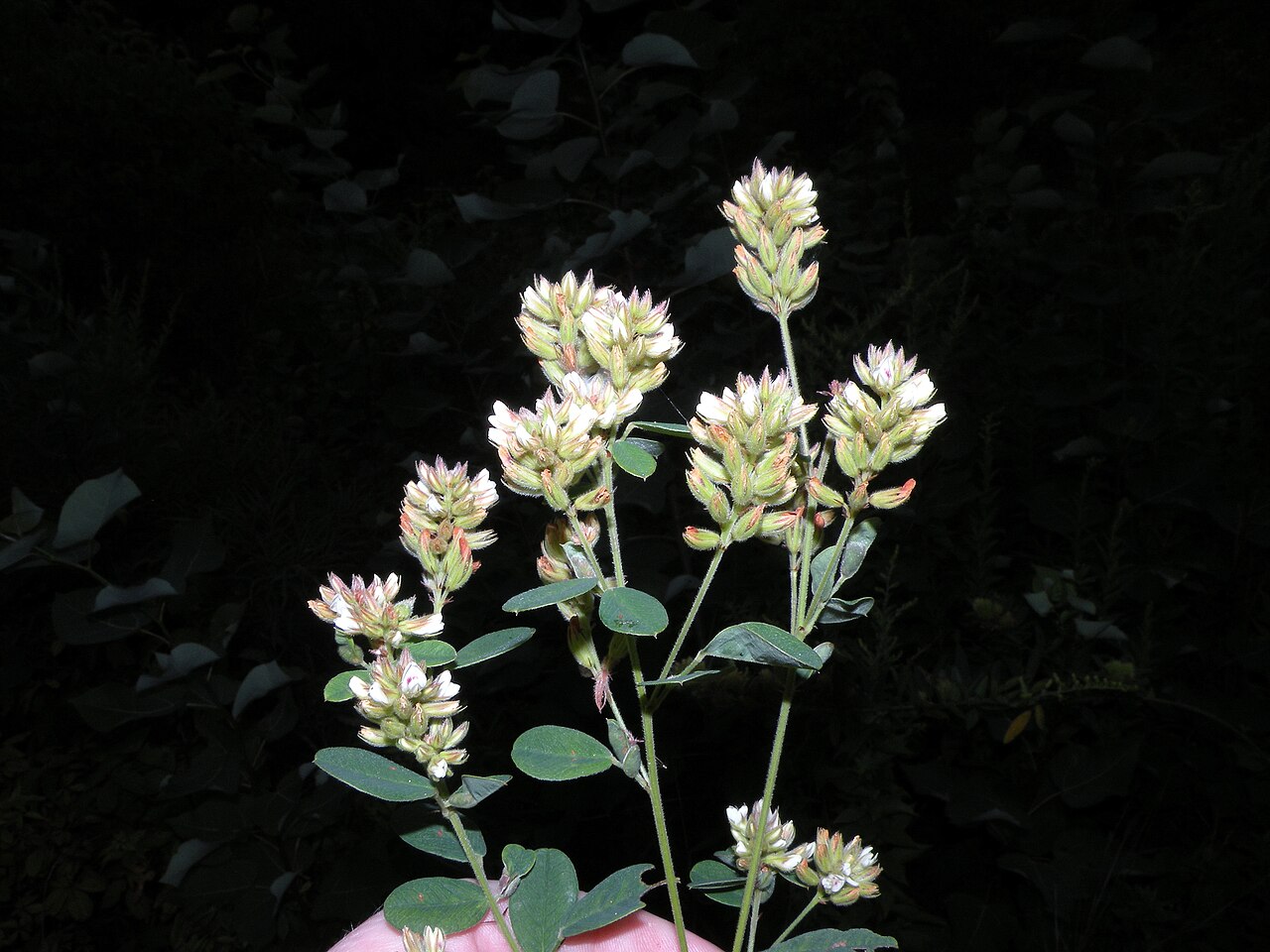
Lespedeza hirta, known as Hairy Lespedeza or hairy bush clover, is a native perennial wildflower in the pea family (Fabaceae). It grows as one or a few upright, softly hairy stems 2 to 5 feet tall, with rounded leaves divided into three leaflets, and in late summer and fall it bears dense, cylindrical heads of small creamy-white pea flowers on long stalks above the leaves.
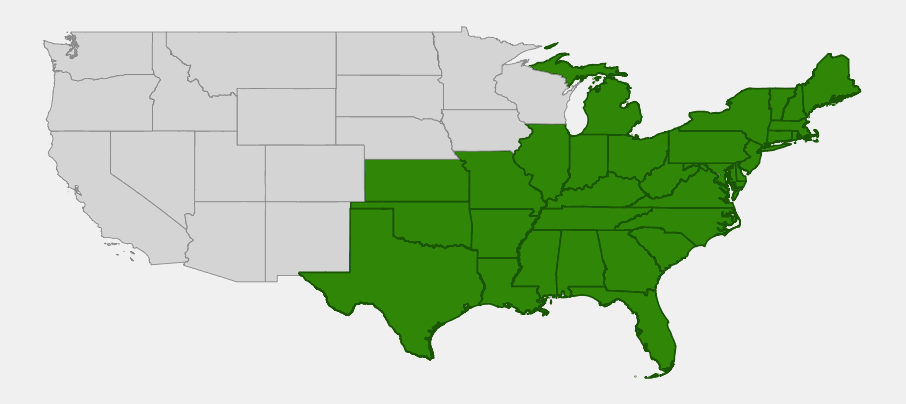
It is one of the most widespread native bush clovers in the East, growing from Maine and southern Ontario south to Florida and west to Michigan, Missouri, Kansas, Oklahoma and eastern Texas. Look for it in dry, open woods, oak and pine barrens, sandhills, rocky glades, old fields and roadsides, mostly on poor, sandy or rocky soils.
Like other legumes, it hosts nitrogen-fixing bacteria in its roots and enriches poor soils. Its seeds are an important fall and winter food for bobwhite quail and other birds, and its leaves feed the caterpillars of several skippers and blues. It is a good choice for dry meadows and wildlife plantings, and a native alternative to the invasive Asian lespedezas.
Identification
Look for an upright, fuzzy, unbranched or few-branched stem with rounded three-part leaves and dense, bristly, cream-colored flower heads on long stalks in late summer and fall.
Growth Habit
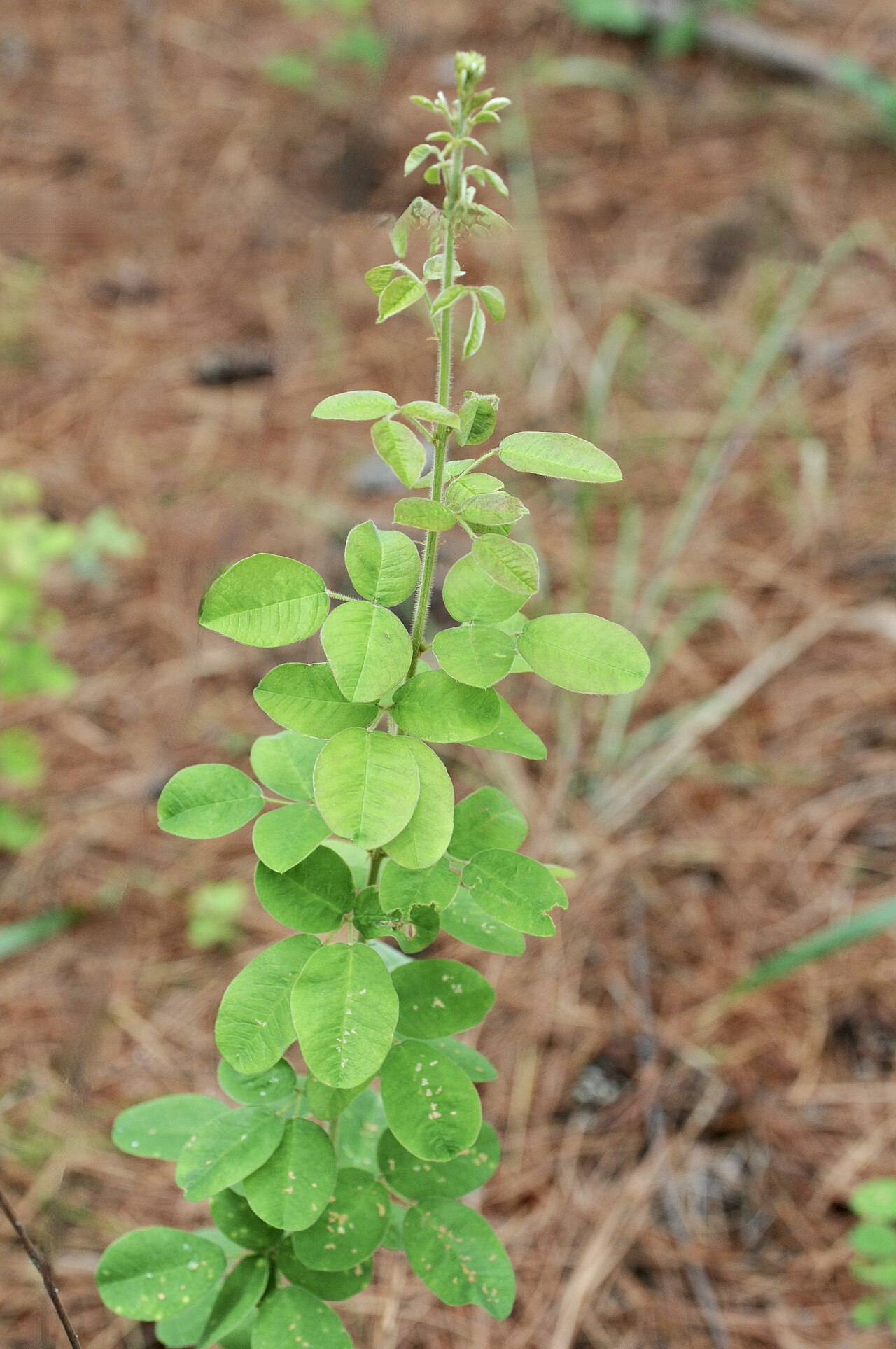
Hairy lespedeza is a perennial with a woody root crown. It sends up one to several stiff, upright stems, 2 to 5 feet tall, that are usually unbranched below the flower clusters. The stems are covered with spreading or appressed hairs. It dies back to the ground each winter.
Leaves
The leaves are alternate and divided into three leaflets, much like clover. Each leaflet is broadly oval to nearly round, about 3/4 to 2 inches long, with a rounded or slightly notched tip and a tiny bristle point. Both surfaces, and especially the underside, are softly hairy.
Flowers
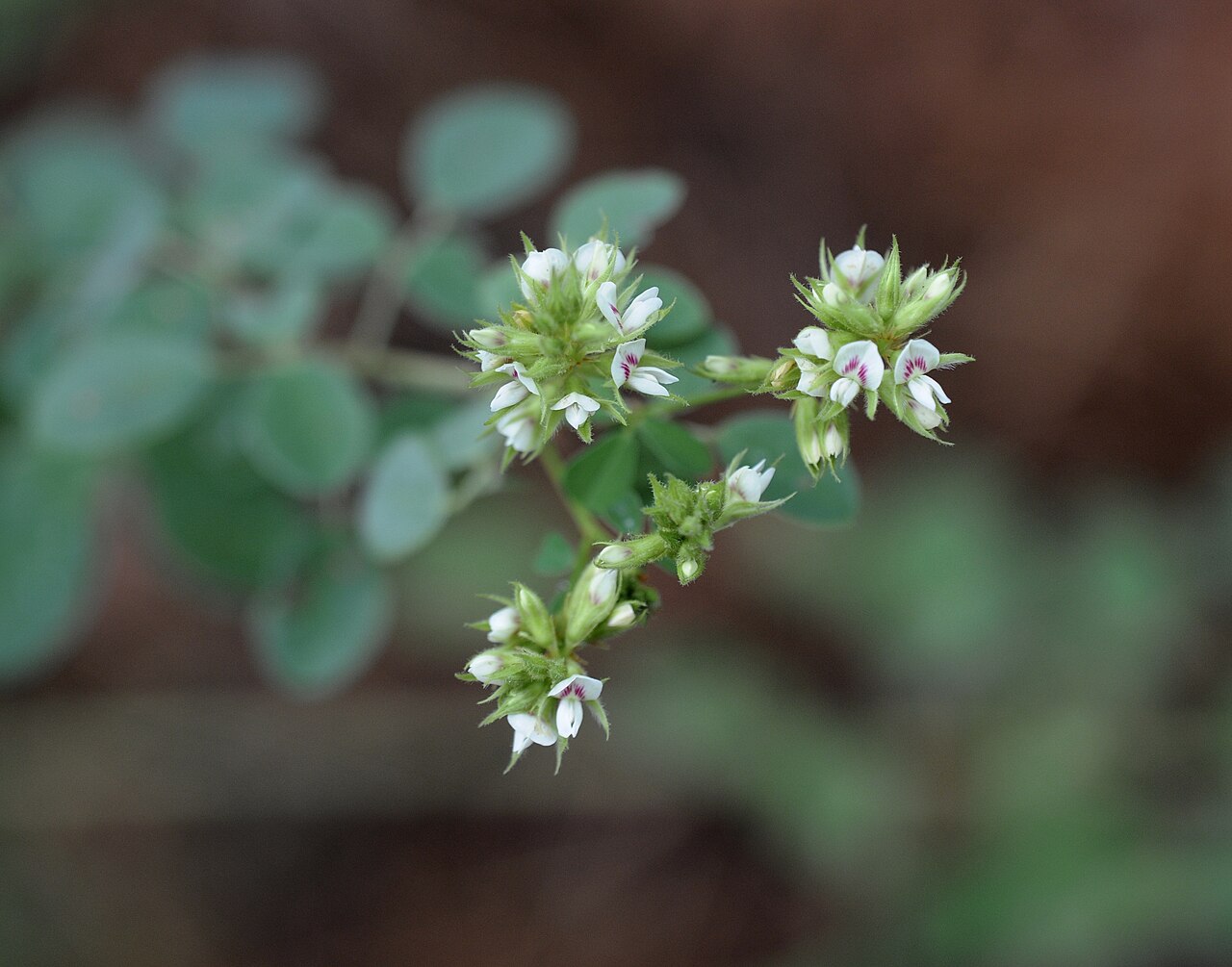
From about August to October, flowers appear in dense, cylindrical to egg-shaped heads 1/2 to 1 1/2 inches long. The heads are held on hairy stalks that are usually longer than the nearby leaves. Each small pea flower is creamy white or yellowish white, with a purple or reddish spot at the base of the upright petal, and is surrounded by long, hairy sepals that give the heads a bristly look.
Fruit
The fruit is a tiny, flat, hairy, one-seeded pod hidden among the persistent sepals. The dry, brown heads remain on the stems into winter.
Look-alikes
Round-headed bush clover (Lespedeza capitata) has narrower, oblong leaflets covered with silvery hairs and round heads crowded at the top of the stem on short stalks. Slender bush clover (L. virginica) has very narrow leaflets and purple flowers. The invasive sericea lespedeza (L. cuneata) has narrow, wedge-shaped leaflets and small flowers tucked along the stem.
Quick Facts
| Scientific Name | Lespedeza hirta (L.) Hornem. |
| Family | Fabaceae (pea family) |
| Plant Type | Herbaceous perennial wildflower (legume) |
| Mature Height | 2–5 ft |
| Mature Spread | 1–2 ft |
| Growth Rate | Moderate |
| Sun Exposure | Full sun to part shade |
| Water Needs | Low; dry to medium-dry soils |
| Soil Type | Sandy, rocky or loamy; tolerates poor soils |
| Soil pH | Acidic to neutral (about 4.5–7.0) |
| Bloom Time | August–October |
| Flower Color | Creamy white with a purple spot |
| Fall Color | Leaves turn tan; dry flower heads persist |
| Fruit | Tiny one-seeded pods in bristly heads |
| Deer Resistant | No; deer browse lespedezas |
| USDA Hardiness Zones | 4–9 |
Native Range
USDA PLANTS lists hairy lespedeza as native in 31 states across the eastern half of the country. It grows throughout New England and New York south along the Atlantic states to Florida, west through Pennsylvania, Ohio, Indiana, Michigan, Illinois and Missouri, and in the South from Alabama, Mississippi and Louisiana to Arkansas, eastern Oklahoma, eastern Kansas and eastern Texas.
In Canada it grows in southern Ontario. It is common in the Coastal Plain and Piedmont and in sandy or rocky uplands, and becomes less frequent toward the western and northern edges of its range.
Its habitats include dry, open oak and pine woods, sandhills and pine barrens, rocky glades and bluffs, savannas, prairies, woodland borders, old fields and roadsides, usually on dry, acidic, sandy or rocky soils, from sea level to about 3,500 feet in the Appalachians.
📋 Regional plant lists featuring Hairy Lespedeza: New York, Pennsylvania & Northern New Jersey · Ohio & Indiana · Michigan, Wisconsin & Eastern Minnesota · Kentucky & Tennessee · Nebraska, Kansas & Eastern Colorado · Connecticut, Massachusetts & Rhode Island · New Hampshire, Maine & Vermont · Maryland, Virginia & West Virginia · Delaware, Southern New Jersey & Long Island · Illinois, Iowa & Missouri · Alabama, Georgia & Mississippi · North & South Florida · North & South Carolina · Arkansas, Louisiana, Eastern Oklahoma & Eastern Texas
Growing & Care Guide
Hairy lespedeza is an easy, drought-tolerant native for dry meadows, open woodland edges and wildlife plantings. It thrives on poor soil where many garden plants struggle.
Light
Full sun to light shade. It flowers best in sun, but it tolerates the dappled light of open oak or pine woods.
Soil & Water
It prefers dry, well-drained sandy, rocky or loamy soil and does fine in poor, acidic soils. Because it fixes nitrogen, it does not need fertilizer. Once established, it needs no watering except in extreme drought.
Planting Tips
Plant it in drifts in a meadow, prairie or woodland-edge garden, among native grasses such as little bluestem and broom sedge. Its upright stems and late flowers add height and structure in late summer.
Pruning & Maintenance
Leave the stems standing over winter so birds can eat the seeds, then cut them back in late winter or early spring. In meadows, mow or burn every few years in late winter to keep woody plants from taking over.
Propagation
Grow it from seed. The hard seeds germinate best after scarification (lightly sanding or nicking the seed coat) or a winter outdoors. Fall sowing works well. A legume inoculant can help seedlings in soils where lespedezas have not grown before.
Landscape Uses
- Wildlife plantings: seeds for quail, turkeys and songbirds
- Dry meadows and prairies: late-summer bloom in poor, sandy soil
- Butterfly gardens: larval host for skippers and blues
- Restoration: a native legume for barrens, sandhills and savannas
- Alternative to invasives: a native choice instead of sericea or shrub lespedeza
Wildlife & Ecological Value
Native bush clovers are among the most valuable plants for wildlife in eastern grasslands and open woods.
For Pollinators
Bumble bees, leafcutter bees and other native bees visit the flowers for nectar and pollen in late summer. The leaves feed the caterpillars of several butterflies, including the silver-spotted skipper, southern and northern cloudywings, hoary edge and eastern tailed-blue.
For Birds
The seeds are an important fall and winter food for northern bobwhite and are also eaten by wild turkeys, mourning doves and sparrows. The plants provide cover in open grasslands.
For Mammals
White-tailed deer and rabbits browse the leaves and stems, which are high in protein.
Ecosystem Role
Through its partnership with nitrogen-fixing bacteria, hairy lespedeza adds nitrogen to poor, sandy soils, helping other plants of barrens and savannas. It recovers quickly after fire.
Cultural & Historical Uses
The genus name Lespedeza honors Vicente Manuel de Céspedes, a Spanish governor of East Florida in the late eighteenth century. A spelling error in the original publication turned “Cespedes” into “Lespedez,” and the misspelled name stuck.
The species name hirta means “hairy,” for the soft hairs on the stems, leaves and flower heads. Linnaeus first described this plant in the genus Hedysarum, and it was moved to Lespedeza by the Danish botanist Jens Wilken Hornemann in the early nineteenth century.
Several Asian lespedezas, such as sericea lespedeza and shrub lespedeza, were widely planted for erosion control and wildlife food and are now invasive in many states. Native species such as hairy lespedeza provide the same benefits without spreading aggressively.
Frequently Asked Questions
Is hairy lespedeza native?
Yes. It is native to the eastern United States and southern Ontario. It should not be confused with the invasive Asian sericea lespedeza or shrub lespedeza.
When does hairy lespedeza bloom?
From about August to October, with dense, creamy-white flower heads on long stalks.
Is hairy lespedeza good for wildlife?
Yes. Its seeds are a valuable winter food for bobwhite quail, turkeys and songbirds, and its leaves feed the caterpillars of several skippers and blues.
How do I tell hairy lespedeza from round-headed bush clover?
Hairy lespedeza has broad, rounded leaflets and flower heads on stalks longer than the leaves. Round-headed bush clover has narrow, silvery leaflets and round heads crowded at the top of the stem.
Does hairy lespedeza need good soil?
No. It thrives in dry, poor, sandy or rocky soils and adds nitrogen to the soil through bacteria in its roots.

Looking for a nursery that carries Hairy Lespedeza?
Browse our native plant nursery directory: Alabama & Arkansas · Connecticut, Delaware, Florida & Georgia · Illinois, Indiana & Kansas · Kentucky, Louisiana, Maine, Maryland, Massachusetts, Michigan, Mississippi & Missouri · New Hampshire, New Jersey, New York, North Carolina, Ohio & Oklahoma · Pennsylvania, Rhode Island, South Carolina, Tennessee, Texas, Vermont & Virginia · West Virginia
