
Little Gold Poppy (Eschscholzia minutiflora)
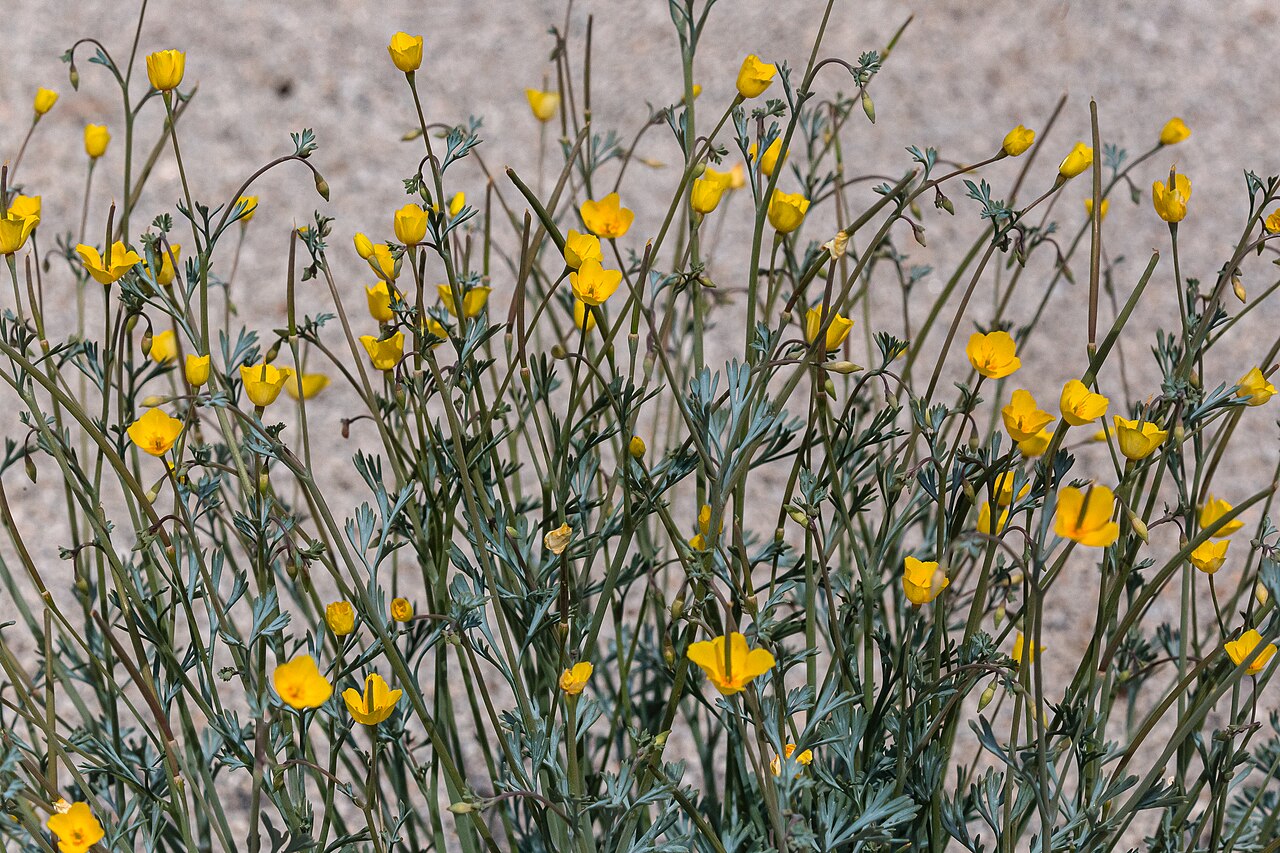
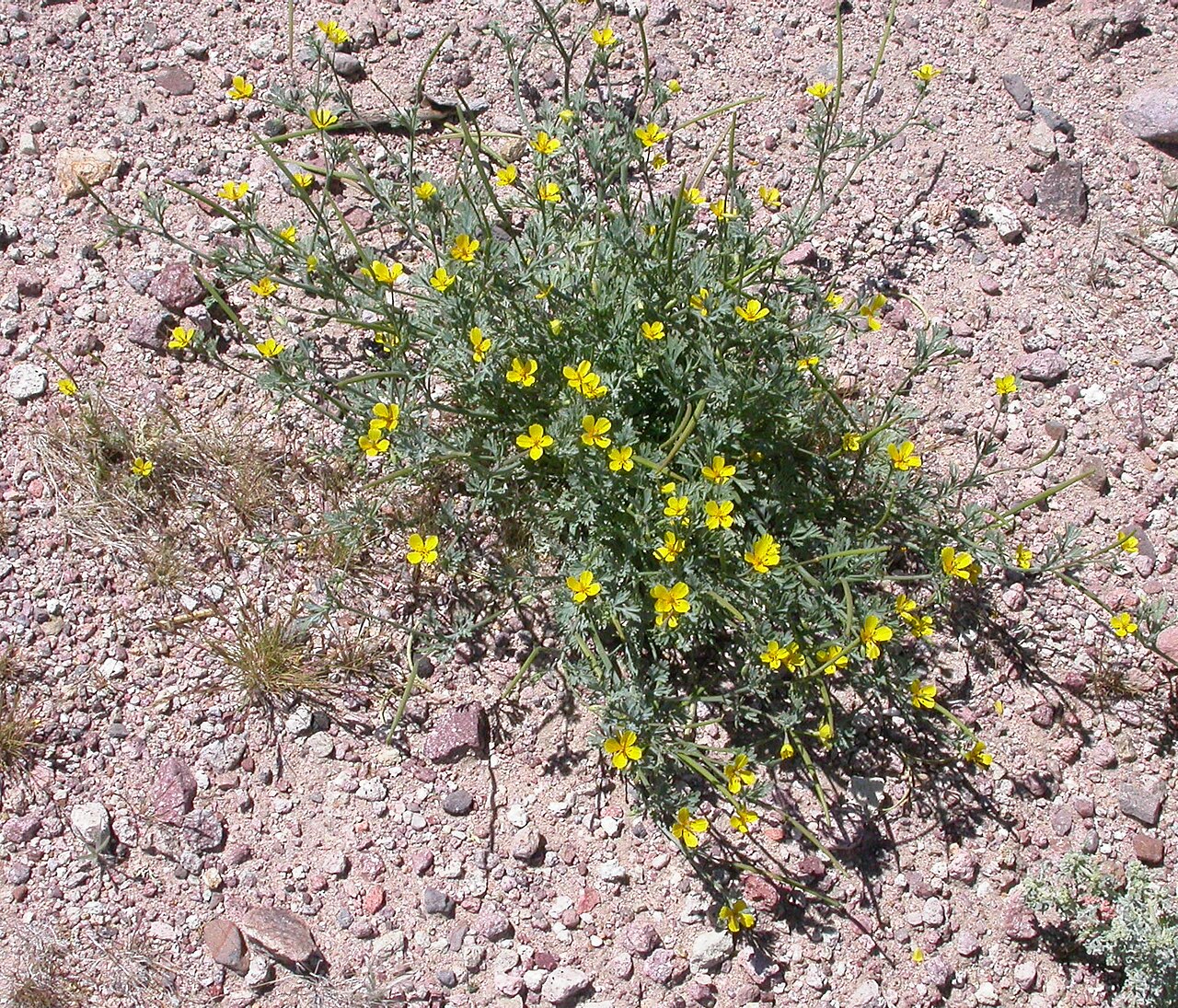
Eschscholzia minutiflora, known as Little Gold Poppy, pygmy poppy or little goldpoppy, is a desert annual and a small cousin of the California poppy. USDA PLANTS uses the common name pygmy poppy. It forms a loose tuft of finely divided, blue-green leaves and wiry stems topped by small, bright yellow, four-petaled flowers. In wet springs it blooms by the thousands on gravelly slopes and washes of the Mojave and Sonoran deserts.
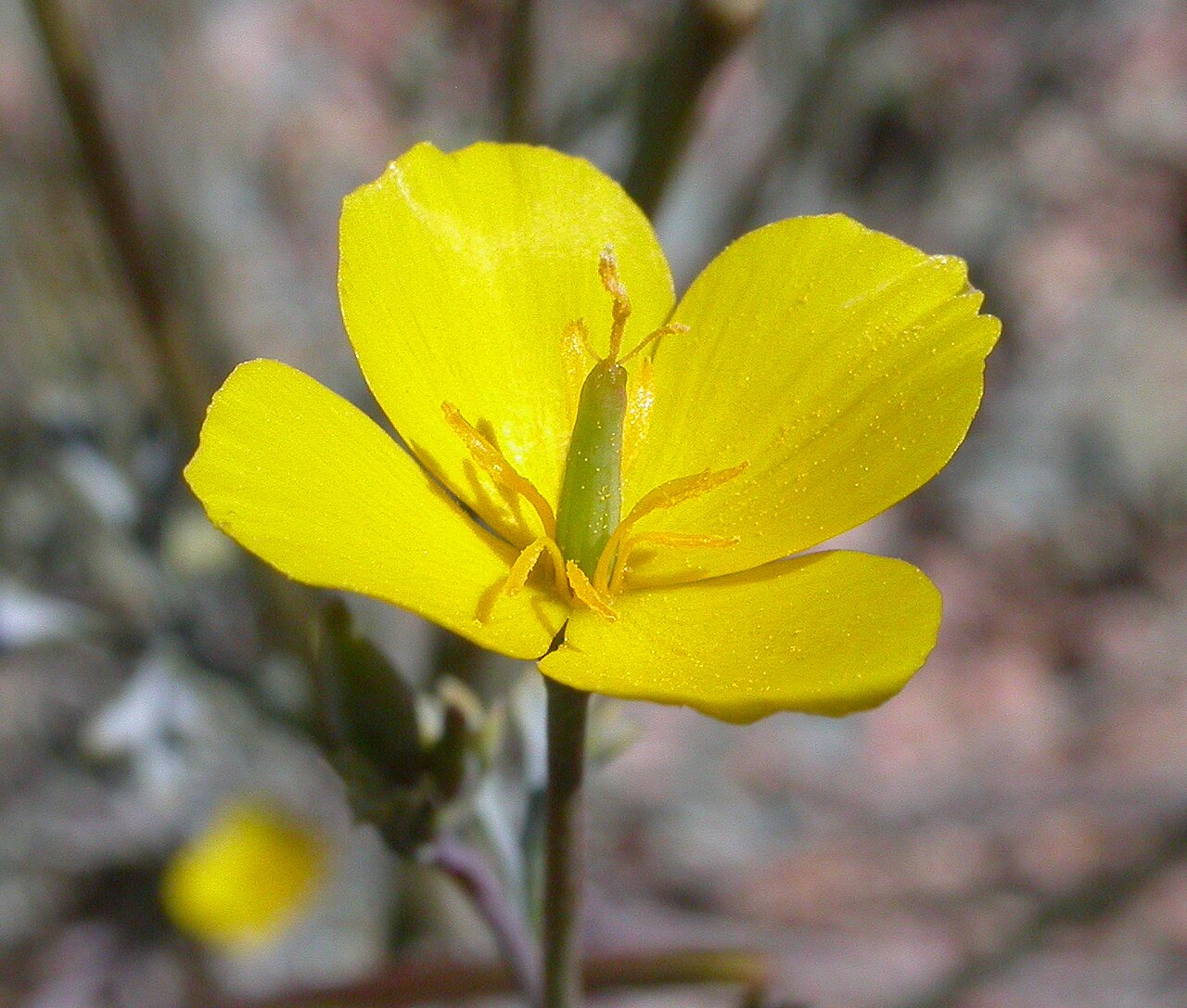
As its scientific name suggests (minutiflora means small-flowered), its flowers are smaller than those of most other gold poppies, often only 1/4 to 1/2 inch across, although some populations have larger flowers. Botanists recognize several forms that differ in flower size and chromosome number, including the larger-flowered Coville’s gold poppy, treated as subspecies covillei or as a separate species. Plants once named Eschscholzia androuxii are now included in this species.
Little gold poppy is a member of the poppy family (Papaveraceae). It is one of the most common spring wildflowers of the low deserts, and it can be grown from seed in desert gardens, where it brings a bright touch of yellow in late winter and spring.
Identification
Look for a low, blue-green, lacy-leaved annual on desert gravel in spring, with many slender stems carrying small, cup-shaped yellow flowers that have four petals and no broad, flat rim under the flower.
Growth Habit
A winter annual, usually 2 to 14 inches tall. Small plants in dry years may have just a few stems, while plants in wet years form bushy mounds with dozens of stems. The plant is hairless and has a bluish, waxy coating.
Leaves
The leaves are mostly near the base and on the lower stems, blue-green, and divided two or three times into narrow, rounded segments, giving a lacy, fern-like look much like a small California poppy.
Flowers
The flowers are borne singly at the ends of slender stems from about February to May. They have four bright yellow petals, sometimes with an orange spot at the base, usually 1/8 to 1/2 inch long, and many stamens. The flower buds are covered by a pointed cap formed by the fused sepals, which falls off as the flower opens. Unlike the California poppy, the flower sits on the stalk without a broad, flat rim beneath it.
Fruit
The fruit is a slender, ribbed capsule about 1 1/4 to 2 1/2 inches long that splits open from the base when dry, scattering many tiny, dark brown to black seeds.
Look-alikes
California poppy (E. californica) has much larger, usually orange flowers and a conspicuous, flat rim under each flower. Desert gold poppy (E. glyptosperma) has larger flowers on leafless stalks arising from a basal rosette. Mexican gold poppy (E. californica subsp. mexicana) of Arizona has larger orange to yellow flowers. Small yellow evening primroses (Camissonia and Chylismia) also have four petals but have a long floral tube and an inferior ovary.
Quick Facts
| Scientific Name | Eschscholzia minutiflora |
| Family | Papaveraceae (poppy family) |
| Plant Type | Annual wildflower (winter annual) |
| Mature Height | 2–14 in |
| Mature Spread | 3–12 in |
| Growth Rate | Fast after winter rain |
| Sun Exposure | Full sun |
| Water Needs | Very low; depends on winter rain |
| Soil Type | Sandy, gravelly or rocky desert soils |
| Soil pH | Neutral to alkaline (about 7.0–8.5) |
| Bloom Time | February–May |
| Flower Color | Bright yellow, sometimes with an orange spot |
| Fall Color | None; annual |
| Fruit | Slender, ribbed capsule with tiny dark seeds |
| Deer Resistant | Yes; rarely browsed |
| USDA Hardiness Zones | Annual; grows where native (about zones 7–11) |
Native Range
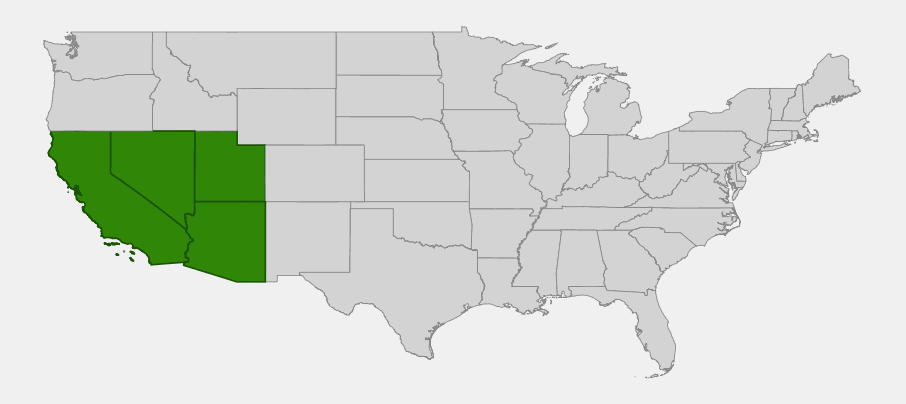
Little gold poppy grows in the deserts of the southwestern United States and northwestern Mexico. USDA PLANTS lists it as native in Arizona, California, Nevada and Utah. It is widespread in the Mojave Desert and the Colorado Desert of southeastern California, from Death Valley and the Owens Valley region south through Joshua Tree and Anza-Borrego. In Nevada it grows mostly in the southern half of the state, in Arizona mainly in the western deserts and the lower Colorado River region, and in Utah only in the far southwest, in Washington County near St. George.
In Mexico it grows in Baja California and Sonora. The larger-flowered forms, including Coville’s gold poppy and the rare Red Rock poppy (subspecies twisselmannii), grow mainly in the Mojave Desert of California.
It grows on gravelly and sandy slopes, washes, alluvial fans and rocky hillsides in creosote bush scrub and other desert shrublands, usually below about 5,000 feet. Like other desert annuals, it is abundant after wet winters and scarce or absent in dry years.
📋 Regional plant lists featuring Little Gold Poppy: Utah & Western Colorado · Arizona & New Mexico · California & Nevada
Growing & Care Guide
Little gold poppy is an easy desert annual to grow from seed, as long as it has sun, sharp drainage and cool-season moisture.
Light
Full sun. The flowers open fully only in bright sunshine and close in cloudy weather and at night.
Soil & Water
Use sandy, gravelly or rocky soil with good drainage and no fertilizer. Seeds germinate after fall or winter rains. In a dry winter, water occasionally and deeply until the plants bloom. No summer water is needed; the plants die after setting seed.
Planting Tips
Sow seed directly in fall or early winter on bare ground and rake it in very lightly; poppies dislike being transplanted because of their taproot. Mix it with other desert annuals such as desert bluebells, phacelias and desert marigold for a spring wildflower patch.
Pruning & Maintenance
None needed. Let the capsules ripen and split so the plants can reseed. Remove the dry plants afterward if you want a neater look.
Propagation
Grows from seed. Collect capsules as they turn tan and begin to split in late spring. Seed stays viable in the soil for years, so plants may skip dry years and reappear after good rains.
Landscape Uses
- Desert gardens: bright yellow spring color for low and middle deserts
- Wildflower meadows: combines with other desert annuals
- Gravel and rock gardens: thrives in lean, fast-draining soil
- Pollinator gardens: pollen for native bees
- Revegetation: a natural part of desert annual seed mixes
Wildlife & Ecological Value
Little gold poppy is part of the spring flush of desert annuals that feeds desert pollinators and seed-eaters.
For Pollinators
The flowers produce abundant pollen but little or no nectar, and are visited by native bees, including bumblebees, and beetles. The Xerces Society lists it as having special value for native bees and bumblebees.
For Birds
Seed-eating desert birds such as sparrows, finches and quail eat the small seeds.
For Mammals
Kangaroo rats, pocket mice and other desert rodents gather the seeds, and desert tortoises graze on spring annuals.
Ecosystem Role
Its long-lived seed bank helps the species ride out droughts. In wet years, its flowers and seeds are part of the boom of resources that desert animals rely on to breed and store food.
Cultural & Historical Uses
The genus Eschscholzia honors Johann Friedrich von Eschscholtz, a Baltic German physician and naturalist who sailed on a Russian expedition to the Pacific coast between 1815 and 1818. The species name minutiflora means small-flowered.
The species is an interesting example of polyploidy in plants. The smallest-flowered form has the most chromosomes, while the larger-flowered Mojave forms have fewer, and botanists have studied how these chromosome races differ in flower size and range.
Its common names reflect its size. “Pygmy poppy,” the name used by USDA PLANTS, and “little gold poppy” both describe the tiny yellow flowers, which are much smaller than those of its famous relative, the California poppy.
Frequently Asked Questions
Is little gold poppy the same as pygmy poppy?
Yes. USDA PLANTS calls Eschscholzia minutiflora pygmy poppy; little gold poppy and little goldpoppy are other common names.
How is it different from the California poppy?
It has much smaller, yellow flowers and lacks the flat rim under the flower that California poppy has. It is also a desert annual.
When does little gold poppy bloom?
From about February to May, depending on winter rain and elevation.
Can I grow little gold poppy in my garden?
Yes, in sunny, well-drained desert gardens. Sow seed in fall and let winter rains do the rest.
Is Eschscholzia covillei the same species?
Some botanists treat Coville’s gold poppy as a subspecies of E. minutiflora and others as a separate species. It has larger flowers and grows mainly in the Mojave Desert.

Looking for a nursery that carries Little Gold Poppy?
Browse our native plant nursery directory: Arizona · California · Nevada · Utah