
Queen’s Delight (Stillingia sylvatica)
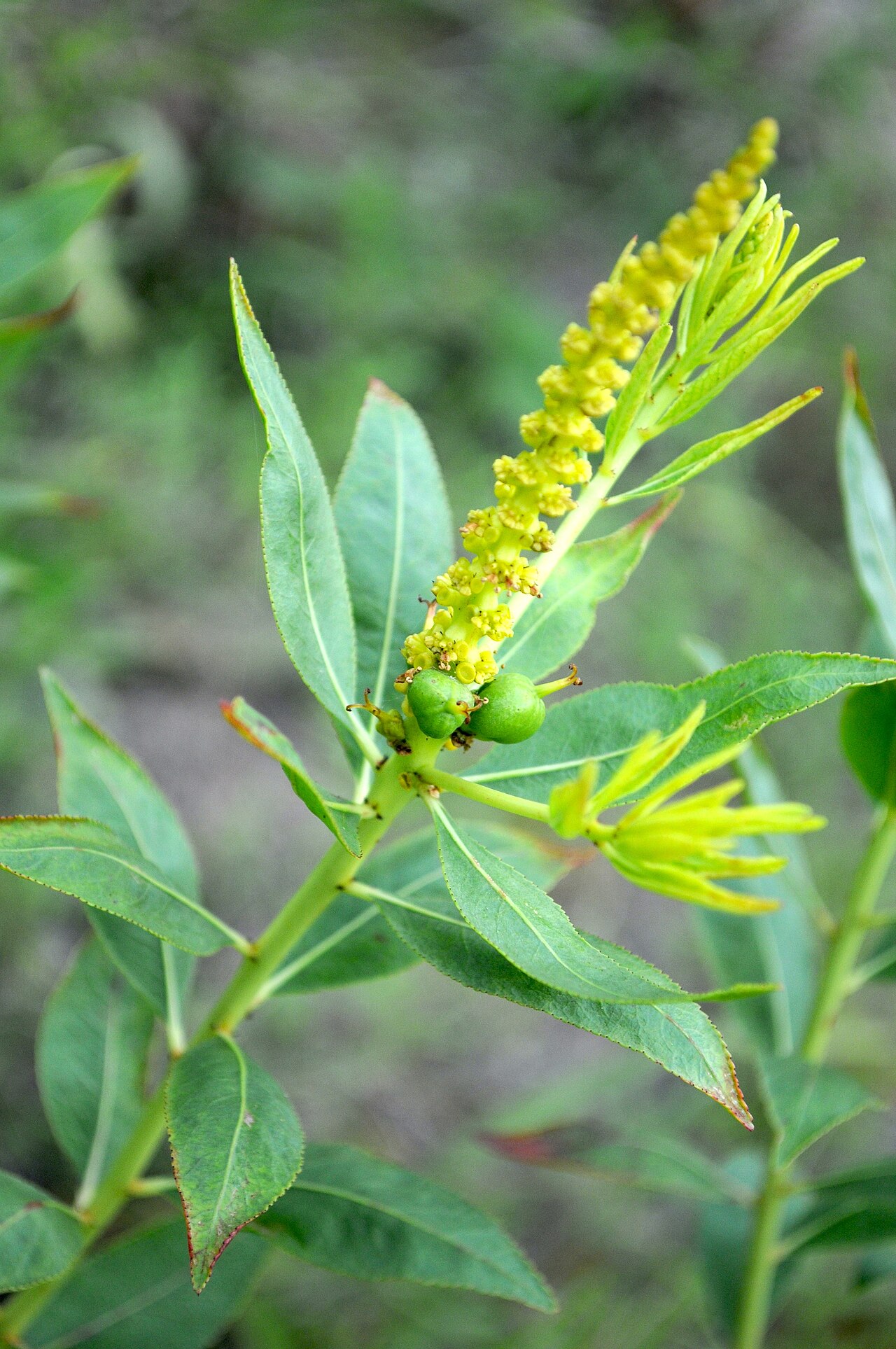
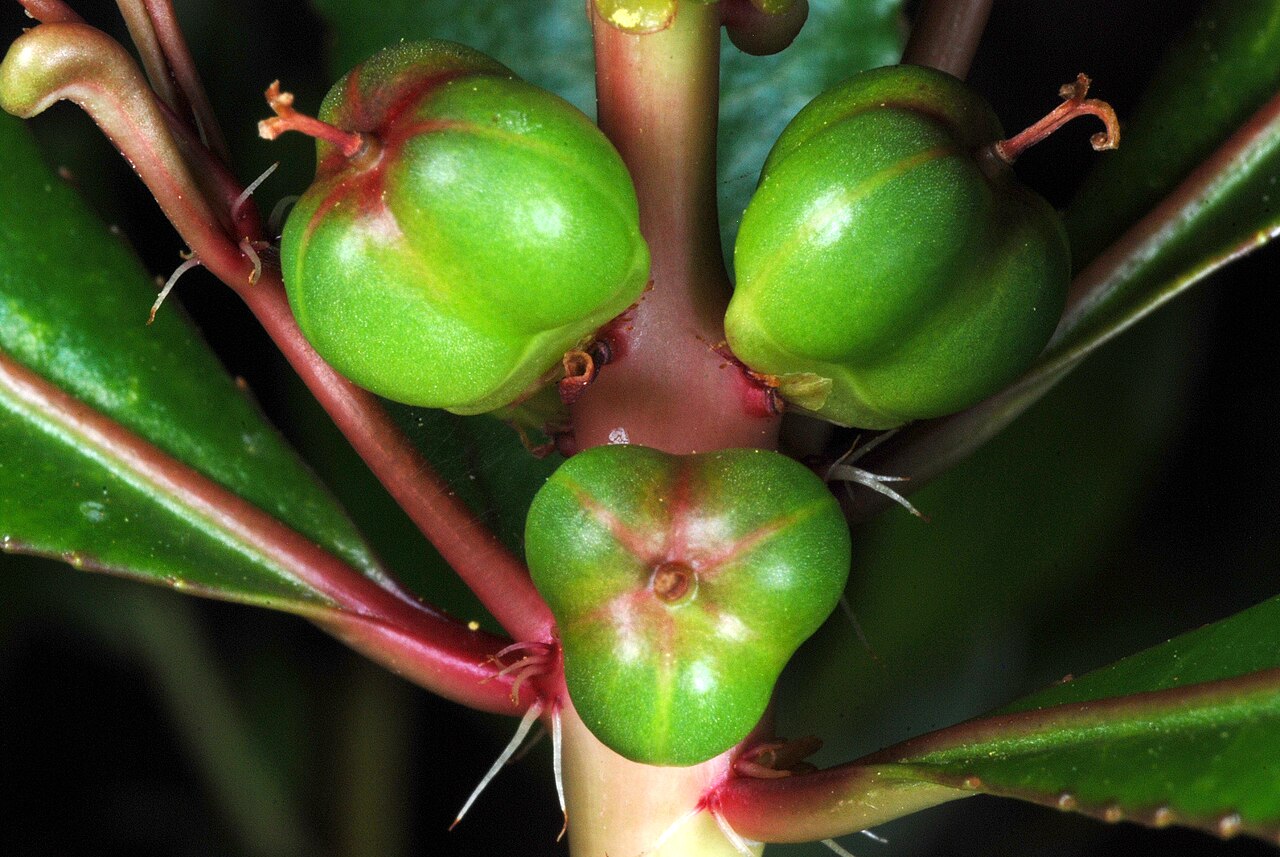
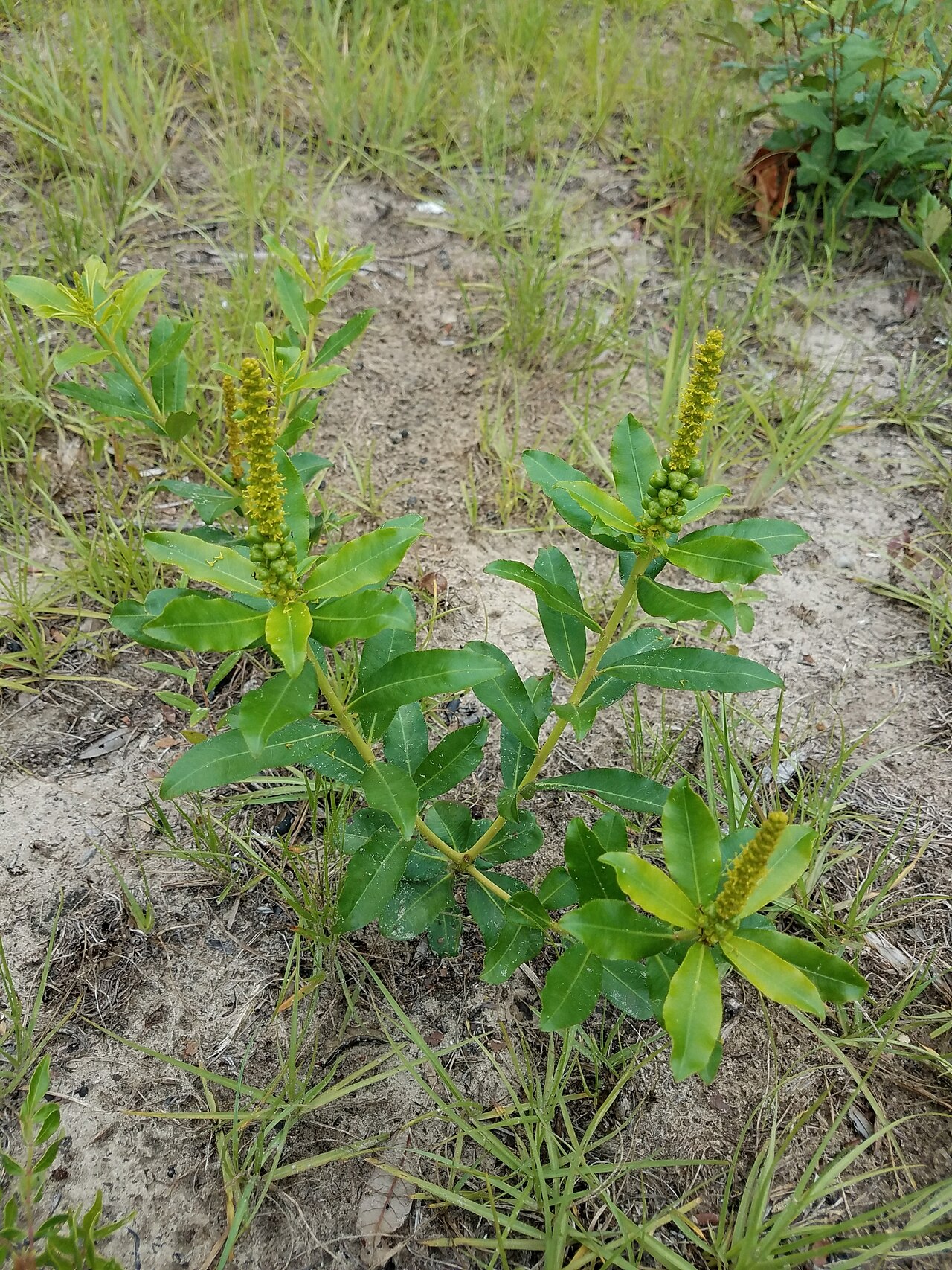
Stillingia sylvatica, known as Queen’s Delight or queen’s-root, is a native perennial of the spurge family (Euphorbiaceae) that grows in deep sands across the southeastern and south-central United States. From a thick, woody root it sends up several smooth stems, usually 1 to 3 feet tall, lined with narrow, finely toothed leaves. From spring into early summer each stem ends in a slender spike of tiny yellow flowers, followed by plump, three-lobed green capsules.
The plant is built for hot, dry, sandy ground. Its deep root lets it survive drought, fire and grazing, and it resprouts quickly after prescribed burns in longleaf pine sandhills. Like many spurges, every part of the plant contains a milky sap. In fall the leaves often turn shades of yellow, orange and red, which makes it surprisingly colorful for a sandhill wildflower.
Safety note: queen’s delight is poisonous. Its milky sap can irritate the skin and eyes, and the root, which was once sold as a strong purgative medicine, can cause vomiting, diarrhea and other serious symptoms if eaten. Wear gloves when handling it, keep it away from children and pets, and never use it as a home remedy. In the garden it suits dry, sunny, sandy sites where it will be admired rather than touched.
Identification
Look for a clump of smooth, upright stems with narrow, toothed leaves, topped by a pencil-thin spike of yellow flowers with a few green, three-lobed fruits at its base. Breaking a leaf releases white, milky sap.
Growth Habit
Queen’s delight is an herbaceous perennial or subshrub that grows from a thick, woody taproot. It forms a clump of several unbranched or sparingly branched stems, usually 10 inches to 3 feet tall, and occasionally up to about 4 feet. The stems are smooth, often reddish, and contain milky sap.
Leaves
The leaves are alternate, nearly stalkless, leathery and smooth, about 1 1/2 to 4 inches long and up to about an inch wide. They are narrowly elliptic to lance-shaped, with small, incurved teeth along the edges. At the base of each leaf there are tiny glands, a feature of the genus. In late summer and fall the foliage often turns yellow, orange or red.
Flowers
The flowers are tiny and lack petals. They are packed into a terminal spike 2 to 5 inches long: many yellow male (staminate) flowers in clusters along the spike, and a few female (pistillate) flowers at its base. Small glands at the base of each flower cluster give the spike a yellow, granular look. Flowering runs mainly from March to June, with scattered later blooms.
Fruit & Seeds
The fruit is a three-lobed capsule about 1/2 inch wide, green at first and drying brown. It splits open in summer, releasing three smooth, gray to brown seeds. Fruiting runs from about April to September.
Look-alikes
Texas stillingia (Stillingia texana) of central and west Texas is smaller and has narrower leaves and finer teeth. Tallowtree (Triadica sebifera), an invasive tree from Asia once placed in Stillingia, has broad, diamond-shaped leaves and similar yellow spikes but is a tree, not a low perennial.
Quick Facts
| Scientific Name | Stillingia sylvatica |
| Family | Euphorbiaceae (spurge family) |
| Plant Type | Herbaceous perennial to subshrub |
| Mature Height | 1–3 ft (rarely to 4 ft) |
| Mature Spread | 1–2 ft |
| Growth Rate | Moderate |
| Sun Exposure | Full sun to light shade |
| Water Needs | Low; very drought tolerant |
| Soil Type | Deep, well-drained sand or sandy loam |
| Soil pH | Acidic to neutral (about 5.0–7.0) |
| Bloom Time | March–June |
| Flower Color | Yellow |
| Fall Color | Yellow, orange to red |
| Fruit | Three-lobed capsule, April–September |
| Deer Resistant | Yes; toxic milky sap |
| USDA Hardiness Zones | 6–10 |
Native Range
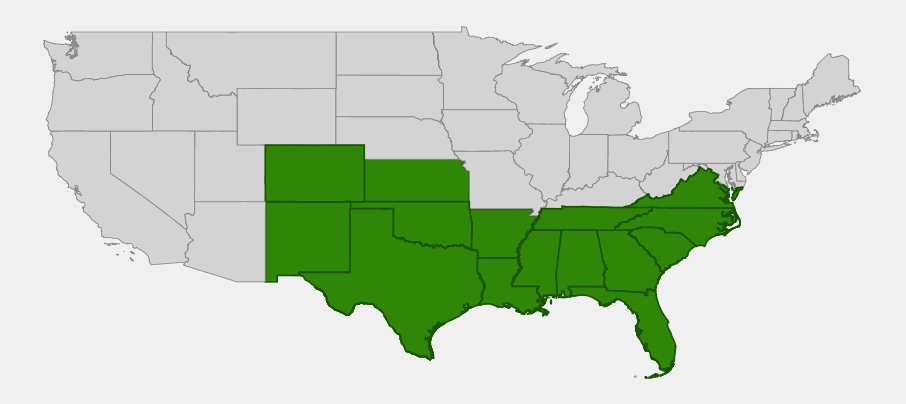
Queen’s delight is endemic to the United States. USDA PLANTS lists it as native from Virginia and North Carolina south to Florida, west through the Gulf states to Texas and Oklahoma, and north into Kansas, with records from Tennessee, Arkansas, New Mexico and Colorado. It is most common on the sandy Coastal Plain from the Carolinas to Florida and across to east and south Texas.
At the edges of its range it is scarce. NatureServe ranks it as critically imperiled in Virginia, where it grows in the sandy southeastern part of the state, and in Colorado, where it is an outlying record on sandy ground in the far southeast. In Kansas and New Mexico it occurs in sandy prairies and sandhills near the Oklahoma and Texas borders. In Texas it reaches from the Pineywoods to the sand plains of South Texas.
Its habitat is almost always sand: longleaf pine and turkey oak sandhills, scrub, dry pine flatwoods, coastal dunes, sandy prairies, old fields and roadsides. It thrives where fire or disturbance keeps taller plants in check.
📋 Regional plant lists featuring Queen’s Delight: Kentucky & Tennessee · Nebraska, Kansas & Eastern Colorado · Maryland, Virginia & West Virginia · Alabama, Georgia & Mississippi · North & South Florida · North & South Carolina · Arkansas, Louisiana, Eastern Oklahoma & Eastern Texas · South & West Texas
Growing & Care Guide
Queen’s delight is an easy, long-lived plant in the right spot: hot sun and deep, sandy soil that never stays wet. It is mostly grown in sandhill restorations, native meadows and dry gardens on sandy sites, and it is offered mainly by native plant nurseries in the Southeast and Texas. Remember that it is poisonous and wear gloves when handling it.
Light
Full sun is best. It tolerates the light, filtered shade of open pinelands, but in deeper shade it becomes leggy and blooms poorly.
Soil & Water
Plant it in deep, well-drained sand or sandy loam. It is adapted to poor, acidic, low-nutrient soils and does not need fertilizer. Water only until it is established; after that its deep taproot carries it through drought. Heavy clay and wet soil cause root rot.
Planting Tips
Start with small container plants or seedlings, because the deep taproot makes older plants very hard to move. Plant in spring or fall, spacing plants about 18 inches to 2 feet apart, and combine them with bunchgrasses and other sandhill wildflowers. Wear gloves to protect your skin from the milky sap.
Pruning & Maintenance
Little care is needed. Cut back dead stems in late winter, wearing gloves, or let a controlled burn or mowing do the job in a meadow. Plants resprout vigorously from the root.
Propagation
Grow it from seed. Collect the capsules as they turn brown, before they split and throw their seeds, and sow the seeds outdoors in fall or after a period of cold, moist stratification. Seedlings quickly develop a long taproot, so sow in deep pots or directly in place. Do not dig wild plants.
Landscape Uses
- Sandhill and scrub restorations: a characteristic plant of fire-maintained sandy uplands
- Dry, sandy gardens: thrives where most perennials struggle
- Native meadows: yellow spikes in spring and colorful foliage in fall
- Coastal landscapes: tolerates sandy soils near dunes
- Deer-resistant plantings: the toxic sap deters browsing
Wildlife & Ecological Value
Although it is easy to overlook, queen’s delight is a working member of sandhill and dry prairie plant communities.
For Pollinators
The nectar glands on the flower spikes attract small bees, wasps, flies and ants. Many of these small insects are in turn food for other wildlife.
For Birds
The seeds are eaten by ground-feeding birds such as doves and quail, which forage in open, sandy habitats.
For Mammals
Its toxic sap means deer and livestock rarely browse it. Small rodents may eat some of the fallen seeds.
Ecosystem Role
Its deep root lets it resprout after fire and drought, helping hold loose sand in place. As a fire-adapted perennial, it is an indicator of healthy, frequently burned sandhills and pine flatwoods.
Cultural & Historical Uses
The genus is named for Benjamin Stillingfleet, an 18th-century English botanist and writer. The name sylvatica means “of the woods,” a reference to the open pine woods where it grows.
In the 19th century the root, sold as “stillingia” or “queen’s root,” was a popular medicine in the United States. It was listed in the U.S. Pharmacopeia and was an ingredient in widely sold patent “blood purifier” tonics, and was used as a purgative and to treat skin diseases and syphilis. Its use has long since been abandoned, and the plant is considered toxic.
The common name “queen’s delight” is old, and its origin is uncertain. Like other members of the spurge family, the plant contains irritating compounds in its milky latex, which explains both its historic medicinal use and its danger.
Frequently Asked Questions
Is queen’s delight poisonous?
Yes. Its milky sap can irritate skin and eyes, and eating the plant, especially the root, can cause vomiting, diarrhea and other serious symptoms. Keep it away from children and pets and wear gloves when handling it.
Where does queen’s delight grow?
It grows in sandy habitats across the Southeast and south-central United States, from Virginia to Florida and west to Texas, Oklahoma and Kansas, with outlying records in New Mexico and Colorado.
When does queen’s delight bloom?
Mainly from March to June, with yellow flower spikes at the tips of the stems. The three-lobed fruits ripen from late spring through summer.
Can I grow queen’s delight in my garden?
Yes, if you have a sunny spot with deep, sandy, well-drained soil. It is drought tolerant and needs little care, but it dislikes clay and wet soil.
Is queen’s delight related to Chinese tallow?
Yes. Both are in the spurge family, and Chinese tallowtree was once placed in the genus Stillingia. Tallowtree is an invasive Asian tree, while queen’s delight is a low native perennial.

Looking for a nursery that carries Queen’s Delight?
Browse our native plant nursery directory: Alabama & Arkansas · Colorado, Florida & Georgia · Kansas · Louisiana & Mississippi · New Mexico, North Carolina & Oklahoma · South Carolina, Tennessee, Texas & Virginia

