
Mat Rock Spiraea (Petrophytum caespitosum)
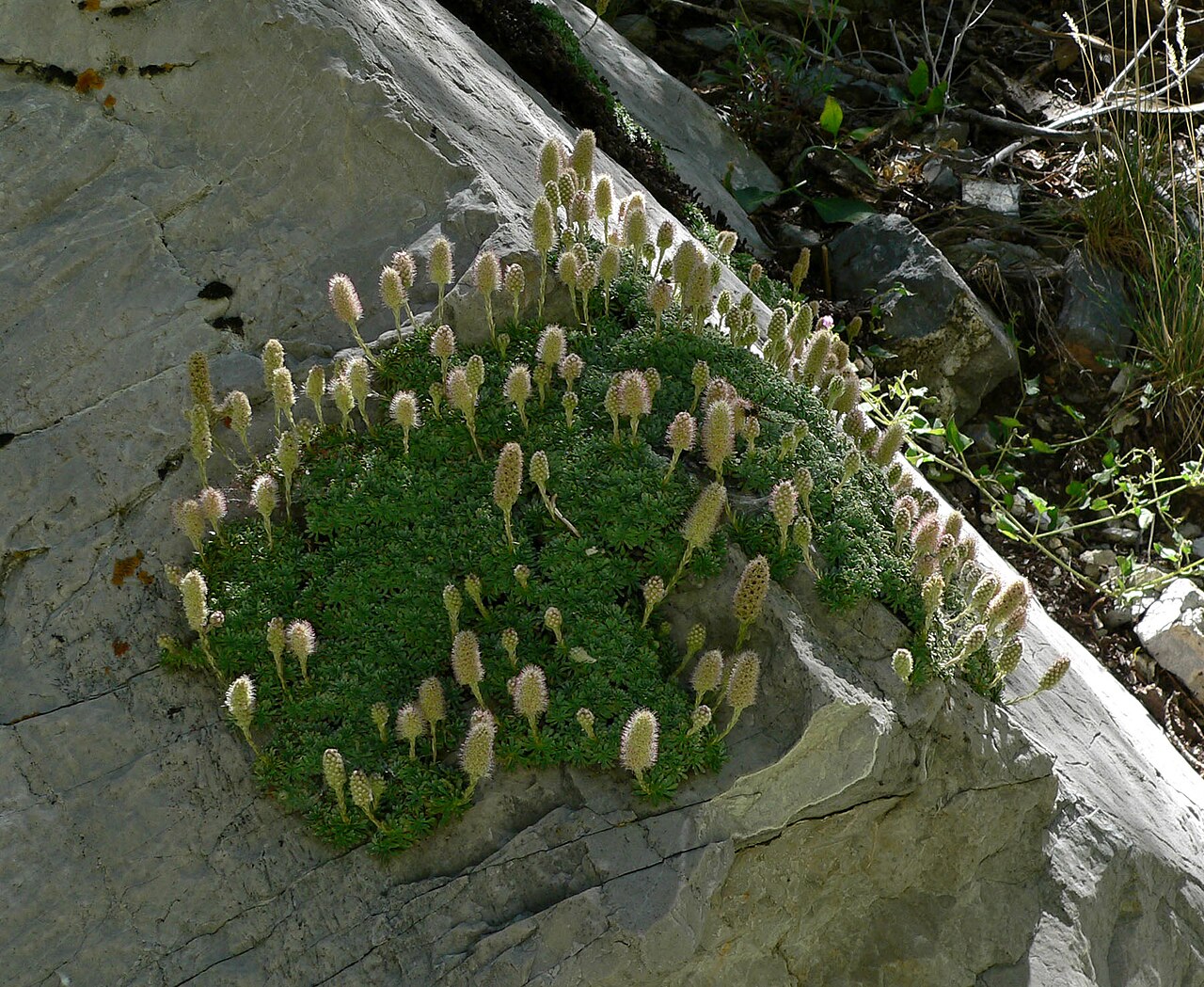
Petrophytum caespitosum, known as Mat Rock Spiraea, rock spiraea, Rocky Mountain rockmat or tufted rockmat, is a tiny woody shrub that grows as a flat, dense mat pressed against bare rock. A single plant may spread 2 to 3 feet across while standing only an inch or two tall, flowing over ledges and down cliff faces like a living carpet.
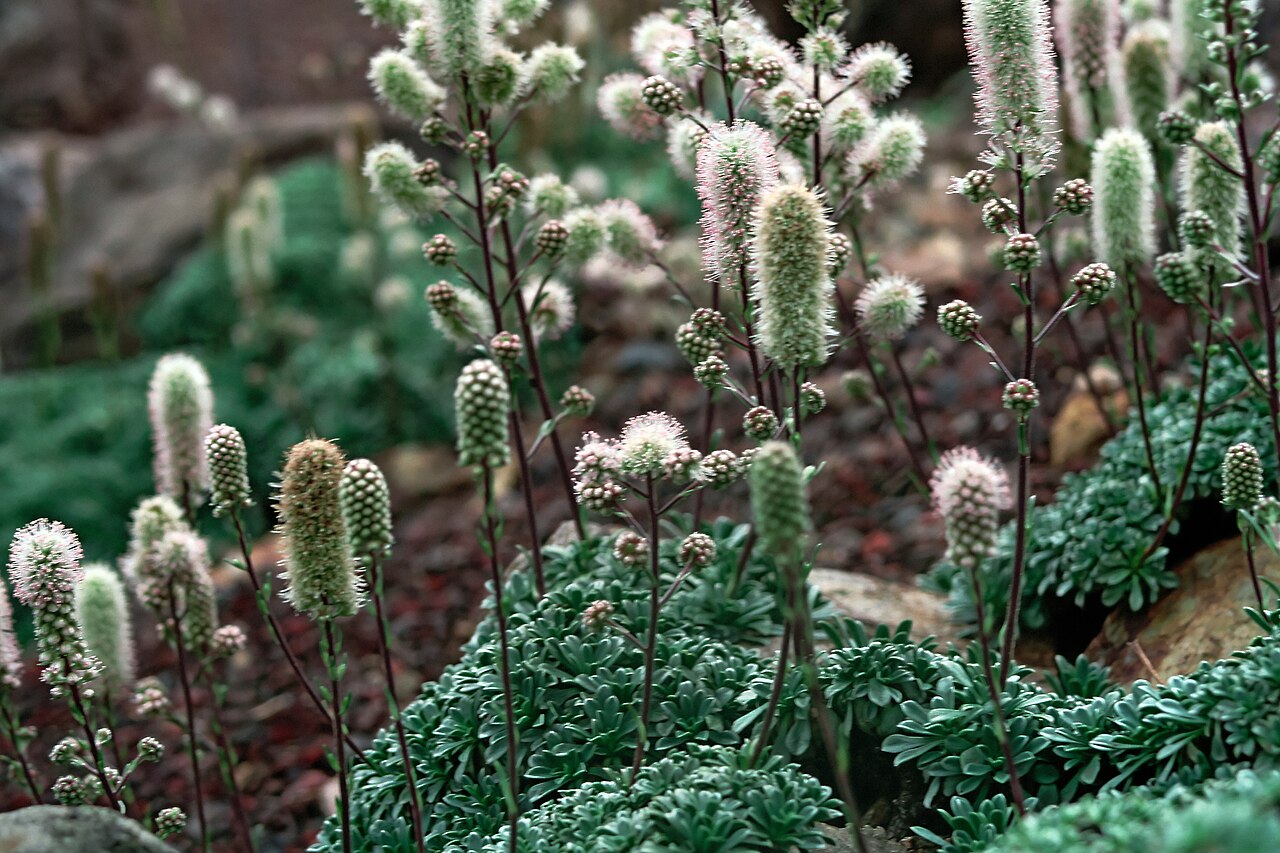
In summer the gray-green mats send up short stalks topped with fuzzy, creamy-white, bottlebrush-like spikes of tiny flowers. It is a member of the rose family and a close relative of the spiraeas, which is reflected in its old name, Spiraea caespitosa.
It is one of the most widespread rock plants of the American West, growing in cracks of limestone, granite and other rock from the Black Hills and western Texas to California and northeastern Oregon. It is a favorite of rock and crevice gardeners for its sculptural form, and it is a reminder of how much life can cling to bare stone.
Identification
Look for a very flat, dense, gray-green mat of tiny leaves molded over bare rock, with short spikes of fuzzy white flowers standing a few inches above it in summer.
Growth Habit
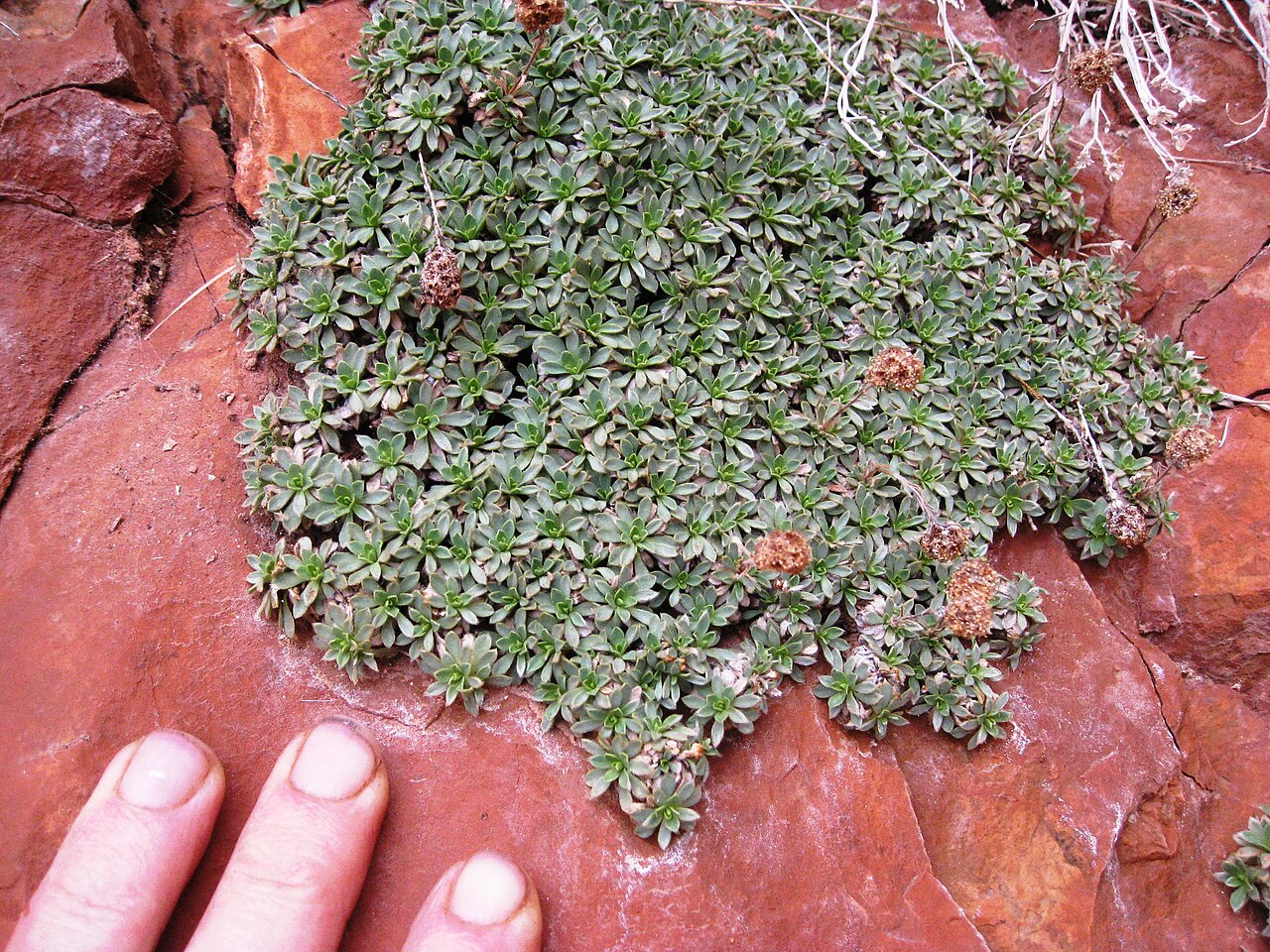
A prostrate, mat-forming subshrub with a woody taproot and many short, branched stems. The mat is usually 1 to 3 inches thick and can spread 2 to 3 feet or more across, closely following the shape of the rock beneath it.
Leaves
Leaves are tiny, about 1/8 to 1/2 inch long, narrowly spoon-shaped, with one main vein, and packed into crowded rosettes at the stem tips. They are covered with fine, silky hairs that give them a silvery gray-green color. Old dead leaves persist on the stems below.
Flowers
From about June to September, leafy stalks 1 to 4 inches tall rise above the mat, each ending in a dense, cylindrical spike about 1/2 to 1 1/2 inches long. The individual flowers are tiny and white, with five petals and about 20 long stamens that give the spike a fuzzy, bottlebrush look.
Fruit
The fruits are tiny, dry pods (follicles) that split to release very small seeds. The spikes turn brown and often stay on the plant through fall and winter.
Look-alikes
Two close relatives are much rarer: Petrophytum hendersonii of the Olympic Mountains and Petrophytum cinerascens of central Washington. Cushion buckwheats and cushion phlox can form similar mats, but buckwheats have round umbels of flowers and phlox has showy five-lobed flowers. Creeping juniper forms mats too, but it has scale-like evergreen foliage and berry-like cones.
Quick Facts
| Scientific Name | Petrophytum caespitosum |
| Family | Rosaceae (rose family) |
| Plant Type | Mat-forming evergreen subshrub |
| Mature Height | 1–3 in (flower stalks to about 4 in) |
| Mature Spread | 1–3 ft |
| Growth Rate | Slow |
| Sun Exposure | Full sun to light shade |
| Water Needs | Low; drought tolerant |
| Soil Type | Rock crevices and gritty, very fast-draining mineral soil |
| Soil pH | Neutral to alkaline (often on limestone) |
| Bloom Time | Summer (June–September) |
| Flower Color | White to creamy white |
| Fall Color | None (brown seed spikes persist) |
| Fruit | Tiny dry follicles |
| Deer Resistant | Yes (rarely browsed on cliffs) |
| USDA Hardiness Zones | 3–8 |
Native Range
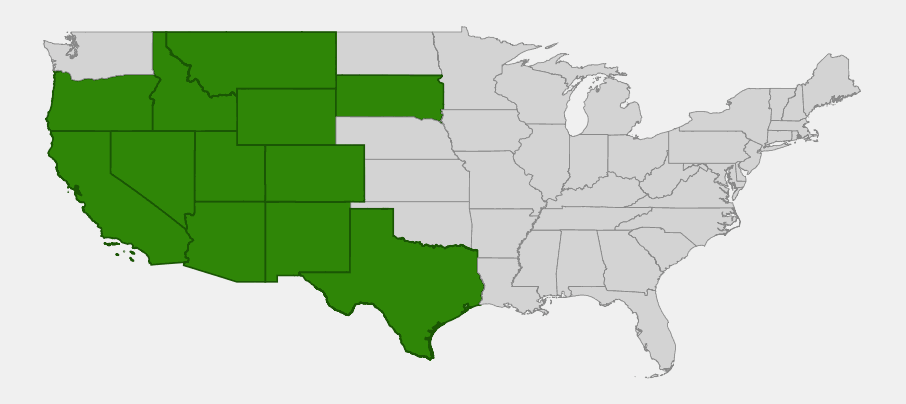
Mat rock spiraea is native to the interior and western United States. USDA PLANTS records it in twelve states: Arizona, California, Colorado, Idaho, Montana, Nevada, New Mexico, Oregon, South Dakota, Texas, Utah and Wyoming.
It is most common in the Great Basin, the Colorado Plateau and the Rocky Mountains. In California it grows mainly in the desert mountains and on the east side of the Sierra Nevada; in Oregon it is found in the northeast. South Dakota plants grow in the Black Hills, and Texas plants are in the mountains of the Trans-Pecos, such as the Guadalupe Mountains, at the edges of the range.
It grows on cliffs, rock outcrops, canyon walls, boulders and talus, rooting in narrow crevices. It is especially common on limestone and dolomite but also grows on granite, sandstone and volcanic rock, from canyon bottoms and foothills up to subalpine and alpine ridges, roughly 3,000 to more than 11,000 feet.
📋 Regional plant lists featuring Mat Rock Spiraea: Idaho, Eastern Oregon & Eastern Washington · Montana & Wyoming · Utah & Western Colorado · Arizona & New Mexico · South & West Texas · North Dakota, South Dakota & Western Minnesota · California & Nevada
Growing & Care Guide
Mat rock spiraea is a classic plant for rock, crevice and trough gardens. It is very cold-hardy and drought tolerant, but it needs perfect drainage and a cool root run between stones. Given that, it slowly forms a beautiful silvery mat that needs almost no care.
Light
Full sun in cool or mountain climates; light afternoon shade in hot, low-elevation gardens. In the wild it grows on both sunny and shaded cliff faces.
Soil & Water
Plant in a narrow crevice between rocks, in tufa or in a very gritty, lean mix of crushed rock and a little soil. Limestone chips suit it well. Water regularly until established, then only during long dry spells. The crown must never sit in wet soil, and wet winters without good drainage are the main cause of loss.
Planting Tips
Plant small, nursery-grown plants in spring, wedging the root ball deep into a vertical or sloping crevice so the roots run back into cool, moist rock while the crown stays dry. Topdress with gravel. It also grows well in troughs and on stone walls.
Pruning & Maintenance
No pruning is needed. Clip off old flower spikes if you prefer a tidier look, and keep fallen leaves off the mat. It resents disturbance once established, so choose its spot carefully.
Propagation
Grow from the very fine seed, surface-sown on a gritty mix in fall or after a few weeks of cold, moist stratification, or from small cuttings of rosettes taken in summer and rooted in sand. Growth is slow. Never collect plants from the wild; they are deeply rooted in rock and almost never survive digging.
Landscape Uses
- Rock and crevice gardens: molds itself over stones and into cracks
- Troughs and walls: stays tiny and slow-growing for years
- Alpine and xeric gardens: very cold-hardy and drought tolerant
- Summer flowers: fuzzy white spikes when few alpines are blooming
- Native habitat gardens: represents western cliff and canyon flora
Wildlife & Ecological Value
On bare cliffs and canyon walls, mat rock spiraea is one of the few flowering plants available, so it matters to the small creatures that live there.
For Pollinators
Its summer flower spikes attract small native bees, flies, beetles and butterflies, which visit for nectar and pollen.
For Birds
The mats offer little food for birds directly, but insects that visit the flowers and shelter in the mats are food for canyon wrens, rock wrens and other cliff-dwelling birds.
For Mammals
Its cliff habitat keeps it out of reach of most grazing animals. Pikas, chipmunks and other small mammals may nibble it where it grows on talus.
Ecosystem Role
Its dense mats trap windblown soil, dust and organic matter on bare rock, slowly building pockets where other plants can take root. It is a long-lived pioneer of cliffs and outcrops.
Cultural & Historical Uses
The genus name Petrophytum means “rock plant,” from the Greek petra (rock) and phyton (plant). The species name caespitosum means “growing in tufts” or clumps.
Thomas Nuttall first described the plant in the 1800s as Spiraea caespitosa, placing it among the spiraeas. It was later moved to its own small genus of three species, all western North American rock plants.
Hikers in the Grand Canyon, Zion, the Black Hills and many western mountain ranges often notice its silvery mats on the canyon walls beside the trail, especially when the white spikes are in bloom in midsummer.
Frequently Asked Questions
Is mat rock spiraea a true spiraea?
It is a close relative in the rose family and was first named Spiraea caespitosa, but botanists now place it in its own genus, Petrophytum.
How big does mat rock spiraea get?
It stays only 1 to 3 inches tall, with flower stalks up to about 4 inches, but old plants can spread 2 to 3 feet across over rock.
When does mat rock spiraea bloom?
In summer, roughly from June to September depending on elevation.
Can I grow mat rock spiraea in a regular garden bed?
It rarely thrives in ordinary garden soil. Grow it in a rock crevice, tufa, trough or very gritty, well-drained rock garden.
Can I dig mat rock spiraea from the wild?
No. Its roots go deep into rock cracks, wild plants almost never survive digging, and collecting is not allowed in parks and other protected areas. Buy nursery-grown plants.

Looking for a nursery that carries Mat Rock Spiraea?
Browse our native plant nursery directory: Arizona · California · Colorado · Idaho · Montana · Nevada & New Mexico · Oregon · South Dakota, Texas & Utah · Wyoming

