
Rosy Camphorweed (Pluchea rosea)
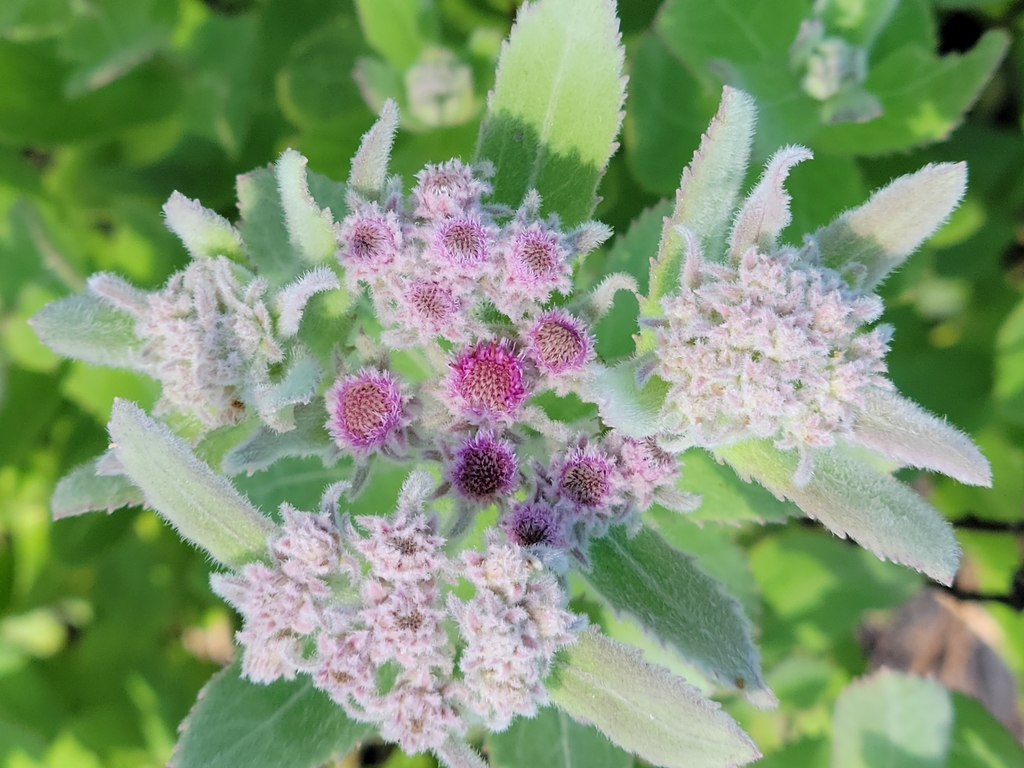
Pluchea rosea, known as Rosy Camphorweed or Godfrey’s camphorweed, is a low, aromatic perennial wildflower of wet pinelands, savannas and marshes on the southeastern Coastal Plain. It belongs to the aster family (Asteraceae). Some recent botanical treatments, including several Florida references, place it under the name Pluchea baccharis.
The whole plant is softly hairy and gray-green, and its leaves give off a strong, camphor-like scent when crushed. From spring through summer, and nearly all year in South Florida, it carries flat-topped clusters of small, rosy-pink to purplish flower heads at the stem tips.
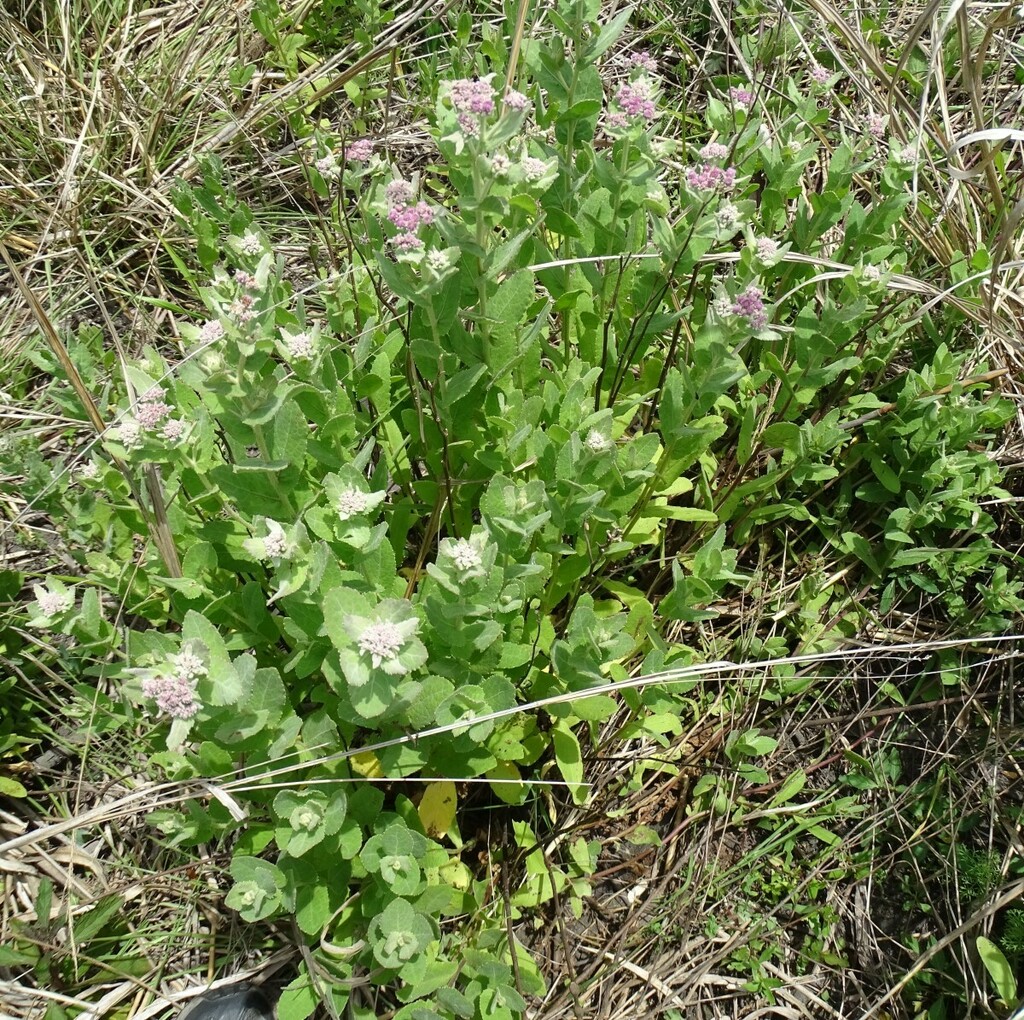
Unlike its weedy annual relatives, rosy camphorweed is a perennial that spreads slowly by underground stems to form loose patches. It is a good, tough plant for rain gardens, pond margins and wet, sunny spots in native gardens from the Carolinas to Texas, and its flowers draw a lively crowd of small bees, wasps and butterflies.
Identification
Look for a short, fuzzy, gray-green plant with stalkless, clasping leaves, a camphor smell when crushed, and flat clusters of rosy-pink, button-like flower heads in wet, sunny places.
Growth Habit
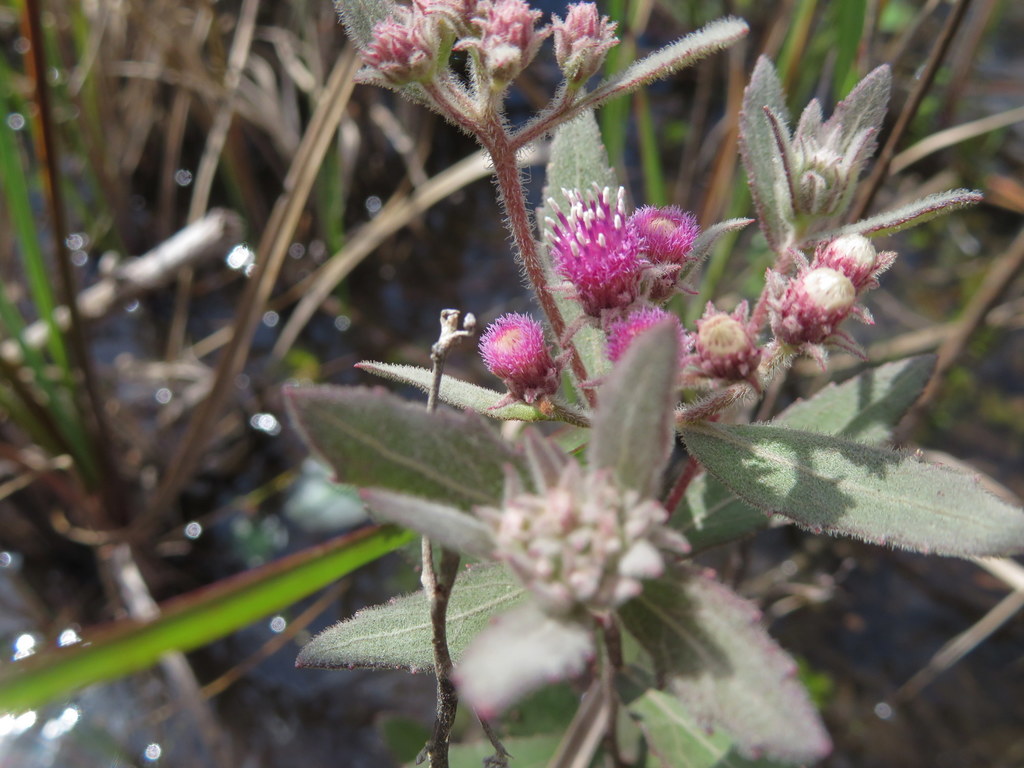
Rosy camphorweed is a herbaceous perennial, usually 1 to 2 feet tall, with upright, mostly unbranched stems rising from creeping underground stems (rhizomes). Plants often grow in small colonies. The stems and leaves are densely covered in soft and sticky, glandular hairs, giving the plant a gray-green, velvety look.
Leaves
The leaves are alternate, oval to oblong or elliptic, about 1 to 3 inches long, with finely toothed or nearly smooth edges. They have no leaf stalk, and the base of each leaf clasps or nearly clasps the stem. Crushed leaves have a strong, camphor-like or medicinal smell.
Flowers
Flower heads appear mainly from spring to fall, and almost year-round in the far south. Many small heads, each about 1/4 inch wide, are crowded into flat-topped or slightly rounded clusters at the stem tips. Each head is made of tiny, thread-like disk florets with no showy rays, colored rosy pink to pinkish purple and surrounded by hairy, pinkish green bracts.
Fruit & Seeds
The fruits are tiny, ribbed seeds (cypselae) topped with a ring of fine white bristles that help them drift on the wind. After the seeds are shed, the heads look tan and fluffy.
Look-alikes
Camphorweed (Pluchea camphorata) is a taller annual or short-lived plant with larger, stalked, less hairy leaves and dull pink to lavender flowers. Marsh fleabane (Pluchea odorata) is an annual with stalked leaves that is common in brackish and salt marshes. Stinking camphorweed (Pluchea foetida) has clasping leaves but creamy white flowers. Rosy camphorweed is the one with soft, gray-green, clasping leaves, creeping rhizomes and bright rosy-pink heads.
Safety Notes
Rosy camphorweed is not known to be toxic, but it is not a food plant. The sticky hairs and strong scent can irritate sensitive skin in some people.
Quick Facts
| Scientific Name | Pluchea rosea |
| Family | Asteraceae (aster family) |
| Plant Type | Herbaceous perennial wildflower |
| Mature Height | 1–2 ft |
| Mature Spread | 1–2 ft; spreads slowly by rhizomes |
| Growth Rate | Moderate |
| Sun Exposure | Full sun |
| Water Needs | High; moist to wet soil |
| Soil Type | Sandy, mucky or marl; wet |
| Soil pH | About 5.0–8.0 |
| Bloom Time | Spring–fall (nearly year-round in South Florida) |
| Flower Color | Rosy pink to pinkish purple |
| Fall Color | Not significant |
| Fruit | Tiny seeds with white bristles |
| Deer Resistant | Mostly; aromatic, hairy foliage is seldom browsed |
| USDA Hardiness Zones | 8–11 |
Native Range
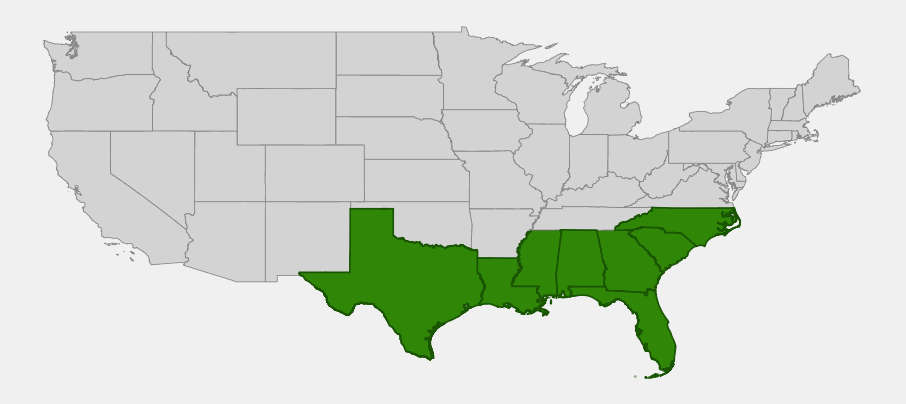
Rosy camphorweed is native to the southeastern Coastal Plain of the United States and south into the Caribbean and Mexico. USDA PLANTS lists it as native in Alabama, Florida, Georgia, Louisiana, Mississippi, North Carolina, South Carolina and Texas.
It is most common in Florida, where it grows throughout the state, south to the Everglades. Elsewhere it follows the Coastal Plain from southeastern North Carolina through South Carolina and Georgia, and west along the Gulf Coast through Alabama, Mississippi and Louisiana to southeastern Texas.
Typical habitats are sunny, seasonally wet places: wet pine flatwoods and savannas, wet prairies, marl prairies, freshwater marshes, pond and lake margins, cypress dome edges and roadside ditches. It is a facultative wetland plant, usually found in moist to wet soil, and benefits from periodic fire that keeps its habitat open.
📋 Regional plant lists featuring Rosy Camphorweed: North & South Florida · Alabama, Georgia & Mississippi · North & South Carolina · Arkansas, Louisiana, Eastern Oklahoma & Eastern Texas
Growing & Care Guide
Rosy camphorweed is occasionally sold by native plant nurseries in Florida and the Gulf states. It is easy to grow in a sunny, moist spot and needs very little care.
Light
Give it full sun. It tolerates a little light shade, but becomes leggy and flowers less without several hours of direct sun.
Soil & Water
It grows best in moist to wet soil, including sandy, mucky or limestone-based marl soils, and tolerates standing water for part of the year. It also adapts to average garden soil with regular watering, but should not dry out for long periods.
Planting Tips
Plant it in a rain garden, swale, pond edge or low spot in a wildflower meadow, together with other wetland wildflowers and grasses. Plants spread slowly by rhizomes into loose patches, so set them about 1 to 2 feet apart.
Pruning & Maintenance
Little care is needed. Do not fertilize. Cut back old stems after flowering or in late winter to keep plants tidy and encourage fresh growth. In natural areas, periodic burning keeps shrubs from shading it out.
Propagation
Divide established clumps in spring, or root sections of rhizome. It can also be grown from fresh seed sown on the surface of moist soil, since the tiny seeds need light to germinate.
Landscape Uses
- Rain gardens and swales: tolerates wet soil and short flooding
- Pond and wetland edges: soft, gray-green foliage and pink flowers
- Pollinator gardens: long bloom season for small bees, wasps and butterflies
- Wet pine and prairie restoration: a characteristic Coastal Plain wildflower
- Fragrance: aromatic, camphor-scented foliage
Wildlife & Ecological Value
Camphorweeds are known among naturalists for the variety of insects that visit their flowers, and rosy camphorweed is no exception.
For Pollinators
The small, nectar-rich florets attract many small native bees, flower flies, beetles and an especially wide variety of wasps, along with small butterflies such as hairstreaks, skippers and crescents. The long flowering season makes it a reliable nectar source in wet habitats.
For Birds
Birds do not feed heavily on the tiny seeds, but the insects drawn to the flowers feed warblers, wrens and other insect-eating birds in wet savannas and marshes.
For Mammals
The aromatic, hairy foliage is seldom eaten by deer or other mammals.
Ecosystem Role
Rosy camphorweed is part of the diverse groundcover of wet pine savannas, flatwoods and prairies, plant communities that depend on frequent fire. It resprouts from its rhizomes after fire and helps support the large insect communities of these species-rich habitats.
Cultural & Historical Uses
The species was described in the mid-twentieth century by Robert K. Godfrey, a longtime botanist at Florida State University and an authority on the plants of the Southeast. Some botanists now place it in the broader species Pluchea baccharis, a name based on a much older description, while USDA PLANTS keeps Pluchea rosea.
The genus Pluchea honors Noël-Antoine Pluche, an eighteenth-century French naturalist. The species name rosea means “rose-colored,” for the flowers.
The common name camphorweed refers to the strong, camphor-like smell of the crushed leaves, shared by several Pluchea species. Some camphorweeds have been used in folk medicine in the Caribbean and Latin America, but rosy camphorweed is best enjoyed as a wildflower.
Frequently Asked Questions
Why is it called camphorweed?
The crushed leaves give off a strong, camphor-like or medicinal smell, a trait shared with other Pluchea species.
Is rosy camphorweed a weed?
No. It is a native perennial wildflower of wet pinelands and marshes. It spreads slowly by underground stems but is not aggressive.
Can rosy camphorweed grow in standing water?
It tolerates seasonal flooding and shallow standing water for part of the year, which makes it a good choice for rain gardens and pond edges.
How is it different from regular camphorweed?
Camphorweed (Pluchea camphorata) is taller, with larger, stalked leaves. Rosy camphorweed is shorter, with soft, gray-green, clasping leaves and brighter rosy-pink flowers.
What insects visit rosy camphorweed?
Small native bees, many kinds of wasps, flower flies, beetles and small butterflies such as hairstreaks and skippers.

Looking for a nursery that carries Rosy Camphorweed?
Browse our native plant nursery directory: Alabama · Florida & Georgia · Louisiana & Mississippi · North Carolina · South Carolina & Texas

