
American Parsley Fern (Cryptogramma acrostichoides)
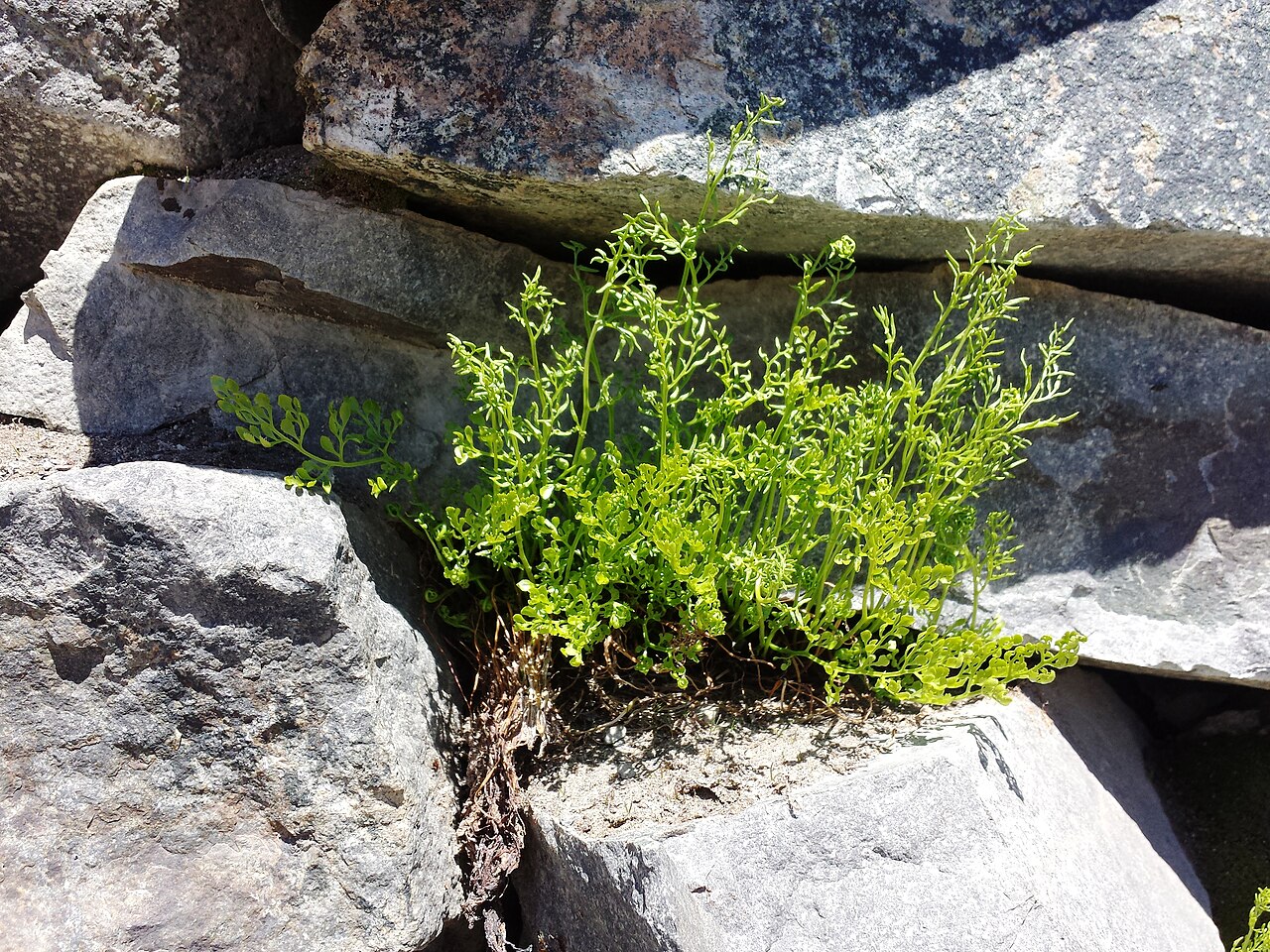
Cryptogramma acrostichoides, known as American Parsley Fern or American rockbrake, is a small, tufted fern of rocky mountain slopes in western and northern North America. It grows in crevices, ledges and talus, often well above treeline, where its bright green, finely divided fronds look remarkably like sprigs of curly parsley tucked among the rocks.
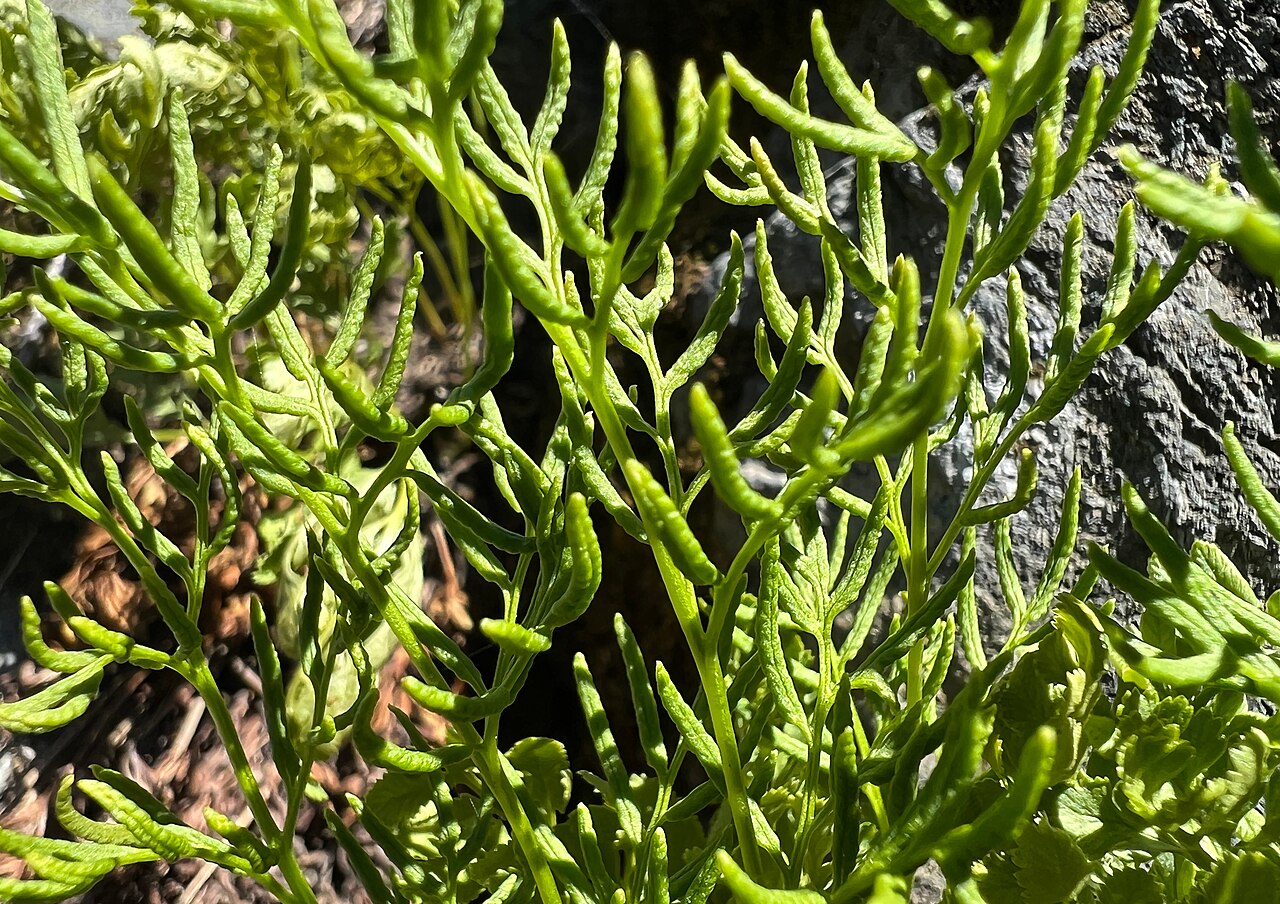
Like a few other ferns, it has two kinds of fronds. The short, leafy sterile fronds make the parsley-like tuft, while taller fertile fronds carry narrow, pod-like segments whose edges roll under to hide the spores. The dead stalks of older fronds usually persist at the base, so each clump looks dense and shaggy.
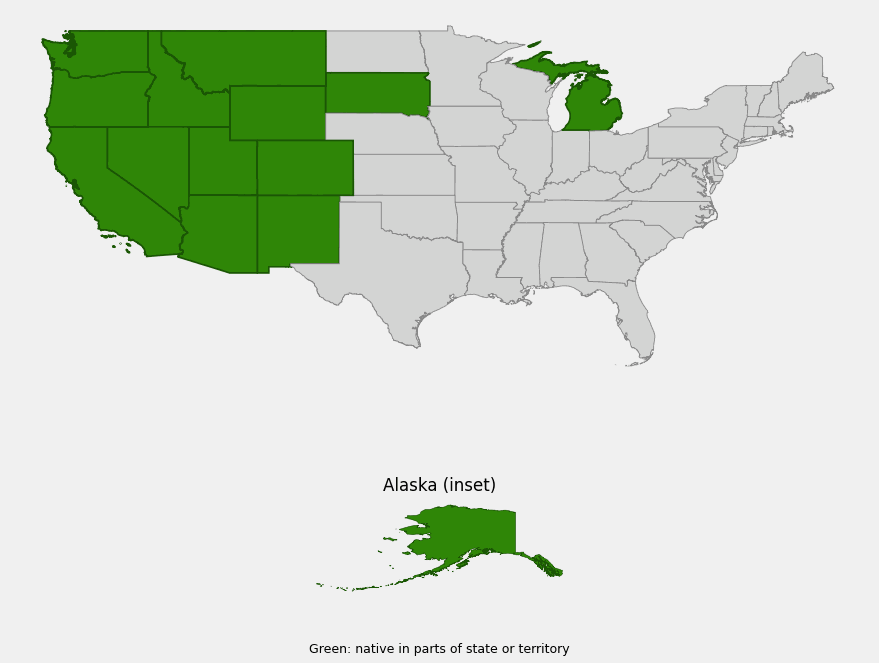
American parsley fern ranges from Alaska and the Yukon south through the Cascades, Sierra Nevada and Rocky Mountains to California, Arizona and New Mexico, with outlying populations around Lake Superior in Michigan and Ontario and in the Black Hills of South Dakota. This guide covers how to identify it, where it grows, how it can be grown in a rock garden, and its role in alpine habitats.
Identification
American parsley fern is easy to recognize once you know its two frond types. Look for a dense tuft of parsley-like fronds with taller, narrow-segmented fertile fronds rising above them, always among rocks.
Growth Habit
It forms dense, compact tufts from a short, branched rhizome. Clumps are usually 4 to 10 inches tall. The persistent bases of old frond stalks form a thatch at the base of the plant. In the high mountains new fronds appear in early summer after snowmelt; the somewhat leathery sterile fronds may persist through winter under the snow.
Sterile Fronds
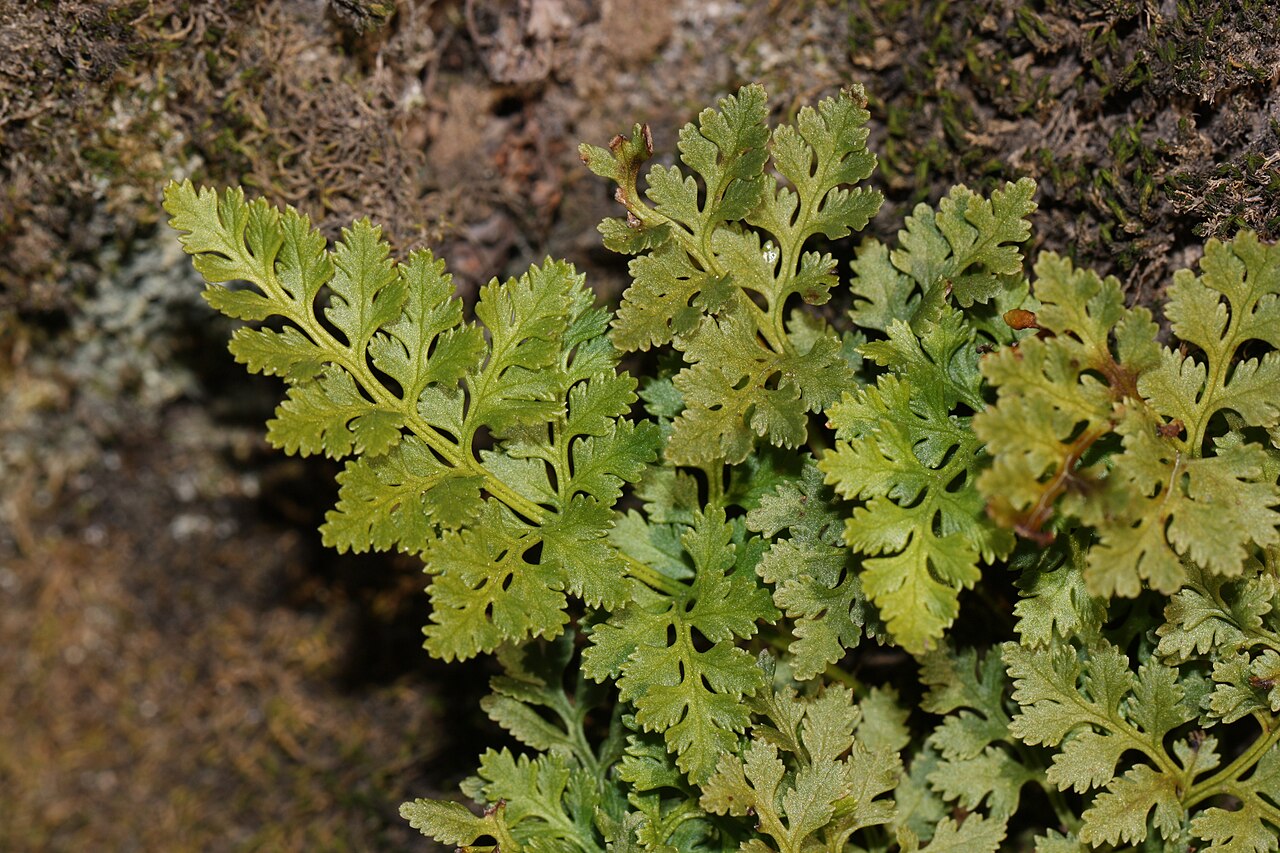
The sterile fronds are about 2 to 6 inches long, bright green, somewhat leathery, and divided two or three times into small, toothed, fan- to egg-shaped segments, giving them the look of curly parsley. They have small, pit-like water pores (hydathodes) at the ends of the veins, visible with a hand lens.
Fertile Fronds
The fertile fronds are taller, up to about 10 inches, on longer stalks. Their segments are narrow, almost bean-pod shaped, because the edges roll under and enclose the sori. As the spores ripen in mid to late summer, the edges open to release them.
Stalks & Rhizome
The frond stalks are green to straw-colored above and brown at the base. The rhizome is short and covered with old stalk bases.
Look-alikes
Lace ferns and lip ferns such as Indian’s dream (Aspidotis densa) also grow in rocks and have dimorphic or narrow fertile segments, but their fronds are narrower and less parsley-like. Slender rockbrake (Cryptogramma stelleri) is a delicate, thin-textured fern of moist, shaded limestone, with fronds that wither by midsummer. The European parsley fern (Cryptogramma crispa) is a close relative; American plants were once treated as a variety of it.
Quick Facts
| Scientific Name | Cryptogramma acrostichoides R. Br. |
| Family | Pteridaceae (maidenhair fern family) |
| Plant Type | Small, tufted perennial fern with separate sterile and fertile fronds |
| Mature Height | 4–10 in |
| Mature Spread | 4–12 in |
| Growth Rate | Slow |
| Sun Exposure | Full sun to part shade |
| Water Needs | Moderate; moist in the growing season, sharp drainage |
| Soil Type | Acidic rock crevices, talus and gritty, rocky soil |
| Soil pH | Acidic, about 4.5–6.5 |
| Bloom Time | None; spores ripen in mid to late summer |
| Flower Color | None (fern) |
| Fall Color | Fronds turn brown with frost |
| Fruit | None; spores in sori hidden under rolled frond edges |
| Deer Resistant | Yes; rarely browsed |
| USDA Hardiness Zones | 2–7 |
Native Range
American parsley fern is native to western and northern North America and to the Russian Far East. USDA PLANTS lists it in Alaska, Arizona, California, Colorado, Idaho, Michigan, Montana, Nevada, New Mexico, Oregon, South Dakota, Utah, Washington and Wyoming. In Canada it grows from the Yukon and Northwest Territories south through British Columbia and Alberta, and east to Saskatchewan, Manitoba and Ontario.
It is most common in the Cascades, Sierra Nevada, Coast Mountains and northern Rocky Mountains, and becomes more scattered in the high mountains of Nevada, Utah, Colorado, Arizona and New Mexico. In the Midwest it is an outlying northern fern: in Michigan it grows only near Lake Superior, on rock outcrops in the Upper Peninsula and Isle Royale, and in South Dakota it is known from the Black Hills.
Its habitat is rocky: crevices in cliffs and outcrops, ledges, boulder fields and talus, mostly on acidic rocks such as granite, basalt and andesite. It grows from middle elevations up into the alpine zone, and at lower elevations in the north.
📋 Regional plant lists featuring American Parsley Fern: Idaho, Eastern Oregon & Eastern Washington · Montana & Wyoming · Michigan, Wisconsin & Eastern Minnesota · Utah & Western Colorado · Arizona & New Mexico · Alaska · North Dakota, South Dakota & Western Minnesota · Western Oregon & Western Washington · California & Nevada
Growing & Care Guide
American parsley fern is a specialist of mountain rocks and is not an easy garden plant. It is rarely sold, but specialist fern and alpine nurseries occasionally offer spore-grown plants. Never dig it from the wild; clumps wedged in crevices are almost impossible to remove without killing them.
Light
In cool climates it grows in full sun to part shade. In warmer gardens give it morning sun and afternoon shade, ideally on a north- or east-facing rock face.
Soil & Water
It needs very well-drained, acidic, gritty soil, such as a crevice garden or trough filled with crushed granite or lava rock and a little leaf mold. Keep it evenly moist during the growing season, as it would be from snowmelt, but never waterlogged. Avoid lime and hard water.
Planting Tips
Plant it in a vertical crevice between rocks so the crown stays dry while the roots reach cool, moist soil underneath. It suits rock gardens in the mountain West and the Pacific Northwest and does best where summers are cool. It struggles in hot, humid climates.
Pruning & Maintenance
Little care is needed. Remove dead fronds in spring if you wish, but the old stalk bases help shelter the crown. Protect it from being overgrown by more vigorous plants.
Propagation
It is propagated from spores sown on a sterile, acidic mix, which is slow. Older clumps in cultivation can sometimes be divided carefully in spring. Do not collect plants from the wild.
Landscape Uses
- Rock and crevice gardens: a tidy tuft of bright green, parsley-like fronds among stones
- Alpine troughs: small enough for containers with gritty, acidic mix
- Stone walls in cool climates: grows naturally in crevices and on ledges
- Mountain-cabin landscapes: pairs with native juniper, woodsia and penstemons on rocky sites
- Native fern collections: a distinctive dimorphic fern of western mountains
Wildlife & Ecological Value
American parsley fern is small, but it is one of the characteristic plants of the rocky habitats of western mountains.
For Pollinators
As a fern it has no flowers and provides no nectar or pollen.
For Birds
Birds make little direct use of it, but the talus slopes and cliffs where it grows are nesting and foraging areas for rosy-finches, rock wrens and other mountain birds.
For Mammals
Small mammals of talus slopes, such as pikas, gather a wide variety of plants in their territories, but parsley fern is not known as an important food. Deer rarely browse it.
Ecosystem Role
Its roots help hold small pockets of soil in rock crevices and talus, and the thatch of old stalks traps organic matter. It is one of the pioneer plants that colonize bare rock in the high mountains.
Cultural & Historical Uses
The genus name Cryptogramma comes from the Greek kryptos, hidden, and gramme, line, for the sori hidden under the rolled frond edges. The species name acrostichoides means “like Acrostichum“, another fern genus. The name was published by the Scottish botanist Robert Brown, based on plants collected in arctic North America during the Franklin expeditions.
For many years American plants were treated as a variety of the European parsley fern, Cryptogramma crispa. Studies of their structure and chromosomes led most botanists to recognize the North American plants as a separate species.
The common name rockbrake, used for the genus, combines “rock” with “brake”, an old word for a fern. American parsley fern is a familiar sight to hikers and climbers in western mountains, tucked into the cracks of granite and volcanic rock.
Frequently Asked Questions
Why is it called parsley fern?
Its short sterile fronds are bright green and finely divided into small, toothed segments, so they look much like sprigs of curly parsley.
Where does American parsley fern grow?
In rock crevices, ledges and talus in the mountains of western North America, from Alaska and the Yukon south to California, Arizona and New Mexico, and around Lake Superior in Michigan and Ontario.
Why does it have two kinds of fronds?
The short, leafy sterile fronds make food, while the taller fertile fronds produce spores. The fertile segments roll under to protect the spores until they ripen.
Can I grow American parsley fern?
Yes, in a cool climate, in a crevice or trough with gritty, acidic, well-drained soil. It is challenging and dislikes heat and lime. Use spore-grown plants and never dig wild ones.
Is it the same as European parsley fern?
They are close relatives. American plants were once treated as a variety of Cryptogramma crispa, but most botanists now treat them as a separate species, Cryptogramma acrostichoides.

Looking for a nursery that carries American Parsley Fern?
Browse our native plant nursery directory: Alaska & Arizona · California · Colorado · Idaho · Michigan & Montana · Nevada & New Mexico · Oregon · South Dakota & Utah · Washington · Wyoming

