
White Bergamot (Monarda clinopodia)
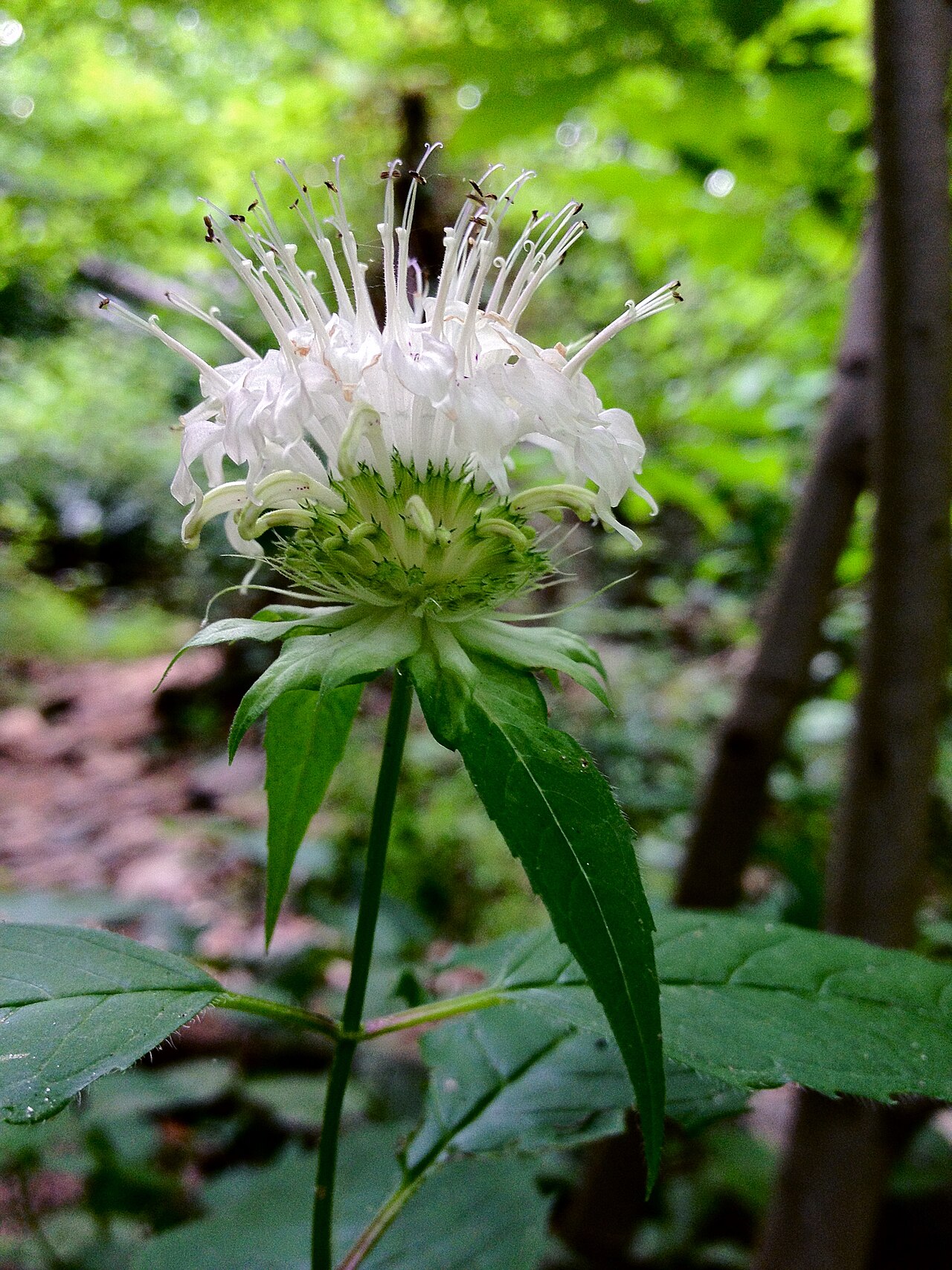
Monarda clinopodia, known as White Bergamot or basil bee balm, is a summer-blooming perennial in the mint family (Lamiaceae). It is native to the eastern United States, mainly in the Appalachian Mountains, the Piedmont and the Ohio Valley, where it grows in rich, moist woods and along shaded slopes and stream banks.
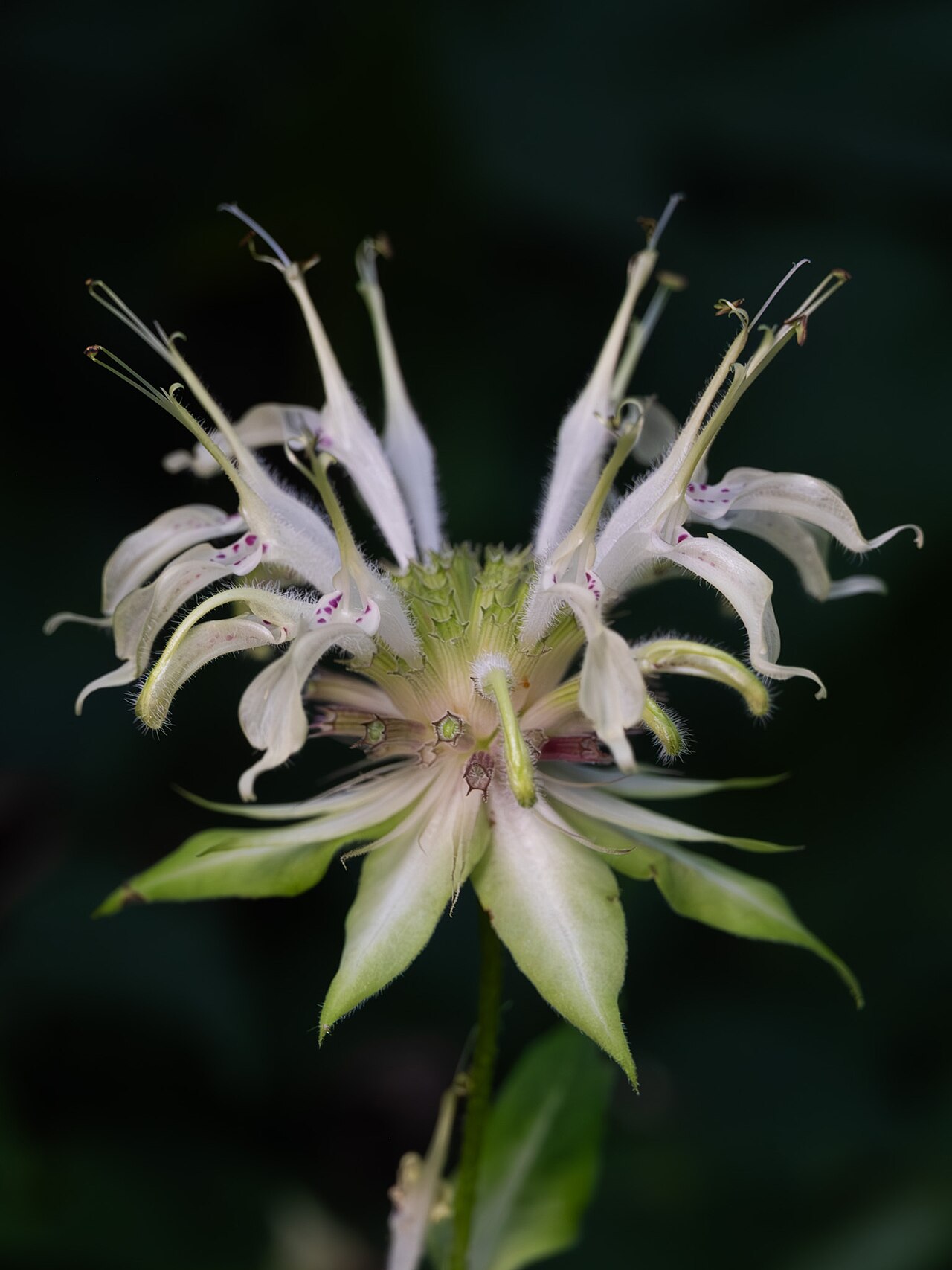
In early to mid summer each stem is topped by a rounded, shaggy head of creamy white to pale pink tubular flowers, often dotted with purple on the lower lip, above a collar of whitish-green bracts. The leaves are softly toothed and only mildly fragrant compared with other bee balms; the species name refers to their resemblance to wild basil (Clinopodium).
White bergamot is one of the few bee balms that is happy in partial shade. It is a good choice for woodland gardens and shady borders, where it attracts bumble bees and other long-tongued pollinators, and it adds a cool white accent among ferns and woodland asters in the middle of summer.
Identification
Look for a square-stemmed mint with opposite, toothed leaves and a single, round head of creamy white, two-lipped flowers on a ring of pale bracts, usually in shady woods.
Growth Habit
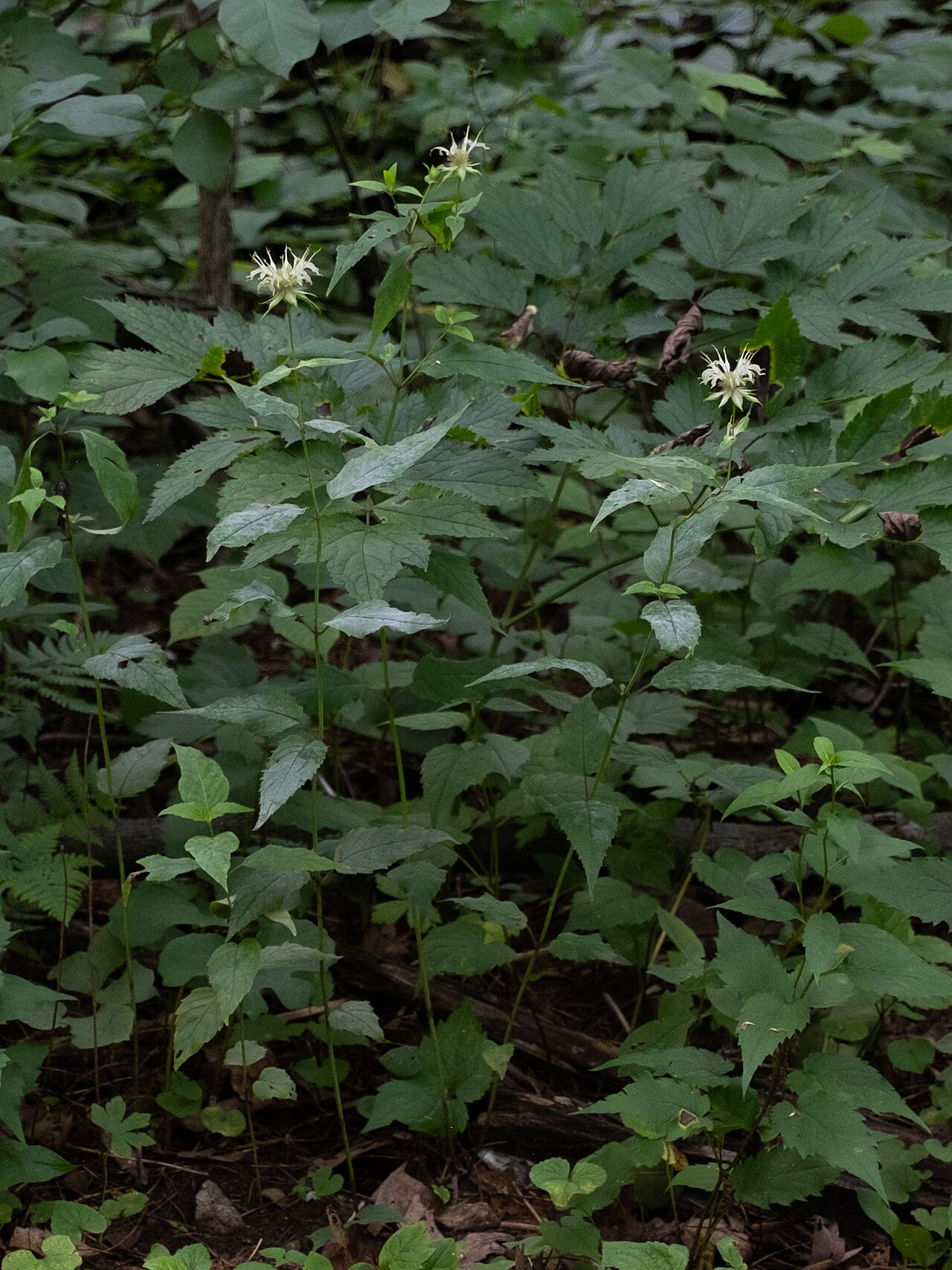
White bergamot is an herbaceous perennial 1 1/2 to 3 feet tall, sometimes taller. It spreads slowly by short rhizomes to form loose clumps. The stems are square, as in other mints, and usually unbranched or with a few branches near the top.
Leaves
Leaves are opposite, 2 to 5 inches long, oval to lance-shaped with a pointed tip, toothed edges and short stalks. They are thin, green and smooth to sparsely hairy, with a mild minty scent when crushed, much weaker than in wild bergamot or scarlet bee balm.
Flowers
Flowers are crowded into a single dense, rounded head about 1 to 2 inches wide at the top of each stem. Each flower is a slender, curved tube about 3/4 to 1 inch long, with a narrow, nearly hairless upper lip and a spreading lower lip that is usually spotted with purple. Colors range from white to cream or pale pink. Beneath the head is a ring of leafy, whitish to pale green bracts. Bloom time is June through August.
Fruit & Seeds
Each flower produces four tiny nutlets that ripen inside the persistent calyx tubes. The dry, rounded seed heads stay on the stems into winter.
Look-alikes
Wild bergamot (M. fistulosa) has lavender flowers, hairy upper lips and strongly aromatic leaves, and grows in sunny, drier sites. Scarlet bee balm (M. didyma) has bright red flowers. Hairy wood mint (Blephilia hirsuta) has small, pale flowers in several stacked whorls along the stem rather than one large head. White bergamot also hybridizes with its relatives, so intermediate plants turn up where they grow together.
Quick Facts
| Scientific Name | Monarda clinopodia |
| Family | Lamiaceae (mint family) |
| Plant Type | Herbaceous perennial |
| Mature Height | 1 1/2–3 ft |
| Mature Spread | 1–2 ft; slowly spreading clumps |
| Growth Rate | Moderate |
| Sun Exposure | Part shade to full sun |
| Water Needs | Medium; moist, well-drained soil |
| Soil Type | Rich loam, humusy woodland soil |
| Soil pH | About 5.5–7.0 |
| Bloom Time | June–August |
| Flower Color | White to cream or pale pink, spotted purple |
| Fall Color | None; dry seed heads persist |
| Fruit | Tiny nutlets in persistent calyces |
| Deer Resistant | Yes; aromatic mint foliage |
| USDA Hardiness Zones | 5–8 |
Native Range
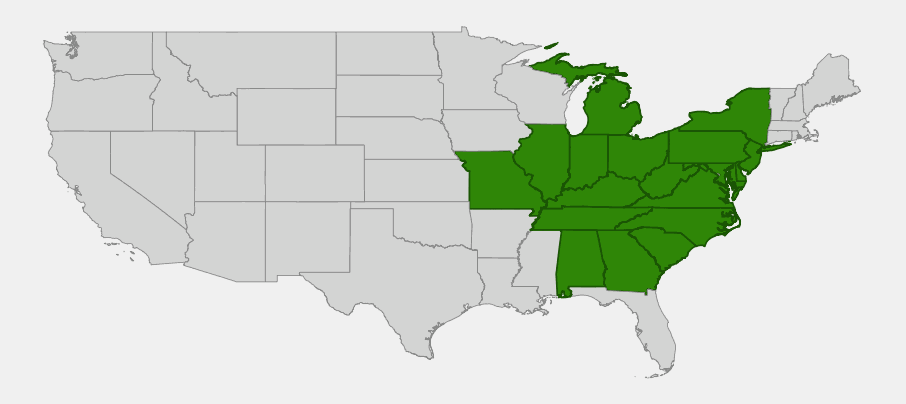
White bergamot is native to the eastern United States, centered on the Appalachian Mountains and the Ohio and Tennessee valleys. USDA PLANTS lists it in 22 states. In New England (Connecticut, Massachusetts, Rhode Island and Vermont) the regional flora treats it as an introduced garden escape, so those states are not included in the native range here. The native range covers Alabama, Delaware, Georgia, Illinois, Indiana, Kentucky, Maryland, Michigan, Missouri, New Jersey, New York, North Carolina, Ohio, Pennsylvania, South Carolina, Tennessee, Virginia and West Virginia.
It is most common in the Blue Ridge, the Ridge and Valley, the Cumberland Plateau and the Piedmont from Pennsylvania to Georgia. Toward the edges of its range, in Michigan, Missouri, New Jersey, Delaware and the Deep South, it is local and uncommon.
Its habitat is rich, moist deciduous and mixed forest, especially wooded slopes, coves, ravines, stream banks, thickets and woodland edges. It tolerates more shade than other eastern bee balms.
📋 Regional plant lists featuring White Bergamot: Alabama, Georgia & Mississippi · North & South Carolina · Maryland, Virginia & West Virginia · Kentucky & Tennessee · Illinois, Iowa & Missouri · Ohio & Indiana · Michigan, Wisconsin & Eastern Minnesota · New York, Pennsylvania & Northern New Jersey · Delaware, Southern New Jersey & Long Island
Growing & Care Guide
White bergamot is less common in the nursery trade than scarlet bee balm or wild bergamot, but native plant nurseries in the East carry it. It is easy to grow and is one of the best bee balms for shade.
Light
Part shade is ideal, such as morning sun and afternoon shade or the dappled light of a woodland edge. It also grows in full sun if the soil stays moist.
Soil & Water
Give it rich, moist, well-drained soil with plenty of organic matter. Water during dry spells, especially the first year. It does not like drought in full sun or soggy, poorly drained soil.
Planting Tips
Plant in spring or fall, 18 inches apart, in groups of three or more for a good show. Combine it with ferns, black cohosh, wild hydrangea and woodland asters. Good air circulation helps prevent powdery mildew.
Pruning & Maintenance
Deadheading extends bloom a little, but leaving the seed heads gives winter interest and seed for birds. Cut stems back in late winter or early spring. Divide crowded clumps every three or four years in spring.
Propagation
Grow from seed sown in fall or in spring after a few weeks of cold, moist stratification; seed needs light to germinate, so press it onto the surface. Divide clumps in spring or take stem cuttings in early summer.
Landscape Uses
- Woodland and shade gardens: one of the few bee balms that blooms well in part shade
- Pollinator gardens: summer nectar for bumble bees, butterflies and moths
- White gardens and moon gardens: creamy flower heads glow in low evening light
- Naturalizing: spreads slowly into loose colonies along woodland edges
- Deer-resistant plantings: aromatic mint foliage is seldom browsed
Wildlife & Ecological Value
Like other bee balms, white bergamot is a strong pollinator plant, and its shade tolerance brings that value into woodland gardens.
For Pollinators
The long, tubular flowers are visited mainly by bumble bees and other long-tongued bees, as well as butterflies, sphinx moths and occasional ruby-throated hummingbirds. Smaller bees sometimes collect pollen or rob nectar through holes in the flower tubes.
For Birds
Seed-eating birds such as goldfinches and juncos pick at the dry seed heads in fall and winter, and hummingbirds may visit the flowers.
For Mammals
Deer and rabbits usually avoid it because of its aromatic foliage.
Ecosystem Role
White bergamot adds summer flowers to the forest understory and woodland edges, when spring wildflowers are long finished. It supports specialist and generalist insects, including moth caterpillars that feed on Monarda leaves.
Cultural & Historical Uses
Carl Linnaeus named the species in 1753. The genus honors the 16th-century Spanish physician Nicolás Monardes, who wrote about medicinal plants of the Americas, and the species name clinopodia refers to the resemblance of its leaves to wild basil (Clinopodium).
Bee balms in general were used by many Indigenous peoples and early settlers for teas and remedies for colds, fevers and digestive complaints. White bergamot is milder in scent than its relatives, but it was used in similar ways.
The common name “bergamot” comes from the similarity of some Monarda fragrances to the bergamot orange used to flavor Earl Grey tea.
Frequently Asked Questions
Does white bergamot grow in shade?
Yes. It grows best in part shade and tolerates fairly deep shade, more than any other common eastern bee balm.
How is white bergamot different from wild bergamot?
White bergamot has creamy white flowers and mildly scented leaves and grows in shady woods. Wild bergamot (Monarda fistulosa) has lavender flowers and strongly aromatic leaves and grows in sunny meadows.
Does white bergamot attract hummingbirds?
Hummingbirds visit it occasionally, but its main visitors are bumble bees, butterflies and moths. For hummingbirds, scarlet bee balm is the better choice.
Does it spread like other mints?
It spreads slowly by short rhizomes into loose clumps and is not aggressive.
Does white bergamot get powdery mildew?
It can, especially in dry soil or crowded plantings. Even moisture and good air circulation help.

Looking for a nursery that carries White Bergamot?
Browse our native plant nursery directory: Alabama · Delaware & Georgia · Illinois & Indiana · Kentucky, Maryland, Michigan & Missouri · New Jersey, New York, North Carolina & Ohio · Pennsylvania, South Carolina, Tennessee & Virginia · West Virginia

