
Parry’s Primrose (Primula parryi)
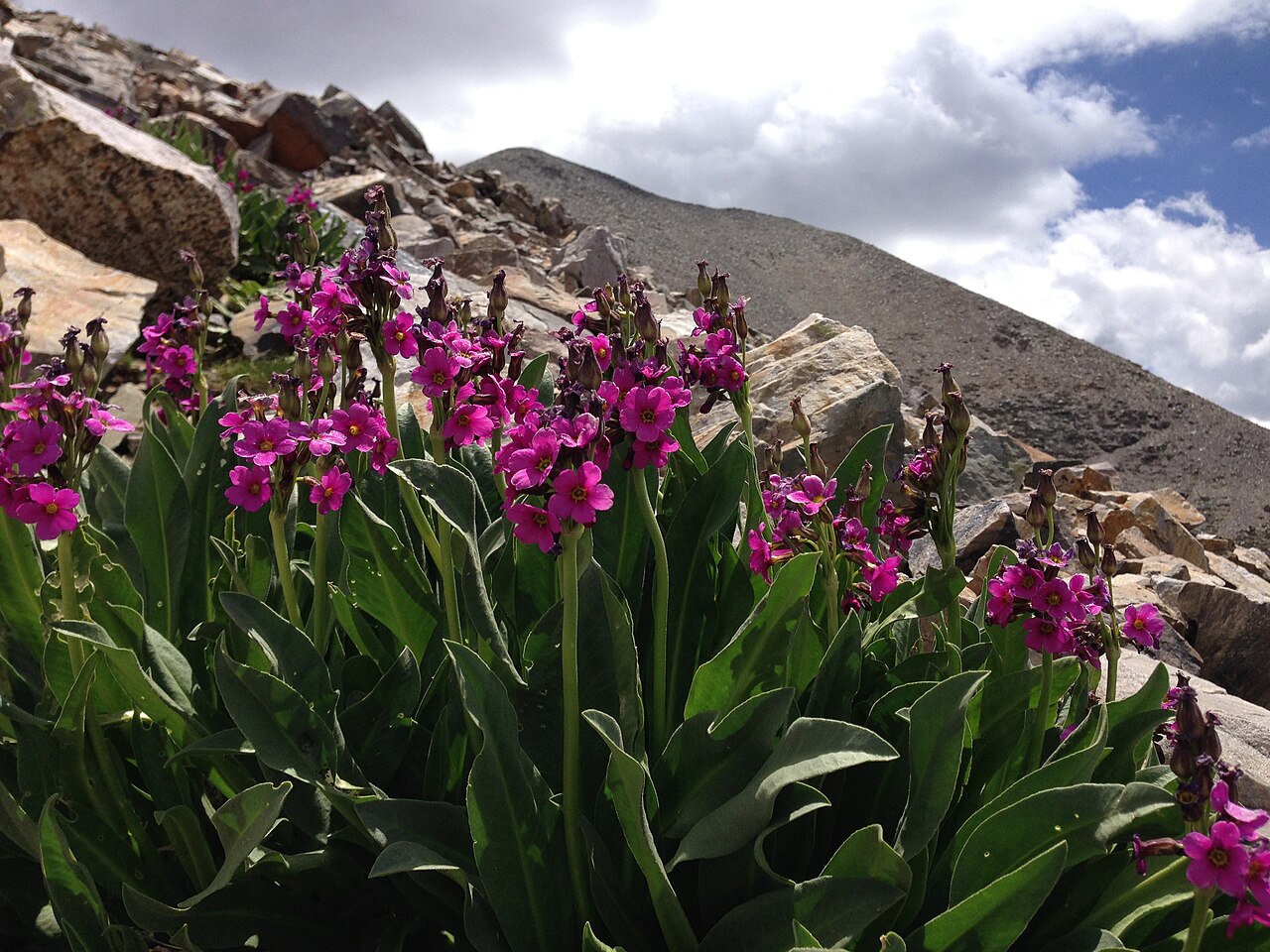
Primula parryi, known as Parry’s Primrose, is the largest and showiest native primrose of the American West. It belongs to the primrose family (Primulaceae). In summer it raises stout stalks 4 to 16 inches tall above a clump of large, fleshy, bright green leaves, each stalk topped by a cluster of brilliant magenta to purplish-pink flowers with yellow eyes.
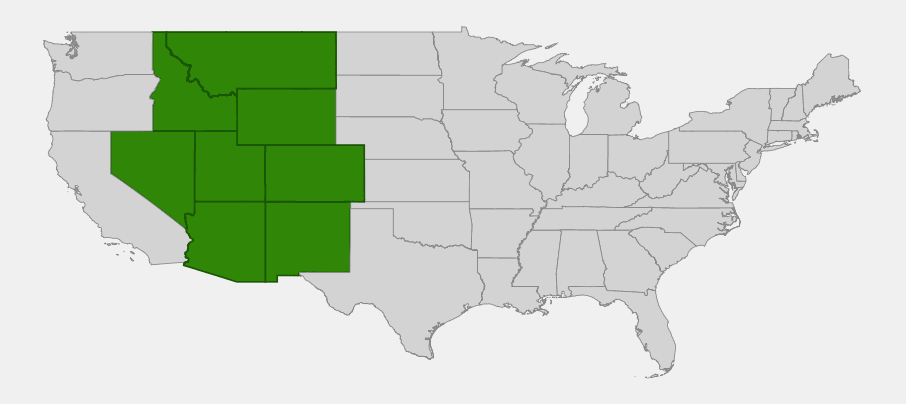
It is a plant of the high mountains, growing along icy streams, in wet rock crevices, around seeps and below melting snowbanks in the subalpine and alpine zones, mostly from about 8,500 to 13,000 feet. It grows in the Rocky Mountains and the high ranges of the Great Basin, from Montana and Idaho south to Nevada, Utah, Colorado, northern Arizona and northern New Mexico.
Parry’s primrose is a beautiful wildflower to find on a summer hike, but it is very hard to grow at low elevations. It needs cold winters, cool summers and constantly wet, cold soil, and it usually fails in hot, dry lowland gardens. Its flowers also have a musky or skunky smell up close.
Identification
Look for a clump of large, upright, fleshy green leaves beside a cold mountain stream or seep, with stout stalks carrying clusters of vivid magenta flowers with yellow centers.
Growth Habit
Parry’s primrose grows from a thick, short rootstock into a basal clump of upright leaves. Mature plants form clumps 6 to 12 inches across, often in groups along streams. The flowering stalks rise from the center of the clump, usually 4 to 16 inches tall, sometimes taller in rich, wet sites.
Leaves
The leaves are all basal, oblong to spoon-shaped, 3 to 12 inches long, smooth, thick and somewhat fleshy, with smooth or slightly toothed edges. They are bright green and lack the mealy, powdery coating seen on some other primroses. They often stand upright like a vase.
Flowers
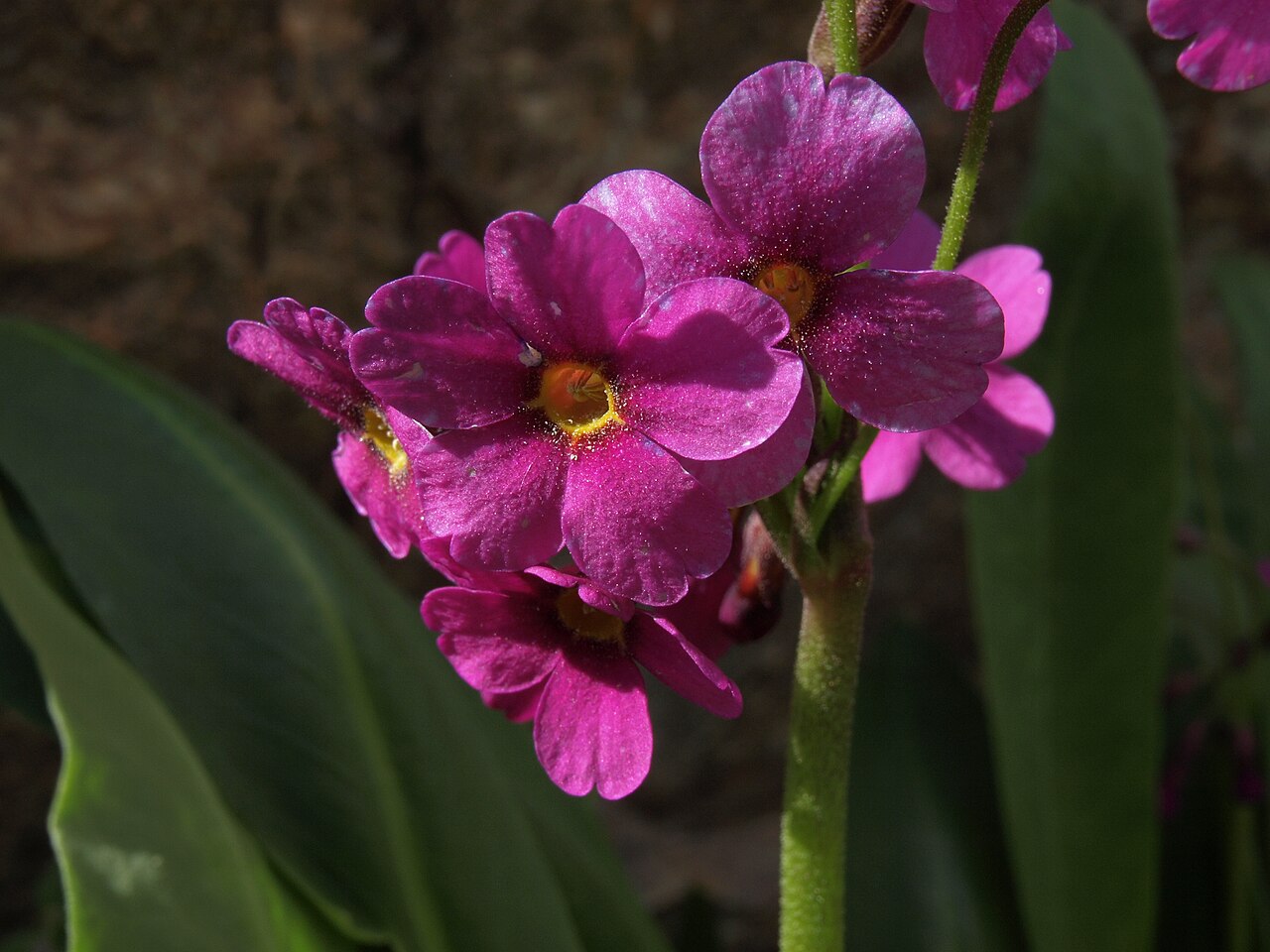
Each stalk carries an umbel of about 3 to 20 flowers on slender stalks of different lengths. The flowers are about 3/4 to 1 inch across, with five rounded, spreading, deep magenta to purplish-pink lobes around a yellow eye and a tube below. They bloom from June to August, soon after snowmelt. The flowers have a musky, somewhat unpleasant smell, often described as skunky.
Fruit
The fruit is an oval capsule, about 1/2 inch long, held upright on the stalk, which splits at the top to release small, dark seeds in late summer.
Look-alikes
No other Rocky Mountain primrose has such large leaves and flowers. Fairy primrose (Primula angustifolia) of Colorado and New Mexico is a tiny alpine plant with one or two flowers per stalk. Shooting stars (Dodecatheon, now often placed in Primula) also have magenta flowers in umbels, but their petals sweep backward. Marsh marigold and white marsh marigold grow in similar places but have broad, rounded leaves and white or yellow flowers.
Quick Facts
| Scientific Name | Primula parryi |
| Family | Primulaceae (primrose family) |
| Plant Type | Herbaceous perennial wildflower |
| Mature Height | 4–16 in |
| Mature Spread | 6–12 in |
| Growth Rate | Slow |
| Sun Exposure | Full sun to part shade |
| Water Needs | High; constantly moist to wet, cold soil |
| Soil Type | Wet, rocky or gravelly soil rich in organic matter |
| Soil pH | Slightly acidic to neutral (about 5.5–7.0) |
| Bloom Time | June–August |
| Flower Color | Magenta to purplish pink with a yellow eye |
| Fall Color | None; leaves die back after frost |
| Fruit | Small oval capsule |
| Deer Resistant | Moderately; the strong odor may discourage grazing |
| USDA Hardiness Zones | 3–6 (needs cool summers) |
Native Range
Parry’s primrose is native to the mountains of the interior West. USDA PLANTS lists it as native in Montana, Idaho, Wyoming, Nevada, Utah, Colorado, Arizona and New Mexico. It does not grow in Canada.
It is most common in the high mountains of Colorado and Utah, including the Front Range, the San Juan Mountains, the Wasatch and the Uinta Mountains. It also grows in the mountains of Wyoming, southwestern Montana and central and eastern Idaho; in the high ranges of eastern Nevada, such as the Ruby Mountains and the Snake Range in Great Basin National Park; on the San Francisco Peaks in northern Arizona; and in the Sangre de Cristo and other ranges of northern New Mexico.
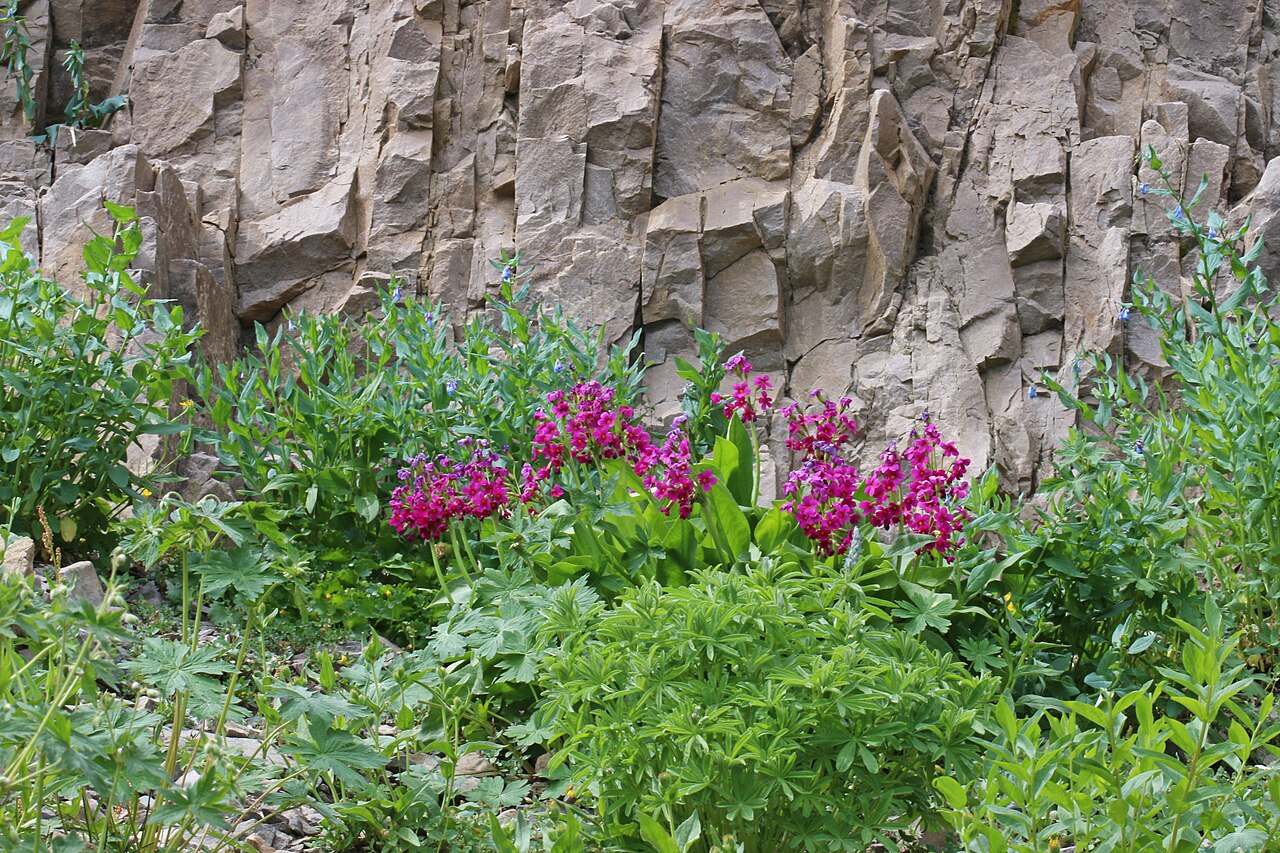
It grows in the subalpine and alpine zones, mostly from about 8,500 to 13,000 feet, along cold streams and waterfalls, in wet rock crevices and talus, around seeps and springs and below snowbanks that melt slowly through summer. It often grows in partial shade of boulders and cliffs.
📋 Regional plant lists featuring Parry’s Primrose: Idaho, Eastern Oregon & Eastern Washington · Montana & Wyoming · Utah & Western Colorado · Arizona & New Mexico · California & Nevada
Growing & Care Guide
Parry’s primrose is a plant for gardeners at high elevations or in cool, mountain climates. At low elevations, with hot summers and dry air, it is very difficult to keep alive and rarely blooms. If you want to try it, grow it from seed or nursery-propagated plants, never from plants dug in the wild.
Light
Full sun at high elevations, where the air is cool. At lower elevations it needs shade during the hot part of the day.
Soil & Water
It needs soil that stays cold and wet all summer, like a mountain streambank: a gritty, humus-rich mix that never dries out but is not stagnant. A spot beside a stream, pond, recirculating water feature or drip line works best. Heat and drought kill it quickly.
Planting Tips
Plant it in spring in a cool, moist spot, such as the shaded side of large rocks near water. Mulch with gravel to keep the crown cool. It is best suited to gardens in the mountains, roughly above 6,000 feet in the West, or to cool, moist climates with mild summers.
Pruning & Maintenance
Remove spent flower stalks if you do not want seed. Keep the soil moist all summer. Clumps can be left undisturbed for years. Watch for slugs in damp gardens.
Propagation
Grow it from seed sown in fall or winter and left outdoors, since it needs a cold, moist period to germinate. Seedlings grow slowly and may take several years to bloom. Large clumps can be carefully divided in spring.
Landscape Uses
- Mountain gardens: a showy accent for high-elevation streamside plantings
- Bog and water gardens: beside cold, flowing water in cool climates
- Alpine and rock gardens: in shaded, constantly moist crevices
- Wildflower viewing: a highlight of summer hikes in the high Rockies and Great Basin
- Pollinator plantings: early-summer nectar at high elevations
Wildlife & Ecological Value
Parry’s primrose adds bright color and nectar to the short alpine summer.
For Pollinators
Bumble bees, flies and butterflies visit the flowers. Its musky scent may attract flies, which are important pollinators at high elevations.
For Birds
Birds make little direct use of it, although hummingbirds feeding in high meadows may visit the bright flowers.
For Mammals
Alpine mammals such as pikas may harvest the leaves along with other plants, but it is not known as a favored food.
Ecosystem Role
It is part of the plant community along cold alpine streams and seeps, where its roots help stabilize wet soils and gravel. These habitats are sensitive to trampling and to changes in snowpack, which could affect this snowmelt-dependent plant.
Cultural & Historical Uses
The species name honors Charles Christopher Parry, a 19th-century botanist and surgeon who explored the Rocky Mountains of Colorado and collected many plants there, several of which bear his name. The genus name Primula comes from the Latin primus, “first,” because many European primroses bloom early in spring.
Hikers in Colorado and Utah often find Parry’s primrose by its color first and its smell second: the flowers have a musky, skunk-like odor that is easy to notice up close. Despite the smell, it is one of the most photographed wildflowers along high mountain trails.
It is one of the few large primroses native to North America. Many garden primroses come from Europe and Asia, and alpine plant enthusiasts have long tried, often without success, to grow Parry’s primrose in lowland gardens.
Frequently Asked Questions
Where does Parry’s primrose grow?
In the high mountains of the Rocky Mountain and Great Basin states, mostly from about 8,500 to 13,000 feet, along cold streams, seeps and wet rocks.
Can I grow Parry’s primrose in my garden?
Only with difficulty unless you live at high elevation or in a cool, moist climate. It needs cold, constantly wet soil and cool summers, and it usually dies in hot, dry lowland gardens.
Why does Parry’s primrose smell bad?
Its flowers have a musky, skunk-like odor. The scent may help attract flies and other pollinators at high elevations.
When does Parry’s primrose bloom?
From June to August, soon after the snow melts at each site.
Is it the same as the garden primrose?
No. Garden primroses are mostly European and Asian species and their hybrids. Parry’s primrose is a native western species adapted to alpine streamsides.


