
Broadleaf Waterleaf (Hydrophyllum canadense)
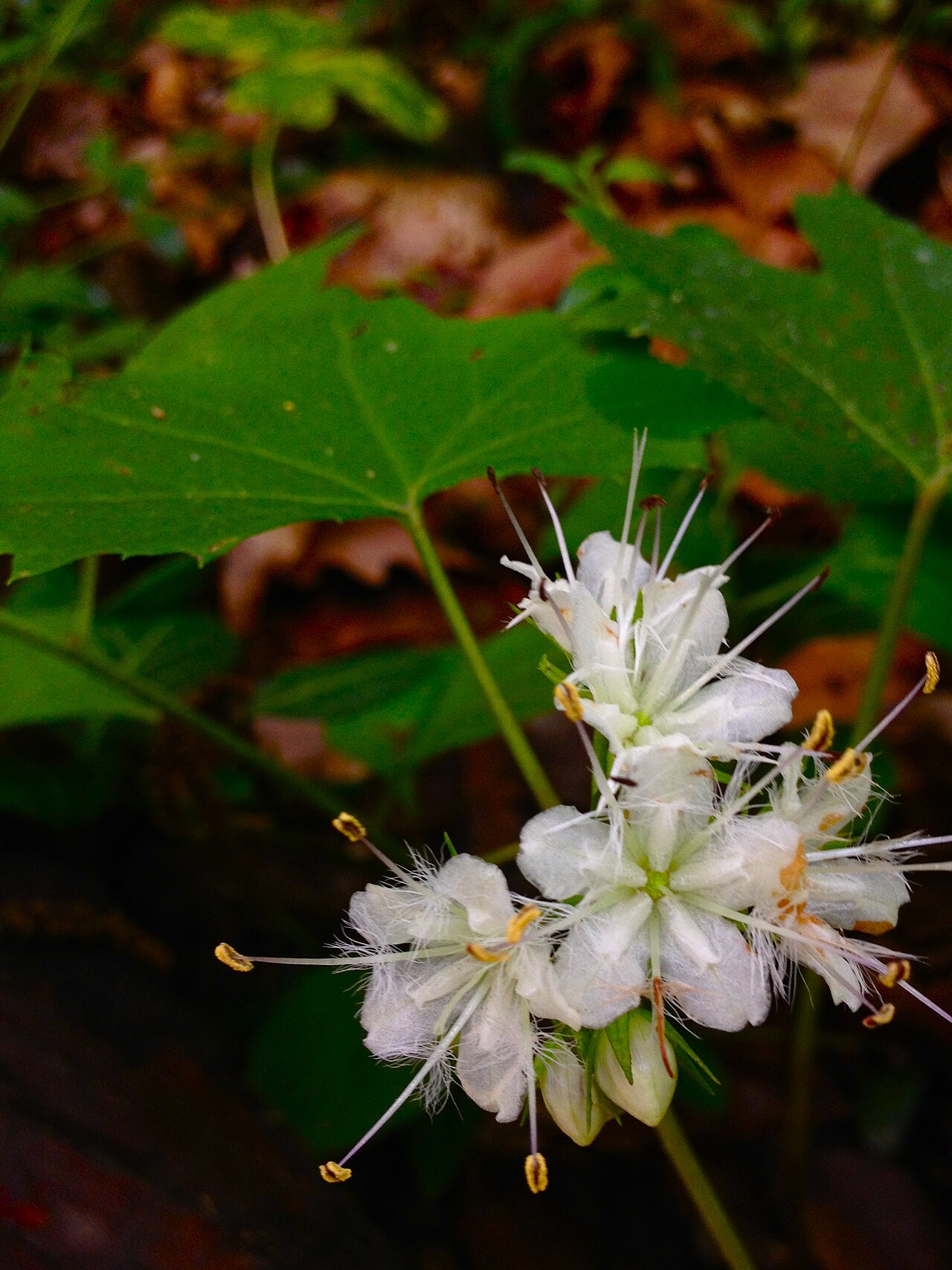
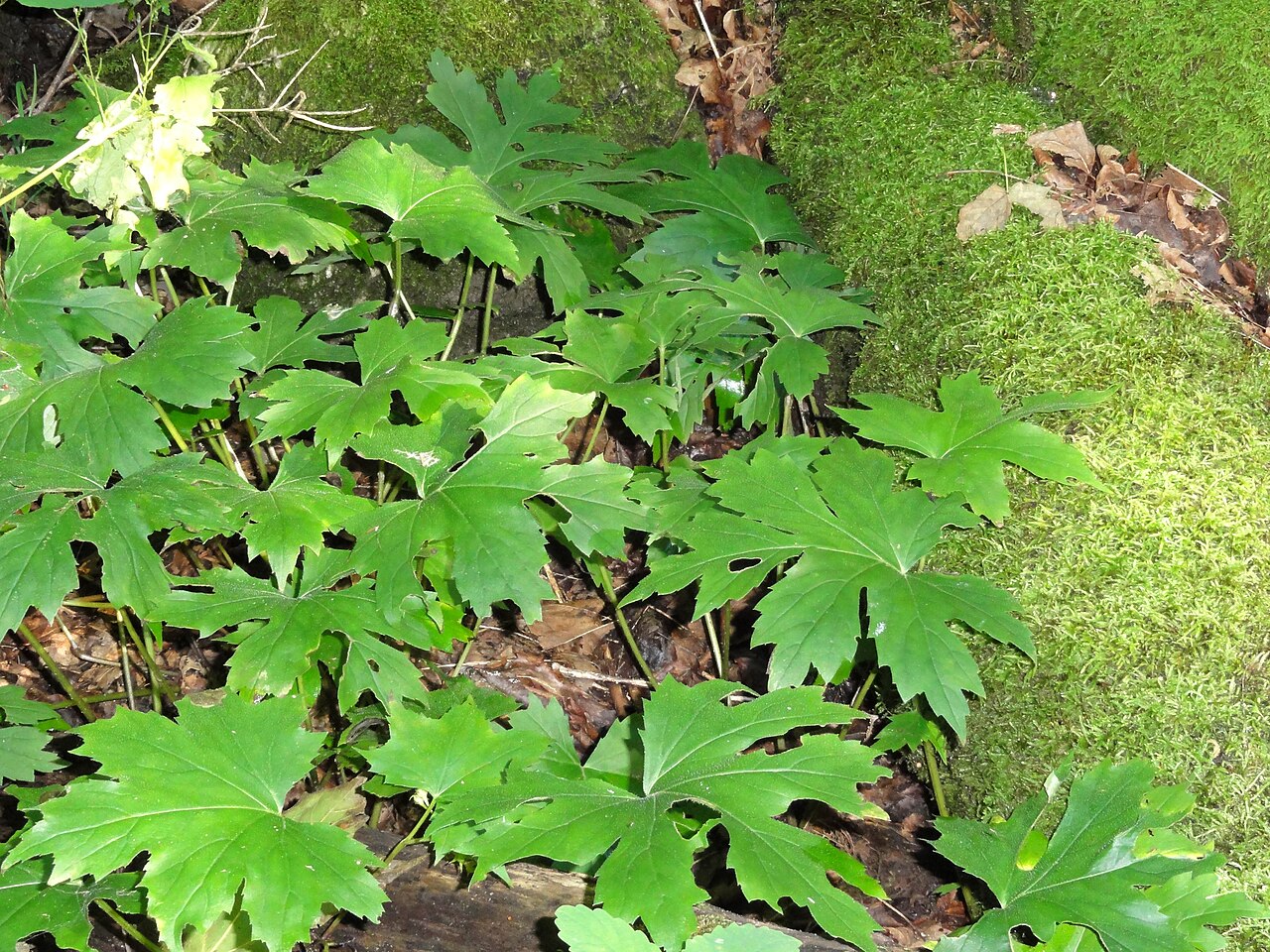
Hydrophyllum canadense, known as Broadleaf Waterleaf and listed by USDA PLANTS as bluntleaf waterleaf (also maple-leaved or Canada waterleaf), is a woodland perennial of rich, moist forests in eastern North America. It forms spreading colonies of broad, maple-like leaves 1 to 2 feet tall, and in late spring and early summer produces rounded clusters of small, bell-shaped white to pale lavender flowers with long, protruding stamens.
It is one of four waterleafs native to the eastern forests, and the only one with leaves shaped like a maple’s. Its flower clusters are usually tucked beneath the leaves rather than held above them, so the plant is easy to pass by in bloom. Waterleafs were long placed in their own family, the Hydrophyllaceae, but are now included in the borage family (Boraginaceae).
For gardeners, broadleaf waterleaf is a dependable groundcover for shady, moist spots under trees, where it fills in after spring ephemerals fade and feeds early-summer bees. This guide covers how to identify it and tell it apart from its relatives, where it grows, how to grow it, and its value to wildlife.
Identification
Broadleaf waterleaf is easiest to identify by its leaves. Its flowers look much like those of other waterleafs, but its broad, palmately lobed leaves are unique in the genus in the East.
Leaves
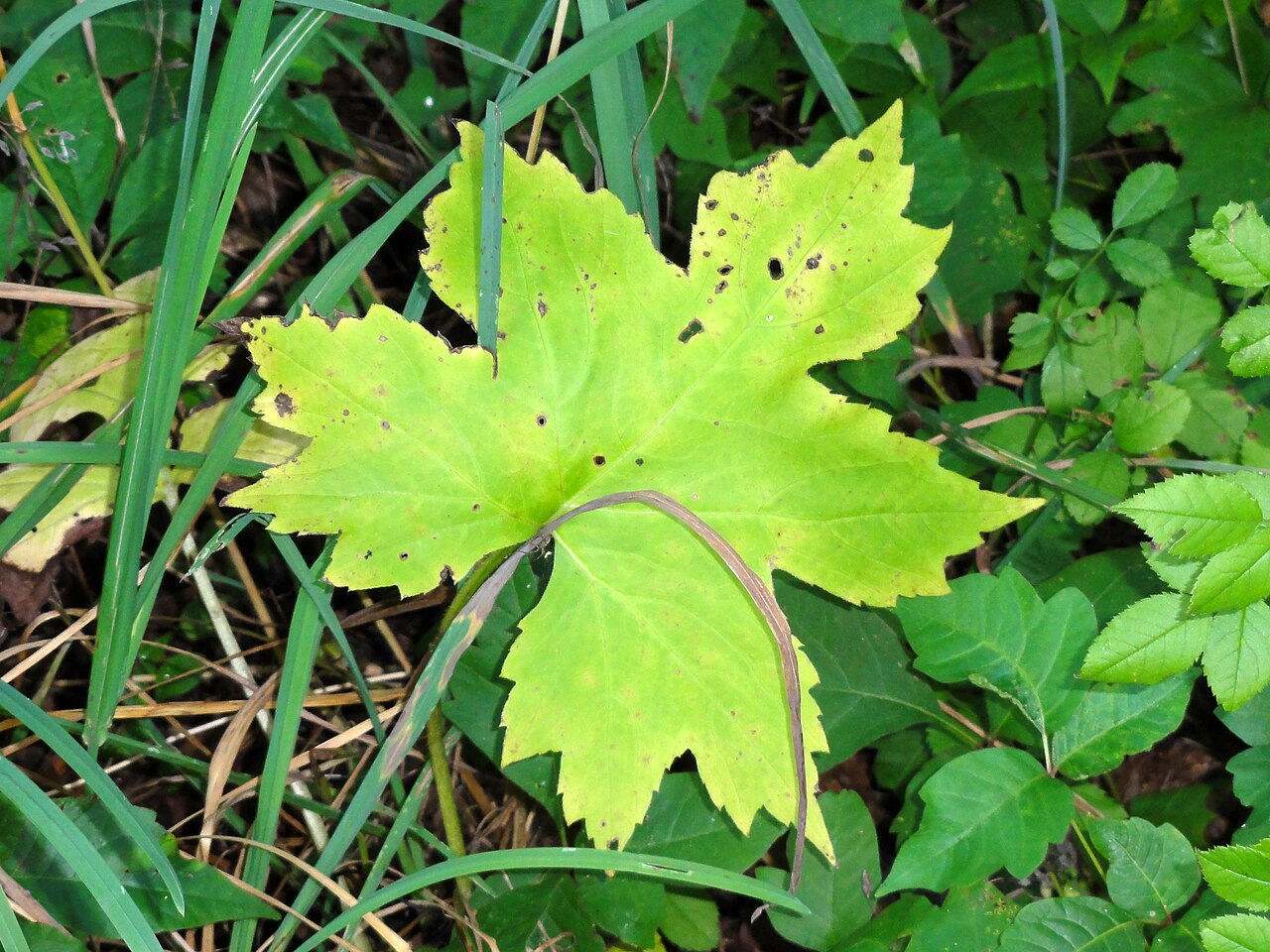
Most leaves are long-stalked and palmately lobed, 4 to 8 inches across, with 5 to 9 shallow, coarsely toothed lobes, much like the leaf of a sugar maple or red maple. Young leaves in spring are sometimes mottled with pale, water-stained-looking blotches, the feature that gave the genus its name. A few lower leaves may be pinnately divided, especially on young plants. The leaves are mostly smooth or only sparsely hairy.
Stems & Roots
Plants grow from a creeping, scaly rhizome and spread to form loose colonies. The stems are 1 to 2 feet tall (sometimes a little more), smooth or slightly hairy, and carry a few alternate leaves.
Flowers
The flowers are arranged in rounded, coiled clusters (cymes) on stalks that arise from the stem near the leaves, usually held below or among the leaves rather than above them. Each flower is a small bell about ⅜ inch long, white to pale pinkish or lavender, with five lobes. The five stamens and the style stick out well beyond the petals, giving clusters a fuzzy look. Bloom is from late May to July, generally a few weeks after Virginia waterleaf.
Fruit & Seeds
Each flower forms a small, round capsule with one to four seeds. The seeds ripen in summer and drop near the parent plant.
Look-alikes
Virginia Waterleaf (H. virginianum) has pinnately divided leaves with 5 to 7 lance-shaped segments and flower clusters held above the leaves. Great Waterleaf (H. appendiculatum) has hairy stems, lower leaves pinnately divided and upper ones somewhat maple-like, and lavender flowers with small appendages between the sepals. Before flowering, the leaves of broadleaf waterleaf can be mistaken for Mayapple or young maple seedlings, but mayapple leaves are umbrella-like, with the stalk attached near the center.
Quick Facts
| Scientific Name | Hydrophyllum canadense |
| Family | Boraginaceae (borage family; formerly Hydrophyllaceae) |
| Plant Type | Herbaceous perennial; colony-forming groundcover |
| Mature Height | 1–2 ft |
| Mature Spread | 1–2 ft per plant; spreads by rhizomes |
| Growth Rate | Moderate |
| Sun Exposure | Part shade to full shade |
| Water Needs | Moderate to high; consistently moist soil |
| Soil Type | Rich, humus-rich loam; floodplain and woodland soils |
| Soil pH | About 6.0–7.5 (often over limestone) |
| Bloom Time | Late May–July |
| Flower Color | White to pale pink or lavender |
| Fall Color | Leaves fade to yellow and often go dormant in late summer |
| Fruit | Small round capsule with 1–4 seeds |
| Deer Resistant | Moderate; occasionally browsed |
| USDA Hardiness Zones | 3–8 |
Native Range
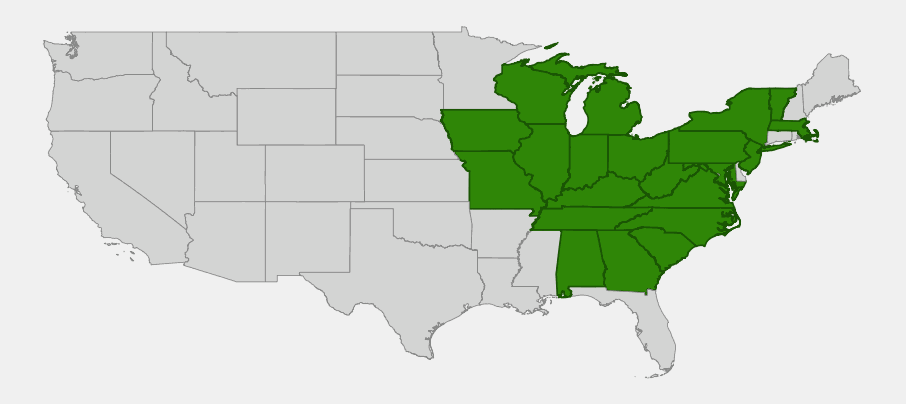
Broadleaf waterleaf is native to eastern North America. USDA PLANTS records it from western New England (Vermont and Massachusetts) and New York west through Pennsylvania, Ohio, Michigan, Indiana and Illinois to Wisconsin, Iowa and Missouri, and south through the Appalachians and the Ohio Valley to Kentucky, Tennessee, the Carolinas, northern Georgia and northern Alabama. In Canada it grows in southern Ontario and Quebec.
It is most common in the Ohio Valley, the Appalachian mountains and plateaus, and the lower Great Lakes region. It is rare at the edges of its range. Go Botany lists it as endangered in Massachusetts and threatened in Vermont, and the records from New Jersey and South Carolina are outlying ones.
It grows in rich, moist deciduous forests, often on slopes and ravines, at the bases of cliffs and in floodplain and stream terrace forests, frequently over limestone or other high-pH bedrock. It favors the same productive woodlands as many spring wildflowers, under sugar maple, basswood, beech, buckeye and tulip tree.
📋 Regional plant lists featuring Broadleaf Waterleaf: New York, Pennsylvania & Northern New Jersey · Ohio & Indiana · Michigan, Wisconsin & Eastern Minnesota · Kentucky & Tennessee · Connecticut, Massachusetts & Rhode Island · New Hampshire, Maine & Vermont · Maryland, Virginia & West Virginia · Delaware, Southern New Jersey & Long Island · Illinois, Iowa & Missouri · Alabama, Georgia & Mississippi · North & South Carolina
Growing & Care Guide
Broadleaf waterleaf is an easy plant for shady, moist woodland gardens. Once established it spreads into a leafy groundcover that needs little care. It can be vigorous in rich soil, so give it room or pair it with sturdy companions.
Light
Grow it in part shade to full shade under deciduous trees. It tolerates morning sun where the soil stays moist, but leaves scorch in hot afternoon sun.
Soil & Water
It wants rich, humus-rich soil that stays evenly moist, such as a woodland bed with natural leaf litter. Neutral to slightly alkaline soils are ideal, but it adapts to slightly acid conditions. In dry summers it may go dormant early; water during long dry spells if you want the foliage to last.
Planting Tips
Plant divisions or potted plants in spring or fall, 12 to 18 inches apart. Let fallen leaves stay on the bed as mulch. Combine it with spring ephemerals such as Virginia bluebells and trilliums, whose space it fills after they go dormant, and with ferns and wild ginger.
Pruning & Maintenance
Little care is needed. Cut back tattered foliage in late summer if it looks untidy, or simply let it fade. If colonies spread farther than you want, pull or dig the edges in spring.
Propagation
Divide established clumps in early spring or fall; pieces of rhizome with a bud root easily. Seed can be sown outdoors in fall when ripe. It needs a cold, moist period before germinating, and seedlings take two or more years to reach flowering size.
Landscape Uses
- Woodland groundcover: forms a leafy carpet in moist shade under trees
- Shade gardens with spring ephemerals: fills gaps left after bluebells, trout lilies and other early flowers go dormant
- Streamside and ravine plantings: suits moist slopes, stream terraces and the bases of rock outcrops
- Woodland restoration: a typical understory plant of rich mesic forests within its native range
- Early-summer bee plant: its flowers bridge the gap between spring ephemerals and summer bloomers
Wildlife & Ecological Value
Broadleaf waterleaf supports a variety of bees and other insects in the shaded forest understory, where flowers are scarce after the spring wildflowers finish.
For Pollinators
The flowers are visited by bumble bees, mason bees, small carpenter bees, mining bees and syrphid flies, which collect nectar and pollen. Waterleafs are also the preferred pollen source of a few specialist mining bees, which depend on them to raise their young.
For Birds
Birds rarely eat waterleaf seeds, but the plant contributes to the dense, insect-rich ground layer that thrushes, ovenbirds and other forest birds forage in.
For Mammals
White-tailed deer and rabbits sometimes browse the leaves, though usually not heavily.
Ecosystem Role
As a colony-forming groundcover, broadleaf waterleaf helps hold soil on slopes and stream terraces and contributes to the rich leaf litter of mesic forests. Its large leaves shade the ground in summer and help keep the forest floor cool and moist.
Cultural & Historical Uses
Linnaeus named Hydrophyllum canadense in 1753. The genus name combines the Greek words for water and leaf. It probably refers to the pale, water-stained-looking blotches on young leaves of several species, although some writers have linked it to the way the hollow leaf bases can hold water.
Several waterleafs have been eaten as wild greens. The young leaves and shoots of Virginia waterleaf, sometimes called Shawnee salad or Indian salad, were cooked or eaten raw in spring. Broadleaf waterleaf leaves are coarser and more bitter, and they have seen less use.
Because it grows in some of the richest, least disturbed woodlands in its range, broadleaf waterleaf is often a sign of a healthy mesic forest. Its colonies are easy to recognize once you know the maple-like leaves, and they make it a good teaching plant for woodland wildflower walks.
Frequently Asked Questions
Is broadleaf waterleaf the same as bluntleaf waterleaf?
Yes. USDA PLANTS lists Hydrophyllum canadense as bluntleaf waterleaf. It is also called broadleaf, maple-leaved or Canada waterleaf.
How do I tell broadleaf waterleaf from Virginia waterleaf?
Broadleaf waterleaf has maple-like, palmately lobed leaves and flower clusters held below the leaves. Virginia waterleaf has pinnately divided leaves and flower clusters held above the leaves, and it blooms a few weeks earlier.
Does broadleaf waterleaf spread?
Yes. It creeps by rhizomes to form colonies in rich, moist soil. It is easy to keep in bounds by pulling the edges, and it is well suited to filling space under trees.
Will it grow in dry shade?
It prefers moist soil. In dry shade it grows slowly and goes dormant early in summer. Add leaf litter or compost and water during droughts for better results.
When does broadleaf waterleaf bloom?
From late May into July, depending on location, after most spring wildflowers have finished.

Looking for a nursery that carries Broadleaf Waterleaf?
Browse our native plant nursery directory: Alabama · Georgia · Illinois, Indiana & Iowa · Kentucky, Maryland, Massachusetts, Michigan & Missouri · New Jersey, New York, North Carolina & Ohio · Pennsylvania, South Carolina, Tennessee, Vermont & Virginia · West Virginia & Wisconsin

