
Alpine Mountainsorrel (Oxyria digyna)
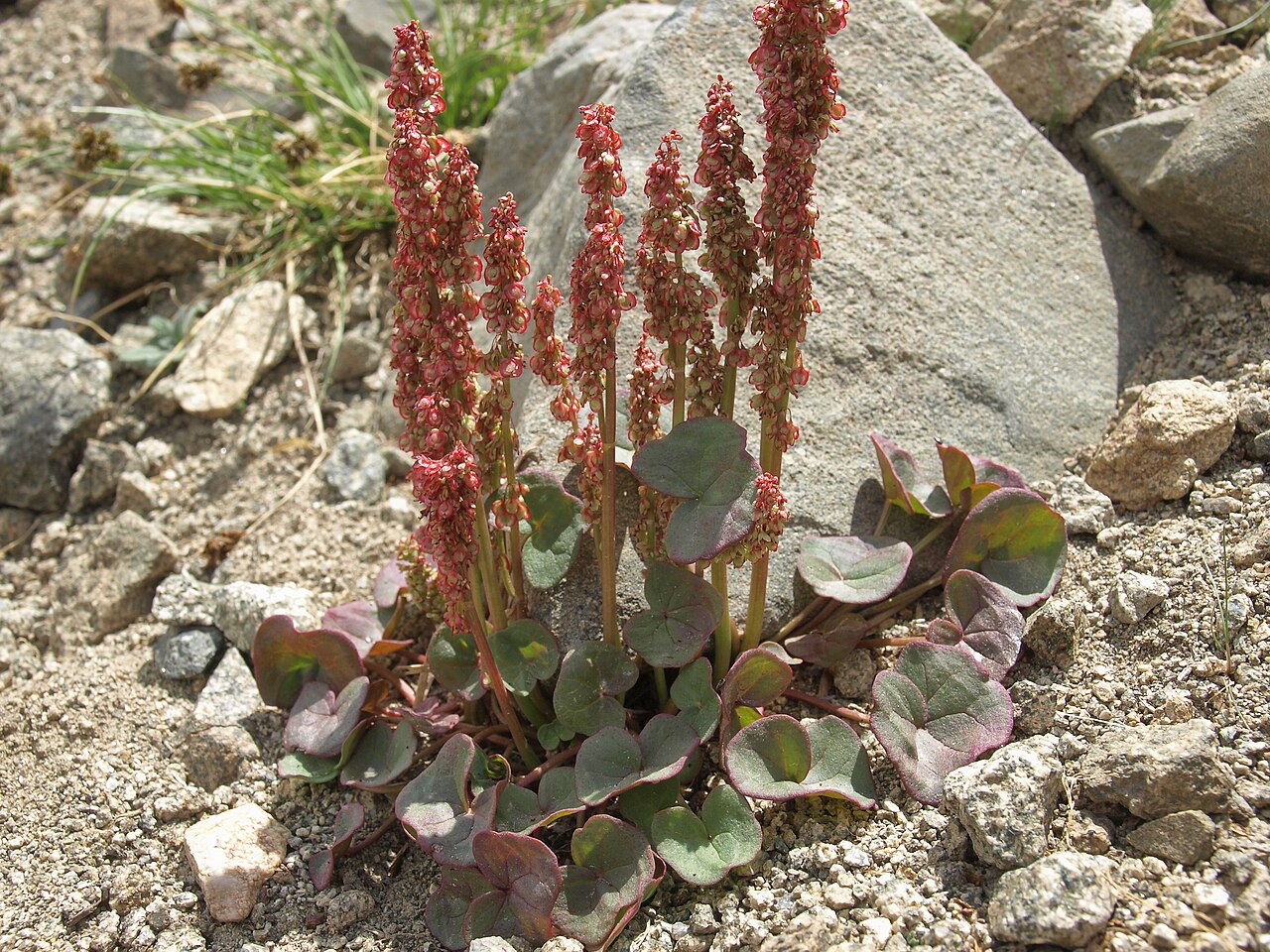
Oxyria digyna, known as Alpine Mountainsorrel, mountain sorrel or alpine sorrel, is a small perennial of the buckwheat family (Polygonaceae) that grows on rocky slopes and in moist crevices in arctic and alpine regions around the world. In the United States it grows throughout Alaska and in the high mountains of the West, from the Cascades and Sierra Nevada to the Rocky Mountains.
It forms low clumps of fleshy, kidney-shaped leaves on long stalks, often tinged red. In summer, upright stalks rise above the leaves with crowded clusters of tiny greenish flowers, followed by showy, flat, round fruits with broad red wings that make the whole plant glow crimson in late summer. The leaves have a pleasantly sour, lemony taste.
Alpine mountainsorrel is one of the most widespread arctic-alpine plants on Earth. It thrives on talus, ledges, snowbed edges and streamsides above timberline, and it is a familiar sight to hikers and climbers. It has long been eaten as a fresh green by Arctic peoples.
Identification
Look for a low clump of round, kidney-shaped, often red-tinged leaves in rocky alpine or arctic places, with upright stalks of small flowers or flat, red-winged fruits.
Growth Habit
Alpine mountainsorrel is a perennial with a stout taproot and a short, branched base, forming a tuft or small clump. The flowering stems are usually 2 to 12 inches tall, occasionally to about 20 inches in sheltered, moist sites, and are mostly leafless.
Leaves
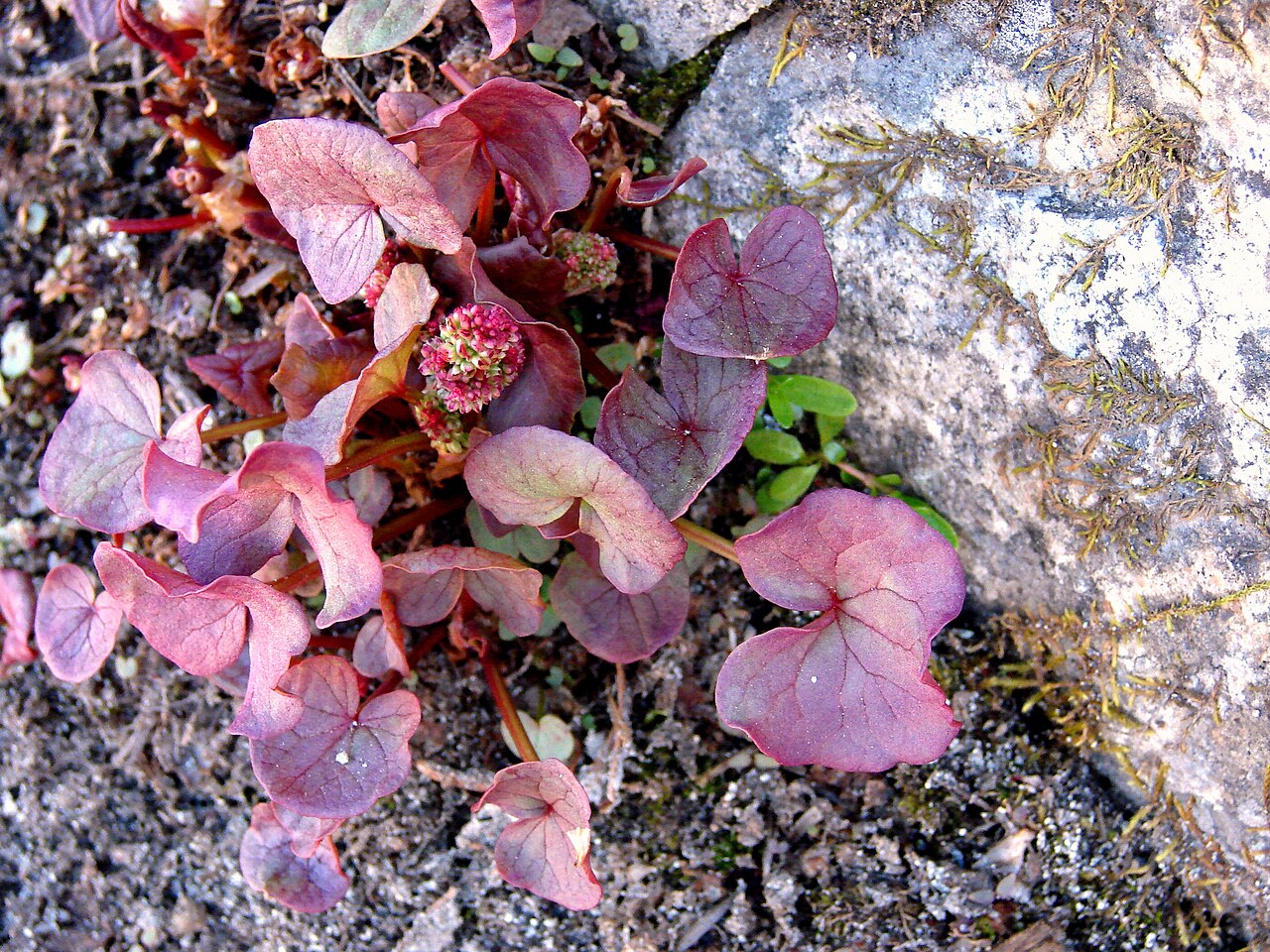
The leaves are almost all basal, on long stalks. Each blade is round to kidney-shaped, about 1/2 to 2 inches wide, with a smooth or slightly wavy edge and a notched base. They are somewhat fleshy and hairless, bright green to reddish, and taste tart and lemony.
Flowers
Flowers appear from about June to August, depending on elevation and snowmelt. They are tiny, about 1/8 inch long, greenish to reddish, and grouped in narrow, branched clusters along the upper stems. Each flower has four tepals, six stamens and two styles, the source of the species name digyna. The flowers are wind-pollinated.
Fruit & Seeds
The fruit is the showiest part: a flat, lens-shaped achene surrounded by a broad, thin wing, about 1/8 to 1/5 inch across. The wings turn red to crimson as they ripen in mid to late summer, coloring the fruiting stalks. The winged fruits are spread by wind.
Look-alikes
Sheep sorrel (Rumex acetosella), a common non-native weed, has arrow-shaped leaves with two basal lobes and grows mostly at lower elevations. Alpine sheep sorrel (Rumex paucifolius) has narrow, lance-shaped leaves. Violets and some saxifrages have rounded leaves but showy flowers and no winged fruits. The round, red-tinged leaves and winged fruits make alpine mountainsorrel easy to recognize.
Safety Notes
The leaves are edible raw or cooked and are rich in vitamin C, but, like rhubarb and garden sorrel, they contain oxalic acid. Eat them only in small amounts, and avoid them if you have kidney problems or gout. Do not pick plants in national parks or other protected areas.
Quick Facts
| Scientific Name | Oxyria digyna |
| Family | Polygonaceae (buckwheat family) |
| Plant Type | Herbaceous perennial |
| Mature Height | 2–12 in (to 20 in) |
| Mature Spread | 4–12 in |
| Growth Rate | Slow |
| Sun Exposure | Full sun to part shade |
| Water Needs | Medium to high; cool, moist soil |
| Soil Type | Gravelly, rocky or sandy, well-drained |
| Soil pH | About 5.0–7.5 |
| Bloom Time | June–August |
| Flower Color | Greenish to reddish; red-winged fruits |
| Fall Color | Leaves and fruits turn red |
| Fruit | Flat, round, red-winged achenes |
| Deer Resistant | Moderate |
| USDA Hardiness Zones | 1–6 |
Native Range
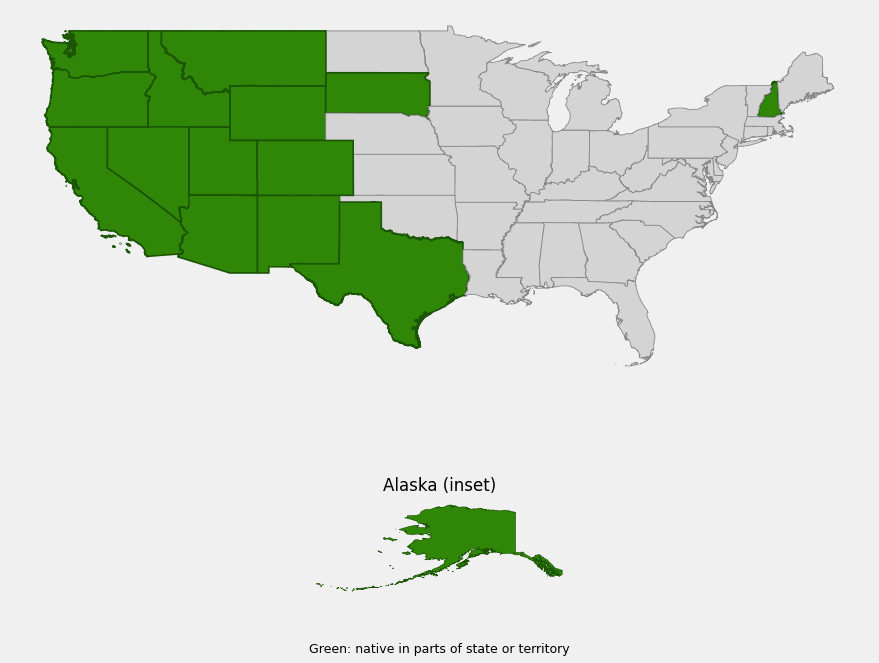
Alpine mountainsorrel is circumpolar, growing across arctic and alpine North America, Greenland, Europe and Asia. USDA PLANTS lists it as native in Alaska, Arizona, California, Colorado, Idaho, Montana, Nevada, New Mexico, Oregon, Utah, Washington and Wyoming, with outlying records from New Hampshire, South Dakota and Texas. It also grows across northern and western Canada, from the Yukon, Nunavut and British Columbia to Alberta, Quebec, Labrador, Newfoundland and Nova Scotia.
In Alaska and northern Canada it grows from near sea level on tundra, scree and coastal cliffs into the mountains. Farther south it is restricted to high elevations: the Cascades and Olympic Mountains, the Sierra Nevada and White Mountains of California, the high Great Basin ranges, the Rocky Mountains from Montana to New Mexico and the San Francisco Peaks of Arizona.
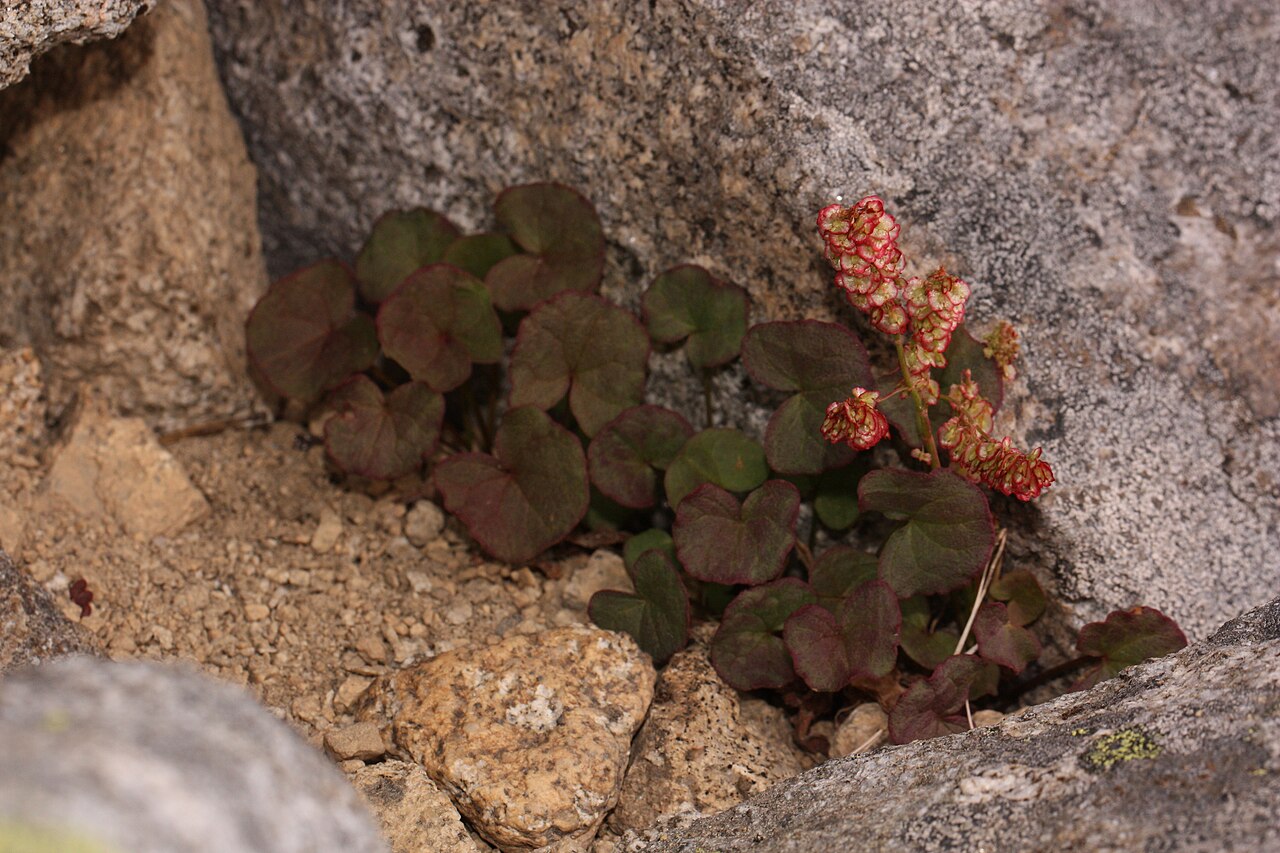
Typical habitats are moist, rocky places above or near timberline: talus and scree slopes, rock crevices and ledges, boulder fields, snowbed margins, alpine streamsides and seeps, and wet cliffs. It often grows where snowmelt keeps the ground cold and wet into summer.
📋 Regional plant lists featuring Alpine Mountainsorrel: Alaska · California & Nevada · Arizona & New Mexico · Utah & Western Colorado · Montana & Wyoming · Idaho, Eastern Oregon & Eastern Washington · Western Oregon & Western Washington
Growing & Care Guide
Alpine mountainsorrel is occasionally sold by rock-garden and alpine-plant specialists. It is a plant for cool-summer gardens, especially in Alaska, the northern tier and the mountains; it does poorly in hot, humid lowlands.
Light
Give it full sun in cool climates and part shade where summers are warm. Afternoon shade helps keep the roots cool.
Soil & Water
Plant it in gritty, well-drained soil that stays evenly moist, such as a scree bed or rock garden with deep gravel. Water regularly in summer; it is adapted to snowmelt and dislikes drought. Avoid heavy, waterlogged clay.
Planting Tips
Tuck plants into crevices between rocks, in a trough, or along the edge of a stream or pond in a rock garden. Mulch with gravel to keep the crown dry while the roots stay moist and cool.
Pruning & Maintenance
Little care is needed. Remove old flowering stalks if you do not want self-sown seedlings, or leave them for the colorful red fruits.
Propagation
Sow fresh seed outdoors in fall or give it a cold, moist period before spring sowing. Seedlings grow slowly. Established clumps can be divided carefully in early spring. Do not dig plants from the wild.
Landscape Uses
- Rock and scree gardens: round leaves and red fruit stalks among stones
- Alpine troughs: compact size and tolerance of cold
- Edible gardens in cold climates: tart, lemony leaves for salads in small amounts
- Streamside rock plantings: moist, gravelly edges in cool gardens
- Alpine restoration: stabilizing moist talus and disturbed high-elevation sites
Wildlife & Ecological Value
Alpine mountainsorrel is an important food plant in the cold, rocky places where it grows.
For Pollinators
The flowers are wind-pollinated and offer little to bees, though flies and other small insects may visit them for pollen.
For Birds
Ptarmigan and rosy-finches and other alpine birds feed on the leaves, buds and seeds.
For Mammals
Pikas cut and store the leaves in their “haypiles” for winter, and marmots, mountain goats, caribou and bears graze on it.
Ecosystem Role
As a pioneer of talus, scree and recently exposed ground near retreating snowfields and glaciers, alpine mountainsorrel helps build plant cover and soil in harsh arctic and alpine sites.
Cultural & Historical Uses
Carl Linnaeus first named this plant Rumex digynus in 1753. In 1768 the English botanist John Hill moved it into its own genus, Oxyria, from the Greek oxys, “sour,” for the taste of the leaves. Digyna means “two pistils,” for the two styles of each flower.
Inuit, Yupik and other Arctic peoples have long eaten the leaves fresh, fermented or cooked, and stored them for winter. Rich in vitamin C, mountain sorrel was a valued green in regions where few fresh foods were available.
Because it grows on every northern continent and on many high mountains, alpine mountainsorrel has been a model plant for scientists studying how plants adapt to cold climates, short seasons and different day lengths.
Frequently Asked Questions
Is alpine mountainsorrel edible?
Yes. The tart, lemony leaves are edible raw or cooked and are rich in vitamin C. Because they contain oxalic acid, eat them only in small amounts, and never pick plants in protected areas.
Where does alpine mountainsorrel grow?
It grows throughout the Arctic and in high mountains of the Northern Hemisphere. In the United States it grows in Alaska and in alpine areas of the western mountains.
Why does it turn red?
Its winged fruits and often its leaves turn red to crimson as summer progresses, especially in exposed, sunny alpine sites.
Can I grow alpine mountainsorrel in my garden?
In cool-summer climates, yes, in a moist, gritty rock or scree garden. It struggles in hot, humid lowland gardens.
Is it related to garden sorrel and rhubarb?
Yes. All three are in the buckwheat family (Polygonaceae), and all get their sour taste from oxalic acid.

Looking for a nursery that carries Alpine Mountainsorrel?
Browse our native plant nursery directory: Alaska & Arizona · California · Colorado · Idaho · Montana · Nevada, New Hampshire & New Mexico · Oregon · South Dakota, Texas & Utah · Washington · Wyoming

