
Shoestring Fern (Vittaria lineata)
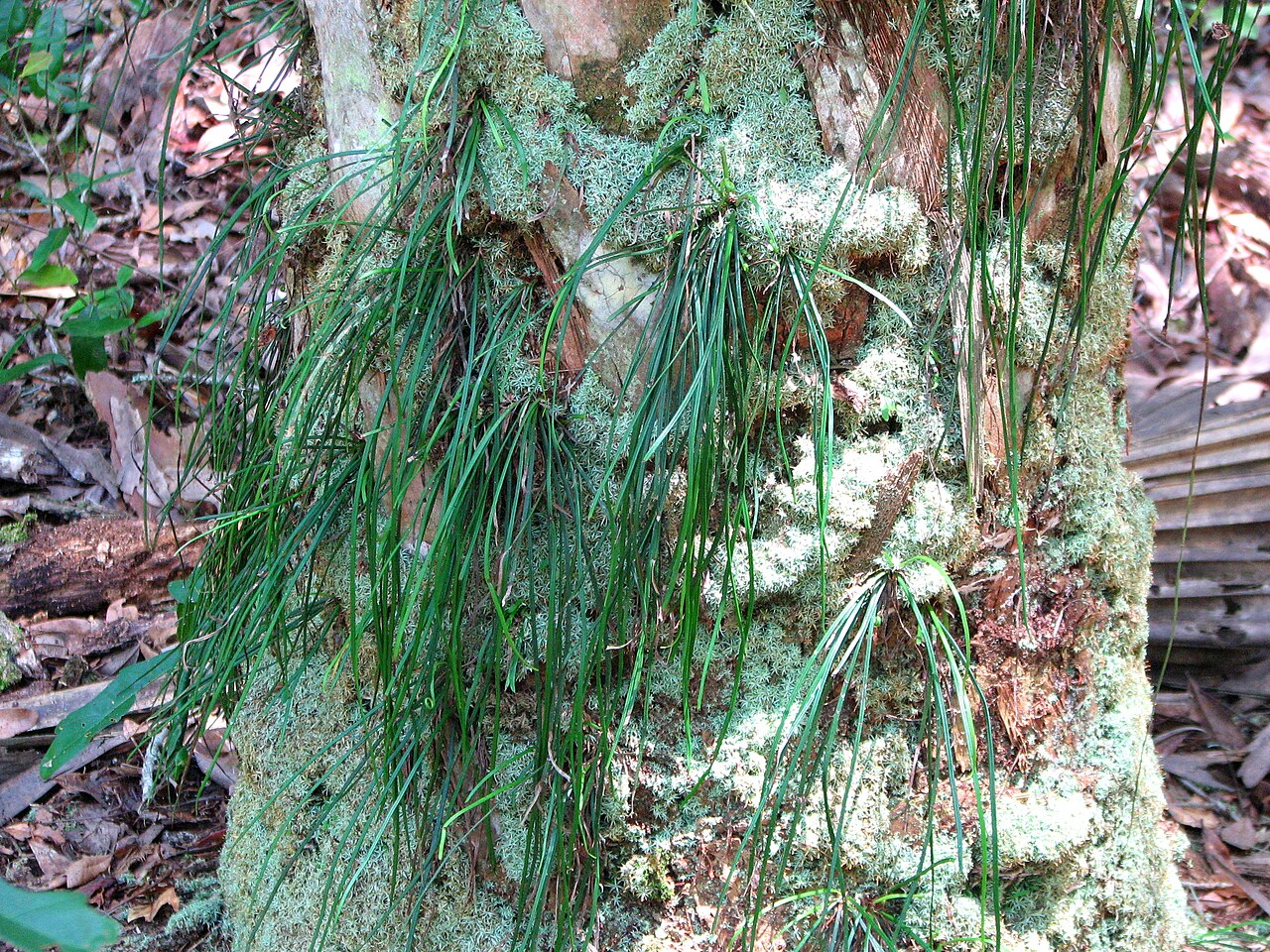
Vittaria lineata, known as Shoestring Fern or grass fern, is a small epiphytic fern that hangs in grass-like tufts from the trunks of trees, especially cabbage palms. In the United States it grows in Florida and extreme southern Georgia, and it is also native to Puerto Rico and much of tropical America, from the Caribbean and Mexico to South America.
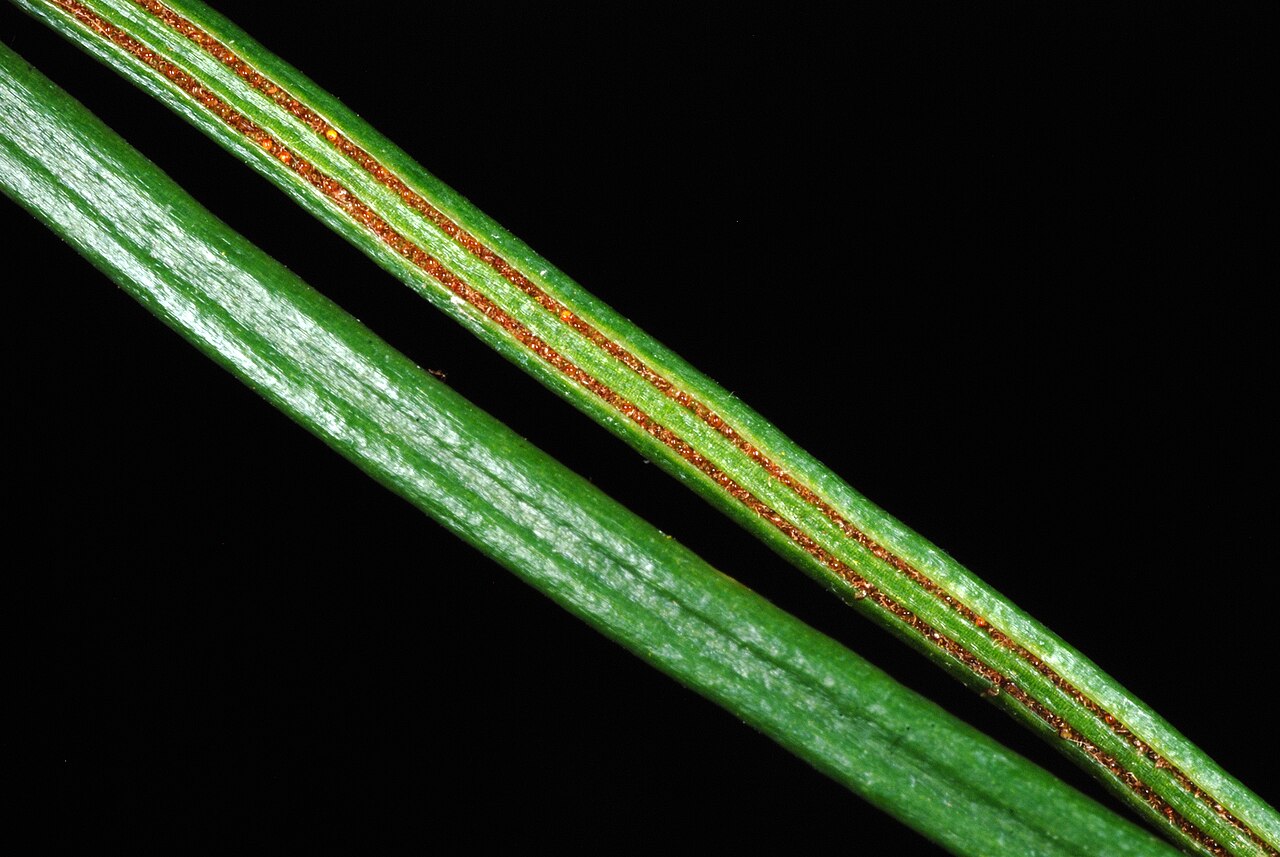
At first glance it does not look like a fern at all. Each frond is a single, undivided, narrow strip, only about 1/8 inch wide but up to 2 feet or more long, so a clump looks like a bunch of dark green shoestrings or a tuft of grass dangling from a palm trunk. The spores are borne in two lines sunk in grooves along the edges of the frond.
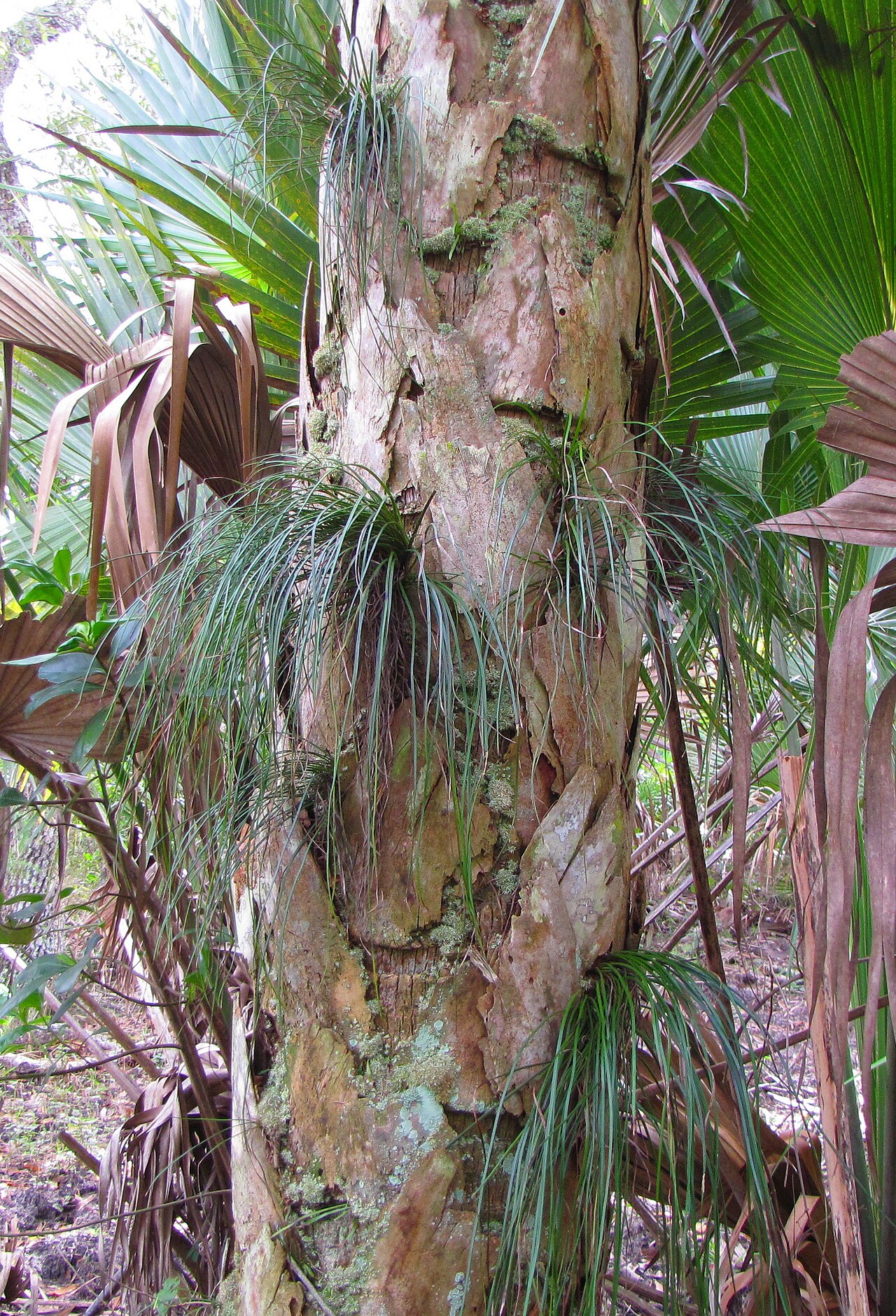
Shoestring fern is one of the most characteristic plants of Florida’s hammocks and swamps, where old cabbage palms are often decorated with it along with resurrection fern, golden polypody and airplants. This guide covers how to identify it, where it grows, whether you can grow it, and its role in nature.
Identification
Look for dense, hanging tufts of very narrow, flat, dark green, grass-like leaves growing out of the leaf bases or bark of a palm or other tree in a shady, humid hammock or swamp.
Growth Habit
It is a perennial epiphyte, which means it grows on other plants without taking nutrients from them. Its short, creeping rhizome is anchored among the old leaf bases (boots) of cabbage palms, in moss, or in crevices of bark, and is covered with small, dark, lattice-like scales. From the rhizome grow dense clusters of fronds that hang downward, so the clump is usually much longer than it is wide.
Fronds
The fronds are simple, undivided and linear, about 1/16 to 1/8 inch wide and usually 6 to 24 inches long, sometimes longer. They are dark, glossy green, somewhat leathery and slightly thickened, with a faint midrib. They grow in dense tufts and hang like a mop or a fringe of ribbons.
Spores
Like all ferns, it does not flower. The spore cases (sori) form two continuous lines in narrow grooves along both edges of the frond, on the underside. When ripe they show as thin brown lines running much of the length of the frond, with the edge of the leaf partly covering them.
Seasonality
Shoestring fern is evergreen. In wet seasons the fronds are plump and bright green; in long dry spells they may look duller and some fronds die back, but the clumps persist year after year on the same trunk.
Look-alikes
Few plants in Florida look like it. Hanging grass or sedge can grow on trunks, but grasses have joints, sheaths and flower spikes, while shoestring fern has none. The fertile fronds of whisk fern (Psilotum nudum), which also grows on palm trunks, are branched and leafless with small round yellow spore cases. In the Appalachians, a related plant called Appalachian shoestring fern (Vittaria appalachiana) lives only as tiny, mat-like gametophytes in rock crevices and never forms fronds.
Quick Facts
| Scientific Name | Vittaria lineata (L.) Sm. |
| Family | Pteridaceae (brake family; formerly Vittariaceae) |
| Plant Type | Evergreen epiphytic fern |
| Mature Height | Fronds hang 6–24 in (sometimes longer) |
| Mature Spread | 3–12 in clumps |
| Growth Rate | Slow |
| Sun Exposure | Shade to part shade |
| Water Needs | High humidity; moist bark |
| Soil Type | None; grows on palm leaf bases, bark and moss |
| Soil pH | Not applicable (epiphyte) |
| Bloom Time | Does not flower (spores mostly in warm months) |
| Flower Color | None |
| Fall Color | Evergreen |
| Fruit | None; spores in two marginal lines |
| Deer Resistant | Not applicable (grows on trunks) |
| USDA Hardiness Zones | 8b–11 (frost-sensitive) |
Native Range
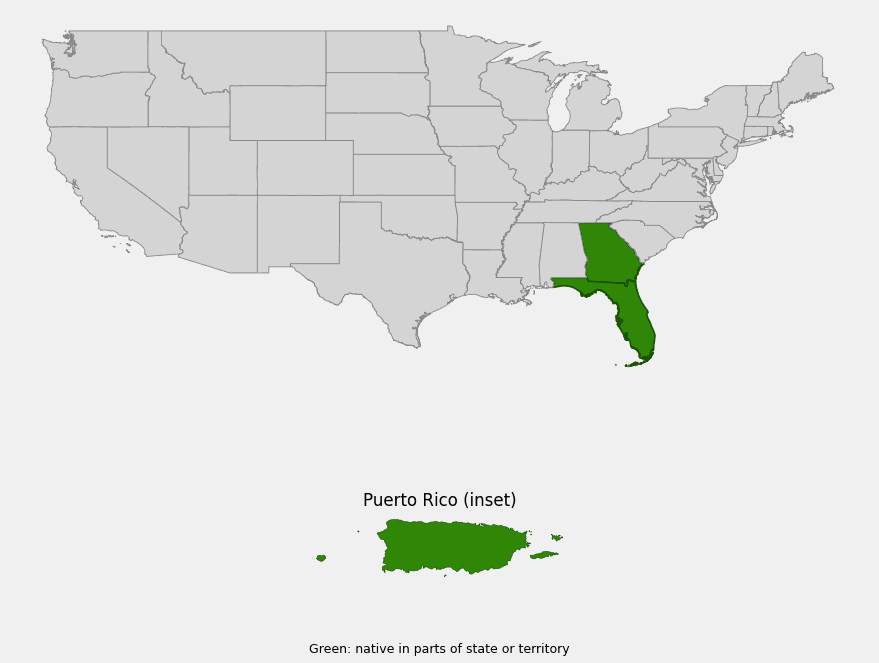
USDA PLANTS lists shoestring fern as native to Florida, Georgia and Puerto Rico. Beyond the United States it grows widely in the American tropics, including the West Indies, Mexico, Central America and South America. Florida is the northern edge of its range.
In Florida it is widespread in the peninsula and reaches north into northern Florida, becoming less common northward. In Georgia it is rare and known only from the far south of the state near the Florida line. In Puerto Rico it grows in moist forests as an epiphyte on trees.
Its main habitat is humid, shaded hammocks, swamps, floodplain forests and the edges of sloughs and lakes, where it grows on the trunks of cabbage palms (Sabal palmetto) and, less often, on oaks, cypress and other trees. It depends on high humidity and is often found in the moistest parts of a hammock.
📋 Regional plant lists featuring Shoestring Fern: Alabama, Georgia & Mississippi · North & South Florida · Puerto Rico
Growing & Care Guide
Shoestring fern is rarely sold, and it is not an easy plant to grow outside its natural habitat. The best way to enjoy it is to protect the old cabbage palms it grows on and to look for it in Florida’s parks and preserves. Never strip it from trees in the wild.
Light
It needs shade or bright filtered light. Direct sun dries and burns the fronds.
Soil & Water
It grows without soil, in the fibrous leaf bases of palms or on moss-covered bark. What it needs most is constant humidity. In a garden in central or south Florida, an established clump on a cabbage palm in a shady, humid spot will usually take care of itself. During long dry spells, misting can help.
Planting Tips
If you buy a nursery-grown plant, attach it to a cabbage palm trunk, a piece of tree fern fiber or a cork mount with some sphagnum moss, using soft ties, and keep it in humid shade. It can also be grown in a terrarium or a very humid greenhouse. In north Florida and Georgia, protect it from hard frost.
Pruning & Maintenance
Remove dead fronds by hand if you wish. Do not trim the old leaf bases off cabbage palms where it grows; “skinning” palms removes its habitat.
Propagation
It can be propagated by carefully dividing a nursery-grown clump with part of the rhizome, or from spores, which is slow and best left to specialists. Do not take plants from the wild.
Landscape Uses
- Natural landscapes: leave the leaf bases on cabbage palms so it and other epiphytes can grow
- Shade and fern gardens: an unusual accent on a palm trunk in a humid, shady garden
- Terrariums and greenhouses: can be grown mounted in very humid conditions
- Nature study: a striking example of an epiphytic fern that looks like grass
- Wildlife habitat: part of the epiphyte community on old palm trunks
Wildlife & Ecological Value
Shoestring fern is part of a small, rich community of epiphytes that live on the trunks of cabbage palms and other trees in Florida’s wet forests.
For Pollinators
As a fern, it has no flowers and does not feed pollinators. It reproduces by spores carried by the wind.
For Birds
Its hanging tufts, together with the leaf bases of palms and other epiphytes, shelter small insects and spiders that birds such as wrens, gnatcatchers and warblers hunt along trunks. Birds may also use fine plant material for nests.
For Mammals
It is not an important food for mammals. Tree frogs, lizards and other small animals use palm trunks covered in epiphytes for cover.
Ecosystem Role
Epiphytes like shoestring fern capture moisture and organic debris on tree trunks, creating tiny habitats for mosses, invertebrates and other organisms. Its presence is a sign of a humid, mature hammock or swamp that has not been heavily disturbed.
Cultural & Historical Uses
The genus name Vittaria comes from the Latin vitta, a ribbon or band, for the ribbon-like fronds. The species name lineata means “lined”, for the lines of spore cases along the frond edges. Linnaeus first described it in the genus Pteris, and it was moved to Vittaria by James Edward Smith.
Shoestring fern has an unusual place in botanical history. For many years, tiny fern gametophytes found in rock crevices in the Appalachian Mountains, far north of any shoestring fern, puzzled botanists. They were eventually shown to belong to a separate species, the Appalachian shoestring fern (Vittaria appalachiana), which reproduces only by budding gametophytes and never produces the familiar fronds.
Today the genus Vittaria is placed in the brake family (Pteridaceae). Its relatives in the tropics include several other grass-like epiphytic ferns, but in the continental United States, Vittaria lineata is the only species that forms fronds.
Frequently Asked Questions
Is shoestring fern really a fern?
Yes. Although it looks like grass, it is a true fern. It has no flowers and reproduces by spores, which form in two lines along the edges of its narrow fronds.
Does shoestring fern harm the palm it grows on?
No. It is an epiphyte, not a parasite. It uses the palm only for support and gets water and nutrients from rain, air and debris.
Where can I see shoestring fern?
Look on the trunks of cabbage palms in shady, humid hammocks and swamps in central and south Florida, such as state parks and preserves. It is rare in north Florida and southern Georgia.
Can I grow shoestring fern?
It is difficult. It needs shade and constant high humidity and is best grown mounted on a palm trunk or in a humid greenhouse or terrarium. Only use nursery-grown plants; never take it from the wild.
Why are there no fronds on some old palms?
Many palms in landscapes are “skinned”, which removes the leaf bases where shoestring fern and other epiphytes grow. Dry, sunny conditions also keep it from becoming established.

Looking for a nursery that carries Shoestring Fern?
Browse our native plant nursery directory: Florida & Georgia

