
Hyssopleaf Thoroughwort (Eupatorium hyssopifolium)
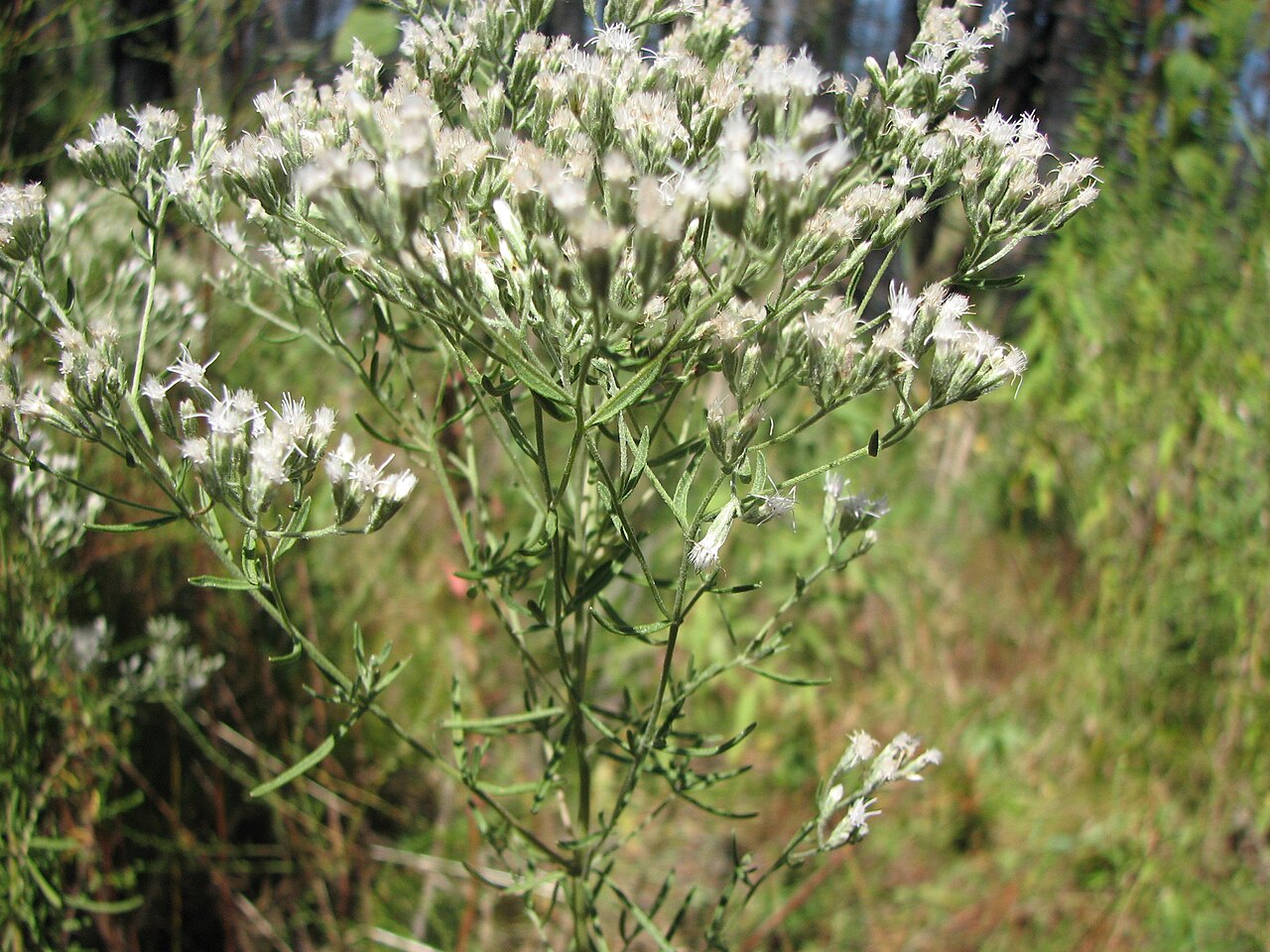
Eupatorium hyssopifolium, known as Hyssopleaf Thoroughwort or hyssop-leaved boneset, is a late-summer and fall-blooming perennial in the aster family (Asteraceae). It grows in dry, sandy and gravelly fields, open pine and oak woods, pine barrens and roadsides across the eastern and south-central United States, from southeastern New England and New York south to Florida and west to eastern Texas, Arkansas and Missouri.
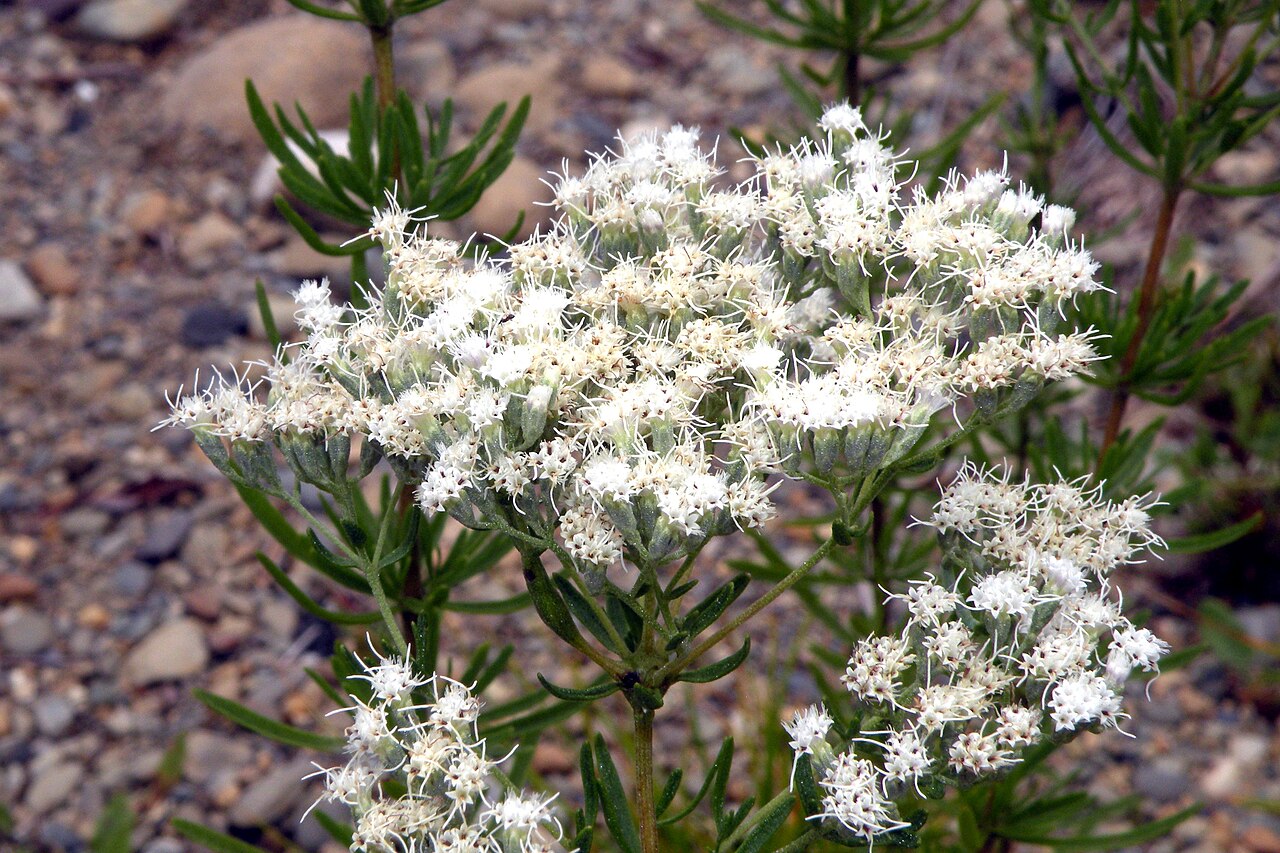
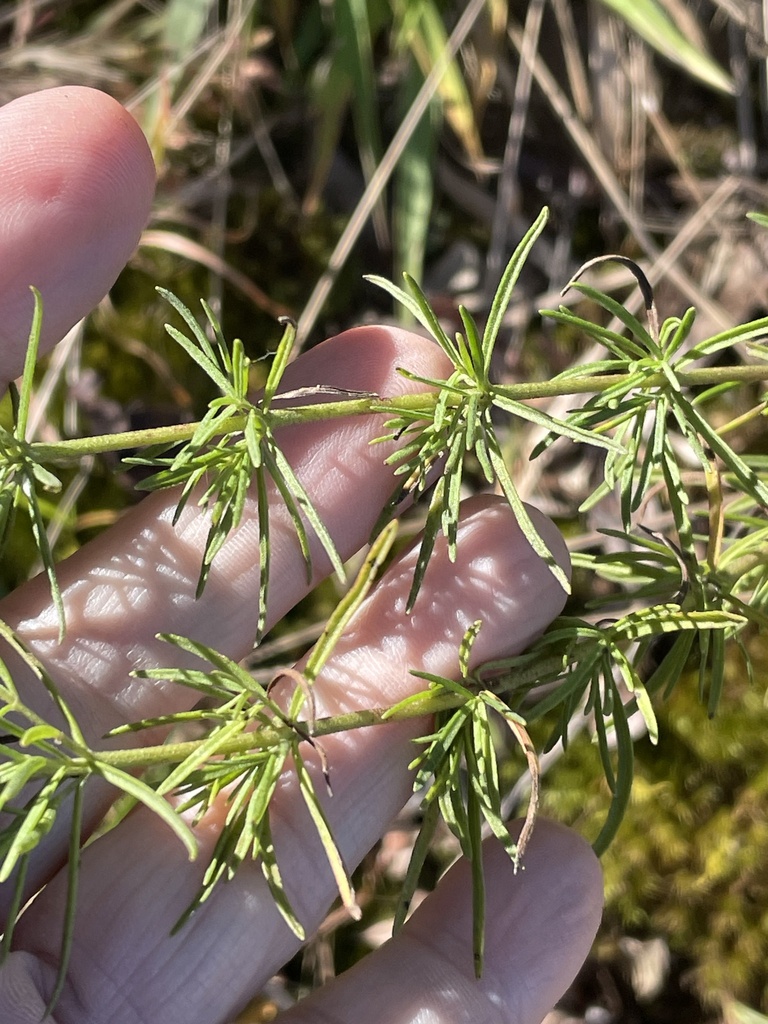
It is easy to recognize by its very narrow, almost needle-like leaves, which grow in whorls of four along the stems, and by its broad, flat-topped clusters of small, fuzzy white flower heads. Like its relatives boneset and late boneset, its flowers have no petals in the usual sense; each head is a tight bundle of five tiny tubular flowers.
Hyssopleaf thoroughwort is a tough, drought-tolerant native for sunny, sandy gardens, meadows and roadside plantings. Its late flowers are busy with bees, wasps, flies, beetles and butterflies at a time when many other plants have finished blooming. Do not eat or use it medicinally: plants in this genus contain alkaloids that can harm the liver.
Identification
Look for a bushy, upright perennial with very narrow, whorled leaves and flat-topped clusters of small white flower heads in late summer and fall, usually in dry, sandy, open ground.
Growth Habit
A clump-forming perennial with several erect, finely hairy stems 1 to 3 feet tall from a short, woody base. The stems branch near the top into the flower clusters. Plants are fairly short-lived but reseed readily in open ground.
Leaves
The leaves are linear to very narrowly lance-shaped, about 3/4 to 2 3/4 inches long and usually less than 1/4 inch wide, mostly in whorls of four (sometimes opposite or alternate toward the top). Small clusters of leaves are often tucked into the leaf axils, giving the stems a bushy look. Leaf edges are usually smooth, sometimes with a few teeth. A broader-leaved form, variety laciniatum, has toothed or lobed leaves up to about 1/2 inch wide.
Flowers
The flower heads are small and cylindrical, about 1/4 inch long, each with about five white disk flowers and no ray flowers, surrounded by overlapping, hairy, white-tipped bracts. They are packed into broad, flat-topped clusters at the top of the plant. Flowering runs mainly from August to October, sometimes starting in midsummer.
Fruit
Each flower produces a small, dark, ribbed seed (cypsela) topped with a tuft of white bristles that carries it on the wind.
Look-alikes
Late boneset (E. serotinum) is taller, with broader, stalked, toothed, opposite leaves. Roundleaf thoroughwort has rounded, opposite leaves. Dog fennel (E. capillifolium) has thread-like, finely divided leaves and long, airy plumes of flowers. Other narrow-leaved thoroughworts in the Southeast, such as E. linearifolium, are closely related and sometimes hard to separate.
Quick Facts
| Scientific Name | Eupatorium hyssopifolium |
| Family | Asteraceae (aster family) |
| Plant Type | Herbaceous perennial |
| Mature Height | 1–3 ft |
| Mature Spread | 1–2 ft |
| Growth Rate | Moderate |
| Sun Exposure | Full sun to light shade |
| Water Needs | Low to medium; drought tolerant |
| Soil Type | Dry, sandy, gravelly or loamy soils |
| Soil pH | Acidic to neutral (about 4.5–7.0) |
| Bloom Time | August–October |
| Flower Color | White |
| Fall Color | None notable; seed heads turn tan |
| Fruit | Small seeds with white bristly pappus |
| Deer Resistant | Yes; bitter foliage is rarely browsed |
| USDA Hardiness Zones | 5–9 |
Native Range
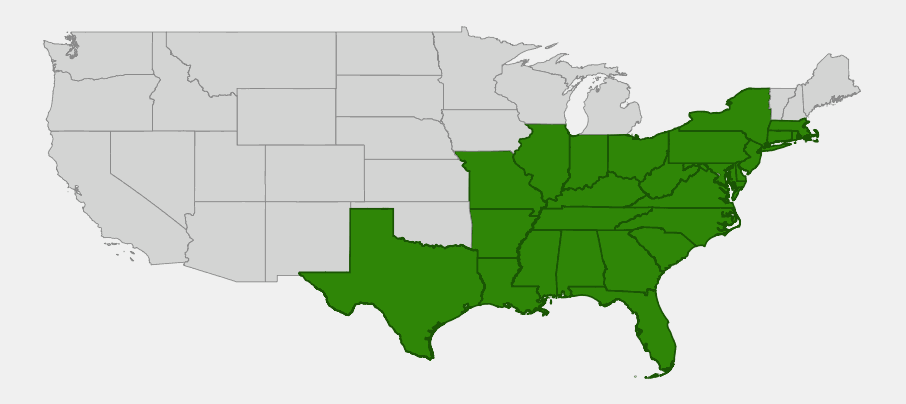
Hyssopleaf thoroughwort is native to the eastern and south-central United States. USDA PLANTS records it from 25 states plus the District of Columbia, from Massachusetts, Rhode Island, Connecticut and New York (mainly Long Island) south along the Atlantic and Gulf Coastal Plains and the Piedmont to Florida, and west to Kentucky, Tennessee, Missouri, Arkansas, Louisiana and eastern Texas. It does not reach Canada.
It is most common on the Coastal Plain and Piedmont of the Southeast and in sandy areas such as the New Jersey Pine Barrens. In New England it is native in the southeastern part of the region, on sandy soils near the coast. Farther inland, in Ohio, Indiana and Illinois, it is scattered and uncommon at the edge of its range; it is listed as endangered in Ohio. In Texas it grows only in the eastern part of the state, in the pinewoods and sandy openings.
Typical habitats are dry, sandy or gravelly old fields, pine and oak barrens, sandhills, open woods and clearings, power-line cuts, roadsides and railroad embankments. It favors places kept open by fire or mowing and becomes more abundant after fire.
📋 Regional plant lists featuring Hyssopleaf Thoroughwort: New York, Pennsylvania & Northern New Jersey · Ohio & Indiana · Kentucky & Tennessee · Connecticut, Massachusetts & Rhode Island · Maryland, Virginia & West Virginia · Delaware, Southern New Jersey & Long Island · Illinois, Iowa & Missouri · Alabama, Georgia & Mississippi · North & South Florida · North & South Carolina · Arkansas, Louisiana, Eastern Oklahoma & Eastern Texas · New Hampshire, Maine & Vermont
Growing & Care Guide
Hyssopleaf thoroughwort is an easy, low-maintenance plant for hot, dry, sunny spots with poor, sandy soil, where many garden perennials struggle.
Light
Full sun gives the most compact plants and best bloom. It tolerates light shade but becomes floppy and flowers less.
Soil & Water
Plant in well-drained, sandy, gravelly or loamy soil of low to moderate fertility. Once established it needs no supplemental water except in long droughts. Rich, wet or heavy soils make it lanky and short-lived.
Planting Tips
Plant in spring or fall, 12 to 18 inches apart, in meadows, sandy borders, pollinator gardens or roadside and power-line plantings. Combine it with little bluestem, broomsedge, goldenrods, asters and blazing stars for a late-season display.
Pruning & Maintenance
Leave the seed heads standing in fall for birds and winter interest, then cut stems down in late winter. Plants may reseed into open, sandy ground; pull extra seedlings if needed.
Propagation
Grow from fresh seed sown in fall or in spring after a few weeks of cold, moist treatment. Seeds need light to germinate, so press them onto the soil surface. Clumps can also be divided in early spring.
Landscape Uses
- Pollinator gardens: late-season nectar and pollen for many insects
- Dry meadows: thrives in sandy, low-fertility soils
- Roadside and power-line plantings: tolerates heat, drought and mowing
- Habitat restoration: pine barrens, sandhills and old fields
- Naturalistic borders: fine-textured foliage and white fall flowers
Wildlife & Ecological Value
Like other thoroughworts, hyssopleaf thoroughwort is a magnet for insects in late summer and fall.
For Pollinators
Small bees such as sweat bees, including Augochlorella aurata, as well as wasps, flies, beetles and butterflies visit the flowers for nectar and pollen. It has been studied as a plant that attracts beneficial insects, including predators and parasitoids of crop pests.
For Birds
Seed-eating birds such as sparrows and finches may pick at the small seeds in fall and winter, and the many insects on the flowers feed insect-eating birds.
For Mammals
The bitter foliage is rarely eaten by deer or rabbits.
Ecosystem Role
It is part of the diverse herb layer of fire-maintained pine and oak barrens, sandhills and dry grasslands, and it increases after fire. Its long fall bloom supports insects that pollinate other late-season plants.
Cultural & Historical Uses
The name Eupatorium honors Mithridates VI Eupator, king of Pontus, who was said to have used a plant of this group in medicine. The species name hyssopifolium means “with leaves like hyssop,” the narrow-leaved Old World herb.
Native peoples and early settlers used various thoroughworts in folk medicine, and hyssopleaf thoroughwort was reportedly applied externally to insect and snake bites. Plants in this genus contain pyrrolizidine alkaloids, which can damage the liver, so it should not be used as a home remedy.
The thoroughworts are known for hybridization and for populations that reproduce by seed without fertilization (apomixis). Some plants called E. hyssopifolium are polyploid and appear to have arisen from past hybridization with late boneset, which can make identification tricky.
Frequently Asked Questions
How do I recognize hyssopleaf thoroughwort?
Look for very narrow leaves in whorls of four and flat-topped clusters of small white, fuzzy flower heads in late summer and fall, in dry, sandy, sunny places.
Is hyssopleaf thoroughwort good for pollinators?
Yes. Its late-season flowers attract many bees, wasps, flies, beetles and butterflies.
Does it need much water?
No. It is drought tolerant and grows best in dry, sandy or gravelly soil once established.
Is hyssopleaf thoroughwort native to New England?
Yes. Go Botany describes it as native to southeastern New England, in Massachusetts, Rhode Island and Connecticut, on sandy soils.
Can I use it as an herbal remedy?
No. It has a history of folk use, but plants in this genus contain alkaloids that can harm the liver.

Looking for a nursery that carries Hyssopleaf Thoroughwort?
Browse our native plant nursery directory: Alabama & Arkansas · Connecticut, Delaware, Florida & Georgia · Illinois & Indiana · Kentucky, Louisiana, Maryland, Massachusetts, Mississippi & Missouri · New Jersey, New York, North Carolina & Ohio · Pennsylvania, Rhode Island, South Carolina, Tennessee, Texas & Virginia · West Virginia

