
Small Butterwort (Pinguicula pumila)
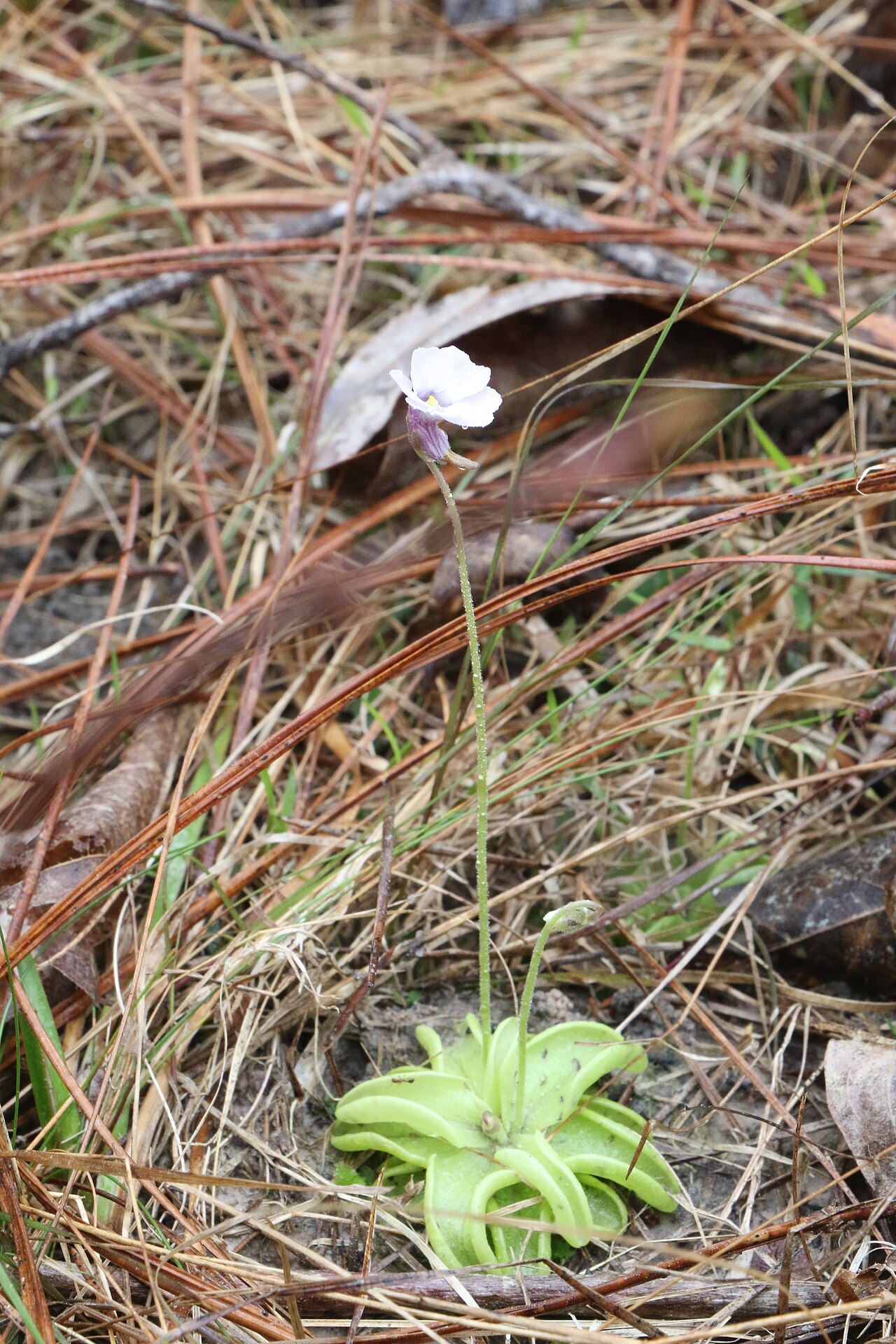
Pinguicula pumila, known as Small Butterwort or dwarf butterwort, is a tiny carnivorous plant of the southeastern Coastal Plain. It belongs to the bladderwort family (Lentibulariaceae). It forms a flat rosette, usually only 1 to 2 inches across, of pale yellow-green, greasy-feeling leaves covered with sticky glands that trap and digest gnats and other tiny insects. In late winter and spring it sends up thin stalks, each with a single small flower that may be white, lavender, pink or pale yellow.
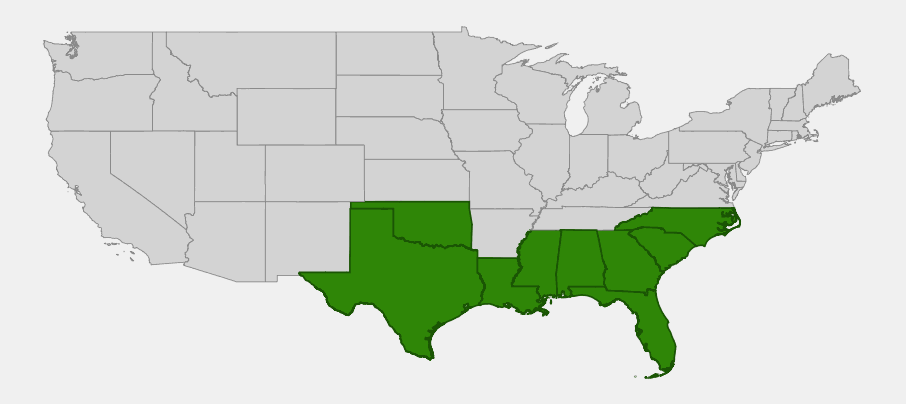
It is the smallest butterwort in the United States. It grows from southeastern North Carolina south through the Coastal Plain of South Carolina and Georgia to the Florida Keys, and west along the Gulf Coast to Louisiana and southeastern Texas. It lives in wet pine flatwoods and savannas, seepage slopes, bog edges and moist, sandy ditches, where frequent fire keeps the ground open and sunny.
Never dig small butterworts from the wild. Like other carnivorous plants, it depends on fragile wetland habitats that have been greatly reduced by development, drainage and fire suppression, and it is rare in parts of its range. If you want to grow it, buy plants or seed from a nursery that propagates its own stock.
Identification
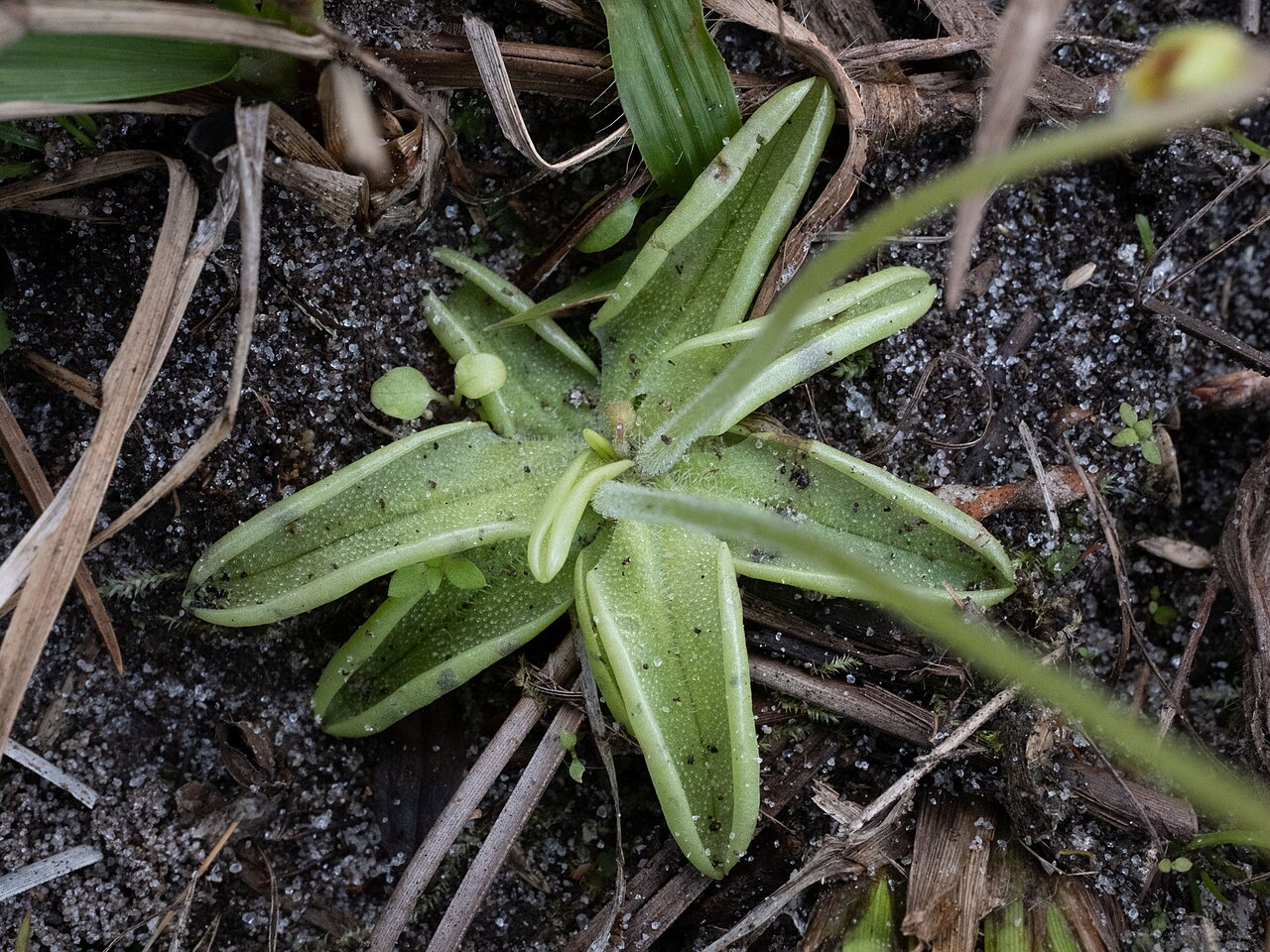
Look for a tiny, flat, star-like rosette of pale yellow-green, sticky leaves with rolled edges on wet, sandy ground in open pinelands, with one small flower on each thin stalk in spring.
Growth Habit
Small butterwort is a perennial, sometimes short-lived, that grows as a single flat rosette pressed close to the ground. Most rosettes are about 1 to 2 inches across. It has a few small roots and no stem above ground other than the flower stalks.
Leaves
The rosette has several to many oblong to oval leaves, each about 1/2 to 1 inch long, pale yellow-green to light green, sometimes tinged pink or reddish. The upper surface is covered with tiny stalked glands that produce a sticky, greasy-looking film, and the leaf edges curl inward. Small insects that land on the leaves become stuck and are digested by enzymes from other glands.
Flowers
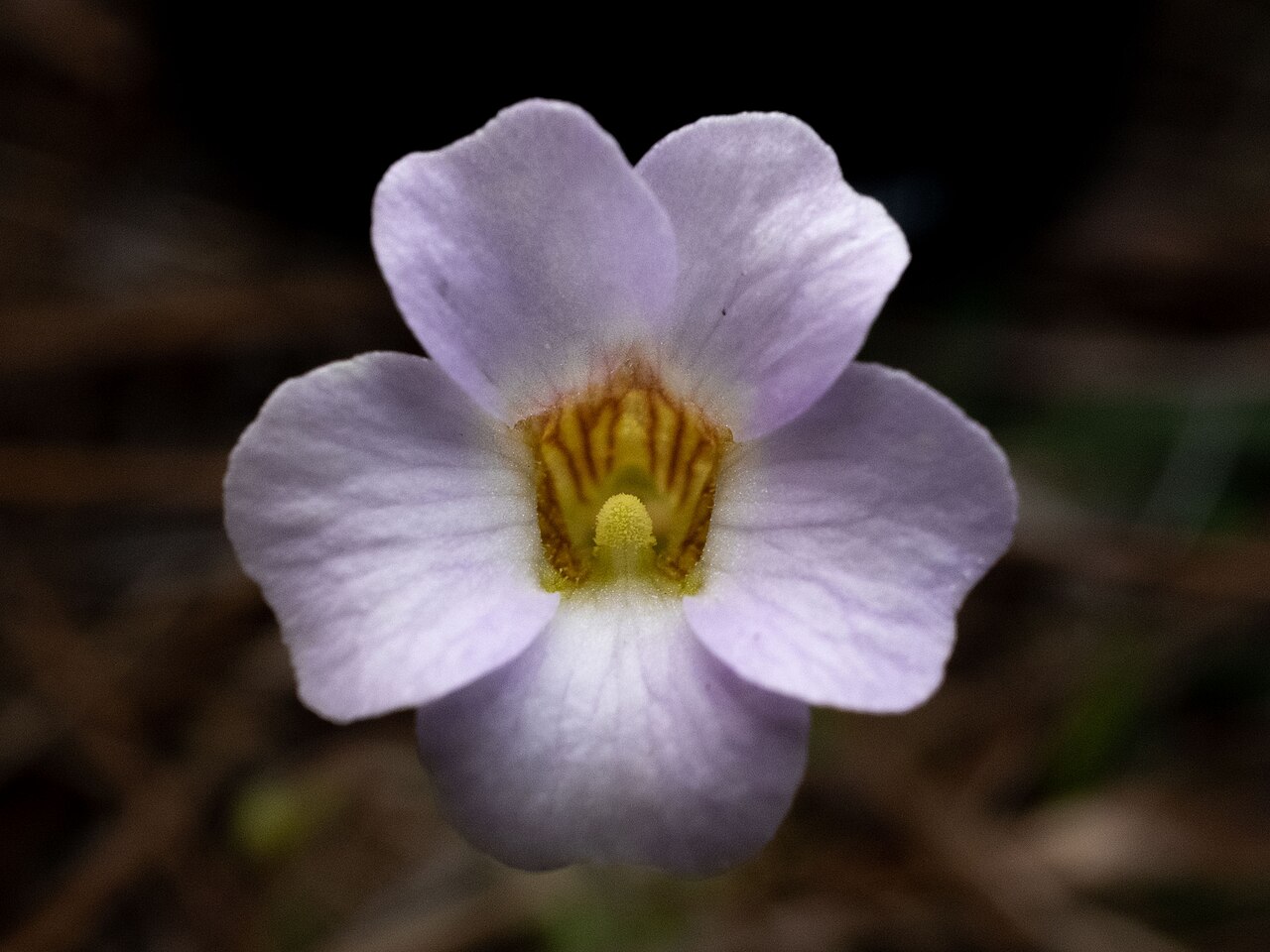
From one to several thin, hairy flower stalks, about 2 to 6 inches tall, rise from the rosette, each with a single flower. The flower is about 1/2 to 3/4 inch across, two-lipped, with five rounded, spreading lobes and a short spur behind. Color varies from white to pale lavender, violet, pink or pale yellow, with a yellowish, hairy throat often marked with darker veins. It blooms mainly from late winter to late spring, depending on location.
Fruit
The fruit is a small, round capsule at the top of the flower stalk, which splits open to release many tiny, dust-like seeds.
Look-alikes
The other southeastern butterworts are larger. Yellow butterwort (P. lutea) has larger, bright yellow flowers. Blue butterwort (P. caerulea) has violet-blue flowers with dark veins, and Godfrey’s butterwort (P. ionantha) is a rare Florida Panhandle species with larger, pale violet to white flowers. Primrose butterwort (P. primuliflora) has pink flowers with a white ring and grows in seeps and streams. Small butterwort is recognized by its very small rosettes and small, often pale flowers.
Quick Facts
| Scientific Name | Pinguicula pumila |
| Family | Lentibulariaceae (bladderwort family) |
| Plant Type | Small carnivorous herbaceous perennial |
| Mature Height | 2–6 in (in flower) |
| Mature Spread | 1–2 in |
| Growth Rate | Moderate |
| Sun Exposure | Full sun to light shade |
| Water Needs | High; constantly moist to wet |
| Soil Type | Wet, acidic sand or sandy peat |
| Soil pH | Acidic (about 4.0–6.0) |
| Bloom Time | Late winter to late spring |
| Flower Color | White, lavender, violet, pink or pale yellow |
| Fall Color | None notable |
| Fruit | Small capsule with tiny seeds |
| Deer Resistant | Generally not browsed |
| USDA Hardiness Zones | 8–10 |
Native Range
Small butterwort is native to the southeastern United States and the Bahamas. USDA PLANTS lists it as native in Alabama, Florida, Georgia, Louisiana, Mississippi, North Carolina, Oklahoma, South Carolina and Texas. It does not grow in Canada.
Its core range is the Atlantic and Gulf Coastal Plain, from southeastern North Carolina through South Carolina and Georgia to the whole Florida peninsula, including the Everglades region and the Florida Keys, then west across the Florida Panhandle, southern Alabama and Mississippi to Louisiana. In Texas it grows only in the southeast, in the Big Thicket and the surrounding pine savannas. The Oklahoma record listed by USDA is a far outlying record at the edge of its range, and it is rare in North Carolina and other states at the margins.
It grows at low elevations in wet, open, acidic places: wet pine flatwoods and savannas, seepage slopes and bogs, edges of cypress and pond margins, wet prairies and roadside ditches. It needs sun and bare, moist ground, and regular fire helps it by removing taller vegetation and thick litter.
📋 Regional plant lists featuring Small Butterwort: Alabama, Georgia & Mississippi · North & South Florida · North & South Carolina · Arkansas, Louisiana, Eastern Oklahoma & Eastern Texas
Growing & Care Guide
Small butterwort can be grown by carnivorous plant enthusiasts in a bog garden or a tray-watered container. It is less forgiving than some butterworts, but it is easy enough if you mimic its sunny, wet, sandy habitat. Use only nursery-propagated plants.
Light
Full sun to bright, light shade. Indoors or in a greenhouse it needs very bright light; too little light makes the leaves stretch and lose their sticky glands.
Soil & Water
Grow it in a lean, acidic mix of peat and coarse sand, or sand alone. Keep the medium constantly moist, for example by standing the pot in a shallow tray of water. Use rainwater, distilled or reverse-osmosis water; minerals in hard tap water build up and harm carnivorous plants. Never fertilize the soil.
Planting Tips
Plant in a sunny bog garden with other carnivorous plants, or in small pots in a tray of rainwater. In the garden it is hardy only in mild-winter areas of the Southeast; elsewhere grow it in a greenhouse or bright windowsill. It catches its own food, so there is no need to feed it insects.
Pruning & Maintenance
Remove fallen leaves and debris from the rosettes, and keep taller plants and mosses from overgrowing them. Replace the growing mix every few years when it begins to break down.
Propagation
Sow the tiny seeds on the surface of moist peat and sand in bright light; they do not need covering. Some growers also root leaf cuttings laid on moist medium. Plants may be short-lived, so keep a few seedlings coming.
Landscape Uses
- Bog gardens: a tiny rosette at the front of a carnivorous plant bog
- Container bogs: grows in tray-watered pots with sundews and pitcher plants
- Natural gnat control: sticky leaves trap fungus gnats and other tiny insects
- Education: a fascinating example of a native carnivorous plant
- Wet savanna conservation: an indicator of healthy, fire-maintained wetlands
Wildlife & Ecological Value
Small butterwort is part of the remarkable community of carnivorous plants in the fire-maintained wetlands of the Coastal Plain.
For Pollinators
Its small flowers are visited by small bees, flies and other insects. Pollinators are not trapped, because the flowers stand on stalks well above the sticky leaves.
For Birds
It provides little food for birds, but its open, wet savanna habitat supports birds such as sparrows and quail.
For Mammals
Mammals rarely eat it because of its tiny size and sticky leaves.
Ecosystem Role
As a carnivorous plant, it gets extra nitrogen and phosphorus by digesting small insects such as gnats and springtails, which lets it thrive in nutrient-poor, wet, sandy soils. It is an indicator of healthy, open pine savannas and bogs that are kept open by fire.
Cultural & Historical Uses
The genus name Pinguicula comes from the Latin pinguis, meaning “fat” or “greasy,” for the greasy feel of the sticky leaves, and the common name butterwort has the same origin. The species name pumila means “dwarf.”
In Europe, the leaves of common butterwort were traditionally used to curdle milk, and the name butterwort may also reflect a folk belief that the plant protected cows and their butter. These traditions relate to European species, not to small butterwort.
Charles Darwin studied butterworts in his book Insectivorous Plants (1875) and showed that their leaves secrete digestive fluids when insects land on them. Small butterwort and its relatives in the Southeast are now a favorite subject for naturalists and photographers, who find them in spring among pitcher plants and sundews.
Frequently Asked Questions
Is small butterwort carnivorous?
Yes. Its leaves are covered with sticky glands that trap tiny insects such as gnats, and other glands release enzymes that digest them.
How big does small butterwort get?
It is the smallest butterwort in the United States. Most rosettes are only 1 to 2 inches across, and the flower stalks are about 2 to 6 inches tall.
What color are small butterwort flowers?
They vary from white to pale lavender, violet, pink or pale yellow, usually with a yellowish throat.
Can I collect small butterwort from the wild?
No. Never dig it or other carnivorous plants from the wild. Buy nursery-propagated plants or seed instead.
Where does small butterwort grow?
On the southeastern Coastal Plain, from North Carolina to the Florida Keys and west to southeastern Texas, in wet pine savannas, bogs and sandy ditches.

Looking for a nursery that carries Small Butterwort?
Browse our native plant nursery directory: Alabama · Florida & Georgia · Louisiana & Mississippi · North Carolina & Oklahoma · South Carolina & Texas

