
Parry’s Gentian (Gentiana parryi)
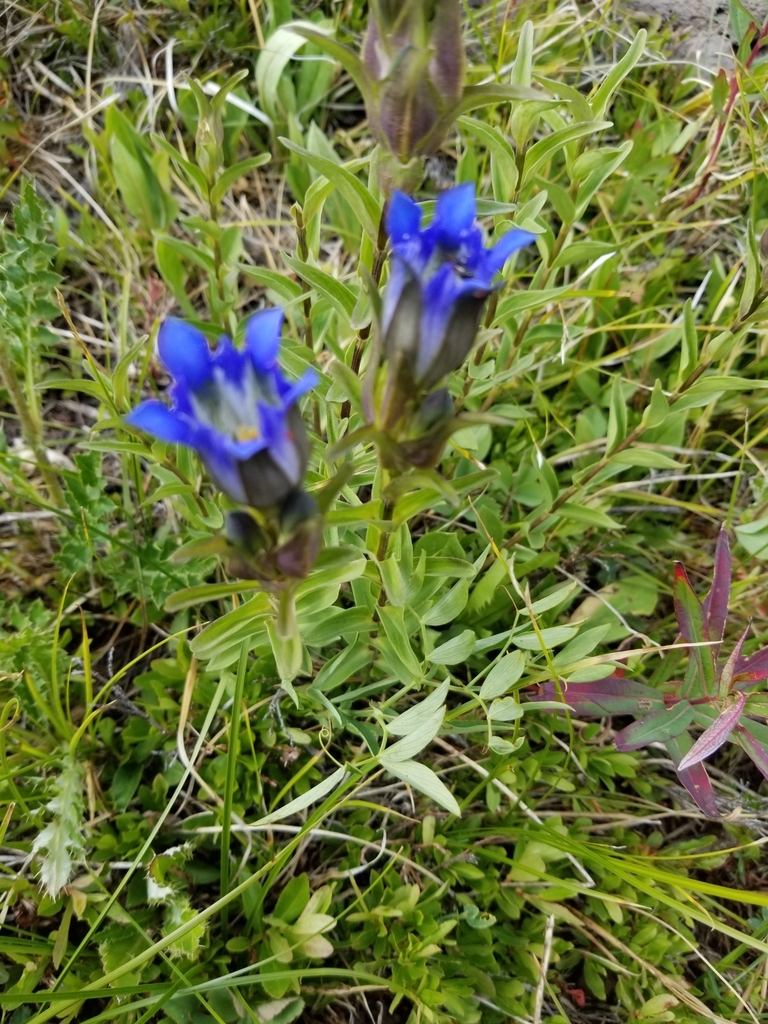
Gentiana parryi, known as Parry’s Gentian or Parry gentian, is a showy late-summer wildflower of the high meadows of the southern Rocky Mountains. From July into September, its short stems end in one to a few large, upright, deep blue bells, often the last bright flowers in a mountain meadow before the first snow. Plants are usually 4 to 16 inches tall.
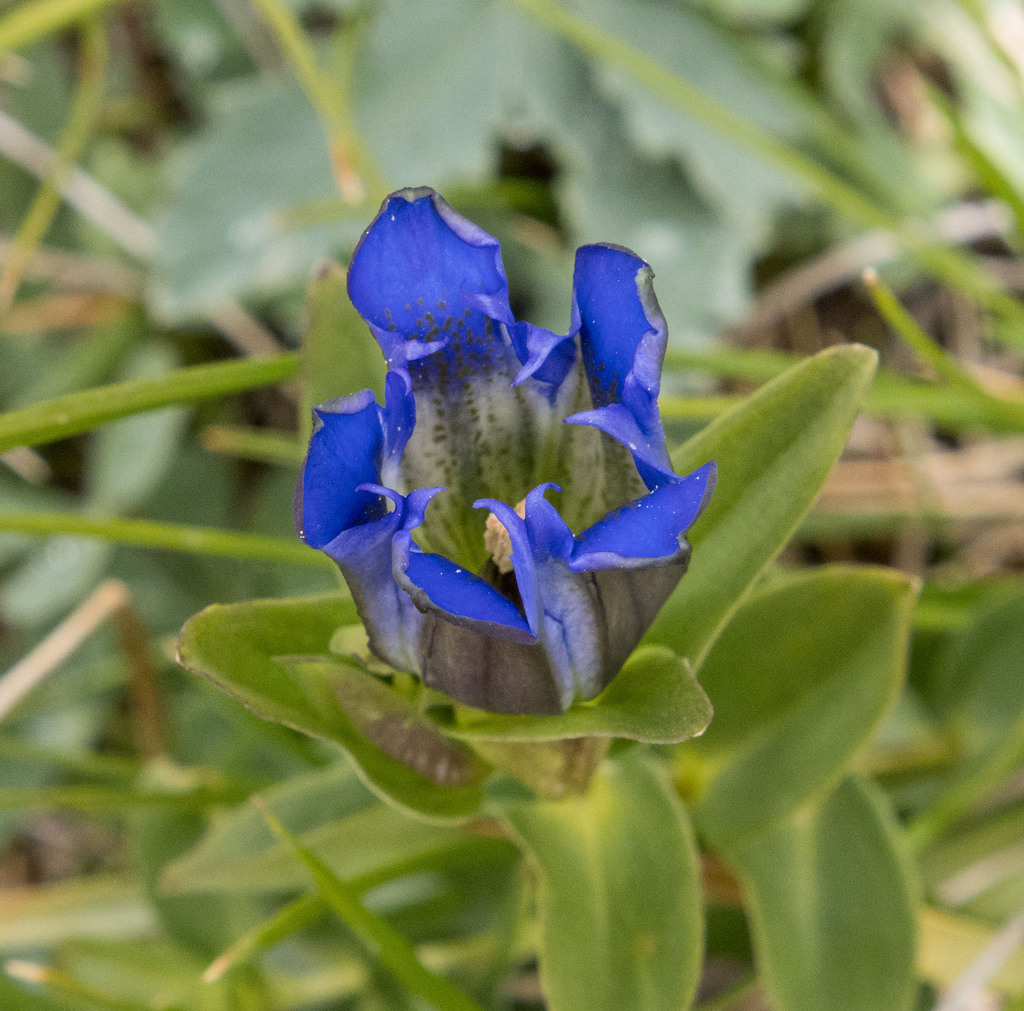
It is a member of the gentian family (Gentianaceae) and one of the true gentians, with flowers that have small pleats between the petal lobes. The smooth, slightly fleshy leaves are covered with a whitish, waxy bloom, giving the plant a bluish-green look. Like many gentians, the flowers close up tightly in cloudy weather and at night, and open again in sunshine.
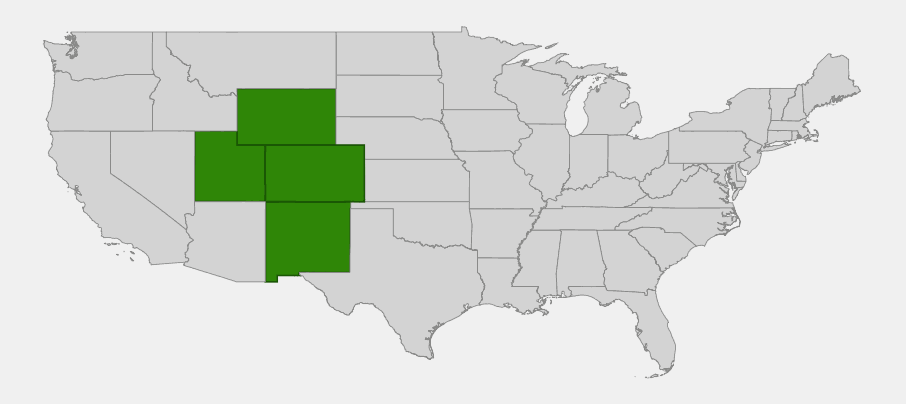
Parry’s gentian grows in subalpine and alpine meadows, forest openings and aspen stands in Wyoming, Colorado, Utah and New Mexico, mostly above about 8,000 feet. Its large flowers are pollinated by bumble bees, which crawl right inside the bells. This guide covers how to identify it, where it grows, the challenges of growing it in a garden, and its value to pollinators.
Identification
Parry’s gentian is one of the most conspicuous gentians of the southern Rockies. Look for a few large, upright, deep blue bells at the tip of each stem, above pairs of smooth, bluish-green, clasping leaves.
Growth Habit
It is a clump-forming perennial with one to several unbranched stems, 4 to 16 inches tall, rising from a thick root crown. The stems are upright or curve upward from a slightly sprawling base. Plants die back to the crown in fall and regrow in early summer after snowmelt.
Leaves
The leaves are opposite, egg-shaped to lance-shaped, about 1 to 1.5 inches long, smooth-edged and slightly thick or fleshy. They are often covered with a whitish, waxy bloom. The upper leaves are broad at the base and clasp the stem, and a pair of leafy bracts usually sits directly below the flower cluster.
Flowers
The flowers are borne singly or in small clusters of up to about four at the top of the stem. Each is a large, upright, funnel- or bell-shaped tube, about 1.5 to 2 inches long, deep blue to purplish blue, often with paler, greenish streaks or spots inside. The five spreading lobes alternate with small pleats (plicae) with short, irregular teeth. The flowers open in sun and close in cloudy weather. Bloom time is mainly July to September.
Fruit & Seeds
Each flower produces a narrow capsule that splits open in fall to release many small, flattened, winged seeds, which are scattered by wind.
Look-alikes
Pleated gentian (Gentiana affinis) has smaller, more numerous flowers in the leaf axils along the upper stem, and narrower leaves. The western mountain bog gentian (Gentiana calycosa) grows farther north and west and has broader flowers. Fringed gentians (Gentianopsis) lack the pleats and have fringed petal lobes. Arctic gentian (Gentiana algida), which shares its alpine habitat, has whitish flowers streaked with purple.
Quick Facts
| Scientific Name | Gentiana parryi Engelm. |
| Family | Gentianaceae (gentian family) |
| Plant Type | Herbaceous perennial |
| Mature Height | 4–16 in |
| Mature Spread | 6–12 in |
| Growth Rate | Slow |
| Sun Exposure | Full sun to light shade |
| Water Needs | Moderate; soil should stay evenly moist |
| Soil Type | Moist, well-drained, gritty loam rich in organic matter |
| Soil pH | About 5.5–7.0 |
| Bloom Time | July–September |
| Flower Color | Deep blue to purplish blue |
| Fall Color | Foliage may turn purplish before dying back |
| Fruit | Narrow capsule with small winged seeds |
| Deer Resistant | Moderately; bitter-tasting |
| USDA Hardiness Zones | 3–6 |
Native Range
Parry’s gentian is a plant of the southern and central Rocky Mountains. USDA PLANTS lists it as native in Wyoming, Colorado, Utah and New Mexico. Some regional references extend its range to central Idaho and eastern Arizona, but it is most common in Colorado.
In Colorado it grows throughout the high mountains, from the Park Range and Front Range to the Elk, Sawatch, Gunnison-area and San Juan Mountains. It reaches south into the San Juan and Sangre de Cristo Mountains of northern New Mexico, north into the mountains of southern Wyoming such as the Medicine Bow and Sierra Madre ranges, and west into the high mountains of eastern Utah.
It grows in subalpine and alpine meadows, along streams and in forest openings, in aspen groves and in open spruce-fir forest, mostly from about 8,000 to 13,000 feet. It favors moist but well-drained soil and often appears in meadows that were covered by snow for much of the year.
📋 Regional plant lists featuring Parry’s Gentian: Montana & Wyoming · Utah & Western Colorado
Growing & Care Guide
Parry’s gentian is a beautiful but challenging plant for gardeners. It is adapted to cool mountain summers, deep winter snow and moist, well-drained soil, and it often struggles in hot, low-elevation gardens. It is occasionally offered by specialist rock garden and Rocky Mountain native nurseries. Never dig plants from the wild: gentians resent root disturbance, wild plants rarely survive transplanting, and mountain meadows recover slowly from digging.
Light
Give it full sun in cool, high-elevation gardens. At lower elevations or in hot climates, plant it where it gets morning sun and light afternoon shade, which helps keep the roots and soil cool.
Soil & Water
It needs soil that stays evenly moist through the growing season but drains well, such as a gritty loam enriched with compost or leaf mold. Water regularly in summer, especially during dry spells, but avoid waterlogged soil. A mulch of gravel or fine stone helps keep the roots cool and moist.
Planting Tips
Plant young, pot-grown plants in spring, handling the root ball carefully. Rock gardens, trough gardens and cool, moist spots near the edge of a meadow planting suit it well. It looks best grown with other mountain wildflowers and low grasses that will not overwhelm it.
Pruning & Maintenance
No pruning is needed. Leave the stems until they die back in fall, and mark the location so the dormant crown is not disturbed in spring. Plants are slow to establish and resent being moved, so choose the site carefully.
Propagation
Grow it from seed. Sow the fine seed in fall or winter on the surface of a gritty seed mix and leave the pots outside for natural cold stratification, or give it several weeks of cold, moist treatment in the refrigerator. Germination can be slow and uneven, and seedlings take two or more years to reach flowering size.
Landscape Uses
- Mountain and high-elevation gardens: deep blue late-summer flowers where summers are cool
- Rock and trough gardens: compact plants for gritty, well-drained soil
- Pollinator gardens: a late-season nectar source favored by bumble bees
- Meadow restoration: a characteristic wildflower of subalpine meadows
- Late-season color: blooms when most mountain wildflowers have finished
Wildlife & Ecological Value
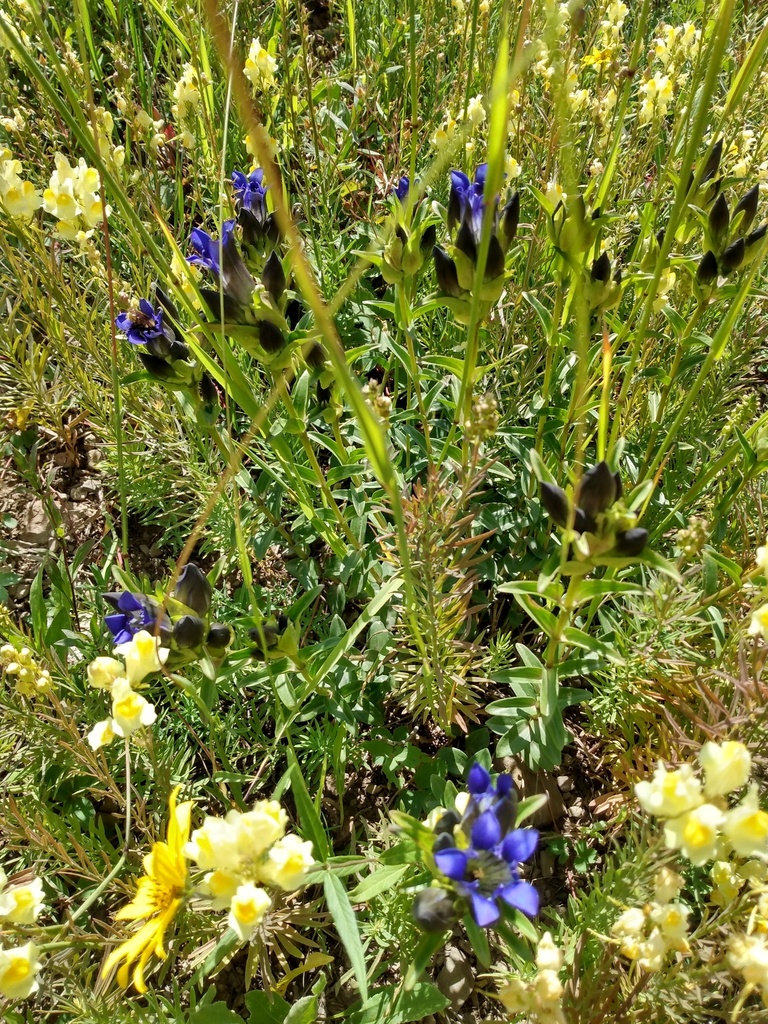
Parry’s gentian blooms late in the short mountain summer, when its large flowers are an important food source for pollinators.
For Pollinators
The large, deep flowers are pollinated mainly by bumble bees, which crawl inside the bell to reach nectar at the base and pick up pollen on their backs. The Xerces Society notes it as having special value for bumble bees. Because it blooms late in the season, it helps queens and workers build reserves before winter, and bumble bees sometimes shelter inside the closed flowers on cold or cloudy days.
For Birds
Birds make little direct use of the plant, although seed-eating birds may take some of the small seeds in fall.
For Mammals
Gentians contain bitter compounds, so they are generally browsed little by deer and elk, though grazing animals may eat them occasionally along with other meadow plants.
Ecosystem Role
Parry’s gentian is part of the diverse wildflower community of high meadows in the southern Rockies. Its late flowers extend the blooming season, and its presence is a sign of an intact subalpine meadow.
Cultural & Historical Uses
The genus name Gentiana is said to honor Gentius, a king of ancient Illyria who, according to Pliny, discovered the medicinal value of gentian roots. The species name parryi honors Charles Christopher Parry, a nineteenth-century botanist who explored the Colorado Rockies and collected many of its plants. George Engelmann described the species from Parry’s collections.
Gentian roots are famously bitter, and European species such as yellow gentian (Gentiana lutea) have long been used to make bitters and digestive tonics. Parry’s gentian shares that bitterness. Some Rocky Mountain wildflower books mention local medicinal uses of native gentians, but none of them should be harvested from the wild.
For many hikers in Colorado and northern New Mexico, Parry’s gentian is a sign that summer is ending. It is a favorite subject for wildflower photographers, especially on sunny days when the flowers are fully open, and it is best enjoyed and photographed in place.
Frequently Asked Questions
When does Parry’s gentian bloom?
Mainly from July to September, late in the mountain summer, after most other wildflowers have peaked.
Why are the flowers closed?
Parry’s gentian flowers close in cloudy weather, at night and in cold conditions, which protects the pollen and nectar. They reopen in sunshine.
Where does Parry’s gentian grow?
It grows in subalpine and alpine meadows, aspen groves and forest openings in the mountains of Wyoming, Colorado, Utah and New Mexico, mostly from about 8,000 to 13,000 feet.
Can I grow Parry’s gentian in my garden?
It can be grown in cool mountain gardens or rock gardens with moist, well-drained soil, but it often struggles in hot, low-elevation climates. Buy plants or seed from specialist nurseries and never dig it from the wild.
What pollinates Parry’s gentian?
Mainly bumble bees, which crawl inside the large flowers to reach nectar.

Looking for a nursery that carries Parry’s Gentian?
Browse our native plant nursery directory: Colorado · New Mexico · Utah · Wyoming

