
Streambank Springbeauty (Claytonia parviflora)
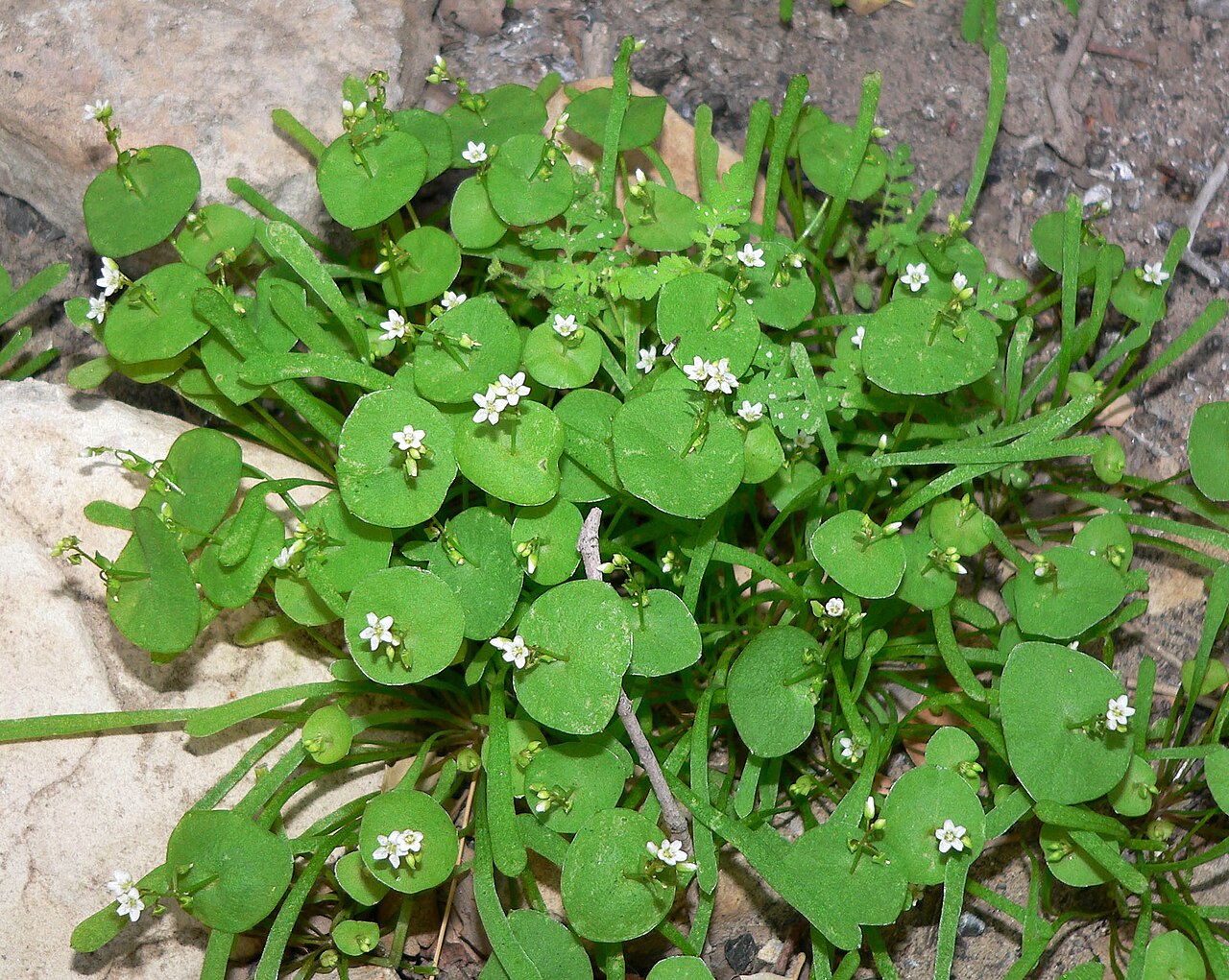
Claytonia parviflora, known as Streambank Springbeauty or narrow-leaved miner’s lettuce, is a small spring annual of the western United States and British Columbia. Like its better-known cousin miner’s lettuce, it has a pair of stem leaves fused into a round, cup-like disk, with tiny white or pale pink flowers rising from the center. It differs in its narrow, strap-like to spoon-shaped basal leaves.
It belongs to the montia family (Montiaceae), which USDA PLANTS still places in the purslane family (Portulacaceae). The species name parviflora means “small-flowered”. Older references treat it as a form of miner’s lettuce, under names such as Montia perfoliata or Claytonia perfoliata subsp. parviflora, and botanists recognize several subspecies within it.
Streambank springbeauty grows in moist, shady spots in spring: under shrubs and trees, along streams, at the base of rocks and on mossy slopes, from the coast to the deserts and the northern Rockies. It is edible, like miner’s lettuce, and it is easy to grow from seed in a shady garden. This guide covers how to identify it, where it grows, and how to grow it.
Identification
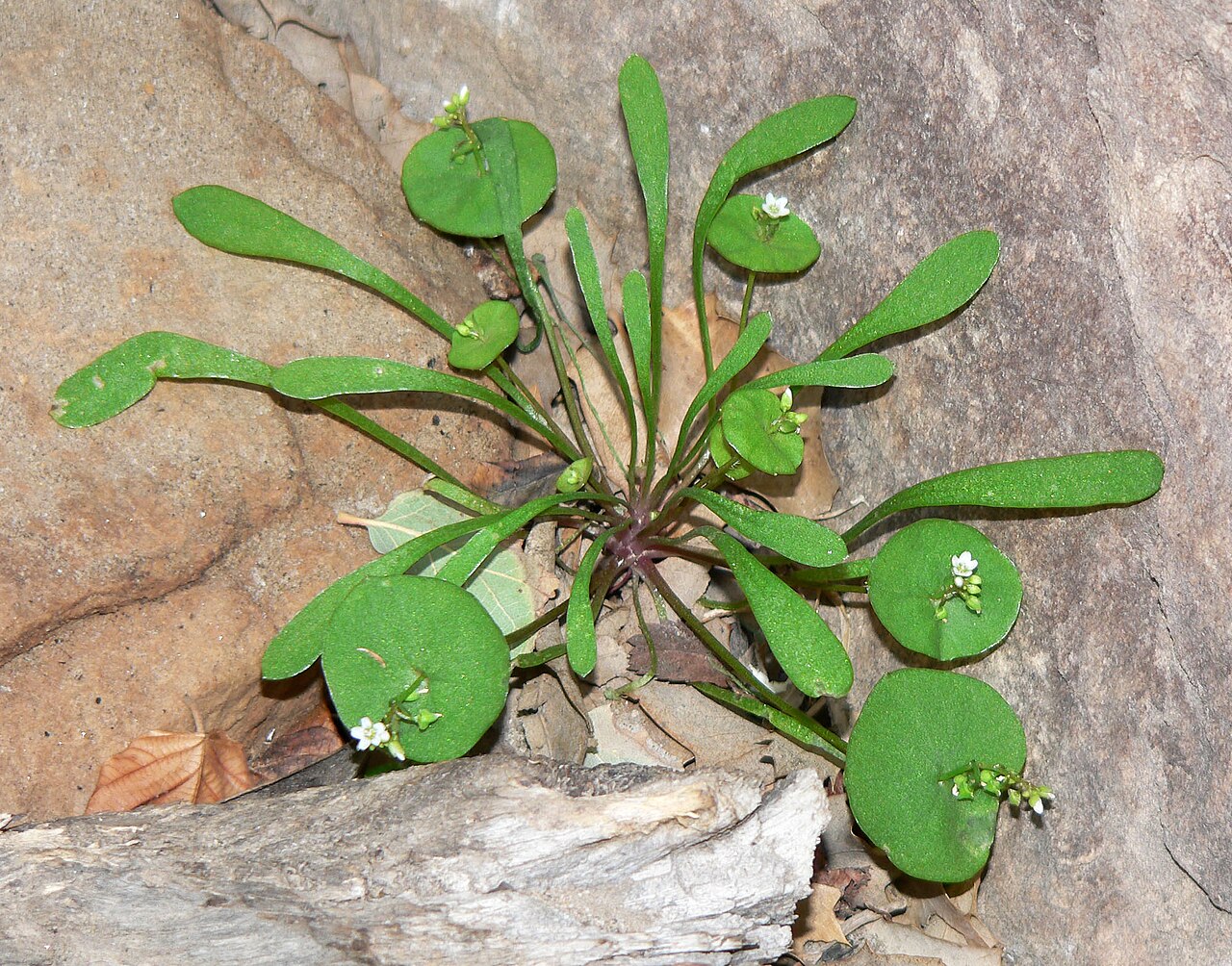
Streambank springbeauty is easiest to recognize by its combination of a round leaf disk beneath the flowers and narrow basal leaves. Compare it with miner’s lettuce, which usually has broader basal leaves.
Growth Habit
It is a small, succulent annual, usually 2 to 8 inches tall, sometimes taller in rich shade. Plants form a basal rosette of leaves with several erect or spreading flowering stems. Seeds germinate with the fall or winter rains, the plants flower in spring, and they dry up by early summer.
Leaves
The basal leaves are fleshy and narrow, linear to narrowly spoon-shaped, mostly 1 to 4 inches long, without a broad blade. Each flowering stem has a single pair of leaves fused into a round to slightly angled disk or cup, usually 1/2 to 1 1/2 inches across. The leaves are often tinged red or orange in sun or as they age.
Flowers
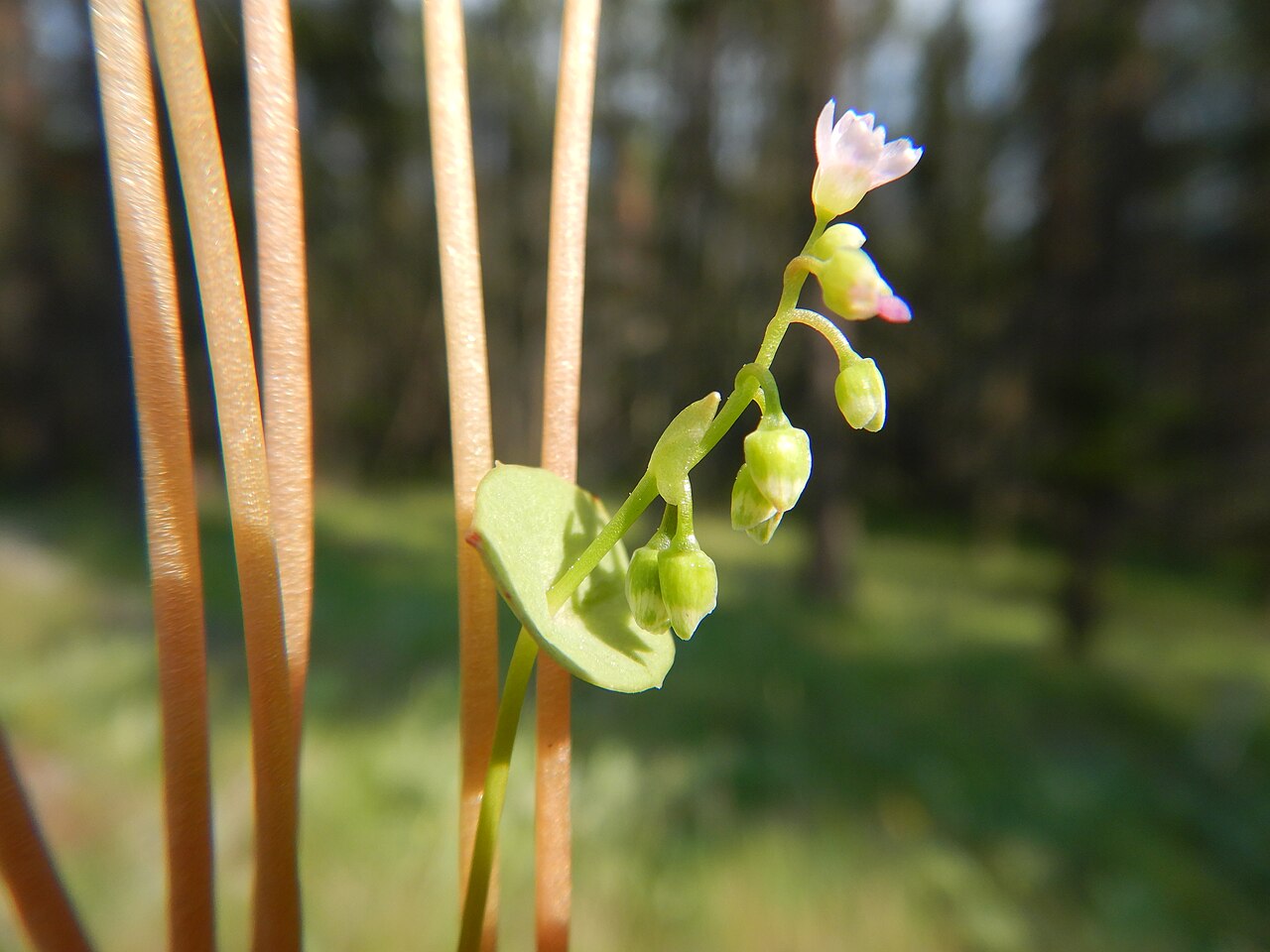
The flowers are clustered in a short raceme that rises from the center of the leaf disk. Each flower is small, about 1/4 inch across or less, with five white to pale pink petals. Bloom time is mainly February to June, earlier at low elevations and later in the mountains.
Fruit & Seeds
The fruit is a small capsule that splits into three valves, flinging out a few shiny black seeds. The seeds carry small fatty appendages that attract ants, which help spread them.
Look-alikes
Miner’s lettuce (Claytonia perfoliata) has the same leaf disk but usually broader, long-stalked basal leaves with diamond- to kidney-shaped blades. Redstem springbeauty (Claytonia rubra) is smaller, with reddish, often lopsided leaf disks and spoon-shaped basal leaves. Candy flower (Claytonia sibirica) has separate, unfused stem leaves and larger pink-veined flowers. Streambank springbeauty is identified by its fused leaf disk together with very narrow basal leaves.
Quick Facts
| Scientific Name | Claytonia parviflora Douglas ex Hook. |
| Family | Montiaceae (montia family); Portulacaceae in USDA PLANTS |
| Plant Type | Annual wildflower |
| Mature Height | 2–8 in |
| Mature Spread | 2–6 in |
| Growth Rate | Fast (annual) |
| Sun Exposure | Part shade to shade |
| Water Needs | Moderate in winter and spring; none in summer |
| Soil Type | Moist, well-drained loam, humus, gravel or sand |
| Soil pH | About 5.5–7.5 |
| Bloom Time | February–June (later in the mountains) |
| Flower Color | White to pale pink |
| Fall Color | None; annual, dies by early summer |
| Fruit | Small three-valved capsule with shiny black seeds |
| Deer Resistant | Not well documented; small and short-lived |
| USDA Hardiness Zones | 5–10 (grows as a cool-season annual) |
Native Range
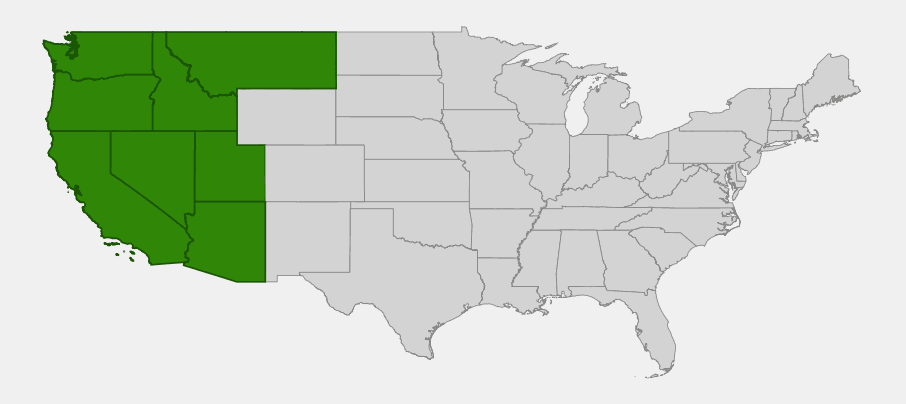
Streambank springbeauty is native to western North America. USDA PLANTS lists it in eight states: Washington, Oregon, California, Idaho, Montana, Nevada, Utah and Arizona, and in British Columbia. It also extends south into northern Baja California.
It is most common west of the Cascades and the Sierra Nevada, in the Puget Trough and Willamette Valley, the Klamath region and the foothills and Coast Ranges of California. It also grows east of the Cascades in Washington and Oregon, in northern Idaho and western Montana, where it reaches its eastern limit, and in shady canyons of the Great Basin and the Mojave and Sonoran desert mountains in Nevada, Utah and Arizona, where the subspecies utahensis occurs.
It grows in places that are moist and shaded in spring: under oaks, pines and shrubs, along stream banks, in rock crevices and at the base of boulders and cliffs, on mossy slopes and in moist meadows. It is found from near sea level into the lower mountains, and higher in the desert mountain ranges.
📋 Regional plant lists featuring Streambank Springbeauty: Idaho, Eastern Oregon & Eastern Washington · Montana & Wyoming · Utah & Western Colorado · Arizona & New Mexico · Western Oregon & Western Washington · California & Nevada
Growing & Care Guide
Streambank springbeauty is an easy native annual for shady spots, woodland gardens and the edges of paths. Seed is rarely sold on its own, but it is sometimes offered by western native seed suppliers, and miner’s lettuce seed mixes are more widely available. Once established, it reseeds each year in suitable shady, moist spots.
Light
Give it part shade to full shade, such as under deciduous trees or on the north side of rocks or buildings. In full sun it grows small and dries up quickly.
Soil & Water
It grows in most well-drained soils, from sandy loam to gravelly or humus-rich soil. It needs moisture from fall through spring, which winter rain usually provides, and no summer water after it sets seed.
Planting Tips
Sow seed in fall, scattering it on bare soil and pressing it in lightly. It combines well with other shade-tolerant spring annuals and woodland perennials, and it can fill gaps between ferns and shrubs.
Pruning & Maintenance
No pruning is needed. Let the plants set seed and dry in place so they can reseed. Keep the area free of aggressive weeds in winter, when the seedlings are small.
Propagation
It is grown from seed. Collect the small black seeds when the capsules dry in late spring, store them dry over summer, and sow them in fall. Plants also self-sow readily.
Landscape Uses
- Woodland and shade gardens: spring greenery and small flowers under trees
- Edible gardens: tender leaves and stems for salads, like miner’s lettuce
- Rock gardens: at the base of rocks and in shady crevices
- Habitat restoration: a native annual of oak woodland and shady slopes
- Children’s gardens: an easy plant with interesting cup-shaped leaves
Wildlife & Ecological Value
Streambank springbeauty is a small but useful part of the spring plant community in western woodlands and shady canyons.
For Pollinators
The small flowers are visited by small bees, flies and other tiny insects, which collect pollen and nectar in early spring when few other flowers are open.
For Birds
Ground-feeding birds such as sparrows, juncos and quail eat the small black seeds.
For Mammals
Rodents eat the seeds, and deer and other browsers may graze the tender leaves in spring.
Ecosystem Role
Its seeds have small fatty appendages that attract ants, which carry them away and help disperse them. As a cool-season annual, it covers bare soil in winter and spring and adds organic matter when it dies back.
Cultural & Historical Uses
The genus name Claytonia honors John Clayton, an eighteenth-century plant collector in colonial Virginia. The species was first collected by David Douglas, the Scottish botanist who explored the Pacific Northwest in the 1820s, and was described by William Jackson Hooker.
Like miner’s lettuce, streambank springbeauty is edible. Native peoples of the Pacific Coast and the Great Basin ate the fresh leaves and stems of Claytonia species in spring, and settlers and gold miners learned to eat them too, which gave miner’s lettuce its name. Only gather it where it is abundant and where foraging is allowed.
The name streambank springbeauty reflects its habit of growing in moist, shady spots along streams. Narrow-leaved miner’s lettuce describes it just as well, and many field guides use that name.
Frequently Asked Questions
Is streambank springbeauty the same as miner’s lettuce?
No, but they are close relatives. Both have a round leaf disk beneath the flowers. Streambank springbeauty has narrow basal leaves, while miner’s lettuce usually has broad, long-stalked basal leaves.
Is streambank springbeauty edible?
Yes. Its leaves and stems can be eaten raw like miner’s lettuce. Only gather it where it is plentiful and foraging is allowed.
Where does streambank springbeauty grow?
It grows from British Columbia to California and northern Baja California, east to Idaho, western Montana, Utah and Arizona, in shady, moist spots.
Can I grow streambank springbeauty?
Yes. Sow seed in fall in part to full shade in well-drained soil. It is an annual that reseeds if left to set seed.
When does streambank springbeauty bloom?
It blooms mainly from February to June, earlier at low elevations and later in the mountains.

Looking for a nursery that carries Streambank Springbeauty?
Browse our native plant nursery directory: Arizona · California · Idaho · Montana · Nevada · Oregon · Utah · Washington

