
Mountain Gooseberry (Ribes montigenum)
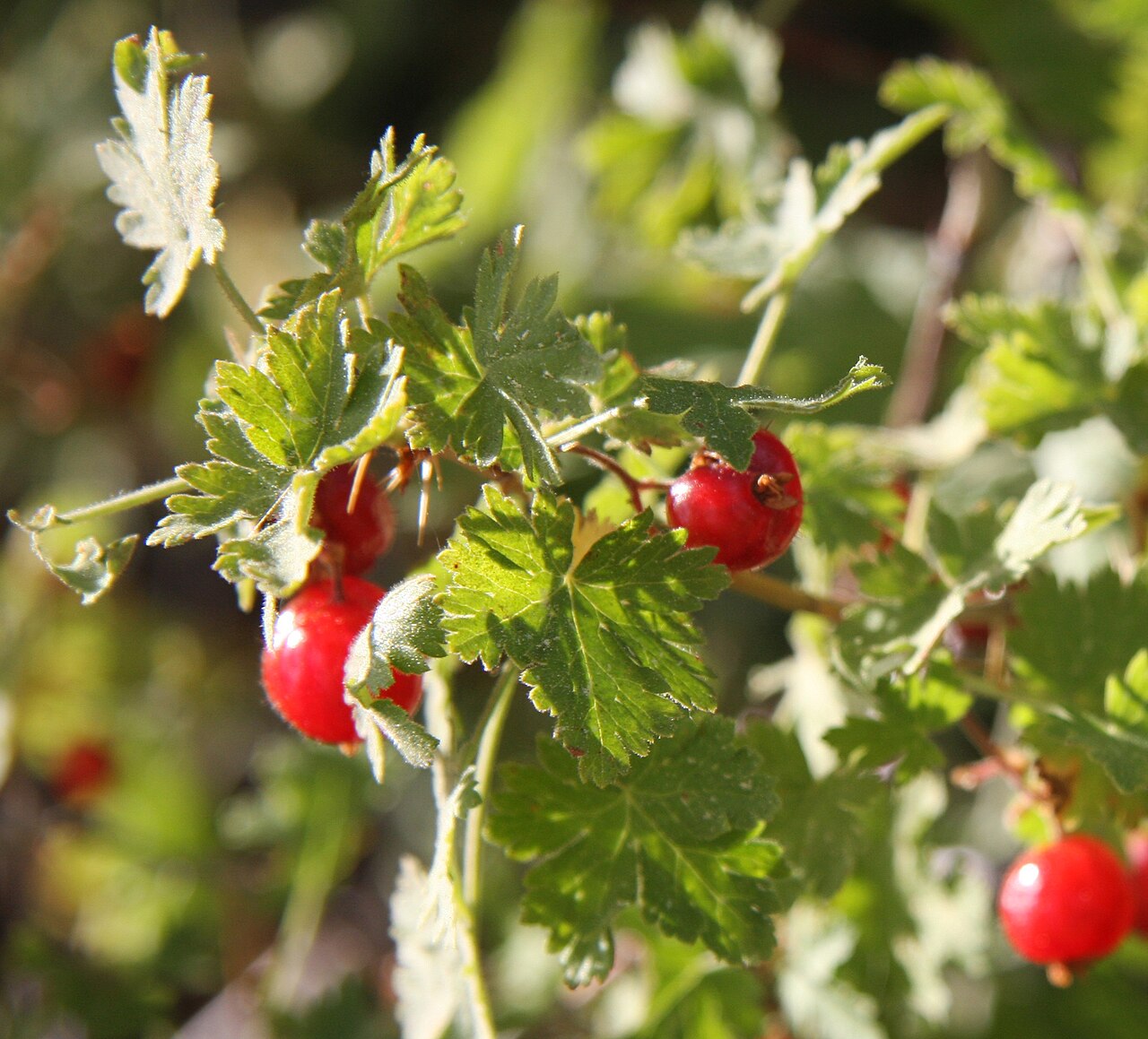
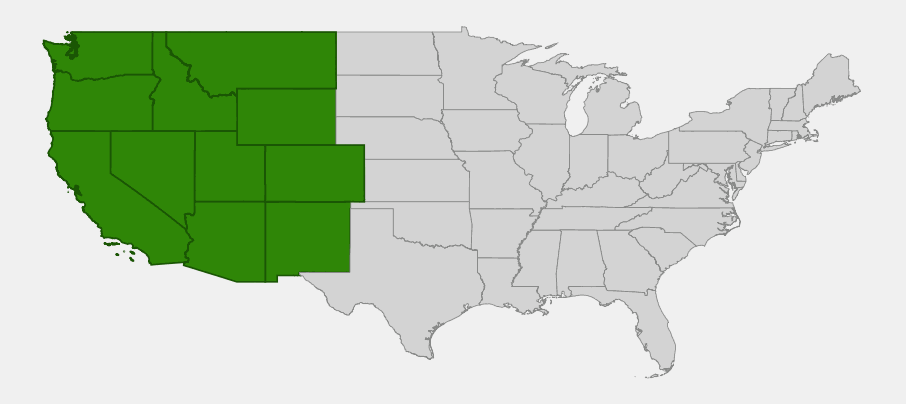
Ribes montigenum, known as Mountain Gooseberry (USDA: gooseberry currant), is a low, spiny shrub of high mountain slopes in the western United States. It belongs to the currant and gooseberry family (Grossulariaceae). Other common names include alpine prickly currant, western prickly gooseberry and red prickly currant. It grows from British Columbia and the Cascades of Washington and Oregon south to the Sierra Nevada, and east through the Great Basin ranges to the Rocky Mountains of Montana, Colorado and New Mexico.
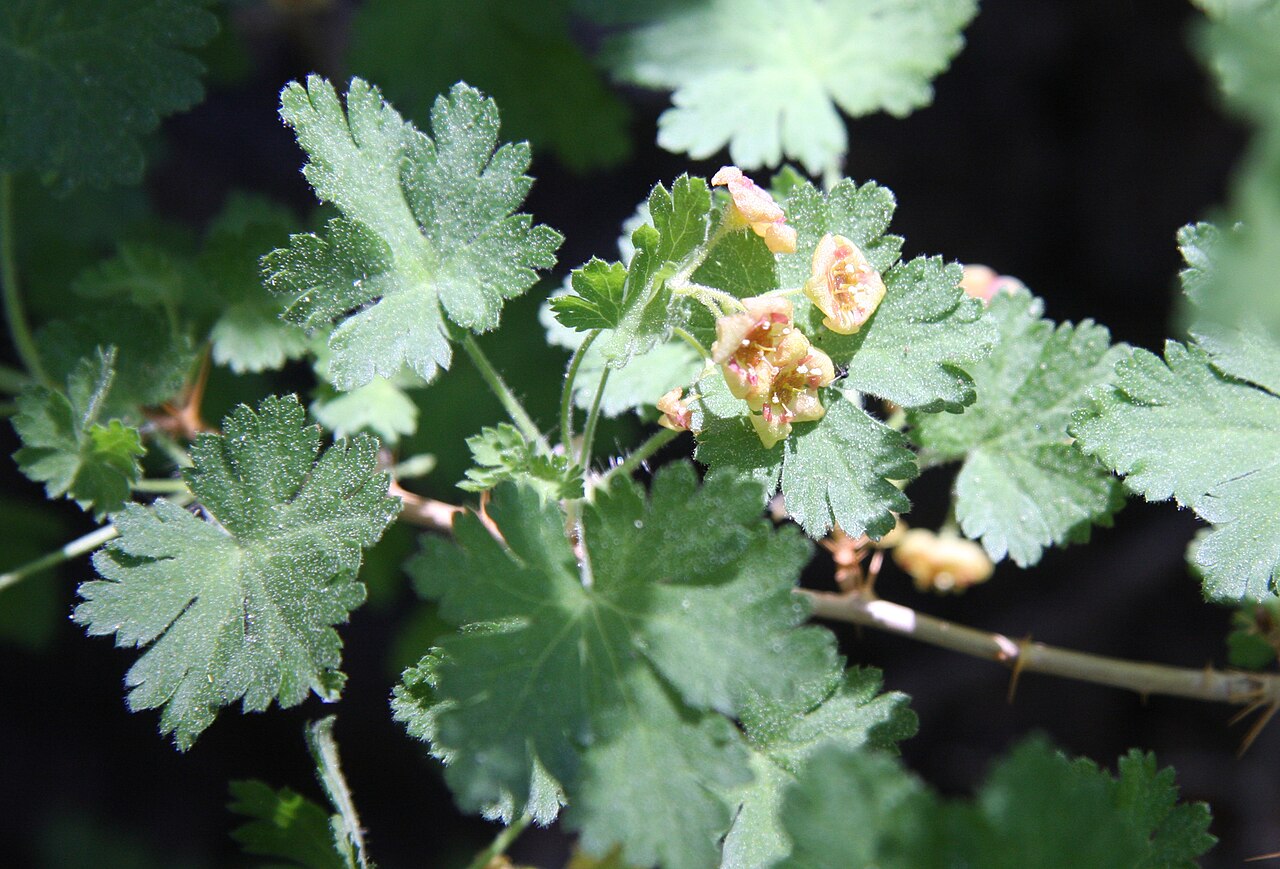
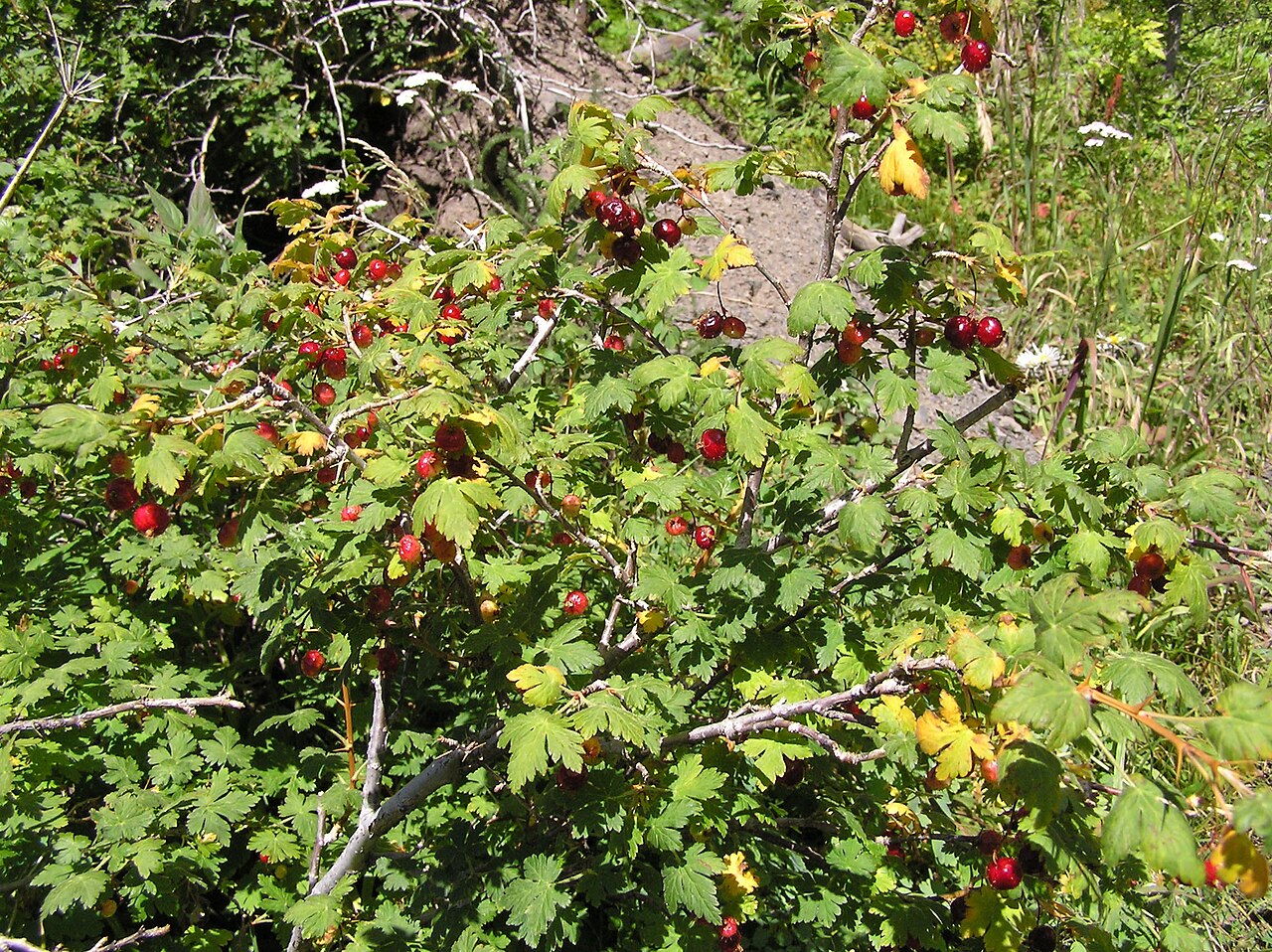
Mountain gooseberry is usually 1 1/2 to 3 feet tall, with spreading, bristly stems armed with clusters of sharp spines at each node. Its small leaves are deeply cut into five lobes and are sticky with glandular hairs. In early summer it bears small, saucer-shaped, pinkish to purplish flowers, followed by bright red, glandular-bristly berries that ripen in late summer.
In the wild it is a common shrub of subalpine forests, talus slopes and rocky ridges. It is a host of white pine blister rust, a non-native fungal disease that also attacks five-needled pines. Gardeners in high-elevation areas can use it in rock gardens and wildlife plantings, but should check local rules about planting Ribes near white pines.
Identification
Look for a low, sprawling shrub on subalpine slopes and talus with small, deeply five-lobed, sticky leaves, clusters of sharp spines at the nodes and bright red, bristly berries.
Growth Habit
Mountain gooseberry is a spreading, freely branched deciduous shrub, usually 1 1/2 to 3 feet tall (rarely to 5 feet), often wider than tall. The stems are covered in fine hairs, glands and scattered bristles, and each node has one to five sharp spines about 1/4 inch long. On rocky slopes the stems may sprawl over boulders.
Leaves
The leaves are alternate, small (about 1/2 to 1 inch across), roughly round in outline and deeply cut into five main lobes, each lobe further toothed. Both surfaces are hairy and sticky-glandular, giving the plant a slightly resinous smell. Leaves turn yellow to red in fall.
Flowers
Flowers appear in June to August, depending on elevation, in short, drooping clusters of 4 to 7. Each flower is about 1/4 inch across and saucer-shaped, with five spreading yellowish-green to pinkish sepals, five small pinkish or purplish, fan-shaped petals and a yellowish-pink disk in the center. The ovary below the flower is covered in purplish, stalked glands.
Fruit
The berries are round to slightly oval, about 1/4 inch across, bright orange-red to red, and covered in gland-tipped bristles. They ripen from late July to September. They are edible but have a mild, somewhat bland or tart flavor.
Look-alikes
Swamp currant (Ribes lacustre) is similar but has smaller, black berries and usually grows in moist forests, often at lower elevations. Wax currant has no spines, tubular white to pink flowers and smooth red berries. Other gooseberries of the region usually have larger leaves and lack the dense coat of glands on the berries.
Quick Facts
| Scientific Name | Ribes montigenum |
| Family | Grossulariaceae (currant family) |
| Plant Type | Low, spiny deciduous shrub |
| Mature Height | 1.5–3 ft |
| Mature Spread | 2–4 ft |
| Growth Rate | Slow to moderate |
| Sun Exposure | Full sun to part shade |
| Water Needs | Low to medium; well-drained |
| Soil Type | Rocky, gravelly or sandy mountain soils, talus |
| Soil pH | Acidic to neutral (about 5.5–7.5) |
| Bloom Time | June–August |
| Flower Color | Yellowish-green to pinkish or purplish |
| Fall Color | Yellow to red |
| Fruit | Red, glandular-bristly berry, late summer |
| Deer Resistant | Moderate; spines deter heavy browsing |
| USDA Hardiness Zones | 3–7 |
Native Range
Mountain gooseberry grows in the mountains of western North America. USDA PLANTS lists it as native in 11 western states: Washington, Oregon, California, Nevada, Idaho, Montana, Wyoming, Utah, Colorado, Arizona and New Mexico, and in British Columbia.
In Washington it grows only east of the Cascade crest, and in Oregon mainly in the eastern and high Cascades, the Blue and Wallowa Mountains and Steens Mountain, with a few outlying records in the Siskiyou Mountains of the southwest. It is widespread in the Sierra Nevada, the high ranges of the Great Basin such as the Ruby Mountains and the Spring Mountains of Nevada, and throughout the Rocky Mountains south to the San Francisco Peaks and White Mountains of Arizona and the Sangre de Cristo Mountains of New Mexico.
It grows at high elevations, from upper montane forests through the subalpine zone to treeline: open spruce-fir and pine forests, avalanche chutes, talus and scree slopes, rocky ridges and rock crevices. It is often common on recently disturbed ground, such as burns and rockslides.
📋 Regional plant lists featuring Mountain Gooseberry: Idaho, Eastern Oregon & Eastern Washington · Montana & Wyoming · Utah & Western Colorado · Arizona & New Mexico · California & Nevada
Growing & Care Guide
Mountain gooseberry is a tough, small shrub for high-elevation and cold-climate gardens. It is rarely sold, but native plant nurseries in the mountain West sometimes grow it from seed.
Light
Full sun to part shade. At lower elevations, afternoon shade helps it cope with heat.
Soil & Water
Plant in well-drained, rocky or gravelly soil. It does not tolerate heavy, wet soil. Once established it needs little supplemental water in cool climates; give occasional deep watering in hot, dry summers.
Planting Tips
Plant in spring or fall where its spines will not be a problem, such as a rock garden, slope or wildlife hedge. It grows best in cold-winter climates and is not suited to hot, low-elevation gardens. Because Ribes species are alternate hosts of white pine blister rust, avoid planting it near five-needled pines such as whitebark and limber pine, and check any local restrictions on planting currants and gooseberries.
Pruning & Maintenance
Little pruning is needed. Remove old, dead stems at the base in late winter. Wear heavy gloves because of the sharp spines.
Propagation
Grow from seed collected from ripe berries. Clean the seed and give it two to four months of cold, moist stratification before sowing. Hardwood cuttings and layering also work.
Landscape Uses
- Mountain gardens: a hardy native shrub for high-elevation sites
- Rock gardens and slopes: sprawls over rocks and stabilizes gravelly soil
- Wildlife plantings: berries for birds and small mammals
- Barrier planting: spiny stems discourage foot traffic
- Restoration: revegetation of subalpine burns, talus and disturbed slopes
Wildlife & Ecological Value
Mountain gooseberry is an important food plant at high elevations, where fruit is scarce and the growing season is short.
For Pollinators
The small flowers are visited by bumble bees and other bees, and occasionally by hummingbirds, during the short mountain summer.
For Birds
Grouse, thrushes, jays and other birds eat the red berries in late summer and fall.
For Mammals
Chipmunks, ground squirrels, black bears and other mammals eat the berries. The spiny stems provide cover for small animals on rocky slopes.
Ecosystem Role
Its spreading stems help stabilize talus and disturbed soils. It is an alternate host of white pine blister rust (Cronartium ribicola), a fungus introduced from Eurasia that must spend part of its life cycle on Ribes before infecting five-needled pines such as whitebark and limber pine.
Cultural & Historical Uses
The species name montigenum means “born of the mountains,” a fitting name for a shrub of high slopes. The genus name Ribes is an old name for currants, probably of Arabic origin.
Indigenous peoples of the Great Basin and Rocky Mountains gathered the berries of mountain gooseberry and other wild currants and gooseberries, eating them fresh or drying them. Hikers still sample the fruit, which is edible but mild and seedy.
During the 20th century, government programs in the western United States pulled up millions of wild Ribes plants in an effort to control white pine blister rust. The program was largely abandoned by the 1960s, and today forest managers focus on breeding rust-resistant pines.
Frequently Asked Questions
Are mountain gooseberry berries edible?
Yes. The red berries are edible, though bristly and mild or tart in flavor. Be sure of identification before eating any wild fruit.
Why is it called gooseberry currant?
It has the spiny stems typical of gooseberries but clusters of small berries like a currant, so USDA uses the name gooseberry currant.
Does mountain gooseberry spread white pine blister rust?
It can host the fungus, which needs Ribes plants to complete its life cycle before infecting five-needled pines. Avoid planting it near white pines.
Where does mountain gooseberry grow?
In the mountains of the western United States and British Columbia, in subalpine forests, talus and rocky ridges, mostly between about 6,000 and 12,500 feet.
Can I grow mountain gooseberry in my garden?
Yes, in cold-climate or mountain gardens with well-drained, rocky soil. It does poorly in hot, humid or low-elevation gardens.

Looking for a nursery that carries Mountain Gooseberry?
Browse our native plant nursery directory: Arizona · California · Colorado · Idaho · Montana · Nevada & New Mexico · Oregon · Utah · Washington · Wyoming

