
Rosilla (Helenium puberulum)
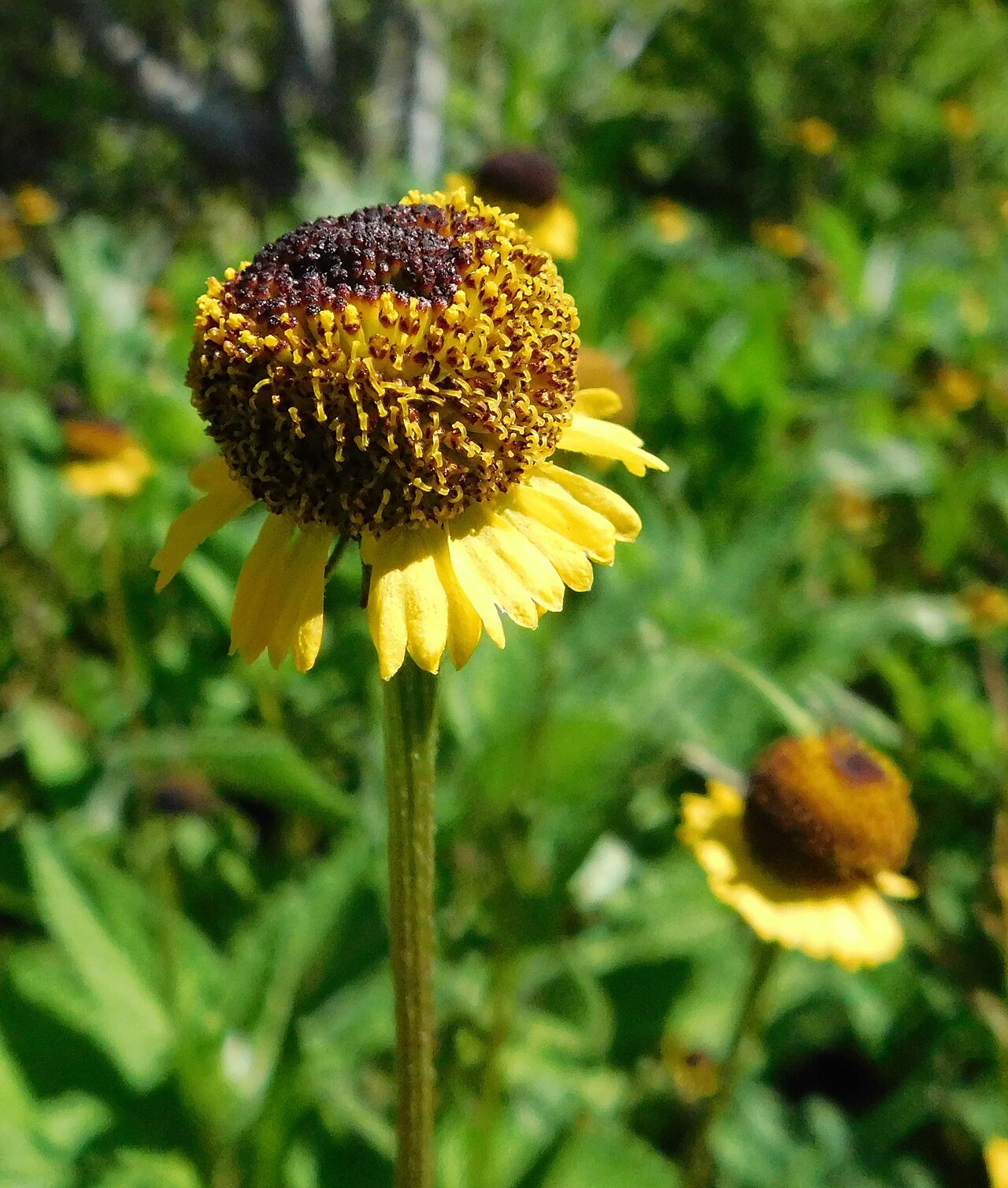
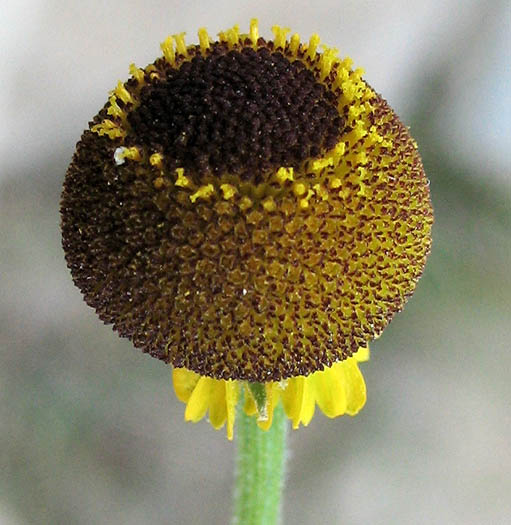
Helenium puberulum, known as Rosilla or coast marsh sneezeweed, is a tall, wetland wildflower of California and southwestern Oregon. Its most striking feature is its flower heads: round, button-like balls of tiny brown-purple and yellow disc florets, about 1/2 to 1 inch across, ringed below by short, drooping yellow rays. The heads are held on long, bare stalks above stems lined with narrow wings of leaf tissue.
It belongs to the aster family (Asteraceae) and is a western relative of the familiar Helenium autumnale, the common sneezeweed of the East. The name rosilla, Spanish for “little rose”, has long been used for this plant in California. The species name puberulum means “minutely hairy”, referring to the fine hairs on the stems and leaves.
Rosilla grows in marshes, wet meadows, seeps and along streams from southwestern Oregon through much of California to northern Baja California. It is an excellent plant for rain gardens, pond edges and wildlife gardens in the West. This guide covers how to identify it, where it grows, how to grow it, and its value to pollinators.
Identification
Rosilla is easy to recognize once in bloom. Look for a tall, upright plant in wet ground with winged stems and many round, two-toned flower heads that look like small brown-and-yellow balls.
Growth Habit
It is an upright, short-lived perennial, sometimes flowering in its first year, usually 1 1/2 to 5 feet tall. The stems branch in the upper half and are minutely hairy. Each stem is lined with narrow, green wings formed by the bases of the leaves, which run down the stem below each leaf.
Leaves
The leaves are alternate, lance-shaped to narrowly oval, up to about 6 inches long near the base and smaller above, with smooth or slightly toothed edges. The basal leaves usually wither by flowering time. The leaf bases extend down the stem as wings, a feature typical of sneezeweeds.
Flowers
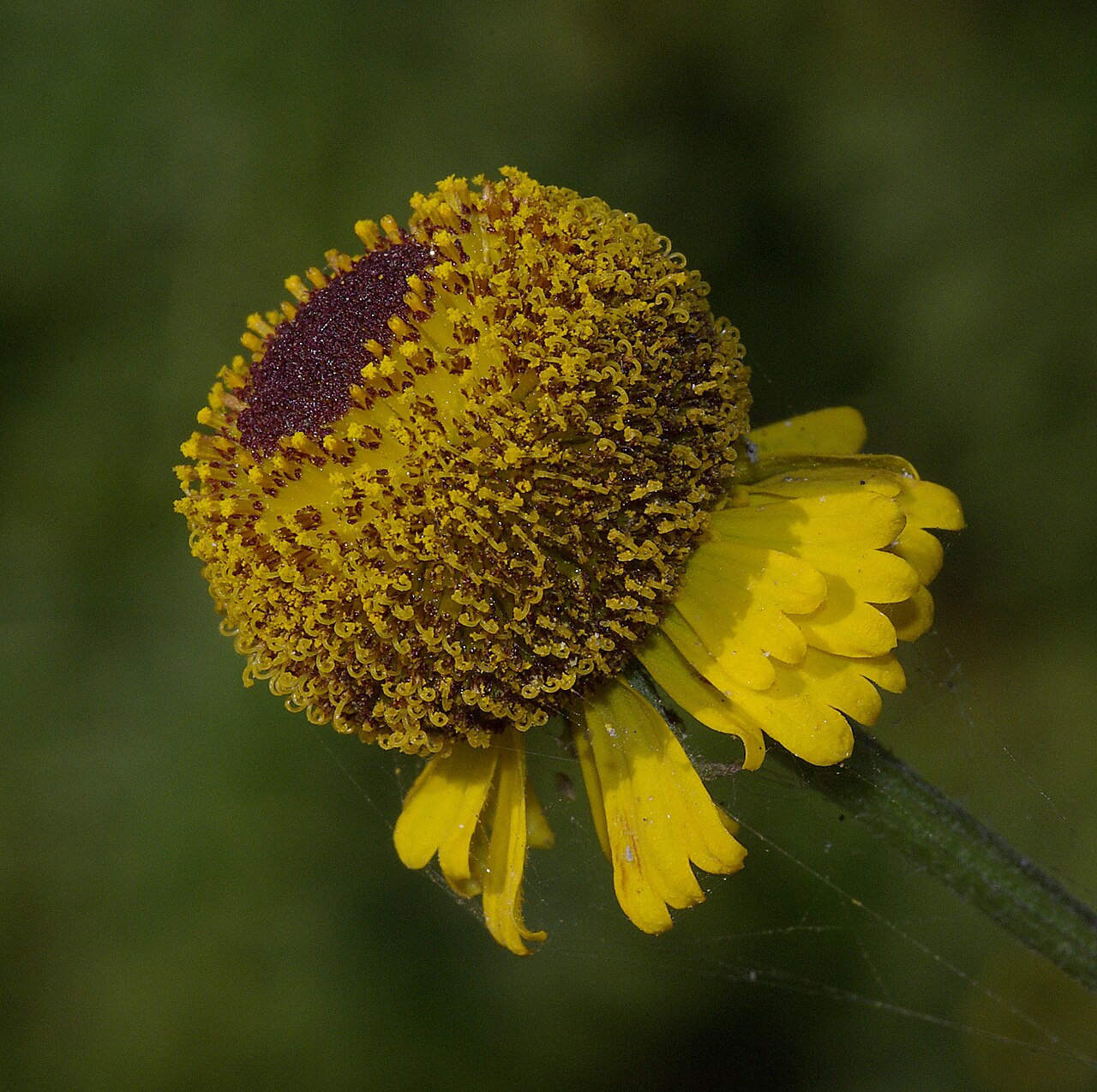
The flower heads are nearly spherical, about 1/2 to 1 inch across, made up of hundreds of tiny disc florets that are dark brown to purple at the top of the ball and yellow below as they open. A ring of short, yellow ray florets, often three-lobed and bent back, surrounds the base, though the rays are sometimes small or few. Heads are borne singly on long stalks. Bloom time is mainly June to September, sometimes starting in late spring and continuing into fall.
Fruit & Seeds
The fruits are tiny, hairy achenes topped with a few small, pointed scales. The ball-shaped heads break apart as the seeds ripen in late summer and fall.
Look-alikes
Helenium bigelovii, Bigelow’s sneezeweed, grows in mountain meadows and has a flatter disc and longer, showier yellow rays. Rosilla is recognized by its nearly round, ball-like heads with short rays and its winged stems.
Quick Facts
| Scientific Name | Helenium puberulum DC. |
| Family | Asteraceae (aster family) |
| Plant Type | Short-lived herbaceous perennial |
| Mature Height | 1.5–5 ft |
| Mature Spread | 1–2 ft |
| Growth Rate | Fast |
| Sun Exposure | Full sun to part shade |
| Water Needs | High; wet to moist soil |
| Soil Type | Wet clay, loam or sandy soils of marshes, meadows and stream banks |
| Soil pH | About 5.5–8.0 |
| Bloom Time | June–September (May–October) |
| Flower Color | Brown-purple and yellow disc with short yellow rays |
| Fall Color | None; seed heads dry brown |
| Fruit | Tiny hairy achene with small scales |
| Deer Resistant | Yes; bitter and considered toxic |
| USDA Hardiness Zones | 7–10 |
Native Range
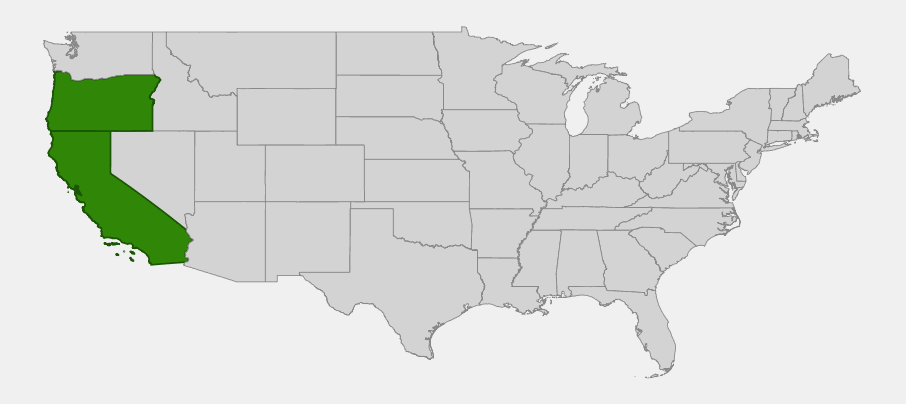
Rosilla is native to the Pacific Coast of North America. USDA PLANTS lists it in California and Oregon, and it also extends into northern Baja California, Mexico. In Oregon it is limited to the southwest, mainly in the Klamath and Siskiyou region of Jackson, Josephine and Curry Counties, west of the Cascades.
In California it is widespread in the Coast Ranges, the Sierra Nevada foothills, the Central Valley margins, and the Transverse and Peninsular Ranges, from near the coast to the lower mountains. It is absent from the deserts and the high mountains.
It grows in wet, open places: freshwater marshes, wet meadows, seeps and springs, stream and pond banks, ditches and moist places in grassland, chaparral and woodland. It is found from near sea level to roughly 5,000 feet.
📋 Regional plant lists featuring Rosilla: Western Oregon & Western Washington · California & Nevada
Growing & Care Guide
Rosilla is an easy, fast-growing native for wet spots in California and southwestern Oregon gardens, and its unusual, ball-shaped flowers are a conversation piece. It is offered by many California native plant nurseries. Safety note: like other sneezeweeds, it contains bitter compounds and is considered toxic to livestock and pets if eaten; it is rarely browsed and should not be planted where animals graze.
Light
Plant it in full sun to part shade. It flowers most heavily in full sun with steady moisture.
Soil & Water
It needs moist to wet soil and is ideal for the low, wet zone of a rain garden, a pond or stream edge or a poorly drained spot. It tolerates clay and seasonal flooding. In drier garden beds it needs regular summer water to look good.
Planting Tips
Plant in fall or spring, about 1 1/2 to 2 feet apart, in groups for best effect. Combine it with monkeyflowers, evening primrose, rushes, sedges and California wild rose in a wetland-style planting.
Pruning & Maintenance
Cut back old stems in late fall or winter. Because individual plants are short-lived, allow some seed heads to ripen so the plants can reseed in moist ground.
Propagation
Grow it from seed, which germinates readily when sown on the surface of moist soil in spring or fall. Clumps can also be divided in early spring.
Landscape Uses
- Rain gardens and bioswales: thrives in the wettest zone and tolerates seasonal flooding
- Pond and stream edges: tall, colorful summer flowers for wet banks
- Pollinator gardens: a long summer bloom visited by bees and butterflies
- Wetland restoration: a native perennial for marshes, seeps and meadows
- Cut flowers: unusual, ball-shaped flower heads for arrangements
Wildlife & Ecological Value
Rosilla blooms through the dry summer months in California wetlands, when moisture-dependent flowers are among the few nectar sources available.
For Pollinators
The many small florets in each head offer nectar and pollen to native bees, including small solitary bees and bumble bees, as well as butterflies, wasps and flies. The long bloom season makes it valuable in late summer.
For Birds
Seed-eating birds, such as goldfinches, may pick at the ripening heads, and the dense stands provide cover in wet meadows and marsh edges.
For Mammals
The foliage is bitter and considered toxic, so it is rarely eaten by deer, rabbits or livestock. Small mammals may shelter in the stands.
Ecosystem Role
Rosilla is a characteristic plant of California freshwater wetlands, seeps and riparian edges, habitats that have been greatly reduced by development and drainage. It colonizes moist, open ground and adds summer flowers to wetland plant communities.
Cultural & Historical Uses
The common name sneezeweed comes from the eastern Helenium autumnale, whose dried leaves and flower heads were once powdered and used as snuff to induce sneezing. Rosilla shares the bitter compounds found in many sneezeweeds, which is why it should never be eaten.
The genus name Helenium is often said to honor Helen of Troy. The species was described by the Swiss botanist Augustin Pyramus de Candolle in the nineteenth century, from specimens collected in California or northern Mexico.
Outside its native range, rosilla has become naturalized in some places, including parts of Australia and New Zealand. Within California and southwestern Oregon, it is a familiar and welcome wildflower of wet places, often noticed by hikers for its unusual, button-like flower heads.
Frequently Asked Questions
Why is it called rosilla?
Rosilla, Spanish for “little rose”, is a traditional California name for this plant. It is also called coast marsh sneezeweed.
Is rosilla poisonous?
Like other sneezeweeds, it contains bitter compounds and is considered toxic to livestock and pets if eaten. It should not be eaten by people.
Where does rosilla grow?
It grows in marshes, wet meadows, seeps and stream banks in California and southwestern Oregon, and in northern Baja California.
Can I grow rosilla in a rain garden?
Yes. It thrives in wet to moist soil in full sun to part shade and tolerates seasonal flooding.
When does rosilla bloom?
Mainly from June to September, sometimes from late spring into fall.

Looking for a nursery that carries Rosilla?
Browse our native plant nursery directory: California · Oregon

