
Pitcher’s Thistle (Cirsium pitcheri)
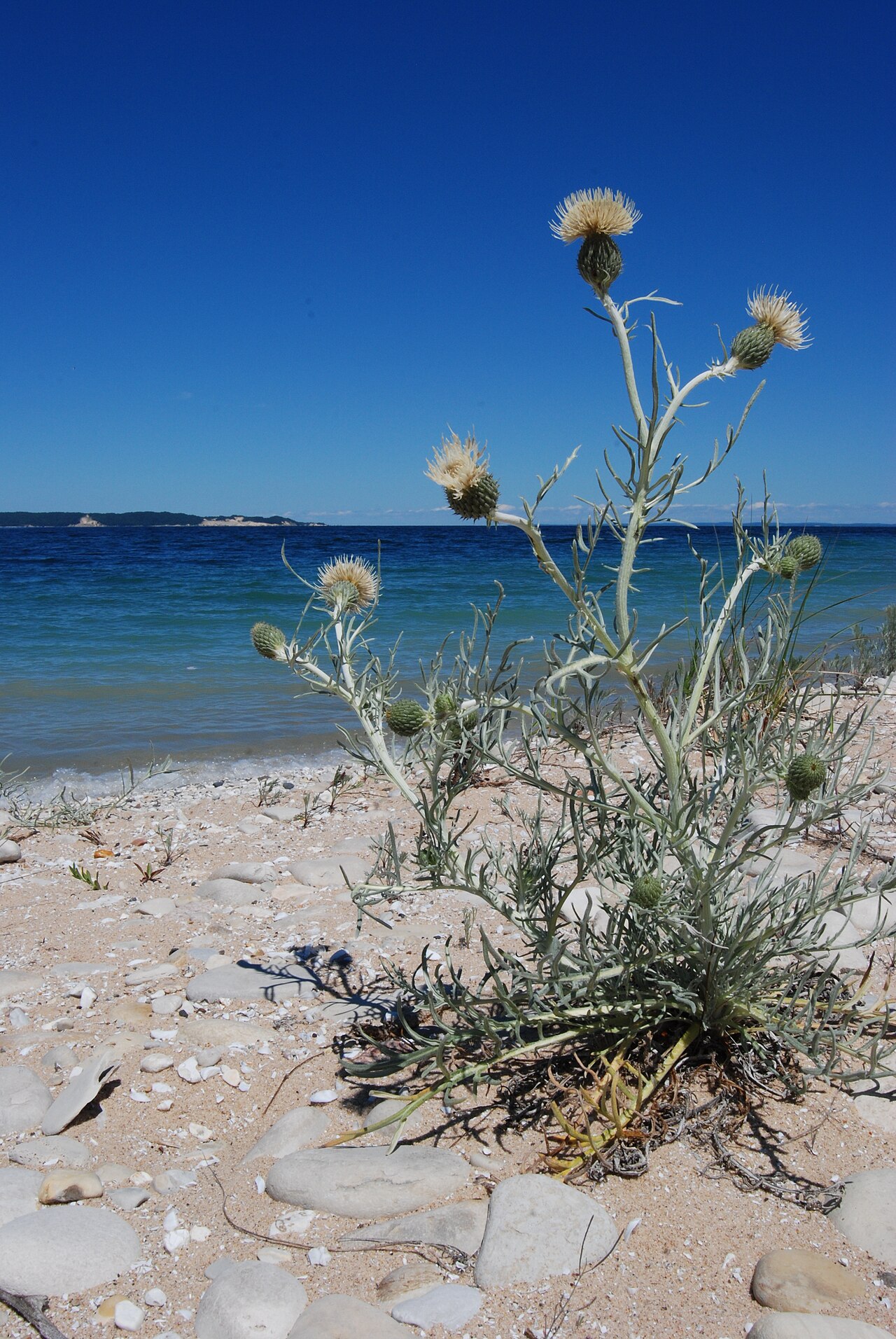
Cirsium pitcheri, known as Pitcher’s Thistle (USDA: sand dune thistle), is a rare native thistle found only on the sand dunes and beaches of the western Great Lakes: Lake Michigan, Lake Huron and Lake Superior. It belongs to the aster family (Asteraceae). It has been listed as Threatened under the U.S. Endangered Species Act since 1988, and it is also a species at risk in Canada, where it grows only in Ontario.
Unlike the weedy thistles most people know, Pitcher’s thistle is a beautiful, silvery plant covered in white, woolly hairs, with leaves divided into long, narrow segments. It is monocarpic: it lives for several years (often five to eight) as a low rosette, then sends up a branched flowering stem 1 to 3 feet tall, blooms once with creamy white to pale pink flower heads, sets seed and dies.
This is a federally protected plant. Never dig plants or collect seed from the wild. It is not available from ordinary nurseries, and growing it is generally limited to authorized recovery programs. This page is meant to help you recognize and appreciate it, and to protect it when you visit Great Lakes dunes.
Identification
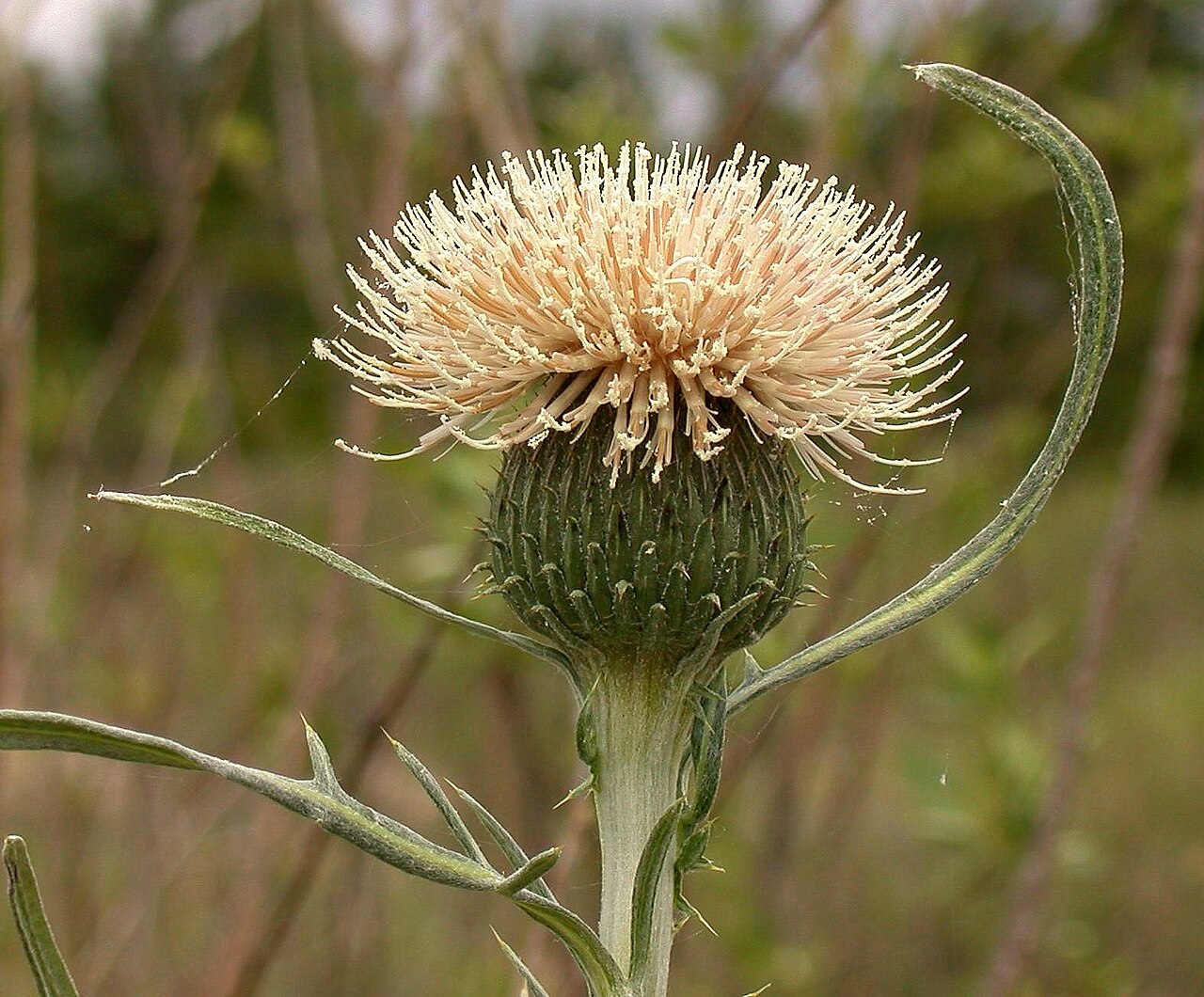
Look for a silvery-white, woolly thistle with leaves cut into long, narrow, spine-tipped segments, growing on open sand dunes along the Great Lakes, with creamy white to pinkish flower heads from June to September.
Growth Habit
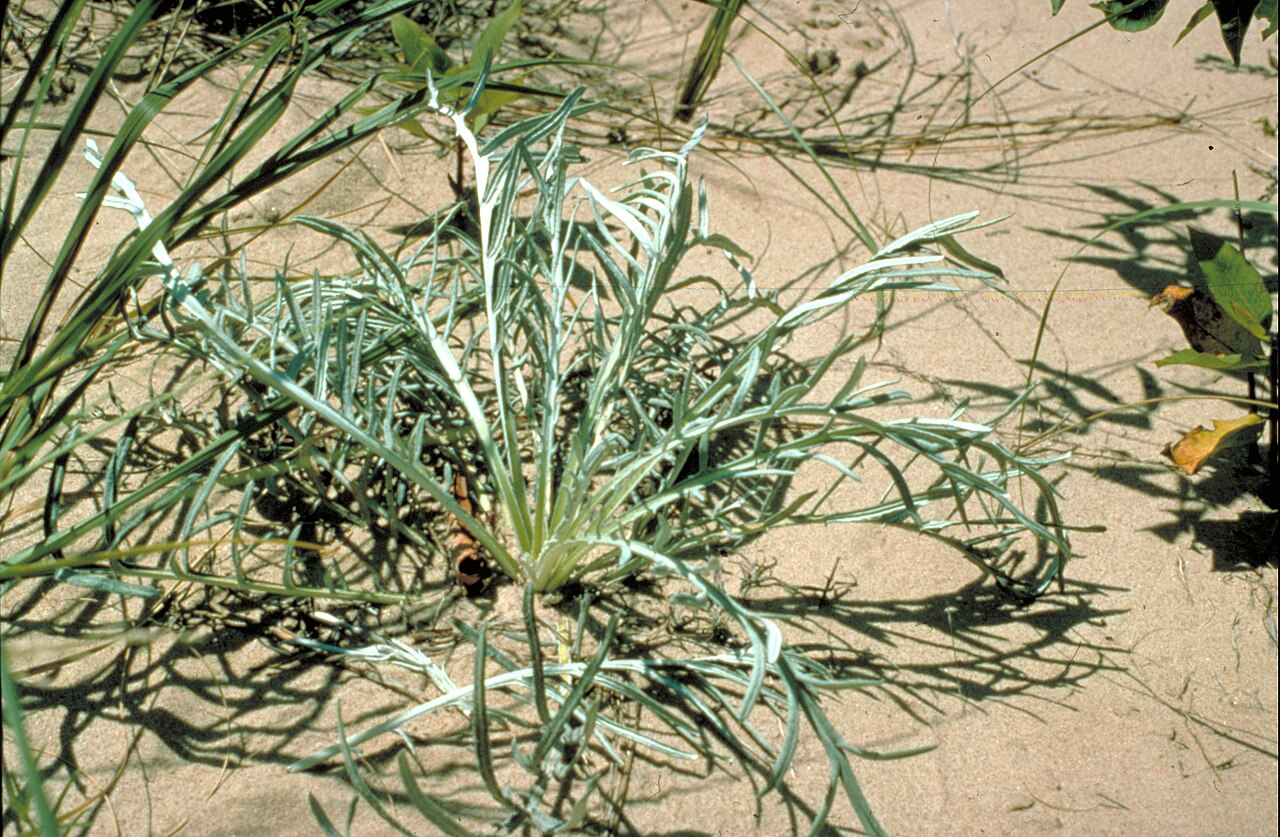
Pitcher’s thistle forms a flat or slightly upright rosette of silvery leaves that grows larger each year. It has a deep taproot, which can reach several feet into the sand. After several years, the rosette produces a single, stout, branching flowering stem 1 to 3 feet tall (occasionally taller). After flowering and setting seed, the whole plant dies.
Leaves
The leaves are up to about a foot long and deeply cut (pinnatifid) into long, narrow, strap-like segments with weak spines at the tips. Both surfaces are densely covered with white, woolly hairs, which reflect sunlight and help the plant conserve water on hot, dry sand. Young rosettes look blue-green to silvery.
Flowers
Flower heads appear from June to September at the tips of the branches. Each head is about 1 to 1 1/2 inches across, with creamy white to pale pink disk flowers and a cup of overlapping, spine-tipped bracts. The heads are lightly fragrant.
Seeds
Each head produces seeds (achenes) with a tuft of feathery bristles. Most seeds fall close to the parent plant; some are carried short distances by wind, and birds such as goldfinches eat many of them.
Look-alikes
Non-native thistles that invade dunes, such as Canada thistle (Cirsium arvense) and bull thistle (Cirsium vulgare), have green leaves and purple flowers. Native field thistle has pink-purple flowers and leaves that are white-woolly only underneath. Wavyleaf thistle of the Great Plains is also woolly but has broader, less finely divided leaves and pink-purple flowers. Spotted knapweed, an invasive dune plant, has smaller, pink flower heads and no spines.
Quick Facts
| Scientific Name | Cirsium pitcheri |
| Family | Asteraceae (aster family) |
| Plant Type | Monocarpic perennial (flowers once, then dies) |
| Mature Height | 1–3 ft in flower |
| Mature Spread | 1–2 ft |
| Growth Rate | Slow; several years as a rosette |
| Sun Exposure | Full sun |
| Water Needs | Low; open, dry dune sand |
| Soil Type | Loose, open, moving sand |
| Soil pH | Neutral to alkaline (about 7.0–8.5) |
| Bloom Time | June–September |
| Flower Color | Creamy white to pale pink |
| Fall Color | None; silvery rosettes persist |
| Fruit | Achene with feathery bristles |
| Deer Resistant | Partly; deer and rabbits may browse flowering stems |
| USDA Hardiness Zones | 4–6 |
Native Range
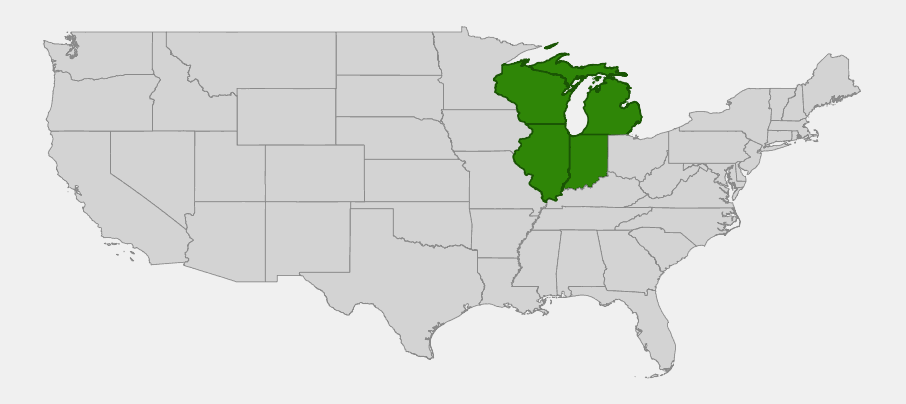
Pitcher’s thistle is endemic to the shorelines of the western Great Lakes. USDA PLANTS lists it as native in Michigan, Wisconsin, Indiana and Illinois, and in Ontario, Canada. Most of the world’s population grows in Michigan, along the Lake Michigan and Lake Huron shores.
In Wisconsin it grows along the Lake Michigan shore, including Door County, and in Indiana it is found in the Indiana Dunes. In Illinois the original populations disappeared, and the species has been reintroduced to dune areas such as Illinois Beach State Park as part of recovery efforts. In Ontario it grows on dunes along Lake Huron, including the Manitoulin Island area, and there are small populations on the south shore of Lake Superior.
It grows on open, sunny sand dunes and beaches, mostly on foredunes and the shifting sand of blowouts and dune slopes, where few other plants can survive. It needs a natural cycle of sand movement and disturbance that keeps the habitat open. Its main threats include shoreline development, heavy foot and vehicle traffic, invasive plants that stabilize dunes (such as spotted knapweed and baby’s breath), and seed-eating insects, including a weevil released to control Canada thistle.
📋 Regional plant lists featuring Pitcher’s Thistle: Ohio & Indiana · Michigan, Wisconsin & Eastern Minnesota · Illinois, Iowa & Missouri
Can You Grow It?
In practice, no. Pitcher’s thistle is a federally Threatened species, and it is not sold by ordinary nurseries. Propagation and planting are carried out by agencies, botanical gardens and conservation groups working under recovery plans and permits. It is also a difficult plant to grow away from open dunes.
Why not grow it at home?
Its life cycle depends on open, moving dune sand, full sun and the natural disturbance of the Great Lakes shore. In ordinary garden soil it does poorly, and because each plant flowers only once after several years, garden populations do not persist without constant replanting. Collecting plants or seed from the wild is illegal on federal lands without a permit and harms the wild populations recovery efforts are trying to rebuild.
How recovery programs grow it
Conservation programs grow seedlings from seed collected under permit, raise them in nurseries or greenhouses, and plant them back onto protected dunes. Reintroduced plants in Illinois have flowered and produced seedlings, showing that careful restoration can work.
Protecting it on the dunes
Stay on marked trails and boardwalks on dunes, keep vehicles off the sand, and do not pick flowers or disturb rosettes. Many people do not realize that the small silvery rosettes are rare plants.
Helping with invasive plants
Volunteer groups along the Great Lakes remove invasive dune plants such as spotted knapweed and baby’s breath, which crowd out Pitcher’s thistle and stabilize the sand it needs to stay open. Joining a dune stewardship day is one of the best ways to help.
Alternatives for your garden
If you garden on sandy soil near the Great Lakes, grow native dune and sand prairie plants instead, such as field sagewort, sand cherry, prairie sandreed and field thistle, a native thistle that is excellent for bees and goldfinches.
Where to See It
- Sleeping Bear Dunes National Lakeshore, Michigan: one of the largest populations, on Lake Michigan dunes
- Indiana Dunes National Park: plants on the Lake Michigan foredunes
- Michigan state parks: dunes such as Warren Dunes and others along Lake Michigan
- Door County, Wisconsin: dunes and beaches on the Lake Michigan shore
- Illinois Beach State Park: reintroduced populations on Illinois dunes
Wildlife & Ecological Value
Pitcher’s thistle is part of a specialized community of plants and animals adapted to the shifting sands of the Great Lakes dunes.
For Pollinators
The flower heads are visited by bumble bees, other native bees, butterflies and moths. Like other native thistles, it is a host plant for the painted lady butterfly. Cross-pollination by insects produces much more seed than self-pollination.
For Birds
American goldfinches eat the seeds and may use the thistle down in their nests.
For Mammals
Deer and rabbits sometimes browse the flowering stems, which can reduce seed production in small populations.
Ecosystem Role
As a long-lived rosette with a deep taproot, it helps hold loose sand and is part of the early stage of dune plant succession. It is a flagship species for the protection of Great Lakes dunes, which also support other rare plants such as Lake Huron tansy and Houghton’s goldenrod.
Cultural & Historical Uses
The species is named after Zina Pitcher (1797–1872), a U.S. Army surgeon and naturalist who collected plants around the upper Great Lakes in the 1820s and later served as mayor of Detroit. The plant was described by John Torrey and Asa Gray.
Pitcher’s thistle was listed as Threatened under the U.S. Endangered Species Act in 1988. A federal recovery plan guides efforts by state and federal agencies, universities and conservation groups to protect dunes, control invasive plants and reintroduce plants to former sites.
Botanists consider it a relative of thistles of the Great Plains, such as Platte thistle (Cirsium canescens), and think its ancestors may have spread to the Great Lakes dunes from the western sandhills after the last ice age.
Frequently Asked Questions
Is Pitcher’s thistle endangered?
It is listed as Threatened under the U.S. Endangered Species Act (since 1988) and is a species at risk in Canada.
Can I buy Pitcher’s thistle for my garden?
No. It is not sold by ordinary nurseries, and growing it is generally limited to recovery programs. Never collect plants or seed from the wild.
How long does Pitcher’s thistle live?
It grows as a rosette for several years, often five to eight, then flowers once, sets seed and dies.
Is Pitcher’s thistle a weed?
No. It is a rare native thistle. The weedy thistles in North America, such as Canada thistle and bull thistle, are mostly introduced from Europe and Asia.
Where can I see Pitcher’s thistle?
On Great Lakes dunes in Michigan, Wisconsin, Indiana, Illinois and Ontario, such as Sleeping Bear Dunes National Lakeshore and Indiana Dunes National Park. Stay on trails so you do not trample young rosettes.

Looking for a nursery that carries Pitcher’s Thistle?
Browse our native plant nursery directory: Illinois & Indiana · Michigan · Wisconsin

