
Little Heartleaf (Hexastylis minor)
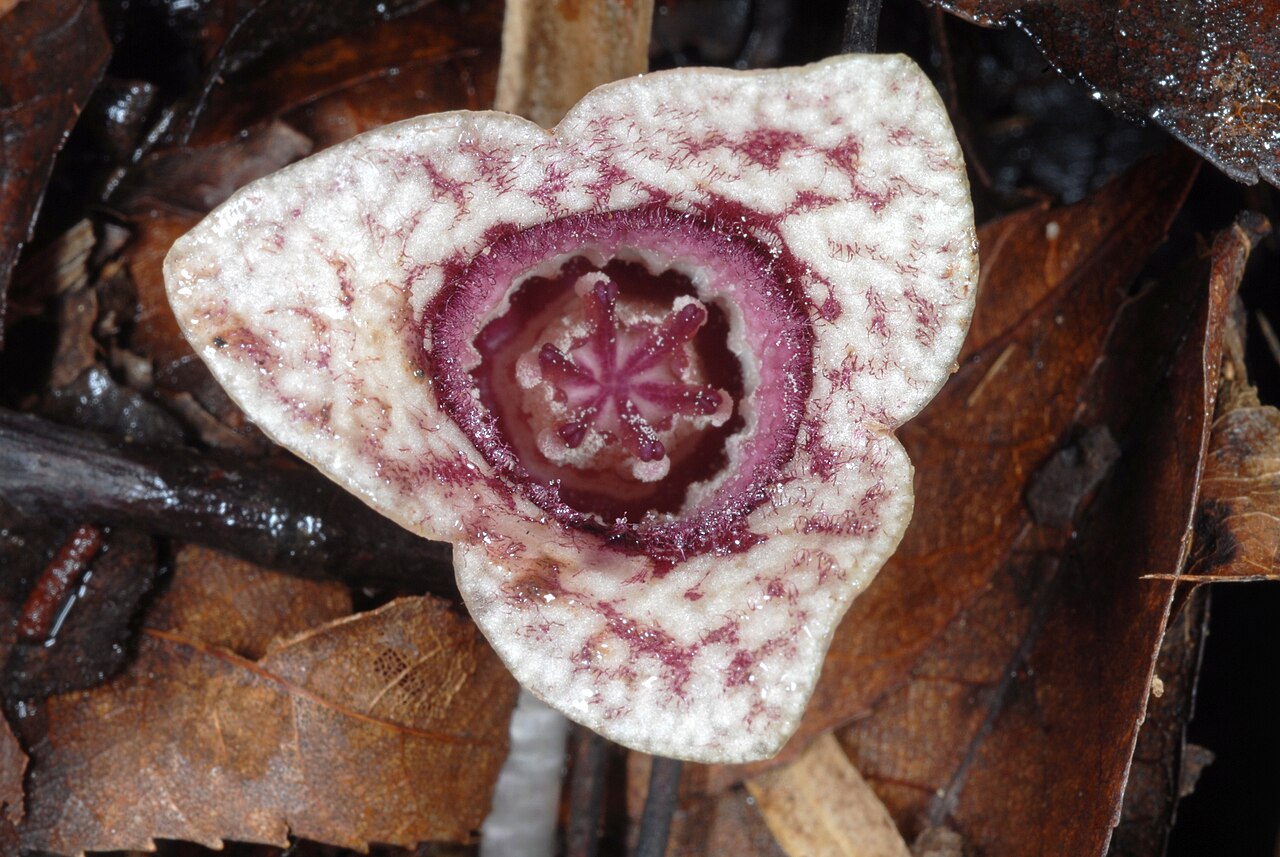
Hexastylis minor, known as Little Heartleaf, is a small evergreen woodland perennial of the southeastern United States, found only in Virginia, North Carolina and South Carolina. It is also treated as Asarum minus by botanists who include the evergreen heartleaves in the wild ginger genus. Its glossy, heart-shaped leaves, often patterned with silvery veins, lie close to the forest floor all year, and in early spring it produces curious, fleshy maroon flowers hidden at ground level beneath them.
Little heartleaf belongs to the birthwort family (Aristolochiaceae), together with the wild gingers and the Dutchman’s pipe vines. Like its close relatives it is often called a wild ginger, because its crushed leaves and roots have a spicy, ginger-like scent, though it is unrelated to culinary ginger. The species name minor refers to its small size. Its flowers, with broad, flaring lobes, are among the most open and showy in the genus, and it is sometimes called little brown jug, a name shared with other heartleaves.
It grows mainly in the Piedmont, with populations extending into the lower mountains and the inner Coastal Plain. This guide covers how to identify little heartleaf, where it grows, how to grow it as an evergreen groundcover in a shady garden, its unusual relationship with ants and other small animals, and the safety concerns it shares with other members of its family.
Identification
Little heartleaf is a low, clump-forming evergreen with long-stalked, heart-shaped leaves and no visible stems. In spring, look under the leaves for small, fleshy, maroon flowers with three broad, flaring lobes lying on the leaf litter.
Growth Habit
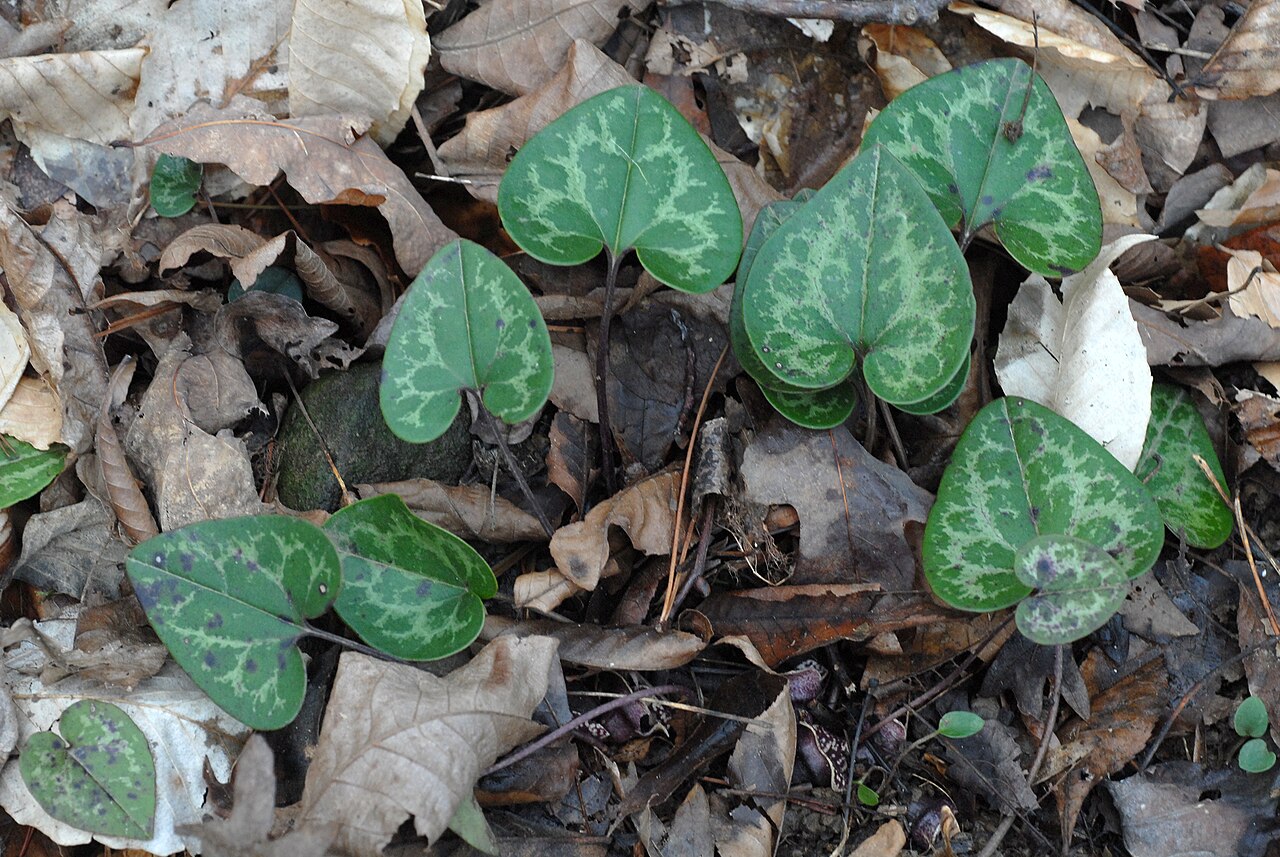
It is a stemless perennial, only 2 to 4 inches tall, growing from a short, branching underground rhizome. Each rhizome tip produces one or a few leaves a year, and plants slowly form small clumps or loose colonies. It keeps its leaves through the winter.
Leaves
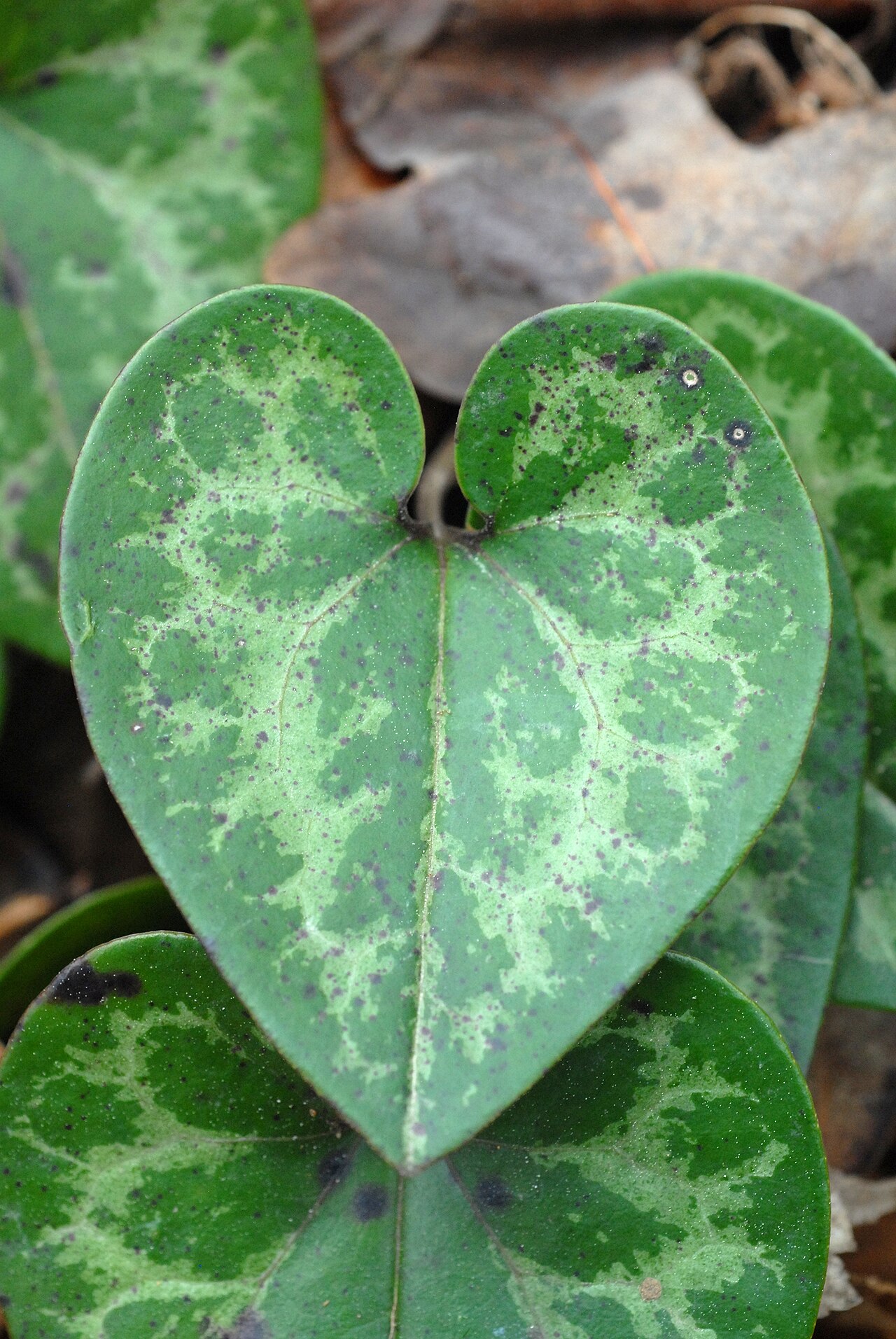
The leaves are heart-shaped to nearly round, mostly 1 1/2 to 3 inches long, on stalks a few inches long. They are thick, leathery and glossy, dark green and often marked with silvery or pale green mottling along the veins, though some plants have plain green leaves. The crushed leaves and rhizomes give off a spicy fragrance. New leaves appear in spring, and old ones persist until the new set is formed.
Flowers
The flowers lack petals; what looks like a flower is the fleshy calyx. It forms a short, wide cup or bell, about 1/2 inch long, that opens into three broad, spreading, triangular lobes, giving the whole flower a width of up to about 1 inch. The outside is maroon to brownish purple, and the inside of the lobes is usually mottled or spotted with cream or white. The flowers sit on very short stalks at ground level and are often buried in the leaf litter. Bloom time is mainly from March to May, sometimes beginning in February.
Fruit & Seeds
The fruit is a fleshy, rounded capsule that ripens within the old calyx in late spring and splits irregularly. The seeds bear a fatty appendage (an elaiosome) that is attractive to ants.
Look-alikes
Arrowleaf heartleaf or little brown jugs (Hexastylis arifolia) has longer, arrow-shaped leaves and jug-shaped flowers with a narrow mouth and small, upright lobes. Other heartleaves of the region (Hexastylis virginica, H. heterophylla, H. shuttleworthii and others) have similar leaves but flowers with narrower tubes and smaller lobes, so the flower is needed for a sure identification. Canadian wild ginger is deciduous, with paired, softly hairy, kidney-shaped leaves.
Quick Facts
| Scientific Name | Hexastylis minor (Ashe) H.L. Blomq. (syn. Asarum minus Ashe) |
| Family | Aristolochiaceae (birthwort family) |
| Plant Type | Evergreen herbaceous perennial; groundcover |
| Mature Height | 2–4 in |
| Mature Spread | 6–12 in; slowly forms small colonies |
| Growth Rate | Slow |
| Sun Exposure | Part shade to full shade |
| Water Needs | Moderate; tolerates dry shade once established |
| Soil Type | Well-drained, humus-rich, acidic loam or sandy loam |
| Soil pH | About 4.5–6.5 |
| Bloom Time | March–May (sometimes from February) |
| Flower Color | Maroon to brownish purple, mottled cream inside |
| Fall Color | Evergreen; leaves stay green through winter |
| Fruit | Fleshy capsule with ant-dispersed seeds |
| Deer Resistant | Yes; rarely browsed |
| USDA Hardiness Zones | 6–8 |
Native Range
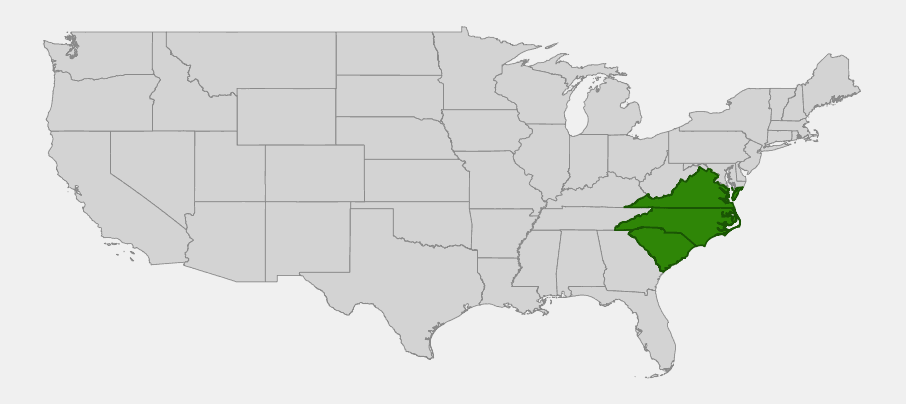
Little heartleaf is endemic to the southeastern United States. USDA PLANTS lists it only in Virginia, North Carolina and South Carolina. It is the most common heartleaf across much of the Piedmont of Virginia and North Carolina.
The center of its range is the Piedmont, from central Virginia south through North Carolina into northwestern South Carolina. It also extends into the lower slopes of the Blue Ridge and onto the inner edge of the Coastal Plain. It does not occur in the higher mountains or in the outer Coastal Plain.
It grows in deciduous and mixed hardwood forests, on dry to moist slopes, ravines, bluffs and stream terraces, often with oaks, hickories, beech and mountain laurel. It favors acidic, well-drained soils and is often found on north-facing slopes and in the light shade of upland oak forests.
📋 Regional plant lists featuring Little Heartleaf: Maryland, Virginia & West Virginia · North & South Carolina
Growing & Care Guide
Little heartleaf is a choice evergreen groundcover for shade gardens in the Mid-Atlantic and Southeast. It grows slowly, but it is long-lived, needs little care and keeps its handsome, often silver-patterned leaves through the winter, when most woodland plants are bare. It is offered by some native plant nurseries and woodland specialists.
Light
Grow it in part to full shade, such as under deciduous trees. Morning sun is tolerated, but hot afternoon sun scorches the leaves.
Soil & Water
It prefers well-drained, acidic soil rich in organic matter, like the leaf mold of an oak or beech woodland. Keep the soil evenly moist during the first year. Once established it tolerates dry shade and periods of summer drought, but it does not tolerate soggy soil, which rots the rhizomes.
Planting Tips
Plant in spring or fall, setting the rhizome just at or slightly below the soil surface. Space plants about 6 to 12 inches apart and plant in groups or drifts for a groundcover effect. It is lovely along shady paths, at the base of trees and in woodland gardens with ferns, partridgeberry, crested iris and spring ephemerals. Place it where the evergreen leaves can be seen in winter.
Pruning & Maintenance
No pruning is needed. Let fallen leaves remain around the plants as a natural mulch, but pull back heavy layers that bury the leaves completely. Old, tattered leaves can be removed in spring when new ones appear.
Propagation
Divide established clumps in early spring or fall, keeping a growing tip and roots with each piece. Seed can also be sown fresh as soon as it ripens in late spring, since it does not store well; seedlings grow slowly and take several years to reach flowering size. Buy nursery-propagated plants and do not dig them from the wild.
Landscape Uses
- Evergreen groundcover: for small areas in shade, with year-round leaf interest
- Woodland gardens: pairs well with ferns and spring wildflowers under deciduous trees
- Shady paths and borders: low, tidy foliage close to where it can be admired
- Winter interest: glossy, silver-veined leaves when most perennials are dormant
- Habitat restoration: for Piedmont hardwood forests in its native range
Wildlife & Ecological Value
Little heartleaf is a quiet plant of the forest floor, but its ground-level flowers and ant-dispersed seeds tie it to the small animals of the leaf litter.
For Pollinators
The fleshy flowers open at ground level and have no nectar-rich petals. Pollination in Hexastylis is not fully understood. Small insects such as fungus gnats, flies, beetles and thrips have been suggested as visitors, and some studies point to self-pollination as important. The flowers are not a significant resource for bees or butterflies.
For Birds
Little heartleaf provides little food for birds. Its evergreen leaves add cover on the forest floor in winter for small invertebrates that ground-foraging birds feed on.
For Mammals
The aromatic, bitter leaves are seldom eaten by deer or rabbits. Small mammals may eat some of the fleshy fruits.
Ecosystem Role
The seeds carry fatty elaiosomes, and ants carry them to their nests, eat the appendages and discard the seeds, a dispersal method called myrmecochory. This short-distance dispersal is one reason heartleaves spread slowly and are good indicators of old, undisturbed forests. Little heartleaf is part of the evergreen layer of the forest floor along with partridgeberry, galax and spotted wintergreen.
Cultural & Historical Uses
Little heartleaf, like other members of the birthwort family, should not be eaten or used as a home remedy. Plants in this family, including the wild gingers, contain aristolochic acids, compounds linked to serious kidney damage and cancer. Although wild gingers were once used as a spice and folk medicine, these uses are not considered safe. Keep children and pets from chewing the leaves and roots.
The species was first described by the North Carolina botanist William Willard Ashe in 1897 as Asarum minus. In the twentieth century H.L. Blomquist of Duke University moved it to the genus Hexastylis, a group of evergreen heartleaves of the eastern United States whose name means “six styles.” Many botanists now treat Hexastylis again as part of Asarum.
For naturalists in the Piedmont, finding the hidden flowers of heartleaves is a rite of spring. Brushing away the leaf litter at the base of a clump in March or April reveals the small maroon “jugs,” and the broad, flared lobes of little heartleaf make it one of the easiest heartleaves to recognize.
Frequently Asked Questions
Is little heartleaf the same as Asarum minus?
Yes. It is called Hexastylis minor in some floras and Asarum minus in others, depending on whether the evergreen heartleaves are kept in a separate genus.
Where are the flowers?
The flowers sit at ground level under the leaves, often buried in leaf litter. Look for them in March to May by gently moving the fallen leaves at the base of the plant.
Is little heartleaf evergreen?
Yes. Its leathery, heart-shaped leaves stay green through the winter, which makes it a useful groundcover for winter interest in shade.
Is little heartleaf edible like ginger?
No. Despite its spicy scent, it should not be eaten or used medicinally. Plants in its family contain aristolochic acids, which can damage the kidneys.
How fast does little heartleaf spread?
Slowly. It forms small clumps from short rhizomes, and its seeds are carried only short distances by ants. Plant several close together for a groundcover.

Looking for a nursery that carries Little Heartleaf?
Browse our native plant nursery directory: North Carolina · South Carolina & Virginia

