
Velvety Goldenrod (Solidago velutina)
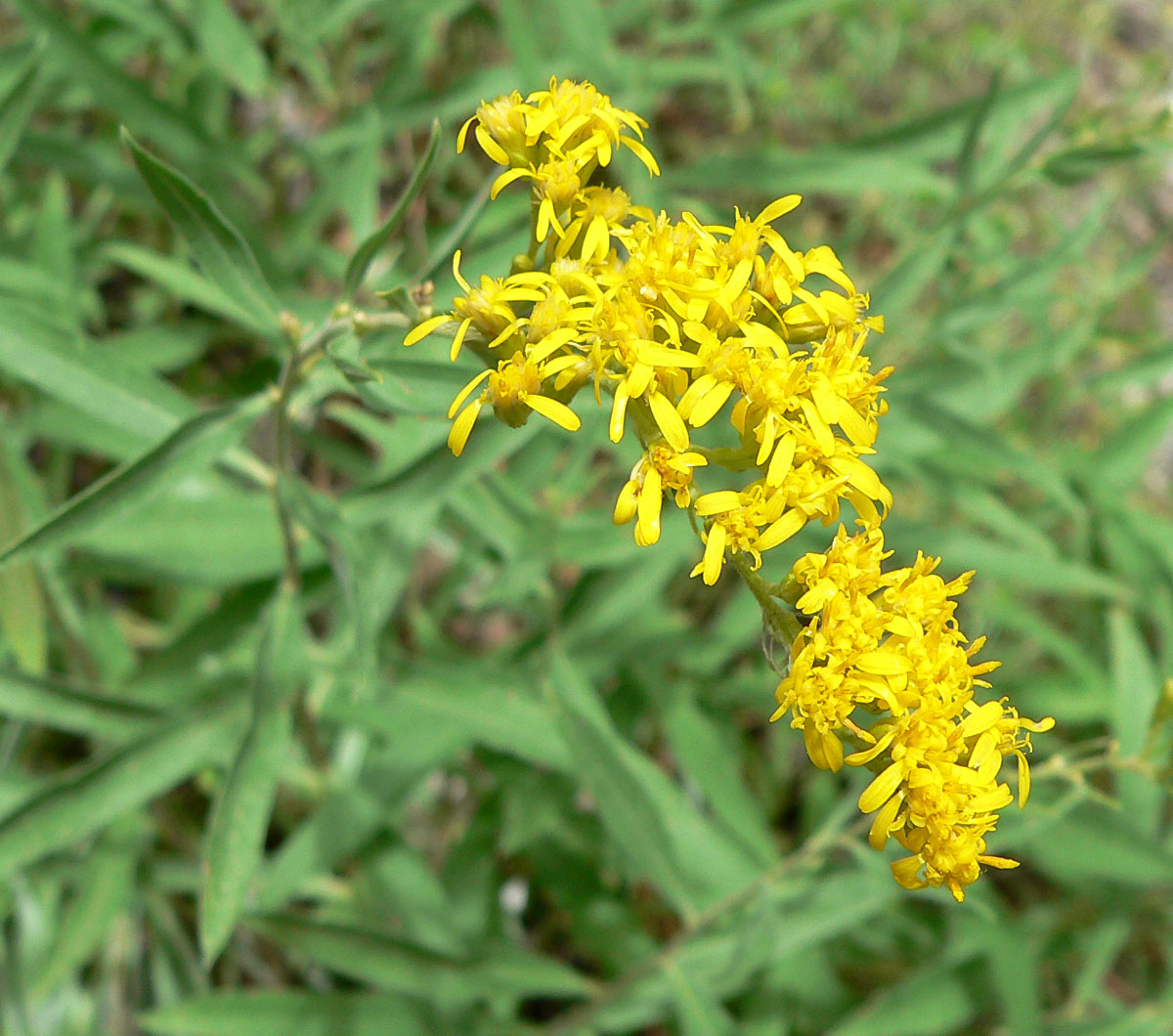
Solidago velutina, known as Velvety Goldenrod, threenerve goldenrod (its USDA name) or, in California, California goldenrod, is a perennial wildflower of the aster family (Asteraceae) native to the western United States and Mexico. It usually grows 1 to 3 feet tall from creeping rhizomes, with leafy stems covered in fine, short, soft hairs that give the plant a slightly gray, velvety look. In late summer and fall it produces arching plumes of small, bright yellow flower heads.
It is the common goldenrod of much of the dry Southwest and California, growing in open pine and oak woodlands, pinyon-juniper country, chaparral, canyons and rocky slopes from near sea level in California to high mountain forests in the Rockies and Great Basin ranges. Botanists recognize three subspecies: subsp. velutina, subsp. sparsiflora (once treated as a separate species, Solidago sparsiflora) of the interior West, and subsp. californica of California, southwestern Oregon and Baja California.
Velvety goldenrod is tough, drought tolerant and late blooming, which makes it valuable in dry western gardens, where few plants flower in September and October. Its flowers are covered with bees, wasps, flies, beetles and butterflies. This guide covers how to identify it, where it grows, how to grow it, and what it offers wildlife.
Identification
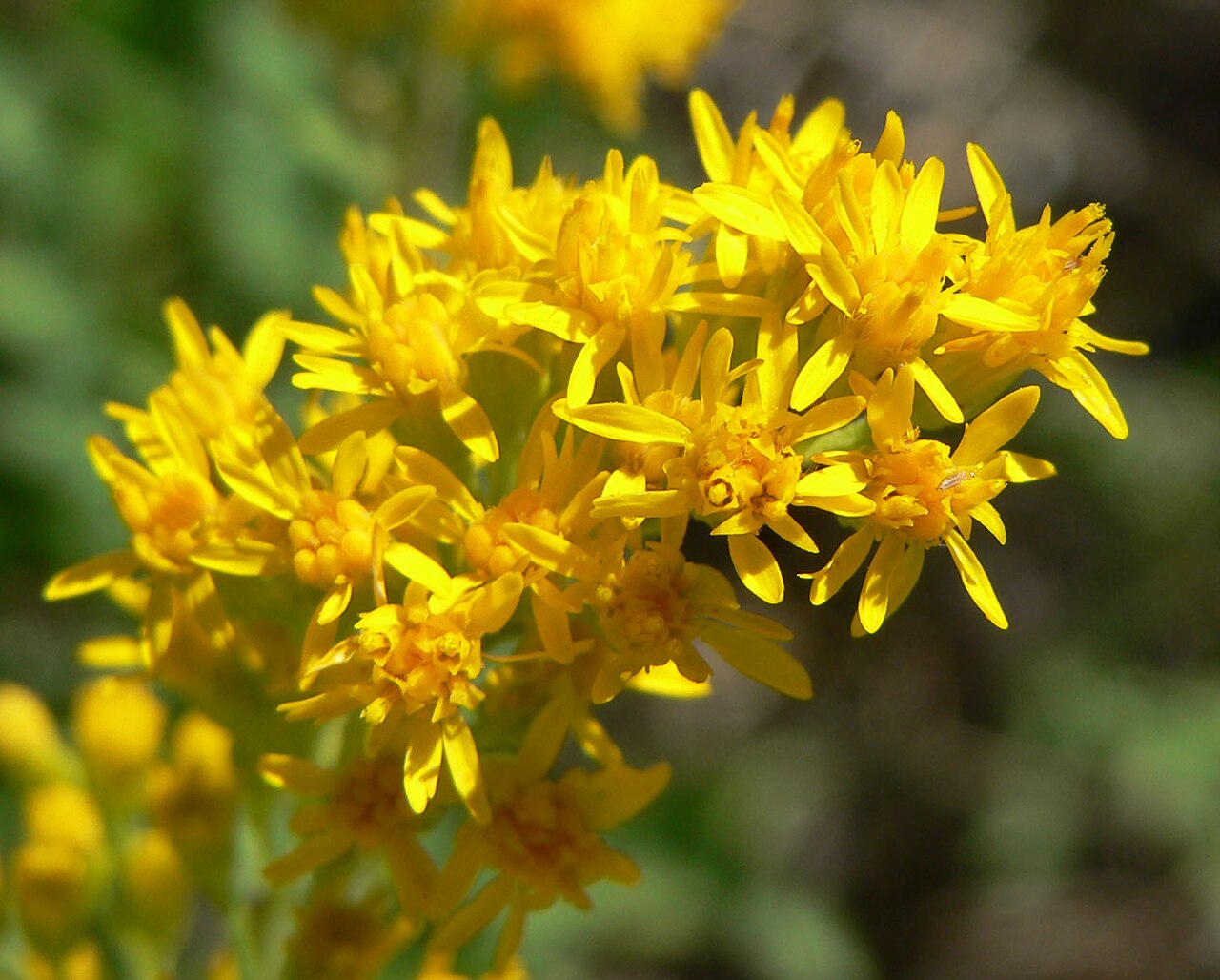
Goldenrods are notoriously hard to tell apart, but in most of the dry West velvety goldenrod is the most common species. Look for the soft, fine hairs on the stems and leaves, leaves with three main veins, and flower heads arranged along one side of arching branches.
Growth Habit
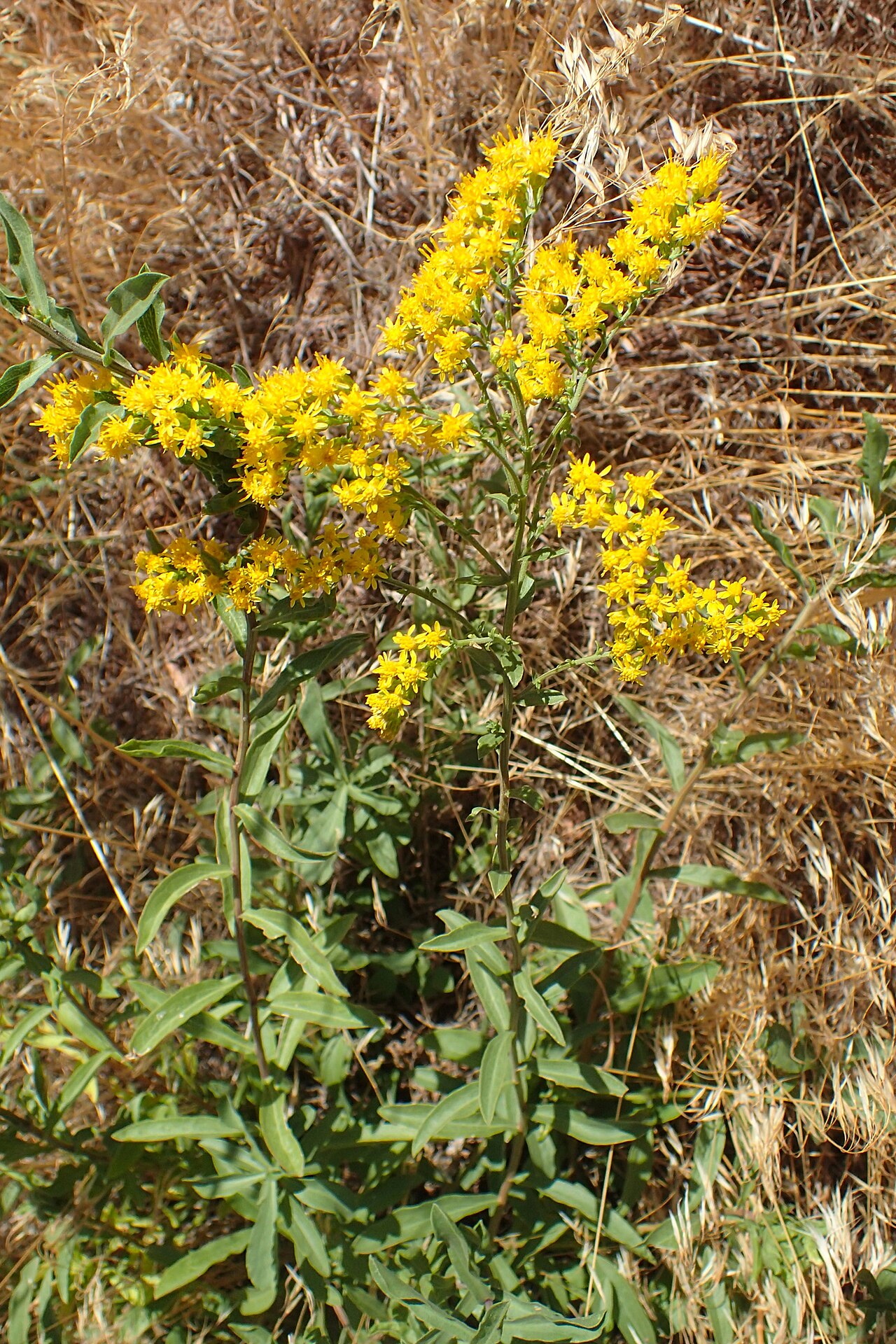
Velvety goldenrod is an herbaceous perennial that spreads by short to long rhizomes and often forms loose patches. The stems are usually 1 to 3 feet tall, sometimes up to about 5 feet, unbranched below the flower cluster, and densely covered in very short, soft, spreading hairs. The plant dies back to the ground each winter.
Leaves
The leaves are alternate, gray-green to green, narrowly oval to lance-shaped, and soft-hairy on both surfaces. The lower leaves are the largest, with a tapering stalk-like base, and often wither by flowering time; the leaves get gradually smaller up the stem. The larger leaves have three prominent, nearly parallel veins running from the base, the feature behind the name threenerve goldenrod.
Flowers
The tiny flower heads, each about 1/4 inch long, are crowded along the upper side of spreading or arching branches, forming a plume- or pyramid-shaped cluster at the top of the stem, sometimes narrow and wand-like in drier sites. Each head has a few short, bright yellow ray florets around a small cluster of yellow disk florets. Bloom time is mostly July to October, continuing into early winter in coastal California.
Fruit & Seeds
The seeds are small, finely hairy achenes (cypselae), each with a tuft of fine white bristles (pappus) that carries it on the wind. The fluffy seed heads are visible on the dry stalks in late fall and winter.
Look-alikes
Canada goldenrod (Solidago canadensis and S. lepida) also grows in the West but is taller, has smooth lower stems and usually grows in moist ground. Missouri goldenrod (Solidago missouriensis) has smooth, hairless stems and leaves. Northern goldenrod (Solidago multiradiata) of the northern mountains has short, dense, flat-topped flower clusters. Velvety goldenrod’s uniformly soft-hairy stems and three-veined leaves, together with its dry habitat, are the best clues.
Quick Facts
| Scientific Name | Solidago velutina DC. |
| Family | Asteraceae (aster family) |
| Plant Type | Rhizomatous herbaceous perennial |
| Mature Height | 1–3 ft (occasionally to 5 ft) |
| Mature Spread | 1–3 ft, spreading slowly by rhizomes |
| Growth Rate | Moderate |
| Sun Exposure | Full sun to part shade |
| Water Needs | Low; drought tolerant once established |
| Soil Type | Well-drained sandy, gravelly, rocky or loamy soils |
| Soil pH | About 6.0–8.0 |
| Bloom Time | July–October (into December in coastal California) |
| Flower Color | Bright yellow |
| Fall Color | Stems and leaves turn tan; fluffy seed heads |
| Fruit | Small achenes with white bristles, dispersed by wind |
| Deer Resistant | Moderately; hairy foliage is not a favorite |
| USDA Hardiness Zones | 4–10 |
Native Range
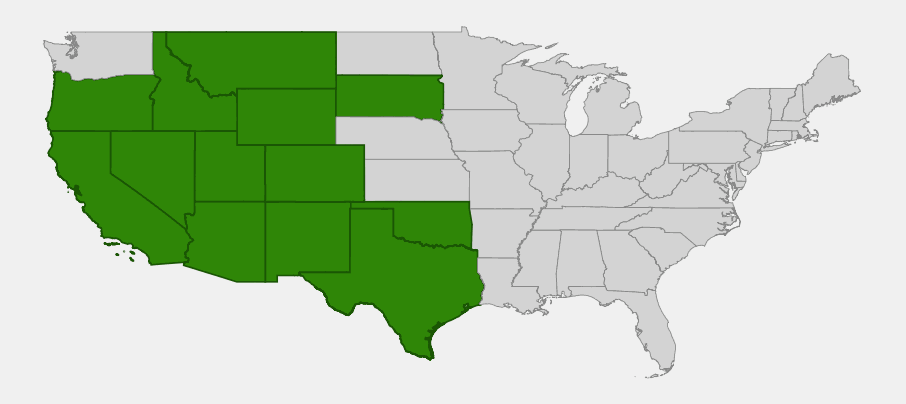
Velvety goldenrod is a plant of the western United States and Mexico. USDA PLANTS lists it as native to 13 states: Arizona, California, Colorado, Idaho, Montana, New Mexico, Nevada, Oklahoma, Oregon, South Dakota, Texas, Utah and Wyoming. In Mexico it extends from Baja California across the northern states and south into the Sierra Madre.
Its heartland is the Southwest, the southern Rockies, the Great Basin and California. Subspecies californica is widespread in California’s Coast Ranges, Sierra Nevada foothills and southern mountains and reaches southwestern Oregon. The interior subspecies grow in Arizona, New Mexico, Utah, Nevada, Colorado and western Texas, with scattered populations farther north in Idaho, Wyoming and Montana. The records from Oklahoma and South Dakota are outlying, at the eastern edge of the range.
Typical habitats are dry, open places: ponderosa pine and mixed conifer forests, pinyon-juniper and oak woodlands, chaparral and coastal scrub, grassy slopes, canyon bottoms, roadsides and rocky ridges. It ranges from near sea level in California to roughly 10,000 feet in the southwestern mountains.
📋 Regional plant lists featuring Velvety Goldenrod: Idaho, Eastern Oregon & Eastern Washington · Montana & Wyoming · Utah & Western Colorado · Arizona & New Mexico · South & West Texas · North Dakota, South Dakota & Western Minnesota · Western Oregon & Western Washington · California & Nevada
Growing & Care Guide
Velvety goldenrod is an easy, low-water perennial for dry western gardens. California native nurseries often sell subsp. californica as California goldenrod, and seed of interior forms is available from regional native seed companies. Choose plants or seed from your own region, since the subspecies differ in hardiness.
Light
Full sun gives the strongest flowering, but it also grows in part shade under open oaks and pines. In hot desert-edge gardens, a little afternoon shade helps.
Soil & Water
It tolerates most well-drained soils, from sand and gravel to clay loam, and is not fussy about pH. Once established it needs little or no summer water in most of its range; an occasional deep soak in summer keeps it greener and taller and extends bloom. Avoid constantly wet, poorly drained soil.
Planting Tips
Plant in fall or early spring, about 18 to 24 inches apart. Because it spreads by rhizomes, give it room or plant it where a loose colony is welcome: on a slope, in a meadow, along a fence or between shrubs. It pairs well with California sagebrush, rabbitbrush, native grasses and asters for a fall display.
Pruning & Maintenance
Leave the stems standing after bloom so birds can eat the seeds, then cut them to the ground in late winter. If it spreads beyond where you want it, pull or dig the extra rhizomes in spring. Goldenrods do not cause hay fever; their pollen is heavy and carried by insects, not wind.
Propagation
Divide established clumps in late fall or early spring, or grow it from seed. Sow seed in fall outdoors or give it a few weeks of cold, moist stratification before sowing in spring; the seeds are small and germinate best on the soil surface or barely covered. Seedlings usually bloom in their second year.
Landscape Uses
- Pollinator gardens: late-season nectar and pollen when little else is blooming
- Dry native gardens: low-water perennial for western xeric plantings
- Meadows and slopes: spreading rhizomes help cover and hold soil
- Habitat restoration: common native perennial of western woodlands, chaparral and grasslands
- Fall color: bright yellow plumes in September and October
Wildlife & Ecological Value
Late-blooming goldenrods are among the most important wildlife plants in the West, and velvety goldenrod is often the main source of fall nectar in dry habitats.
For Pollinators
The Xerces Society, as cited by the Lady Bird Johnson Wildflower Center, recognizes velvety goldenrod as having special value to native bees and honey bees and as a plant that supports beneficial insects used in conservation biological control. Its flowers draw a wide range of bees, wasps, flies, beetles and butterflies, and migrating monarchs and other butterflies use goldenrods as a fall fuel stop.
For Birds
Finches, sparrows and other small seed-eating birds feed on the seeds in fall and winter, and insect-eating birds forage for the many insects that visit the flowers and feed on the leaves.
For Mammals
Deer and other browsers occasionally eat the foliage, and small mammals use the dense patches for cover.
Ecosystem Role
Goldenrods host a large community of specialist insects, including many native bees that collect their pollen and numerous moth caterpillars, gall makers and beetles. By flowering late, velvety goldenrod helps carry pollinators through the end of the growing season and into fall migration.
Cultural & Historical Uses
The genus name Solidago comes from the Latin solidare, to make whole, a reference to the long use of goldenrods in traditional wound treatment. The species name velutina means velvety, describing the fine hairs on the stems and leaves. The species was described by the Swiss botanist Augustin Pyramus de Candolle in 1836.
Several Native peoples of the Southwest and California used goldenrods for medicine, and some made a yellow dye from the flowers. Goldenrods in general are still used by natural dyers for yellow and gold colors.
Goldenrods are often wrongly blamed for fall hay fever. Their sticky pollen is moved by insects, not the wind; the real culprit is usually wind-pollinated ragweed, which blooms at the same time.
Frequently Asked Questions
Why is it called velvety goldenrod?
The stems and leaves are covered with very short, soft hairs that give the plant a velvety feel and a slightly gray look. The species name velutina means velvety.
Is velvety goldenrod the same as California goldenrod?
California goldenrod is subsp. californica of the same species. It was once treated as a separate species, Solidago californica, but is now usually included in Solidago velutina.
Does velvety goldenrod cause hay fever?
No. Its heavy, sticky pollen is carried by insects. Fall hay fever is usually caused by wind-pollinated plants such as ragweed.
Is it invasive in gardens?
It spreads by rhizomes and can form loose patches, but it is not aggressive in dry soil. Extra shoots are easy to pull in spring.
How much water does it need?
Very little once established. It is a drought-tolerant plant of dry western woodlands and slopes; an occasional summer soak is enough in hot areas.

Looking for a nursery that carries Velvety Goldenrod?
Browse our native plant nursery directory: Arizona · California · Colorado · Idaho · Montana · Nevada, New Mexico & Oklahoma · Oregon · South Dakota, Texas & Utah · Wyoming

