
Felwort (Swertia perennis)
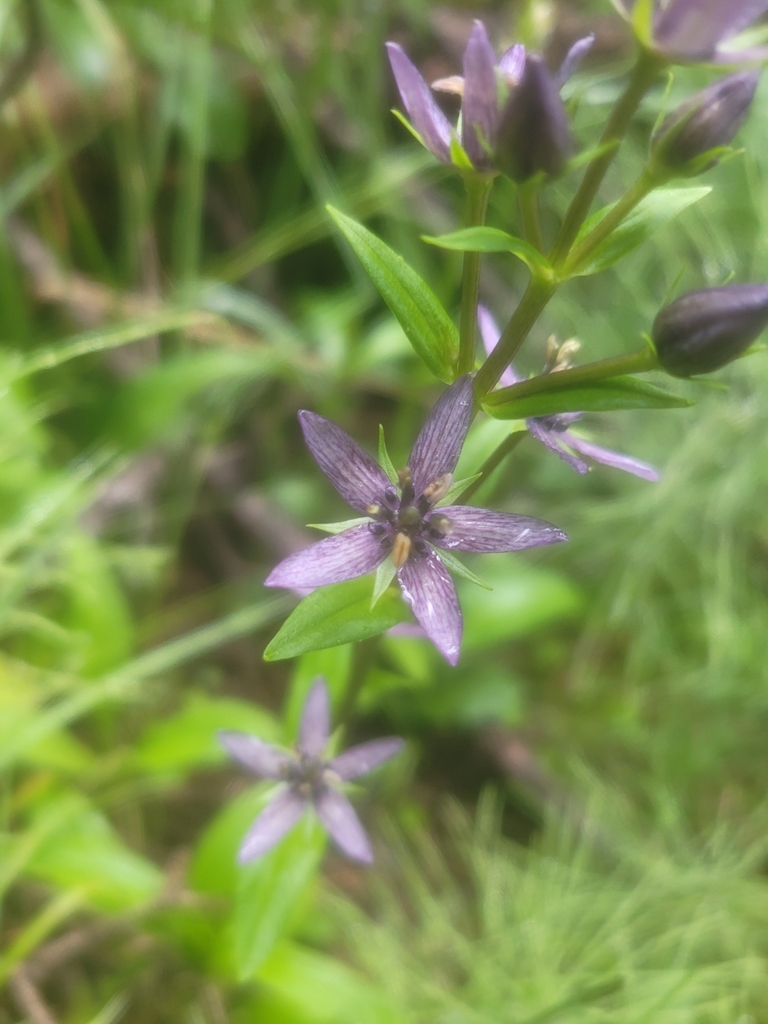
Swertia perennis, known as Felwort, star gentian, alpine bog swertia or star swertia, is a perennial wildflower of the gentian family (Gentianaceae). It grows in wet mountain meadows, bogs and streambanks across the mountains of western North America and Alaska, and also in the mountains of Europe and Asia.
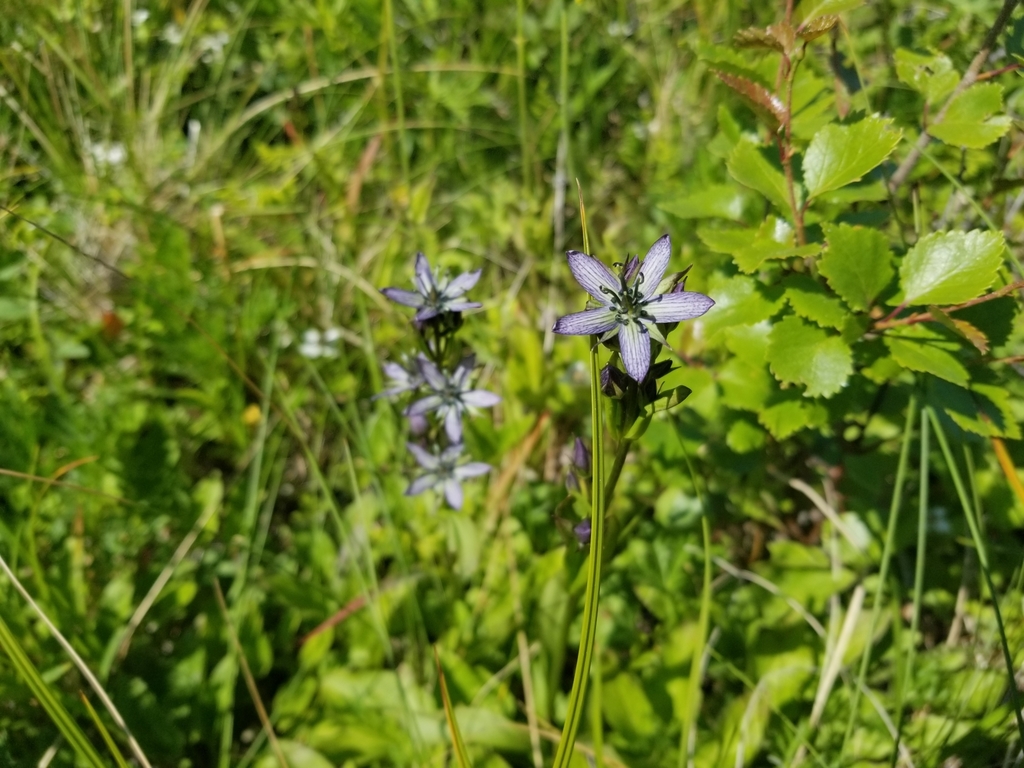
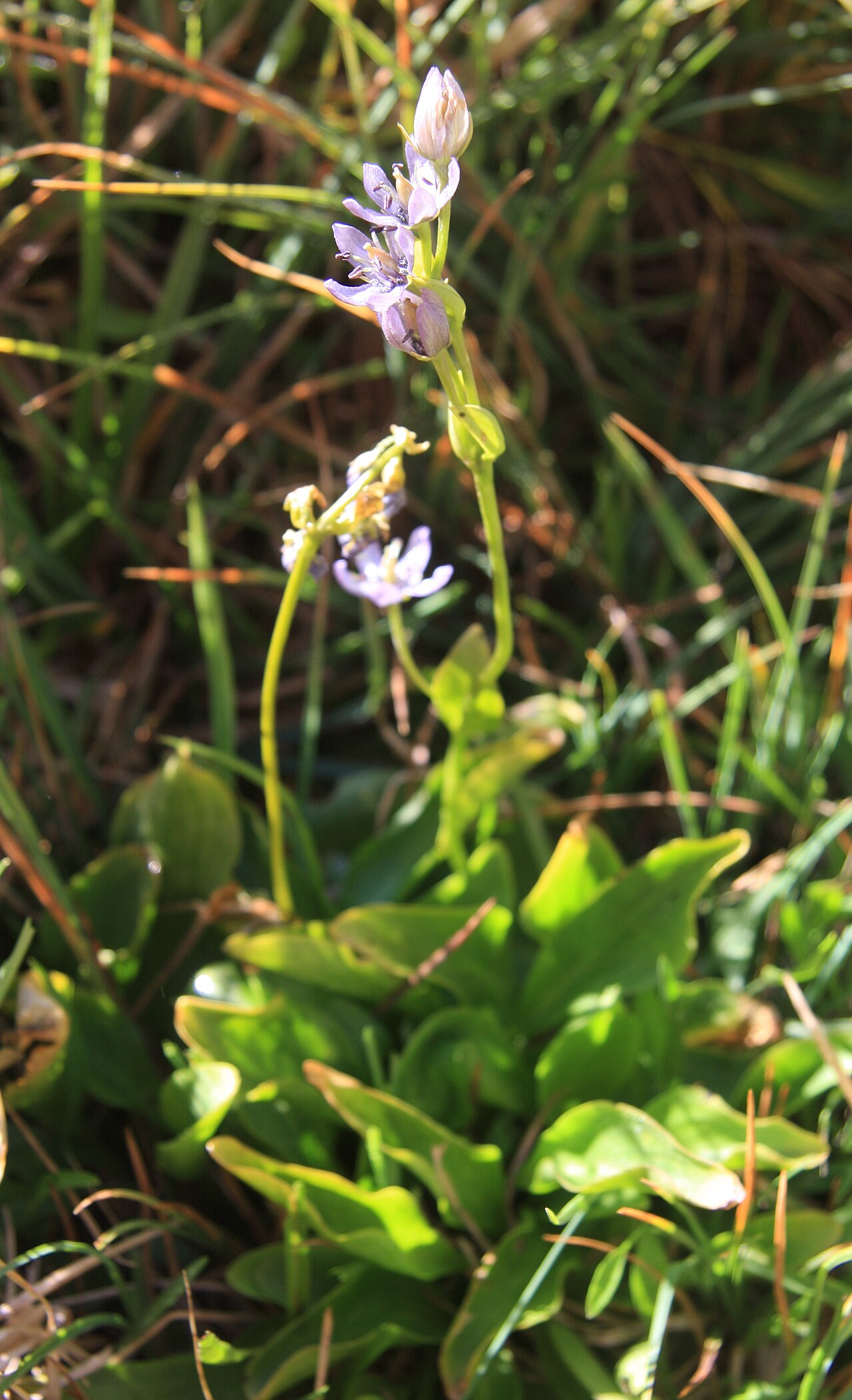
From a rosette of smooth, spoon-shaped basal leaves it sends up an upright, unbranched stem usually 4 to 20 inches tall, carrying a narrow cluster of star-shaped flowers in mid to late summer. Each flower opens flat, with five (sometimes four) pointed lobes in an unusual dusky blue-purple, slate-blue or greenish-white, finely veined and speckled with darker purple. At the base of each lobe are two small nectar pits fringed with hairs, a feature of the genus.
Felwort is a plant of cold, wet, open places at middle to high elevations: subalpine and alpine meadows, fens, seeps and the edges of streams and lakes. It is not a garden plant, and it should never be dug from the wild. This guide covers how to identify it, where it grows, where to see it, and its role in mountain wetlands.
Identification
Felwort is easy to recognize when it blooms: look in wet mountain meadows for an upright stem of flat, star-shaped, slate-blue flowers with darker veins and dots, rising from spoon-shaped leaves at the base.
Growth Habit
Felwort is a hairless herbaceous perennial that grows from a short rhizome. Each plant has a basal rosette of leaves and usually a single upright, unbranched stem 4 to 20 inches tall, occasionally taller in rich meadows. Plants often grow scattered through wet meadows rather than in dense patches.
Leaves
The basal leaves are smooth, oval to spoon-shaped, 2 to 8 inches long including a long stalk, with smooth margins and a few prominent veins running lengthwise. The stem leaves are few, smaller, stalkless and opposite or nearly so, decreasing in size upward.
Flowers
The flowers are borne on short stalks in a narrow, elongated cluster at the top of the stem. Each is about 3/4 to 1 inch across and opens flat into a five-pointed star (sometimes four lobes). The color is distinctive: dusky blue-purple, slate-blue or bluish-gray, sometimes greenish-white, with darker purple veins and speckles. At the base of each lobe are two small, fringed nectar glands. Bloom time is mostly July to September, depending on elevation and snowmelt.
Fruit & Seeds
After flowering, each flower forms a narrow, dry capsule that splits in two to release many small, flattened, winged seeds in late summer and fall.
Look-alikes
Its relatives in the genus Frasera, such as monument plant (Frasera speciosa), are much larger plants of drier ground with greenish flowers. True gentians, such as mountain bog gentian (Gentiana calycosa), have tubular or bell-shaped flowers rather than flat stars. Elephant’s head (Pedicularis groenlandica) can share the same wet meadows but has pink, elephant-trunk flowers in dense spikes.
Quick Facts
| Scientific Name | Swertia perennis L. |
| Family | Gentianaceae (gentian family) |
| Plant Type | Herbaceous perennial from a short rhizome |
| Mature Height | 4–20 in in flower |
| Mature Spread | 4–10 in |
| Growth Rate | Slow |
| Sun Exposure | Full sun to light shade |
| Water Needs | High; constantly wet or saturated soil |
| Soil Type | Wet, organic or mineral soils of meadows, fens, seeps and streambanks |
| Soil pH | About 5.5–7.5 |
| Bloom Time | July–September |
| Flower Color | Dusky blue-purple to slate-blue, sometimes greenish-white, with darker veins |
| Fall Color | Leaves yellow before dying back |
| Fruit | Narrow capsule with small, winged seeds |
| Deer Resistant | Not well documented |
| USDA Hardiness Zones | 2–7 |
Native Range
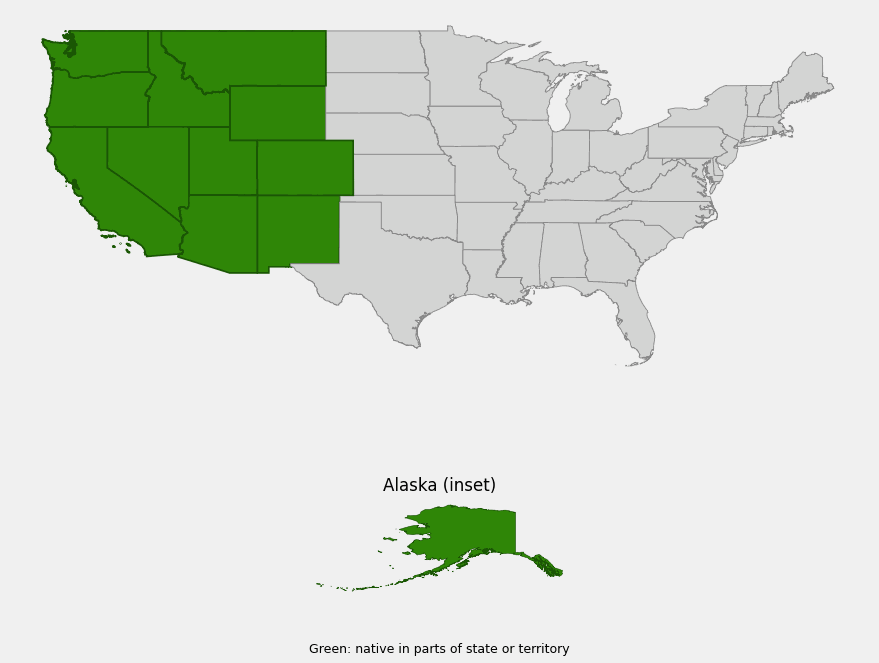
Felwort has a wide range in the Northern Hemisphere. In North America, USDA PLANTS lists it as native to Alaska and 11 western states: Arizona, California, Colorado, Idaho, Montana, New Mexico, Nevada, Oregon, Utah, Washington and Wyoming. It also grows in western Canada, from British Columbia and Alberta north to Yukon, and in the mountains of Europe and Asia.
In the lower 48 states it is a mountain plant: the Cascades and Sierra Nevada, the northern and southern Rocky Mountains, and isolated ranges of the Great Basin and the Southwest, reaching its southern limit in the high mountains of northern Arizona and New Mexico. In Alaska it grows from the southern coast and Kodiak area into the interior, often at lower elevations than farther south. No native records are known from east of the Rockies in the United States.
Typical habitats are wet subalpine and alpine meadows, fens and bogs, seeps, wet streambanks and lake margins, usually where the soil stays saturated through the summer from snowmelt or springs. In the lower 48 states it grows mostly from roughly 5,000 to 12,000 feet, lower in the northern Cascades and Rockies.
📋 Regional plant lists featuring Felwort: Idaho, Eastern Oregon & Eastern Washington · Montana & Wyoming · Utah & Western Colorado · Arizona & New Mexico · Alaska · Western Oregon & Western Washington · California & Nevada
Growing & Care Guide
Felwort is not sold in nurseries and is very difficult to keep alive outside its cold, wet mountain habitat. It is best enjoyed in the wild. Never dig plants or collect seed from wild populations; wet meadow plants rarely survive transplanting, and the meadows themselves are easily damaged by trampling.
Light
In the wild it grows in full sun to light shade in open meadows, often among taller grasses, sedges and willows.
Soil & Water
It needs soil that is cold and constantly wet through the growing season, usually from snowmelt or springs, and a long winter under snow. These conditions are almost impossible to reproduce in a lowland garden.
Planting Tips
Rather than planting felwort, gardeners in cold mountain areas can protect existing wet meadows and seeps on their land and avoid draining or grazing them heavily. Specialist alpine and bog gardeners occasionally grow it from legally sourced seed in cool, moist bog beds.
Pruning & Maintenance
No maintenance is needed in the wild. Where it grows on private land, the best care is to keep the hydrology intact and limit trampling and heavy grazing during the growing season.
Propagation
Like many gentians, it is grown from seed that needs a cold, moist period before it germinates, and seedlings are slow. Seed should come only from cultivated plants or from collection with permission, not from wild populations in parks or other protected areas.
Landscape Uses
- Wildflower viewing: a striking late-summer bloomer of mountain meadows
- Wetland conservation: an indicator of healthy, intact wet meadows and fens
- Alpine bog gardens: for specialists only, from legally sourced seed
- Pollinator observation: flowers visited by flies, bees and other insects
- Botanical study: a circumboreal gentian relative with unusual fringed nectar pits
Wildlife & Ecological Value
Felwort is part of the diverse flowering community of mountain wetlands, blooming in the short summer when insects are most active.
For Pollinators
The open, flat flowers expose their nectar in the fringed pits at the base of each lobe, where short-tongued insects can reach it. Flies, including syrphid flies, bumble bees and other small bees visit the flowers, and the dark veins and spots may act as nectar guides.
For Birds
Felwort has little direct value to birds, but the wet meadows where it grows support many insects that feed songbirds, and the meadows are important habitat for nesting birds.
For Mammals
Elk, deer, marmots and pikas graze in subalpine meadows and may eat felwort along with other wildflowers.
Ecosystem Role
Felwort is a characteristic plant of subalpine and alpine wet meadows and fens, habitats that store water, release it slowly into streams and support a high diversity of plants and insects. Its presence is a good sign of an undisturbed, consistently wet meadow.
Cultural & Historical Uses
The genus name Swertia honors Emanuel Sweert, a 16th- and 17th-century Dutch gardener and author of an illustrated flower catalog. The species name perennis means perennial, distinguishing it from annual relatives. Linnaeus named the species in 1753 from European plants.
“Felwort” is an old English name for plants of the gentian family, from the Old English feldwyrt, field plant; it is used for several gentian relatives in Europe. “Star gentian” and “star swertia” describe the flat, star-shaped flowers.
Like many gentians, felwort contains bitter compounds, and gentian relatives have long been used in traditional bitter tonics in Europe and Asia. This page does not recommend any medicinal use; enjoy the plant in its habitat instead.
Frequently Asked Questions
What does felwort look like?
It is an upright mountain wildflower 4 to 20 inches tall with spoon-shaped basal leaves and a narrow cluster of flat, star-shaped flowers in dusky blue-purple or slate-blue, with darker veins and speckles.
Where does felwort grow?
In wet subalpine and alpine meadows, fens, seeps and streambanks in Alaska and the mountains of the western United States and Canada, as well as in Europe and Asia.
When does felwort bloom?
Mostly from July to September, depending on elevation and when the snow melts.
Can I grow felwort in my garden?
It is not available from nurseries and is very hard to grow outside cold, constantly wet mountain conditions. Enjoy it in the wild and never dig it up.
Is felwort a true gentian?
It belongs to the gentian family (Gentianaceae) but not to the genus Gentiana. Its flat, star-shaped flowers with fringed nectar pits set it apart from true gentians, which have tubular or bell-shaped flowers.

Looking for a nursery that carries Felwort?
Browse our native plant nursery directory: Alaska & Arizona · California · Colorado · Idaho · Montana · Nevada & New Mexico · Oregon · Utah · Washington · Wyoming

