
Lobeleaf Groundsel (Packera multilobata)
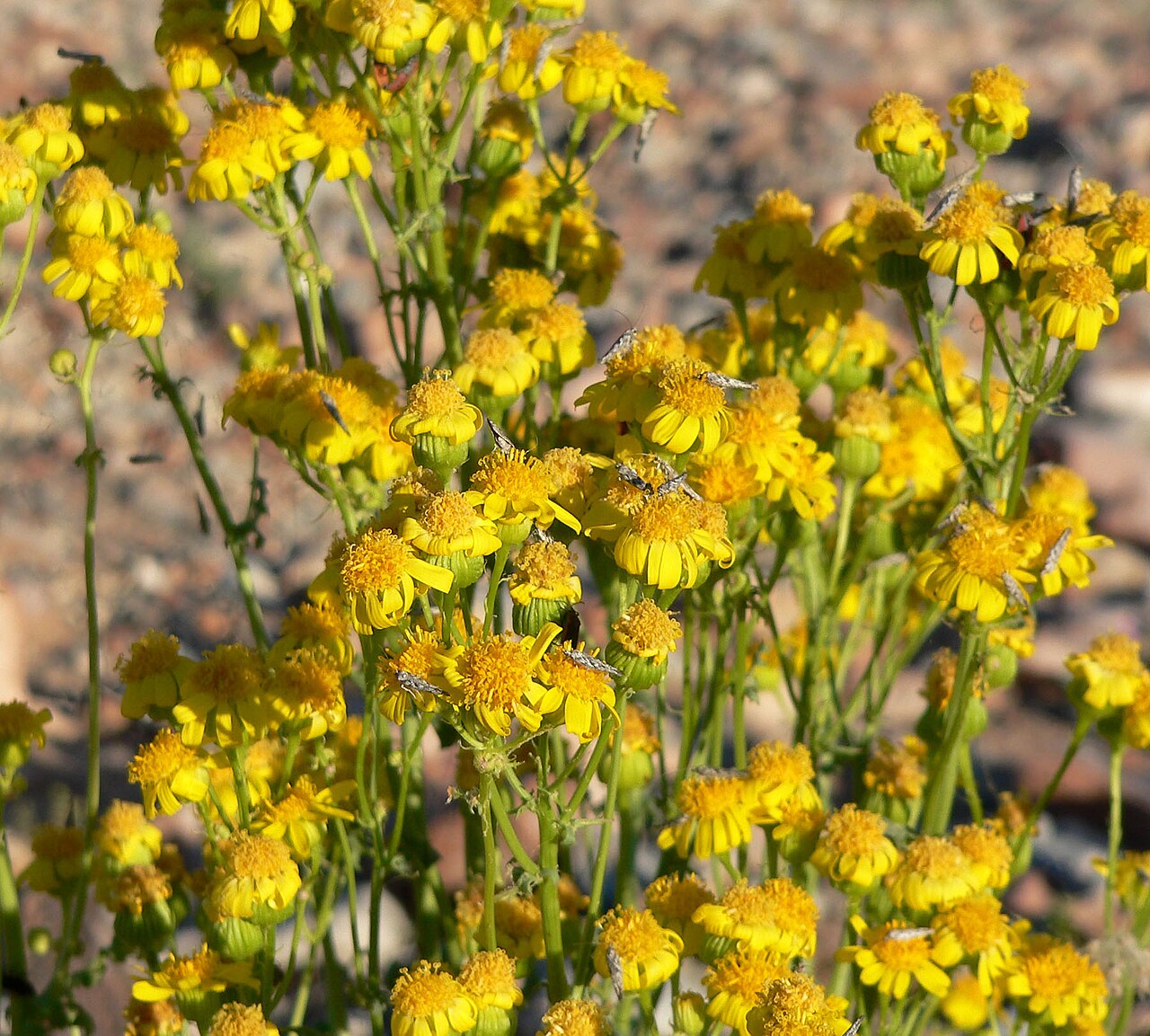
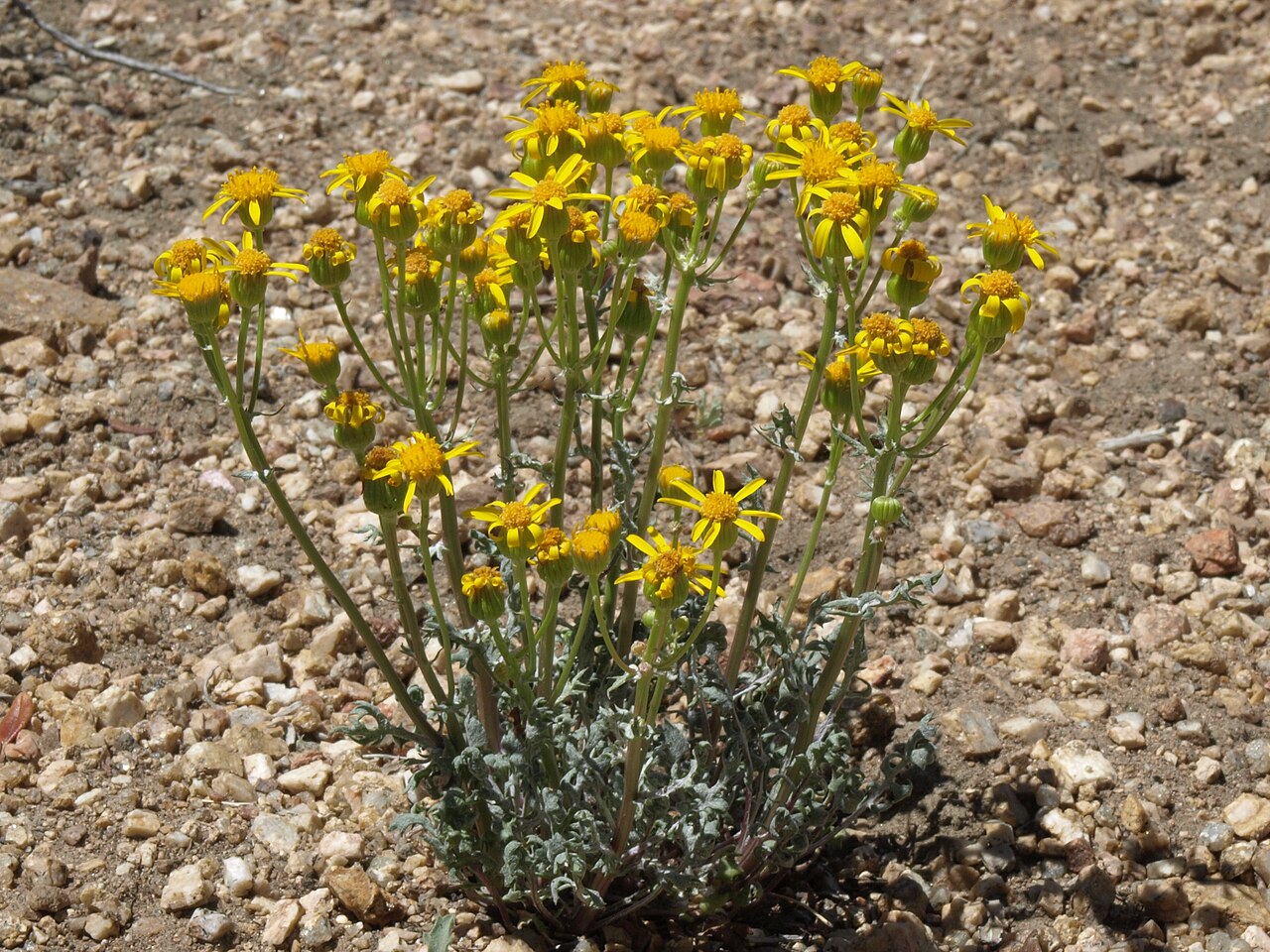
Packera multilobata, known as Lobeleaf Groundsel (also Great Basin groundsel or Uinta groundsel), is a cheerful yellow-flowered member of the aster family (Asteraceae) and one of the most common spring wildflowers of the Intermountain West. From a taproot and short, branched crown it sends up one to several stems, usually 6 to 18 inches tall, topped in late spring with a loose, flat-topped spray of small golden daisies. The name multilobata, “many-lobed,” describes its leaves, which are cut into so many rounded lobes that they can look almost fern-like.
Lobeleaf groundsel grows across the Great Basin and Colorado Plateau, from the desert mountains of eastern California and southern Nevada to Idaho, Wyoming, western Colorado, Arizona and New Mexico. It is at home in sagebrush steppe, pinyon-juniper woodland, mountain brush and open ponderosa pine forest, usually on dry, rocky or gravelly ground, and in wet springs it can turn whole hillsides and road cuts yellow. It is a short-lived perennial, sometimes behaving as a biennial, and it reseeds freely on open soil.
For gardeners in the dry West, lobeleaf groundsel is an easy, drought-tolerant native for rock gardens, xeriscapes and restoration seedings, and a reliable early nectar source for small bees and flies. Like other groundsels it contains pyrrolizidine alkaloids, so it should never be eaten or used as a home remedy, and it is toxic to livestock. This guide covers how to identify it, where it grows, how to grow it from seed, and its role in western shrublands.
Identification
The West has dozens of yellow groundsels, and many look alike at a glance. Lobeleaf groundsel is best recognized by its combination of deeply and repeatedly lobed basal leaves, a low, clumped habit, and many small heads in a flat-topped cluster. Leaves that are only toothed, rather than lobed, point to a different Packera or Senecio.
Roots & Stems
Each plant grows from a taproot topped by a short, often branched crown (caudex). Older plants produce several stems from the crown, forming a small clump. Stems are upright, usually 6 to 18 inches tall and occasionally up to about 20 inches, green to reddish-purple at the base. They start out with tufts of white wool, especially in the leaf axils, and become mostly smooth as the season goes on.
Leaves
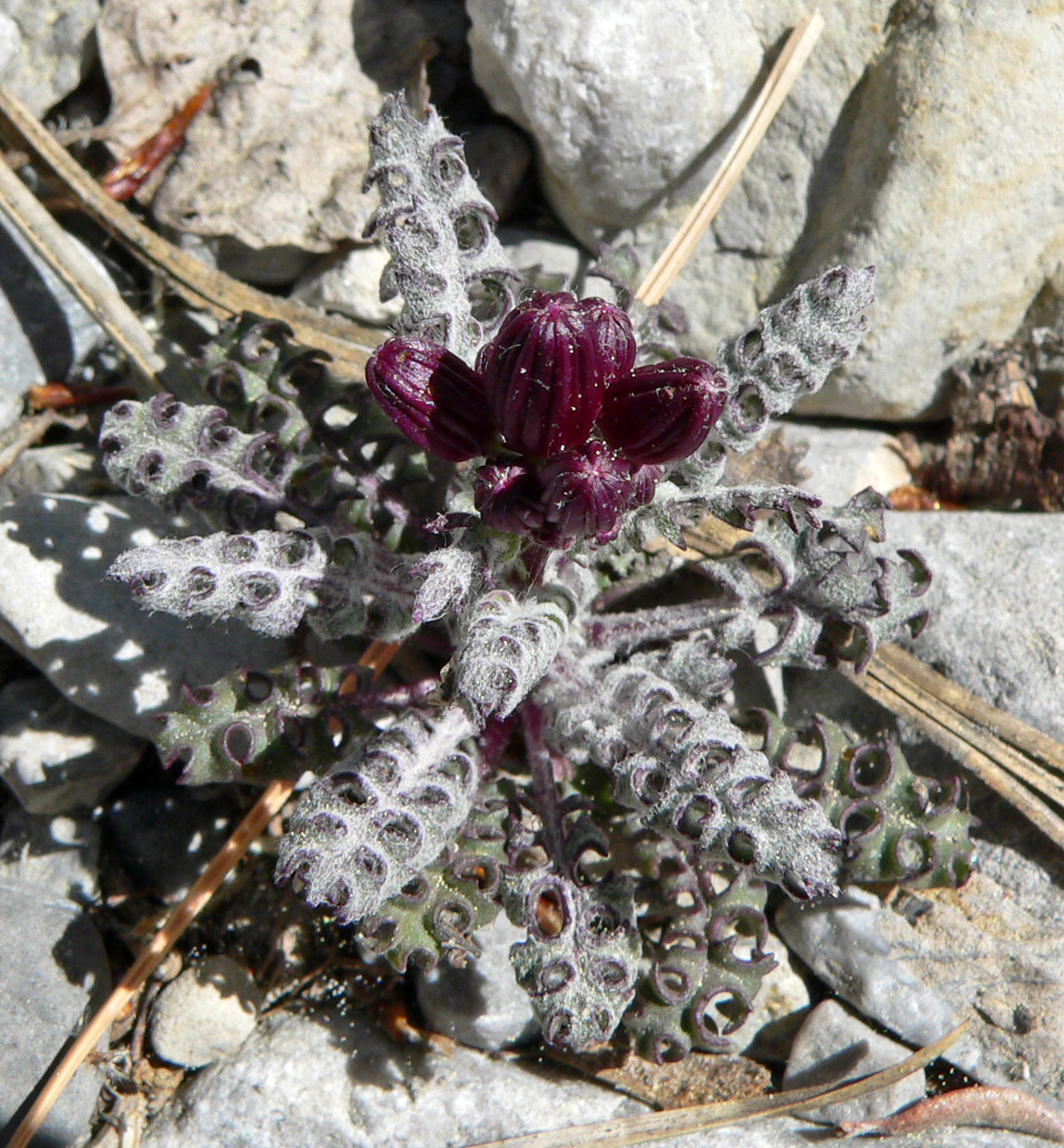
Most of the leaves are in a basal rosette. They are 1 to 4 inches long, oblong to lance-shaped in outline, and pinnately divided into many rounded, toothed lobes, often so deeply that the lobes look like separate leaflets. Young rosettes are frequently grey-woolly and may be tinged purple underneath; mature leaves are greener and less hairy. Leaves on the stem are smaller and become progressively reduced and more finely divided toward the top.
Flowers
The flower heads are small, about ½ to ¾ inch across, and are borne 5 to 30 or more in a loose, flat-topped to rounded cluster. Each head has a central disk of golden-yellow disk florets ringed by about 8 or 13 bright yellow ray florets; occasionally the rays are short or missing. The cup of the head is made of a single row of narrow green bracts (phyllaries), often with darker tips. Bloom begins in April at lower elevations and continues into July or August high in the mountains.
Fruit & Seeds
After flowering, each head ripens into a small puff of seeds. The seeds (cypselae) are tiny, ribbed and topped with a ring of soft white bristles (the pappus) that carries them on the wind. Plants often set abundant seed, which is why lobeleaf groundsel turns up quickly on road cuts, burns and other freshly disturbed soil.
Quick Facts
| Scientific Name | Packera multilobata (syn. Senecio multilobatus) |
| Family | Asteraceae (aster family) |
| Plant Type | Short-lived herbaceous perennial or biennial with a taproot |
| Mature Height | 6–18 in (occasionally to about 20 in) |
| Mature Spread | 6–12 in |
| Growth Rate | Fast |
| Sun Exposure | Full sun to light shade |
| Water Needs | Low; very drought tolerant once established |
| Soil Type | Well-drained rocky, gravelly, sandy or clay soils |
| Soil pH | About 6.5–8.5 (neutral to alkaline) |
| Bloom Time | April–July (into August at high elevations) |
| Flower Color | Bright yellow |
| Fall Color | None; foliage dries after seed set |
| Fruit | Small cypsela with a white, fluffy pappus |
| Deer Resistant | Yes; usually avoided because of its bitter, toxic alkaloids |
| USDA Hardiness Zones | 4–8 |
Native Range
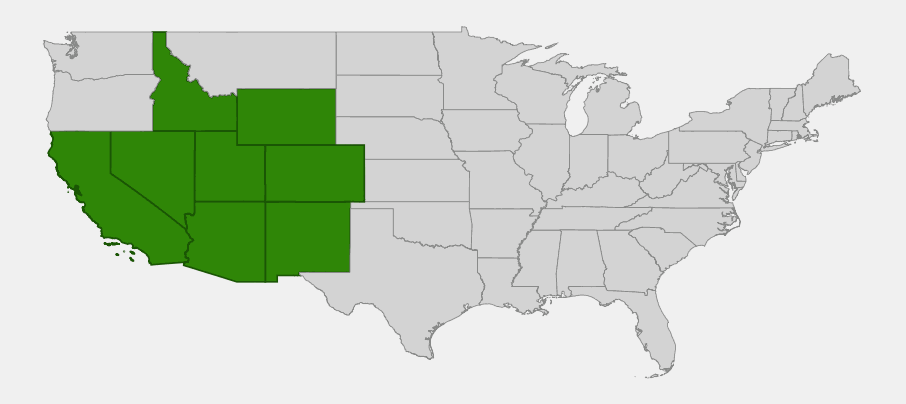
Lobeleaf groundsel is a species of the interior West. USDA PLANTS and the Lady Bird Johnson Wildflower Center record it as native in eight states: Arizona, California, Colorado, Idaho, Nevada, New Mexico, Utah and Wyoming. Its center of abundance is the Great Basin and the Colorado Plateau, especially Utah and Nevada, where it is one of the most familiar spring groundsels.
In California it grows mainly east of the Sierra Nevada, in the White and Inyo Mountains and the desert ranges of the Mojave. In Arizona and New Mexico it is most common on the Colorado Plateau in the northern parts of those states, while in Colorado and Wyoming it is largely a plant of the western, Intermountain side. In Idaho it reaches the southern part of the state. It grows from about 3,000 feet in desert canyons to above 10,000 feet on high ridges.
Within that range it is a habitat generalist. It grows in big sagebrush and black sagebrush steppe, pinyon-juniper woodland, mountain brush with mountain mahogany and bitterbrush, open ponderosa pine and aspen stands, and on rocky ridges, washes, road cuts and burned areas. NatureServe ranks it as globally secure (G5).
📋 Regional plant lists featuring Lobeleaf Groundsel: Arizona & New Mexico · California & Nevada · Idaho, Eastern Oregon & Eastern Washington · Utah & Western Colorado · Montana & Wyoming
Growing & Care Guide
Lobeleaf groundsel is one of the easier Intermountain wildflowers to establish. It wants sun, sharp drainage and very little water, and it behaves best in lean soil. Because individual plants are short-lived, think of it as a self-sowing colony rather than a permanent specimen: leave some open gravel or bare soil nearby, and new seedlings will replace the old plants.
Light
Full sun gives the most compact plants and heaviest bloom. It tolerates light shade under open pines or junipers, as it grows in the wild, but in deeper shade it becomes leggy and flowers poorly.
Soil & Water
Plant it in well-drained rocky, gravelly or sandy soil, including the lean, alkaline soils common in the West. Heavy, wet clay and rich, irrigated beds shorten its life. Water seedlings and new transplants until they root in, then rely mostly on natural rainfall; in low-elevation desert gardens an occasional deep watering in spring extends the bloom. Do not fertilize.
Planting Tips
Use it in rock gardens, gravel gardens, dry slopes and the sunny edges of sagebrush or juniper plantings, in groups of five or more so the small flowers make an impact. Pair it with blue and purple spring bloomers such as penstemons and lupines, and with bunchgrasses and buckwheats that will carry the planting through summer after the groundsel goes dormant.
Pruning & Maintenance
Little care is needed. Leave flowering stems to ripen seed if you want the colony to persist, then cut them back once the heads have shattered. Pull unwanted seedlings while they are small, because the taproot makes older plants harder to remove. Wear gloves when handling large amounts of the plant.
Propagation
Grow it from seed. Sow fresh seed outdoors in fall on the surface of lean, open soil, or press it lightly into the surface; winter cold and moisture help germination. Seed can also be cold-moist stratified for about 30 to 60 days and started in spring. Seedlings form a rosette in their first year and usually flower in their second. The taproot makes established plants difficult to divide or move.
Landscape Uses
- Rock and gravel gardens: small, tidy rosettes and a bright spring display in lean, fast-draining soil
- Xeriscapes: very drought tolerant once established in low-water western landscapes
- Restoration and revegetation: a quick, self-sowing forb for sagebrush, pinyon-juniper and post-fire seedings within its native range
- Pollinator gardens: an early nectar and pollen source for native bees, flies and butterflies
- Naturalized slopes and roadsides: fills disturbed, rocky ground with color while slower natives establish
Wildlife & Ecological Value
Lobeleaf groundsel is a small plant, but in good years it is one of the most abundant spring flowers in Intermountain shrublands, and it supports a wide range of insects at a time when few other plants are blooming.
For Pollinators
The open, flat-topped clusters of small yellow heads are visited by many kinds of small native bees, including sweat bees and mining bees, along with syrphid flies, beetles and small butterflies. Because it blooms early in the season at low and middle elevations, it provides nectar and pollen when insects are emerging and other forage is scarce.
For Birds
Small seed-eating birds such as finches and sparrows pick at the seed heads, though groundsel seed is a minor food. The plant contributes more to birds indirectly, by supporting the insects that sage-steppe birds feed to their young.
For Mammals
Deer, elk and livestock generally avoid lobeleaf groundsel because its foliage is bitter and contains pyrrolizidine alkaloids. These compounds can cause liver damage in cattle and horses if large amounts are eaten, so it is regarded as a poisonous range plant, although animals rarely eat it when better forage is available.
Ecosystem Role
As a fast-growing, wind-seeded perennial, lobeleaf groundsel is one of the first native forbs to colonize road cuts, landslides and burned shrubland, helping to hold soil while longer-lived shrubs and grasses return. Its alkaloids also make it a host for specialist insects that tolerate or store these defensive chemicals.
Cultural & Historical Uses
The species was first described in the mid-1800s, in work by John Torrey and Asa Gray, as Senecio multilobatus, from specimens collected during early expeditions across the West. In the late twentieth century botanists recognized the North American “golden groundsels” as a separate genus, Packera, named for Canadian botanist John G. Packer, and William A. Weber and Áskell Löve transferred this species to it. Many western field guides still list it under Senecio.
Ethnobotanical records note that the Navajo and Yavapai used parts of the plant medicinally. Because groundsels contain liver-damaging pyrrolizidine alkaloids, modern readers should treat these uses as history only. Safety note: do not eat lobeleaf groundsel or make teas or remedies from it, keep livestock off dense stands, and wash your hands after handling large amounts of the plant.
For hikers in Utah, Nevada and the Four Corners, lobeleaf groundsel is a familiar sign of spring: the yellow sprays line trailsides, canyon benches and pinyon-juniper flats from April into early summer. Seed is increasingly used in native seed mixes for sagebrush and post-fire restoration, where its quick establishment gives a head start to slower-growing species.
Frequently Asked Questions
Is lobeleaf groundsel poisonous?
Yes. Like other groundsels and ragworts it contains pyrrolizidine alkaloids, which can damage the liver. Never eat it or use it in teas or home remedies, and keep horses and cattle away from dense stands. Simply growing or touching it in the garden is not a problem.
Is lobeleaf groundsel a perennial?
It is a short-lived perennial that sometimes behaves as a biennial. Individual plants may live only a few years, but it reseeds readily, so a planting usually persists as a colony if some open soil is left for seedlings.
How do I tell lobeleaf groundsel from other yellow groundsels?
Look at the basal leaves. Lobeleaf groundsel has leaves divided into many rounded lobes, often so deeply that they look like leaflets. Many similar western species, such as Tall Western Groundsel, have leaves that are merely toothed or entire.
Will lobeleaf groundsel grow in a regular garden bed?
It struggles in rich, irrigated beds and heavy clay. It does best in a sunny rock garden, gravel bed or dry slope with lean, fast-draining soil and little or no supplemental water once it is established.
Does lobeleaf groundsel attract pollinators?
Yes. Its early, abundant flowers draw small native bees, hover flies, beetles and small butterflies, making it a useful early-season food source in western pollinator gardens.

Looking for a nursery that carries Lobeleaf Groundsel?
Browse our native plant nursery directory: Arizona · California · Colorado · Idaho · Nevada & New Mexico · Utah · Wyoming

