
Bearded Swallow-wort (Cynanchum barbigerum)
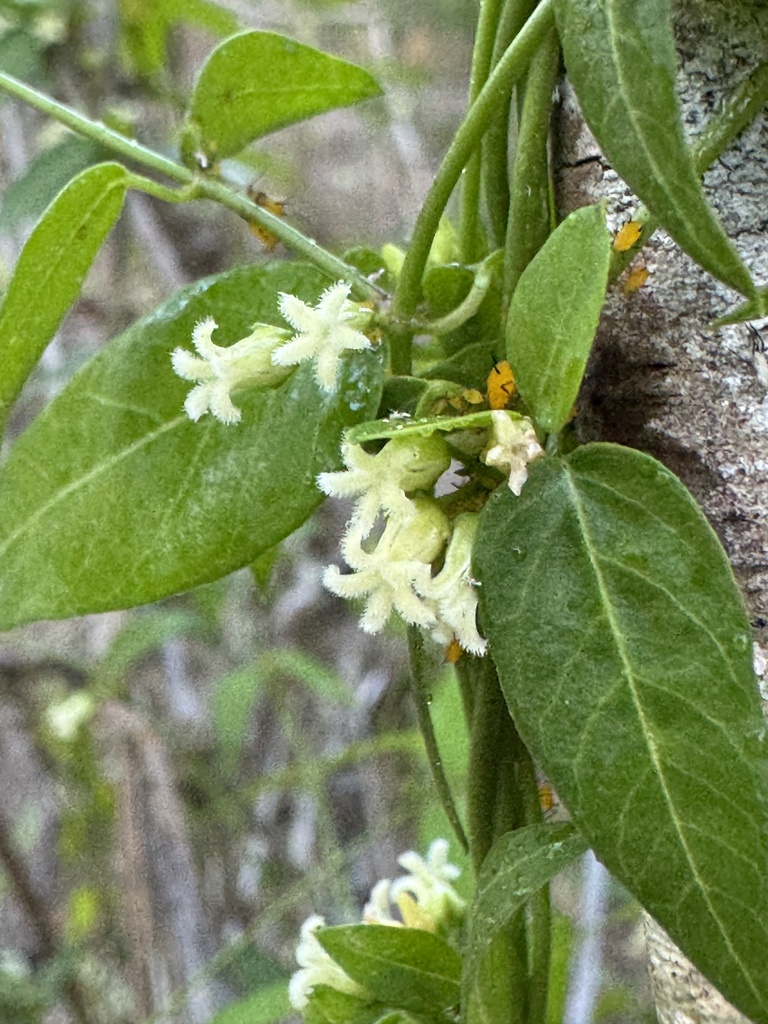
Cynanchum barbigerum, known as Bearded Swallow-wort, bearded milkvine or thread-vine, is a slender, twining vine of the milkweed family native to central and southern Texas and northeastern Mexico. Its thin, wiry stems climb over shrubs, fences and boulders, carrying pairs of small, glossy leaves and clusters of tiny, cream to white, star-shaped flowers.
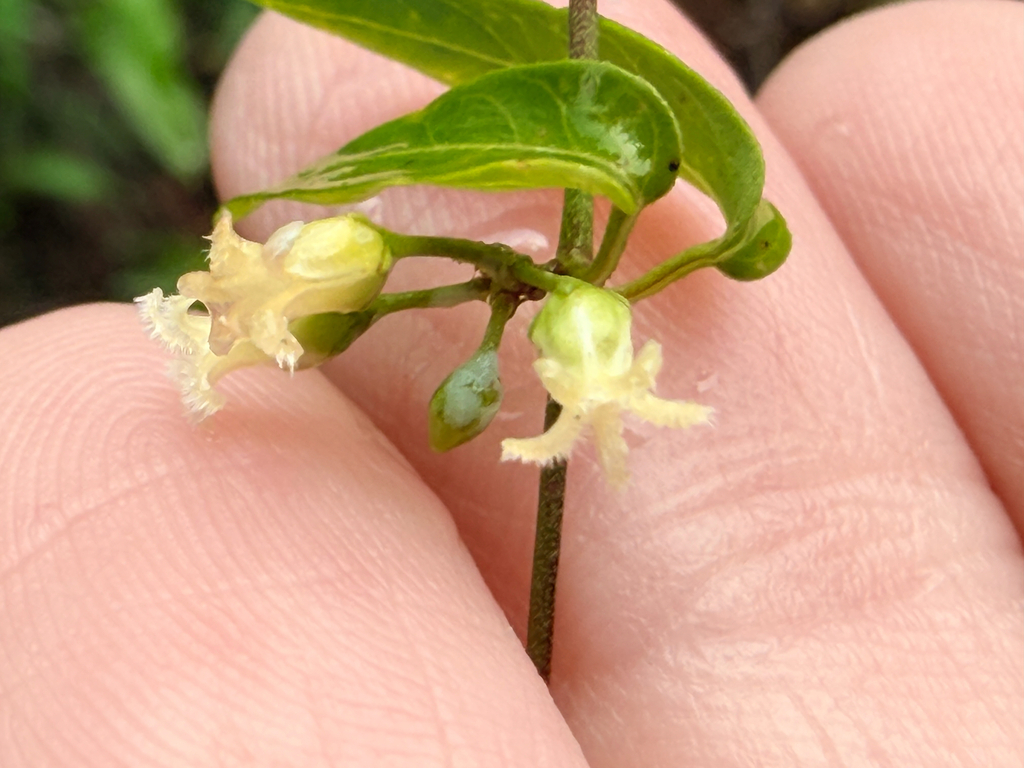
It is easy to miss: the flowers are only about a quarter of an inch long and the stems are hardly thicker than string. Look closely, though, and each flower has fine hairs inside its five lobes, the “beard” that gives the plant its name. Many botanists now place it in the genus Metastelma as Metastelma barbigerum; USDA PLANTS lists it under Cynanchum.
Unlike the invasive Eurasian swallow-worts of the Northeast, this species is a well-behaved native that adds fine texture and a long season of small flowers to brushy habitats. This guide covers how to identify it, where it grows, how to grow it on a fence or shrub, and its value to butterflies and other insects.
Identification
Look for a delicate, twining vine with opposite, narrow, pointed leaves and small clusters of creamy white, five-lobed flowers in the leaf axils. A hand lens shows the hairy inner surface of the petals.
Growth Habit
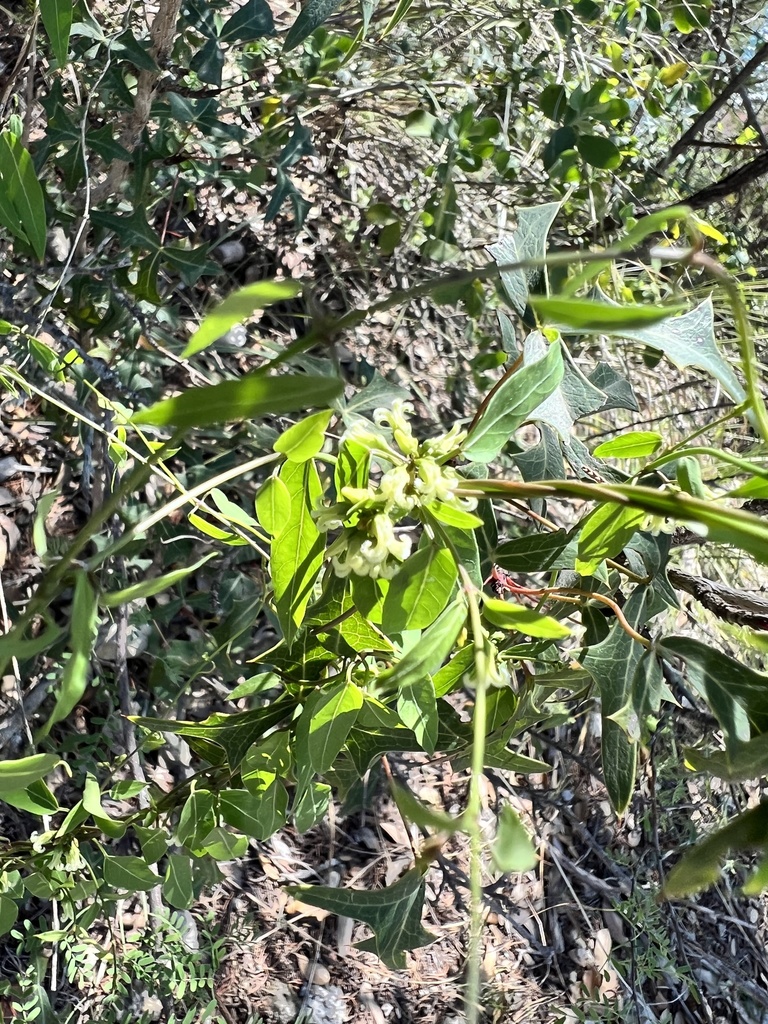
It is a perennial, herbaceous to slightly woody vine with very slender, twining stems that typically reach 3 to 6 feet. It has no tendrils; instead the stems wind around twigs, grass stems and wire. It dies back partly in cold winters and resprouts from the base.
Leaves
Leaves are opposite, narrowly lance-shaped to oblong, about 1/2 to 1 1/2 inches long, with a pointed tip, short stalk and a smooth, somewhat glossy upper surface.
Flowers
Flowers grow in small clusters of a few to about a dozen in the leaf axils. Each is roughly 1/8 to 1/4 inch long, bell-shaped to tubular at the base with five spreading lobes, cream, white or greenish white. The inner surface of the lobes is densely hairy, giving a bearded look. Flowering is mainly March to July, with some flowers later in the year after rain.
Fruit & Seeds
Like other milkweed relatives, it produces slender, pointed pods (follicles) about 1 1/2 to 2 1/2 inches long. When ripe, they split along one side to release flat seeds with tufts of silky hairs that carry them on the wind.
Look-alikes
Honeyvine (Cynanchum laeve) is a much larger vine with broad, heart-shaped leaves. Talayote also has heart-shaped leaves and larger flowers. Hartweg’s climbing milkweed has larger, rounded flower clusters and narrow leaves on stouter stems.
Quick Facts
| Scientific Name | Cynanchum barbigerum (Scheele) Shinners (syn. Metastelma barbigerum Scheele) |
| Family | Apocynaceae (dogbane family; milkweed subfamily) |
| Plant Type | Perennial twining vine |
| Mature Height | Stems 3–6 ft long |
| Mature Spread | 2–4 ft on its support |
| Growth Rate | Moderate |
| Sun Exposure | Full sun to part shade |
| Water Needs | Low; drought tolerant |
| Soil Type | Well-drained limestone, caliche, rocky or sandy soils |
| Soil pH | About 7.0–8.5 (neutral to alkaline) |
| Bloom Time | March–July, with scattered later flowers |
| Flower Color | Cream to white or greenish white |
| Fall Color | None notable |
| Fruit | Slender pod 1 1/2–2 1/2 in long with silk-tufted seeds |
| Deer Resistant | Yes (rated high by the Lady Bird Johnson Wildflower Center) |
| USDA Hardiness Zones | 8–10 |
Native Range
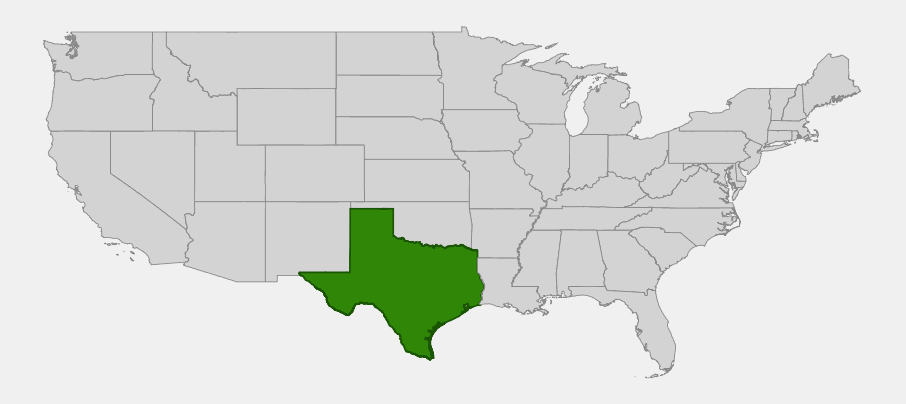
Bearded swallow-wort is native to Texas and northeastern Mexico. In the United States, USDA PLANTS lists it only in Texas, where it grows mainly on the Edwards Plateau and in South Texas.
Its Texas range runs from the Austin and San Antonio area and the Hill Country south through the South Texas Plains and Coastal Bend to the Lower Rio Grande Valley, including Brownsville and the Rio Grande near Roma. It continues south into the Mexican states of Tamaulipas, Nuevo León and Coahuila.
It climbs over shrubs, small trees, fences and boulders in brushland, thorn scrub, oak-juniper woodland edges, limestone hillsides, creek banks and fencerows, from near sea level to about 2,000 feet.
📋 Regional plant lists featuring Bearded Swallow-wort: South & West Texas
Growing & Care Guide
Bearded swallow-wort is a subtle, fine-textured vine for native gardens in central and South Texas. It is not grown for big flowers but for its light, airy growth on a fence, trellis or shrub, its long flowering season and its appeal to small pollinators. It is rarely sold; look for it at native plant sales or grow it from seed.
Light
It grows in full sun to part shade. It often climbs up through shrubs from a shaded base toward the light, and it flowers best with at least half a day of sun.
Soil & Water
It prefers well-drained, rocky, limestone or sandy soils, including alkaline caliche. It is drought tolerant once established; water occasionally in long summer droughts to keep it flowering. Avoid heavy, wet soils.
Planting Tips
Give it something to twine on: a chain-link or wire fence, a small trellis, or an open native shrub such as agarita or Texas persimmon. Its stems are so light that it will not smother a healthy shrub.
Pruning & Maintenance
It needs very little care. Cut back dead stems in late winter if desired. Leave the pods if you want it to self-sow.
Propagation
Grow it from fresh seed collected from ripe pods before the seeds blow away. Sow seed shallowly in spring in a well-drained mix. It can also be started from stem cuttings.
Landscape Uses
- Fences and trellises: a light, fine-textured native vine that won’t overwhelm its support
- Pollinator gardens: long-blooming small flowers for butterflies, bees and other small insects
- Wildlife hedgerows: twines through native shrubs in brushy plantings
- Deer-resistant gardens: rarely browsed by deer
- Hill Country and South Texas landscapes: adapted to limestone soils, heat and drought
Wildlife & Ecological Value
Small as they are, bearded swallow-wort’s flowers attract a range of insects, and the vine adds structure to brushy habitats used by birds and small animals.
For Pollinators
The small flowers are visited by butterflies, small bees, wasps and flies. The Lady Bird Johnson Wildflower Center notes that it attracts the variegated fritillary. As in other milkweed relatives, pollen is packaged in small sacs (pollinia) that attach to the legs or mouthparts of visiting insects.
For Birds
Its tangled stems add cover to shrubs used by nesting songbirds, and birds may use the silky seed fluff as nest lining.
For Mammals
It is generally avoided by deer. Its main value to mammals is the added cover it gives to brushy thickets.
Ecosystem Role
As a native milkweed relative, it is part of the diverse vine layer of Texas brushland and thornscrub, and it supports insects that specialize on plants in the milkweed subfamily.
Cultural & Historical Uses
The species was first described as Metastelma barbigerum by the German botanist Adolf Scheele in the mid-1800s, from plants collected in Texas. It was later moved to Cynanchum by the Texas botanist Lloyd Shinners. The name barbigerum means “bearing a beard”, referring to the hairy inner surface of the flower lobes.
Swallow-wort is an old European name for related plants in the milkweed family. The northeastern United States has two invasive Eurasian “swallow-worts” (Vincetoxicum species), but bearded swallow-wort is a native Texas plant and is not invasive.
Safety note: many members of the milkweed subfamily contain compounds that are toxic if eaten. Its toxicity is not well documented, so don’t eat any part of it and keep pets and livestock from browsing it.
Frequently Asked Questions
Is bearded swallow-wort invasive?
No. It is a native Texas vine. The invasive swallow-worts of the northeastern United States are different, Eurasian species in the genus Vincetoxicum.
Where does bearded swallow-wort grow?
It grows in central and South Texas, especially the Edwards Plateau, South Texas Plains, Coastal Bend and Lower Rio Grande Valley, and in northeastern Mexico.
Why is it called bearded?
The inside of each small flower lobe is covered with fine hairs, which look like a little beard under magnification. The scientific name barbigerum means the same thing.
Is bearded swallow-wort a milkweed?
It belongs to the milkweed subfamily of the dogbane family and has similar pods with silky, wind-borne seeds, but it is a twining vine rather than an upright milkweed.
How do I grow bearded swallow-wort?
Plant it in well-drained soil in sun or part shade, next to a fence, trellis or open shrub it can climb. It is drought tolerant and needs little care once established.

Looking for a nursery that carries Bearded Swallow-wort?
Browse our native plant nursery directory: Texas

