
Pine Barren Frostweed (Helianthemum corymbosum)
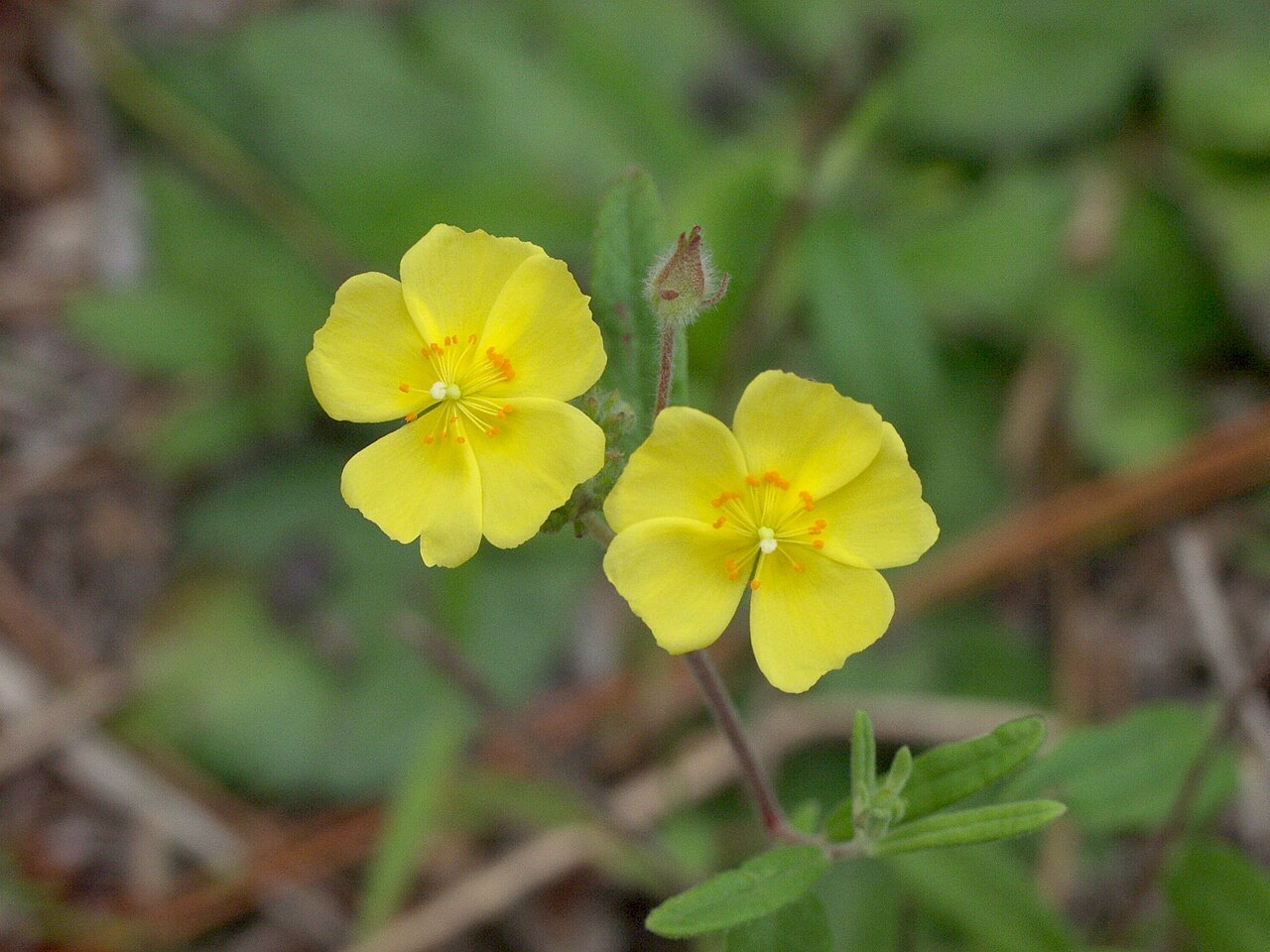
Helianthemum corymbosum, known as Pine Barren Frostweed, pinebarren frostweed or clustered rockrose, is a low, gray-green perennial of dry, sandy pinelands in the southeastern Coastal Plain. From late winter through spring it opens bright, clear yellow, five-petaled flowers about an inch across, each lasting only a morning, above clusters of fuzzy buds and soft, felted leaves.
It belongs to the rockrose family (Cistaceae). Many botanists now place the North American frostweeds in the genus Crocanthemum, as Crocanthemum corymbosum, separating them from the Old World sunroses (Helianthemum); USDA PLANTS still uses Helianthemum. The name “frostweed” comes from a curious habit of some frostweeds: in early winter, ice crystals can form where sap seeps from cracks at the base of the stems.
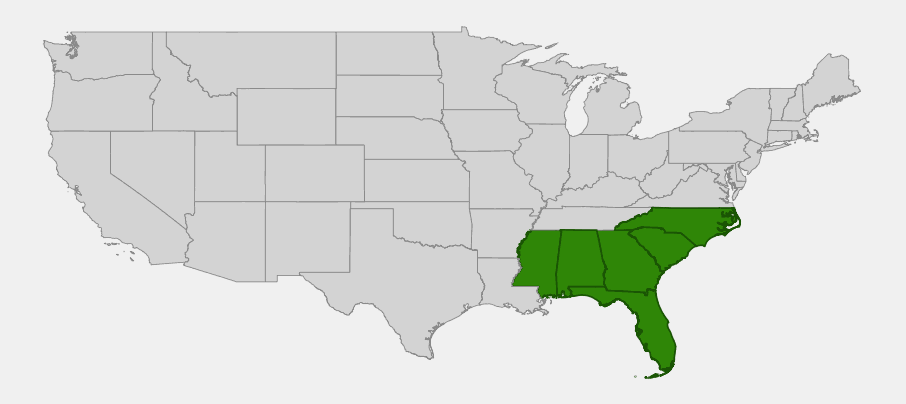
Pine barren frostweed grows from North Carolina to Florida and west to Mississippi, and is most common in Florida’s sandhills, scrub and pine flatwoods. It is a natural fit for dry, sunny native gardens on sandy soil and a valuable early pollen source for native bees. This guide covers how to identify it, where it grows, how to grow it and its role in fire-maintained pinelands.
Identification
Look for pine barren frostweed from late winter to early summer in open, sandy pinelands, where its yellow flowers stand out against its grayish, softly hairy foliage.
Growth Habit
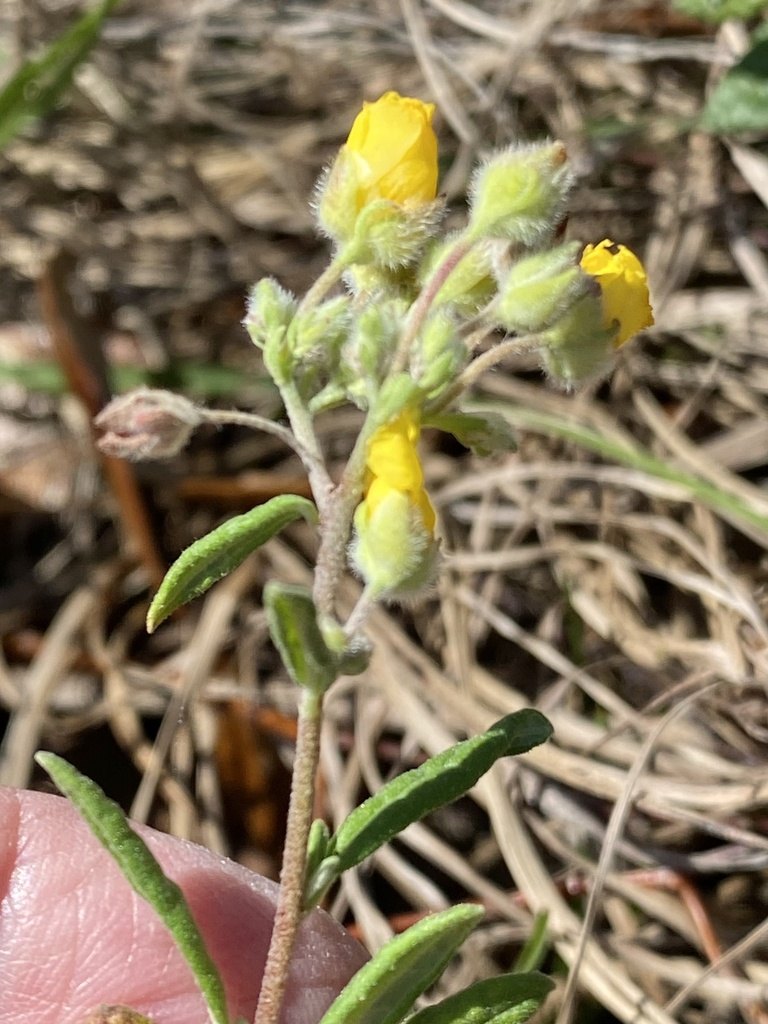
It is a short-lived to long-lived perennial or subshrub, woody at the base, with several erect to spreading stems usually 6 to 20 inches tall. The whole plant is covered in fine star-shaped (stellate) hairs, which give it a gray-green or silvery cast.
Leaves
The leaves are alternate, elliptic to lance-shaped, about ½ to 1½ inches long, with smooth edges. They are green to gray-green and finely hairy above and whitish-felted beneath.
Flowers
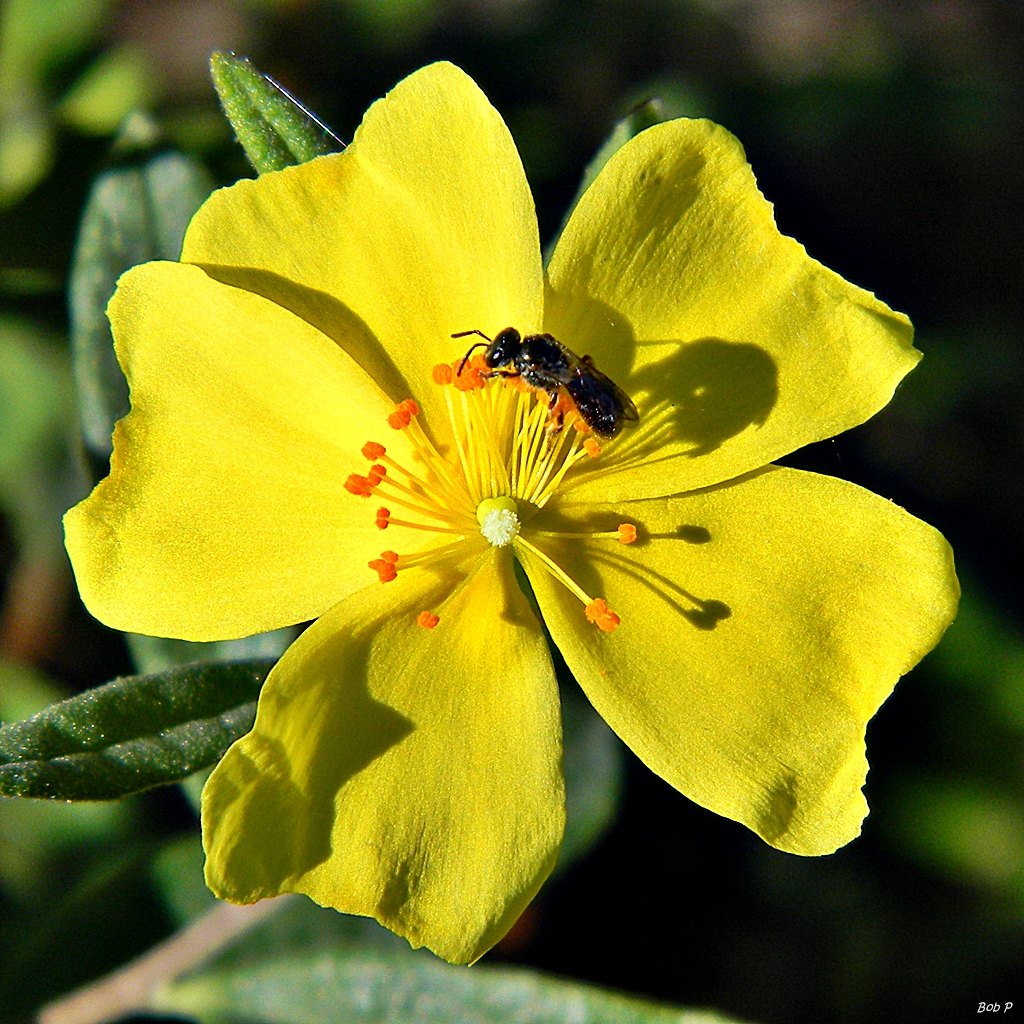
The flowers are borne in branched, flat-topped clusters (corymbs) at the stem tips, with many fuzzy buds. The showy flowers have five broad, bright yellow petals and are about ¾ to 1¼ inches across, with a dense ring of orange-tipped stamens. Each opens in the morning sun and drops its petals the same day. Like other frostweeds it also produces small, closed flowers without petals that pollinate themselves. The main bloom runs from about February or March to June, earliest in Florida.
Fruit & Look-alikes
The fruit is a small, three-parted capsule held in the persistent sepals. Other frostweeds, such as Carolina frostweed (H. carolinianum), usually bear one or a few large flowers per stem rather than a branched cluster. The Florida scrub frostweed (H. nashii) is very similar; botanists separate them by details of the hairs and flower clusters.
Quick Facts
| Scientific Name | Helianthemum corymbosum Michx. (syn. Crocanthemum corymbosum) |
| Family | Cistaceae (rockrose family) |
| Plant Type | Perennial wildflower or low subshrub |
| Mature Height | 6–20 in |
| Mature Spread | 8–18 in |
| Growth Rate | Moderate |
| Sun Exposure | Full sun to light shade |
| Water Needs | Low; very drought tolerant |
| Soil Type | Dry, deep, well-drained sands |
| Soil pH | Acidic, about 4.5–6.5 |
| Bloom Time | February–June |
| Flower Color | Bright yellow |
| Fall Color | None; gray-green foliage persists |
| Fruit | Small three-parted capsule |
| Deer Resistant | Moderately; hairy foliage is seldom favored |
| USDA Hardiness Zones | 8–10 |
Native Range
Pine barren frostweed is native to the southeastern Coastal Plain of the United States. USDA PLANTS lists it from Alabama, Florida, Georgia, Mississippi, North Carolina and South Carolina. It is most common in Florida, where it occurs through much of the peninsula and Panhandle, and becomes more local northward through Georgia and the Carolinas and westward along the Gulf Coast to Mississippi.
It grows on deep, dry, sandy soils in full sun or light shade: longleaf pine sandhills, turkey oak barrens, Florida scrub, dry pine flatwoods, coastal dunes and scrubby openings, and sandy roadsides and clearings. It tolerates poor, acidic, nutrient-poor sands where few other plants can grow.
Like many plants of the longleaf pine ecosystem, it depends on periodic fire or other disturbance to keep its habitat open. Where fire is suppressed and shrubs and trees close in, frostweed populations decline. At the northern edge of its range, in the Carolinas, it is uncommon.
📋 Regional plant lists featuring Pine Barren Frostweed: North & South Florida · Alabama, Georgia & Mississippi · North & South Carolina
Growing & Care Guide
Pine barren frostweed is a good choice for dry, sunny, sandy gardens in the Southeast, especially in Florida. It is occasionally offered by native plant nurseries and native seed producers. Its compact size and spring flowers make it useful at the front of a sandhill or scrub planting.
Light
Give it full sun for the best flowering. It tolerates light, high shade, such as under open longleaf pines, but flowers less in heavier shade.
Soil & Water
It needs deep, loose, very well-drained sand and does best in poor, acidic soil with no added organic matter. Once established it needs no supplemental water. Wet or heavy soils and frequent irrigation lead to root rot.
Planting Tips
Plant small container plants in fall or late winter, and water them only until established. Group several plants together for a better show, and combine them with other sandhill natives such as wiregrass, gopher apple and golden aster. Avoid thick mulch around the crown.
Pruning & Maintenance
It needs little care. Light trimming after flowering can keep plants compact. In naturalistic plantings, an occasional controlled burn or cutting back of competing growth mimics the fires it is adapted to. Do not fertilize.
Propagation
Sow fresh seed in a sandy mix in fall or winter; germination can be slow and uneven, and scarifying the hard seed coat may help. Softwood cuttings can be rooted in a fast-draining mix in late spring.
Landscape Uses
- Sandhill and scrub gardens: a compact, gray-green plant with cheerful spring flowers
- Dry, sandy front borders: low height suits the edge of beds and pathways
- Pollinator gardens: an early pollen source for native bees and flower flies
- Pine flatwoods and sandhill restoration: part of the groundcover of fire-maintained longleaf pine habitats
- Coastal and dune landscapes: tolerates dry, sandy, sunny conditions near the coast
Wildlife & Ecological Value
Pine barren frostweed provides abundant pollen early in the year in the dry pinelands and scrub of the Southeast.
For Pollinators
Its open, yellow flowers offer lots of pollen but little or no nectar. They are visited by small native bees such as sweat bees, by flower flies and by small beetles. Its petaled and petalless flowers ensure seed is produced even when pollinators are scarce.
For Birds
Ground-feeding birds such as quail, towhees and sparrows may eat its small seeds. In sandhills and scrub it is one of many low plants that create the open, varied groundcover these birds use.
For Mammals
It is not a major food plant for mammals, though deer and gopher tortoises may occasionally browse low plants of the sandhill groundcover.
Ecosystem Role
It is part of the diverse groundcover of longleaf pine sandhills, scrub and flatwoods, which depend on frequent fire. Its deep roots let it resprout after fire, and its flowers support the early-season insect community in these habitats.
Cultural & Historical Uses
The French botanist André Michaux described this plant in his Flora Boreali-Americana (1803), from collections he made while traveling through the southeastern United States. The species name corymbosum refers to its flat-topped, branched flower clusters.
The frostweeds are known for a winter curiosity. On cold mornings, some frostweed plants push thin ribbons of ice out of cracks at the base of their stems as sap freezes, a phenomenon also seen in a few other plants. This habit gave the group its common name.
In the Southeast, pine barren frostweed is a familiar spring wildflower of sandhill and scrub preserves. Florida native plant gardeners value it as one of the earliest bloomers for dry, sandy landscapes.
Frequently Asked Questions
When does pine barren frostweed bloom?
Mainly from about February or March to June, earliest in Florida. Each flower opens in the morning sun and drops its petals by afternoon, but plants produce new flowers over many weeks.
Where does pine barren frostweed grow?
On dry, sandy soils of the southeastern Coastal Plain, in longleaf pine sandhills, scrub, dry flatwoods and coastal dunes, from North Carolina to Florida and west to Mississippi.
Why is it called frostweed?
Frostweeds are named for their habit of forming thin ribbons of ice at the base of the stems on freezing winter mornings, as sap seeps out and freezes.
Is it Helianthemum or Crocanthemum?
Both names are used. USDA PLANTS lists it as Helianthemum corymbosum, while many recent sources, including Florida floras, use Crocanthemum corymbosum.
Can I grow pine barren frostweed in my garden?
Yes, in full sun and deep, dry, well-drained sand within its native region. It needs no fertilizer and little water once established, and it dislikes wet or heavy soils.

Looking for a nursery that carries Pine Barren Frostweed?
Browse our native plant nursery directory: Alabama · Florida & Georgia · Mississippi · North Carolina · South Carolina

