
Sea Sandwort (Honckenya peploides)
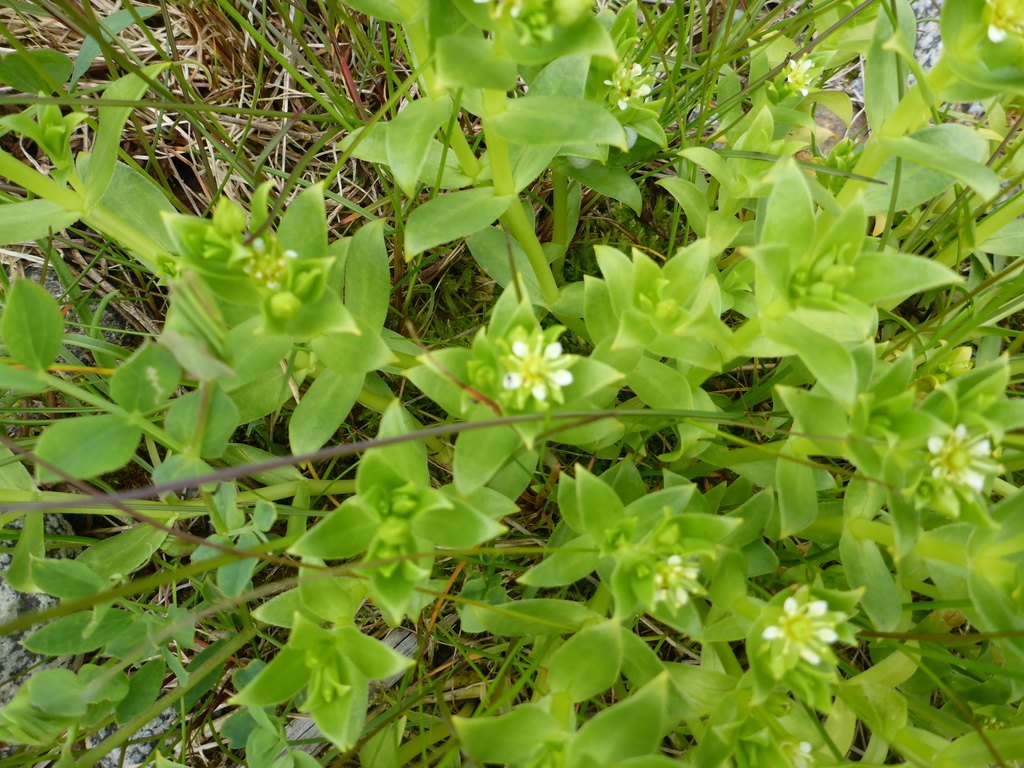
Honckenya peploides, known as Sea Sandwort, seabeach sandwort or seaside sandplant (the name used by USDA PLANTS), is a fleshy, bright green perennial of sandy and gravelly beaches in the northern half of the world. Its thick, glossy leaves are arranged in neat, four-ranked columns along the stems, and it spreads by rhizomes to form low mounds and mats on the upper beach, just above the reach of ordinary tides.
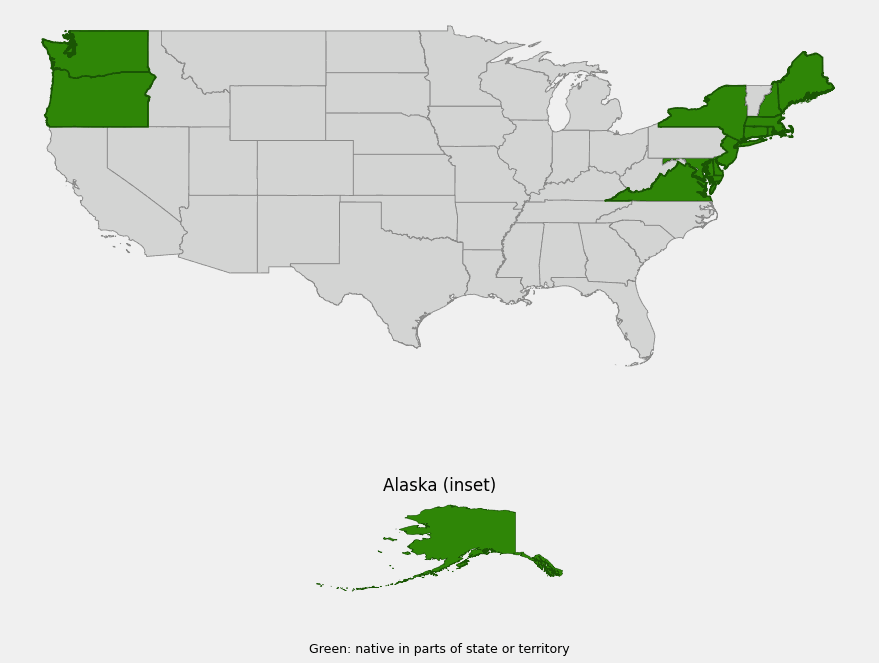
It belongs to the pink family (Caryophyllaceae), and it is the only species in its genus. It grows around the Arctic and along the cooler coasts of North America, Europe and Asia. In the United States it occurs along the Atlantic coast from Maine south to Virginia, along the Pacific coast of Washington and Oregon, and widely on Alaska’s beaches, from the southeast to the Arctic.
Sea sandwort is a pioneer of shifting sand: it traps blowing sand and helps build the first small dunes on a beach. Its leaves have long been eaten as a fresh green by Alaska Native peoples. This guide covers how to identify sea sandwort, where it grows, how it can be used in coastal plantings, and its role in beach ecosystems.
Identification
Sea sandwort is easy to recognize on the upper beach by its succulent, yellow-green to bright green shoots with closely stacked, paired leaves, often forming low, rounded mounds in the sand or gravel.
Growth Habit
It is a succulent perennial herb that spreads from long, branching rhizomes buried in the sand. The stems are short, fleshy and upright to sprawling, usually 2 to 12 inches high, and they can grow up through accumulating sand. Plants often form dense mounds or loose colonies several feet across.
Leaves
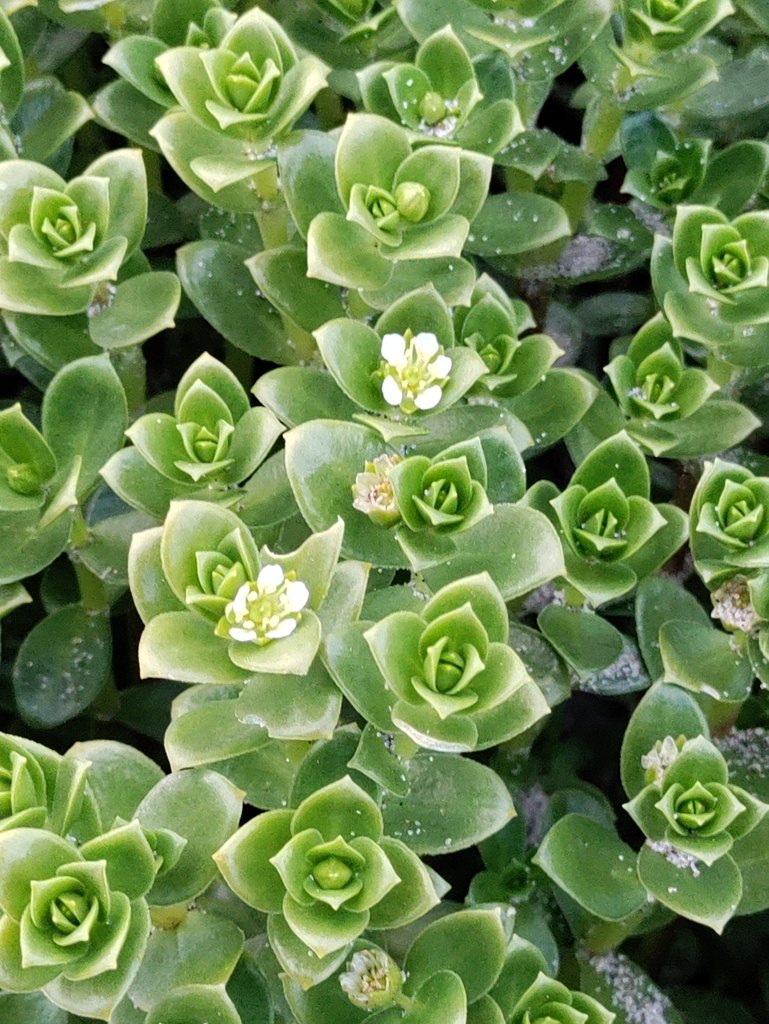
The leaves are opposite, thick and fleshy, ovate to elliptic with pointed tips, about ½ to 1½ inches long, and stalkless. Each pair is set at right angles to the pair below, so the leaves appear in four tidy rows along the stem. They are smooth, glossy, yellow-green to bright green and somewhat translucent.
Flowers
The small flowers sit singly or in small groups in the upper leaf axils and at the tips of the shoots. Each has five green sepals and five small white petals, about ⅓ to ½ inch across. Plants tend to be functionally male or female: male flowers have prominent stamens and petals about as long as the sepals, while female flowers have tiny petals. Flowering runs from about May to August.
Fruit & Look-alikes
The fruit is a fleshy, rounded, pea-sized capsule, yellowish-green and somewhat like a small berry, holding a few large, dark seeds. Sea sandwort is unlike other beach plants: purslanes have alternate leaves, and sea-milkwort and seaside plantain grow in salt marsh rather than on open beach sand.
Quick Facts
| Scientific Name | Honckenya peploides (L.) Ehrh. |
| Family | Caryophyllaceae (pink family) |
| Plant Type | Succulent, rhizomatous herbaceous perennial |
| Mature Height | 2–12 in |
| Mature Spread | 1–3 ft (spreading by rhizomes) |
| Growth Rate | Moderate |
| Sun Exposure | Full sun |
| Water Needs | Low to moderate; tolerates salt spray and occasional tidal flooding |
| Soil Type | Loose beach sand, gravel and cobble |
| Soil pH | About 6.5–8.5 |
| Bloom Time | May–August |
| Flower Color | White to greenish-white |
| Fall Color | Yellowish as stems die back |
| Fruit | Fleshy, pea-sized yellowish-green capsule |
| Deer Resistant | Generally; beach habitat sees little browsing |
| USDA Hardiness Zones | 1–7 |
Native Range
Sea sandwort has a circumpolar range on arctic and cool-temperate coasts of North America, Greenland, Europe and Asia. USDA PLANTS lists it from Alaska, Connecticut, Delaware, Maryland, Massachusetts, Maine, New Hampshire, New Jersey, New York, Oregon, Rhode Island, Virginia and Washington, and from most coastal Canadian provinces and territories.
On the Atlantic coast it grows from Maine and the Maritime Provinces south to Virginia, becoming scarcer toward its southern limit. On the Pacific coast it occurs from Alaska and British Columbia south along the beaches of Washington and Oregon. In Alaska it is one of the most familiar beach plants, from the southeast panhandle to the Bering Sea and Arctic coasts.
It grows on the upper beach, on the foredunes, among driftwood and cobbles, and on gravel spits and bars, in the zone just above the normal high-tide line where it receives salt spray and occasional storm waves. It is tolerant of burial by sand and readily regrows from buried rhizomes.
📋 Regional plant lists featuring Sea Sandwort: Alaska · Connecticut, Massachusetts & Rhode Island · New Hampshire, Maine & Vermont · Delaware, Southern New Jersey & Long Island · New York, Pennsylvania & Northern New Jersey · Maryland, Virginia & West Virginia · Western Oregon & Western Washington
Growing & Care Guide
Sea sandwort is not a typical garden plant, but it is useful in coastal dune restoration and in beachfront landscapes with open sand. It is rarely sold, though some coastal restoration nurseries grow it. Use only nursery-grown plants or seed, and do not dig plants from beaches, where they help hold the sand in place.
Light
It needs full sun and open exposure, as on an open beach.
Soil & Water
Plant it in loose, sandy or gravelly soil with perfect drainage. It tolerates salt spray, wind and occasional saltwater flooding, and once established it needs no irrigation in cool coastal climates. It does poorly in rich, heavy or constantly wet garden soil, and it is best suited to cool coasts.
Planting Tips
Plant rooted rhizome divisions or plugs in spring on the upper beach or foredune, slightly deeper than they grew in the pot so they are anchored against wind. It combines well with beach grass, beach pea and sea rocket in a natural dune planting. Protect new plantings from foot traffic.
Pruning & Maintenance
No pruning is needed. Allow sand and drift material to accumulate around it, since burial stimulates new growth. Keep paths and fencing in place to prevent trampling.
Propagation
It is propagated from rhizome cuttings or divisions, which root readily in damp sand, or from fresh seed sown in a sandy mix in fall to receive natural winter chilling. Seedlings establish best with cool temperatures and some moisture.
Landscape Uses
- Dune restoration: traps blowing sand and helps form small embryo dunes
- Coastal landscapes: a succulent groundcover for open sand near the shore in cool climates
- Beach stabilization: its rhizomes knit loose sand and gravel on the upper beach
- Traditional food: its leaves are a traditional spring and summer green in Alaska
- Native plant study: a circumpolar pioneer of northern beaches
Wildlife & Ecological Value
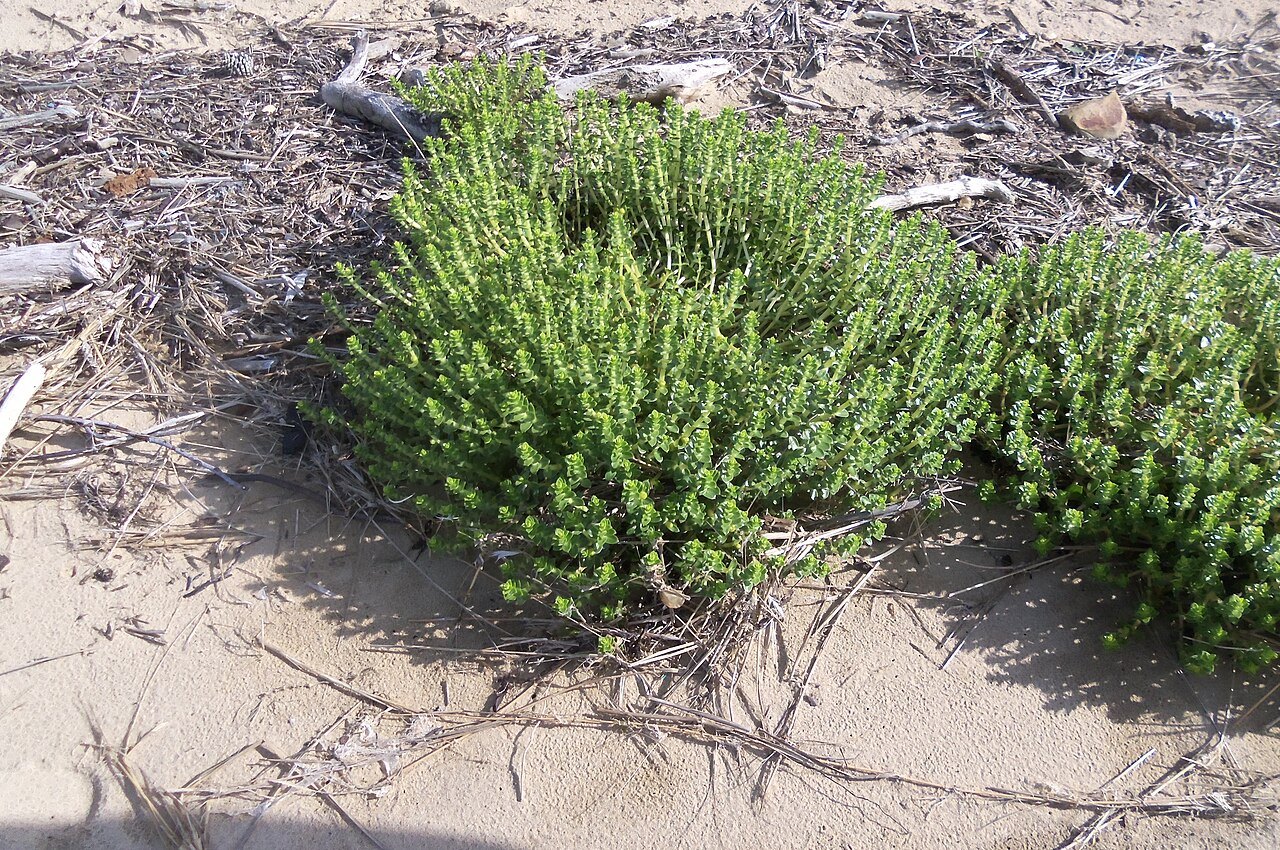
Sea sandwort is one of the first plants to colonize bare beach sand, creating shelter and structure for other plants and animals on the upper beach.
For Pollinators
Its small flowers produce nectar and are visited by flies, small bees and other insects of the shoreline. Because plants are largely separate male and female, insects carry pollen between them.
For Birds
Its mounds give shelter to shorebirds and their chicks on the upper beach, and its seeds and the insects around it are eaten by sparrows, buntings and other birds. Geese and other waterfowl may graze its succulent shoots, especially in the North.
For Mammals
In Alaska and the Arctic, bears, ground squirrels and other mammals may graze the fleshy leaves. Small mammals feed on its seeds.
Ecosystem Role
It is a classic dune-building pioneer: its stems trap sand, which accumulates around the plants to form small hummocks that later support beach grass and other dune plants. It also helps stabilize gravel and cobble beaches and adds organic matter to bare sand.
Cultural & Historical Uses
The genus name honors the German botanist Gerhard August Honckeny. Linnaeus originally described the plant as Arenaria peploides, a sandwort, and the species name means “like Peplis,” another small, fleshy-leaved plant.
For Alaska Native peoples, including Yup’ik and Inupiat communities, sea sandwort, often called beach greens, has long been an important wild vegetable. The young leaves and shoots are gathered in spring and early summer and eaten fresh, cooked or preserved, sometimes mixed with seal oil. It is a valuable source of vitamins in places where fresh greens are scarce.
In northern Europe it has also been eaten as a pickled or fermented green, and its tolerance of salt and sand burial has made it a subject of study in coastal ecology and dune restoration.
Frequently Asked Questions
Is sea sandwort edible?
Yes. Its young leaves and shoots are a traditional food in Alaska, where they are known as beach greens. If you forage, be certain of the identification, pick sparingly from large colonies, and avoid protected dunes and areas where collecting is prohibited.
Where does sea sandwort grow?
On upper sandy and gravelly beaches and foredunes along cool northern coasts: the Atlantic from Maine to Virginia, the Pacific from Alaska to Oregon, and around the Arctic.
Can I grow sea sandwort in my garden?
Only in open, sandy, sunny sites near the coast in cool climates. It is best used in dune restoration and beachfront plantings rather than ordinary garden beds.
Why are its leaves arranged in four rows?
Its leaves grow in opposite pairs, and each pair is turned at right angles to the one below. This gives the stems a neat, four-sided look when viewed from above.
Is sea sandwort salt tolerant?
Yes. It grows just above the high-tide line and tolerates salt spray, occasional saltwater flooding and burial by blowing sand.

Looking for a nursery that carries Sea Sandwort?
Browse our native plant nursery directory: Alaska · Connecticut & Delaware · Maine, Maryland & Massachusetts · New Hampshire, New Jersey & New York · Oregon · Rhode Island & Virginia · Washington

