
Slender Janusia (Janusia gracilis)
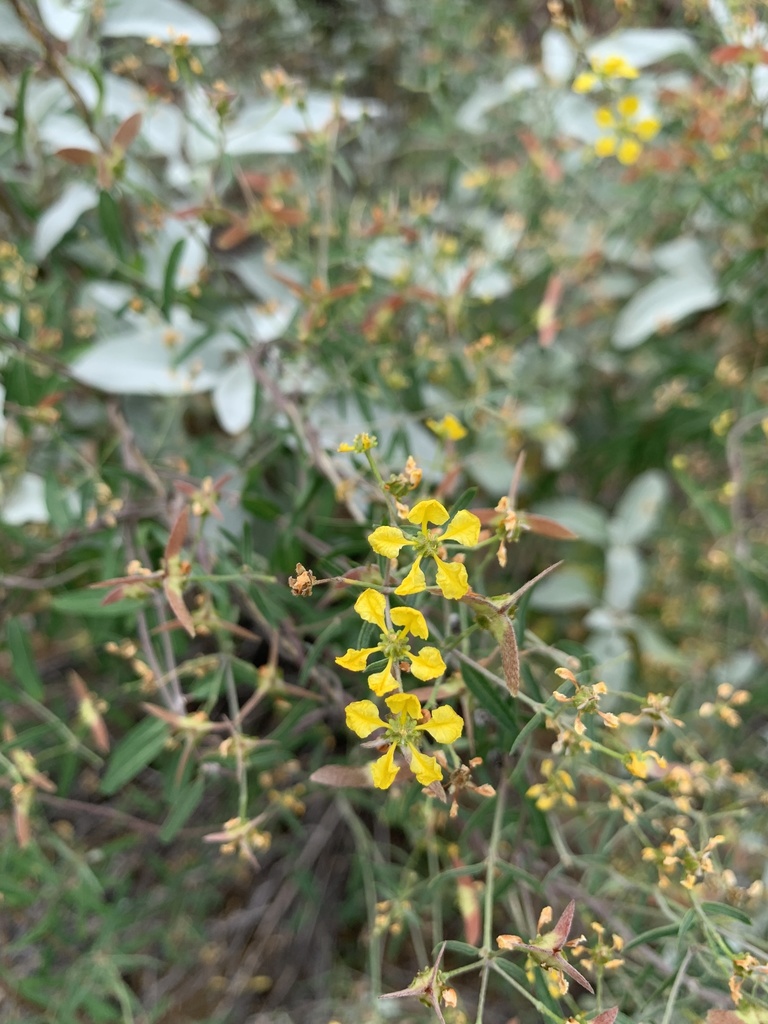
Janusia gracilis, known as Slender Janusia, is a slender, twining perennial vine in the Barbados cherry family (Malpighiaceae). Its thin, wiry, grayish stems climb up to about 10 feet through desert shrubs or trail over rocks. It has narrow, opposite leaves and small, bright yellow flowers about 1/2 inch across, followed by distinctive winged fruits.
Slender janusia is native to the deserts and desert grasslands of the American Southwest and Mexico, from Arizona, southern New Mexico and West Texas south into central Mexico. It grows on rocky hillsides, gravelly slopes and along washes and arroyos, usually from about 1,000 to 5,000 feet, almost always climbing through other plants.
It flowers from spring into fall, especially after rain. It is a delicate, low-water native vine for desert gardens, where it can scramble through shrubs such as jojoba or bursage, adding small yellow flowers and papery winged fruits without overwhelming its host.
Identification
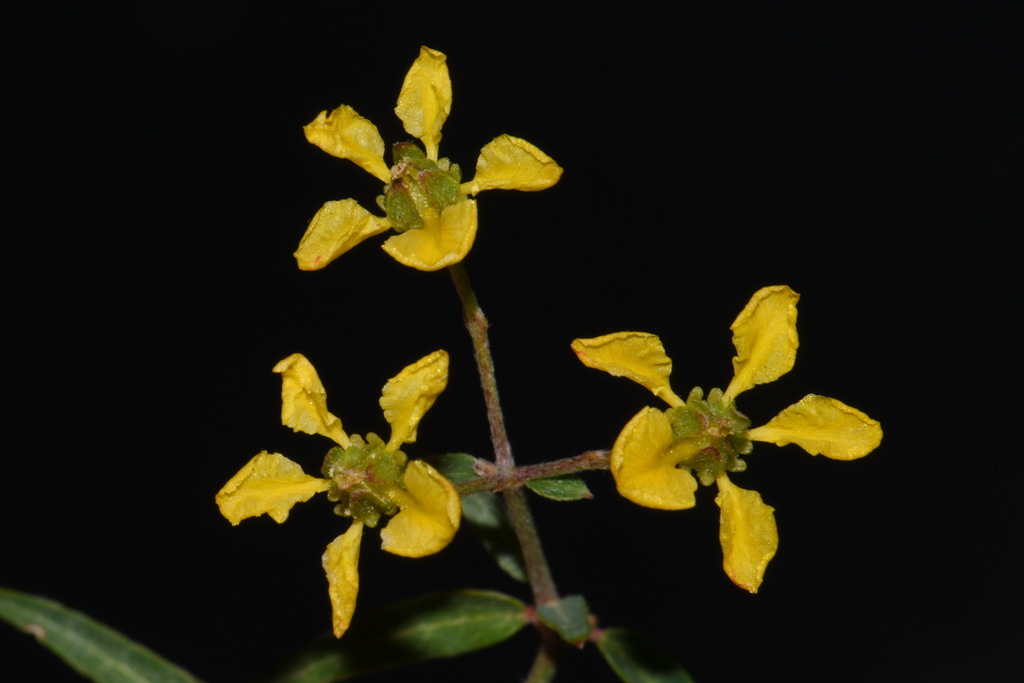
Look for a thin, grayish, twining vine climbing through desert shrubs, with narrow opposite leaves, small five-petaled yellow flowers on slender stalks, and fruits made of two or three winged samaras.
Growth Habit
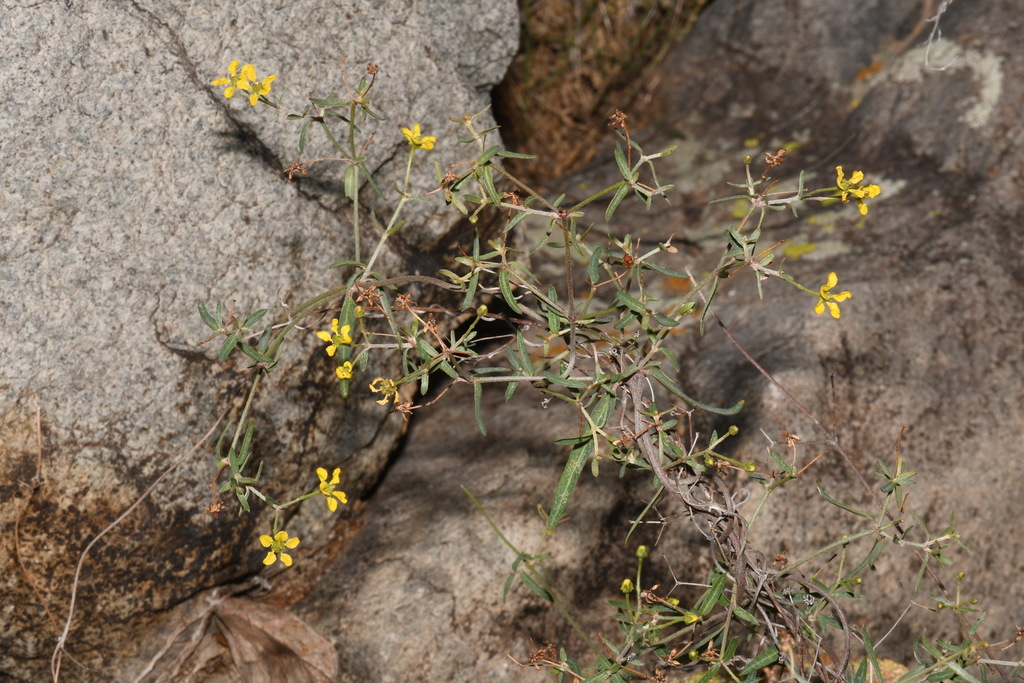
Slender janusia is a perennial vine from a woody base, with very slender, twining stems up to about 10 feet long. The young stems are covered in fine, flat-lying gray hairs. It usually climbs up through shrubs, cacti and small trees, and in the open it trails over rocks and ground. It may lose many leaves in long dry spells.
Leaves
The leaves are opposite, narrowly lance-shaped to linear, about 1/2 to 1 1/2 inches long and only 1/8 to 1/4 inch wide, with pointed tips. They are sparsely hairy, a little paler underneath, and often have a few tiny glands on the edge near the base. The paired, narrow leaves on a twining stem are a useful clue.
Flowers
The flowers are borne in small clusters on slender stalks. Each has five small sepals, several of which bear glands, and five yellow petals with rounded blades narrowed into a slender stalk (claw) at the base, a typical feature of the Malpighiaceae. The petals are only about 1/6 to 1/5 inch long and may turn reddish as they age. It flowers from about April to October.
Fruit & Seeds
The fruit splits into two or three samaras, each a seed with a papery, veined wing about 1/2 inch long. They usually sit back to back with the wings pointing outward, like a small propeller, and are often tinged red or purple. The wings help the seeds travel on the wind.
Look-alikes
Its relative Callaeum macropterum (yellow orchid vine), also native to Arizona and Texas, is a much larger, woodier vine with broader leaves, larger flowers and big, butterfly-shaped fruit. Related Aspicarpa species are small, low herbs rather than climbers. The slender twining stems, narrow paired leaves and propeller-like samaras set slender janusia apart.
Quick Facts
| Scientific Name | Janusia gracilis |
| Family | Malpighiaceae (Barbados cherry family) |
| Plant Type | Slender twining perennial vine |
| Mature Height | Climbs 3–10 ft into shrubs |
| Mature Spread | 2–6 ft |
| Growth Rate | Moderate |
| Sun Exposure | Full sun to light shade |
| Water Needs | Low; very drought tolerant |
| Soil Type | Rocky, gravelly or sandy, well-drained soil |
| Soil pH | Neutral to alkaline (about 7.0–8.5) |
| Bloom Time | April–October |
| Flower Color | Yellow, sometimes aging reddish |
| Fall Color | None notable |
| Fruit | Two or three winged samaras, often reddish |
| Deer Resistant | Moderately |
| USDA Hardiness Zones | 8–10 |
Native Range
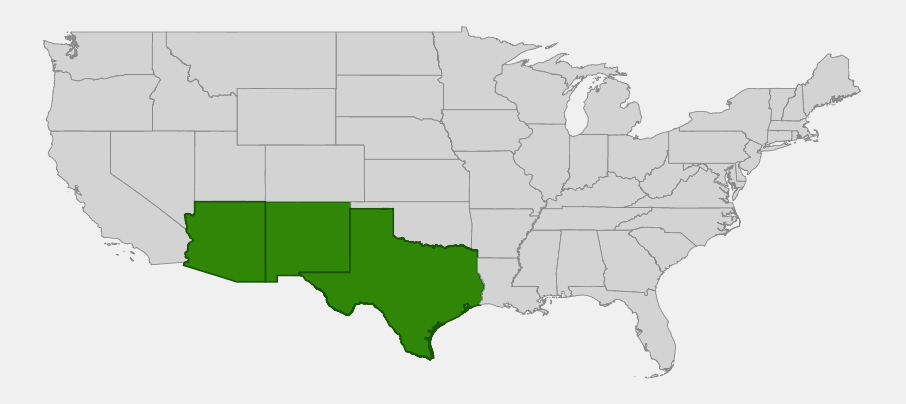
Slender janusia is native to the Southwest. USDA PLANTS lists it from Arizona, New Mexico and Texas, and SEINet gives its range as Arizona, southern New Mexico and southern Texas, south through central Mexico. In Arizona it is widespread in the Sonoran Desert and desert grasslands of the central and southern part of the state.
In Texas it grows mainly in the Trans-Pecos, including the El Paso area, the Big Bend region and Presidio County. In New Mexico it is found in the southern part of the state, in the Chihuahuan Desert and its mountain foothills.
It grows on rocky hillsides, gravelly slopes and bajadas, canyon sides and along washes and arroyos, from about 1,000 to 5,000 feet, almost always twining through desert shrubs, cacti and small trees.
📋 Regional plant lists featuring Slender Janusia: Arizona & New Mexico · South & West Texas
Growing & Care Guide
Slender janusia is rarely sold, but it sometimes appears at native plant sales in Arizona. It is a light, unobtrusive vine for desert gardens, best grown scrambling through an existing native shrub, as it does in the wild.
Light
Full sun to light shade. In the wild it often grows up through shrubs, with its base in their shade and its flowers in the sun.
Soil & Water
Plant it in fast-draining rocky, gravelly or sandy soil. It needs little water once established; an occasional deep watering during long, hot dry spells keeps it leafy and flowering. Avoid heavy, wet soil and frequent shallow watering.
Planting Tips
Plant it at the base of a shrub such as jojoba, bursage, desert hackberry or brittlebush, or next to a small trellis, fence or rock pile. It is too delicate to smother a healthy shrub and adds flowers and fruit to plants that are not in bloom.
Pruning & Maintenance
Very little care is needed. Remove dead stems in late winter if they look untidy. It may die back partly in cold winters or extreme drought and regrow from the woody base.
Propagation
Grow it from fresh seed, removing the papery wings and sowing in a gritty, well-drained mix in spring or early summer. It may also be grown from cuttings of the stems in warm weather.
Landscape Uses
- Desert gardens: a delicate flowering vine for shrubs and fences
- Habitat gardens: adds flowers to Sonoran and Chihuahuan desert plantings
- Pollinator gardens: long flowering season for small native bees
- Xeriscapes: very low water once established
- Rock gardens: trails over boulders and rock piles
Wildlife & Ecological Value
Slender janusia blooms for a long season in hot, dry country, offering small but steady food for native bees.
For Pollinators
The yellow flowers are visited by small native bees. Many plants in the Malpighiaceae have oil-producing glands on the sepals, which are collected by specialized oil-collecting bees for their nests and larvae.
For Birds
Its tangled stems add cover inside the shrubs it climbs, which shelter desert birds such as verdins, gnatcatchers and sparrows.
For Mammals
Desert mule deer, javelinas and rabbits may browse the tender stems and leaves, but its habit of growing inside other shrubs gives it some protection.
Ecosystem Role
Slender janusia is part of the diverse layer of small vines and herbs that grow within desert shrubs. Its winged seeds are carried by the wind to new shrubs, washes and rocky slopes.
Cultural & Historical Uses
The origin of the genus name Janusia is uncertain. It is often thought to refer to Janus, the two-faced Roman god, perhaps because the genus has flowers of two kinds or fruits that face in two directions, but this is not certain. The species name gracilis means “slender” or “graceful.”
Slender janusia belongs to the Malpighiaceae, a mostly tropical family that includes Barbados cherry (Malpighia) and the hallucinogenic ayahuasca vine (Banisteriopsis). Only a handful of members of the family reach the United States, mostly in the Southwest, Texas and Florida.
Some botanists, following DNA studies of the family, now place this species in the genus Cottsia as Cottsia gracilis. USDA PLANTS and many regional floras still use Janusia gracilis. Its traditional uses, if any, are not well documented.
Frequently Asked Questions
Is slender janusia a vine?
Yes. It is a slender, twining perennial vine that climbs up to about 10 feet through desert shrubs or trails over rocks.
Will slender janusia harm the shrubs it climbs?
No. Its stems are very thin and light, and it does not smother healthy shrubs.
What do the fruits look like?
The fruit splits into two or three papery, winged samaras, often reddish, that sit back to back like a small propeller.
When does slender janusia bloom?
From about April to October, especially after rains.
Where does slender janusia grow?
On rocky hillsides, gravelly slopes and washes in Arizona, southern New Mexico and West Texas, and south into central Mexico.

Looking for a nursery that carries Slender Janusia?
Browse our native plant nursery directory: Arizona · New Mexico · Texas

