
White-tubed Colicroot (Aletris farinosa)
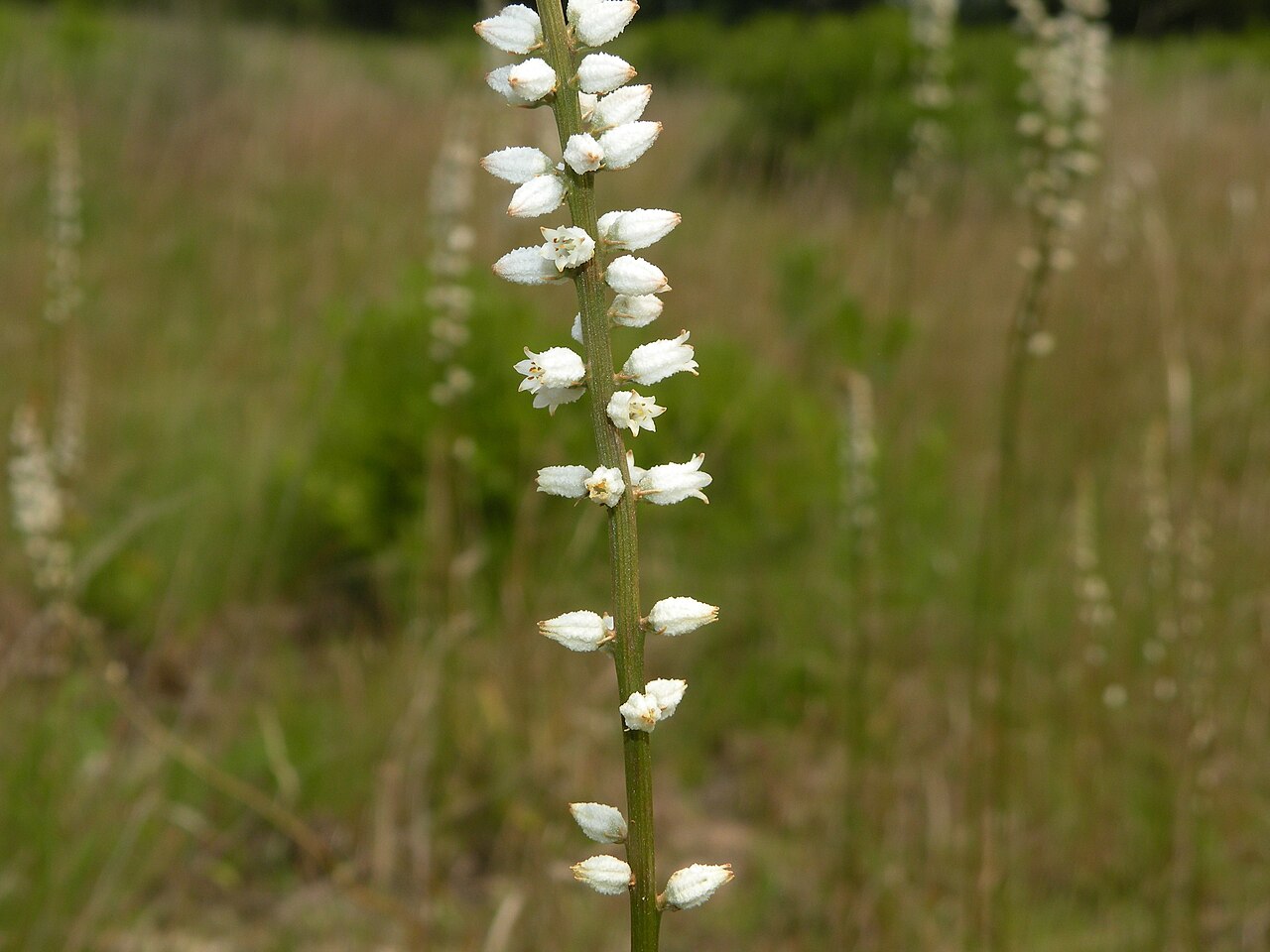
Aletris farinosa, known as White-tubed Colicroot, white colicroot, unicorn root or star grass, is a perennial wildflower in the bog asphodel family (Nartheciaceae). It forms a flat, star-shaped rosette of pale yellow-green, lance-shaped leaves, and in early summer it sends up a slender, nearly leafless stalk 1 to 3 feet tall, lined with small, white, tubular flowers. The flowers have a rough, granular surface that looks dusted with meal, which is what the species name farinosa (“mealy”) describes.
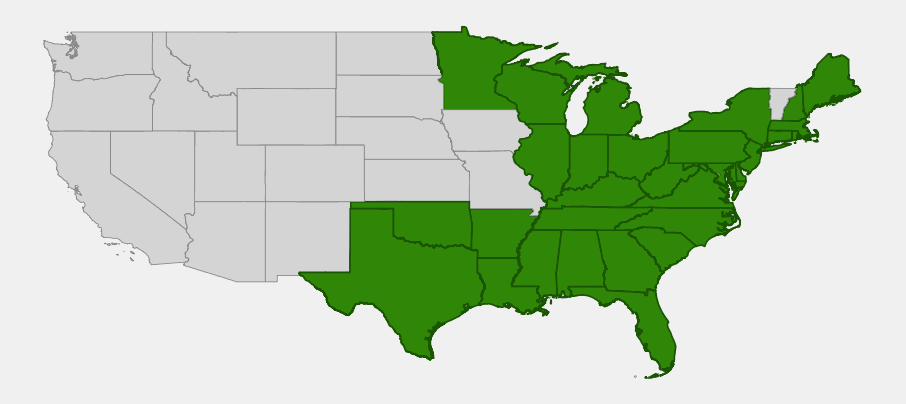
White colicroot is native across much of the eastern United States and southern Ontario, from Maine and Wisconsin south to Florida and west to eastern Oklahoma and eastern Texas. It is a plant of open, sunny places with acidic, sandy or peaty soils: pine barrens and pine savannas, sandy prairies, dry to moist meadows, bog and swamp edges, power-line clearings and open woods.
It blooms from late spring to midsummer and is easy to overlook until its white spikes rise above the grass. It is an indicator of high-quality, fire-maintained or open habitats, and it has become uncommon or rare in parts of its range as those habitats have disappeared. For gardeners it is a choice plant for sunny, acidic, sandy sites, such as a native meadow or bog garden.
Identification
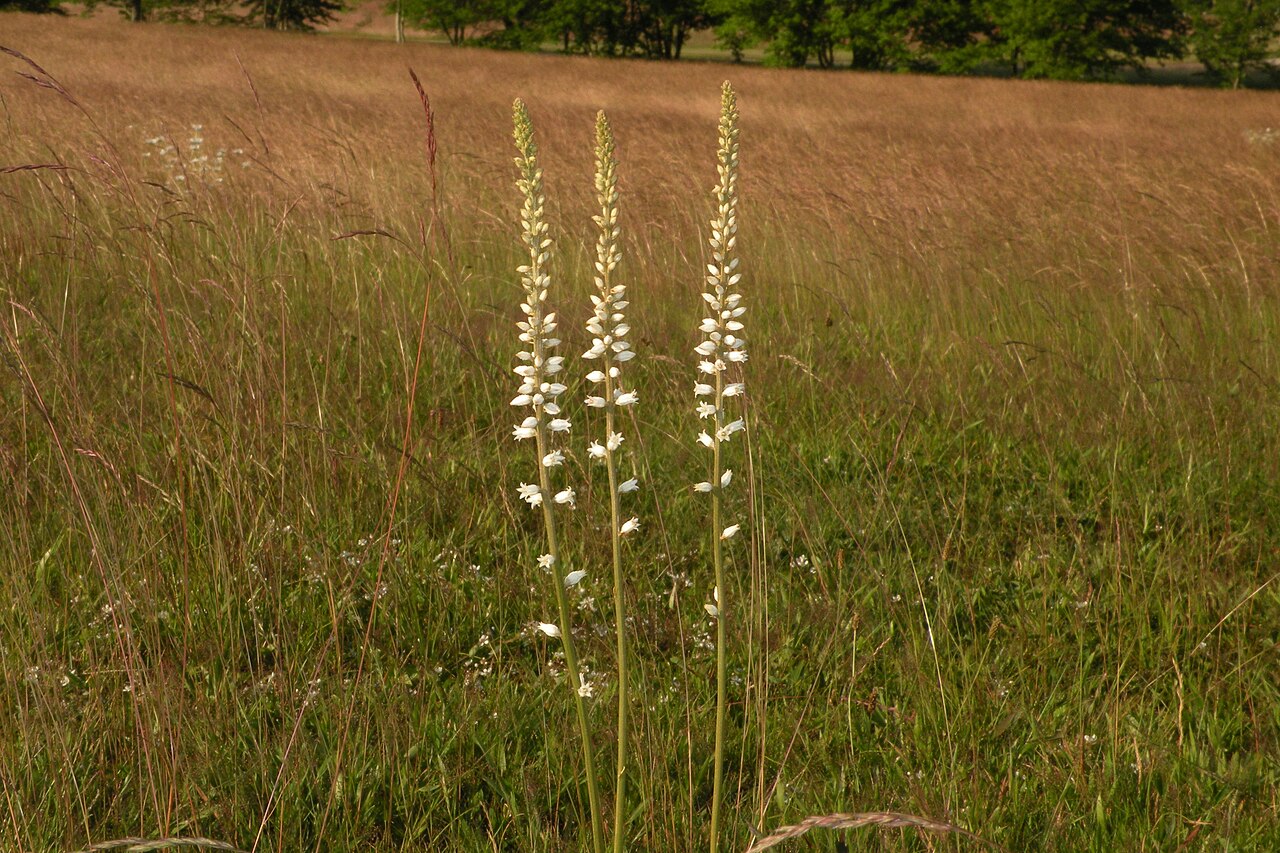
Look for a flat rosette of pale green, grass-like leaves at ground level and a single tall, slender spike of small white, tube-shaped flowers with a rough, mealy surface.
Growth Habit
White colicroot grows from a short, thick rootstock. Each plant forms a flat basal rosette, and mature plants send up one flowering stem 1 to 3 feet tall in late spring or early summer. Plants often grow in loose groups, and the rosettes stay green into winter in mild climates.
Leaves
The basal leaves are lance-shaped, 2 to 8 inches long and up to 1 inch wide, pale yellow-green and slightly shiny, and they spread flat on the ground in a star-like pattern, giving the plant the name star grass. The flowering stalk has only a few small, scale-like leaves.
Flowers
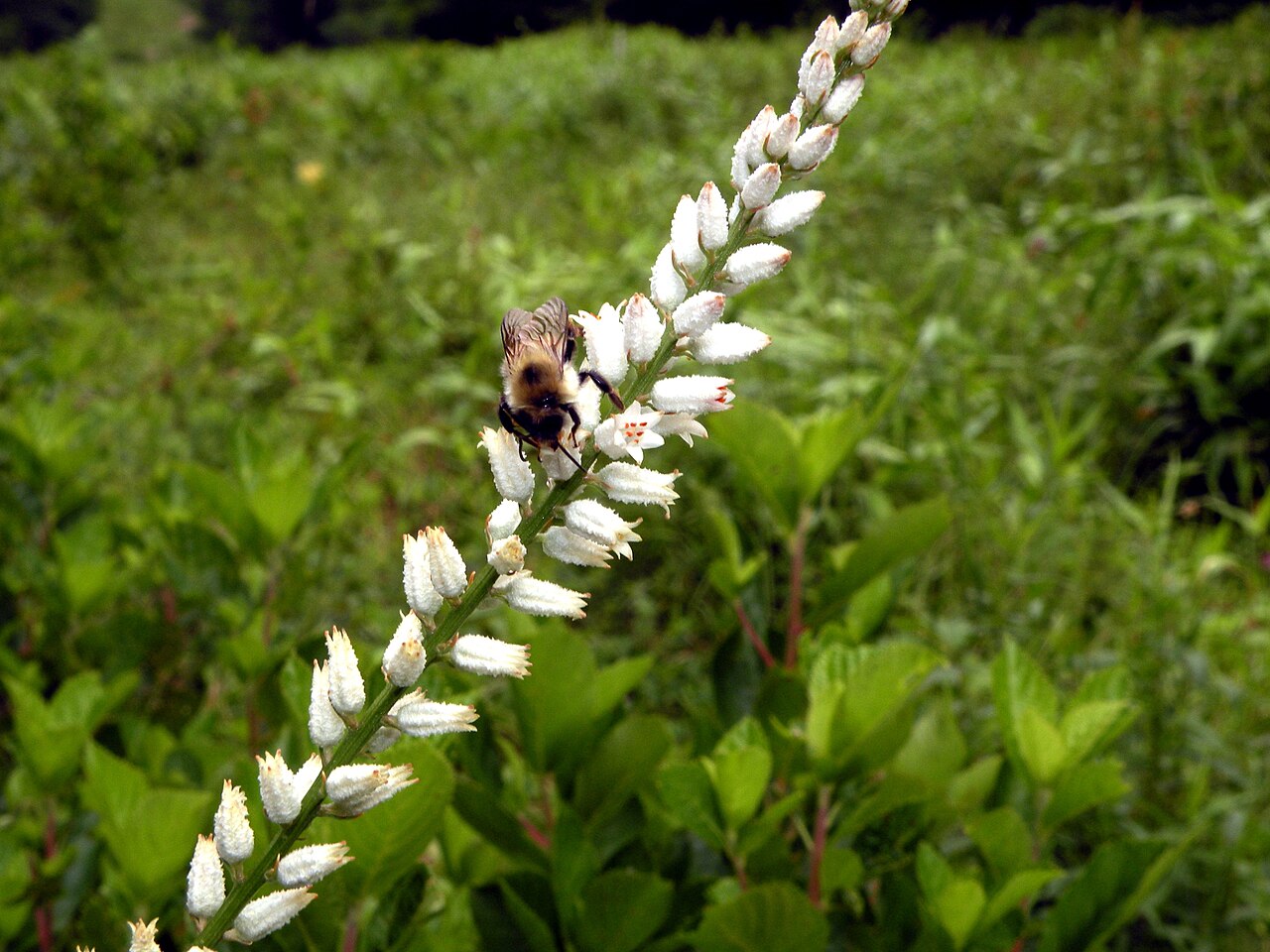
The flowers are spaced along the upper part of the stalk in a long, narrow spike. Each flower is a white tube about 1/4 to 3/8 inch long, with six short, spreading lobes at the tip, and the outside is covered with tiny bumps that make it look rough and mealy. Older flowers may turn cream or tan. Flowering runs from May to August, earlier in the South.
Fruit & Seeds
The flowers persist around small, oval capsules that ripen in late summer and release many tiny seeds. The dry spikes, with their papery old flowers, often remain standing into fall.
Look-alikes
Yellow colicroot (Aletris lutea) of the Southeast has yellow flowers. Other southern colicroots have yellow, orange or smooth, bell-shaped flowers. Ladies’ tresses orchids (Spiranthes) have white flowers in spikes, but their flowers are lipped orchids arranged in a spiral, and their leaves are not in a flat rosette. White fringed orchids and other white spikes of wet meadows have larger, open flowers.
Quick Facts
| Scientific Name | Aletris farinosa |
| Family | Nartheciaceae (bog asphodel family) |
| Plant Type | Herbaceous perennial with a basal rosette |
| Mature Height | 1–3 ft in flower; rosette 2–8 in |
| Mature Spread | 6–12 in |
| Growth Rate | Slow |
| Sun Exposure | Full sun to light shade |
| Water Needs | Moderate; tolerates dry to moist soil |
| Soil Type | Acidic sand, sandy loam or peaty soil |
| Soil pH | Acidic (about 4.5–6.0) |
| Bloom Time | May–August |
| Flower Color | White |
| Fall Color | Rosette may turn reddish or stay green |
| Fruit | Small capsule with tiny seeds |
| Deer Resistant | Moderately |
| USDA Hardiness Zones | 4–9 |
Native Range
USDA PLANTS lists white colicroot as native in 30 states, from Maine, Michigan, Wisconsin and Minnesota south to Florida and west to Arkansas, Louisiana, eastern Oklahoma and eastern Texas. In Canada it is native in southern Ontario.
It is most common on the Atlantic and Gulf Coastal Plains, in the pine barrens of New Jersey and Long Island, the sandplains of southern New England and the Great Lakes, the Piedmont and the Appalachians. It is scattered and uncommon toward the edges of its range, and it is considered rare or of conservation concern in several states, including Rhode Island.
White colicroot grows in open, sunny or lightly shaded places with acidic soils: pine barrens, longleaf pine savannas and flatwoods, sandy prairies and oak savannas, wet and dry meadows, bog and swamp borders, seepage slopes, roadsides and power-line rights-of-way. Many of these habitats depend on fire or mowing to stay open.
📋 Regional plant lists featuring White-tubed Colicroot: New York, Pennsylvania & Northern New Jersey · Ohio & Indiana · Michigan, Wisconsin & Eastern Minnesota · Kentucky & Tennessee · Connecticut, Massachusetts & Rhode Island · New Hampshire, Maine & Vermont · Maryland, Virginia & West Virginia · Delaware, Southern New Jersey & Long Island · Illinois, Iowa & Missouri · Alabama, Georgia & Mississippi · North & South Florida · North & South Carolina · Arkansas, Louisiana, Eastern Oklahoma & Eastern Texas
Growing & Care Guide
White colicroot is not common in the nursery trade, but it is offered by some native plant nurseries in the East and Southeast. It is a plant for gardeners who can give it sun, acidic, sandy soil and little competition. Buy nursery-propagated plants or seed, and never dig plants from the wild, since it is rare in parts of its range.
Light
Full sun to light shade. It needs open conditions and declines when shaded by taller plants or shrubs.
Soil & Water
It needs acidic, lean soil: sand, sandy loam or peaty soil. It grows naturally on both dry sandy sites and moist, seepy ground, and it does well in a sunny bog garden edge as long as it is not under standing water for long. Do not add lime or rich compost.
Planting Tips
Plant it near the front of a meadow, savanna planting or bog garden, where its small rosettes will not be smothered. Combine it with low grasses such as little bluestem and with other acid-soil wildflowers. Space plants about 6 to 12 inches apart.
Pruning & Maintenance
Remove or cut back taller plants that shade the rosettes. In larger plantings, burning or mowing in late winter, as is done in many natural habitats, helps keep the site open. Leave the spikes standing to ripen seed.
Propagation
Grow it from seed, sown fresh in fall on the surface of a moist, acidic, sandy mix, or given about two months of cold, moist stratification before spring sowing. Seedlings grow slowly and may take two or more years to flower. Established clumps can be carefully divided.
Landscape Uses
- Native meadows and savannas: vertical white spikes among low grasses
- Bog garden edges: tolerates moist, acidic, peaty soil
- Pollinator gardens: summer flowers for bumblebees and other bees
- Pine barrens and sandplain restoration: a characteristic plant of open, acidic habitats
- Rock and sand gardens: small rosettes suit sunny, lean beds
Wildlife & Ecological Value
White colicroot is a characteristic plant of open, acidic grasslands and savannas, which support many specialized insects and other wildlife.
For Pollinators
The small, tubular flowers are visited by bumblebees and other bees, as well as by flies, small butterflies and other insects that collect nectar and pollen.
For Birds
Its tiny seeds are of minor importance to birds, but the open savannas and meadows where it grows are important for ground-nesting birds such as quail and sparrows.
For Mammals
The tough, bitter leaves are seldom eaten by deer or rabbits.
Ecosystem Role
White colicroot is a good indicator of intact, open, acidic habitats such as pine barrens and savannas. Its presence suggests that the site has been kept open by fire or other disturbance and has not been heavily fertilized or plowed.
Cultural & Historical Uses
The name colicroot reflects the use of the bitter root in folk and patent medicines in the 1800s, when it was given for colic, digestive problems and “female complaints.” The name unicorn root was shared with an unrelated plant, false unicorn root (Chamaelirium luteum), which caused much confusion in old herbal literature. The root can be irritating or cause nausea, and it should not be used as a home remedy.
The genus name Aletris comes from a Greek word for a female slave who ground grain, a reference to the mealy, flour-dusted look of the flowers. The species name farinosa means “mealy” or “floury,” describing the same feature.
In the eastern pine barrens and southern savannas, white colicroot is one of the plants naturalists look for as a sign of a high-quality habitat that still burns or stays open naturally.
Frequently Asked Questions
Why is it called colicroot?
The bitter root was once used in folk medicine to treat colic and other digestive complaints. It should not be used as a remedy today.
Where does white colicroot grow?
In sunny, open places with acidic, sandy or peaty soil, such as pine barrens, savannas, sandy prairies, meadows and bog edges, from Maine and Minnesota south to Florida and eastern Texas.
When does white colicroot bloom?
From May to August, earlier in the South and later in the North.
Can I grow white colicroot in my garden?
Yes, if you have a sunny spot with acidic, sandy or peaty soil and little competition from taller plants. Buy nursery-propagated plants or seed, and never dig it from the wild.
Is white colicroot an orchid?
No. Its white flower spikes can look like ladies’ tresses orchids, but it belongs to the bog asphodel family, and its flowers are simple white tubes.

Looking for a nursery that carries White-tubed Colicroot?
Browse our native plant nursery directory: Alabama & Arkansas · Connecticut, Delaware, Florida & Georgia · Illinois & Indiana · Kentucky, Louisiana, Maine, Maryland, Massachusetts, Michigan, Minnesota & Mississippi · New Hampshire, New Jersey, New York, North Carolina, Ohio & Oklahoma · Pennsylvania, Rhode Island, South Carolina, Tennessee, Texas & Virginia · West Virginia & Wisconsin

