
Pachysandra: Native Allegheny Spurge vs Japanese Pachysandra (Pachysandra)
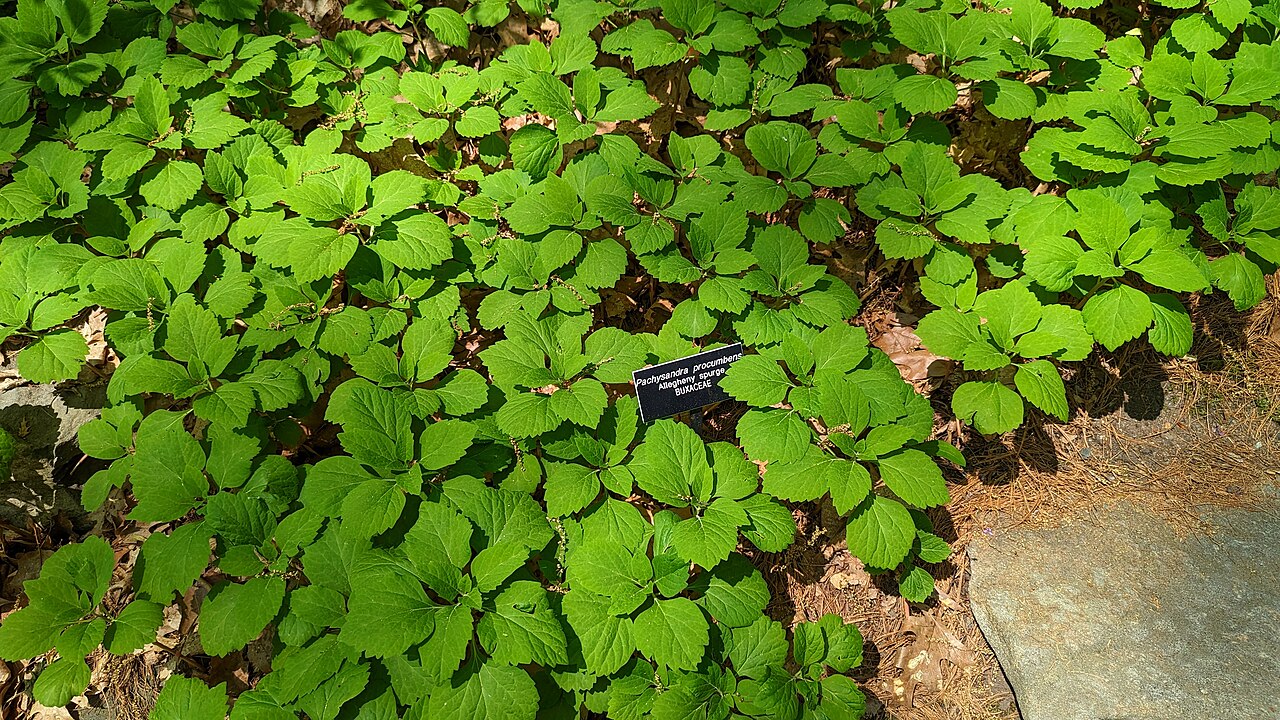
When most people say “pachysandra,” they mean the glossy, dark green carpet that fills the shady side of millions of American houses. That plant is Japanese pachysandra (Pachysandra terminalis), an evergreen ground cover from Japan and China. It is tough and easy, but it is not native anywhere in North America, and in the Northeast and Mid-Atlantic it creeps out of yards into neighboring woods.
The genus has a native member too: Allegheny spurge (Pachysandra procumbens), also sold as Allegheny pachysandra. It is a low, clump-forming woodland plant of the southeastern United States with broad, gray-green leaves that turn mottled with silver and purple in cool weather, and spikes of fragrant white flowers in very early spring. It fills the same role in the garden, a shade-tolerant ground cover under trees, but it does it more slowly and in a softer, looser way.
This guide covers both plants: where the native species grows, how to grow it, and how to tell it apart from the Japanese pachysandra and its cousins. If you came here from a list of ground covers for Maryland, Oklahoma or New York, the short answer is this: none of those states has a native pachysandra, but Allegheny spurge is hardy in all three and is the closest native substitute for the Japanese plant.
Identification
Pachysandra is a small genus in the boxwood family (Buxaceae), usually counted as three or four species. One, Allegheny spurge, is North American. The others, Japanese pachysandra and the Chinese Pachysandra axillaris (sometimes split further), are East Asian. Despite the common name “spurge,” Allegheny spurge is not related to the true spurges (Euphorbia) and has no milky sap.
Leaves & Stems
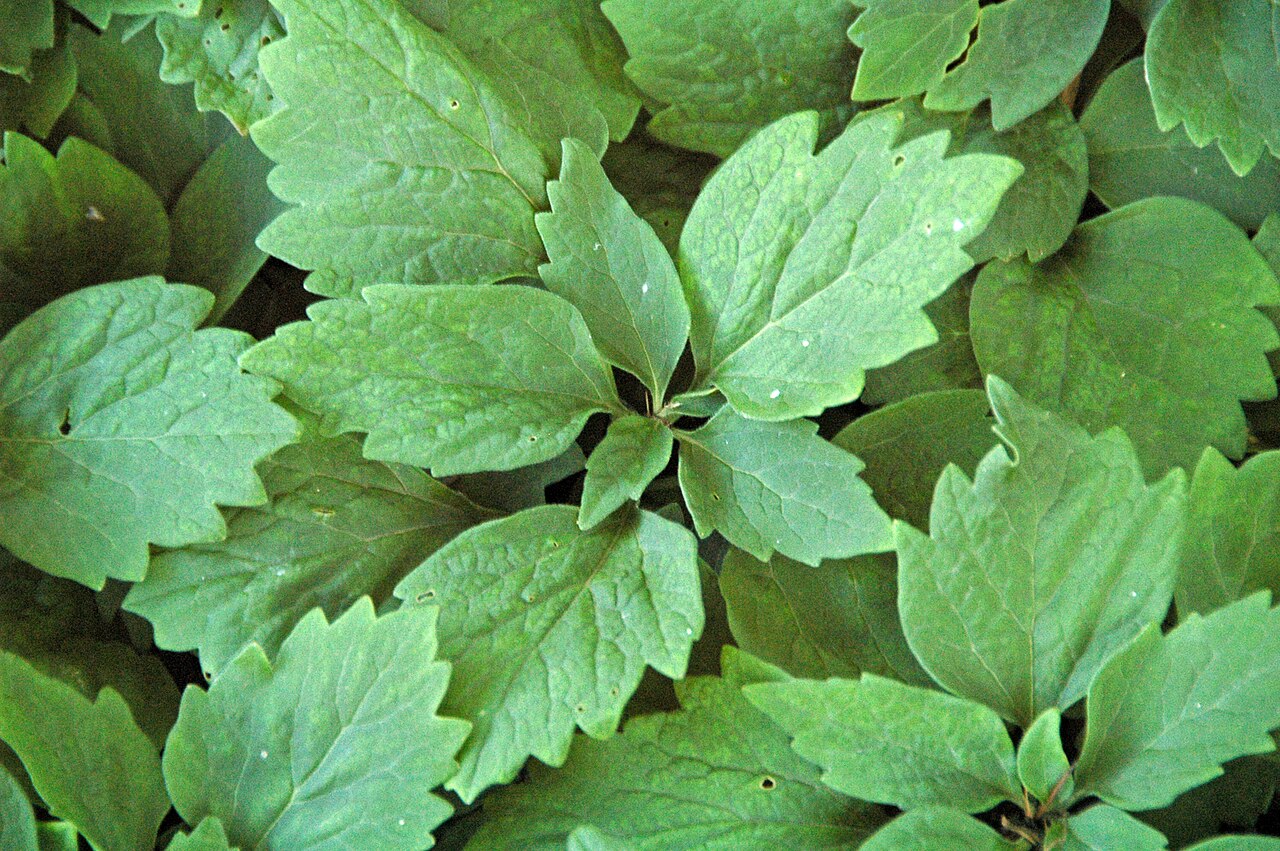
All pachysandras grow from creeping underground stems (rhizomes) that send up short, unbranched shoots topped by a cluster of leaves. In Allegheny spurge the shoots are 6 to 12 inches tall and the leaves are broad, rounded to oval, 2 to 4 inches long, with a few coarse teeth toward the tip and a dull, matte, gray-green surface. New leaves emerge plain green in spring; by fall and winter they develop silvery-gray and purplish mottling. In the Deep South the leaves often persist through winter, while in colder gardens they flatten and brown, and the plant behaves more like a deciduous perennial.
Japanese pachysandra has narrower, wedge-shaped leaves with teeth only on the upper half, a thick, glossy, dark green surface, and a fully evergreen habit even in New England. Its stems form a dense, even carpet rather than separate clumps.
Flowers
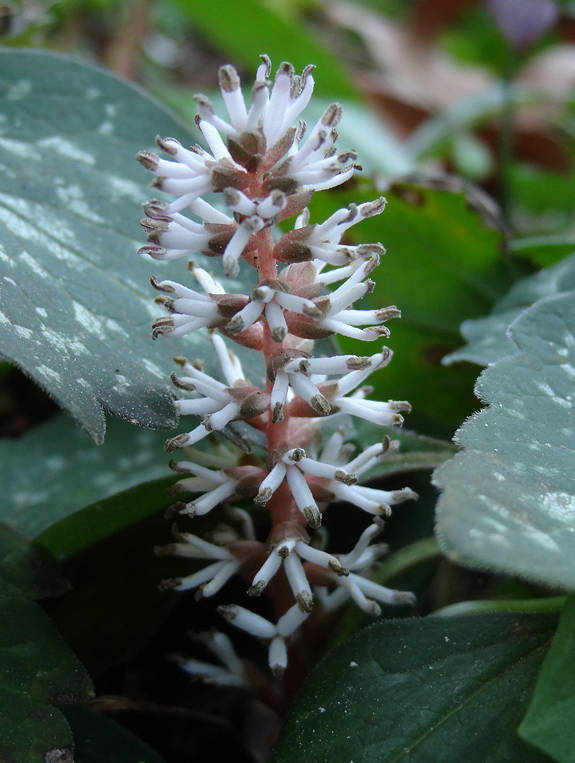
Allegheny spurge blooms in March and April, often before its new leaves expand. The flowers are on short spikes, 2 to 4 inches long, that rise from the base of the stems near the ground, so they are often hidden among last year’s leaves. Each spike carries a few female flowers at the bottom and many male flowers above. The male flowers are mostly thick white stamens, often tinged pink or purple at the base, and they have a sweet, honey-like scent. Japanese pachysandra holds its creamy white flower spikes at the tips of the stems, above the leaves, which is the origin of its name terminalis.
Fruit & Seeds
The fruit is a small capsule tipped with the persistent, horn-like styles of the female flower. Fruit set is often light in gardens, and both species spread mainly by their rhizomes rather than by seed.
Quick Facts
| Scientific Name | Pachysandra Michx. (genus); native species Pachysandra procumbens Michx. |
| Family | Buxaceae (Boxwood) |
| US-Native Species | One: Allegheny spurge (P. procumbens); 2–3 other species are East Asian |
| Growth Forms | Low, rhizomatous evergreen or semi-evergreen ground covers (subshrubs) |
| Mature Height | Allegheny spurge 6–12 in; Japanese pachysandra 6–10 in |
| Growth Rate | Slow (Allegheny spurge); moderate to fast (Japanese pachysandra) |
| Sun Exposure | Part Shade to Full Shade |
| Water Needs | Average; evenly moist, well-drained soil |
| Soil Type | Humus-rich loam; native plants often on limestone or loess soils |
| Bloom Time | March–April |
| Flower Color | White, often tinged pink or purple; fragrant |
| Wildlife Value | Early nectar and pollen for bees and flies; little food value for birds or mammals |
| Deer Resistant | Yes; foliage contains alkaloids and is generally left alone |
| USDA Hardiness Zones | 5–9 (Allegheny spurge); 4–8 (Japanese pachysandra) |
Native Range
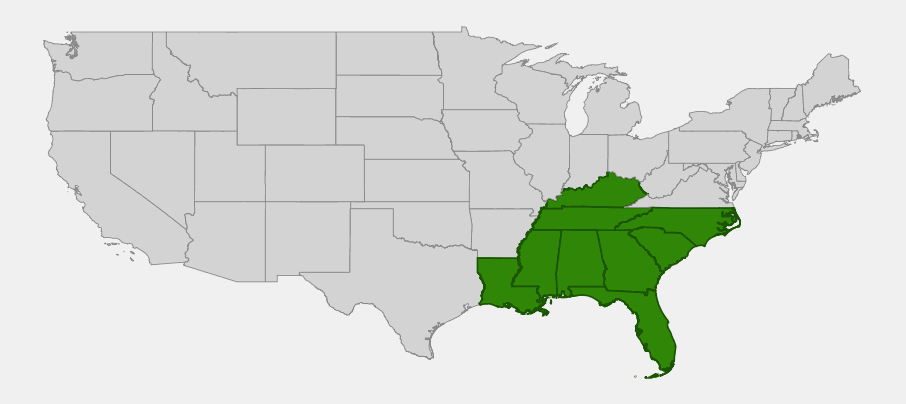
Allegheny spurge is a plant of the Southeast. Its heartland is the rich, limestone-influenced forests of Kentucky, Tennessee and northern Alabama, where it grows on wooded slopes, ravines and stream terraces under beech, sugar maple, oaks and tulip-tree. From there it reaches south and west through Mississippi and into the Florida Parishes of eastern Louisiana, south through Georgia to the Florida Panhandle, and east into the mountains and foothills of western North Carolina and the upper edge of South Carolina. County maps from the Biota of North America Program show it as rare across much of this range outside Kentucky and Tennessee.
Scattered records have been reported at the edges of the range, including West Virginia, southern Indiana and Pennsylvania. Some of these are old or uncertain, and none is a core population, so they are not shaded on the map below. Despite the name, Allegheny spurge does not grow wild through most of the Allegheny Mountains of Pennsylvania and West Virginia; the name was given by the French botanist André Michaux, who described the species in 1803.
Allegheny spurge is not native to Maryland, Oklahoma, New York, New England or the Midwest, though it is hardy and widely planted in all of these places, and gardeners there grow it as a near-native alternative to Japanese pachysandra. Japanese pachysandra is not native anywhere in the Americas. Where you see a solid, glossy green pachysandra carpet spreading into the woods behind a subdivision, it has come from a garden.
📋 Regional plant lists covering the native range of Allegheny spurge: Kentucky & Tennessee · North Carolina & South Carolina · Georgia, Alabama & Mississippi · Arkansas, Louisiana, Eastern Oklahoma & Eastern Texas
Native Species
The United States has a single native pachysandra, so this section is short. For a full profile with planting details, see the species page.
Allegheny Spurge (Pachysandra procumbens)
Also called Allegheny pachysandra or mountain spurge. Native from Kentucky and western North Carolina south to the Florida Panhandle and west to Louisiana. A clump-forming, semi-evergreen woodland ground cover 6 to 12 inches tall with broad, matte, gray-green leaves that mottle silver and purple in winter, and fragrant white bottlebrush flower spikes at ground level in March and April. Slow to spread, long-lived, deer resistant and hardy to about zone 5. Nurseries offer a few selections chosen for strong leaf mottling.
Non-Native Look-Alikes
The pachysandra in most garden centers, landscape plans and older yards is not the native species. These are the ones to know.
Japanese Pachysandra (Pachysandra terminalis)
Native to Japan and China. Japanese pachysandra is one of the most widely planted ground covers in the eastern United States, sold as a “carefree” cover for deep shade under trees. Common cultivars include ‘Green Carpet’ (compact, deep green), ‘Green Sheen’ (extra glossy) and ‘Variegata’ or ‘Silver Edge’ (leaves edged in white). It spreads steadily by rhizomes to form a dense, uniform mat that very few other plants can penetrate.
That density is the problem. In the Northeast and Mid-Atlantic, Japanese pachysandra spreads from old plantings and dumped yard waste into adjacent woodlands, where it smothers spring wildflowers, ferns and tree seedlings. It is treated as invasive or as a plant to watch by several regional invasive-plant groups in that part of the country, and many native-plant organizations recommend against new plantings. Large beds are also prone to Volutella leaf and stem blight, which causes brown, collapsing patches, especially where beds are crowded, wet and unthinned.
Chinese Pachysandra (Pachysandra axillaris)
An East Asian species occasionally sold by specialty nurseries, with flower spikes that arise from the leaf axils along the stems. It is uncommon in American gardens and is not native here.
How to Tell Them Apart
| Feature | Allegheny spurge (native) | Japanese pachysandra (non-native) |
| Leaf surface | Dull, matte gray-green; silver and purple mottling in cool weather | Glossy, dark green, unmottled (except variegated cultivars) |
| Leaf shape | Broad, rounded to oval, coarse teeth near the tip | Narrow, wedge-shaped, teeth on the upper half |
| Flowers | Fragrant white to pinkish spikes at the base of the stems, near the ground | Creamy white spikes at the tips of the stems, above the leaves |
| Winter habit | Semi-evergreen; leaves often flatten or brown in cold areas | Fully evergreen |
| Spread | Slow, loose clumps that mix with wildflowers | Fast, dense mat that excludes other plants |
Growing & Care Guide
Light
Allegheny spurge grows best in part shade to full shade: dappled light under deciduous trees, the north side of a building, or a spot with morning sun and afternoon shade. Hot afternoon sun bleaches and scorches the leaves, especially in the South. Deep, dry shade under maples and beeches is tolerated once plants are established, but growth will be slower there.
Soil & Water
Give it rich, loose, well-drained soil with plenty of leaf mold, similar to the forest floor it comes from. Slightly acidic to near-neutral soil suits it, and it does well on soils over limestone. Water regularly through the first summer. Once established, it handles ordinary dry spells in shade, but long droughts in sun will burn it. Avoid heavy, waterlogged clay, where the crowns rot.
Planting Tips
Plant in spring or early fall. Because Allegheny spurge spreads slowly, set plants closer than you would Japanese pachysandra, about 8 to 12 inches apart, and expect a full cover in three to five years. Mulch between plants with shredded leaves rather than thick bark mulch. If you are replacing a Japanese pachysandra bed, dig out as much of the old rhizome mat as possible first; fragments left behind will resprout and outcompete the slower native.
Pruning & Maintenance
Little is needed. In late winter, before the flower spikes appear, cut back or rake off old, tattered leaves so the flowers and fresh foliage show. Let fallen tree leaves stay in the bed; they protect the crowns and feed the soil. Weed between young plants until the patch closes in.
Propagation
Divide established clumps in early spring or fall, keeping a piece of rhizome with each shoot. Stem cuttings taken in early summer root in moist, shaded conditions. Seed is rarely used because fruit set is light and seedlings are slow.
Landscape Uses
- Native replacement for Japanese pachysandra under trees and along shaded foundations
- Woodland ground layer with wild ginger, foamflower and Christmas fern
- Spring wildflower garden with Virginia bluebells, woodland phlox and crested iris, which can grow up through its loose clumps
- Shady paths and steps, mixed with creeping phlox, green and gold or Pennsylvania sedge for faster cover
- Deer-browsed yards, where its foliage is usually ignored
Wildlife & Ecological Value
For Pollinators
Allegheny spurge flowers at the very start of the season, when little else is open on the forest floor. Its fragrant spikes offer pollen and nectar to early-flying native bees, including small mining and sweat bees, and to flies. Japanese pachysandra flowers attract some of the same insects, but its dense mats crowd out the native spring wildflowers that support many more.
For Birds
Pachysandras are not an important food plant for birds. The real value of Allegheny spurge for birds is indirect: its loose clumps leave room for leaf litter, where ground-feeding birds such as thrushes and towhees find insects, while thick Japanese pachysandra beds bury that layer.
For Mammals
Deer, rabbits and voles generally leave pachysandra alone. The plants contain alkaloids, and like their relative boxwood, they should not be eaten by people or pets.
Ecosystem Role
In southeastern woods, Allegheny spurge is part of the rich, diverse herb layer of limestone and loess forests, growing among trilliums, ferns and spring ephemerals and helping hold soil on slopes and ravine banks. Wild populations are uncommon in several states, so buy nursery-propagated plants and leave wild colonies alone.
Cultural & Historical Uses
André Michaux, who traveled the southern Appalachians for the French government in the 1780s and 1790s, described Allegheny spurge and named the genus Pachysandra, from Greek words meaning “thick stamens,” for the plump white stamens that make up most of each flower. For a long time it was a botanical curiosity grown mainly by wildflower enthusiasts.
Japanese pachysandra arrived in American gardens in the 1800s and became a standard landscape ground cover after World War II, when new suburbs needed something green under shade trees where lawn grass failed. By the late 20th century it covered so much ground in the East that it had become a symbol of the uniform suburban landscape.
Interest in Allegheny spurge has grown alongside the native-plant movement. Botanical gardens such as Garden in the Woods in Massachusetts display it as a native alternative, and more nurseries now propagate it, which makes it easier to find than it was a few decades ago.
Frequently Asked Questions
Is pachysandra native to the United States?
One species is. Allegheny spurge (Pachysandra procumbens) is native to the Southeast, from Kentucky and western North Carolina to Louisiana and the Florida Panhandle. The common evergreen pachysandra sold everywhere, Japanese pachysandra (P. terminalis), is from Japan and China.
Is Japanese pachysandra invasive?
It can be. It spreads by rhizomes from yards and dumped clippings into nearby woods, especially in the Northeast and Mid-Atlantic, and forms dense mats that crowd out native wildflowers. Several regional invasive-plant groups list it as invasive or as a plant to watch.
Can I grow Allegheny spurge in Maryland, Oklahoma or New York?
Yes. It is not native to any of those states, but it is hardy to about zone 5 and grows well in shady gardens across all three. It is a better choice than Japanese pachysandra because it does not form invasive mats. In Oklahoma, give it a shaded, mulched spot with regular summer water.
Why does my Allegheny spurge look brown in winter?
In colder areas its leaves flatten and brown over winter; this is normal. Cut or rake off the old leaves in late winter, and the fragrant flowers and fresh new foliage will appear in early spring.
Is pachysandra poisonous?
Pachysandras are in the boxwood family and contain alkaloids. They are not food plants for people or pets, which is also why deer usually leave them alone.

Looking for a nursery that carries Allegheny Spurge?
Browse our native plant nursery directory: Alabama · Florida & Georgia · Kentucky, Louisiana & Mississippi · North Carolina · South Carolina & Tennessee

