
Native Dogwoods (Cornus)
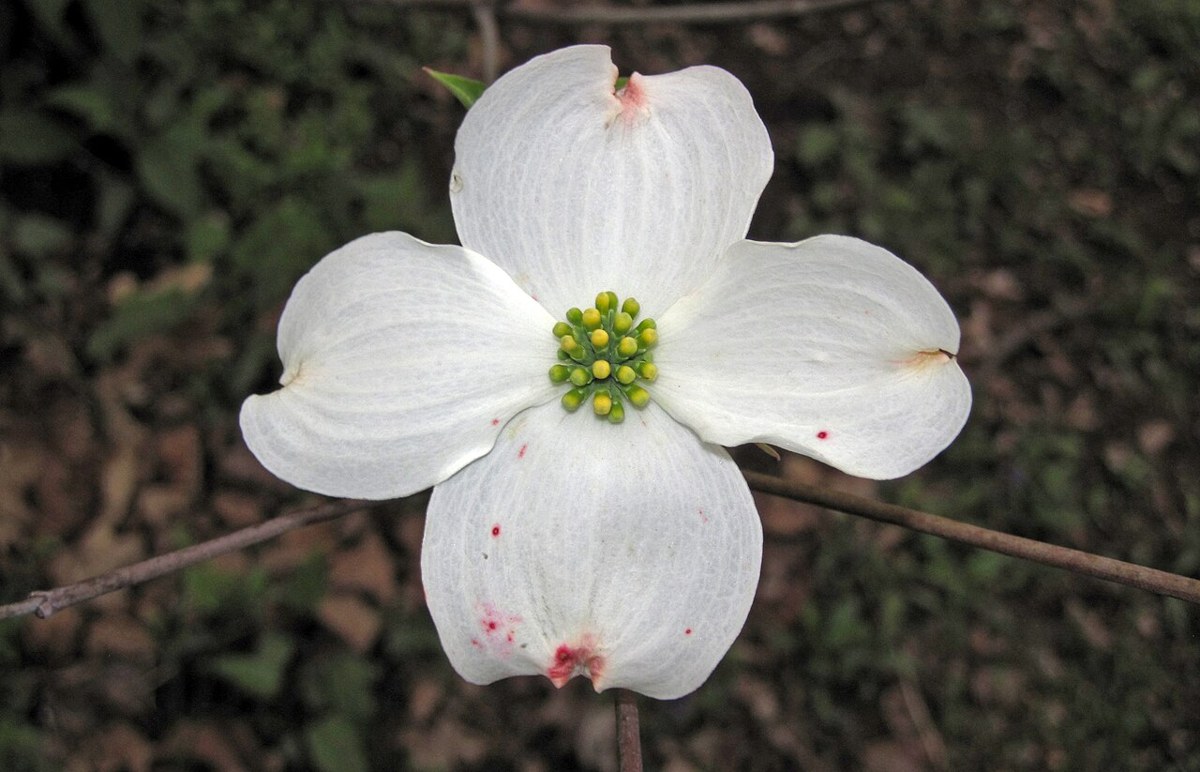
Dogwoods (genus Cornus) are shrubs, small trees and even a few low wildflowers, known for clusters of small four-parted flowers, opposite leaves with curving veins, and berries that birds strip from the branches in fall. About 16 species are native to the United States, and at least one grows wild in every state except Hawaii.
When most people say “dogwood” they picture flowering dogwood, the white-bracted spring tree of eastern woodlands and the state tree or flower of Virginia, North Carolina and Missouri. But the genus also includes red-twigged shrubs for wet ground, a bird-feeding thicket shrub, a giant West Coast tree, and bunchberry, a 6-inch groundcover. Many dogwoods sold in nurseries are Asian: kousa dogwood, Cornelian cherry and evergreen dogwoods such as Summer Splash. This guide helps you tell them apart and choose a native.
Identification
The simplest test for a dogwood is the leaf. Dogwood leaves are smooth-edged, and their side veins curve forward to run parallel to the leaf edge. Tear a leaf gently across and pull the halves apart: thin, white, rubbery threads (strands of the water-conducting tissue) stretch between the pieces. Almost every dogwood leaf does this. Nearly all dogwoods also have opposite leaves; the two exceptions are pagoda dogwood and the Asian giant dogwood, whose leaves are alternate and crowded near the twig tips.
Flowers and Bracts
Dogwood flowers are small, with four petals and four stamens. In most species they are creamy white and held in flat or domed clusters (cymes) in late spring or early summer. In the “big-bracted” group, flowering dogwood, Pacific dogwood and bunchberry, a tight button of tiny flowers is surrounded by large white or pink bracts that look like petals. Flowering dogwood has four bracts with notched tips; Pacific dogwood usually has four to six, with pointed or slightly notched tips.
Fruit
Fruit color sorts the natives into groups. Flowering dogwood, Pacific dogwood and bunchberry have red fruit. The shrubby swamp and thicket dogwoods (silky, swamp, gray, roughleaf, stiff, red-osier) have white to blue berries, often on red stalks. Pagoda dogwood has blue-black berries on red stalks, and California’s blackfruit dogwood has black fruit.
Twigs and Bark
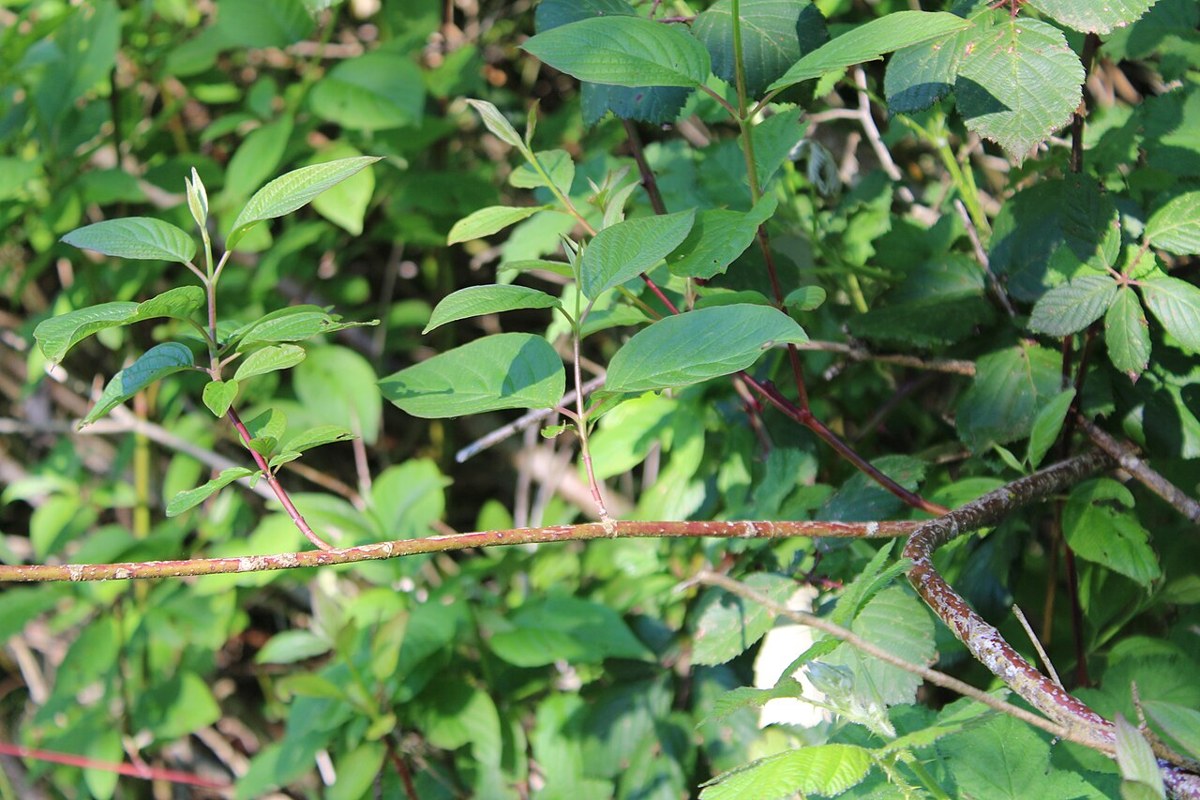
Winter twigs separate the shrubs. Red-osier dogwood has bright red stems with white pith; silky dogwood has purplish-red stems with brown pith and silky hairs; gray dogwood has gray-brown twigs with brown pith and red fruit stalks after the berries drop. Old flowering dogwood bark breaks into small square blocks, like alligator hide.
Growth Habit
Flowering and Pacific dogwoods are small to medium trees with horizontal branching. Pagoda dogwood grows in distinct horizontal tiers. Most of the others are multi-stemmed shrubs, 6–15 ft tall, that spread into thickets by suckers or rooting stems. Bunchberry and western bunchberry are creeping perennials only a few inches tall.
Quick Facts
| Genus | Cornus |
| Family | Cornaceae (Dogwood) |
| U.S. Native Species | About 16, including two herbaceous bunchberries |
| Growth Forms | Small trees, thicket-forming shrubs and low creeping perennials; all deciduous |
| Mature Height | 4–8 in (bunchberry); 6–15 ft (shrub dogwoods); 15–30 ft (flowering and pagoda dogwood); up to about 50 ft (Pacific dogwood) |
| Sun Exposure | Full Sun to Full Shade, depending on species |
| Water Needs | Wet to average; flowering and pagoda dogwood need well-drained soil, red-osier and silky dogwood tolerate saturated soil |
| Soil Type | Acidic to neutral loam for tree dogwoods; shrub species tolerate clay and wet soils |
| Bloom Time | Spring to early summer |
| Flower Color | White, creamy white or (flowering dogwood) occasionally pink bracts |
| Fruit | Red, white, blue or black drupes, late summer to fall |
| Wildlife Value | High-fat fall fruit for migrating birds; larval host for spring azure butterflies and many moths; early-summer flowers for bees and flies |
| USDA Hardiness Zones | About 2–9; flowering dogwood 5–9, red-osier dogwood 2–8 |
Native Range
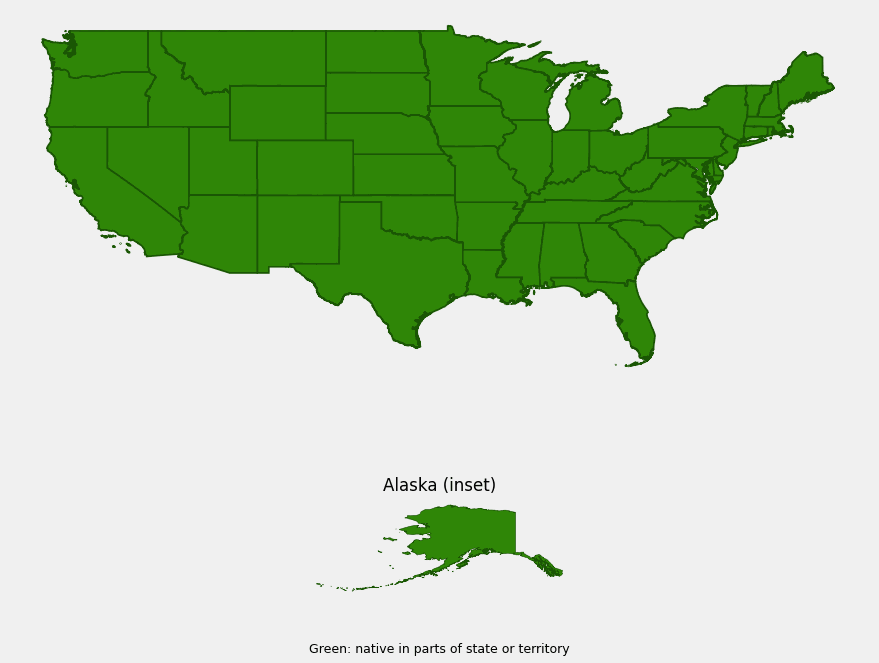
Dogwoods grow in all of the lower 48 states and Alaska. Red-osier dogwood covers most of the continent, from Alaska and Newfoundland south through the Rockies to New Mexico and California; in the arid West it is often the only native dogwood, growing along streams. Bunchberry is a northern plant of cool forests from Alaska to New England, south in the mountains.
Flowering dogwood is native from southern Maine and Ontario south to Florida and west to Michigan, Illinois, Missouri, eastern Kansas, Oklahoma and east Texas. It is the native “Dogwood” for our New York, New Jersey and Virginia articles. The East and Midwest also have the most shrub dogwoods: silky, swamp, gray, roughleaf, stiff and round-leaved dogwood, plus pagoda dogwood in moist woods.
The Pacific Coast has its own set: Pacific dogwood in the forests of Washington, Oregon and California (with a small population in Idaho), western bunchberry, brown dogwood (C. glabrata) and blackfruit dogwood. No dogwood is native to Hawaii.
📋 Regional plant lists featuring native dogwoods: NH, ME, VT · CT, MA, RI · NY, PA, NJ north · DE, NJ south, NY Long Island · MD, VA, WV · NC, SC · GA, AL, MS · AR, LA, OK east, TX east · KY, TN · OH, IN · IL, IA, MO · MI, WI, MN east · ND, SD, MN west · NE, KS, CO east · UT, CO west · MT, WY · ID, OR east, WA east · OR west, WA west · AZ, NM · CA, NV · TX south/west/central · Alaska
Native Species
These are the most important dogwoods native to the United States. Every species with a full Plant Native profile is linked.
Flowering Dogwood (Cornus florida)
The classic spring-flowering tree of the East, 15–30 ft tall with layered branches, white (sometimes pink) bracts in April and May before the leaves are full, glossy red fruit and red-purple fall color. It grows as an understory tree in woods with acidic, well-drained soil. It is the state tree of Virginia and Missouri and the state flower of Virginia and North Carolina.
Pacific Dogwood (Cornus nuttallii)
The West Coast counterpart of flowering dogwood and the largest native dogwood, sometimes reaching 50 ft, with four to six large white bracts. It grows under conifers in Washington, Oregon and California, often blooming a second time in late summer. It is difficult in gardens and prone to anthracnose.
Pagoda Dogwood (Cornus alternifolia)
A small tree or large shrub, 15–25 ft, of moist eastern and northern woods, with tiered horizontal branches, alternate leaves, flat clusters of cream flowers in late spring and blue-black fruit on red stalks. A good shade-tolerant native for cool, moist gardens.
Red-osier Dogwood (Cornus sericea, syn. C. stolonifera)
A spreading shrub, 6–10 ft, with brilliant red winter stems, white flowers and white berries. It grows along streams and in wet meadows across most of North America and is widely used to stabilize stream banks. Our site has a second profile for it under its current name, redosier dogwood (Cornus sericea).
Silky Dogwood (Cornus amomum)
An eastern shrub of wet thickets and stream banks with purplish-red twigs, silky-hairy young stems and blue berries, often with white blotches. It roots where branches touch wet soil and is one of the best shrubs for rain gardens and wetland edges in the East.
Swamp Dogwood (Cornus obliqua)
A close relative of silky dogwood, found mostly in the Midwest and Northeast, with narrower leaves whitish beneath and blue or white fruit. It also thrives in wet ground.
Gray Dogwood (Cornus racemosa)
A suckering shrub, 6–15 ft, of fencerows, old fields and woodland edges in the Northeast and Midwest. White berries on bright red stalks are eaten quickly by birds, and the plant forms dense thickets, so give it room or use it for screening and wildlife hedges.
Roughleaf Dogwood (Cornus drummondii)
A tough shrub or small tree of the Midwest, Great Plains and South, with sandpapery leaves and white fruit. It tolerates drought, clay and alkaline soils better than most dogwoods and is common in prairie thickets.
Toughleaf Dogwood (Cornus asperifolia)
A southeastern shrub of the coastal plain, from the Carolinas to Florida and Alabama, with rough leaves and blue to white fruit. Some botanists combine it with roughleaf dogwood.
Stiff Dogwood (Cornus foemina)
A shrub of swamps, stream banks and wet woods in the Southeast, with upright stems, narrow leaves and blue fruit. A good native for wet southern sites.
Round-leaved Dogwood (Cornus rugosa)
A shrub of rocky slopes and dry woods in the Northeast and Great Lakes with broad, nearly round leaves and pale blue fruit. Unlike most shrub dogwoods it prefers well-drained soil.
Bunchberry (Cornus canadensis)
A creeping groundcover only 4–8 inches tall, with a whorl of leaves topped by a small white “dogwood flower” and then a cluster of red berries. It grows in cool, moist, acidic forests from Alaska to New England and is happiest where summers are cool.
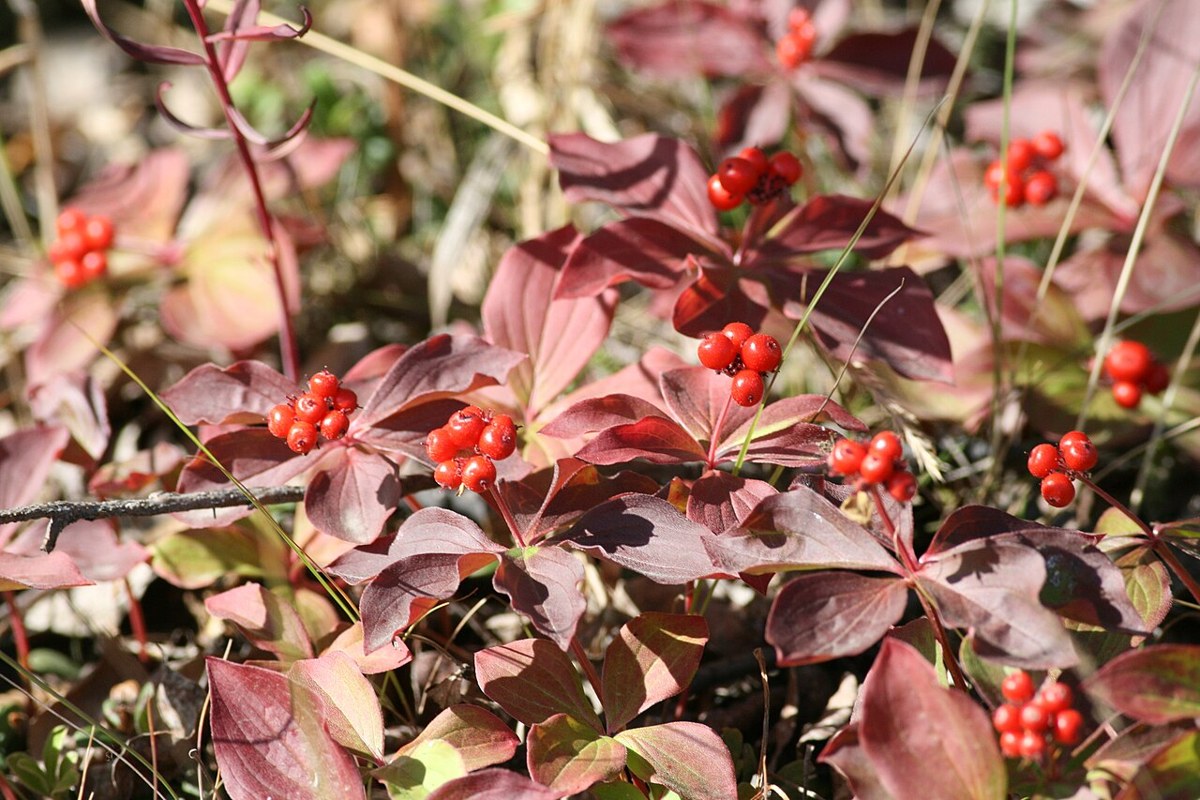
Western Bunchberry (Cornus unalaschkensis)
The bunchberry of the Pacific Coast from Alaska to northern California, separated from C. canadensis by flower details. It needs the same cool, shady, acidic conditions.
Blackfruit Dogwood (Cornus sessilis)
A California shrub or small tree of streamsides in the northern Sierra Nevada and Coast Ranges. Its small yellow flowers open before the leaves in early spring, and the fruit ripens to shiny black.
Non-Native Look-Alikes
Several of the most popular “dogwoods” in garden centers are Asian species. They are not invasive in most of the U.S., but they do not replace the native fruit and caterpillar food of our dogwoods, and it helps to know which is which.
Kousa dogwood (Cornus kousa), from Japan, Korea and China, is the most common look-alike. It blooms three to four weeks later than flowering dogwood, after the leaves are out, and its bracts have pointed tips instead of notched ones. Its fruit is a pinkish-red, raspberry-like ball on a long stalk rather than a cluster of separate oval berries, and older trunks have patchy, peeling bark. Kousa resists dogwood anthracnose, so it is often planted instead of the native. The Rutgers “Stellar” dogwoods are hybrids of kousa and flowering dogwood.
Cornelian cherry (Cornus mas), from southern Europe and western Asia, is a shrub or small tree that covers itself with tiny yellow flowers in late winter, before forsythia, and bears oblong red fruit in summer. Japanese cornel (C. officinalis) is very similar. No native dogwood has yellow flowers before the leaves except California’s blackfruit dogwood.
Evergreen Asian dogwoods are a newer group, including Cornus elliptica, C. hongkongensis and C. capitata from China and the Himalayas. They keep their leaves in winter, which no native dogwood does, and most are hardy only to about zone 7. Summer Splash™, featured in our Virginia article, is a variegated evergreen dogwood from this Asian group, with red new growth, yellow-and-cream leaf margins and white bracts. It is an ornamental, not a native; Virginians who want the state’s own dogwood should plant Cornus florida.
Tatarian dogwood (Cornus alba) and bloodtwig dogwood (C. sanguinea) are Eurasian red-stemmed shrubs that look like red-osier dogwood. Variegated forms such as ‘Elegantissima’ are usually C. alba. C. sanguinea has escaped from cultivation in a few places. Giant dogwood (C. controversa), the Asian “wedding cake tree,” is the alternate-leaved look-alike of pagoda dogwood.
Growing & Care Guide
Light
Flowering and pagoda dogwood are understory trees that do best with morning sun and afternoon shade, or the light shade of tall trees. In full sun they need good soil moisture and mulch. Shrub dogwoods flower and fruit best in sun to part shade. Bunchberry needs shade and cool soil.
Soil & Water
Flowering dogwood needs moist, well-drained, acidic, organic soil; it fails in heavy, waterlogged clay and suffers in drought because its roots are shallow. Red-osier, silky, swamp and stiff dogwoods tolerate wet, poorly drained soils and occasional flooding. Roughleaf and gray dogwood handle dry and alkaline soils.
Planting Tips
Plant tree dogwoods with the root flare at or slightly above grade, and mulch widely to keep roots cool. Protect the thin bark from lawn mowers and string trimmers; trunk wounds are a common route for borers and disease. Buy flowering dogwood grown from regional seed where possible, which is better adapted to local conditions than distant stock.
Pruning & Maintenance
Prune tree dogwoods lightly, right after flowering. Renew red-osier dogwood by cutting a third of the oldest stems to the ground each late winter; the young stems have the brightest color. Thicket-forming species can be kept in bounds by pulling suckers.
Pests & Diseases
Dogwood anthracnose, a fungal disease, has killed many flowering dogwoods in cool, moist mountain woods of the East and Pacific dogwoods in the West. Trees in sunnier, well-ventilated spots are less affected. Powdery mildew and dogwood borer are other common problems. Disease-resistant selections of flowering dogwood are available.
Propagation
Clean seeds from ripe fruit in fall and sow outdoors, or give them about three to four months of cold, moist stratification; some species need a warm period first. Red-osier and silky dogwood root very easily from hardwood cuttings stuck straight into moist soil in early spring, which is how they are often used for stream-bank restoration.
Landscape Uses
- Specimen and understory trees for spring bloom (flowering, pagoda and Pacific dogwood)
- Rain gardens, pond edges and stream banks (red-osier, silky, swamp and stiff dogwood)
- Wildlife hedges and screens (gray and roughleaf dogwood)
- Winter stem color (red-osier dogwood)
- Groundcover in cool, shady, acidic gardens (bunchberry)
Wildlife & Ecological Value
For Birds
Dogwood fruit is unusually high in fat, which is why migrating thrushes, vireos, catbirds, woodpeckers and bluebirds seek it out in early fall. A flowering dogwood or gray dogwood thicket in fruit can be stripped by birds within days. The trees also provide nest sites, and shrub dogwood thickets give cover to songbirds and game birds.
For Butterflies and Moths
Dogwoods are larval hosts for the spring azure butterfly and over a hundred species of moths. Those caterpillars are in turn food for nesting birds.
For Pollinators
The small flowers of shrub dogwoods attract a wide range of bees, flies, beetles and small butterflies in late spring and early summer.
For Mammals
Deer, rabbits, moose and beaver browse dogwood twigs, especially red-osier dogwood, which is an important winter food for moose. Bears, squirrels, foxes and other mammals eat the fruit.
Cultural & Historical Uses
Dogwood wood is extremely hard and was used for weaving shuttles, golf club heads, tool handles and spindles. Native peoples used flexible red-osier stems for baskets and the inner bark of red-osier and silky dogwood in smoking mixtures. The bark of flowering dogwood was used in folk medicine as a substitute for quinine during the Civil War; that is a historical use, not a recommendation. The name “dogwood” may come from “dagwood,” from the use of the hard stems for skewers or daggers.
Frequently Asked Questions
Is Summer Splash dogwood native?
No. Summer Splash is a variegated evergreen dogwood from an Asian group of species. It is attractive and suited to mild climates, but it is not native to Virginia or anywhere in the U.S. The native choice for Virginia is flowering dogwood, the state tree and flower.
How do I tell flowering dogwood from kousa dogwood?
Flowering dogwood blooms before or as the leaves come out and has notched bract tips and clusters of separate red berries. Kousa blooms several weeks later on a leafy tree and has pointed bracts and round, raspberry-like fruit.
Do dogwoods need a second tree to produce fruit?
Flowering dogwood fruits best with another genetically different flowering dogwood nearby, because most trees do not set much fruit with their own pollen. Bees and other insects carry the pollen between trees.
Which native dogwood grows in wet soil?
Red-osier, silky, swamp and stiff dogwoods all tolerate wet and seasonally flooded soils. Flowering dogwood does not.
Can people eat dogwood berries?
Native dogwood berries are bitter and are best left for birds. Do not eat any wild fruit unless you are certain of its identity.
What is a good native dogwood for New York or New Jersey yards?
Flowering dogwood for a small flowering tree in part shade, pagoda dogwood for cool, moist shade, and red-osier, silky or gray dogwood for shrub borders, wet spots and bird habitat.

Looking for a nursery that carries native dogwoods?
Browse our native plant nursery directory: Alabama, Alaska, Arizona & Arkansas · California · Colorado, Connecticut, Delaware, Florida & Georgia · Idaho, Illinois, Indiana, Iowa & Kansas · Kentucky, Louisiana, Maine, Maryland, Massachusetts, Michigan, Minnesota, Mississippi, Missouri & Montana · Nebraska, Nevada, New Hampshire, New Jersey, New Mexico, New York, North Carolina, North Dakota, Ohio & Oklahoma · Oregon · Pennsylvania, Rhode Island, South Carolina, South Dakota, Tennessee, Texas, Utah, Vermont & Virginia · Washington · West Virginia, Wisconsin & Wyoming

