
Native Hibiscus and Rose Mallows (Hibiscus)
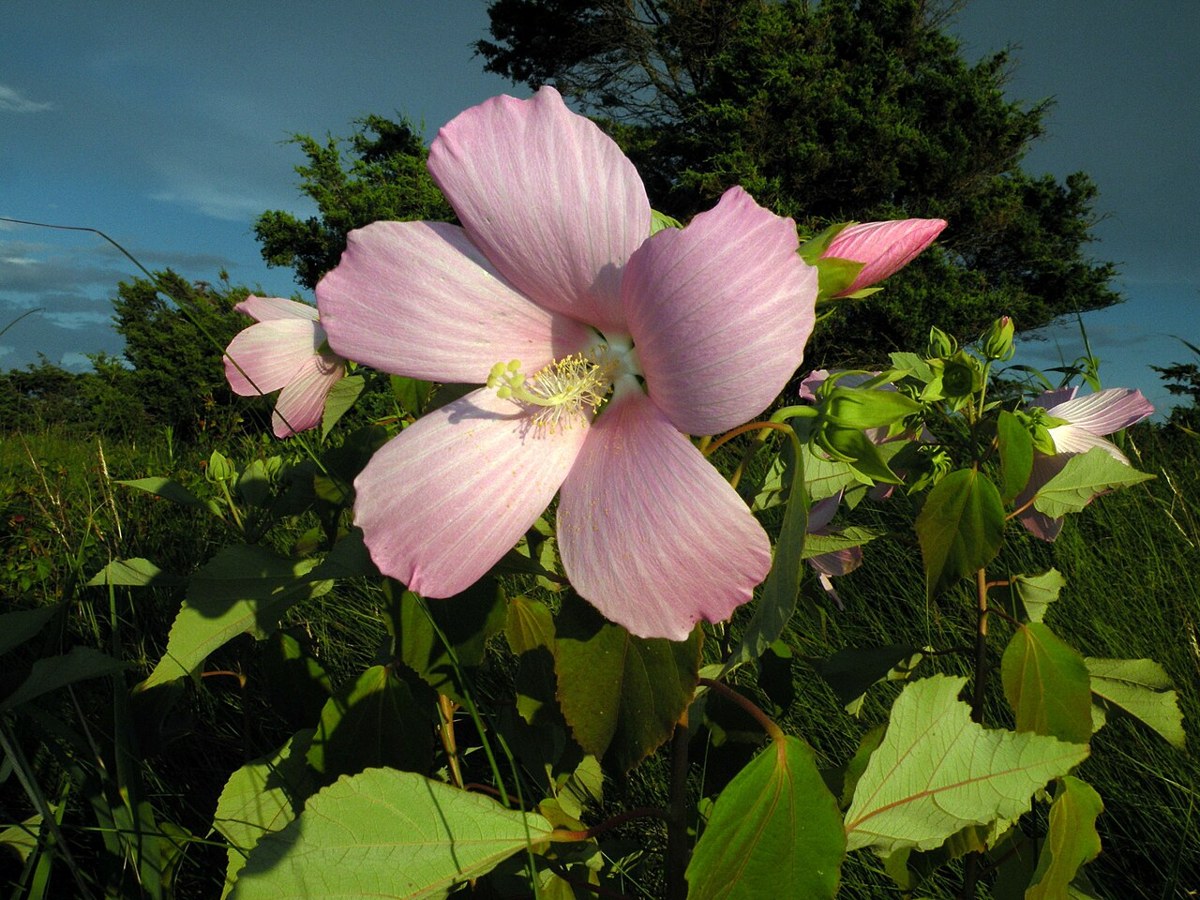
Hibiscus is a large genus of the mallow family with showy, five-petaled flowers and a central column of stamens. Most of the several hundred species are tropical, but the United States has about 20 native species. In the eastern half of the country they are the rose mallows: tall perennials of marshes, riverbanks and ditches that die to the ground each winter and bloom in mid to late summer with some of the largest flowers of any hardy plant. The Southwest has small desert shrubs, and Hawaii has its own group of native hibiscus, including the state flower.
Our New Jersey and Arkansas tree articles both feature “hibiscus,” including Midnight Marvel, a hardy hibiscus bred from these native rose mallows. That is not the same plant as the tropical Chinese hibiscus sold as a houseplant or the rose of Sharon shrub, which is native to Asia. This guide explains the difference, introduces the native species and shows how to grow them.
For most gardeners from New England to Texas, the native choice is eastern rosemallow (swamp rose mallow), with halberd-leaf rosemallow in the Midwest and South and scarlet rosemallow for a red flower in warm climates.
Identification
Hibiscus flowers have five broad petals that overlap like a pinwheel and a central staminal column: dozens of stamens fused into a tube that surrounds the style, with five round stigma lobes sticking out at the tip. Just below the five green sepals is a ring of narrow bracts called the epicalyx. The fruit is a dry, five-parted capsule. Leaves are alternate and often toothed or lobed.
Flowers
Native rose mallow flowers are typically 4–8 inches across. Eastern rosemallow is white or pink, often with a crimson center; halberd-leaf rosemallow is pale pink with a dark red eye; scarlet and heartleaf hibiscus are bright red; comfortroot and desert rosemallow are pale yellow with a red or maroon center. Each flower lasts only a day, but a mature clump produces new ones for six to eight weeks in midsummer.
Leaves
Leaf shape quickly separates the eastern natives. Eastern rosemallow has broad, unlobed or shallowly three-lobed leaves with pale, felt-like undersides. Halberd-leaf rosemallow has smooth, hairless leaves shaped like an arrowhead or halberd, with two pointed side lobes at the base. Scarlet rosemallow has leaves cut into five to seven narrow, finger-like lobes. Swamp rosemallow (H. grandiflorus) has large, velvety, gray-green leaves. Comfortroot is rough with stiff hairs.
Growth Habit
Eastern rose mallows are herbaceous perennials 3–8 ft tall that grow from a woody crown. They are among the last perennials to emerge in spring, often not until May or June. The desert species are low, woody shrubs 1–4 ft tall, and several Hawaiian species are shrubs or small trees.
Quick Facts
| Genus | Hibiscus |
| Family | Malvaceae (Mallow) |
| U.S. Native Species | About 20, including roughly 7 in Hawaii |
| Growth Forms | Herbaceous perennials (rose mallows), small desert shrubs, and shrubs or small trees in Hawaii |
| Mature Height | 3–8 ft for eastern rose mallows; 1–4 ft for desert species; up to about 30 ft for some Hawaiian species |
| Sun Exposure | Full Sun to Part Shade; flowers best in full sun |
| Water Needs | Wet to average for rose mallows (they grow in marshes); dry for desert species |
| Soil Type | Rich, moist or wet soils, including clay; tolerates brackish soil (eastern rosemallow) |
| Bloom Time | Mid to late summer (rose mallows); spring through fall in the Southwest and Hawaii |
| Flower Color | White, pink, red, pale yellow; often with a dark red center |
| Wildlife Value | Bees, including the rose mallow specialist bee; hummingbirds at red-flowered species |
| Deer Resistant | Low; deer and rabbits browse young shoots |
| USDA Hardiness Zones | 4–9 (eastern rosemallow, halberd-leaf); 6–10 (scarlet rosemallow); 10–12 (Hawaiian species) |
Native Range
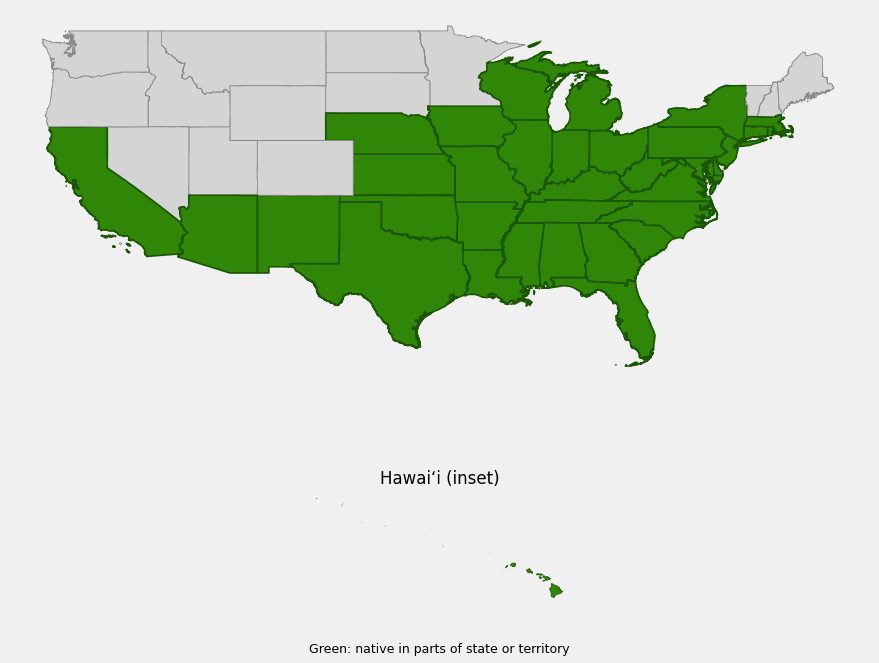
Eastern rosemallow grows in coastal and inland marshes from Massachusetts and southern New York south to Florida and west to Ohio, Indiana, Illinois, southern Michigan and Texas. It is the native hibiscus of New Jersey’s tidal marshes and river edges. Halberd-leaf rosemallow is a plant of riverbanks and sloughs in the Mississippi and Ohio basins, from Pennsylvania west to Wisconsin, Iowa, Nebraska and Kansas and south to Florida and Texas. In Arkansas, both grow along rivers, bayous and ditches.
The Southeast coastal plain has the most species: scarlet rosemallow, swamp rosemallow (H. grandiflorus) and comfortroot in Georgia, Florida and the Gulf states. Texas adds heartleaf hibiscus in the south and the rare Neches River rosemallow in the east. Rock hibiscus and desert rosemallow grow in the deserts of California, Arizona, New Mexico and west Texas. Woolly rosemallow reaches California’s Central Valley.
Hawaii has its own native hibiscus, several found nowhere else, but many are rare. None are native to the northern Rockies, the Great Basin, the Pacific Northwest or northern New England.
📋 Regional plant lists covering native hibiscus range: CT, MA, RI · NY, PA, NJ north · DE, NJ south, NY Long Island · MD, VA, WV · NC, SC · GA, AL, MS · AR, LA, OK east, TX east · KY, TN · OH, IN · IL, IA, MO · MI, WI, MN east · NE, KS, CO east · AZ, NM · CA, NV · TX south/west/central · Hawaii
Native Species
These are the most important hibiscus native to the United States. Every species with a full Plant Native profile is linked.
Eastern Rosemallow (Hibiscus moscheutos)
Also called swamp rose mallow or crimson-eyed rosemallow. A 3- to 7-ft perennial with white or pink flowers up to 8 inches across, often with a red center, from July to September. It grows in fresh and brackish marshes and tolerates salt spray, making it a natural choice for wet ground along the Atlantic and Gulf coasts and around ponds inland. It is the main parent of modern hardy hibiscus.
Woolly Rosemallow (Hibiscus lasiocarpos)
A hairy-fruited relative of eastern rosemallow, sometimes treated as a subspecies of it, found in the lower Mississippi Valley and Gulf states and in California’s Central Valley. White to pink flowers with a red eye.
Halberd-leaf Rosemallow (Hibiscus laevis)
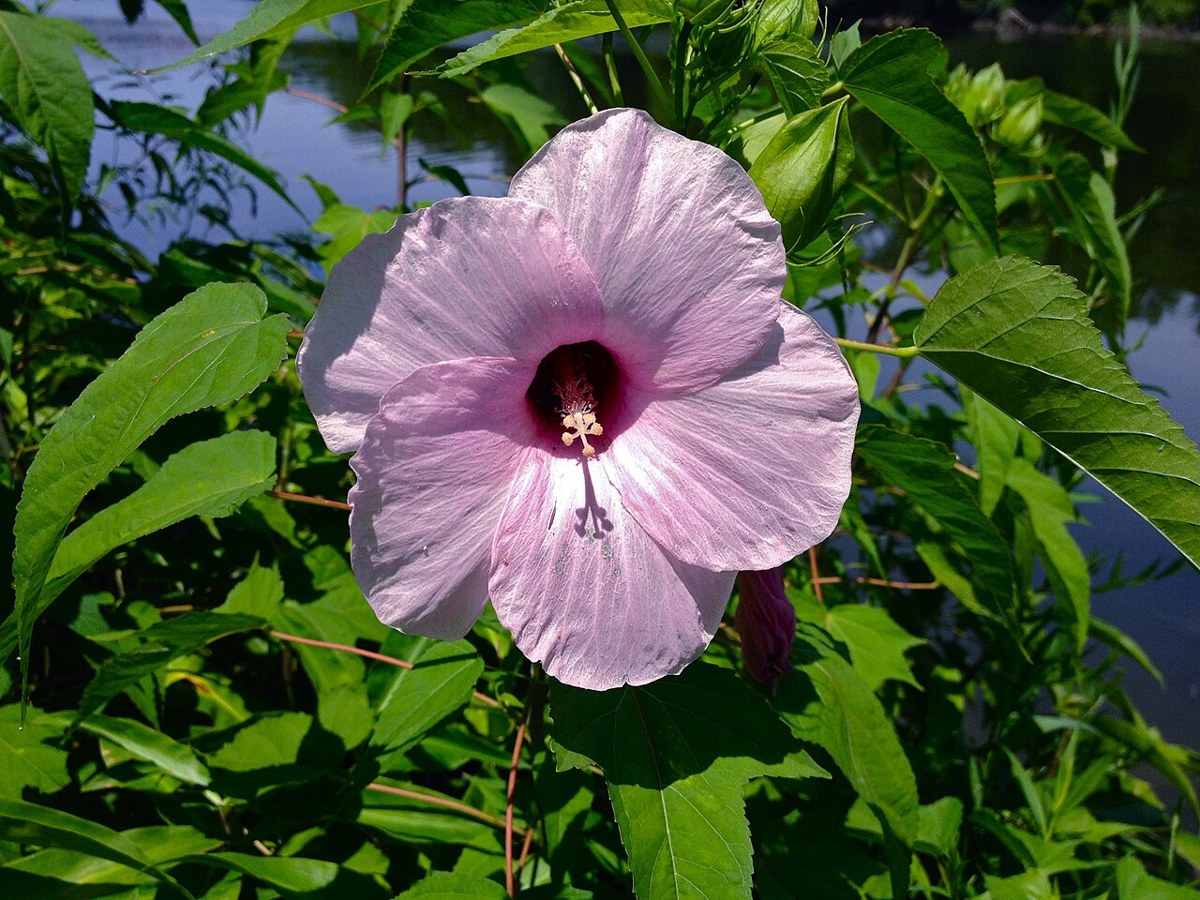
A smooth, hairless perennial, 4–7 ft tall, with arrowhead-shaped leaves and pale pink, bell-shaped flowers with a dark red throat. It grows on riverbanks and mudflats in the Midwest and South and handles periodic flooding well.
Scarlet Rosemallow (Hibiscus coccineus)
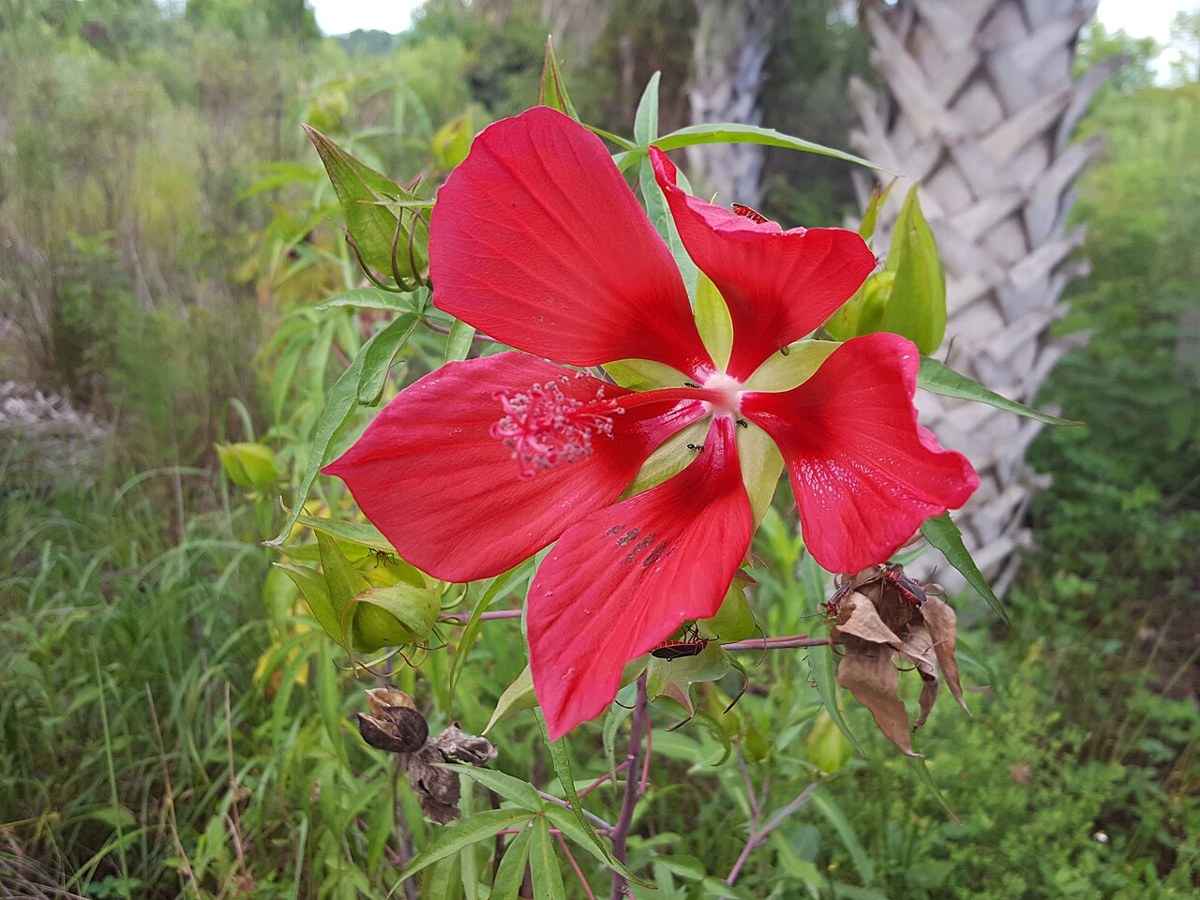
Also called Texas star or swamp hibiscus, though it is native to the swamps of Georgia, Florida and Alabama. Tall, slender stems carry deeply cut, finger-like leaves and brilliant red, star-shaped flowers 5–6 inches across that attract hummingbirds. Hardy to about zone 6 with mulch.
Swamp Rosemallow (Hibiscus grandiflorus)
A very large southeastern rose mallow of coastal plain marshes, growing 6–10 ft tall with velvety gray-green leaves and pale pink to white flowers that can reach 10 inches across.
Comfortroot (Hibiscus aculeatus)
A rough-hairy perennial of wet pine savannas and ditches on the southeastern coastal plain, with cream to pale yellow flowers and a maroon center. A good choice for sunny, wet, sandy sites.
Heartleaf Hibiscus (Hibiscus martianus)
A small shrub of south Texas brushland and rocky slopes with soft, velvety, heart-shaped leaves and bright red flowers through much of the year. Drought tolerant and loved by hummingbirds.
Desert Rosemallow (Hibiscus coulteri)
A low, twiggy shrub of rocky desert slopes in Arizona, New Mexico and west Texas with pale yellow flowers, often red at the base.
Rock Hibiscus (Hibiscus denudatus)
A small, gray-hairy shrub of desert washes and rocky hills from southern California to west Texas, with pale lavender to white flowers and a darker center. Very drought tolerant.
Lindenleaf Rosemallow (Hibiscus furcellatus)
A shrubby rose mallow with pink flowers and velvety leaves, native to Florida marshes and also to Hawaii, where it is known as ʻakiohala.
Maʻo Hau Hele (Hibiscus brackenridgei)
Hawaii’s state flower: a shrub or small tree of dry forests with bright yellow flowers. It is federally listed as endangered in the wild, though it is grown in Hawaiian gardens from nursery stock.
Kokiʻo Keʻokeʻo (Hibiscus arnottianus)
A Hawaiian native with fragrant white flowers and a long red or white staminal column, from the forests of Oʻahu and Molokaʻi. It has been used in breeding many tropical hibiscus hybrids.
Kauai White Hibiscus (Hibiscus waimeae)
A small tree of Kauaʻi’s canyons with large, fragrant white flowers that fade to pink by evening. It is rare in the wild.
Kokiʻo ʻUla (Hibiscus kokio)
A red-flowered Hawaiian native shrub or small tree, found on several islands but uncommon in the wild.
Clay’s Hibiscus (Hibiscus clayi)
A red-flowered Kauaʻi shrub known from very few wild plants and federally listed as endangered. It is grown in Hawaiian gardens from propagated stock.
Non-Native Look-Alikes
Three very different groups of plants are sold simply as “hibiscus.” Knowing which you have tells you how hardy it is and whether it belongs in a native garden.
Hardy hibiscus hybrids such as Midnight Marvel, the Summerific series, ‘Lord Baltimore’ and the Luna series are bred mainly from our native rose mallows, especially eastern rosemallow, scarlet rosemallow and halberd-leaf rosemallow. Midnight Marvel, featured in our Arkansas article, has dark wine-purple, maple-like leaves and scarlet flowers up to about 9 inches across. These are herbaceous perennials, not trees: they die to the ground each winter and regrow to about 4 ft. They have native parentage and are hardy to about zone 4, and bees still visit them, but they are garden hybrids rather than wild plants. If you want a true native, choose eastern rosemallow or halberd-leaf rosemallow grown from regional seed.
Rose of Sharon (Hibiscus syriacus) is a woody shrub or small tree from eastern Asia, 8–12 ft tall, with 2- to 4-inch flowers in white, pink, lavender or blue in late summer. Unlike the native rose mallows, its stems stay woody all winter. It seeds itself heavily and has escaped into woods, fencerows and roadsides in parts of the East and South, where it is treated as invasive. Seedless cultivars reduce the problem.
Tropical or Chinese hibiscus (Hibiscus rosa-sinensis) has glossy, dark evergreen leaves and flowers in red, orange, yellow and pink, often with a very long staminal column. Its origin is in Asia or the Pacific, and it survives outdoors only in frost-free areas such as south Florida, south Texas, southern California and Hawaii. Elsewhere it is a patio or houseplant. Confederate rose (H. mutabilis, from China) is another tender shrub grown in the South.
Flower-of-an-hour (Hibiscus trionum) is a small Old World annual with cream flowers and a dark center that has become a weed of crop fields and gardens across much of the U.S. Hau (H. tiliaceus), common on Hawaiian shores, is generally believed to have been brought to Hawaii by early Polynesian voyagers.
Among true natives, seashore mallow (Kosteletzkya pentacarpos) looks like a smaller pink rose mallow and grows in the same coastal marshes; it is a different genus.
Growing & Care Guide
Light
Plant rose mallows in full sun, at least six hours a day, for the most flowers and sturdy stems. They tolerate light afternoon shade in hot southern gardens. Desert species need full sun.
Soil & Water
Native rose mallows are wetland plants and do best in rich, constantly moist soil, but they also grow well in ordinary garden beds if watered during dry spells. They tolerate heavy clay and short periods of standing water. Do not let them dry out completely in summer, or they drop buds. Desert species want sharp drainage and little water once established.
Planting Tips
Plant in spring after the soil warms, setting the crown at the same depth it grew in the pot. Give each plant 3–4 ft of space; clumps widen slowly but do not spread by runners. Mark the spot, because rose mallows emerge so late in spring that they are often dug up by mistake.
Pruning & Maintenance
Cut the dead stems to 4–6 inches in late fall or early spring. Pinching shoots in early summer gives shorter, bushier plants with more flowers. Common pests are Japanese beetles and the hibiscus sawfly, whose small green larvae skeletonize leaves in early summer; hand-pick or hose them off. Avoid insecticides that would harm the bees the flowers attract.
Propagation
Native rose mallows grow easily from seed. Nick or rub the hard seed coat, or soak it overnight, and sow in warm soil; plants often bloom in their second year. Mature clumps can be divided in spring, and soft stem cuttings root in early summer.
Landscape Uses
- Rain gardens, pond edges and wet ditches
- Back of the border in moist sunny beds
- Coastal and brackish sites (eastern rosemallow)
- Hummingbird gardens (scarlet rosemallow, heartleaf hibiscus)
- Desert gardens (rock hibiscus, desert rosemallow)
- Native replacement for rose of Sharon and tropical hibiscus
Wildlife & Ecological Value
For Pollinators
Rose mallow flowers are visited by bumble bees, carpenter bees and many other bees. The rose mallow bee (Ptilothrix bombiformis) is a specialist that collects pollen mainly from Hibiscus and nests in the ground nearby, and native rose mallow stands are important to it.
For Hummingbirds
Ruby-throated hummingbirds visit scarlet rosemallow and other red-flowered natives, and heartleaf hibiscus is a hummingbird favorite in south Texas.
For Wildlife Generally
Rose mallow seeds are eaten by some birds, and dense stands give cover in marshes. The plants help stabilize the edges of ponds, ditches and tidal marshes.
Ecosystem Role
Native rose mallows are characteristic plants of open freshwater and brackish marshes along the Atlantic and Gulf coasts and in the great river valleys. Many of those wetlands have been drained, so garden and restoration plantings help. In Hawaii, native hibiscus are part of dry and mesic forest ecosystems that have mostly disappeared, which is why several species are federally endangered.
Cultural & Historical Uses
The name “mallow” comes from the related marsh mallow (Althaea officinalis) of Europe, whose roots were once used for the original marshmallow confection. Native peoples used the fibrous stems of rose mallows for cordage. Hybridizers, beginning with the Fleming brothers in Nebraska in the mid-1900s, crossed native rose mallows to create the hardy hibiscus now sold across the country. Maʻo hau hele became Hawaii’s state flower in 1988; Hawaiian native hibiscus were also used in lei.
Frequently Asked Questions
Is Midnight Marvel hibiscus native?
Not exactly. It is a hardy hibiscus hybrid bred from native North American rose mallows, so its parentage is native, but it is a cultivated hybrid. It is not a tree: it dies to the ground each winter and regrows to about 4 ft. Eastern rosemallow and halberd-leaf rosemallow are the wild natives of Arkansas.
What hibiscus is native to New Jersey?
Eastern rosemallow (swamp rose mallow), which grows in tidal and freshwater marshes and along rivers throughout the state. It is perfect for wet, sunny spots and pond edges. Rose of Sharon and tropical hibiscus are not native.
Is rose of Sharon a native hibiscus?
No. Rose of Sharon (Hibiscus syriacus) is from eastern Asia and seeds itself into natural areas in parts of the East and South. Native rose mallows are a better choice.
Why hasn’t my hardy hibiscus come back?
Native rose mallows and their hybrids are some of the latest perennials to sprout, often in late May or June. Wait before digging. Tropical hibiscus left outdoors will not survive a hard freeze.
Do hardy hibiscus need wet soil?
They grow naturally in marshes and love moisture, but they do well in ordinary garden soil if watered during dry spells. They do not do well in dry, sandy soil without watering.

Looking for a nursery that carries native hibiscus and rose mallows?
Browse our native plant nursery directory: Alabama, Arizona & Arkansas · California · Connecticut, Delaware, Florida, Georgia & Hawaii · Illinois, Indiana, Iowa & Kansas · Kentucky, Louisiana, Maryland, Massachusetts, Michigan, Mississippi & Missouri · Nebraska, New Jersey, New Mexico, New York, North Carolina, Ohio & Oklahoma · Pennsylvania, Rhode Island, South Carolina, Tennessee, Texas & Virginia · West Virginia & Wisconsin

