
Osha (Ligusticum porteri)
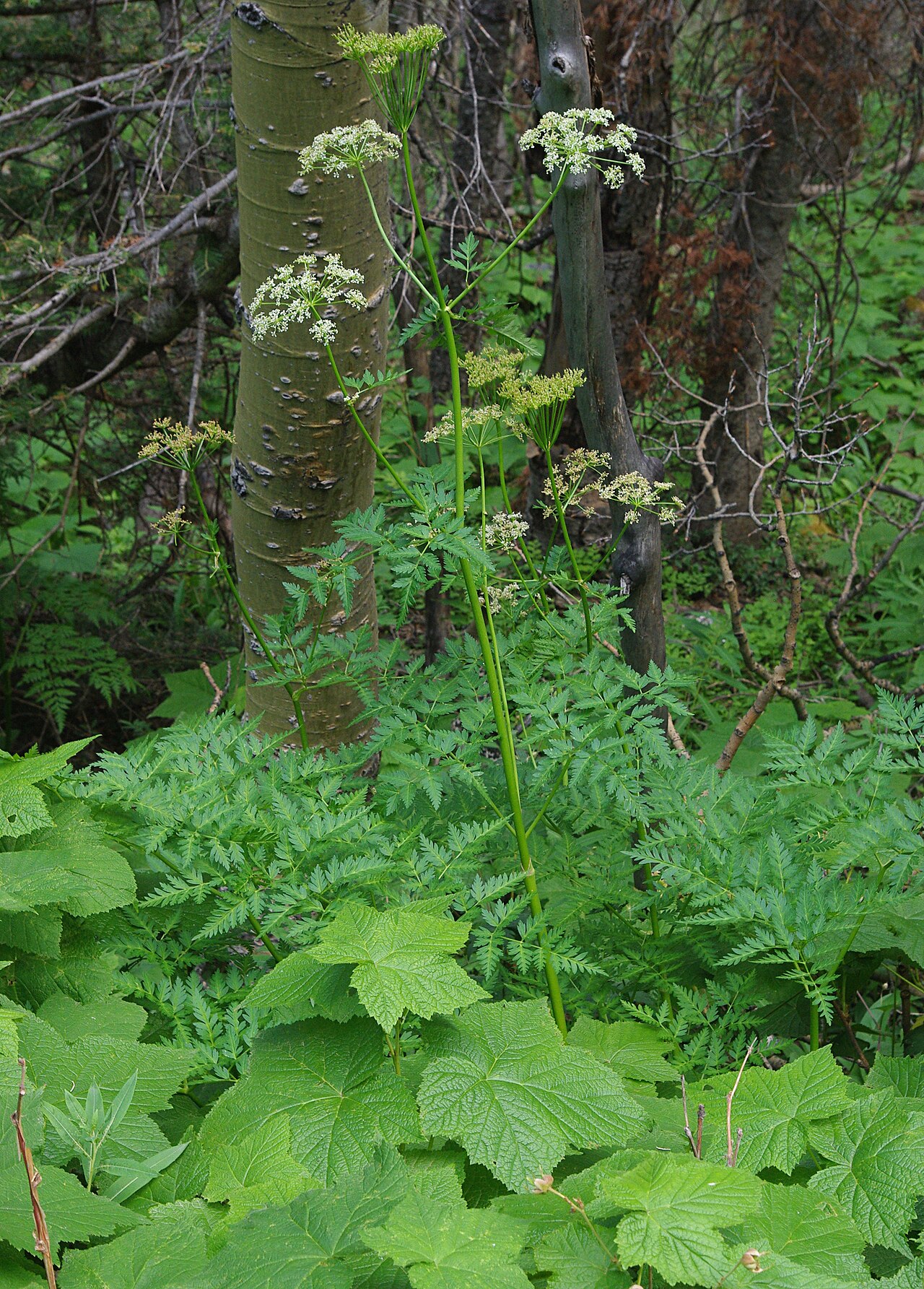
Ligusticum porteri, known as Osha (also oshá, bear root, chuchupate or Porter’s licorice-root, the USDA name), is a tall perennial in the carrot family (Apiaceae) of the southern Rocky Mountains. It grows 2 to 4 feet tall from a thick, aromatic root, with finely divided, fern-like leaves and flat-topped clusters (umbels) of small white flowers in summer.
Osha grows in moist mountain meadows, aspen groves and openings in spruce-fir and mixed conifer forests, mostly between about 7,000 and 11,000 feet, from Colorado and New Mexico west into Utah and Arizona and north into Wyoming. Its root has a strong, spicy, celery-like scent, and it has been one of the most important medicinal plants of Native American and Hispanic communities of the Southwest for generations.
Demand for the root in the herbal trade has raised concern about overharvesting, and the plant is very difficult to cultivate. It also closely resembles some of the deadliest plants in North America, poison hemlock and water hemlock. This guide covers how to recognize osha and enjoy it in the wild; please do not dig wild plants.
Identification
Look for a tall carrot-family plant in high-elevation aspen and conifer openings with lacy, fern-like leaves, white umbels in midsummer, ribbed oblong fruits, and a dark brown, hairy root crown that smells strongly of celery or lovage.
Growth Habit
Osha is a long-lived perennial that forms a clump of basal leaves from a stout taproot. In summer it sends up one to several hollow, smooth flowering stems, usually 2 to 4 feet tall. The root crown is covered with a mat of fibrous, hair-like remains of old leaf stalks, and the dark brown root has a yellowish interior and a strong, spicy scent.
Leaves
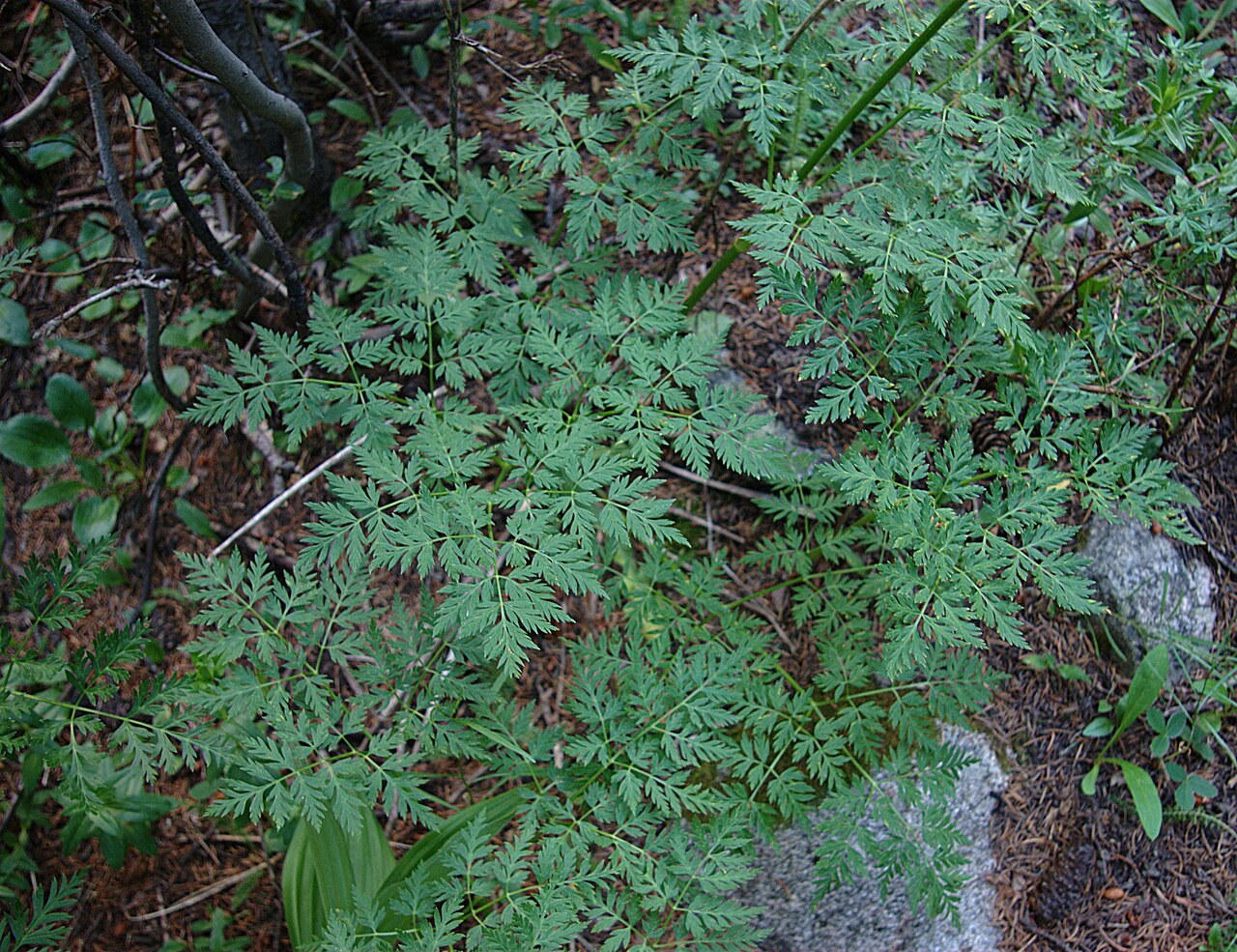
The leaves are mostly basal, long-stalked and two to three times divided into many small, sharply toothed or cut segments, giving a lacy, fern-like look. A few smaller leaves grow on the flowering stems, with broad sheathing bases. The leaves are bright green and smooth.
Flowers
Tiny white flowers grow in compound umbels 2 to 5 inches across at the tops of the stems, often with several smaller umbels below. Flowering is mainly from June through August, depending on elevation and snowmelt.
Fruit & Seeds
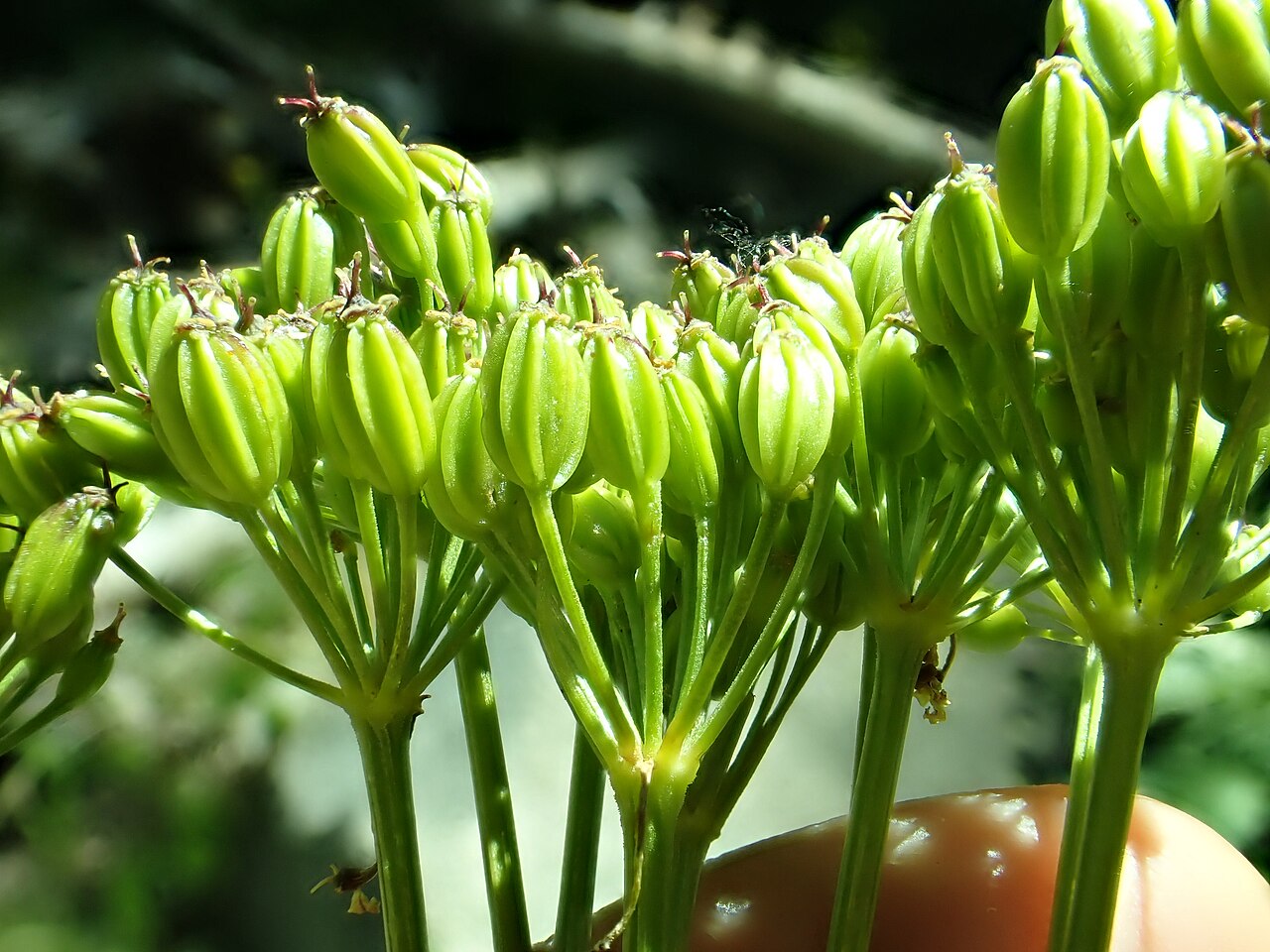
Each flower becomes a dry, oblong fruit about 1/4 inch long with prominent ribs, green at first and turning brown as it ripens in late summer. Each fruit splits into two seeds.
Look-alikes and Safety
Osha belongs to the carrot family, which includes some of the most poisonous plants in North America. Water hemlock (Cicuta) grows in wet mountain meadows and along streams in the same mountains, and poison hemlock (Conium maculatum), a European weed, grows along roads, ditches and disturbed ground across the West. Both can be fatal if any part is eaten. Poison hemlock has purple-spotted, hollow stems and a musty, mousy smell; water hemlock has chambered root bases and leaflets with veins ending in the notches between teeth. Osha has a strongly aromatic, celery-scented root with a hairy crown of old leaf fibers, but these differences can be subtle, especially in young plants. Do not dig, taste or use any wild carrot-family plant unless an expert has confirmed its identity; mistakes can be deadly. Harmless relatives such as cow parsnip (much larger, broad leaves) and mountain sweet cicely also grow in osha habitat.
Quick Facts
| Scientific Name | Ligusticum porteri |
| Family | Apiaceae (carrot family) |
| Plant Type | Herbaceous perennial |
| Mature Height | 2–4 ft in flower |
| Mature Spread | 1–2 ft |
| Growth Rate | Slow |
| Sun Exposure | Part shade to full sun |
| Water Needs | Moderate; moist soil |
| Soil Type | Deep, rich, moist mountain loam |
| Soil pH | Slightly acidic to neutral (about 5.5–7.0) |
| Bloom Time | June–August |
| Flower Color | White |
| Fall Color | Yellow to tan |
| Fruit | Ribbed, oblong dry fruits |
| Deer Resistant | Somewhat; strongly aromatic |
| USDA Hardiness Zones | 3–6 |
Native Range
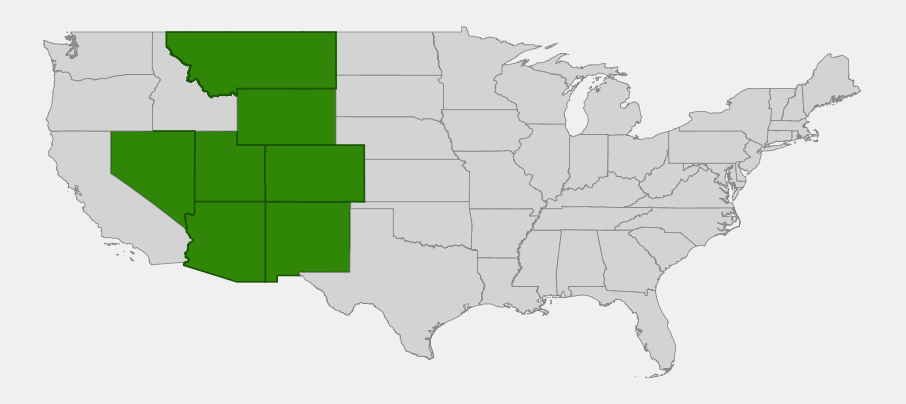
USDA PLANTS lists osha as native to Arizona, Colorado, Montana, New Mexico, Nevada, Utah and Wyoming. The center of its range is the southern Rocky Mountains of Colorado and northern New Mexico, including the San Juan and Sangre de Cristo Mountains, where it can be abundant. It also grows in the mountains of northern Mexico.
From there it extends into the high plateaus and mountains of Utah and Arizona, such as the White Mountains and the San Francisco Peaks area, and north into Wyoming. Records from Montana and eastern Nevada are at the edge of its range, where it is much less common.
Osha grows in deep, moist soils in montane and subalpine zones: aspen groves, openings and edges of spruce-fir, Douglas-fir and mixed conifer forests, moist meadows and ravines, mostly between about 7,000 and 11,000 feet.
📋 Regional plant lists featuring Osha: Arizona & New Mexico · Utah & Western Colorado · Montana & Wyoming · California & Nevada
Can You Grow It?
Osha is famously difficult to grow, and most osha in commerce is still dug from the wild. A few growers and research projects have raised it from seed, but it is slow and fussy outside its mountain home. If you want to grow it, start from purchased, responsibly grown seed, and expect years before a plant is mature.
Light
In the wild it grows in dappled light under aspens and at forest edges, and in open meadows at high elevation. In gardens, give it morning sun and afternoon shade.
Soil & Water
It needs deep, rich, evenly moist but well-drained soil high in organic matter, similar to the humus of an aspen forest. It does poorly in heavy clay, alkaline soil or hot, dry conditions, so it rarely succeeds at low elevations.
Planting Tips
Osha does best in cool mountain climates with snowy winters and mild summers. Plant it where it can stay undisturbed for many years; its deep taproot makes established plants hard to move.
Pruning & Maintenance
Little care is needed beyond keeping the soil mulched and moist. Leave the seed heads standing to ripen, and cut the dead stems in late fall or spring.
Propagation
Seed needs a long period of cold, moist stratification, typically several months, so sow it outdoors in fall in a cold climate. Germination is often slow and erratic, and seedlings grow slowly. Please do not dig wild osha or collect large amounts of wild seed.
Where to See It
- Aspen groves: common in the herb layer of high aspen forests in Colorado and New Mexico
- Forest edges and clearings: look in openings in spruce-fir and mixed conifer forest
- Mountain meadows: grows in moist subalpine meadows and ravines
- Trails in the Sangre de Cristo and San Juan Mountains: often abundant along high trails in midsummer
- Pollinator watching: its umbels draw beetles, flies and small bees
Wildlife & Ecological Value
Osha’s broad umbels of white flowers and its aromatic foliage make it a busy part of high-elevation meadows and aspen understories in midsummer.
For Pollinators
The open, flat flower clusters are visited by many small insects, including flower longhorn beetles, flies, wasps and small native bees. Carrot-family plants are also host plants for swallowtail butterflies, and anise swallowtail caterpillars feed on related plants in the Rockies.
For Birds
Birds use osha patches for cover in the forest understory. Seed-eating birds may take some of the dry fruits in late summer.
For Mammals
Osha is closely associated with bears in folklore: it is often called bear root, and Native traditions describe bears digging the roots, chewing them and rubbing the paste on their fur. Elk and deer browse it only lightly.
Ecosystem Role
Osha is a long-lived member of the herb layer in aspen and mixed conifer forests of the southern Rockies. Because it grows slowly and reproduces mainly by seed, heavily harvested populations can take many years to recover. The conservation group United Plant Savers lists osha among its medicinal plants at risk.
Cultural & Historical Uses
Osha root has been used for generations by many Native American peoples of the Southwest and Rocky Mountains, and by Hispanic communities of New Mexico and southern Colorado, where it is a well-known traditional remedy, especially for coughs, colds and sore throats. It is sold in herb shops across the region. This page describes traditional use only; it is not medical advice, and osha should not be used during pregnancy or without guidance from a qualified practitioner.
Because nearly all osha is wild-harvested, conservation groups and botanists have raised concern about overharvesting. Harvest on public land generally requires a permit, and responsible herbalists encourage buying only cultivated or carefully sourced root, or using other herbs instead. The safest choice for plant lovers is to admire osha in the wild and leave it in place.
The genus Ligusticum is named after the Italian region of Liguria, home of a related lovage. The species name porteri honors Thomas Conrad Porter, a 19th-century botanist who co-wrote an early flora of Colorado. The name “oshá” is used in New Mexican Spanish, and “chuchupate” comes from Mexico.
Frequently Asked Questions
Is osha endangered?
It is not federally listed, but it is listed as at risk by United Plant Savers because of heavy wild harvest for the herbal trade and its slow growth. Do not dig wild plants.
How can you tell osha from poison hemlock?
Poison hemlock has purple-blotched stems and a musty smell, while osha has a strongly celery-scented root with a hairy crown of old leaf fibers. Water hemlock grows in the same mountain habitats. These differences can be subtle, and mistakes can be fatal, so never harvest or taste wild carrot-family plants without expert identification.
Where does osha grow?
In moist aspen groves, forest openings and meadows of the southern Rocky Mountains, mainly in Colorado and New Mexico, and in nearby Utah, Arizona, Wyoming and mountains of northern Mexico, mostly from about 7,000 to 11,000 feet.
Can I grow osha in my garden?
It is very difficult. Osha needs a cool mountain climate, deep moist humus-rich soil and long cold stratification for its seed, and it grows slowly. Start only from responsibly sourced seed.
Why is osha called bear root?
Traditional stories describe bears digging osha roots after hibernation, chewing them and rubbing the paste on their fur, and the root is linked with bears in several Native cultures.


