
Sand Grape (Vitis rupestris)
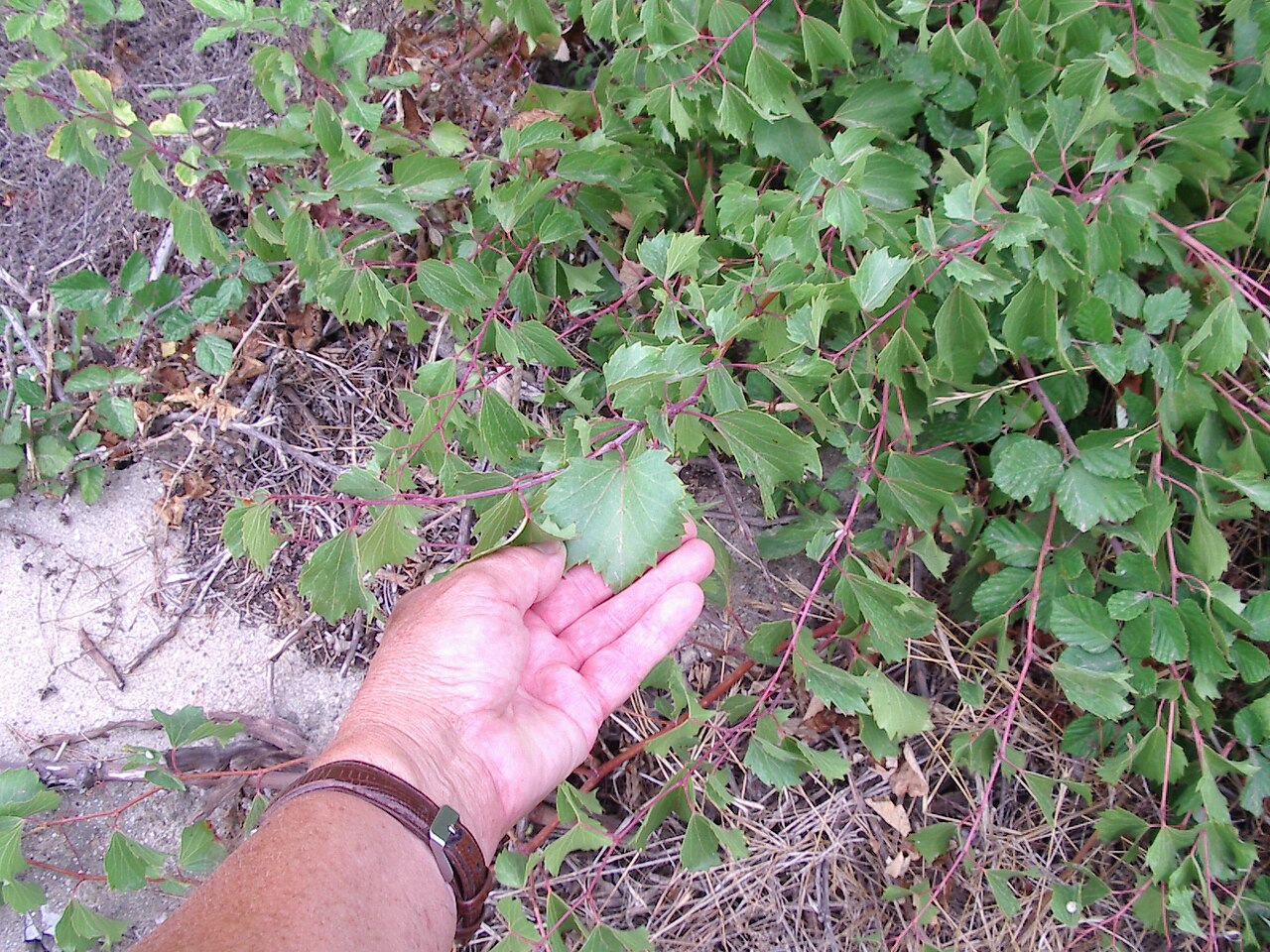
Vitis rupestris, the Sand Grape, also called rock grape, sugar grape or bush grape, is an unusual native grape of gravel bars and rocky streambeds in the south-central and eastern United States. Unlike most wild grapes, which climb high into trees, it usually grows as a low, bushy shrub 1 to 3 feet tall, sprawling over sand and cobbles, with few or no tendrils. Its small, shiny, often folded leaves and sweet little black grapes set it apart from every other native grape.
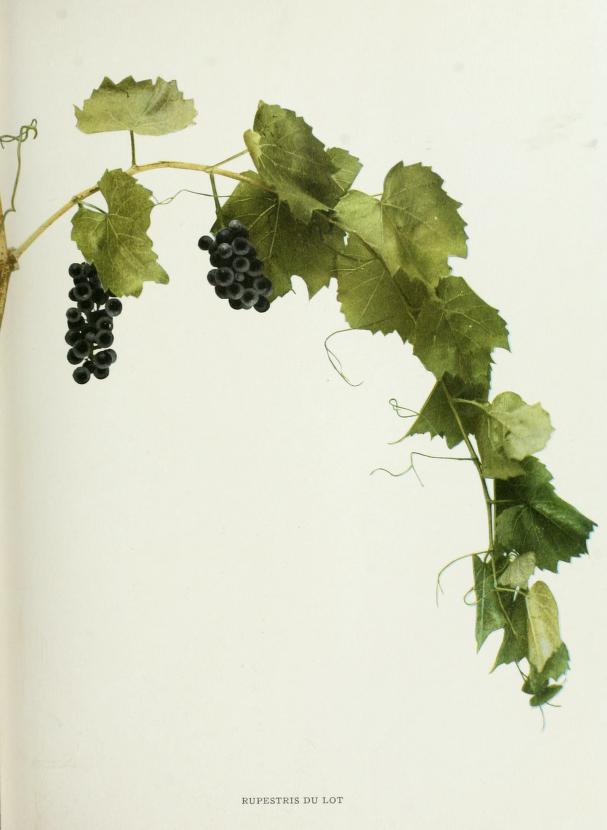
Sand grape has a special place in the history of wine. When the North American aphid-like insect grape phylloxera devastated European vineyards in the late nineteenth century, the solution was to graft European wine grapes onto the roots of resistant American species. Sand grape was one of the most important of these, and selections such as ‘Rupestris du Lot’ (St. George) and its hybrids with riverbank grape and with Vitis berlandieri became standard rootstocks. Many of the world’s vineyards still grow on rootstocks with sand grape in their parentage.
In the wild, however, sand grape is now uncommon to rare in much of its range. NatureServe ranks it G3 (globally vulnerable), and it is ranked critically imperiled (S1) in Pennsylvania, Maryland, Virginia, Tennessee, Indiana, Arkansas and Texas. This guide covers how to identify it, its range and habitat, how to grow it from nursery stock, and why it matters to both wildlife and grape growers.
Identification
Sand grape is the easiest native grape to recognize, because of its habit and leaves. A low, shrubby grape with small, smooth, kidney-shaped leaves growing on a gravel bar is almost certainly this species, though it does hybridize with riverbank grape and other species where they meet.
Habit & Stems
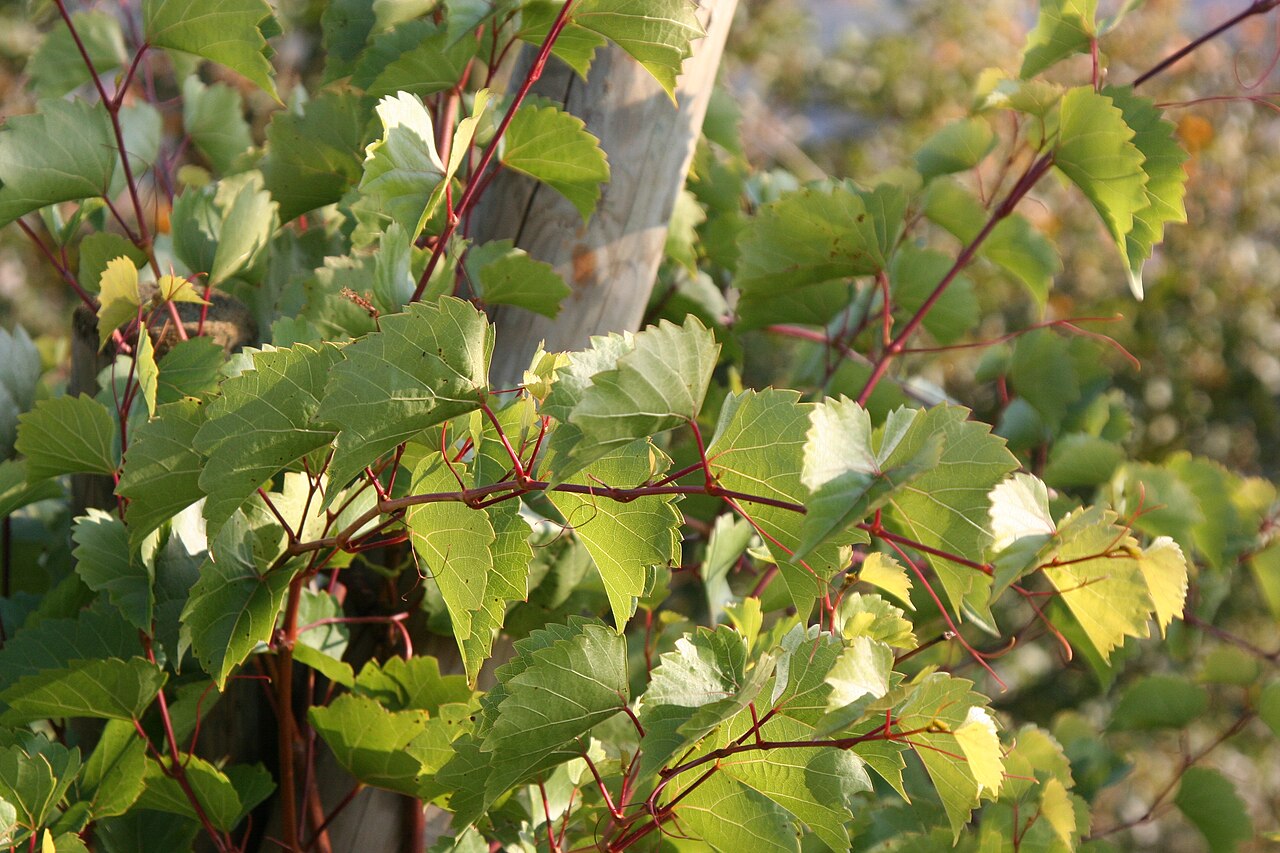
Sand grape is a deciduous, woody shrub or low, sprawling vine. Most plants are 1 to 3 feet tall, occasionally up to about 6 feet, and spread several feet across the ground. When it grows next to a shrub or fence it may climb a little, but it rarely reaches far into trees. Tendrils are few, short or absent. The bark on older stems is gray-brown and shreddy, and young shoots are smooth and often reddish.
Leaves
The leaves are small for a grape, about 2 to 4 inches long, and often broader than long: kidney-shaped to broadly heart-shaped, with a short tip and a wide, shallow notch at the base. They are smooth and shiny on both sides, bright green to slightly bluish green, and their edges have coarse, broad teeth. Leaves are often folded upward along the midrib, an easy field mark.
Flowers
Sand grape blooms in April and May. The small, greenish, fragrant flowers grow in short, compact clusters. Like most wild grapes, plants are usually functionally male or female, so only some plants fruit.
Fruit
The fruit clusters are small and compact, with round, black or purplish-black grapes about 1/4 to 3/8 inch across, with a light bloom. They ripen early for a wild grape, mostly in July and August, and are sweet when fully ripe, hence the name sugar grape.
Look-alikes
Riverbank Grape often grows along the same rivers. It is a high-climbing vine with larger, three-lobed leaves with a long, tapering tip, and the two species hybridize. Frost Grape is a large climbing vine with heart-shaped, unlobed leaves and sour fruit that ripens in fall. Summer grape and the other native wild grapes are climbing vines whose leaves are usually hairy beneath.
Quick Facts
| Scientific Name | Vitis rupestris |
| Family | Vitaceae (grape family) |
| Plant Type | Low, bushy deciduous shrub or sprawling vine |
| Mature Height | 1–3 ft (occasionally to about 6 ft) |
| Mature Spread | 3–10 ft |
| Growth Rate | Moderate to fast |
| Sun Exposure | Full sun |
| Water Needs | Medium; deep roots reach water under gravel bars, and established plants tolerate drought |
| Soil Type | Sand, gravel and rocky alluvium; well-drained soils |
| Soil pH | About 6.0–8.0; often over limestone |
| Bloom Time | April–May |
| Flower Color | Greenish; fragrant |
| Fall Color | Yellow |
| Fruit | Small, sweet black grapes, ripening July–August |
| Deer Resistant | No; deer browse the shoots |
| USDA Hardiness Zones | 5–9 |
Native Range
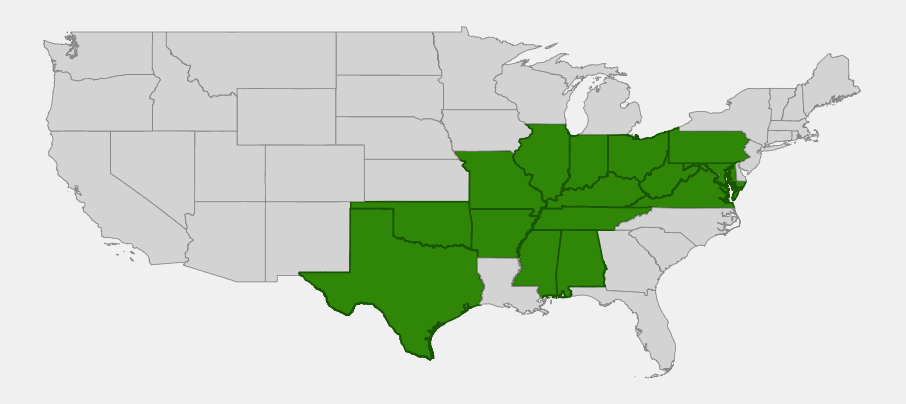
Sand grape is native to the south-central and eastern United States. USDA PLANTS records it from 15 states and the District of Columbia: Pennsylvania, Maryland, Virginia and West Virginia; Ohio, Indiana, Illinois, Kentucky and Tennessee; Missouri, Arkansas and Oklahoma; Alabama and Mississippi; and Texas. Its stronghold is the Ozark and Ouachita region of Missouri, Arkansas and Oklahoma, plus scattered populations along rivers in the Appalachians, the Ohio Valley and the Edwards Plateau of central Texas.
It is a specialist of flood-scoured habitats: gravel and cobble bars, rocky and sandy streambeds and riverbanks, and the margins of rocky creeks, often over limestone. Regular floods clear away competing trees and shrubs, and sand grape survives them with deep roots and flexible stems. Where floods have been controlled by dams or channels have been altered, its open gravel-bar habitat tends to grow over.
NatureServe ranks sand grape G3, globally vulnerable. State ranks are S1 (critically imperiled) in Pennsylvania, Maryland, Virginia, Tennessee, Indiana, Arkansas and Texas; S2 (imperiled) in Oklahoma and Kentucky; and S3 (vulnerable) in West Virginia and Missouri. It is not native in California, where it is grown only in vineyards. Because it hybridizes easily with other grapes, pure sand grape populations are also at risk from hybridization in some areas.
📋 Regional plant lists featuring Sand Grape: Alabama, Georgia & Mississippi · Arkansas, Louisiana, Eastern Oklahoma & Eastern Texas · Illinois, Iowa & Missouri · Ohio & Indiana · Kentucky & Tennessee · Maryland, Virginia & West Virginia · New York, Pennsylvania & Northern New Jersey
Growing & Care Guide
Sand grape is easy to grow in a sunny, well-drained spot, and its compact, shrubby habit makes it one of the few native grapes that fits a small garden. Buy nursery-grown plants or rootstock cuttings rather than digging wild plants, which are rare in many states.
Light
Plant it in full sun. In shade it grows thin and fruits poorly, and in the wild it disappears when trees close over a gravel bar.
Soil & Water
It needs well-drained soil: sand, gravel, rocky loam or a raised bed. Its deep roots tolerate drought once established, and it does not like heavy, waterlogged clay. Limestone soils suit it well. No fertilizer is needed.
Planting Tips
Plant in spring or fall. It works as a low, sprawling groundcover on a sunny bank, a rock garden or a dry streambed feature, or tied to a low fence or trellis. For fruit, plant more than one plant, since most wild plants are either male or female.
Pruning & Maintenance
Prune in late winter while dormant. Cut back old, unproductive stems to keep the plant compact. It is usually less prone to fungal diseases than European grapes, though leaf spots and Japanese beetles may appear.
Propagation
Sand grape is famous for rooting easily from dormant hardwood cuttings, which is one reason it became a popular rootstock. Take pencil-thick cuttings with three or four buds in late winter and root them in moist sand. Seed needs 2 to 3 months of cold, moist stratification.
Landscape Uses
- Gravel and dry streambed gardens: a low, shrubby native grape for sunny, rocky sites
- Riverbank and gravel-bar restoration: within its native range, using local nursery stock
- Wildlife plantings: early-ripening fruit for birds and mammals
- Edible landscaping: small, sweet grapes for fresh eating and jelly
- Grape breeding and rootstock collections: a historic phylloxera-resistant parent
Wildlife & Ecological Value
Sand grape is a small shrub, but on gravel bars its early fruit and low tangles are useful to wildlife.
For Pollinators
The small, fragrant flowers attract bees, flies and beetles in spring. Like other grapes, its leaves feed the caterpillars of the eight-spotted forester, grapevine sphinx moths and other grape specialists.
For Birds
Songbirds such as northern cardinals, mockingbirds, catbirds, thrushes and robins eat the fruit in summer, as do wild turkeys. The low, dense tangles shelter ground-foraging birds on open gravel bars.
For Mammals
Raccoons, opossums, foxes and squirrels eat the grapes, and deer browse the leaves and shoots.
Ecosystem Role
On gravel bars and scoured banks, sand grape helps hold sand and gravel between floods. Its tolerance of flooding, drought and phylloxera reflects a long history in harsh, frequently disturbed habitats.
Cultural & Historical Uses
The German-born Texas botanist Adolf Scheele named Vitis rupestris in 1848, from Texas specimens. The epithet rupestris means “growing among rocks,” and the common names sand grape, rock grape and sugar grape all reflect its habitat and sweet fruit.
Its great fame came in the 1870s and 1880s. Grape phylloxera, a tiny root-feeding insect native to North America, was accidentally introduced to Europe and destroyed a large share of the vineyards of France and other countries. Researchers found that many American grapes tolerate phylloxera, and cuttings of sand grape, riverbank grape and V. berlandieri were shipped to Europe in enormous numbers. American grape experts, including Thomas V. Munson in Texas and Hermann Jaeger in Missouri, helped supply and select the stock and were honored by the French government for their work.
Sand grape selections such as ‘Rupestris du Lot’ (St. George) were among the first successful rootstocks, and hybrids of sand grape with riverbank grape (for example 3309 Couderc and 101-14 Millardet et de Grasset) and with V. berlandieri (for example 110 Richter, 1103 Paulsen and 140 Ruggeri) are still among the most widely planted rootstocks. Wine grapes around the world grow on roots descended from this small native shrub of American gravel bars, even as wild sand grape has become rare in many states.
Frequently Asked Questions
Is sand grape a vine or a shrub?
Mostly a shrub. It usually grows as a low, bushy plant 1 to 3 feet tall that sprawls over the ground, with few or no tendrils. It can climb a little when it grows next to a shrub or fence, but it rarely climbs into trees like other native grapes.
Why is sand grape important for wine?
It is naturally resistant to grape phylloxera, a root-feeding insect that destroyed many European vineyards in the 1800s. Sand grape and its hybrids with other American grapes became rootstocks onto which wine grapes are grafted, and they are still used today.
Is sand grape rare?
Yes, in much of its range. NatureServe ranks it globally vulnerable (G3), and critically imperiled in several states, including Pennsylvania, Maryland, Virginia, Tennessee, Indiana, Arkansas and Texas. Loss of flood-scoured gravel bars, dams and hybridization with other grapes are likely causes.
Are sand grapes edible?
Yes. The small, black grapes are sweet when fully ripe in mid to late summer and can be eaten fresh or made into jelly. Avoid collecting from wild plants where the species is rare, and make sure the plant is a true grape, not poisonous moonseed.
Can I grow sand grape in my garden?
Yes, in full sun and well-drained, sandy, gravelly or rocky soil. It is compact for a grape and tolerates drought and heat. Buy nursery plants or rooted cuttings rather than digging wild plants.

Looking for a nursery that carries Sand Grape?
Browse our native plant nursery directory: Alabama & Arkansas · Illinois & Indiana · Kentucky, Maryland, Mississippi & Missouri · Ohio & Oklahoma · Pennsylvania, Tennessee, Texas & Virginia · West Virginia

