
Native Wild Grapes (Vitis)
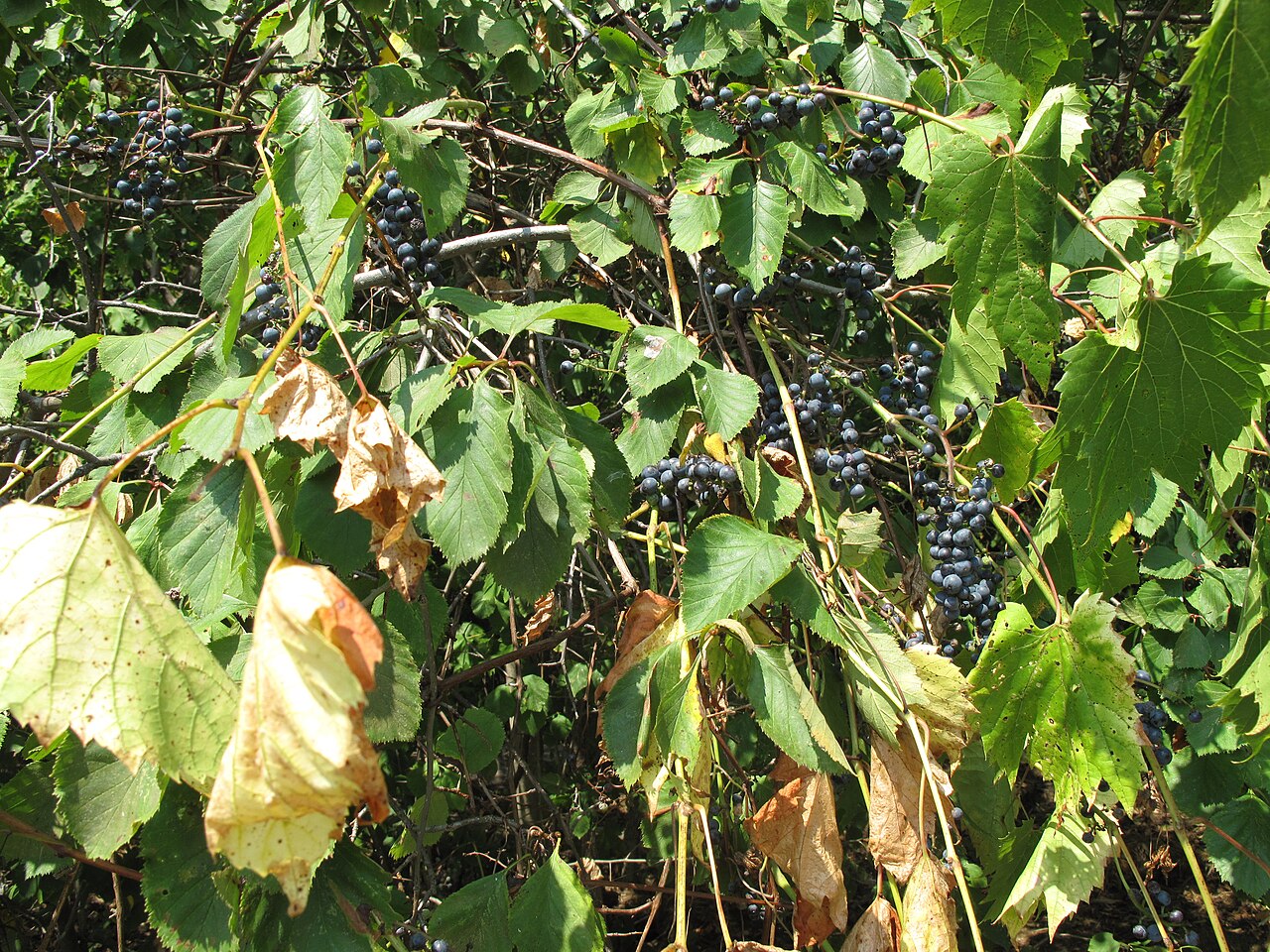
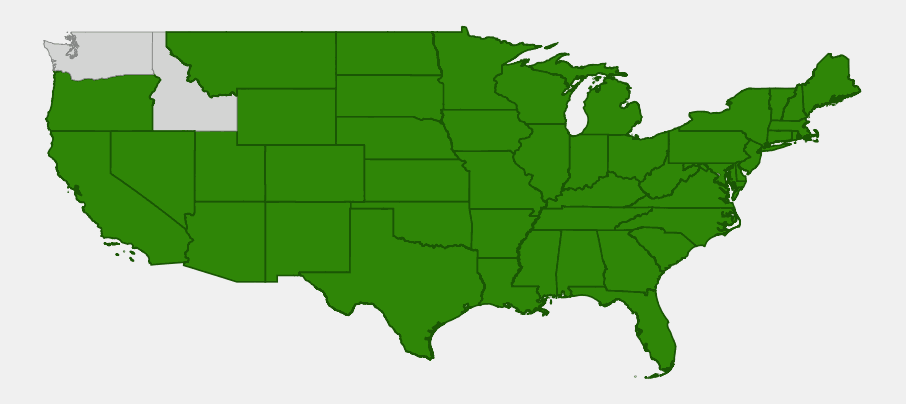
Wild grapes are woody, tendril-climbing vines of the genus Vitis in the grape family (Vitaceae). North America and East Asia are the world’s two centers of grape diversity: roughly 20 species are native to the United States, and wild grapes grow in 46 of the lower 48 states, from Maine to southern California. They scramble over fences, shrubs and forest edges, climb high into trees along streams, and feed a remarkable range of birds and mammals with their late-summer fruit.
In Indiana, the “wild grape” of woodland edges, fencerows and riverbanks is usually riverbank grape or summer grape, with frost grape and graybark grape in bottomland woods and catbird grape in the southwest. If you are reading this after our Indiana vines article, one correction matters for identification: true grapes have simple, heart-shaped and often lobed leaves, not pinnately compound leaves, and they climb by forked tendrils rather than spreading by underground stems. A healthy wild grape easily reaches 30 to 50 feet or more if it has a tree to climb, and its ripe fruit is blue-black or purple in most species. A vine with compound leaves and yellow berries is something else.
Wild grapes are also the ancestors and rootstocks of much of the world’s grape industry. Concord grapes come from fox grape, scuppernongs are a bronze form of muscadine, and the roots of American species saved the vineyards of Europe from phylloxera in the late 1800s. This guide introduces the main native species, explains how to tell them from poisonous moonseed and invasive porcelainberry, and covers how to grow them for wildlife or fruit.
Identification
All wild grapes share a set of features that, taken together, separate them from almost every other vine.
Leaves
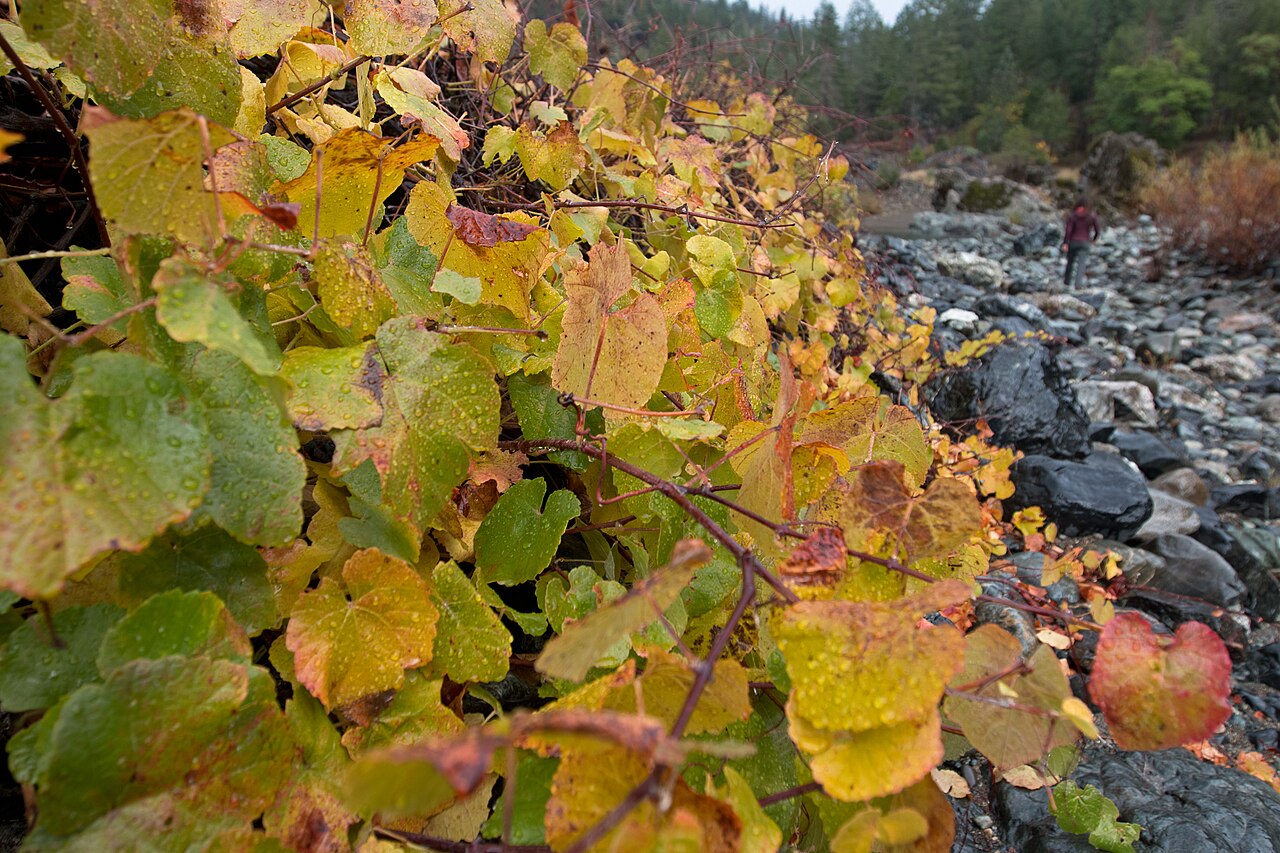
Leaves are simple, alternate and heart-shaped at the base, 2 to 8 inches across, with toothed margins and often three (sometimes five) shallow to deep lobes. The undersides are a useful species clue: green and nearly hairless in riverbank and frost grape, whitish or rusty-woolly in fox grape, waxy blue-white in summer grape, gray-cobwebby in graybark grape. Muscadine leaves are small, rounded and coarsely toothed. Leaves typically turn yellow in fall, sometimes red in western species.
Tendrils
Grapes climb by forked tendrils that grow opposite the leaves. In most species, a tendril or flower cluster sits opposite every leaf except every third node. Fox grape is unusual in having a tendril or fruit cluster opposite nearly every leaf, and muscadine’s tendrils are unbranched.
Bark & Stems
Older vines have brown bark that shreds into long, loose strips (except muscadine, whose bark stays tight and has small lenticels). The pith of young stems is brown and interrupted by woody partitions at each node; in muscadine it is continuous. Old trunks can be several inches thick and hang from the canopy like ropes.
Flowers & Fruit
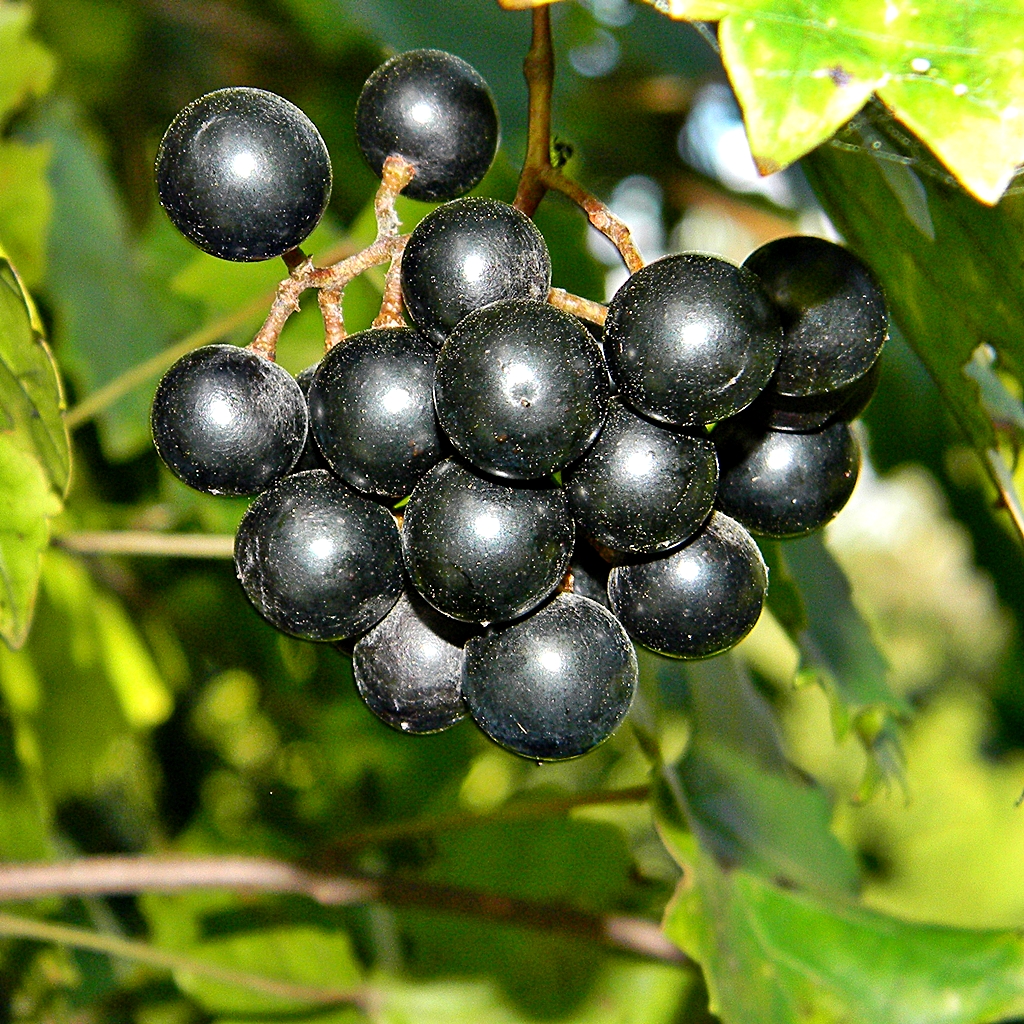
Flowers are tiny, greenish and fragrant, in clusters in late spring. Most wild grapes are functionally dioecious, so only female (or perfect-flowered) vines bear fruit. Fruits are true grapes: juicy berries with 2 to 4 pear-shaped seeds, usually blue-black or purple with a waxy bloom, in loose to dense hanging bunches. Wild grape fruit is mostly smaller and more acidic than cultivated grapes, ripening from midsummer (summer and muscadine grapes) to after the first frosts (frost grape).
Quick Facts
| Scientific Name | Vitis (genus) |
| Family | Vitaceae (Grape) |
| U.S. Native Species | About 20 (approximate; treatments differ on hybrids and varieties) |
| Plant Type | Deciduous woody vines climbing by tendrils |
| Mature Length | 15–50 ft or more; old vines can climb to the tops of tall trees |
| Growth Rate | Fast once established |
| Sun Exposure | Full Sun to Part Shade; fruits best in sun |
| Water Needs | Moderate; most species tolerate drought once established |
| Soil Type | Adaptable: loam, sand, clay; many species favor stream banks and floodplains |
| Bloom Time | Spring to early summer |
| Flower Color | Greenish, tiny, fragrant |
| Fruit | Small grapes, usually blue-black or purple, midsummer to fall |
| Fall Color | Mostly yellow; red in some western species |
| Wildlife Value | Very high: fruit for birds and mammals, nesting material and cover, caterpillar host |
| USDA Hardiness Zones | 3–10 by species (riverbank grape 3–8; muscadine about 6/7–10) |
Native Range
Native wild grapes grow in every lower 48 state except Washington and Idaho, where grapes occur only as planted or escaped vines. None is native to Alaska or Hawaii. The East and South have by far the most species: Texas, Arkansas and the Southeast each have half a dozen or more, and the Ozarks and Edwards Plateau are hot spots of grape diversity.
riverbank grape has the widest range of any American grape, from Maine and Quebec west to the Dakotas, eastern Montana, Wyoming and Colorado and south to Texas. Summer grape, frost grape and graybark grape cover most of the eastern half of the country. Fox grape is a northeastern and Appalachian species. Muscadine runs from Delaware and Missouri south to Florida and Texas, and mustang grape is centered on Texas, Oklahoma, Louisiana and Arkansas.
In the West, canyon grape (also called Arizona grape) follows canyons and washes in Arizona, New Mexico, west Texas, southern Utah and southern Nevada; California wild grape lines streams in California and southwestern Oregon; and desert wild grape (Vitis girdiana) grows in southern California canyons. In Indiana, riverbank, summer and frost grapes are found throughout much of the state, while graybark and catbird grapes are mainly southern.
📋 Regional plant lists covering native wild grape country: Ohio & Indiana · Illinois, Iowa & Missouri · Michigan, Wisconsin & Eastern Minnesota · Kentucky & Tennessee · Dakotas & Western Minnesota · Nebraska, Kansas & Eastern Colorado · New York, Pennsylvania & North Jersey · Southern New England · Northern New England · Delaware, South Jersey & Long Island · Maryland, Virginia & West Virginia · North & South Carolina · Georgia, Alabama & Mississippi · Arkansas, Louisiana, Eastern Oklahoma & East Texas · South & West Texas · Arizona & New Mexico · Utah & Western Colorado · Montana & Wyoming · Western Oregon & Washington · California & Nevada
Native Species
These are the most widespread and garden-worthy wild grapes native to the United States. Every species with a full Plant Native profile is linked.
Riverbank Grape (Vitis riparia)
The most common wild grape of Indiana, the Midwest and the North, and the hardiest American grape. Bright green, sharply toothed, usually three-lobed leaves, hairless beneath; small, sour, blue-black grapes in late summer. Native from New England to Montana and south to Texas, along rivers, fencerows and woodland edges. A key rootstock species and parent of many cold-hardy wine grapes.
Summer Grape (Vitis aestivalis)
Also called pigeon grape. A high-climbing vine of dry upland woods and edges across the eastern U.S., including Indiana. Leaves are whitened with a waxy bloom and often rusty hairs beneath, and the black fruit ripens in late summer. The ‘Norton’ wine grape is usually attributed to this species.
Frost Grape (Vitis vulpina)
A floodplain and bottomland grape of the eastern and central states, including Indiana. Leaves are mostly unlobed and glossy, and the small, very sour black fruit is often not palatable until after frost, hence the name. It is a common high-climbing vine in river woods.
Graybark Grape (Vitis cinerea)
Also called winter grape. Widespread in the Midwest and South, in floodplain forests and thickets. Young stems and leaf undersides are covered in grayish, cobwebby hairs. Small black grapes ripen late in fall.
Fox Grape (Vitis labrusca)
The northeastern and Appalachian grape with the largest fruit of any native bunch grape, dark purple to reddish, with the musky “foxy” flavor known from Concord grape juice. Leaves are thick, with dense white to rusty wool beneath, and a tendril or fruit cluster grows opposite nearly every leaf. Concord, Catawba and Niagara grapes descend from this species.
Muscadine (Vitis rotundifolia)
The native grape of the Southeast, from Delaware and Missouri to Florida and Texas. Small, round, glossy, coarsely toothed leaves, tight non-shredding bark and unbranched tendrils. Bears a few large, thick-skinned, sweet grapes per cluster; bronze forms are called scuppernongs. Sometimes placed in its own genus, Muscadinia.
Calloose Grape (Vitis shuttleworthii)
A Florida endemic of hammocks and scrub in the peninsula, with leaves densely felted with rusty or white hairs beneath and dark purple to black fruit. A good wildlife vine for central and south Florida gardens.
Mustang Grape (Vitis mustangensis)
A rampant south-central species of Texas, Oklahoma, Louisiana and Arkansas, with leaves and young stems densely white-woolly beneath. Large, dark purple grapes are very acidic and can irritate the skin and mouth when eaten raw, but they are traditionally cooked into jelly and wine. Vigorous enough to smother small trees.
Canyon Grape (Vitis arizonica)
Also called Arizona grape. A climbing or sprawling vine of canyons, washes and streamsides in Arizona, New Mexico, west Texas, southern Utah and southern Nevada, with small, toothed, heart-shaped leaves and small black grapes. A valuable shade and wildlife vine in desert gardens with some summer water.
California Wild Grape (Vitis californica)
The grape of California streams and riparian woodland, also native in southwestern Oregon. Rounded, gray-green leaves turn yellow, orange and red in fall, one of the best sources of autumn color among California natives. Small purple grapes. A fast cover for arbors and fences; the hybrid ‘Roger’s Red’ (with the wine grape) is popular for its fall color but is not a pure native.
Catbird Grape (Vitis palmata)
Also called red grape for its reddish young stems. A swamp and floodplain grape of the Mississippi and lower Ohio valleys, with deeply lobed leaves and late-ripening black fruit.
Sand Grape (Vitis rupestris)
Also called rock grape. A low, bushy grape that often lacks tendrils, growing on gravel bars and rocky streambeds in the Ozarks and nearby states. It is uncommon in the wild but very important in viticulture as a phylloxera-resistant rootstock parent.
Desert Wild Grape (Vitis girdiana)
A grape of canyon streams in southern California and Baja California, with gray-woolly leaves and small black fruit. Like canyon grape, it is a good wildlife vine for dry gardens with a reliable water source.
Non-Native Look-Alikes
Two kinds of look-alikes matter with grapes: non-native grapes that might be confused with wild ones, and other vines in and outside the grape family, one of them poisonous.
Wine grape (Vitis vinifera), from Europe and western Asia, is the source of most table and wine grapes. It occasionally persists or escapes near vineyards, especially in California, but it is not native anywhere in the U.S. Its leaves are usually more deeply lobed and less hairy than eastern wild grapes, and its fruit is larger and sweeter. Amur grape (Vitis amurensis), from northeast Asia, is grown in cold climates and in breeding; it is not native here.
Porcelainberry (Ampelopsis glandulosa var. brevipedunculata), an East Asian member of the grape family, is a serious invasive vine in the eastern U.S., from New England to the Mid-Atlantic and Midwest. Its deeply lobed leaves look very grape-like, but its fruit gives it away: speckled berries in striking turquoise, lilac and blue, held upright in loose clusters. Its pith is white and continuous (grape pith is brown with partitions), and its bark does not shred. Remove it wherever it appears.
Moonseed (Menispermum canadense) is a native eastern vine whose blue-black fruit looks like wild grapes and is poisonous. Tell it apart before eating any wild “grape”: moonseed has no tendrils (it twines), its leaf margins are smooth rather than toothed, the leaf stalk attaches slightly inside the leaf edge, and each fruit holds a single flat, crescent-shaped seed. Wild grapes have tendrils, toothed leaves and 2 to 4 rounded, pear-shaped seeds.
Other native relatives can also be confused with grapes. heartleaf peppervine (Ampelopsis cordata) has heart-shaped, toothed leaves but white pith and fruit that turns from orange to blue. Virginia creeper has palmately compound leaves with five leaflets. Neither has true grapes.
Growing & Care Guide
Wild grapes are among the easiest native vines to grow; the real work is giving them enough support and keeping them in bounds.
Light
Grapes grow in part shade but flower and fruit best in full sun. In the wild they reach for light by climbing to the tops of trees along edges and stream banks.
Soil & Water
Most species tolerate a wide range of soils if drainage is reasonable. Riverbank, frost and catbird grapes handle periodic flooding. Water new plants through the first summer. Western species such as canyon and California wild grape need regular water in dry climates, as in their streamside habitats.
Support
Give grapes a sturdy arbor, pergola or fence. Their weight is considerable once established. Grapes allowed to climb small trees can shade them out and pull them down, so do not plant them at the base of young trees you want to keep.
Pruning & Maintenance
Prune in late winter while vines are dormant; spring pruning causes heavy sap bleeding. For fruit, cut back to a framework of a few main canes, as with cultivated grapes; for wildlife cover, prune only to keep vines off structures and trees. Wild grapes have good natural resistance to many grape diseases, though black rot, powdery mildew and Japanese beetles can still affect them.
Propagation
Grapes root readily from dormant hardwood cuttings taken in winter and from layering. Seed needs about three months of cold, moist stratification. Plant several vines if you want fruit, since many are male.
Landscape Uses
- Arbors and pergolas for summer shade
- Fence cover and screening along property lines
- Wildlife hedgerows and woodland edges
- Stream bank plantings with riverbank, frost and California wild grape
- Edible gardens with muscadine and fox grape selections
Wildlife & Ecological Value
Wild grapes are among the most valuable native plants for wildlife in North America.
For Birds
Wild grapes are eaten by a long list of birds, including wild turkeys, northern cardinals, American robins, gray catbirds, northern mockingbirds, brown thrashers, eastern bluebirds, cedar waxwings, woodpeckers and many migrating thrushes. The shredded bark of old vines is a favorite nest material for gray catbirds, northern cardinals and other songbirds, and the tangles provide dense nesting cover.
For Mammals
Raccoons, opossums, foxes, black bears, squirrels and white-tailed deer eat the fruit, and deer browse the leaves and shoots.
For Insects
Grape flowers are visited by bees and other small pollinators. Wild grapes are host plants for many moth caterpillars, including the Pandorus sphinx, Abbott’s sphinx and the eight-spotted forester, and for a variety of leaf miners.
Ecosystem Role
Grape tangles along streams and forest edges shade banks, trap debris and provide some of the richest fall food supplies in floodplain forests.
Cultural & Historical Uses
Wild grapes were gathered across North America for fresh fruit, juice and drying, and their long, flexible vines were used for cordage and baskets. Early European explorers were struck by the abundance of wild grapes; the Norse name “Vinland” may refer to them.
American grapes changed the history of wine. When the root aphid phylloxera, accidentally brought from North America, devastated European vineyards in the late 1800s, growers saved the industry by grafting European vines onto phylloxera-resistant roots of American species such as riverbank grape, sand grape and the Texas species Vitis berlandieri. Most of the world’s vineyards are still grown on such rootstocks. American species also gave rise to Concord, Catawba, Norton and the scuppernong and other muscadine cultivars, and to many cold-hardy wine grapes bred from riverbank grape.
Frequently Asked Questions
Are wild grapes edible?
The ripe fruit of native wild grapes is edible, though often sour, seedy and small; it is traditionally used for jelly, juice and wine. Mustang grape can irritate the mouth and skin when raw. Before eating any wild “grape,” make sure it is not moonseed, a poisonous look-alike with no tendrils, smooth-edged leaves and a single crescent-shaped seed in each fruit.
Which wild grape grows in Indiana?
Riverbank grape and summer grape are the most common, with frost grape and graybark grape in bottomland woods and catbird grape in the southwest. All are woody, tendril-climbing vines with simple, lobed leaves and blue-black fruit.
Do wild grapes have compound leaves?
No. Grape leaves are simple, heart-shaped and often lobed. A vine with compound leaves is a different plant, such as Virginia creeper (five leaflets) or poison ivy (three leaflets).
Will wild grapes kill my trees?
They can. Vigorous vines can blanket the crowns of small or weakened trees, shading them and adding weight that breaks branches in storms. Grow wild grapes on an arbor or fence, and cut vines out of trees you want to protect.
How do I tell wild grape from porcelainberry?
Porcelainberry has speckled turquoise, lilac and blue berries in upright clusters, white pith and non-shredding bark. Wild grapes have hanging bunches of blue-black or purple fruit, brown pith and shredding bark on older stems. Porcelainberry is invasive in the eastern U.S.

Looking for a nursery that carries native wild grapes?
Browse our native plant nursery directory: Alabama, Arkansas & Arizona · California · Colorado, Connecticut, Delaware, Florida & Georgia · Iowa, Illinois, Indiana & Kansas · Kentucky, Louisiana, Massachusetts, Maryland, Maine, Michigan, Minnesota, Missouri, Mississippi & Montana · North Carolina, North Dakota, Nebraska, New Hampshire, New Jersey, New Mexico, Nevada, New York, Ohio & Oklahoma · Oregon · Pennsylvania, Rhode Island, South Carolina, South Dakota, Tennessee, Texas, Utah, Virginia & Vermont · Wisconsin, West Virginia & Wyoming

