
Wild Potato (Solanum jamesii)
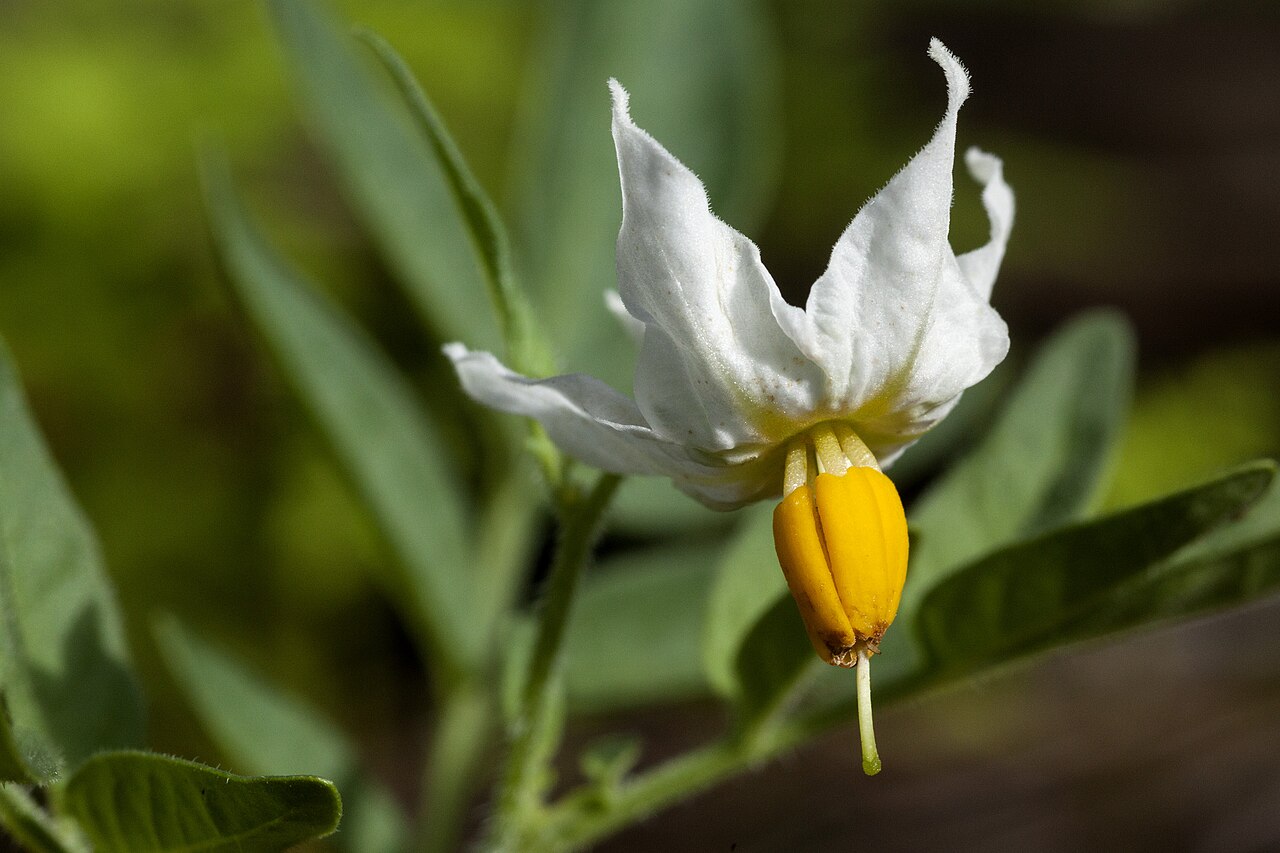
Solanum jamesii, known as Wild Potato or Four Corners Potato, is a small native potato of the American Southwest in the nightshade family (Solanaceae). It is a true wild potato, a close relative of the cultivated potato, and grows 4 to 12 inches tall from small, marble-sized tubers on underground runners. In summer it bears white, star-shaped flowers with a cone of bright yellow anthers.
It grows in the mountains and plateaus of Arizona, New Mexico, southern Colorado, southern Utah and West Texas, in pine and oak woodlands, pinyon-juniper country, canyon bottoms and meadows. It sprouts with the summer monsoon rains, flowers from July to September and dies back to its tubers in fall.
Wild potato has a remarkable human history. Starch grains on grinding stones show that people in southern Utah were processing its tubers more than 10,000 years ago, the oldest known use of wild potatoes in North America, and Native peoples of the Southwest have eaten them ever since. Like other potatoes, its green parts and raw or green-skinned tubers contain toxic glycoalkaloids, so it is not a plant to sample casually.
Identification
Look for a low, potato-like plant 4 to 12 inches tall with pinnately divided leaves of narrow leaflets, white star-shaped flowers with a yellow cone of anthers in late summer, and small round green berries, in woodlands and meadows of the Southwest.
Growth Habit
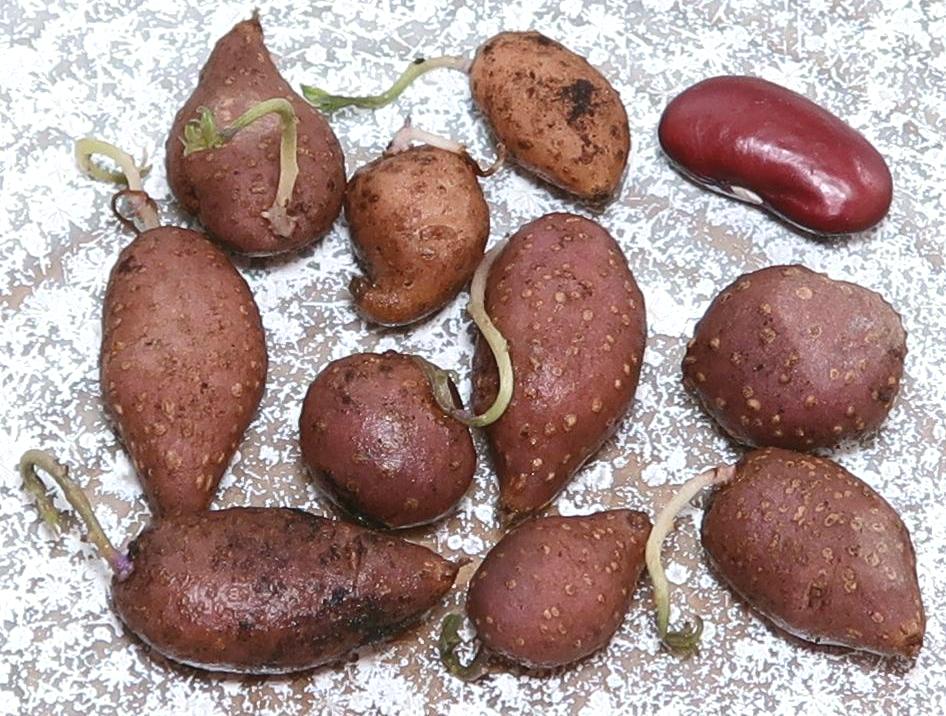
Wild potato is a perennial that survives the dry season as small underground tubers, usually 1/2 to 1 inch across, borne at the ends of slender underground stems (stolons). From each tuber it sends up one or a few slender, upright to sprawling, branching stems, 4 to 12 inches tall, after the summer rains begin. Plants often grow in loose colonies.
Leaves
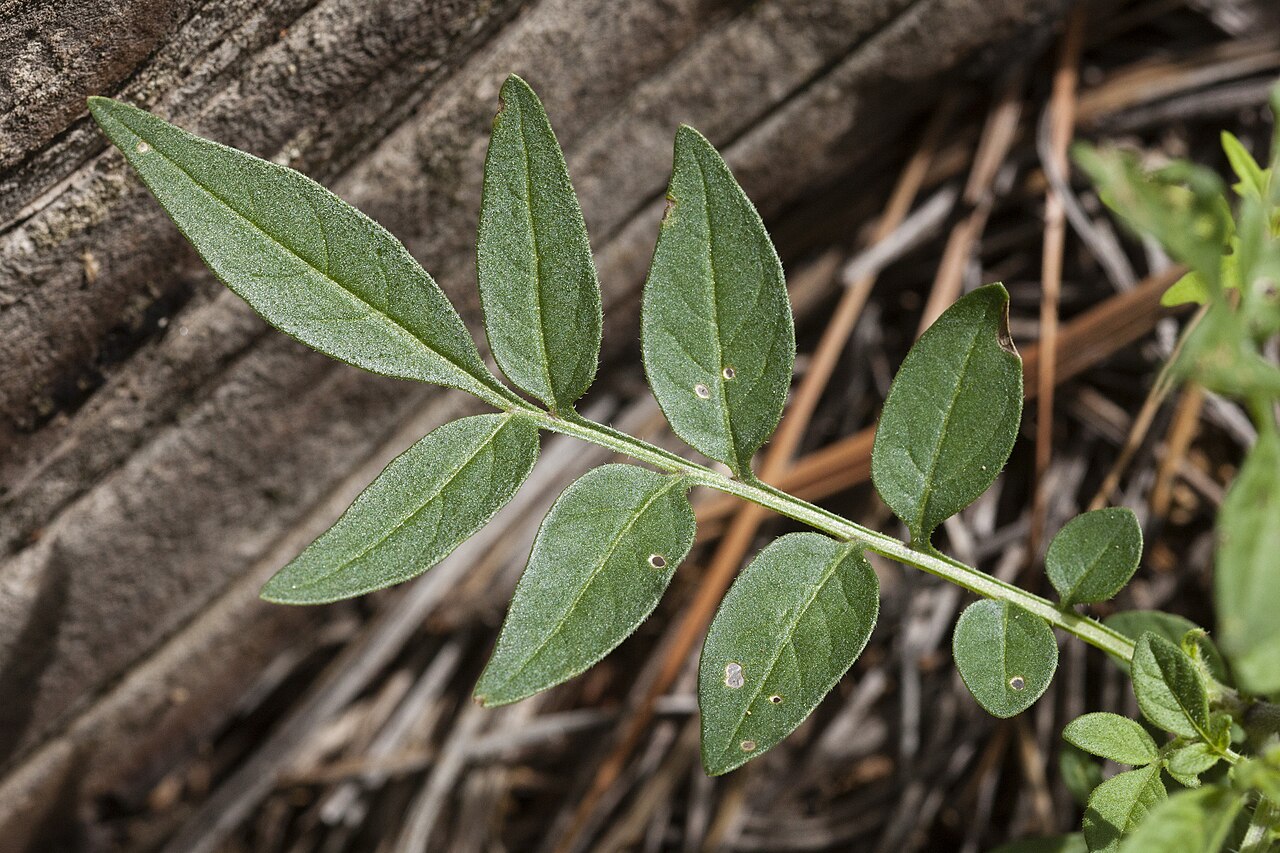
The leaves are alternate and pinnately divided into usually 5 to 9 narrow, lance-shaped, pointed leaflets, the end leaflet often slightly larger. They are 2 to 6 inches long, green and smooth or slightly hairy.
Flowers
Clusters of a few flowers grow on stalks from the upper stems. Each flower is about 1 inch across, with five white petals joined at the base into a star shape and often swept back, and five bright yellow anthers that form a cone in the center, typical of potatoes and nightshades. Flowering is mainly July through September.
Fruit & Seeds
The fruit is a small, round, green berry about 1/2 inch across, resembling a tiny unripe tomato and containing many small seeds. The berries are toxic and should not be eaten. The underground tubers are smooth and tan to brown.
Look-alikes
Fendler’s potato (Solanum stoloniferum, formerly S. fendleri), the other wild potato of Arizona and New Mexico, has purple or lavender flowers and broader leaflets. Silverleaf nightshade (Solanum elaeagnifolium) has silvery, undivided leaves, purple flowers and prickles. Western horsenettle is prickly with lobed leaves. Note that the name “wild potato” is also used for the unrelated wild potato vine, a morning glory (Ipomoea pandurata) of the eastern United States.
Quick Facts
| Scientific Name | Solanum jamesii |
| Family | Solanaceae (nightshade family) |
| Plant Type | Tuberous herbaceous perennial |
| Mature Height | 4–12 in |
| Mature Spread | 6–18 in (spreads by stolons) |
| Growth Rate | Fast in the monsoon season |
| Sun Exposure | Part shade to full sun |
| Water Needs | Low to moderate; summer rain |
| Soil Type | Sandy, gravelly or loamy alluvium; well-drained |
| Soil pH | Neutral to slightly alkaline (about 6.5–8.0) |
| Bloom Time | July–September |
| Flower Color | White with yellow anthers |
| Fall Color | None notable |
| Fruit | Small round green berry (toxic) |
| Deer Resistant | Somewhat; foliage contains alkaloids |
| USDA Hardiness Zones | 5–8 |
Native Range
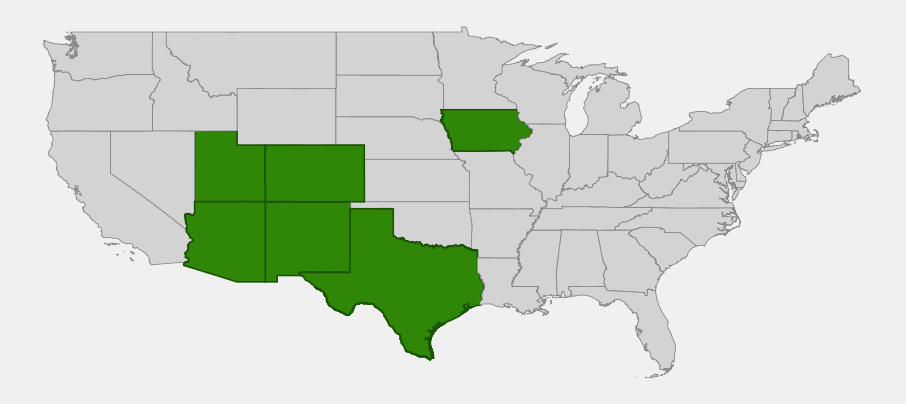
USDA PLANTS lists wild potato as native to Arizona, Colorado, New Mexico, Texas and Utah, with an outlying record from Iowa. Its real home is the Southwest: northern and central New Mexico and Arizona, the Four Corners region of southwestern Colorado and southeastern Utah, and the mountains of West Texas, extending south into northern Mexico. The Iowa record is far outside this range and is best treated as an outlying record, not part of the natural range.
In Utah and Colorado many populations grow near archaeological sites, such as around Escalante and Mesa Verde, which has led researchers to suggest that ancient peoples carried and planted the tubers, extending its range northward.
It grows mostly between about 5,000 and 8,500 feet in ponderosa pine and oak woodlands, pinyon-juniper woodlands, canyon bottoms, alluvial flats, mountain meadows and grassy openings, often in sandy or gravelly soil that collects summer runoff.
📋 Regional plant lists featuring Wild Potato: Arizona & New Mexico · Utah & Western Colorado · South & West Texas
Growing & Care Guide
Four Corners potato is occasionally available as tubers from Southwestern seed sellers and heritage seed projects. It is grown mainly by gardeners interested in native food plants and by researchers. Buy tubers or seed rather than digging wild plants, many of which grow at protected archaeological sites.
Light
Part shade to full sun. In hot, low-elevation gardens it does better with afternoon shade.
Soil & Water
Plant in loose, well-drained sandy or gravelly loam. It is dormant and dry in winter and spring, and needs water during its summer growing season, as the monsoon rains would provide. Avoid soggy soil, which rots the small tubers.
Planting Tips
Plant tubers about 2 to 3 inches deep in spring and expect sprouts in early summer; some tubers stay dormant for a season or more before sprouting. It suits a raised bed or large pot, where the tiny tubers are easy to find at harvest.
Pruning & Maintenance
Let the foliage die back naturally in fall so the tubers can mature. Mulch lightly in cold areas. Plants spread slowly by stolons and form small colonies.
Propagation
Grow from tubers, which can be divided from established patches, or from seed collected from ripe berries and sown in spring. Seedlings take a season or two to form good-sized tubers. Never collect wild tubers, especially near archaeological sites, where it may be illegal.
Landscape Uses
- Native food gardens: a heritage Southwestern food plant
- Ethnobotanical and school gardens: tells the story of 10,000 years of potato use
- Woodland edges: small white flowers under pines and oaks
- Pollinator gardens: buzz-pollinated flowers for native bees
- Container gardens: easy to grow and harvest in a large pot
Wildlife & Ecological Value
Wild potato is a small plant, but it is part of the late-summer flush of growth that follows the monsoon in Southwestern woodlands.
For Pollinators
Like other potatoes, its flowers offer pollen but no nectar. They are pollinated by bumble bees and other native bees that “buzz” the cone of anthers, vibrating their flight muscles to shake out the pollen.
For Birds
Few birds eat the toxic berries, but ground-feeding birds forage among the plants for insects.
For Mammals
Rodents such as pocket gophers may eat the tubers. Most mammals avoid the foliage, which contains bitter alkaloids.
Ecosystem Role
As a crop wild relative of the cultivated potato, wild potato holds genetic diversity that may help breeders develop potatoes tolerant of drought, cold and disease. Its tubers survive drought, fire and frost underground, letting it reappear after each summer’s rains.
Cultural & Historical Uses
In 2017, archaeologists led by Lisbeth Louderback of the Natural History Museum of Utah reported starch grains from Solanum jamesii on grinding stones at North Creek Shelter near Escalante, Utah, dated to about 10,900 years ago. It is the earliest evidence of wild potato use in North America. Studies have also found that its tubers are nutritious, comparing well with cultivated potatoes in protein, calcium, iron and zinc.
Navajo (Diné), Hopi, Zuni, Apache and other peoples of the Southwest have gathered and cooked the tubers for generations. A traditional practice in some communities was to eat the slightly bitter tubers with a special clay, which binds the bitter glycoalkaloids. Today Navajo and other community growers and researchers are working to bring the Four Corners potato back as a traditional food.
Safety note: like all potatoes, wild potato contains toxic glycoalkaloids such as solanine. The leaves, stems and berries are poisonous, and tubers should be eaten only fully cooked, never raw or with green skin. The species name honors Edwin James, the naturalist on the 1820 Long Expedition, who collected it.
Frequently Asked Questions
Is the wild potato a real potato?
Yes. Solanum jamesii is a true wild potato in the same genus as the cultivated potato, though its tubers are only about the size of a marble.
Can you eat wild potatoes?
The tubers are a traditional food when cooked, and have been eaten in the Southwest for over 10,000 years. But the leaves, stems and berries are poisonous, and raw or green tubers contain toxic glycoalkaloids. Do not eat any wild plant unless you are sure of its identity, and never dig wild potatoes on public land or near archaeological sites.
Why is it called the Four Corners potato?
It grows in the Four Corners region where Arizona, New Mexico, Colorado and Utah meet, and many of the best-known populations, and the archaeological evidence of its ancient use, are found there.
Is this the same plant as wild potato vine?
No. Wild potato vine (Ipomoea pandurata) is a morning glory of the eastern United States with a huge root. Solanum jamesii is a true potato of the Southwest.
When does wild potato bloom?
From about July to September, after the summer monsoon rains begin.

Looking for a nursery that carries Wild Potato?
Browse our native plant nursery directory: Arizona · Colorado · Iowa · New Mexico · Texas & Utah

