
New Jersey Blueberry (Vaccinium caesariense)
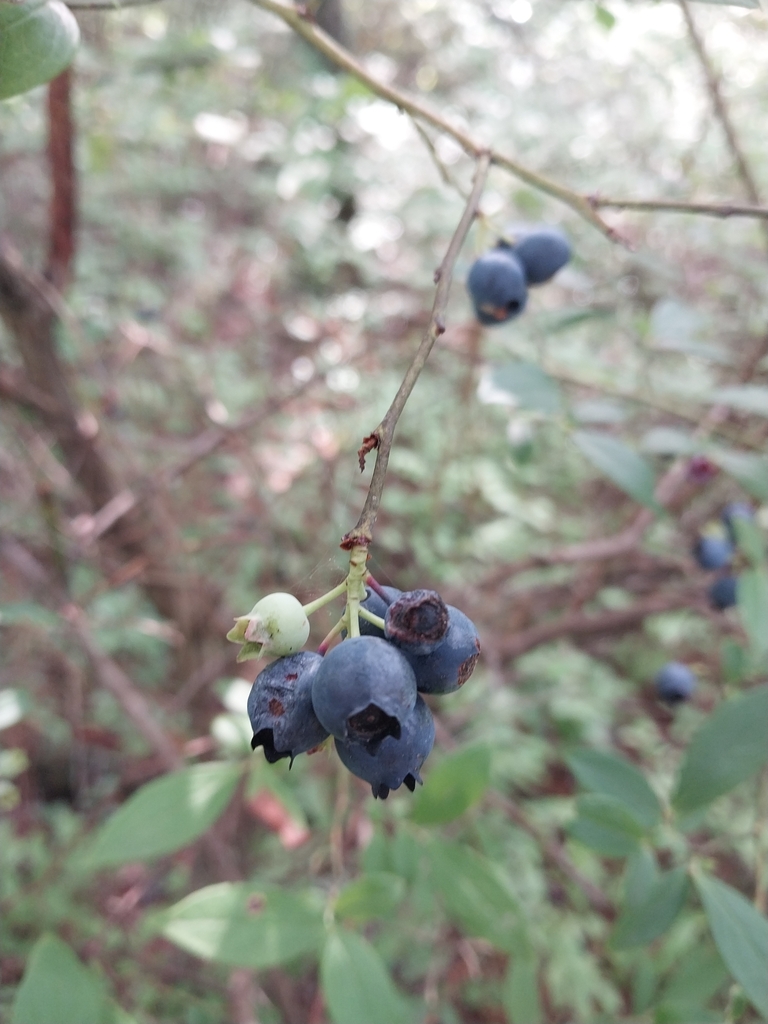
Vaccinium caesariense, the New Jersey Blueberry, is a tall wild blueberry of Atlantic Coast wetlands. It is a deciduous, many-stemmed shrub usually 3 to 8 feet tall (occasionally taller) with smooth, blue-green leaves, white bell-shaped flowers in spring and sweet, powder-blue berries in summer. It belongs to the heath family (Ericaceae) and grows in acid, wet places: pine barrens swamps and bogs, Atlantic white cedar swamps, pond and stream margins, flatwoods and bay heads.
The species name comes from Nova Caesarea, the Latin name for New Jersey, where Kenneth Mackenzie described the plant in 1935 from the Pine Barrens. It is closely related to the familiar highbush blueberry, Vaccinium corymbosum, and many botanists, including the Flora of North America treatment, fold it into that variable species. USDA PLANTS and several state floras still recognize it separately, as a diploid wetland blueberry distinguished by its smooth, glaucous foliage.
For gardeners, New Jersey blueberry is simply a handsome native highbush-type blueberry for wet, acid soil: edible fruit, good fall color, and steady value for bees and birds. This guide covers how to tell it from its relatives, where it grows, and how to grow it in a rain garden, pond edge or naturalized wet border.
Identification
New Jersey blueberry looks much like highbush blueberry, and the two are often found together. Look closely at the leaves and twigs. The whole plant tends to be smooth and pale, with a bluish waxy coating that rubs off between your fingers.
Stems & Habit
It forms an upright, open clump of several woody stems from the base, usually 3 to 8 feet tall and sometimes much taller in sheltered swamps. Young twigs are green to reddish and often glaucous (coated with a whitish bloom), with tiny raised warts. Older stems have gray-brown, shreddy bark. Clumps slowly widen from underground stems.
Leaves
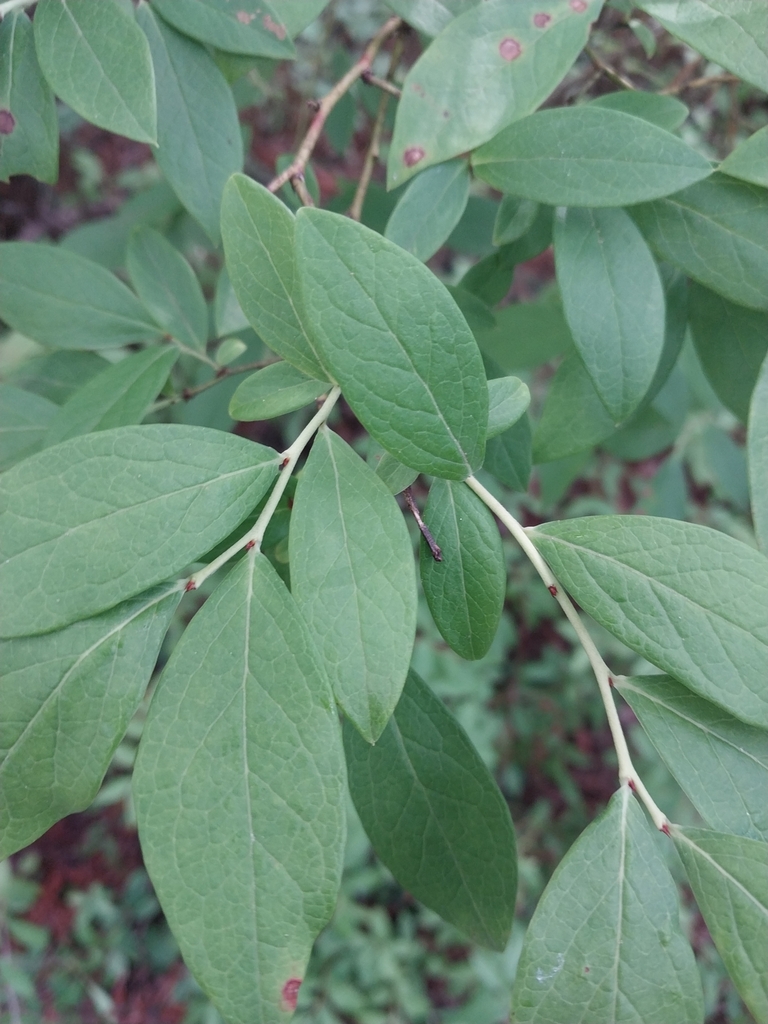
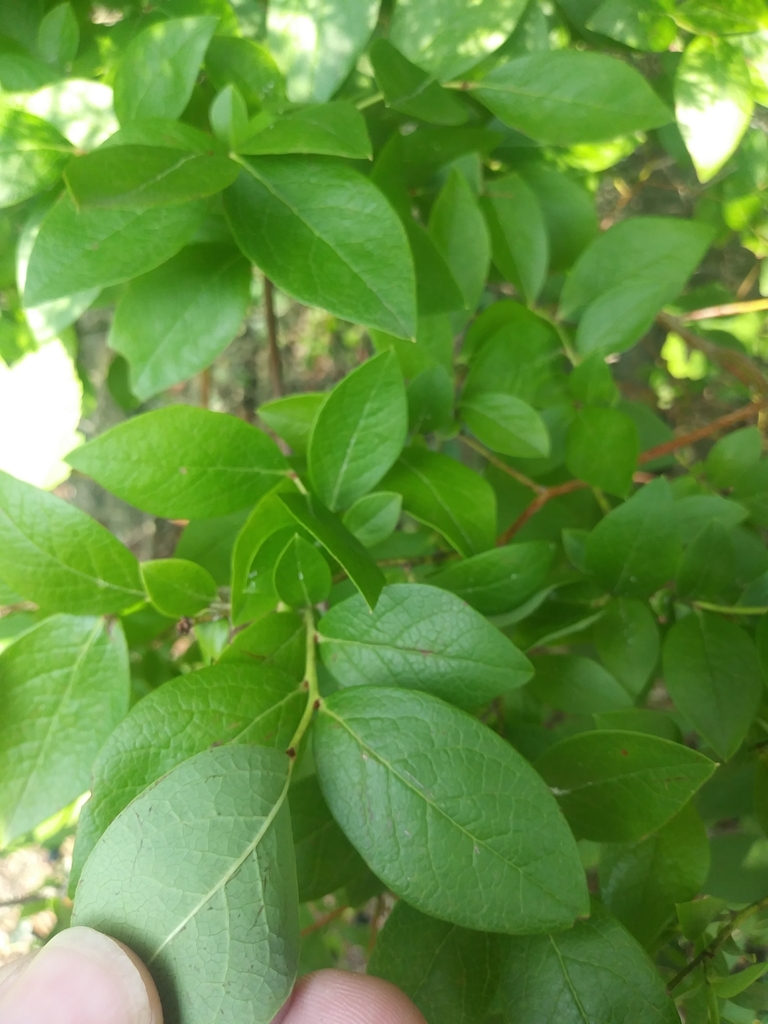
Leaves are alternate, simple, elliptic to oval, about 1 to 2½ inches long, with smooth (entire) edges. They are hairless or nearly so on both sides, and pale blue-green with a waxy bloom, especially underneath. That bluish, hairless foliage is the main feature separating it from the many forms of highbush blueberry, which often have hairy or greener leaves. In fall the leaves turn shades of red, orange and purple before dropping.
Flowers
Flowers appear in early to mid spring, from March in the South to May or June in New England, in small clusters at the ends of last year’s twigs, usually as the leaves are expanding. Each is a white (sometimes pink-tinged) narrow urn or bell about ⅓ inch long, hanging downward, with five small lobes at the mouth.
Fruit
The berries ripen in early to midsummer. They are round, about ¼ to ⅓ inch across, blue-black covered with a pale powdery bloom, and have the small crown-like scar at the tip typical of blueberries. They are sweet and fully edible, though smaller than cultivated blueberries.
Quick Facts
| Scientific Name | Vaccinium caesariense (often included in V. corymbosum) |
| Family | Ericaceae (heath family) |
| Plant Type | Deciduous multi-stemmed shrub |
| Mature Height | 3–8 ft (occasionally to about 12 ft) |
| Mature Spread | 3–6 ft; slowly suckers into clumps |
| Growth Rate | Slow to moderate |
| Sun Exposure | Full sun to part shade |
| Water Needs | High; moist to wet, acid soil |
| Soil Type | Acidic peat, sand or sandy loam; tolerates seasonal flooding |
| Soil pH | About 4.0–5.5 |
| Bloom Time | March–June (earlier in the South) |
| Flower Color | White, sometimes tinged pink |
| Fall Color | Red, orange and purple |
| Fruit | Edible blue berries with a pale bloom, June–August |
| Deer Resistant | No; deer browse twigs and foliage |
| USDA Hardiness Zones | 5–9 |
Native Range
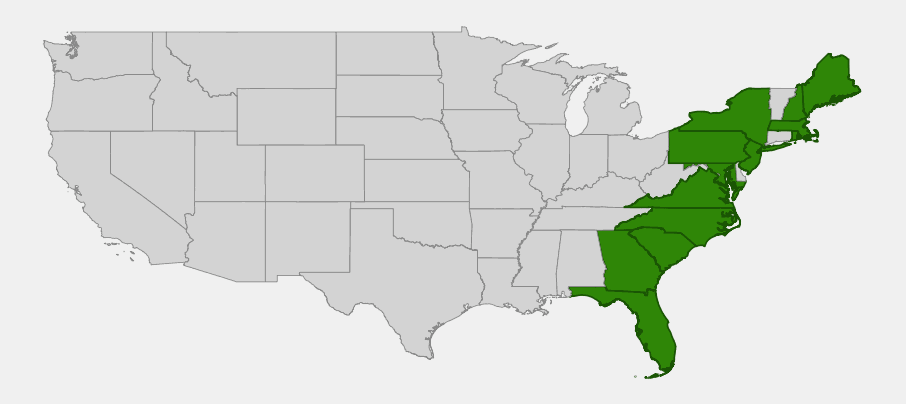
USDA PLANTS records New Jersey blueberry from 13 states along the Atlantic side of the eastern United States: Maine, New Hampshire, Massachusetts and Rhode Island south through New York, New Jersey, Pennsylvania, Maryland and Virginia to North Carolina, South Carolina, Georgia and Florida. It is almost entirely a plant of the Atlantic Coastal Plain and nearby lowlands, and it is listed as an obligate wetland species.
Its center of abundance is the New Jersey Pine Barrens, where it grows with highbush blueberry, sheep laurel, leatherleaf and Atlantic white cedar in swamps and along tea-colored streams. Farther south it occurs in pocosins, bay heads and wet flatwoods, and in the North in bogs and pond shores. Records away from the coast, such as those from Pennsylvania, are scattered.
Because many botanists now treat it as part of Vaccinium corymbosum, range maps and state checklists differ. Some states record the same plants as smooth-leaved highbush blueberry, so it is likely more widespread on the Coastal Plain than records under this name show.
📋 Regional plant lists featuring New Jersey Blueberry: North & South Florida · Alabama, Georgia & Mississippi · North & South Carolina · Maryland, Virginia & West Virginia · Delaware, Southern New Jersey & Long Island · New York, Pennsylvania & Northern New Jersey · Connecticut, Massachusetts & Rhode Island · New Hampshire, Maine & Vermont
Growing & Care Guide
New Jersey blueberry is grown much like any highbush blueberry, with one advantage: it is happy in soil that stays wet, where cultivated blueberries can struggle. Like all blueberries it needs acid soil to thrive. Look for it from native plant nurseries that specialize in Coastal Plain plants, or grow a wetland-tolerant local highbush blueberry if this exact species is unavailable.
Light
Full sun gives the most flowers, fruit and fall color. It also grows in part shade at the edge of a swamp or woodland, but the shrub becomes more open and fruits less heavily.
Soil & Water
Plant in acidic soil with a pH between about 4.0 and 5.5, rich in organic matter. Peaty, sandy soils are ideal. It tolerates saturated soil and short periods of standing water, but it also grows in ordinary moist garden soil if kept mulched and watered during dry spells. In neutral or alkaline soil the leaves turn yellow between the veins (iron chlorosis). Amend with peat or composted pine bark and sulfur rather than lime.
Planting Tips
Plant in fall or early spring, setting the root ball at the same depth it grew in the pot. Mulch 2 to 3 inches deep with pine needles, wood chips or shredded bark to keep the shallow, fibrous roots cool and moist. Planting two or more seedlings improves cross-pollination and fruit set.
Pruning & Maintenance
Little pruning is needed. After the first few years, remove a few of the oldest, least productive stems at the base in late winter to keep the clump vigorous. Fertilize lightly, if at all, with an acid-forming fertilizer meant for azaleas and blueberries. Netting may be needed if you want to beat the birds to the fruit.
Propagation
Grow from seed cleaned from ripe berries and cold-stratified for about 90 days, or from softwood cuttings in early summer under mist. Suckers at the edge of an established clump can be dug and divided in early spring.
Landscape Uses
- Rain gardens and wet borders: one of the best native fruiting shrubs for soggy, acid soil
- Pond and stream edges: helps stabilize banks and softens shorelines
- Edible landscapes: small, sweet berries for fresh eating, baking and jam
- Wildlife gardens: spring nectar for bees and summer fruit for birds and mammals
- Wetland restoration: for pine barrens, pocosin and Coastal Plain swamp projects within its range
Wildlife & Ecological Value
Like other wild blueberries, New Jersey blueberry is a keystone shrub of the habitats it grows in, feeding insects in spring and a long list of birds and mammals in summer.
For Pollinators
Its hanging, bell-shaped flowers are adapted to bees that vibrate pollen loose, a behavior called buzz pollination. Bumblebees, mining bees and the specialist southeastern blueberry bee (Habropoda laboriosa) are important visitors. Several specialist mining bees in the genus Andrena collect pollen mainly from blueberries and their relatives. The leaves host caterpillars of many moths and of butterflies such as the striped hairstreak and brown elfin.
For Birds
Catbirds, thrushes, bluebirds, robins, towhees, mockingbirds, cedar waxwings and many other songbirds eat the berries, as do wild turkeys and northern bobwhite. The dense clumps also provide nesting cover in swamps and thickets.
For Mammals
Black bears, foxes, raccoons, opossums, chipmunks and mice eat the fruit. White-tailed deer and rabbits browse the twigs and foliage, especially in winter.
Ecosystem Role
In pine barrens and pocosins, blueberries resprout quickly from their roots after fire, helping to hold soil and providing food soon after a burn. Like other heath-family plants they depend on root-associated fungi (ericoid mycorrhizae) that help them take up nutrients from poor, acid, peaty soil.
Cultural & Historical Uses
Wild blueberries were an important food for Native American peoples of the Atlantic Coast, including the Lenape of New Jersey, who ate them fresh and dried them for winter use. Colonists quickly adopted the custom, and picking wild “huckleberries” in the Pine Barrens was a source of summer income for local families into the twentieth century.
New Jersey is the birthplace of the cultivated blueberry. Beginning in 1911, Elizabeth Coleman White of Whitesbog in the Pine Barrens worked with USDA botanist Frederick Coville to find the best wild highbush blueberries growing around her family’s cranberry bogs. Local pickers were paid to mark exceptional bushes, and those plants became parents of the first named cultivars. Wild blueberries from these Pine Barrens swamps, part of the complex that includes New Jersey blueberry, gave rise to a worldwide crop.
Kenneth Mackenzie named Vaccinium caesariense in 1935, honoring the state with its Latin name. Since then botanists have debated whether it is a distinct species or one of many forms of highbush blueberry. The blueberry is now New Jersey’s official state fruit.
Frequently Asked Questions
Is New Jersey blueberry the same as highbush blueberry?
Closely related, and often treated as the same species. USDA PLANTS lists Vaccinium caesariense separately, but many modern botanists include it in highbush blueberry (V. corymbosum). In the field it is a smooth, blue-green-leaved wetland form. See our highbush blueberry guide for the broader species.
Are New Jersey blueberries edible?
Yes. The berries are sweet and safe to eat, like any blueberry. They are smaller than cultivated berries but have excellent flavor, and they ripen from June to August depending on latitude.
Can I grow New Jersey blueberry in wet soil?
Yes. It grows naturally in swamps and bogs and tolerates saturated soil better than most cultivated blueberries. It still needs acidic soil to thrive.
How tall does New Jersey blueberry get?
Usually 3 to 8 feet, sometimes taller in sheltered swamps. Clumps spread slowly to several feet wide.
Where does the name “caesariense” come from?
From Nova Caesarea, Latin for New Jersey. The plant was described from the New Jersey Pine Barrens in 1935.

Looking for a nursery that carries New Jersey Blueberry?
Browse our native plant nursery directory: Florida & Georgia · Maine, Maryland & Massachusetts · New Hampshire, New Jersey, New York & North Carolina · Pennsylvania, Rhode Island, South Carolina & Virginia

