
Bartram’s Serviceberry (Amelanchier bartramiana)
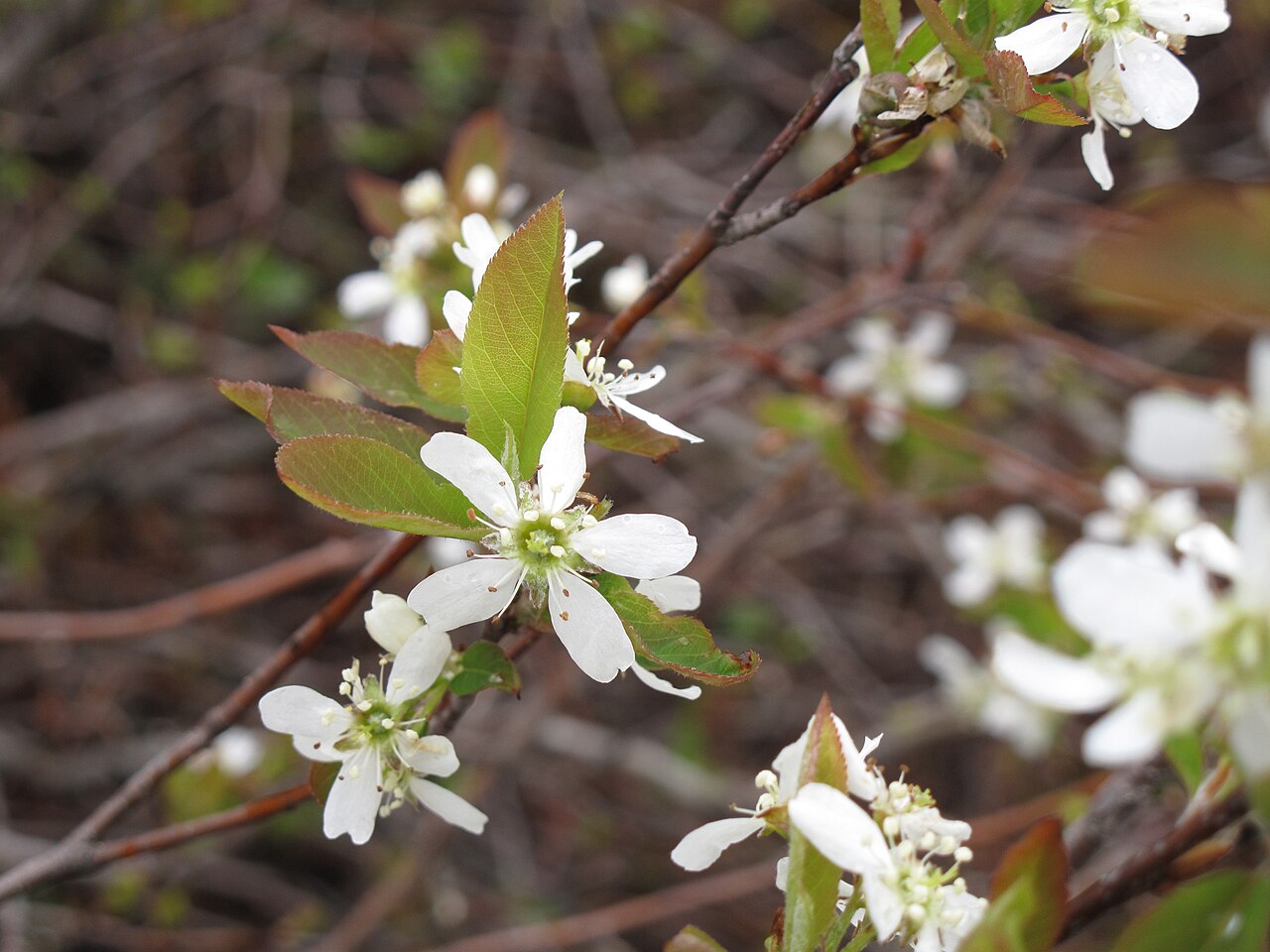
Amelanchier bartramiana, Bartram’s Serviceberry, listed by USDA as oblongfruit serviceberry and also called mountain juneberry or Bartram’s shadbush, is a small, northern serviceberry of bogs, conifer forests and mountain slopes. It is a multi-stemmed shrub, usually 3 to 6 feet tall, whose white flowers open in late spring together with bronze-tinged new leaves. By midsummer it carries sweet, dark purple berries that are longer than they are wide.
It is the most northern and boreal of the eastern serviceberries. Its range runs from Newfoundland and Labrador across Quebec and Ontario, south into northern New England, New York and the upper Great Lakes states, and in the Appalachians as far as Pennsylvania and the high country of West Virginia. Toward the south it becomes a plant of cold, high-elevation bogs and mountaintops.
Bartram’s serviceberry is easy to tell from other serviceberries once you know what to look for: its flowers are borne singly or in small groups of two to four, not in long clusters, and its leaves are finely toothed nearly to the base. This guide covers identification, range, growing it in a cool, acidic garden, and its value to wildlife.
Identification
Serviceberries (Amelanchier) are notoriously hard to identify because they vary and hybridize freely. Bartram’s serviceberry is one of the more distinctive species, especially in flower.
Growth Habit
A clumped, upright shrub with several stems, usually 3 to 6 feet tall and occasionally to 8 feet, sometimes lower and spreading on exposed sites. The bark is smooth and gray. Unlike some serviceberries, it does not spread far by runners.
Leaves
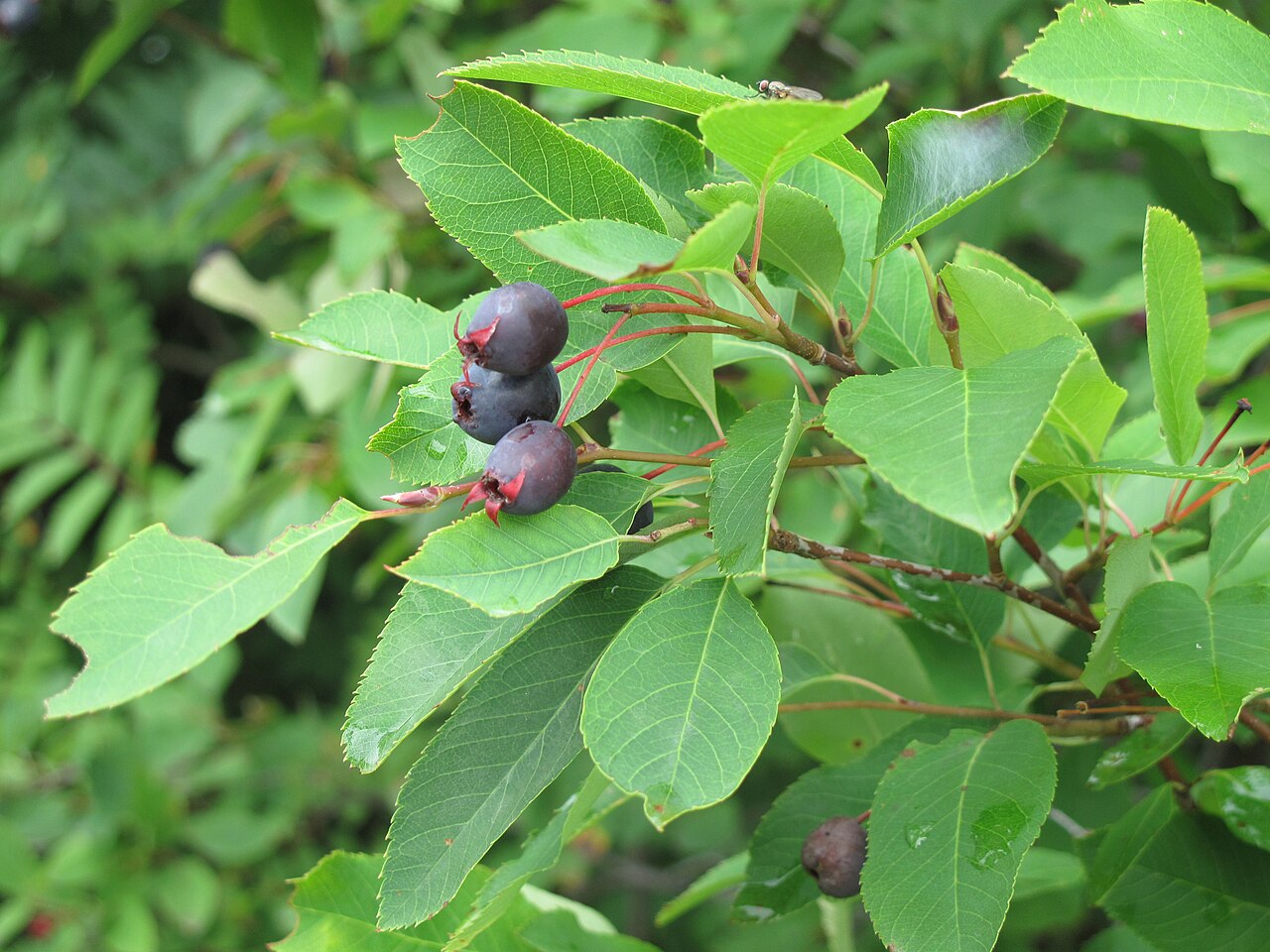
Leaves are alternate, elliptic to oblong, about 1 to 2 inches long, with a pointed tip and fine, sharp teeth running nearly to the base. They emerge reddish-bronze and finely hairy and become smooth, dark green above and paler beneath. In fall they turn yellow, orange or red.
Flowers
The flowers open in late spring (May to June, depending on latitude and elevation), when the leaves are partly expanded. They are white, about 1 inch across, with five oblong petals, and they are borne singly or in clusters of two to four from the leaf axils at the ends of the twigs, rather than in the long, many-flowered racemes typical of other serviceberries. The top of the ovary is woolly.
Fruit
The fruit is a small pome, about ½ inch long, oblong to pear-shaped, ripening from red to dark purple or nearly black with a slight bloom in July and August. It is sweet and juicy. The oblong shape is the source of the USDA common name.
Similar Species
Allegheny serviceberry and shadblow have flowers in drooping racemes of several to many flowers and grow taller. Bartram’s serviceberry hybridizes with several of them, and the hybrid with Allegheny serviceberry has been named Amelanchier ×neglecta, so intermediate plants turn up where their ranges overlap.
Quick Facts
| Scientific Name | Amelanchier bartramiana |
| Family | Rosaceae (rose family) |
| Plant Type | Deciduous multi-stemmed shrub |
| Mature Height | 3–6 ft (occasionally to 8 ft) |
| Mature Spread | 3–5 ft |
| Growth Rate | Slow to moderate |
| Sun Exposure | Full sun to part shade |
| Water Needs | Medium to high; consistently moist |
| Soil Type | Acidic peat, sandy or rocky soils |
| Soil pH | About 4.0–6.0 |
| Bloom Time | May–June |
| Flower Color | White |
| Fall Color | Yellow, orange or red |
| Fruit | Oblong dark purple pome, July–August |
| Deer Resistant | No; browsed by deer and moose |
| USDA Hardiness Zones | 2–6 |
Native Range
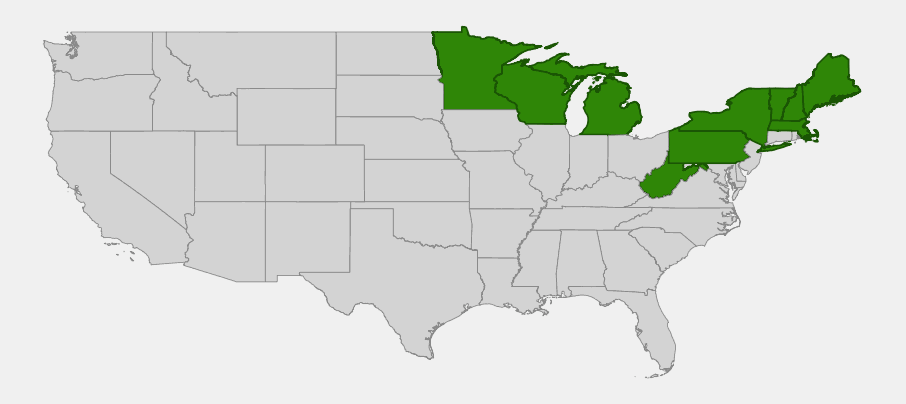
Bartram’s serviceberry is a boreal and northern Appalachian shrub. USDA PLANTS records it as native in Maine, New Hampshire, Vermont, Massachusetts, New York, Pennsylvania, West Virginia, Michigan, Wisconsin and Minnesota, and in Canada from Newfoundland, Labrador, the Maritime provinces and Quebec west to Ontario. It is most common in northern Maine, the White and Green Mountains, the Adirondacks, and the northern parts of the upper Great Lakes states.
Toward the south it is uncommon and restricted to cold, wet or high places, such as the high-elevation bogs and heath barrens of the Allegheny Mountains in Pennsylvania and West Virginia. Populations there are at the southern edge of the range and are tracked as rare by state natural heritage programs.
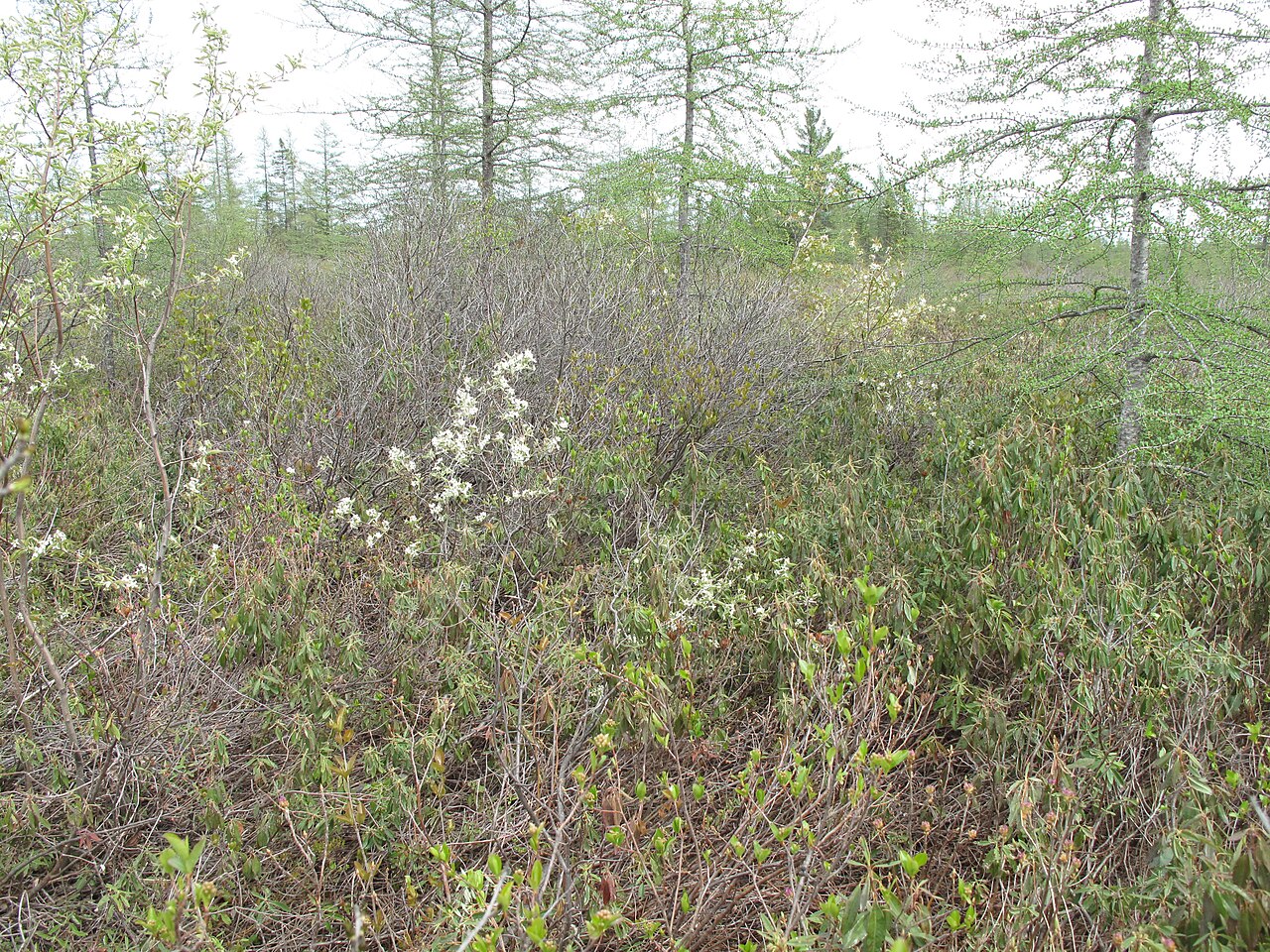
Throughout its range it grows in acidic, nutrient-poor sites: peat bogs and fens, the edges of black spruce and tamarack swamps, open conifer and mixed forests, rocky lake shores, and mountain slopes and summits up to the subalpine zone.
📋 Regional plant lists featuring Bartram’s Serviceberry: New York, Pennsylvania & Northern New Jersey · Michigan, Wisconsin & Eastern Minnesota · Connecticut, Massachusetts & Rhode Island · New Hampshire, Maine & Vermont · Maryland, Virginia & West Virginia
Growing & Care Guide
Bartram’s serviceberry is a choice small shrub for cold-climate gardens with acidic, moist soil, and its fruit is as good as that of any serviceberry. It is offered occasionally by native plant nurseries in New England, the Great Lakes region and Canada. Buy nursery-propagated plants; do not dig wild shrubs, especially from rare southern populations. It is not well suited to hot-summer climates.
Light
Full sun to part shade. It flowers and fruits best with at least half a day of sun, but it appreciates shade from afternoon heat at the southern edge of its hardiness range.
Soil & Water
Plant it in moist, acidic, well-drained soil rich in organic matter, such as sandy loam amended with peat-free compost or leaf mold. It tolerates wet, peaty soil and bog-garden conditions, but not alkaline soil or prolonged drought. Mulch to keep roots cool and moist.
Planting Tips
Plant in spring or early fall, 3 to 4 feet apart for a loose hedge or group. It fits well with other acid-loving shrubs such as blueberries, Labrador tea and rhodora. Protect young plants from deer and rabbits, which browse serviceberry twigs in winter.
Pruning & Maintenance
Prune lightly after flowering, removing dead or crowded stems at the base. Like other serviceberries, it can get rusts, leaf spots and fire blight; good air circulation and avoiding excess fertilizer help.
Propagation
Sow cleaned seed in fall outdoors, or cold-stratify it for about 3 to 4 months before spring sowing. Rooted suckers can be divided from established nursery plants, and softwood cuttings root with difficulty.
Landscape Uses
- Bog and rain gardens: tolerates wet, acidic soils in cold climates
- Edible landscaping: sweet, juicy summer berries for fresh eating or jam
- Wildlife plantings: early flowers for bees and summer fruit for birds
- Naturalistic northern gardens: pair with blueberries, Labrador tea and native conifers
- Small-space shrubs: stays compact compared with tree-form serviceberries
Wildlife & Ecological Value
Like all serviceberries, Bartram’s serviceberry is valuable to wildlife in both spring and summer.
For Pollinators
Its spring flowers are visited by bumblebees, mining bees, sweat bees and flies, and provide early pollen and nectar at a time when little else blooms in northern bogs and forests. Serviceberries are also host plants for several moths and butterflies, including the striped hairstreak and red-spotted admiral (white admiral).
For Birds
Its fruit ripens in midsummer and is eaten quickly by many birds, including American robins, cedar waxwings, thrushes, gray catbirds and grouse, often before people get to it.
For Mammals
Black bears, foxes, chipmunks and squirrels eat the fruit. Deer, moose and snowshoe hares browse the twigs and buds in winter.
Ecosystem Role
In bogs and boreal forests it is part of a diverse shrub layer that feeds wildlife through the growing season. Its rare southern populations in high-elevation bogs are relics of colder climates and are of interest to conservation biologists.
Cultural & Historical Uses
The species is named for John Bartram, the 18th-century Philadelphia botanist and plant collector, or perhaps his son William, both of whom explored the eastern woods. It was first described as Pyrus bartramiana by Ignaz Tausch in 1838 and was later moved to Amelanchier. Some older manuals call it Amelanchier oligocarpa, the “few-fruited serviceberry.”
Serviceberry fruit was an important food for Indigenous peoples across North America, eaten fresh or dried and pounded into cakes or mixed with meat in pemmican. Northern serviceberries such as this one were gathered in summer along with blueberries in the same bogs and barrens.
The name serviceberry is often explained by a story that its early flowers coincided with church services once ground thawed enough for burials in spring, but it more likely comes from the resemblance of the fruit to that of the European service tree (Sorbus domestica). Juneberry and shadbush refer to its fruiting and flowering times.
Frequently Asked Questions
Are Bartram’s serviceberry berries edible?
Yes. Like other serviceberries, the dark purple fruit is sweet and juicy, eaten fresh or in jams and pies. Leave enough for wildlife, and pick only from plants you can identify with certainty.
How do I tell Bartram’s serviceberry from other serviceberries?
Look at the flowers: they are borne singly or in twos to fours rather than in long clusters. The leaves are finely toothed almost to the base, and the fruit is oblong rather than round.
How tall does Bartram’s serviceberry get?
Usually 3 to 6 feet, occasionally to 8 feet. It is a shrub, not a small tree like downy or Allegheny serviceberry.
Does Bartram’s serviceberry grow in the South?
No. It is a northern plant that reaches its southern limit in the high mountains of Pennsylvania and West Virginia, and it does poorly in hot summers.
What is oblongfruit serviceberry?
It is the USDA common name for Amelanchier bartramiana, referring to its elongated fruit. Bartram’s serviceberry and mountain juneberry are other names for the same plant.

Looking for a nursery that carries Bartram’s Serviceberry?
Browse our native plant nursery directory: Maine, Massachusetts, Michigan & Minnesota · New Hampshire & New York · Pennsylvania & Vermont · West Virginia & Wisconsin

