
Rose Evening Primrose (Oenothera rosea)
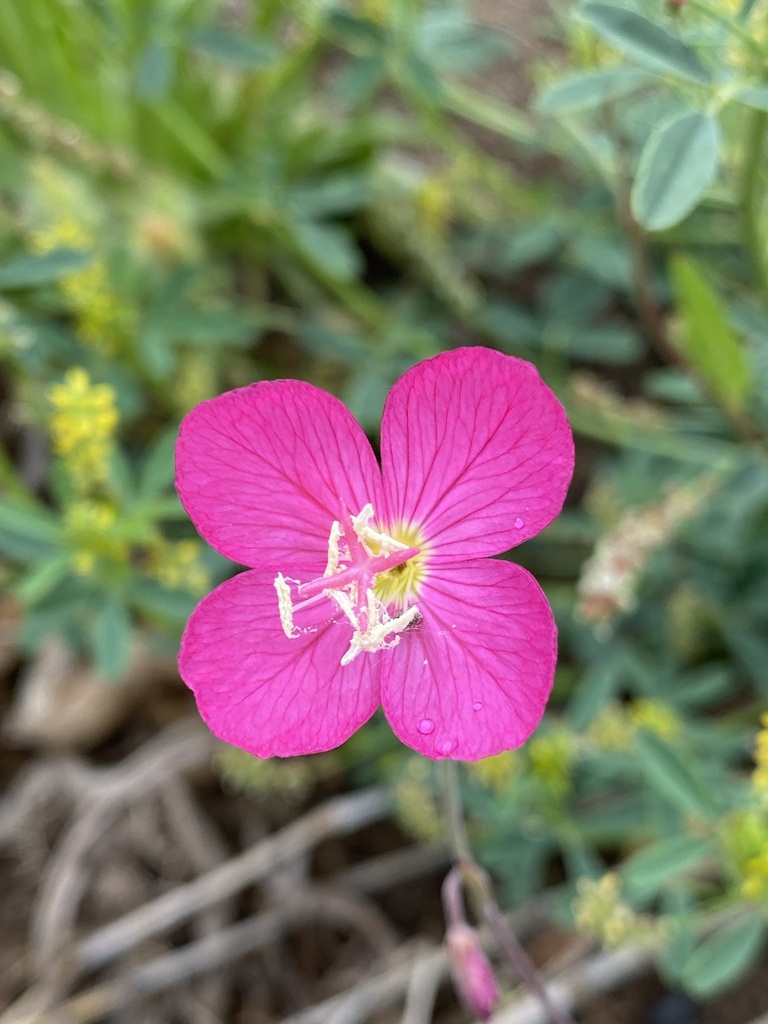
Oenothera rosea, known as Rose Evening Primrose, rosy evening primrose or pink evening primrose, is a small, short-lived perennial with bright rose-pink to magenta flowers about an inch across. Unlike many evening primroses, it blooms during the day, opening one or two flowers at a time from nodding buds on slender, leafy stems. Plants are usually 8 inches to 2 feet tall and bloom over a long season, from spring into late fall.
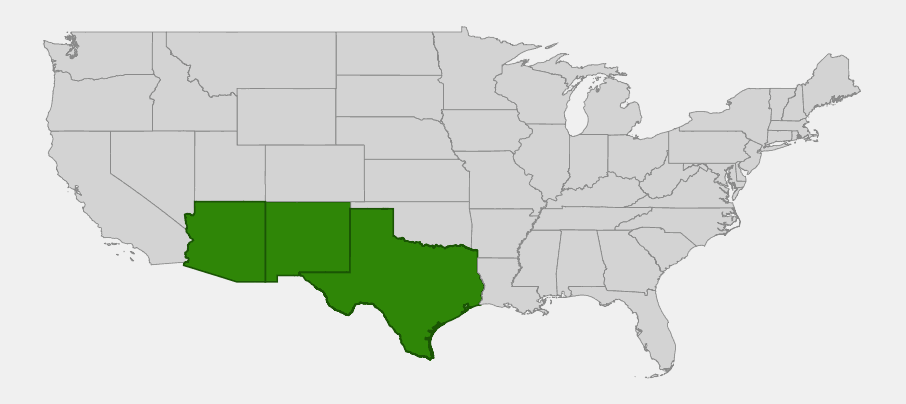
In the United States, rose evening primrose is native to southern Arizona, southern New Mexico and Texas, where it grows along streams, in moist meadows and ditches, and on disturbed ground such as roadsides and lawns. Its native range continues south through Mexico and Central America into South America. California has scattered populations, but Calflora treats those as introduced, so this page does not count California in the native range.
It is a close relative of the popular pink evening primrose (showy evening primrose), and like that plant it has been carried around the world as an ornamental and has become a weed in parts of Europe, Africa, Asia and Australia. This page covers identification, its native range, how to grow it, and its value to pollinators.
Identification
Rose evening primrose is one of the smallest pink evening primroses. Its daytime flowers, slender stems and club-shaped, stalked seed capsules help identify it.
Growth Habit
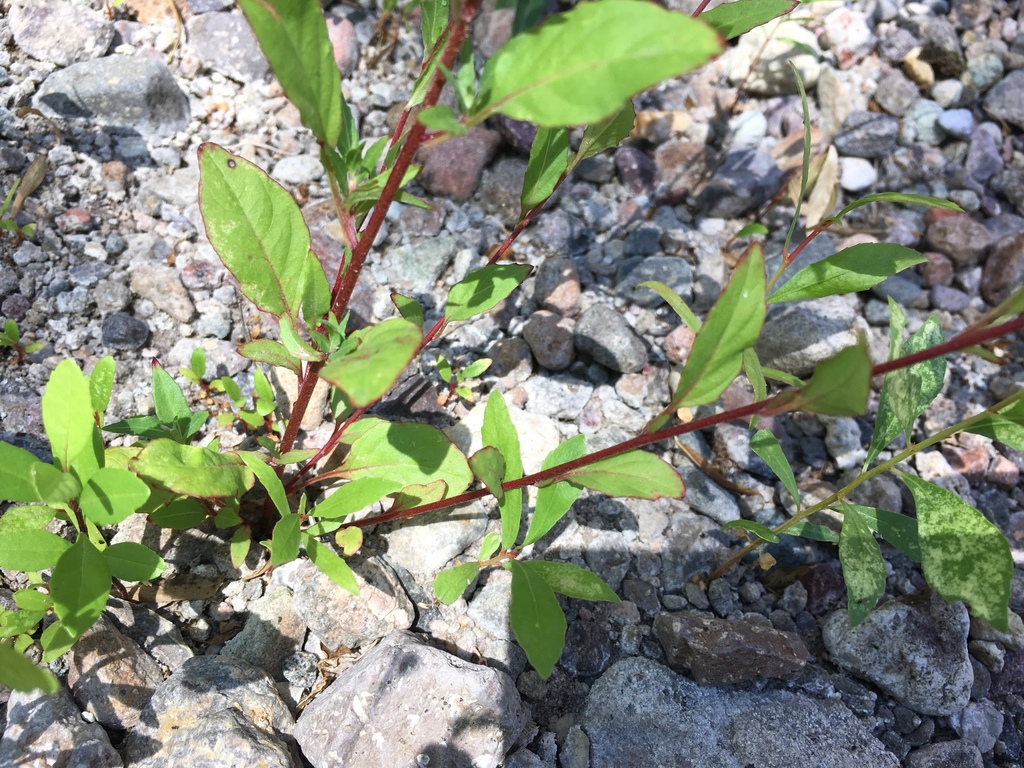
It is a perennial from a slender taproot, sometimes flowering in its first year and behaving like an annual. The stems are thin, branched from the base, upright to sprawling, and usually 8 to 20 inches tall, occasionally up to 2 feet. They are often reddish and finely hairy.
Leaves
The leaves are alternate, lance-shaped to narrowly oval, about 1 to 2 1/2 inches long, with entire to wavy or shallowly toothed margins. The lowest leaves are often more deeply lobed. They are green to grayish-green and finely hairy.
Flowers
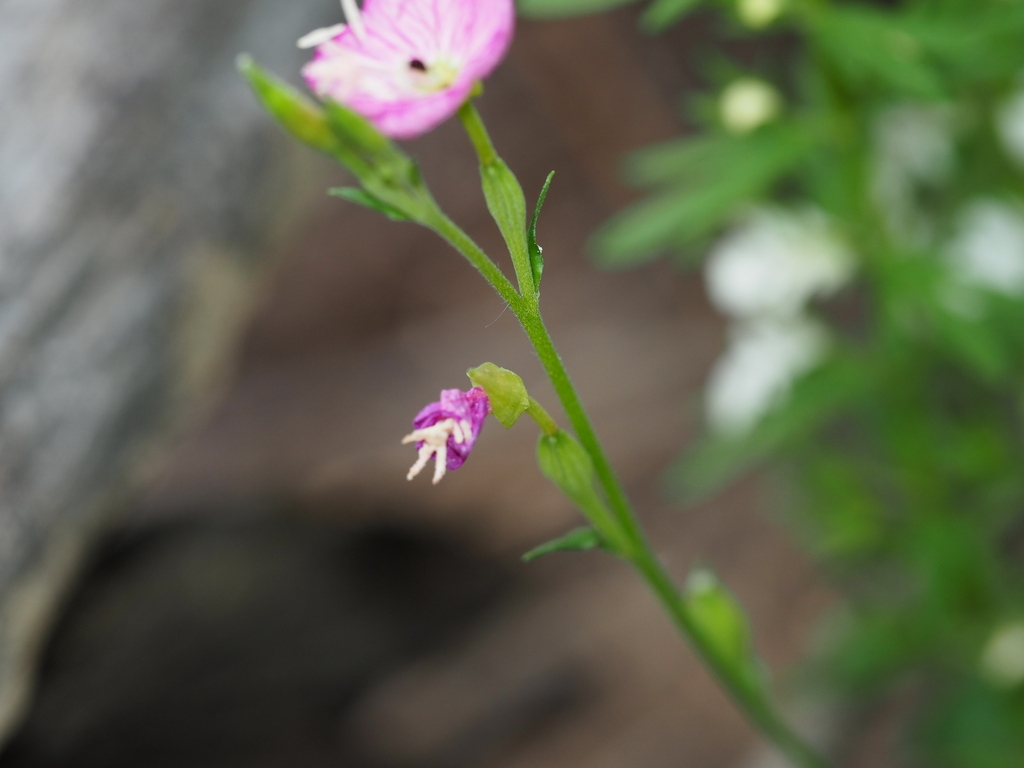
The flowers grow singly in the upper leaf axils, and the buds nod before opening. Each flower has four rounded petals, rose-pink to magenta and often with darker veins, about 1/4 to 1/2 inch long, so the open flower is roughly 1/2 to 1 inch across. The center is pale yellowish to whitish, with eight stamens and a four-lobed, cross-shaped white stigma. Flowers open in the morning and last about a day. Bloom time is long, from about May to November, and nearly year-round in mild areas.
Seed Capsules
The fruit is a small, club-shaped capsule, about 1/3 to 1/2 inch long, narrowed at the base into a slender stalk-like section, with four ridges or narrow wings along the upper part. It splits open to release many tiny seeds.
Similar Species
Pink Evening Primrose (Oenothera speciosa) is closely related but has much larger, pale pink to white flowers, 2 to 3 inches across, and spreads by underground runners. Scarlet Beeblossom (O. suffrutescens) has small, white flowers that turn pink to red, arranged in a long spike, and opens in the evening. Rose evening primrose is distinguished by its small, bright rose-pink daytime flowers borne singly in the leaf axils.
Quick Facts
| Scientific Name | Oenothera rosea L’Hér. ex Aiton (syn. Hartmannia rosea) |
| Family | Onagraceae (evening primrose family) |
| Plant Type | Short-lived herbaceous perennial, sometimes annual |
| Mature Height | 8–20 in (occasionally to 2 ft) |
| Mature Spread | 8–18 in |
| Growth Rate | Fast |
| Sun Exposure | Full sun to part shade |
| Water Needs | Medium; moist soils, tolerates short dry periods |
| Soil Type | Loam, sandy, gravelly or clay soils; often moist or disturbed sites |
| Soil pH | About 6.0–8.0 |
| Bloom Time | May–November |
| Flower Color | Rose-pink to magenta |
| Fall Color | None notable |
| Fruit | Small, club-shaped, four-ridged capsule |
| Deer Resistant | Moderate |
| USDA Hardiness Zones | 8–11 |
Native Range
USDA PLANTS lists rose evening primrose as native in Arizona, New Mexico and Texas. In Arizona it occurs mainly in the southeastern counties, including Santa Cruz and Cochise counties, along streams, springs and moist canyon bottoms in the Sky Islands region. In Texas it grows in the Rio Grande Valley and South Texas as well as in parts of West Texas. New Mexico records are from the southern part of the state.
It favors moist, open or lightly shaded places: stream banks, the edges of springs and ponds, wet meadows, ditches, irrigated fields, lawns and roadsides. It is rated a facultative wetland plant (FACW), meaning it usually grows in wetlands but also occurs in drier sites. It readily colonizes disturbed soil.
USDA also lists California, but Calflora treats the California plants as non-native, probably escaped from gardens, so California is not shown on this page’s range map. Outside the United States its native range extends through Mexico and Central America into South America. It has become naturalized, and sometimes weedy, in many warm regions, including Spain, Portugal, the Canary Islands, the Azores, South Africa, India, Japan and Australia.
📋 Regional plant lists featuring Rose Evening Primrose: Arizona & New Mexico · South & West Texas
Growing & Care Guide
Rose evening primrose is easy to grow from seed, and it fits into informal gardens, moist borders and containers in warm climates. It is not widely sold, but seed is offered by some native and wildflower seed suppliers. Grow it within or near its native range; in regions where it is not native, such as California and other warm-winter areas, it can escape and become weedy, so choose another native evening primrose there.
Light
Grow it in full sun to part shade. In the hot desert Southwest it appreciates afternoon shade and moisture; in milder areas, full sun gives the most flowers.
Soil & Water
It adapts to most soils, from sand and gravel to clay, as long as they don’t stay waterlogged for long periods. It blooms longest with regular moisture and tolerates short dry spells. In dry gardens it may go dormant or die back in summer and return with the rains.
Planting Tips
Sow seed on the soil surface in spring or fall and keep it moist until seedlings appear; the seeds need light to germinate. Space plants about a foot apart. It works well along paths, at the edge of a rain garden or near a water feature.
Pruning & Maintenance
Little care is needed. Trim back leggy stems to encourage fresh growth and more flowers. Plants are short-lived, but they reseed; remove seed capsules if you want to limit volunteers.
Propagation
Grow it from seed, which germinates readily in warm soil. Plants often flower within a few months of sowing. Basal cuttings also root in spring.
Landscape Uses
- Rain gardens and moist borders: tolerates moist soils and occasional flooding
- Pollinator gardens: a long season of small pink flowers for bees
- Informal and cottage gardens: a delicate, self-sowing filler in warm-climate gardens within its native range
- Containers: a compact, long-blooming plant for pots in warm regions
- Streamside restoration: a native colonizer of moist, disturbed banks in South Texas and southern Arizona
Wildlife & Ecological Value
Rose evening primrose is small, but its long blooming season makes it a steady food source for pollinators in warm, moist places.
For Pollinators
The daytime flowers are visited by small native bees, honey bees, flies and butterflies, which collect nectar and pollen. Like other evening primroses, its foliage may also feed the caterpillars of moths that specialize on the evening primrose family.
For Birds
Seed-eating birds such as finches and sparrows feed on the tiny seeds. Low plants also provide insects for ground-foraging birds.
For Mammals
Rabbits and other small mammals may nibble the foliage, though it is not a major food plant.
Ecosystem Role
As a pioneer of moist, disturbed soils, rose evening primrose helps cover bare stream banks and ditches. Its long flowering season supports pollinators from spring to fall in the borderlands of Arizona and Texas.
Cultural & Historical Uses
Rose evening primrose was formally described in 1789 in Hortus Kewensis, the catalog of plants grown at the Royal Botanic Gardens, Kew, showing that it was already in cultivation in Europe in the 18th century. Some botanists place it and its relatives, including pink evening primrose, in a separate genus, Hartmannia.
In Mexico, where it is common, it is known by names such as hierba del golpe (“herb for bruises”), rosilla and árnica. It has a long history in Mexican folk medicine, especially as a poultice or wash for bruises, sprains and inflammation, and it is sometimes sold in markets for this purpose. Its medicinal uses have not been well tested, so it should not be used without medical advice.
Because it has been grown as an ornamental and spreads easily by seed, rose evening primrose has become one of the more widespread evening primroses worldwide, naturalized on several continents. In its native range in the U.S. borderlands, it is a cheerful, unassuming wildflower of springs, streams and roadsides.
Frequently Asked Questions
Does rose evening primrose bloom at night?
No. Despite the name evening primrose, its flowers open in the morning and close by evening. Many other evening primroses do bloom at night.
Is rose evening primrose native to California?
California has scattered populations, but Calflora treats them as introduced. In the United States it is native to Arizona, New Mexico and Texas, and it also grows wild across Mexico and Central and South America.
How is it different from pink evening primrose?
Rose evening primrose has small, bright rose-pink flowers about 1/2 to 1 inch across and does not spread by runners. Pink evening primrose (Oenothera speciosa) has much larger, paler pink flowers 2 to 3 inches across and spreads by underground runners.
Is rose evening primrose invasive?
It is native in the southern U.S. borderlands and is not considered invasive there. Outside its native range, including California and several other countries, it has escaped from gardens and can be weedy.
How do I grow rose evening primrose?
Sow seed on the surface of moist soil in spring or fall, in full sun to part shade. It grows quickly, often blooms the first year, and reseeds. Give it regular moisture for the longest bloom.

Looking for a nursery that carries Rose Evening Primrose?
Browse our native plant nursery directory: Arizona · New Mexico · Texas

