
Green-flower Hedgehog Cactus (Echinocereus viridiflorus)
Echinocereus viridiflorus, the Green-flower Hedgehog Cactus (USDA: nylon hedgehog cactus; also called green pitaya), is a small, tough cactus of the western Great Plains and the Southwest. Its short stems, often no bigger than a golf ball to a fist, hide in the grass of shortgrass prairie and rocky hills from southeastern Wyoming and southwestern South Dakota south to New Mexico and West Texas.
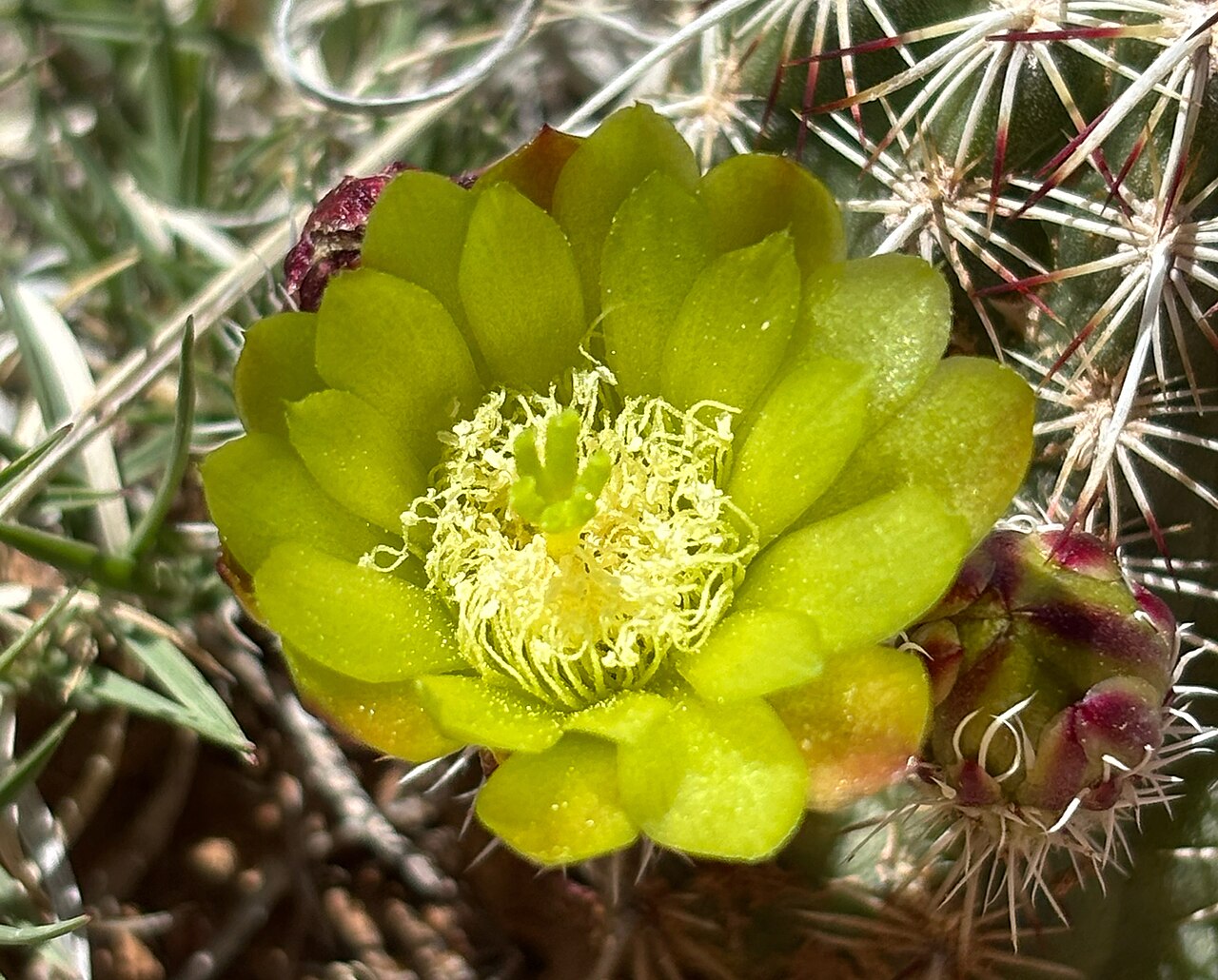
Most hedgehog cacti have large magenta, red or pink flowers. This one is different: in spring it opens small, glossy flowers in shades of yellow-green to chartreuse, sometimes with a reddish stripe on the petals, which are often described as lemon-scented. Its comb-like spines are frequently banded in red and white, so a cluster of stems can look striped. It is also one of the most cold-hardy cacti in North America, surviving winters well below 0°F on the high plains.
This guide covers how to identify it, where it grows, how to grow it in a dry, sunny rock garden, and its place in prairie and desert ecosystems. Buy only nursery-propagated plants; wild cacti should never be dug up, and one variety in West Texas is a federally endangered species.
Identification
Green-flower hedgehog cactus is a small, low cactus with ribbed cylindrical to egg-shaped stems and dense, comb-like spines. The yellow-green flowers, borne on the sides of the stem, are the surest way to recognize it.
Stems & Spines
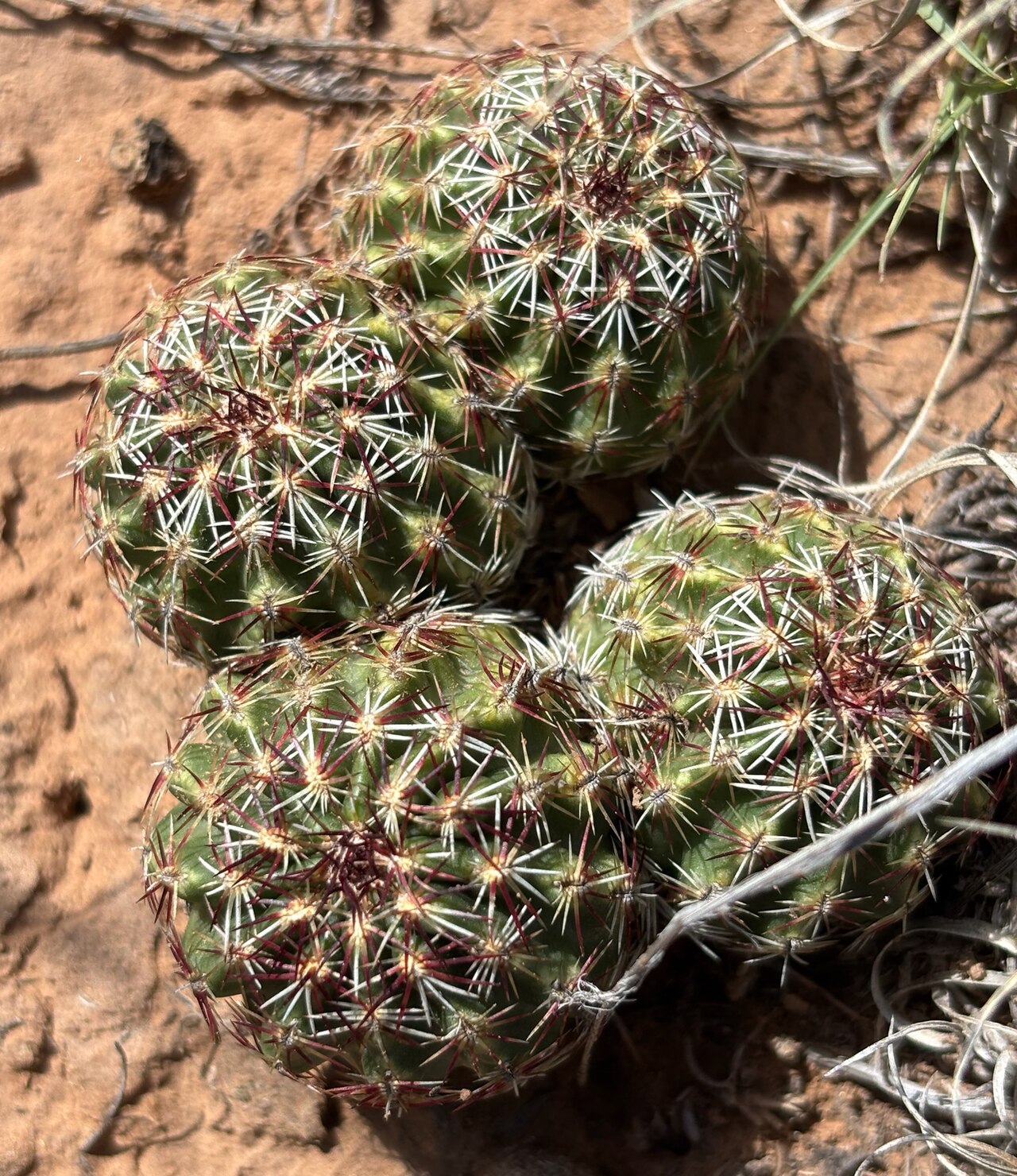
Stems are usually single or in small clusters, 1 to 4 inches tall in the northern and plains forms and up to about 8 inches or more in some southern forms, and 1 to 3 inches thick. They have about 10 to 14 low ribs. Each areole has a row of short radial spines pressed flat against the stem like the teeth of a comb, often in bands of red, pink, white or tan, and there may be zero to a few stouter central spines.
Flowers
From about April to June, flowers open from the sides of the stem, often several at once. They are small for a hedgehog cactus, about ¾ to 1 inch across, funnel-shaped, and yellow-green to greenish yellow, sometimes with a darker red or brown midstripe on the petals. The flowers have a light citrus scent and close at night.
Fruit
The fruit is a small, round, green to purplish berry about ½ inch long, covered with short spines that fall away as it ripens. It contains many tiny black seeds.
Look-alikes
Other hedgehog cacti in its range, such as Lace Hedgehog Cactus and Claret Cup Cactus, have larger pink, magenta or red flowers. Spinystar (Escobaria vivipara) has a similar size but bears its pink flowers at the top of the stem from grooved tubercles rather than ribs. Mountain Ball Cactus is round with pale pink flowers at the top. Without flowers, look for the comb-like, often red-and-white banded spines and distinct ribs.
Quick Facts
| Scientific Name | Echinocereus viridiflorus Engelm. |
| Family | Cactaceae (cactus family) |
| Plant Type | Small perennial cactus |
| Mature Height | 1–4 in (to about 8 in in some southern forms) |
| Mature Spread | 2–6 in (single stems or small clusters) |
| Growth Rate | Slow |
| Sun Exposure | Full sun |
| Water Needs | Very low; drought tolerant |
| Soil Type | Rocky, gravelly or sandy, very well-drained |
| Soil pH | About 6.5–8.5 (neutral to alkaline) |
| Bloom Time | April–June |
| Flower Color | Yellow-green to chartreuse |
| Fall Color | Stems may turn reddish or purplish in winter |
| Fruit | Small green to purplish spiny berry |
| Deer Resistant | Yes |
| USDA Hardiness Zones | 4–9 |
Native Range
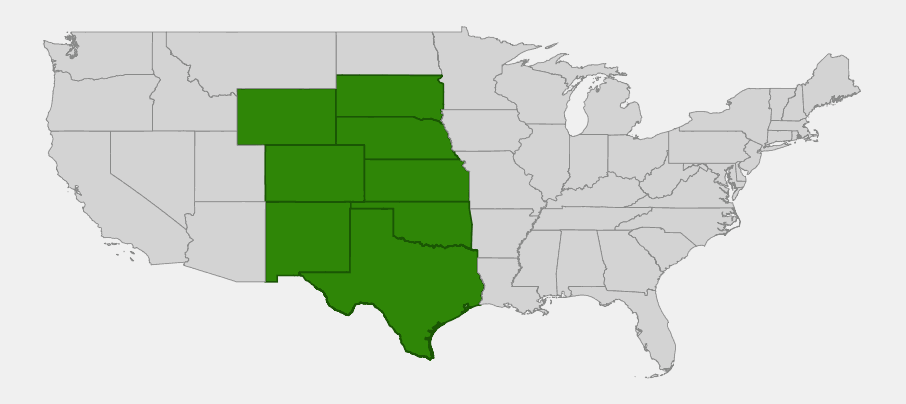
Green-flower hedgehog cactus is native to the western Great Plains and the southern Rocky Mountain foothills. USDA PLANTS lists it in Wyoming, South Dakota, Nebraska, Kansas, Colorado, Oklahoma, New Mexico and Texas. In the north it reaches southeastern Wyoming and the southwestern corner of South Dakota; it is widespread on the plains and foothills of eastern Colorado and in western Nebraska and Kansas, the Oklahoma Panhandle, much of New Mexico and the Texas Panhandle and Trans-Pecos.
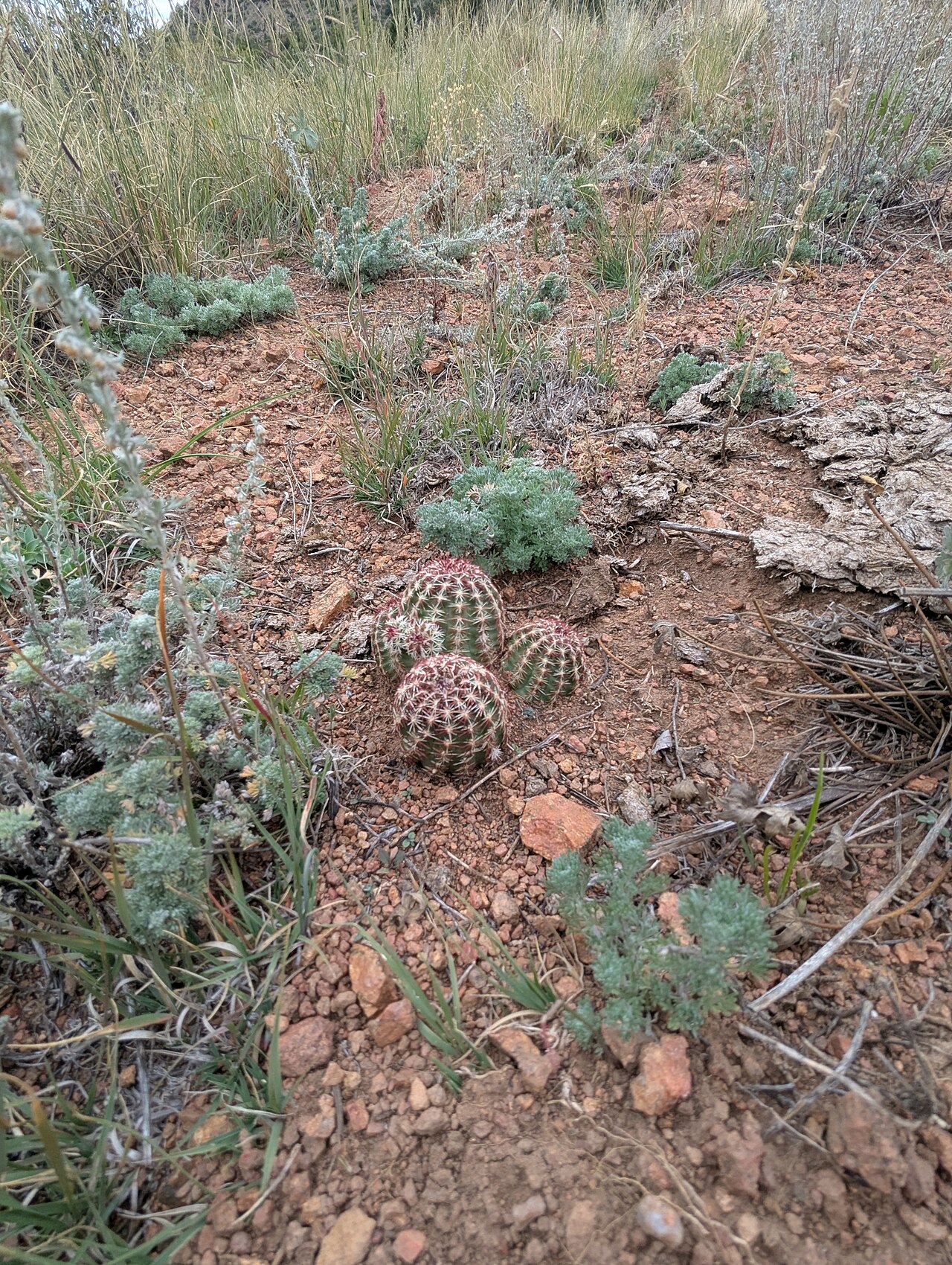
It grows in open, sunny places with thin, rocky or gravelly soil: shortgrass prairie with blue grama and buffalograss, limestone and sandstone ridges, mesas, canyon rims, and pinyon-juniper woodland. It is often hidden among grasses, and many people walk past it until it blooms. It ranges from about 3,000 feet on the plains to over 9,000 feet in Colorado mountain parks.
The species is variable, and botanists recognize several varieties. USDA PLANTS includes Davis’ hedgehog cactus or Davis’ green pitaya (E. viridiflorus var. davisii, often treated as E. davisii), a tiny plant known only from a small area of Brewster County, Texas, which is federally listed as endangered. The common, widespread plains form is var. viridiflorus; taller southern forms such as var. cylindricus and var. chloranthus (often treated as a separate species, E. chloranthus) grow in New Mexico and West Texas.
📋 Regional plant lists featuring Green-flower Hedgehog Cactus: Montana & Wyoming · Nebraska, Kansas & Eastern Colorado · North Dakota, South Dakota & Western Minnesota · Arizona & New Mexico · South & West Texas
Growing & Care Guide
Green-flower hedgehog cactus is one of the best cacti for cold-winter gardens, because it is fully hardy on the high plains. What it cannot tolerate is wet soil, especially in winter. Grow it in a sunny rock garden, trough or raised bed, and buy only nursery-grown plants; collecting wild cacti damages populations and is illegal in many places.
Light
Full sun. In shade it stretches, flowers poorly and is more likely to rot.
Soil & Water
Very fast-draining, lean soil: a mix of gravel, coarse sand and a little loam, or a scree bed. It is adapted to dry winters and summer thunderstorms, so water occasionally in spring and summer during long droughts and not at all in winter. In wet climates, grow it in a raised bed, on a slope or under a rain cover.
Planting Tips
Plant in spring or early summer so roots settle before winter. Set the base of the stem at or slightly above the soil surface and topdress with gravel so the stem never sits against wet soil. Small groups planted among rocks look natural and are easier to find.
Pruning & Maintenance
No pruning is needed. Keep grasses and weeds from shading it, remove fallen leaves in autumn, and do not fertilize, which leads to soft, rot-prone growth. In winter the stems shrink and may turn reddish; this is normal cold hardening.
Propagation
Grow from seed sown on the surface of a gritty mix in warm conditions; seedlings are slow and take several years to flower. Offsets from clustered plants can be removed, allowed to dry for a week, and rooted in dry gravelly mix.
Landscape Uses
- Rock and scree gardens: a small, hardy cactus for cold, dry climates
- Troughs and containers: compact size suits trough gardens
- Shortgrass prairie gardens: tucked among blue grama and buffalograss
- Xeriscapes: needs no supplemental water once established
Wildlife & Ecological Value
Small as it is, green-flower hedgehog cactus is part of the plant community of the shortgrass prairie and dry hills, providing early-season flowers and fruit.
For Pollinators
Its open flowers are visited by native bees, especially small to medium solitary bees, as well as flies and beetles that gather pollen. Because it blooms in spring, it offers pollen when relatively few prairie plants are in flower.
For Birds
Ground-feeding birds and small mammals eat the fruits and spread the seeds. Its spiny stems provide little cover, but grasslands where it grows support birds such as horned larks and longspurs.
For Mammals
Rodents and rabbits eat fruits and sometimes gnaw stems during droughts. Deer and livestock generally avoid it because of its spines.
Ecosystem Role
It is part of the diverse low plant layer of shortgrass prairie and rocky hills. Its presence often indicates thin, rocky soils that have not been plowed, so it is an indicator of intact native grassland.
Cultural & Historical Uses
George Engelmann, the St. Louis physician and botanist who described many western cacti, named Echinocereus viridiflorus in 1848. Echinocereus means “hedgehog cereus,” for the spiny stems, and viridiflorus means “green-flowered.”
The common name nylon hedgehog cactus, used by USDA, refers to the fine, stiff, slightly glossy spines that resemble nylon bristles. The Spanish name pitaya, used for several hedgehog cacti, refers to their edible fruits; this species’ fruits are small and seldom eaten.
It is a favorite of cactus growers in cold climates, who prize it as one of the few cacti that survive winters on the northern plains. Wild populations of Davis’ green pitaya in Texas were heavily collected after the plant was discovered, which is one reason it was federally listed as endangered in 1979. Today responsible growers use only seed-grown plants.
Frequently Asked Questions
How cold-hardy is green-flower hedgehog cactus?
Very hardy. It grows naturally in southeastern Wyoming, South Dakota and the high plains of Colorado, and survives winters well below 0°F (USDA zones 4–9) as long as its soil is dry and well drained.
Why does this cactus have green flowers?
Its flowers are yellow-green to chartreuse, which is unusual among cacti. They are pollinated by bees and other insects that are attracted by color, pattern and scent rather than by the bright red flowers that attract hummingbirds.
Is green-flower hedgehog cactus endangered?
The species as a whole is widespread and not listed. One variety, Davis’ green pitaya (E. viridiflorus var. davisii), known only from Brewster County, Texas, is federally listed as endangered.
How big does it get?
Most plants are only 1 to 4 inches tall and 1 to 3 inches wide, growing singly or in small clusters. Some southern forms reach about 8 inches.
Can I dig one up from the wild?
No. Collecting wild cacti harms populations and is illegal on public land and without permission on private land. Buy seed-grown plants from a reputable nursery.

Looking for a nursery that carries Green-flower Hedgehog Cactus?
Browse our native plant nursery directory: Colorado · Kansas · Nebraska, New Mexico & Oklahoma · South Dakota & Texas · Wyoming

