
Mojave Poppy (Eschscholzia glyptosperma)
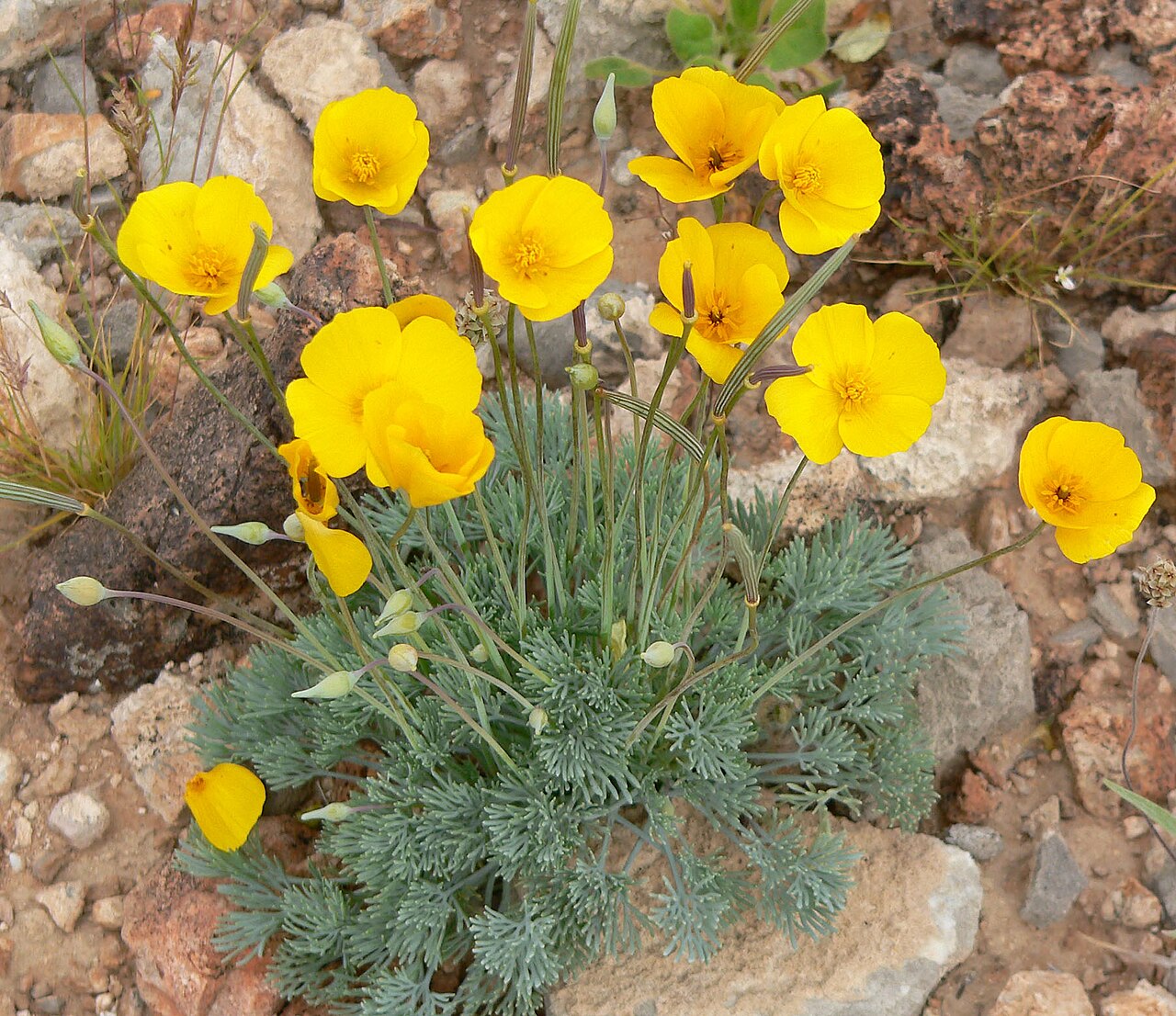
Eschscholzia glyptosperma, known as Mojave Poppy, desert gold poppy or desert golden poppy, is a native annual wildflower of the Mojave and northern Sonoran deserts. It is a close relative of the California poppy, but its flowers are pure, bright yellow rather than orange, and each one sits alone on a slender, leafless stalk above a low tuft of blue-gray, finely divided leaves.
Mojave poppy is a winter annual. Its seeds germinate after fall and winter rains, and in good years the plants carpet desert flats, washes and gravelly slopes with gold from March to May. In dry years few seeds sprout, and the seeds wait in the soil for a wetter season.
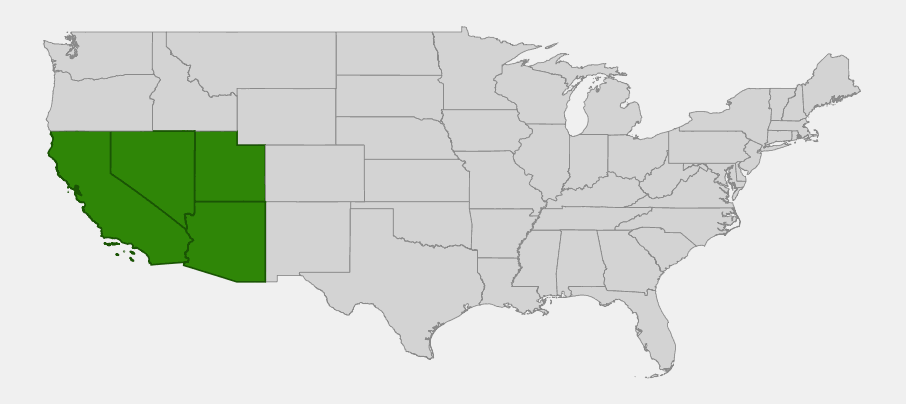
It grows in southeastern California, southern Nevada, western Arizona and the southwestern corner of Utah. Desert gardeners can grow it easily from seed sown in fall. This guide covers how to identify it, where it grows, and how to grow it.
Identification
Several small yellow poppies grow in the Southwest deserts. Mojave poppy is recognized by its leaves, which are all at the base of the plant, and by its single, fairly large flowers on leafless stalks.
Growth Habit
An annual that forms a tuft of leaves at ground level, with several to many slender, erect flower stalks up to about 10 inches tall. In good rain years a single plant can carry dozens of flowers.
Leaves
The leaves are all basal, finely divided into narrow, pointed segments, and blue-green to gray-green with a waxy coating. There are no leaves on the flower stalks.
Flowers & Fruit
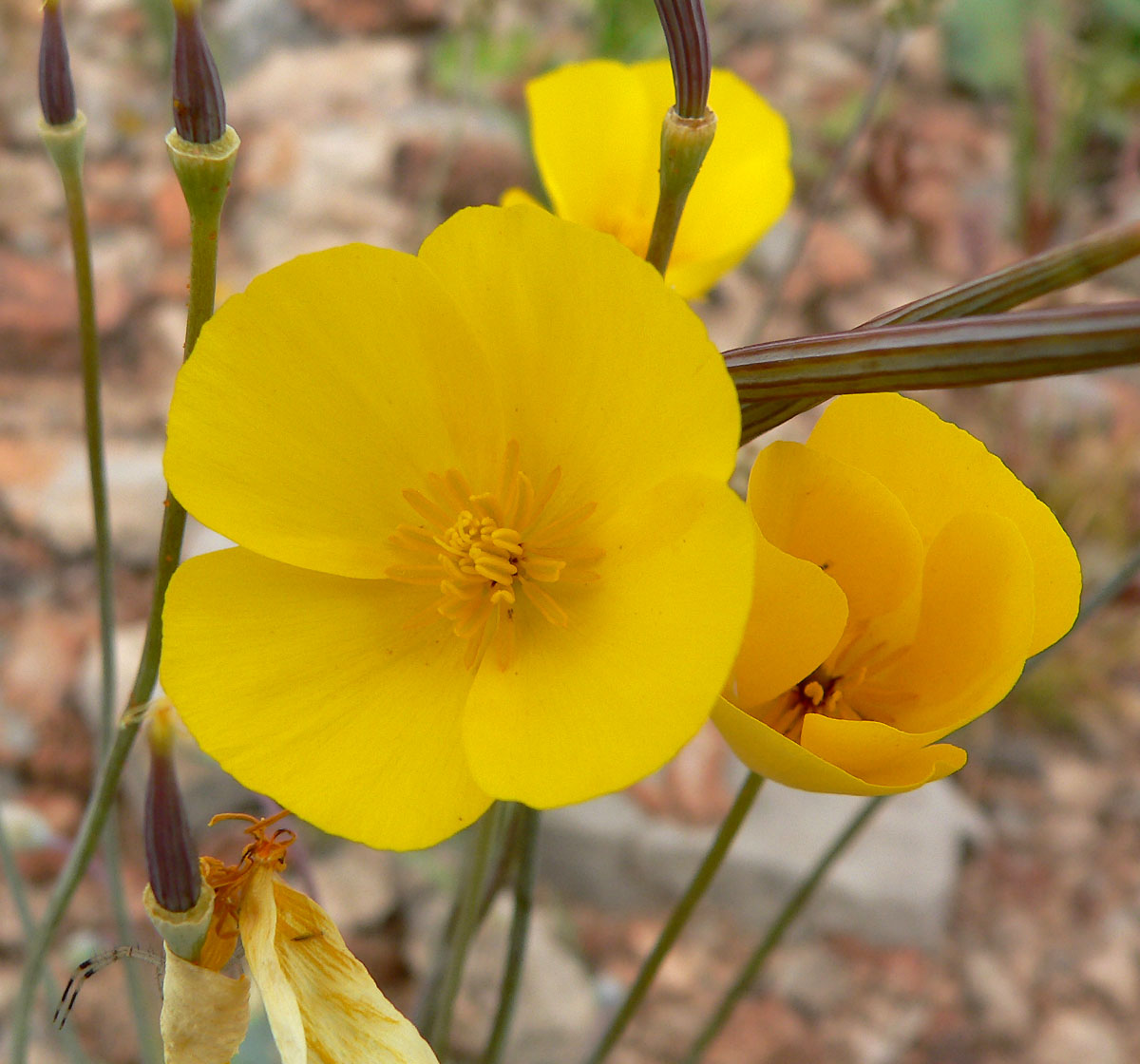
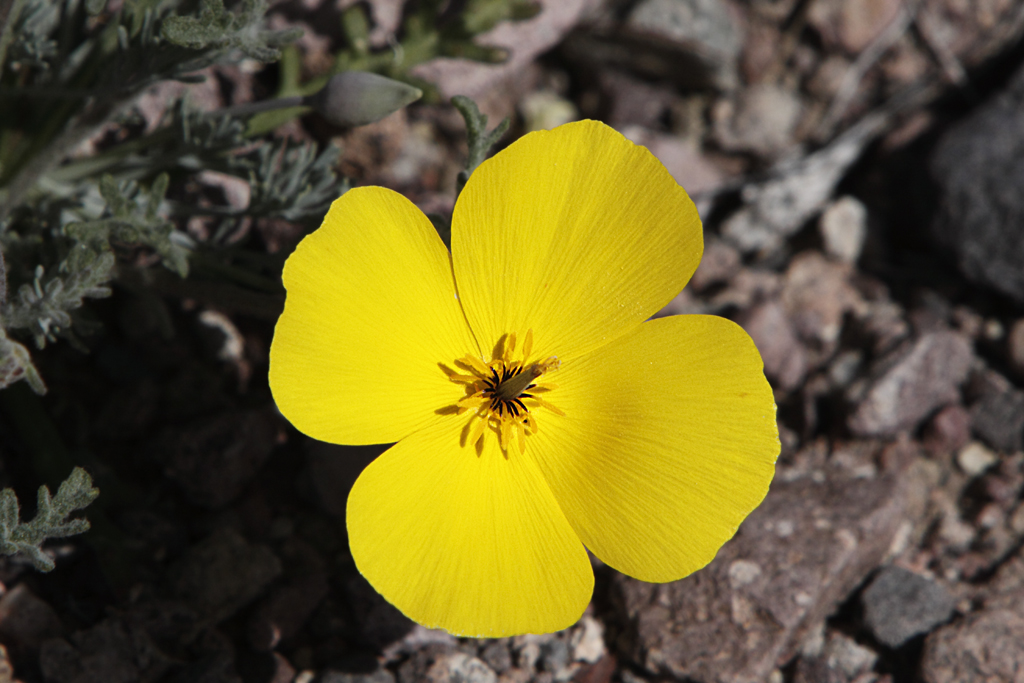
Each stalk bears one cup-shaped flower with four bright yellow petals about ½ to 1 inch long and many stamens. Like other Eschscholzia, the sepals are joined into a pointed cap that is pushed off as the flower opens, and the flower has no broad, flared rim beneath it. The fruit is a slender, ribbed capsule about 1½ to 2¾ inches long that splits open to release tiny, rounded brown seeds with a pitted surface.
Look-alikes
Little Gold Poppy (E. minutiflora) has smaller flowers and leaves on its branching stems, not just at the base. Tufted Poppy (E. caespitosa) grows mainly west of the deserts. California Poppy (E. californica) has orange or orange-centered flowers, a broad, flared rim below each flower and leafy stems.
Quick Facts
| Scientific Name | Eschscholzia glyptosperma |
| Family | Papaveraceae (poppy family) |
| Plant Type | Winter annual wildflower |
| Mature Height | 4–10 in |
| Mature Spread | 4–8 in |
| Growth Rate | Fast |
| Sun Exposure | Full sun |
| Water Needs | Low; relies on winter rain |
| Soil Type | Sandy, gravelly or rocky, well-drained |
| Soil pH | Neutral to alkaline |
| Bloom Time | March–May |
| Flower Color | Bright yellow |
| Fall Color | None; plants die after setting seed |
| Fruit | Slender ribbed capsule with tiny pitted seeds |
| Deer Resistant | Generally not browsed |
| USDA Hardiness Zones | Annual; grown from fall-sown seed in zones about 7–10 |
Native Range
Mojave poppy is native to the Mojave Desert and the northern edge of the Sonoran Desert. It grows in southeastern California, including Death Valley and the eastern Mojave, in southern Nevada around Las Vegas, in western Arizona and in the southwestern corner of Utah.
It grows on desert flats, washes, gravelly fans and rocky slopes, often among creosote bush and bursage, at elevations of about 100 to 5,200 feet. It is often most abundant on open, gravelly soils between shrubs.
Like many desert annuals, its numbers swing widely from year to year. In wet winters it can form broad golden displays; in drought years it may barely appear, surviving as seed in the soil.
📋 Regional plant lists featuring Mojave Poppy: Arizona & New Mexico · California & Nevada · Utah & Western Colorado
Growing & Care Guide
Mojave poppy is easy to grow from seed in desert gardens and is sometimes included in Mojave and Sonoran wildflower seed mixes. It is best treated like the desert does: sow in fall, let winter rain do the work, and let it reseed.
Light
Full sun. It needs open ground without shade from shrubs or buildings to flower well.
Soil & Water
Sandy, gravelly or rocky soil with good drainage is ideal; rich garden soil and heavy watering lead to weak, floppy plants. If winter rains fail, water the seedbed every couple of weeks from germination until flowering, then let it dry out.
Planting Tips
Scatter seed in October to December on bare, raked soil and press it in lightly; do not bury it deeply. Like other poppies it has a taproot and does not transplant well, so sow it where it is to grow. It fits wildflower meadows, rock gardens, gravel mulched beds and the spaces between desert shrubs.
Pruning & Maintenance
No pruning is needed. Leave plants in place until the capsules split so that they reseed for next year, then pull the dry stems.
Propagation
Grow from seed only. Collect ripe capsules just before they split and store the seed dry. Seed of desert annuals often germinates in stages over several years, which is normal.
Landscape Uses
- Desert wildflower gardens: sown with desert marigold, phacelia and lupines
- Rock and gravel gardens: bright spring color with no summer water
- Pollinator gardens: early nectar and pollen for native bees
- Desert restoration: annual cover on open, disturbed ground
Wildlife & Ecological Value
Mojave poppy is one of the desert annuals that create spring wildflower displays and feed insects and seed-eating animals.
For Pollinators
The open, bowl-shaped flowers offer plenty of pollen and are visited by many native bees, including bumblebees, as well as beetles and flies. The Xerces Society lists the species as having special value to native bees.
For Birds
Its small seeds are eaten by seed-eating desert birds such as sparrows, quail and doves, along with seeds of other spring annuals.
For Mammals
Desert rodents such as kangaroo rats and pocket mice gather and cache the seeds of desert annuals, and the leaves may be grazed by desert tortoises and small herbivores in spring.
Ecosystem Role
Its long-lived seed bank lets it wait out drought and respond quickly when rain comes, providing a burst of food for insects after wet winters. Its plants also help cover bare soil between shrubs during the cool season.
Cultural & Historical Uses
The genus Eschscholzia honors Johann Friedrich von Eschscholtz, a Baltic German physician and naturalist who sailed with Russian expeditions to the Pacific coast between 1815 and 1818. The species name glyptosperma means “carved seed”, referring to the pitted surface of its seeds.
Desert gold poppies are a highlight of spring wildflower displays in places such as Death Valley and Lake Mead National Recreation Area, where their abundance varies dramatically with winter rainfall.
Because it looks like a smaller, yellow California poppy, many desert visitors call any yellow poppy they see a “California poppy”. Mojave poppy is a separate species adapted to the hotter, drier desert climate.
Frequently Asked Questions
Is Mojave poppy the same as California poppy?
No. They are related, but Mojave poppy (Eschscholzia glyptosperma) is a desert annual with yellow flowers on leafless stalks, while California poppy has orange flowers, leafy stems and a broad rim below each flower.
When does Mojave poppy bloom?
Mainly from March to May. The display depends on winter rain: in wet years it can carpet the desert, and in dry years few plants appear.
Where can I see Mojave poppy?
In the Mojave Desert of California, southern Nevada, western Arizona and southwestern Utah, including places such as Death Valley and the deserts around Las Vegas.
How do I grow Mojave poppy?
Sow seed on bare, sunny, well-drained soil in fall. Winter rain or occasional watering will sprout it, and it will flower in spring and reseed itself.
Is Mojave poppy good for bees?
Yes. Its open flowers produce lots of pollen and attract many native bees, including bumblebees.

Looking for a nursery that carries Mojave Poppy?
Browse our native plant nursery directory: Arizona · California · Nevada · Utah

