
Inflated Sedge (Carex vesicaria)
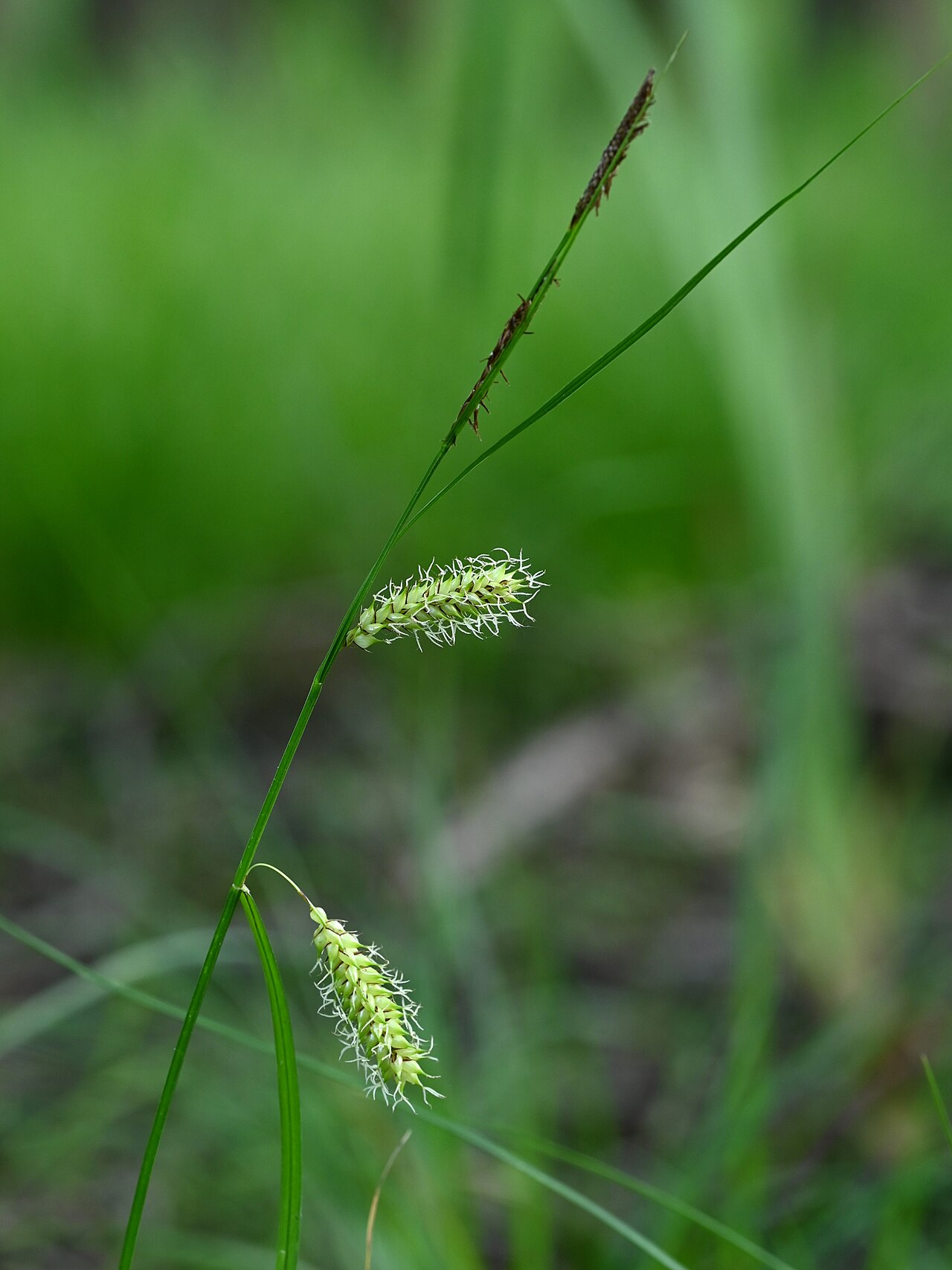
Carex vesicaria, the Inflated Sedge (also called blister sedge), is a large, clump-forming wetland sedge native to the northern United States, Canada, Europe and Asia. It grows in marshes, wet meadows, swamps, beaver ponds and the shallow edges of lakes and streams.
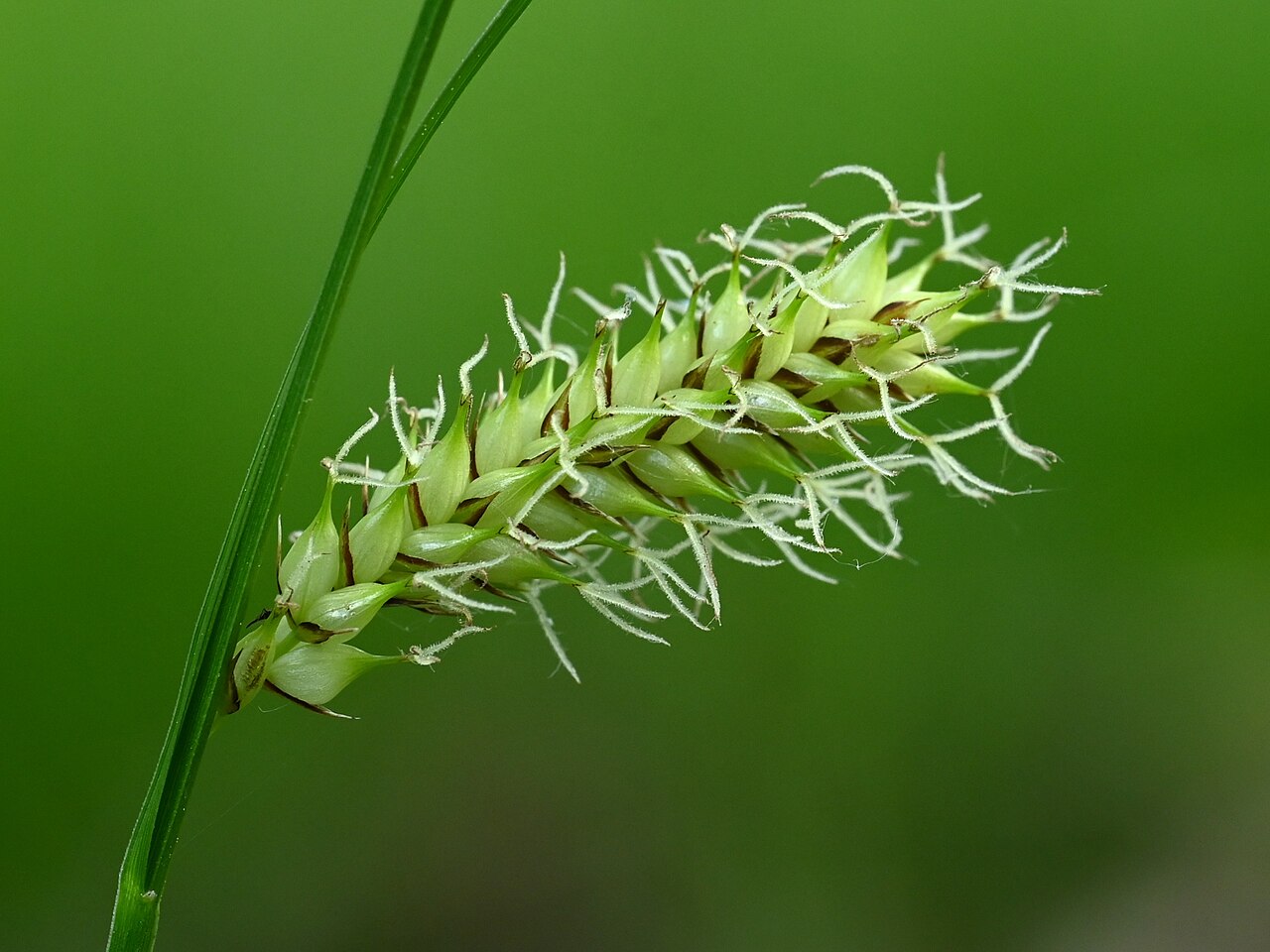
It is named for its swollen, inflated seed sacs (perigynia), which are packed into thick, cylindrical spikes and turn from green to golden brown as they ripen in summer. The plants have long, arching leaves and triangular stems typical of sedges.
Inflated sedge is an important plant for wetland restoration and wildlife, holding soil along shorelines and providing food and cover for waterfowl. This guide covers how to identify it, where it grows, how to grow it and its value to wildlife.
Identification
Inflated sedge is a tall, tufted sedge with sharply triangular stems, long leaves and two to four thick, cylindrical female spikes below one to several slender male spikes.
Stems & Leaves
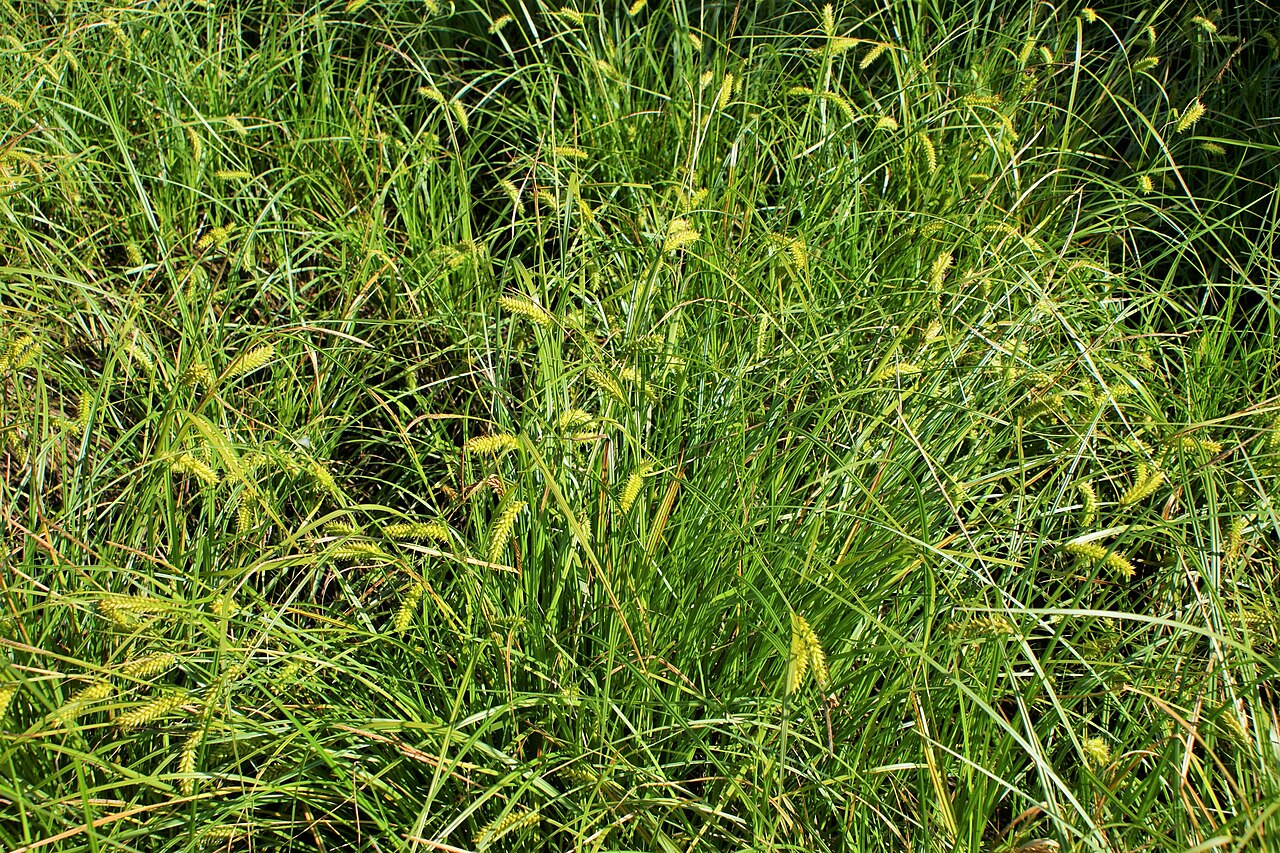
It grows 1½ to 3½ feet tall in dense clumps, spreading slowly by short rhizomes. The stems are sharply triangular and rough on the angles. The leaves are flat, 3 to 8 mm wide, often longer than the stems, with reddish-brown, sometimes spongy, lower sheaths.
Spikes
From late spring to early summer, each stem bears one to several slender male spikes at the top and two or three thick, cylindrical female spikes below, each 1 to 3 inches long. The lower female spikes are on short stalks and may nod slightly.
Perigynia
The seed sacs (perigynia) are inflated, shiny, egg-shaped and ribbed, about ¼ inch long, tapering to a short, two-toothed beak. They are held at an upward angle, green at first and golden to brown when ripe. Each contains a single three-sided achene.
Look-alikes
Beaked sedge (Carex utriculata) is very similar and often grows with it, but it has wider leaves with fine cross-walls on the sheaths, spongy stem bases and perigynia that spread out more widely from the spike. Western plants once called C. vesicaria are now often treated as Carex exsiccata. Other inflated sedges such as Bladder Sedge (C. intumescens) have far fewer, much larger perigynia per spike.
Quick Facts
| Scientific Name | Carex vesicaria L. |
| Family | Cyperaceae (sedge family) |
| Plant Type | Perennial wetland sedge |
| Mature Height | 1½–3½ ft |
| Mature Spread | 1–2 ft clumps; spreads slowly |
| Growth Rate | Moderate |
| Sun Exposure | Full sun to partial shade |
| Water Needs | Wet; saturated soil or shallow water |
| Soil Type | Muck, peat, silt or sandy loam |
| Soil pH | About 5.0–7.5 |
| Bloom Time | May–July |
| Flower Color | Greenish spikes; perigynia golden brown when ripe |
| Fall Color | Tan to golden |
| Fruit | Inflated perigynia, each with one achene |
| Deer Resistant | Moderate |
| USDA Hardiness Zones | 3–7 |
Native Range
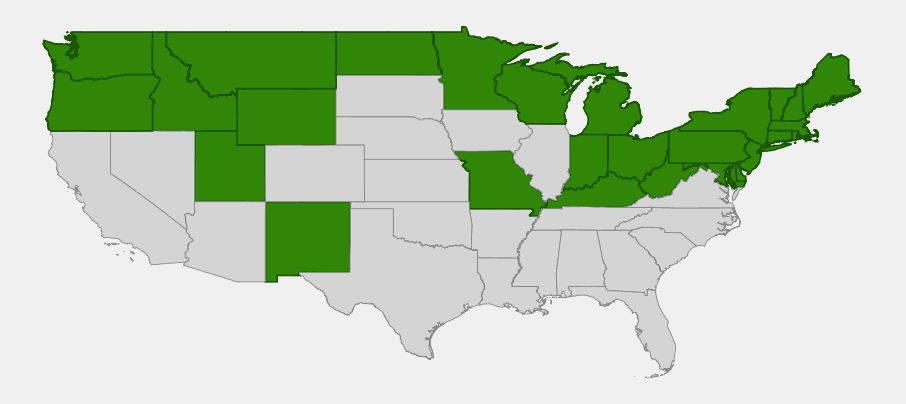
Inflated sedge is circumboreal, native to northern North America, Europe and northern Asia. In the United States, USDA PLANTS lists it in New England, New York, New Jersey, Pennsylvania, Delaware, Maryland, West Virginia, Kentucky, Ohio, Indiana, Michigan, Wisconsin, Minnesota, Missouri, North Dakota, Montana, Wyoming, Idaho, Utah, New Mexico, Washington and Oregon.
It is most common in the Northeast, the Great Lakes region and the northern Rocky Mountains, becoming scattered toward the southern edge of its range. Botanists separate some western populations as Carex exsiccata, so the exact western range depends on the treatment used.
It grows in shallow water and saturated soil: marshes, sedge meadows, wet prairies, shrub swamps, beaver ponds, bogs and fens, ditches and the edges of lakes, ponds and slow streams, from low elevations to mountain meadows.
📋 Regional plant lists featuring Inflated Sedge: Connecticut, Massachusetts & Rhode Island · New Hampshire, Maine & Vermont · New York, Pennsylvania & Northern New Jersey · Delaware, Southern New Jersey & Long Island · Maryland, Virginia & West Virginia · Kentucky & Tennessee · Ohio & Indiana · Michigan, Wisconsin & Eastern Minnesota · Illinois, Iowa & Missouri · North Dakota, South Dakota & Western Minnesota · Montana & Wyoming · Idaho, Eastern Oregon & Eastern Washington · Western Oregon & Western Washington · Utah & Western Colorado
Growing & Care Guide
Inflated sedge is sold by wetland and restoration nurseries, usually as plugs. It is a reliable, attractive sedge for pond edges, rain gardens that hold water, constructed wetlands and shoreline restoration in northern climates.
Light
Full sun to partial shade. It fruits best in full sun.
Soil & Water
It needs constantly moist to wet soil or shallow water up to about 6 inches deep, and tolerates seasonal flooding. It grows in muck, peat, silt or sandy soils.
Planting Tips
Plant plugs 12 to 18 inches apart in spring or early summer, at the water’s edge or in saturated soil. Combine with other sedges, rushes, blue flag and wetland wildflowers.
Pruning & Maintenance
Little care is needed. Leave the foliage over winter for wildlife cover and cut back old leaves in early spring if desired. Keep aggressive invasive plants such as reed canary grass and purple loosestrife out of plantings.
Propagation
Divide clumps in spring. Seed can be sown in fall on wet soil, or after 60 to 90 days of cold, moist stratification; it germinates best with light and constant moisture.
Landscape Uses
- Wetland and shoreline restoration: stabilizes mucky shores and marsh edges
- Rain gardens and swales: for the wettest, lowest zone
- Pond edges: fine-textured, arching foliage and golden seed spikes
- Wildlife plantings: seeds and cover for waterfowl
Wildlife & Ecological Value
Inflated sedge is a valuable wetland plant for birds, mammals and insects.
For Pollinators
Sedges are wind-pollinated and offer little nectar, but they are host plants for the caterpillars of several skippers and satyr butterflies, such as the eyed brown and dion skipper, and for many moths.
For Birds
Ducks, rails, sparrows and other wetland birds eat the seeds, and the dense clumps provide nesting cover for waterfowl, rails, sedge wrens and swamp sparrows.
For Mammals
Muskrats and beavers eat the leaves and rhizomes, and moose, elk and deer graze the foliage in wet meadows.
Ecosystem Role
Its dense root systems hold mucky soil along shores and in marshes, filter sediment and nutrients from runoff, and help build the organic soils of wet meadows.
Cultural & Historical Uses
Carl Linnaeus named Carex vesicaria in 1753. The species name comes from the Latin vesica, meaning “bladder” or “blister,” for its inflated perigynia.
The genus Carex is one of the largest groups of flowering plants, with roughly 2,000 species worldwide, and many of them are hard to tell apart without close study of the perigynia.
Sedges like inflated sedge are a reminder of the saying “sedges have edges”: their triangular stems feel sharply angled when rolled between the fingers, unlike the round stems of rushes and grasses.
Frequently Asked Questions
Why is it called inflated sedge?
Its seed sacs (perigynia) are swollen and bladder-like, giving the spikes a plump look.
Where does inflated sedge grow?
In marshes, wet meadows, beaver ponds and lake and stream edges across the northern United States, Canada, Europe and Asia.
How do I tell inflated sedge from beaked sedge?
Beaked sedge has wider leaves, spongy stem bases and perigynia that spread more widely. Inflated sedge has narrower leaves and perigynia held at an upward angle.
Can I grow inflated sedge in a garden?
Yes, in wet soil or shallow water at a pond edge or in a rain garden, in sun or partial shade.
Is inflated sedge good for wildlife?
Yes. Its seeds feed waterfowl and other birds, its clumps provide nesting cover, and it hosts the caterpillars of several skippers and butterflies.

Looking for a nursery that carries Inflated Sedge?
Browse our native plant nursery directory: Connecticut & Delaware · Idaho & Indiana · Kentucky, Maine, Maryland, Massachusetts, Michigan, Minnesota, Missouri & Montana · New Hampshire, New Jersey, New Mexico, New York, North Dakota & Ohio · Oregon · Pennsylvania, Rhode Island, Utah & Vermont · Washington · West Virginia, Wisconsin & Wyoming

