
Little Western Bittercress (Cardamine oligosperma)
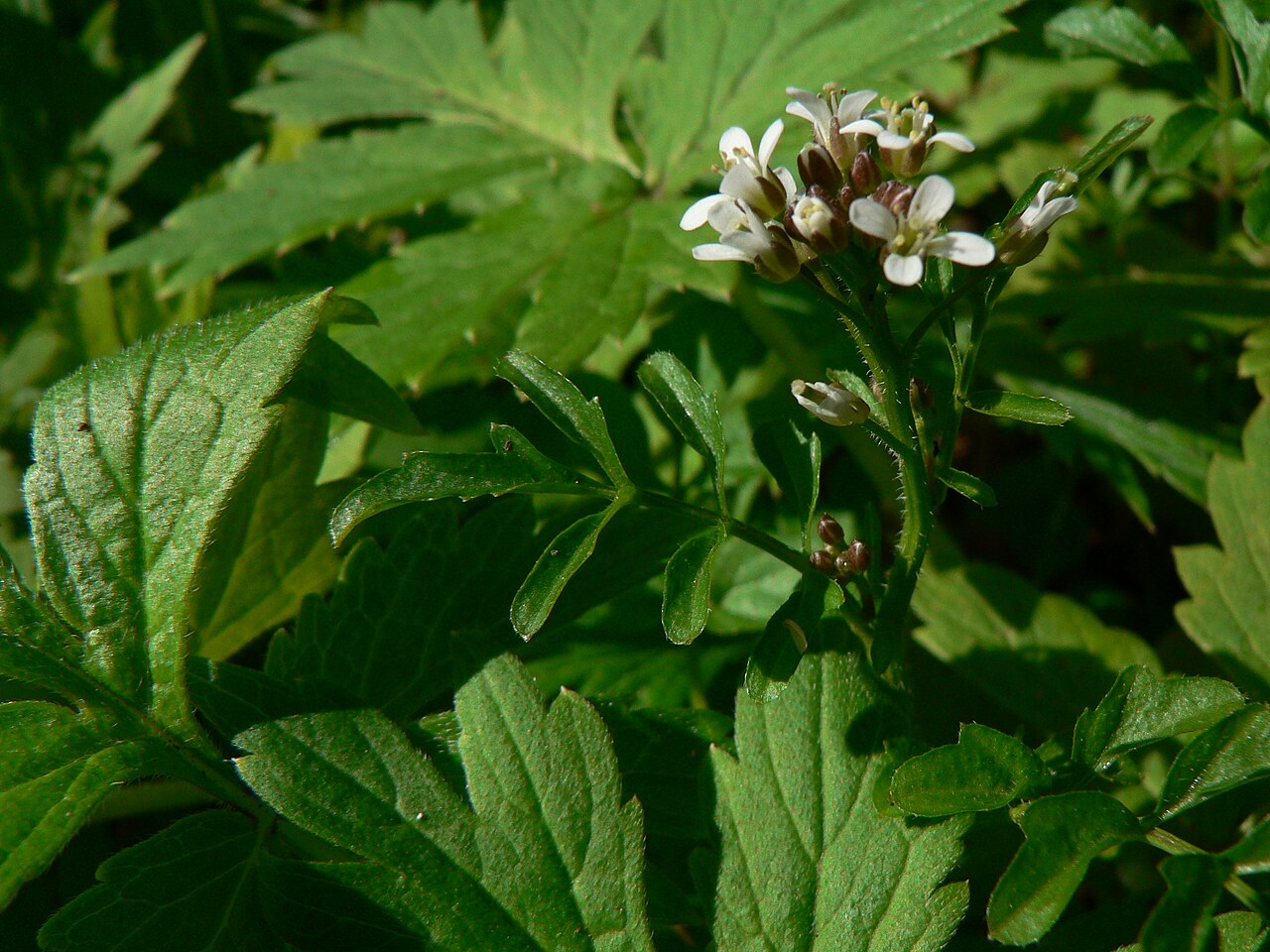
Cardamine oligosperma, known as Little Western Bittercress, few-seeded bittercress or umbellate bittercress, is a small native wildflower of the mustard family (Brassicaceae) found from Alaska to California and Colorado. It is an annual or short-lived biennial with leaves divided into small, rounded leaflets and clusters of tiny white flowers in spring and early summer.
It grows in moist, often shady places: stream banks, seeps, wet meadows, mossy rocks, damp woods and lakeshores, from the coast to subalpine elevations. Like its relatives, it has slender seed pods that split open explosively when ripe, flinging the seeds away, which is why it is sometimes called shotweed or snapweed.
Little western bittercress is a modest plant, easy to overlook and often mistaken for the introduced hairy bittercress that weeds gardens across the country. It is edible, with a peppery, cress-like flavor, and is a natural part of moist western plant communities. This guide covers how to identify it, where it grows, and how to use it.
Identification
Little western bittercress is a small, delicate member of the mustard family. Look for divided leaves with rounded leaflets, tiny four-petaled white flowers and slender, upright seed pods.
Growth Habit
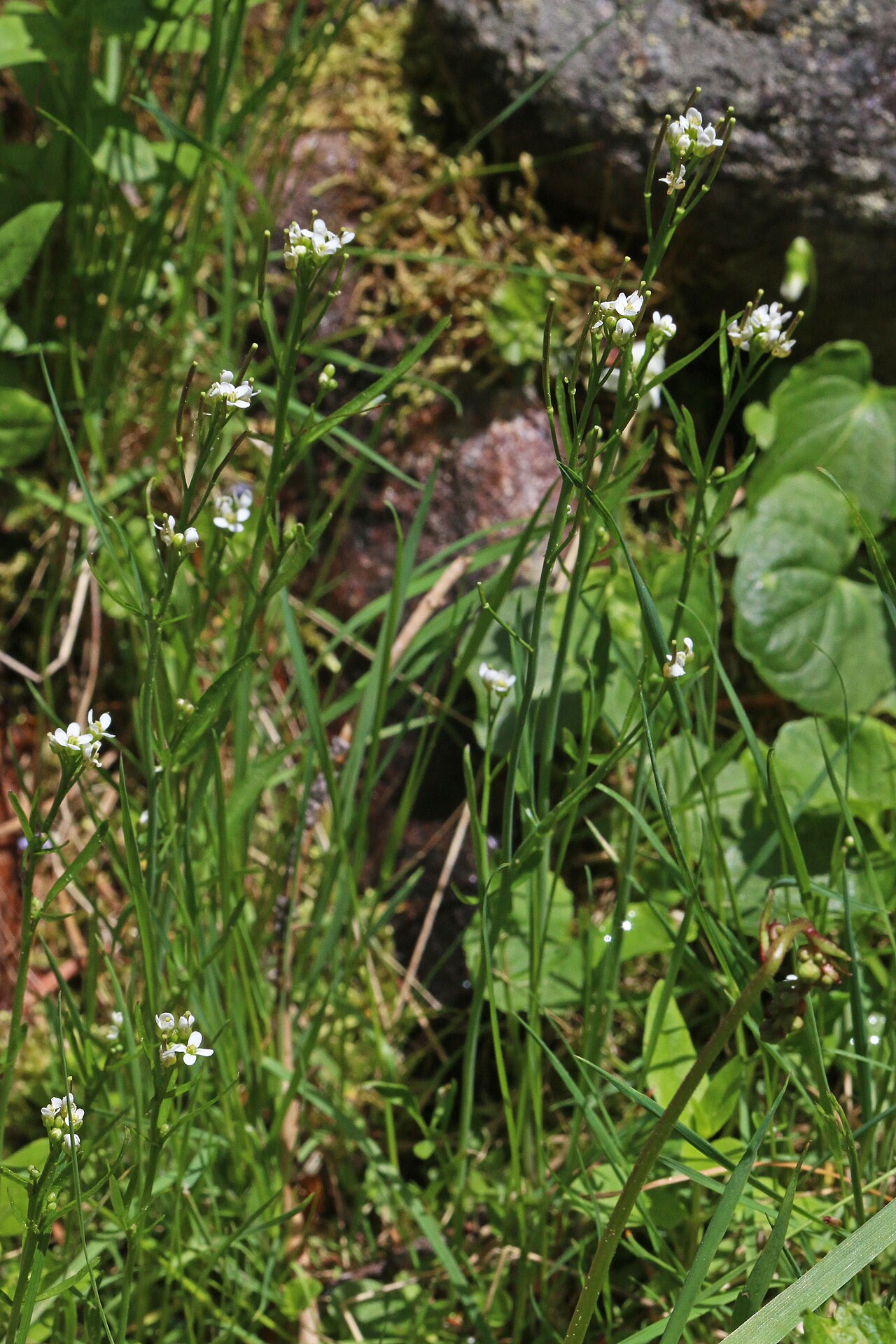
An annual or biennial from a slender taproot, with one to several upright or spreading stems usually 3 to 16 inches tall. Plants in open, moist sites are often branched and leafy; in shade they may be single-stemmed and weak.
Leaves
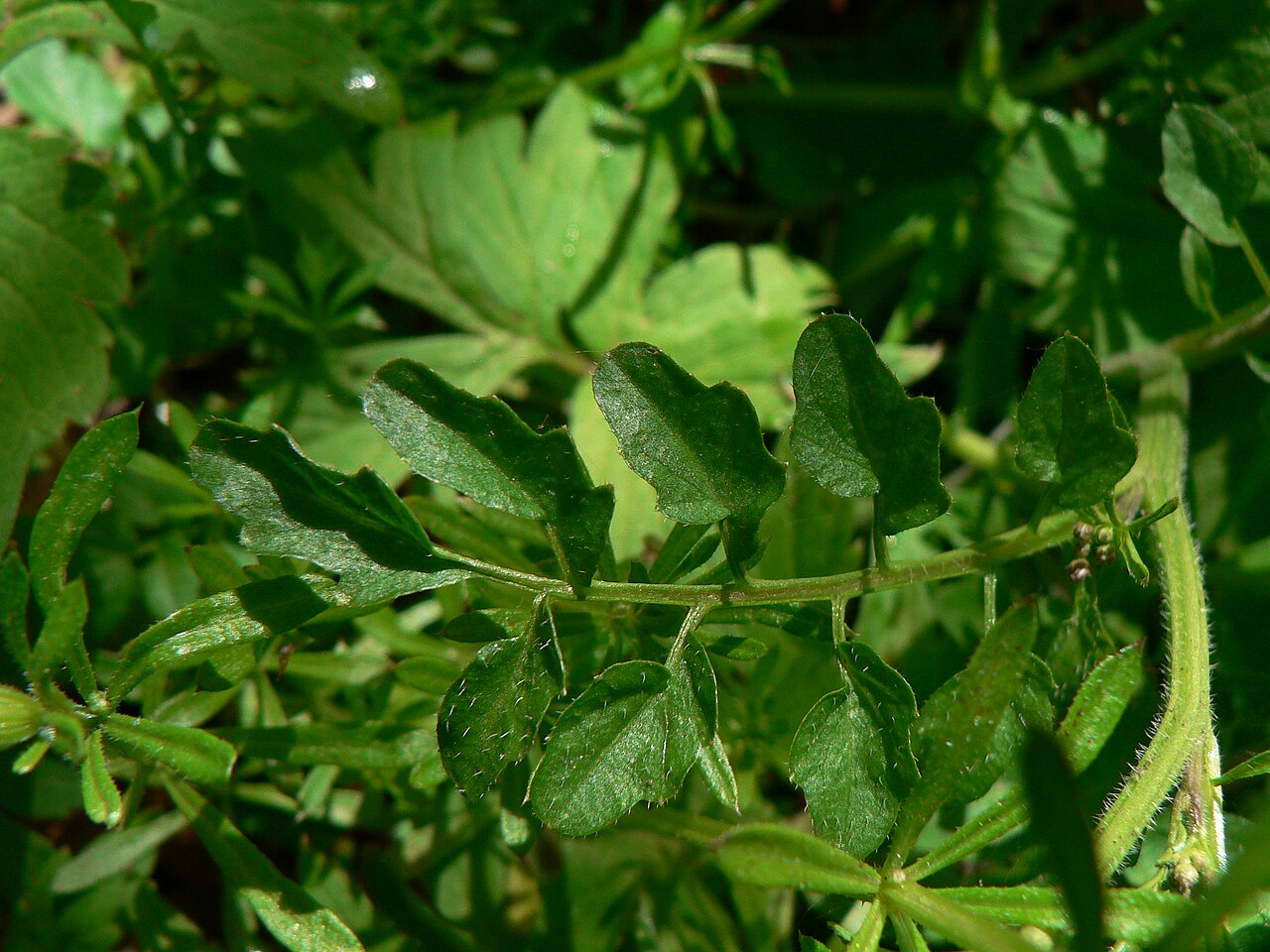
The basal leaves form a loose rosette and are divided into a rounded end leaflet and several pairs of smaller, rounded to oval leaflets. Stem leaves are similar but smaller, with narrower leaflets. Both leaves and stems are smooth or sparsely hairy.
Flowers & Fruit
The flowers are about ¼ inch across, with four white petals, in small clusters at the stem tips that lengthen as the plant flowers. Each flower usually has six stamens. The fruit is a slender, upright pod (silique) about ½ to 1 inch long, containing a row of tiny seeds; when ripe, the pod walls coil back suddenly and throw the seeds. Bloom runs mainly from February at low elevations to July in the mountains.
Look-alikes
Hairy bittercress (Cardamine hirsuta), a European weed, is very similar but usually has only four stamens, a more prominent basal rosette at flowering and fewer stem leaves. Wavy bittercress (C. flexuosa), another introduced weed, has zigzag stems. Native Milkmaids (C. californica) is a perennial with larger white to pink flowers and leaves with fewer, broader leaflets.
Quick Facts
| Scientific Name | Cardamine oligosperma (incl. C. umbellata in some treatments) |
| Family | Brassicaceae (mustard family) |
| Plant Type | Annual or biennial herb |
| Mature Height | 3–16 in |
| Mature Spread | 3–8 in |
| Growth Rate | Fast |
| Sun Exposure | Part shade to full shade; sun where moist |
| Water Needs | Medium to high; moist soil |
| Soil Type | Moist loam, mossy banks, gravelly streamsides |
| Soil pH | Slightly acidic to neutral |
| Bloom Time | February–July (varies with elevation) |
| Flower Color | White |
| Fall Color | None; plants die back after seeding |
| Fruit | Slender pods that split explosively |
| Deer Resistant | Low; tender greens are eaten |
| USDA Hardiness Zones | 3–9 (self-sowing annual) |
Native Range
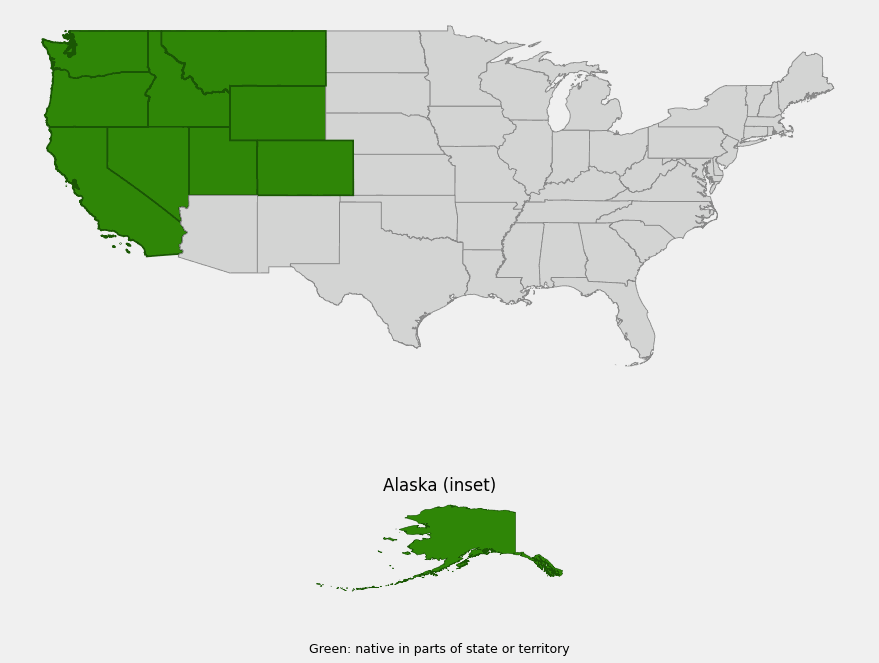
Little western bittercress is native to western North America. It ranges from Alaska, Yukon and the Northwest Territories south through British Columbia and Alberta to California, Nevada, Utah and Colorado, and east to Montana and Wyoming. Some botanists treat the plants of Alaska and the far north as a separate species or variety, umbellate bittercress (Cardamine umbellata).
The USDA PLANTS database also lists New York, far outside the species’ western range. We could not find herbarium or observation records supporting a native population there, so New York is not shown on the map.
It grows from near sea level along the Pacific Coast to subalpine elevations in the Rockies and Sierra Nevada, in moist, shaded or partly shaded places: stream banks, seeps, wet meadows, mossy rocks, creek bottoms, lakeshores and damp forest openings. It also appears in moist lawns and garden beds within its native range.
📋 Regional plant lists featuring Little Western Bittercress: Alaska · California & Nevada · Idaho, Eastern Oregon & Eastern Washington · Montana & Wyoming · Western Oregon & Western Washington · Utah & Western Colorado
Growing & Care Guide
Little western bittercress is not sold as a garden plant, and it seldom needs to be planted: within its range it often appears on its own in moist, shady corners. It is best appreciated as a wild edible and a small part of native streamside and woodland plant communities.
Light
Part shade to full shade, or full sun where the soil stays moist. It grows best in cool, damp spring conditions.
Soil & Water
Moist, loose soil rich in organic matter, mossy banks or gravelly streamsides. It needs steady moisture while growing and dies back once the soil dries in summer.
Planting Tips
If you want it in a woodland or rain garden, scatter fresh seed on moist, bare soil in late spring or fall. It works as a small, self-sowing groundcover filler beneath ferns and other moisture-loving natives.
Pruning & Maintenance
No care is needed. If it seeds more than you want, pull plants before the pods ripen; they come out easily.
Propagation
Grows easily from seed and self-sows freely. Collect ripe pods carefully into a bag, since they burst open when touched.
Landscape Uses
- Wild edible greens: peppery leaves raw or cooked in early spring
- Woodland and streamside gardens: a small self-sowing filler in moist shade
- Rain gardens: damp, shaded margins
- Native plant study: comparing native and weedy bittercresses
Wildlife & Ecological Value
Small as it is, little western bittercress plays a part in moist western plant communities in early spring.
For Pollinators
Its tiny flowers are visited by small bees, flies and other insects, although many flowers can self-pollinate. Plants in the mustard family are host plants for some white butterflies and orangetip butterflies, whose caterpillars feed on the flowers and pods.
For Birds
Small seed-eating birds such as juncos and sparrows feed on the tiny seeds, and the plants may be eaten by grouse and other ground-feeding birds.
For Mammals
Deer, elk and small mammals graze the tender spring greens along with other early leafy plants.
Ecosystem Role
As a fast-growing annual, it quickly covers moist, disturbed soil along streams and trails in spring. Its explosive pods spread seed onto newly exposed mud and gravel after floods or snowmelt.
Cultural & Historical Uses
The genus name Cardamine comes from a Greek name for a cress-like plant. The species name oligosperma means “few-seeded”, and the species was described by Thomas Nuttall, who collected plants in the West in the 1830s.
Bittercresses have long been eaten as wild greens. The leaves of little western bittercress have a mild, peppery taste like watercress and can be added to salads or cooked as a potherb, especially when young.
The names shotweed and snapweed refer to the way the ripe pods split and fling their seeds when touched. People picking or weeding mature plants sometimes get seeds in their faces, so it is wise to keep them away from the eyes.
Frequently Asked Questions
Is little western bittercress a weed?
It is a native plant, though it can self-sow into moist lawns and garden beds. The common bittercress weed of nurseries and gardens across North America is usually the introduced hairy bittercress (Cardamine hirsuta).
How do I tell it from hairy bittercress?
Little western bittercress usually has six stamens in each flower and more leaves on the stem, while hairy bittercress usually has four stamens and a larger basal rosette at flowering. A hand lens helps.
Is it edible?
Yes. Its leaves are edible raw or cooked and have a peppery, cress-like taste. As with any wild plant, be sure of the identification and gather it only from clean, unpolluted sites.
Why do the seed pods pop?
When the pods are ripe, their walls dry and coil back suddenly, throwing the seeds several feet away from the parent plant.
Where does it grow?
In western North America from Alaska and the Yukon south to California, Nevada, Utah and Colorado, in moist, shady places such as stream banks, seeps and wet meadows.

Looking for a nursery that carries Little Western Bittercress?
Browse our native plant nursery directory: Alaska · California · Colorado · Idaho · Montana · Nevada · Oregon · Utah · Washington · Wyoming

