
Black Highbush Blueberry (Vaccinium fuscatum)
Vaccinium fuscatum, the Black Highbush Blueberry (also called hairy highbush blueberry, and formerly Vaccinium atrococcum), is a tall native blueberry of the eastern United States and southern Ontario. It grows in bogs, swamps, pocosins, wet woods and pine flatwoods from Maine and Michigan south to Florida and west to Texas and Oklahoma.
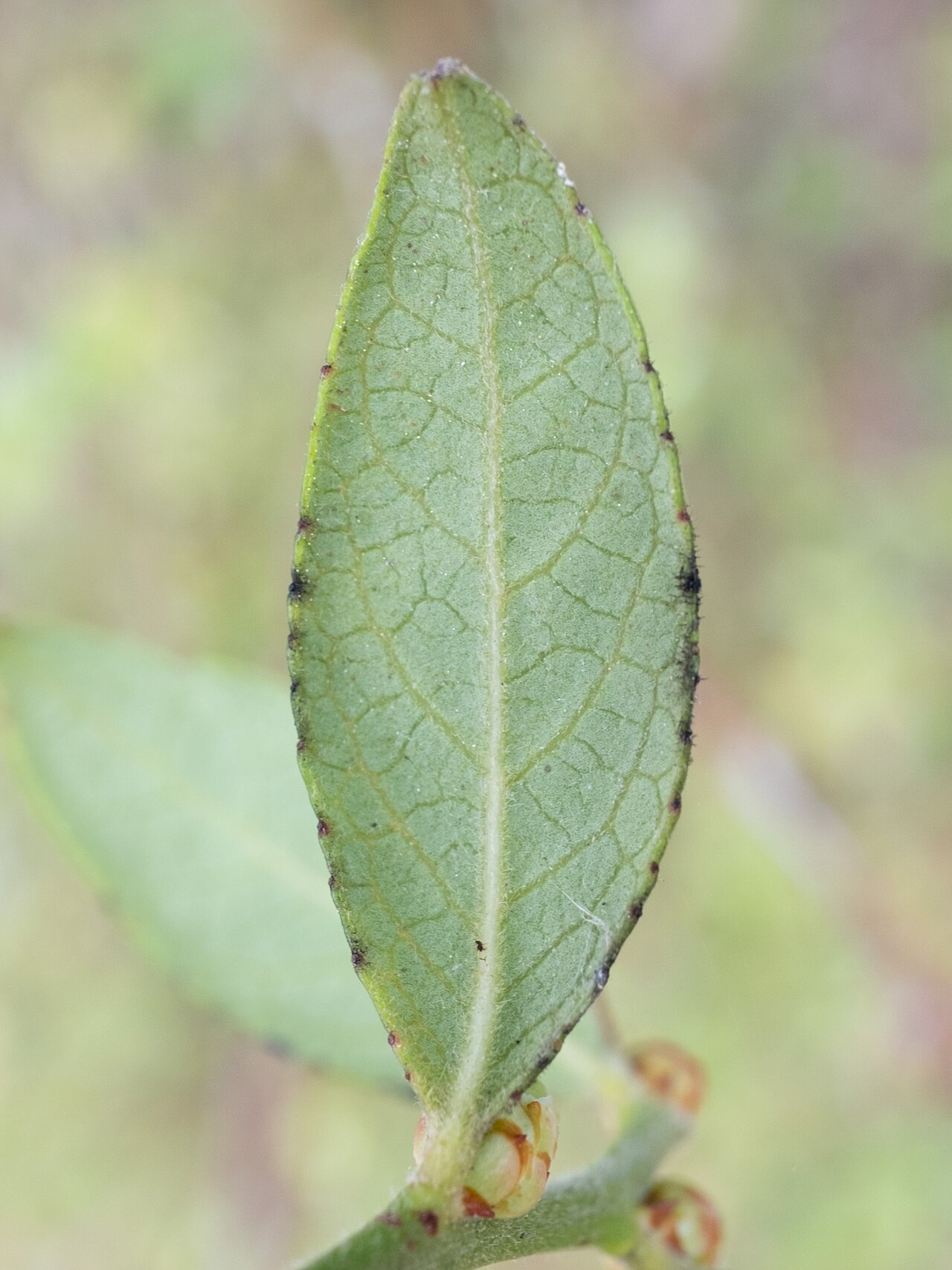
It is a close relative of the familiar Highbush Blueberry (V. corymbosum), and some botanists include it in that species. It differs in its dull, hairy leaf undersides and twigs, its earlier bloom and its shiny black berries without the whitish bloom of most blueberries.
The berries are edible and sweet, and the shrub offers spring flowers, summer fruit and brilliant red fall color. This guide covers how to identify it, where it grows, how to grow it and its value to wildlife.
Identification
Black highbush blueberry is a tall, multi-stemmed shrub with hairy twigs and leaf undersides, white urn-shaped flowers in early spring and black, unfrosted berries.
Form & Twigs
It grows 5 to 12 feet tall with several upright, arching stems from the base. Young twigs are green to reddish and covered with short, dingy hairs, and older stems have gray-brown, shredding bark.
Leaves
The leaves are alternate, elliptic to oval, about 1½ to 3 inches long, with smooth or finely toothed edges. The undersides are densely covered with dull, grayish or brownish hairs, and the leaves turn brilliant red to orange in fall.
Flowers
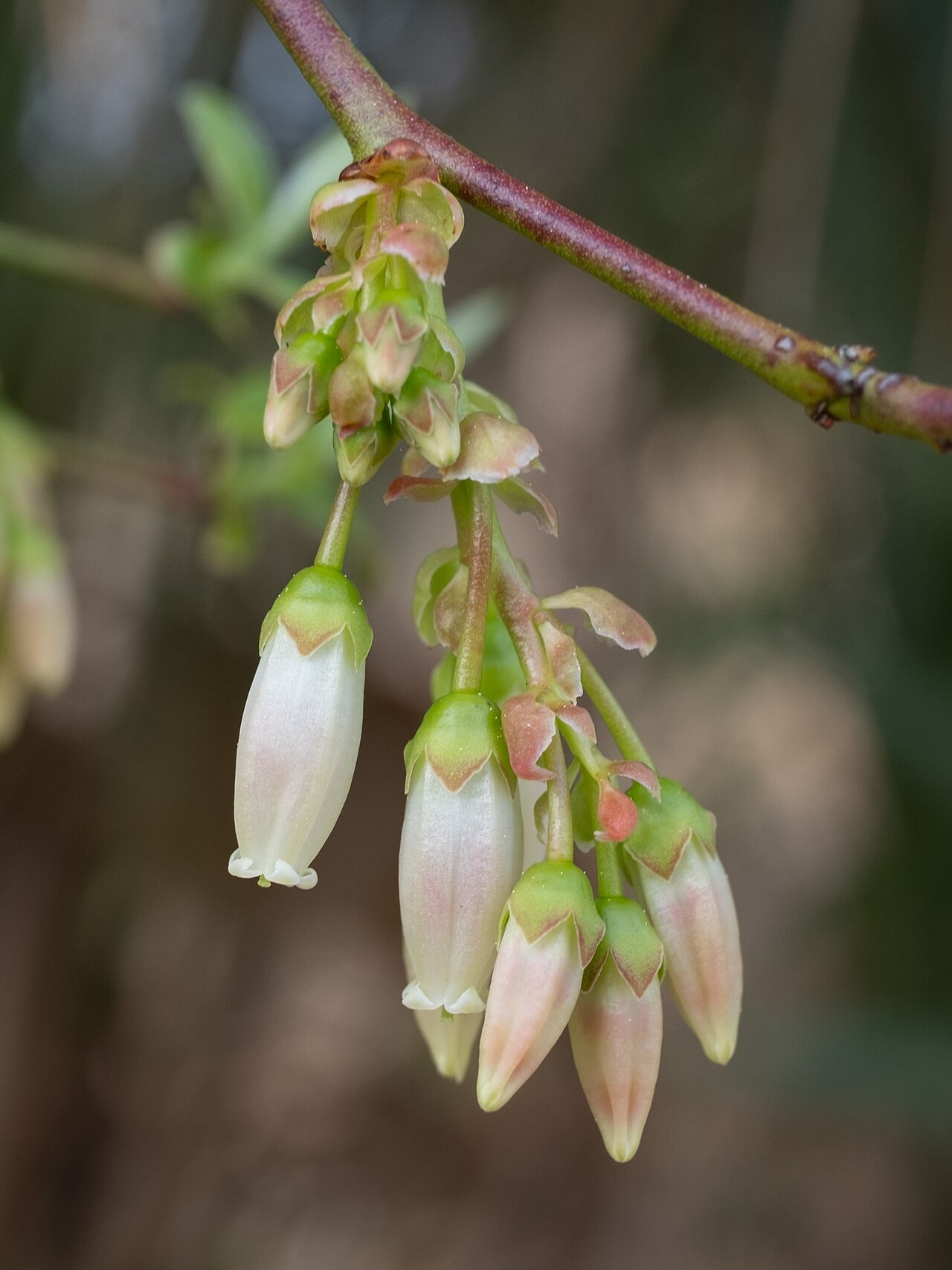
In early spring, from about February in the Deep South to May in the North, and often before or as the leaves expand, it bears clusters of white to pinkish, urn-shaped flowers about ¼ to ⅜ inch long. It typically blooms a week or two earlier than nearby highbush blueberry.
Fruit & Look-alikes
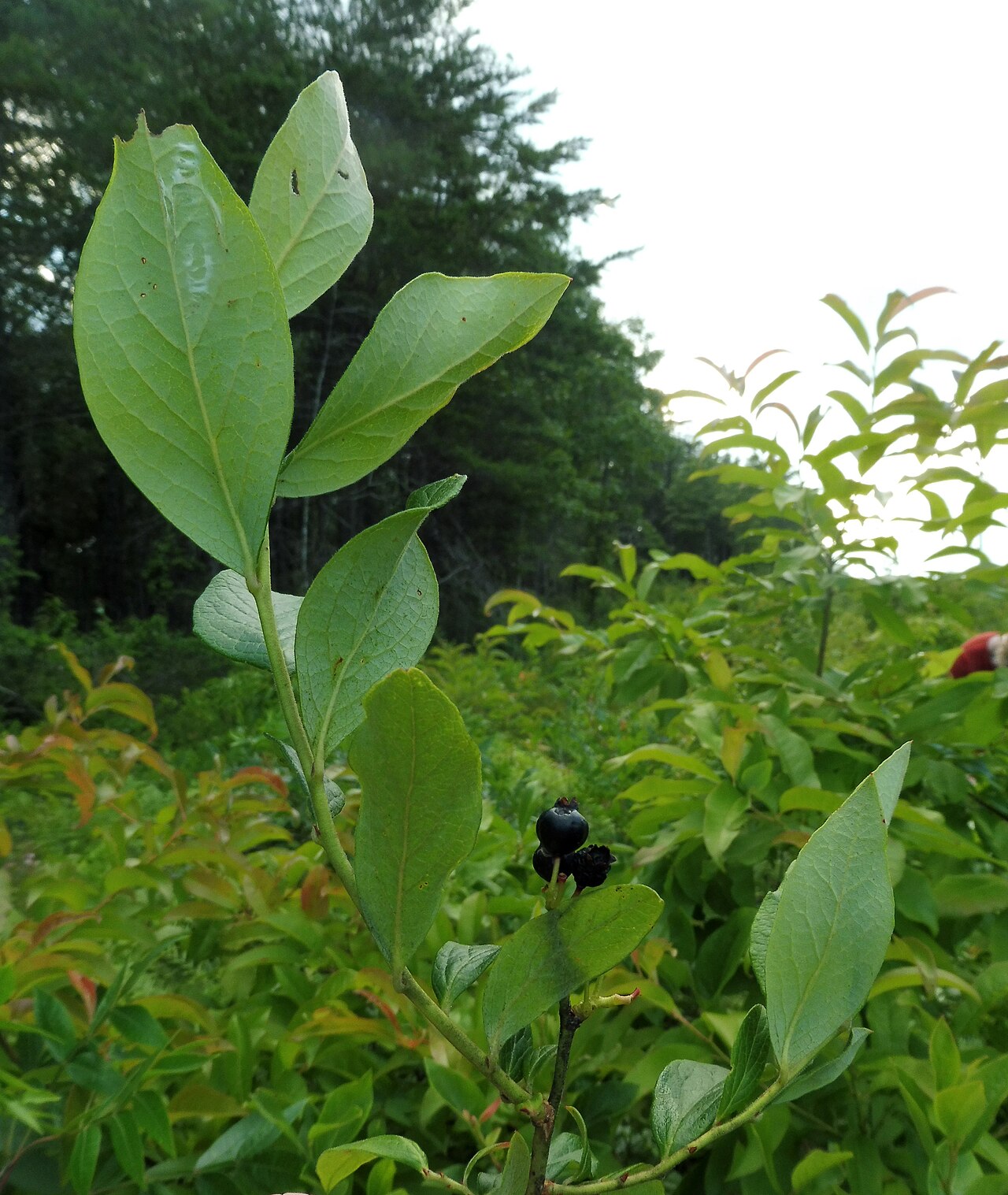
The berries ripen in early to mid summer, about ¼ to ⅜ inch across, black and shiny, without a powdery bloom, and sweet. Highbush Blueberry has smooth or less hairy leaves and blue, bloom-covered berries. Black huckleberries (Gaylussacia) have resin dots on the leaves and ten hard seeds per berry.
Quick Facts
| Scientific Name | Vaccinium fuscatum Aiton (syn. V. atrococcum) |
| Family | Ericaceae (heath family) |
| Plant Type | Deciduous shrub |
| Mature Height | 5–12 ft |
| Mature Spread | 4–8 ft |
| Growth Rate | Moderate |
| Sun Exposure | Full sun to partial shade |
| Water Needs | Moist to wet; tolerates seasonal flooding |
| Soil Type | Acidic, organic or sandy, moist |
| Soil pH | About 4.0–5.5 |
| Bloom Time | February–May |
| Flower Color | White to pinkish |
| Fall Color | Brilliant red to orange |
| Fruit | Shiny black berry without bloom; edible |
| Deer Resistant | Low; browsed by deer |
| USDA Hardiness Zones | 4–9 |
Native Range
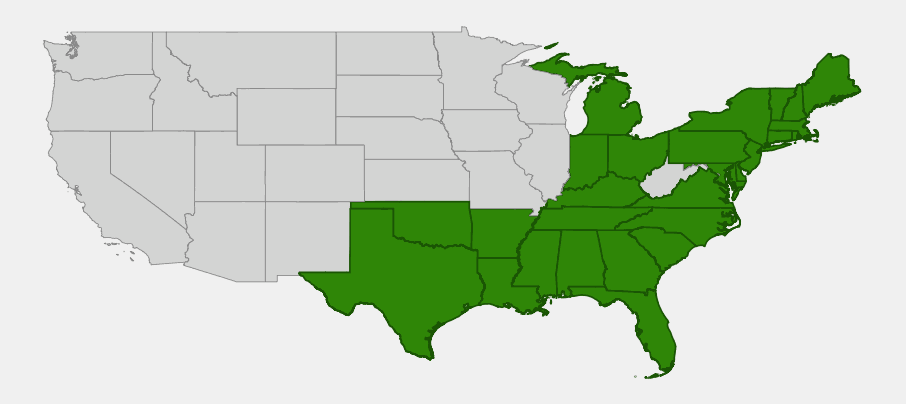
Black highbush blueberry is native to eastern North America, from southern Ontario and New England south to Florida and west to eastern Texas and Oklahoma. USDA PLANTS lists it in 27 states, including much of the Northeast, the Mid-Atlantic, the Southeast, the Ohio Valley and Michigan.
It is most common on the Atlantic and Gulf Coastal Plains and in the Piedmont, where it often grows alongside highbush blueberry. Because it is often lumped with V. corymbosum, its range is underreported in many areas.
It grows in wet, acidic places: bogs, swamps, pocosins, wet pine flatwoods and savannas, stream and pond margins, and wet woods, as well as on drier sandy sites and rocky slopes in parts of its range.
📋 Regional plant lists featuring Black Highbush Blueberry: North & South Florida · Alabama, Georgia & Mississippi · North & South Carolina · Maryland, Virginia & West Virginia · Kentucky & Tennessee · Arkansas, Louisiana, Eastern Oklahoma & Eastern Texas · Ohio & Indiana · Michigan, Wisconsin & Eastern Minnesota · New York, Pennsylvania & Northern New Jersey · Delaware, Southern New Jersey & Long Island · Connecticut, Massachusetts & Rhode Island · New Hampshire, Maine & Vermont
Growing & Care Guide
Black highbush blueberry is occasionally sold by native nurseries, sometimes under the name highbush blueberry. It is an attractive, wildlife-friendly shrub for moist, acidic soils, offering early flowers, sweet black berries and excellent fall color.
Light
Full sun to partial shade. Fruit production is best in full sun.
Soil & Water
It needs acidic soil (pH 4 to 5.5) rich in organic matter. It thrives in moist to wet soil and tolerates seasonal flooding, but also grows in well-drained sandy soil with mulch and regular water. Avoid alkaline or heavy clay soils.
Planting Tips
Plant in fall or early spring, 4 to 6 feet apart, with plenty of peat or pine bark in the planting area if your soil is not naturally acidic. Mulch with pine needles or wood chips. Plant more than one for better fruit set.
Pruning & Maintenance
After the first few years, remove a few of the oldest stems at the base in late winter to keep the shrub productive. Protect fruit from birds with netting if you want to harvest it.
Propagation
Take softwood cuttings in early summer or hardwood cuttings in winter, or dig rooted suckers. Seed from ripe berries needs cold stratification and grows slowly.
Landscape Uses
- Edible landscaping: sweet black berries in early summer
- Rain gardens and wet borders: tolerates wet, acidic soil
- Wildlife gardens: fruit and cover for birds and mammals
- Fall color: brilliant red foliage
Wildlife & Ecological Value
Like other blueberries, black highbush blueberry is a top wildlife plant.
For Pollinators
Its early flowers are an important nectar source for bumble bee queens and for the southeastern blueberry bee, which buzz-pollinates blueberries. Blueberries also host caterpillars of many moths and butterflies, including the striped hairstreak, Henry’s elfin and brown elfin.
For Birds
Catbirds, robins, thrushes, bluebirds, towhees, wild turkeys and many other birds eat the berries.
For Mammals
Black bears, foxes, raccoons, opossums, squirrels and chipmunks eat the fruit, and deer and rabbits browse the twigs.
Ecosystem Role
It is a characteristic shrub of acidic wetlands and pine flatwoods, where it forms part of the dense shrub layer that provides food and cover for wildlife.
Cultural & Historical Uses
William Aiton described Vaccinium fuscatum in 1789 in his catalog of plants grown at the Royal Botanic Gardens, Kew. The species name means “darkened,” for the black fruit or dusky hairs.
Highbush blueberries are notoriously difficult to classify because they hybridize and include plants with different chromosome numbers. Many botanists combine black highbush blueberry with V. corymbosum, while others, including USDA PLANTS, recognize it as a separate species.
Wild highbush blueberries were gathered by Indigenous peoples throughout eastern North America and dried for winter use, and they were the starting point for the cultivated blueberry industry in the early 20th century.
Frequently Asked Questions
Are black highbush blueberries edible?
Yes. The shiny black berries are sweet and edible, eaten fresh or cooked like other blueberries.
How is black highbush blueberry different from highbush blueberry?
Black highbush blueberry has hairy twigs and leaf undersides, blooms earlier and has black berries without the whitish bloom. Highbush blueberry usually has smoother leaves and blue, frosted berries.
Where does black highbush blueberry grow?
In bogs, swamps, wet woods and pine flatwoods across the eastern United States and southern Ontario.
Can I grow black highbush blueberry?
Yes, in acidic, moist soil in full sun to partial shade. It tolerates wet sites well.
Is black highbush blueberry good for wildlife?
Yes. Its flowers feed early bees, its berries feed many birds and mammals, and its leaves host several butterflies and moths.

Looking for a nursery that carries Black Highbush Blueberry?
Browse our native plant nursery directory: Alabama & Arkansas · Connecticut, Delaware, Florida & Georgia · Indiana · Kentucky, Louisiana, Maine, Maryland, Massachusetts, Michigan & Mississippi · New Hampshire, New Jersey, New York, North Carolina, Ohio & Oklahoma · Pennsylvania, Rhode Island, South Carolina, Tennessee, Texas, Vermont & Virginia

