
Blinks (Montia fontana)
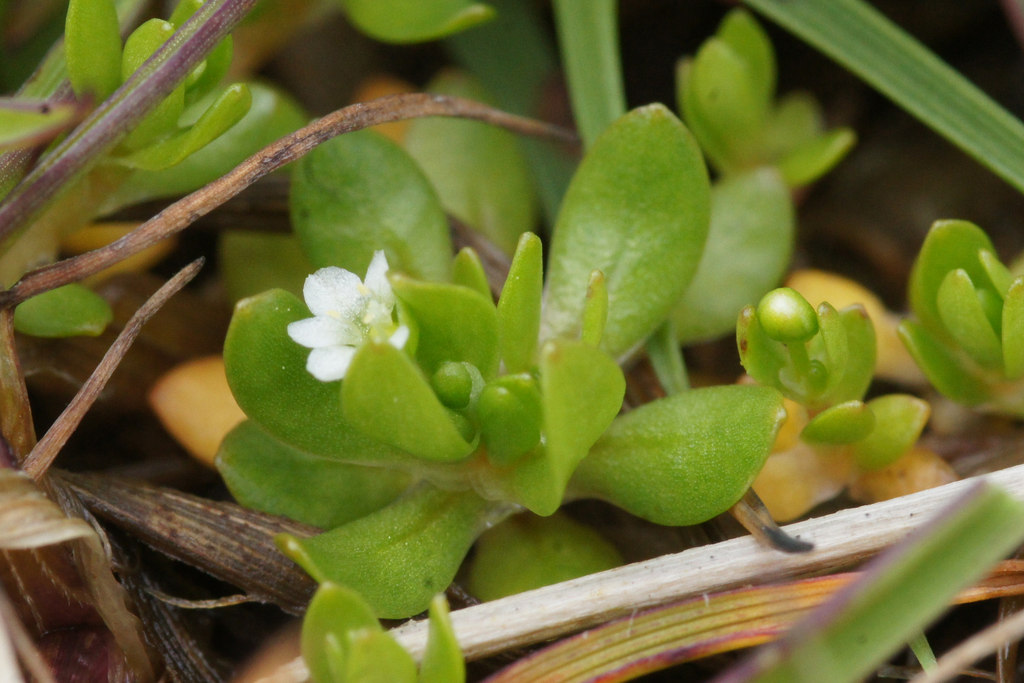
Montia fontana, known as Blinks, water chickweed or annual water miner’s lettuce, is a tiny, succulent wetland plant of springs, seeps, wet meadows and the muddy edges of pools and streams. It grows as small sprawling tufts or dense, bright green mats of paired, spoon-shaped leaves, with minute white flowers that are easy to overlook. Its species name, fontana, means “of springs,” which describes its favorite habitat well.
Blinks is one of the most widely distributed flowering plants in the world. It grows across Europe, northern Asia, the mountains of Africa, South America and Australasia, and in North America it is native from Alaska and Canada south through the Pacific states and the Great Basin, with scattered populations in the Northeast. It belongs to the miner’s lettuce family (Montiaceae) and is a small relative of Miner’s Lettuce and the Spring Beauty.
Blinks is not a showy garden plant, and it is rarely sold. It matters for other reasons: it is a common, characteristic plant of seeps, vernal pools and spring-fed wetlands, and learning to recognize it helps you read the health of these small, easily damaged habitats. This guide covers how to identify it, where it grows, and how to encourage it in a wet, natural area or a bog or rain garden.
Identification
Blinks is small and variable, and its appearance changes with water depth. On wet mud it forms compact, upright tufts; in shallow running water it produces long, weak, floating stems. A few features hold steady and make it easy to recognize once you know them.
Growth Habit
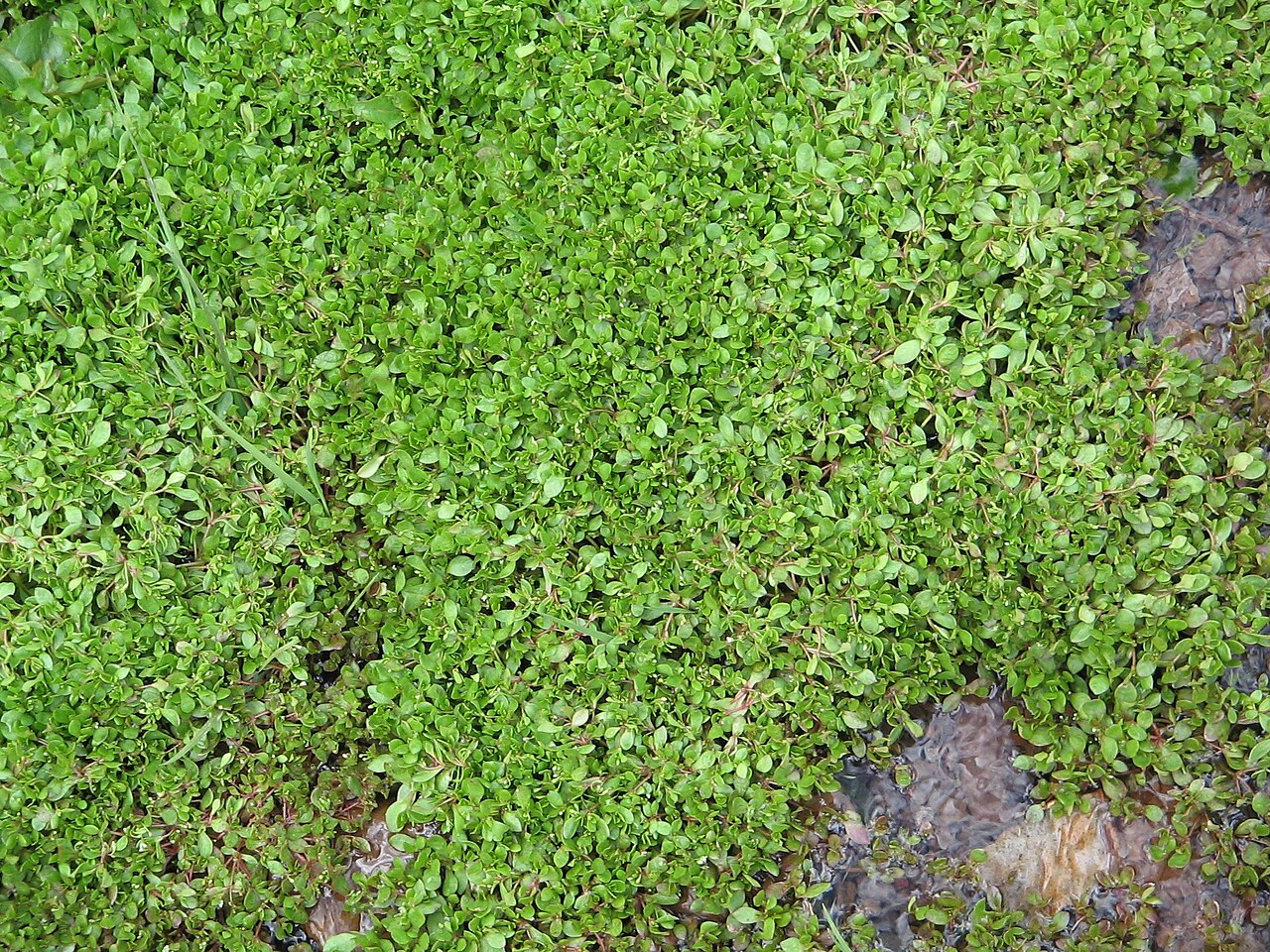
Blinks is usually an annual, though plants in permanently wet places can persist longer. The stems are slender, succulent and branched, usually 1 to 8 inches long, and they may be upright, sprawling or floating. Plants often root at the lower nodes and grow together into loose mats.
Leaves
The leaves are opposite, slightly fleshy, bright to yellowish green and spoon-shaped to narrowly oblong, usually less than an inch long, tapering to a short stalk. Paired leaves along the stem are the first thing to look for; similar wetland plants such as water-starworts have narrower, notched leaf tips and no petals.
Flowers
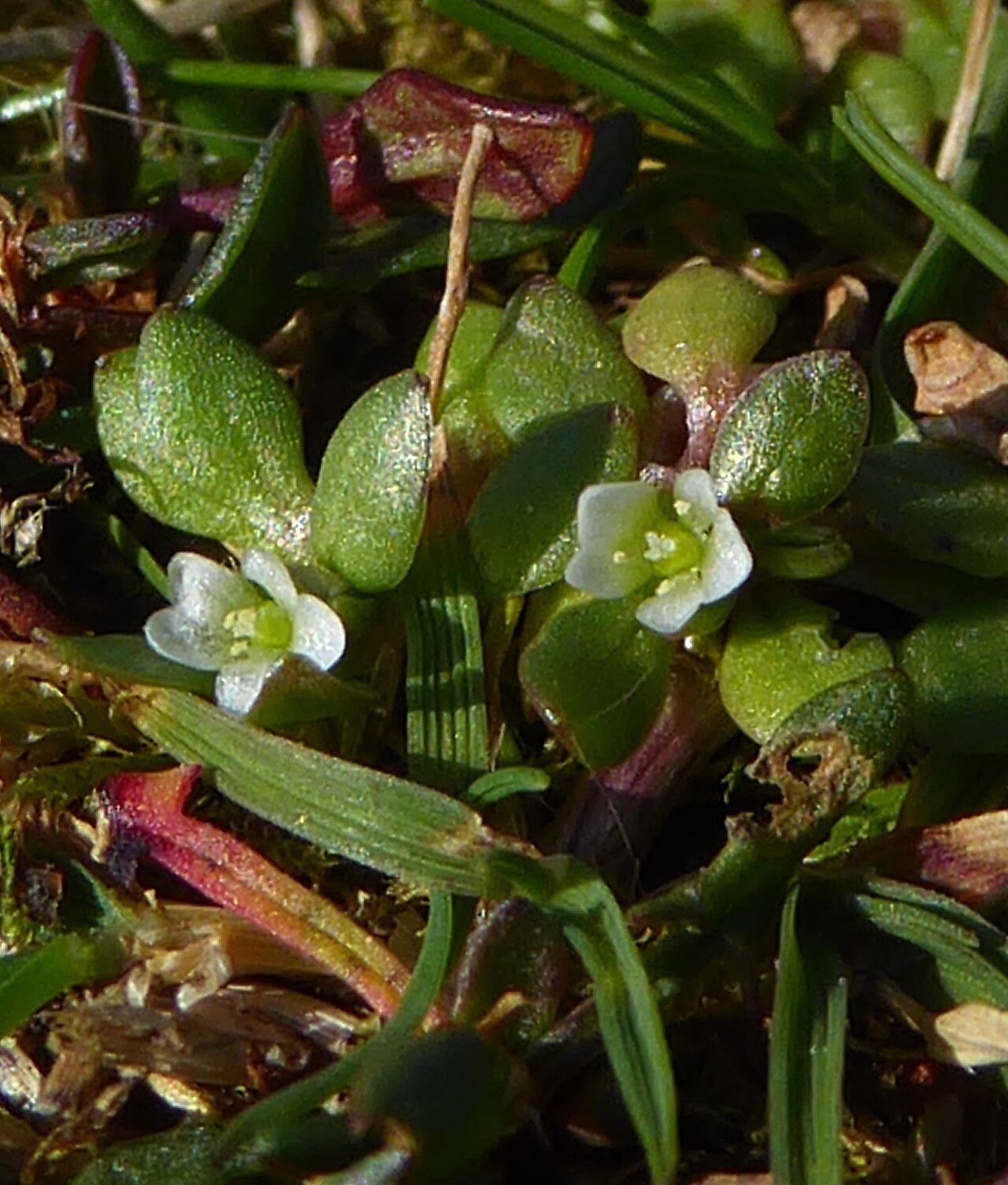
The flowers are tiny, about 1/16 to 1/8 inch across, with five white petals that are partly joined at the base, two green sepals and three stamens. They grow singly or in small clusters in the leaf axils and at the stem tips. The flowers open only briefly, often for a short time on sunny days, and many self-pollinate without opening at all. The common name “blinks” is often explained by these flowers that open and close so quickly.
Fruit & Seeds
The fruit is a small, round capsule that splits into three parts and holds up to three seeds. The seeds are black and about 1 mm long. Their surface varies from smooth and shiny to finely warty, and botanists use this seed texture to separate the subspecies of Montia fontana.
Look-alikes
Water-starworts (Callitriche) also grow in mats in shallow water but have no petals and notched leaf tips. Chickweeds (Stellaria) have deeply split petals and five or more styles. Young Miner’s Lettuce has much larger leaves and a disk-like pair of leaves under the flower cluster.
Quick Facts
| Scientific Name | Montia fontana L. |
| Family | Montiaceae (miner’s lettuce family); formerly Portulacaceae |
| Plant Type | Annual (sometimes short-lived perennial) wetland herb |
| Mature Height | 1–4 in tall; stems 1–8 in long, sprawling or floating |
| Mature Spread | Forms mats several inches to a foot or more across |
| Growth Rate | Fast |
| Sun Exposure | Full sun to part shade |
| Water Needs | High; constantly wet soil or shallow water |
| Soil Type | Wet mud, sand, gravel or mossy ground at springs and seeps |
| Soil pH | Acidic to neutral |
| Bloom Time | Spring to summer (March–August, depending on elevation) |
| Flower Color | White |
| Fall Color | None; annual |
| Fruit | Small three-parted capsule with up to 3 black seeds |
| Deer Resistant | Not usually browsed |
| USDA Hardiness Zones | 3–9 (grown as a cool-season annual) |
Native Range
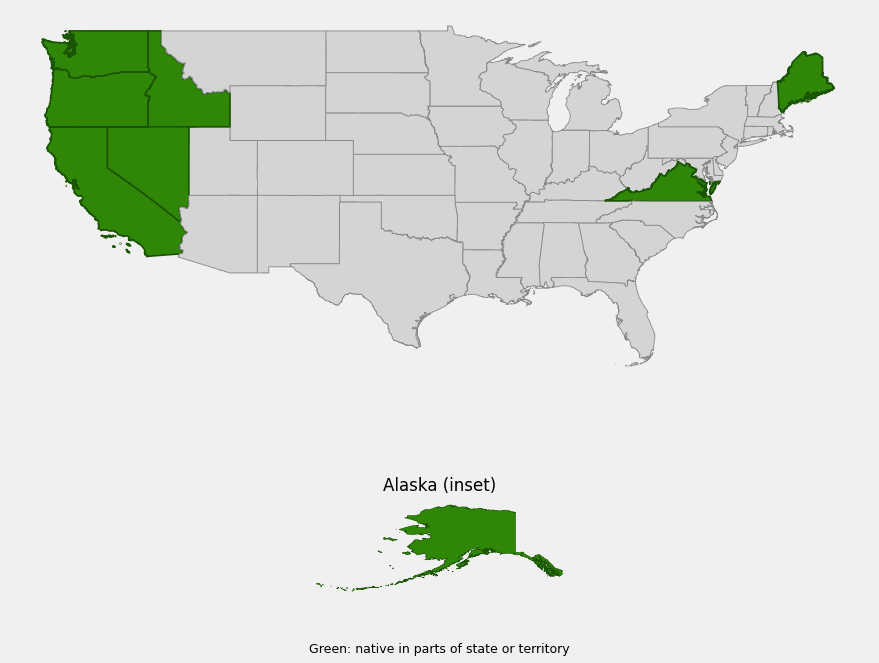
USDA PLANTS lists blinks as native in Alaska, Washington, Oregon, Idaho, California, Nevada, Maine and Virginia, and across much of Canada from British Columbia and Yukon to Labrador, Newfoundland and the Maritime provinces. In the West it is most common in the Pacific Northwest and California, from coastal wetlands to mountain meadows. In the East it is scarce and local, known from scattered wet sites in Maine and from a few records farther south, including Virginia.
Outside North America it is native through much of Europe and northern Asia, on high mountains in tropical Africa, in Greenland, and in the cool, wet parts of South America, Australia and New Zealand. Few flowering plants have such a wide range. Its small seeds probably travel on the feet and feathers of waterbirds and in mud, which may explain how it reached so many separate wetlands.
Blinks grows in places that stay wet for most of its growing season: spring-fed seeps, the edges of streams and ponds, wet meadows, mossy ground below snowbanks, ditches, and vernal pools that dry out in summer. In California and Oregon it is a typical plant of vernal pool margins and wet grassland in early spring. In the North it grows on wet tundra, gravel bars and shores. It does best where competing plants are low and the ground is open.
📋 Regional plant lists featuring Blinks: Alaska · Western Oregon & Western Washington · Idaho, Eastern Oregon & Eastern Washington · California & Nevada · New Hampshire, Maine & Vermont · Maryland, Virginia & West Virginia
Growing & Care Guide
Blinks is a plant for naturalists rather than flower borders. If you have a seep, a spring, a pond edge or a constantly wet corner, it may already grow there or arrive on its own. Where it is native, you can help it simply by protecting the wet, open conditions it needs.
Light
Blinks grows in full sun to partial shade. In hot, dry-summer climates it does best where it has some shade or where cold spring water keeps the ground cool.
Soil & Water
It needs soil that is saturated or covered by shallow water while it grows. Mud, sand, gravel and mossy ground all work. It will not survive in ordinary garden soil that dries out between waterings. In vernal pools and seasonal seeps it completes its life cycle in the wet months and sets seed before the ground dries.
Planting Tips
Blinks is almost never sold. The best way to grow it is to create or protect habitat: a shallow, unlined seep or the margin of a natural pond or bog garden, with open, low-competition ground. Within its native range, seed from a few plants on your own property can be scattered on wet mud in fall or early spring. Do not collect from protected areas, and avoid moving mud between wetlands, which can spread invasive plants and aquatic diseases.
Pruning & Maintenance
No pruning is needed. Keep taller plants from shading out the patch, and avoid trampling soft, wet ground, which damages the seedbank. Do not use herbicides or fertilizer near seeps and springs; blinks and the other plants and insects of these habitats are sensitive to runoff.
Propagation
Blinks reproduces mainly from seed, which it sets in large amounts, often from flowers that never open. Plants in water can also root from pieces of stem. A patch usually maintains itself if the site stays wet and open.
Landscape Uses
- Seeps and spring restoration: one of the characteristic native plants of spring-fed wetlands
- Vernal pool and wet meadow plantings: an early-season annual of seasonal pool margins in the West
- Bog and pond margins: a low, bright green carpet on wet mud between taller wetland plants
- Nature study: a good example of a tiny, self-pollinating annual with a worldwide range
Wildlife & Ecological Value
Blinks is small, but it is part of the low plant layer that shelters invertebrates in seeps, springs and seasonal pools, and it is eaten by a range of wildlife.
For Pollinators
Blinks offers little to pollinators. Its flowers are tiny and short-lived, and most of them pollinate themselves. Small flies and other insects may visit open flowers on sunny days.
For Birds
Waterfowl, shorebirds and songbirds that forage in shallow water eat the leaves, stems and seeds. Waterbirds probably also carry its seeds from one wetland to another in mud on their feet.
For Mammals
Deer, elk and other grazing mammals may eat it along with other tender wetland plants in spring. Mats in streams and seeps shelter aquatic insects and other invertebrates that fish and amphibians feed on.
Ecosystem Role
Blinks is often one of the first plants to cover open mud at springs and seeps, which helps hold fine sediment in place. Together with mosses, water-starworts and other low plants, it forms the “spring vegetation” that ecologists use to recognize healthy, undisturbed groundwater-fed sites.
Cultural & Historical Uses
Carl Linnaeus named Montia fontana in 1753. The genus honors Giuseppe Monti, an eighteenth-century Italian botanist and professor in Bologna. Blinks gives its name to a whole group of European spring communities, the Montio–Cardaminetea, which are defined by plants of cold, clean spring water.
The plant has many local names that describe its habitat and its quick flowers, including blinks, water blinks, water chickweed and water miner’s lettuce. Like other members of the miner’s lettuce family, its leaves are mild and succulent, and some foraging guides list them as edible raw or cooked. The plants are tiny, though, and they grow in water that may be contaminated, so it is better appreciated than gathered.
Its remarkably wide range has made blinks a favorite subject for botanists who study how plants spread. Scientists have described several subspecies based mainly on the texture of the seed coat, and their distributions differ around the world. The seeds can survive for some time in mud, which suits a plant that may be carried long distances by birds.
Frequently Asked Questions
Why is it called blinks?
The tiny white flowers open only briefly, often for a short time on sunny days, and many never open at all. They seem to blink open and shut, which is the usual explanation for the name.
Is blinks the same as miner’s lettuce?
No, but they are related. Both belong to the miner’s lettuce family (Montiaceae). Blinks is much smaller and grows in wet places, while Miner’s Lettuce (Claytonia perfoliata) has larger leaves and a round, disk-like leaf below the flowers.
Where does blinks grow in the United States?
USDA lists it as native in Alaska, Washington, Oregon, Idaho, California, Nevada, Maine and Virginia. It is most common in Pacific Coast wetlands, mountain meadows and Alaskan wetlands, and rare in the East.
Can I grow blinks in my garden?
Only if you can keep the soil constantly wet. It suits the margin of a natural pond, a bog garden or a seep. It is rarely sold, and it is best encouraged by protecting wet, open ground where it already grows.
Is blinks edible?
Some foraging guides list the leaves as edible, like its relative miner’s lettuce. However, the plant is tiny and grows in water that may carry bacteria, parasites or pollutants, so we do not recommend eating it from the wild.

Looking for a nursery that carries Blinks?
Browse our native plant nursery directory: Alaska · California · Idaho · Maine · Nevada · Oregon · Virginia · Washington

