
Potbelly Airplant (Tillandsia paucifolia)
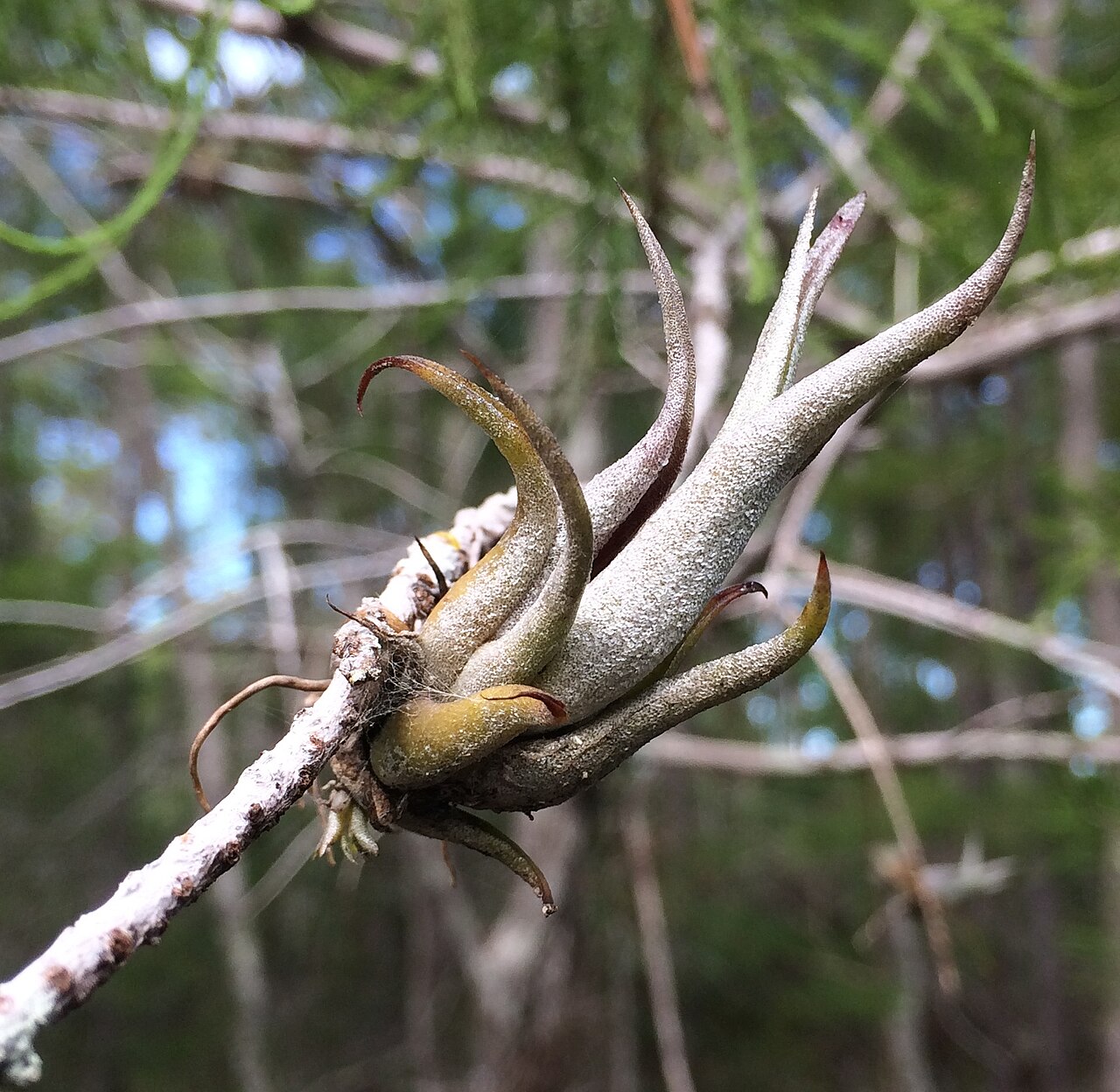
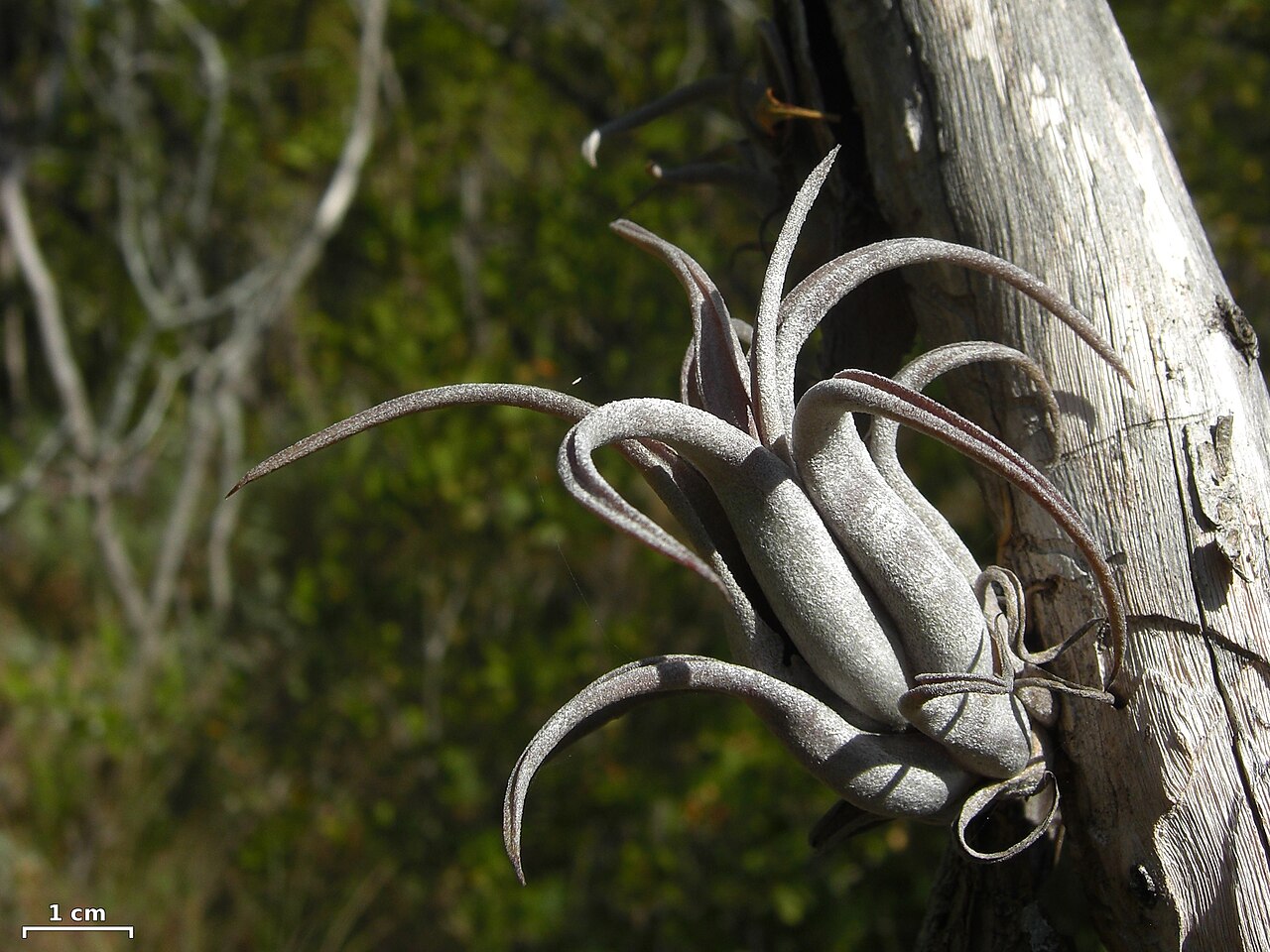
Tillandsia paucifolia, the Potbelly Airplant, is a small, silvery air plant (a bromeliad) native to South and Central Florida. It is named for its swollen, bulb-like base, formed by a few thick, overlapping leaves, from which the leaf blades curl and twist outward. The whole plant is usually only 4 to 8 inches long and is covered with fine gray scales that give it a frosted look.
Like other Tillandsia, it is an epiphyte: it grows perched on the branches and trunks of trees, especially slash pine, cypress and buttonwood, and takes its water and nutrients from rain, dew and dust rather than from soil. It is not a parasite and does not feed on its host tree. Botanists and older references also call it Tillandsia circinata, and some sources treat the two names differently, but the Atlas of Florida Plants and USDA PLANTS use Tillandsia paucifolia for the Florida plant.
Outside Florida, it ranges through the West Indies, Mexico, Central America and northern South America. It is also a popular houseplant in the air plant trade. This guide covers identification, its Florida range, and how to grow it outdoors in zones 10–11 and indoors.
Identification
The swollen base and few, thick, twisted leaves make the potbelly airplant one of the easiest Florida air plants to recognize.
Leaves & Growth Habit
A small epiphytic rosette, usually 4 to 8 inches long, growing singly or in small clusters. It has relatively few leaves (the name paucifolia means “few-leaved”), typically about five to ten. Their broad, overlapping bases form a hollow, bulb-shaped “pot belly,” and the narrow, channeled blades taper to points, often curling or twisting to one side. Every surface is covered with dense, silvery-gray trichomes, the absorbent scales typical of air plants.
Flowers
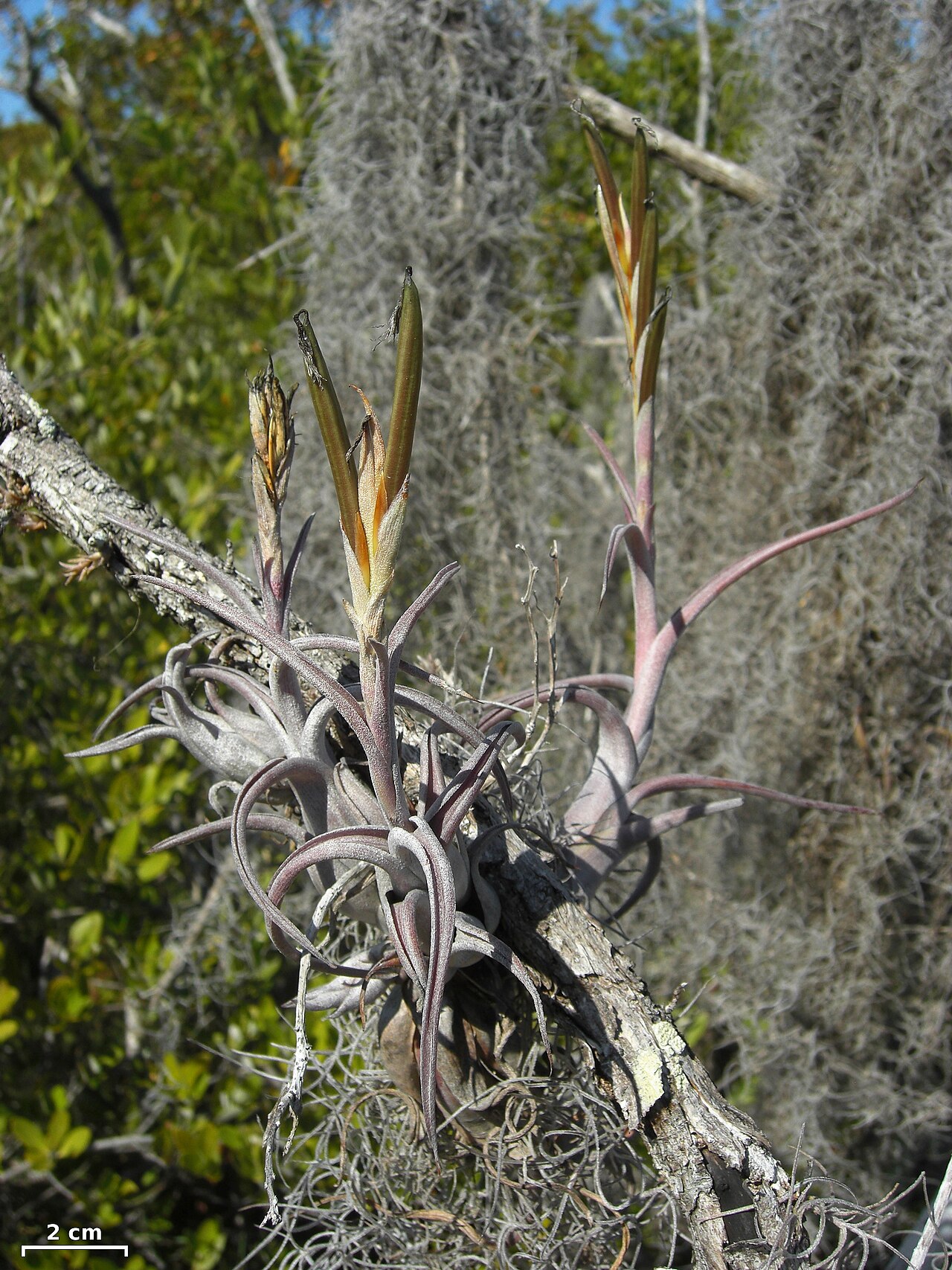
The flower spike is short and upright, with one or a few flattened branches covered in overlapping bracts that are pink to rosy red. The tubular flowers, which peek out between the bracts, are violet to lavender-blue and about 1 to 1½ inches long, with protruding stamens. Bloom times vary, and individual rosettes flower once, then produce offsets (“pups”) from the base.
Fruit & Seeds
The fruit is a slender capsule that splits open to release seeds with fluffy, silky hairs. The seeds drift on the wind and catch on rough bark, where new plants can start.
Look-alikes
In Florida, Bartram’s Airplant and Southern Needleleaf have many narrow leaves and no swollen base. Florida’s other bulb-based air plants, Balbis Airplant and the banded airplant (Tillandsia flexuosa), are larger, with longer leaves, and the banded airplant has pale cross-bands on its leaves. Ball Moss forms round tufts of thin leaves.
Quick Facts
| Scientific Name | Tillandsia paucifolia Baker; syn. Tillandsia circinata (in part) |
| Family | Bromeliaceae (bromeliad family) |
| Plant Type | Epiphytic perennial (air plant) |
| Mature Height | 4–8 in |
| Mature Spread | 3–6 in; small clumps with offsets |
| Growth Rate | Slow |
| Sun Exposure | Bright filtered light to partial sun |
| Water Needs | Low; rain, dew and humidity; dries quickly between wettings |
| Soil Type | None; grows on bark of trees and shrubs |
| Soil pH | Not applicable (epiphyte) |
| Bloom Time | Variable through the year |
| Flower Color | Violet to lavender-blue flowers in pink to red bracts |
| Fall Color | Evergreen; silvery gray |
| Fruit | Slender capsule with silky, wind-borne seeds |
| Deer Resistant | Yes; grows out of reach on tree branches |
| USDA Hardiness Zones | 10–11 outdoors; houseplant elsewhere |
Native Range
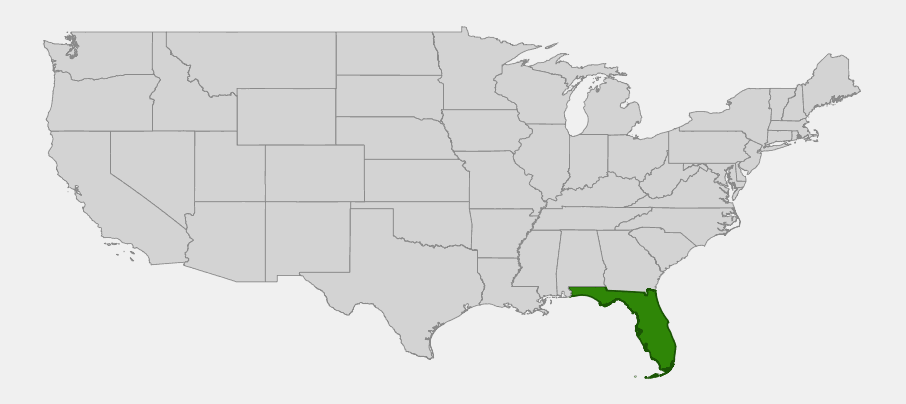
In the United States, potbelly airplant grows only in Florida. The Atlas of Florida Plants records it as native in 13 counties, mostly in South Florida, from the Florida Keys and Miami-Dade north along the Atlantic coast to Brevard County, inland around Lake Okeechobee, and on the Gulf coast from Collier County north through Lee and Charlotte counties. It is not state-listed in Florida.
Beyond Florida it is widespread in the Neotropics, from the Bahamas and the West Indies through southern Mexico and Central America to Colombia and Venezuela.
In Florida it grows on trees in open, bright, humid habitats: slash pine flatwoods and pine rocklands, cypress swamps and domes, buttonwood and mangrove edges, and tropical hammocks. It often grows on thin twigs and outer branches, where light is good and the plant dries quickly after rain. Southwest Florida populations are especially common on slash pines.
📋 Regional plant lists featuring Potbelly Airplant: North & South Florida
Growing & Care Guide
Potbelly airplant is one of the easier native air plants to grow, outdoors in frost-free Florida and indoors anywhere. Buy plants from nurseries that propagate them, and never remove wild plants from trees: collecting plants from state and national parks and other public lands is prohibited, and several of Florida’s native air plants have become state-listed because of the invasive Mexican bromeliad weevil.
Light
Outdoors, give it bright, filtered light, like the dappled shade of a pine or oak canopy, with some direct morning sun. Indoors, place it within a few feet of a bright east, west or south window, or under grow lights. Its heavy silvery coating lets it tolerate more light than green-leaved air plants.
Soil & Water
It needs no soil. Outdoors in South Florida, rain, dew and humidity usually supply all the water it needs once it is established on a tree. Indoors, mist it several times a week or soak it in rainwater or dechlorinated water for 10 to 20 minutes once a week. The swollen base can hold water and rot, so turn the plant upside down and shake it gently after watering, and let it dry fully within a few hours, in good air circulation.
Planting Tips
Attach it to a branch, piece of driftwood or cork bark with soft plant ties, cotton string or a dab of non-toxic, waterproof glue, never with copper wire, which is toxic to bromeliads. Do not bury the base in moss or soil. Outdoors it grows year-round in zones 10–11; protect it from frost, and bring container or mounted plants indoors when temperatures drop below about 45°F.
Pruning & Maintenance
Remove dry, dead outer leaves at the base. After a rosette flowers, it slowly declines while producing pups; you can trim off the old rosette once it dries. Feed indoor plants occasionally with a very dilute bromeliad or air plant fertilizer in the growing season.
Propagation
Gently separate pups once they are about a third to half the size of the parent, or leave them to form a clump. It can also be grown from seed sown on a mesh or bark surface, but seedlings take several years to reach flowering size.
Landscape Uses
- Native tree gardens in South Florida: attach to slash pines, oaks or buttonwoods for a natural look
- Houseplants: a compact, sculptural air plant for bright windows and terrariums with good airflow
- Mounted displays: on driftwood, cork bark or branches on a shaded patio
- Wildlife gardens: adds habitat for small invertebrates and nectar for hummingbirds
Wildlife & Ecological Value
Small as it is, the potbelly airplant provides food and shelter for a surprising number of creatures.
For Pollinators
Its tubular violet flowers produce nectar. Bees, beetles and hummingbirds have been reported visiting T. paucifolia during the day, and moths at night. In Florida, ruby-throated hummingbirds visit air plant flowers during migration and winter.
For Birds
Small birds such as warblers and gnatcatchers glean insects and spiders from among the leaves, and some birds use bits of air plants in their nests.
For Mammals
It has little direct value for mammals. Squirrels occasionally pull plants from branches.
Ecosystem Role
The hollow, swollen bases of bulb-shaped air plants such as this one often shelter ants and other small invertebrates, and the plants add to the diversity of Florida’s epiphyte communities. Heavy growth on a single branch can shade the host or add weight, but the plant does not take nutrients from the tree.
Cultural & Historical Uses
The English botanist John Gilbert Baker described Tillandsia paucifolia in the late 1880s. Its name means “few-leaved.” The genus honors the 17th-century Swedish-Finnish physician and botanist Elias Tillandz. The name Tillandsia circinata, meaning “coiled,” was published earlier by Schlechtendal and has often been applied to Florida plants; botanists still debate how the two names relate.
Air plants of this kind have become hugely popular as houseplants because they need no soil and can be displayed on driftwood, shells and wire frames. Many of those sold today are grown in nurseries in Florida and Central America; buying nursery-grown plants helps protect wild populations.
Florida’s native air plants face a serious threat from the Mexican bromeliad weevil, an invasive insect first found in Florida in 1989. Its larvae bore into the bases of larger bromeliads, and the losses led Florida to list several native Tillandsia species as endangered or threatened. Potbelly airplant is not currently state-listed, but it is one more reason to leave wild air plants where they grow.
Frequently Asked Questions
Is potbelly airplant native to Florida?
Yes. The Atlas of Florida Plants and USDA PLANTS list it as native in Florida, where it grows in about 13 counties, mostly in South Florida. It is also native to the West Indies, Mexico, Central America and northern South America.
Is it the same as Tillandsia circinata?
Florida plants have often been called Tillandsia circinata, and the names are frequently treated as synonyms. The Atlas of Florida Plants and USDA PLANTS use Tillandsia paucifolia.
How do I care for a potbelly airplant indoors?
Give it bright indirect light, soak or mist it weekly, shake out excess water, and let it dry within a few hours. Good airflow is essential, because water trapped in the swollen base can cause rot.
Is it a parasite on trees?
No. It only uses the tree for support and gets water and nutrients from rain, dew and dust. Very heavy growth can add shade and weight, but it does not feed on the tree.
Can I collect air plants from trees in Florida?
No. Collecting plants from public lands is prohibited, and several Florida air plants are state-listed because of the Mexican bromeliad weevil. Buy nursery-grown plants instead.

Looking for a nursery that carries Potbelly Airplant?
Browse our native plant nursery directory: Florida

