Blue Mistflower in a Small Garden: Designing Around a Spreading Perennial
Last updated: November 6, 2026

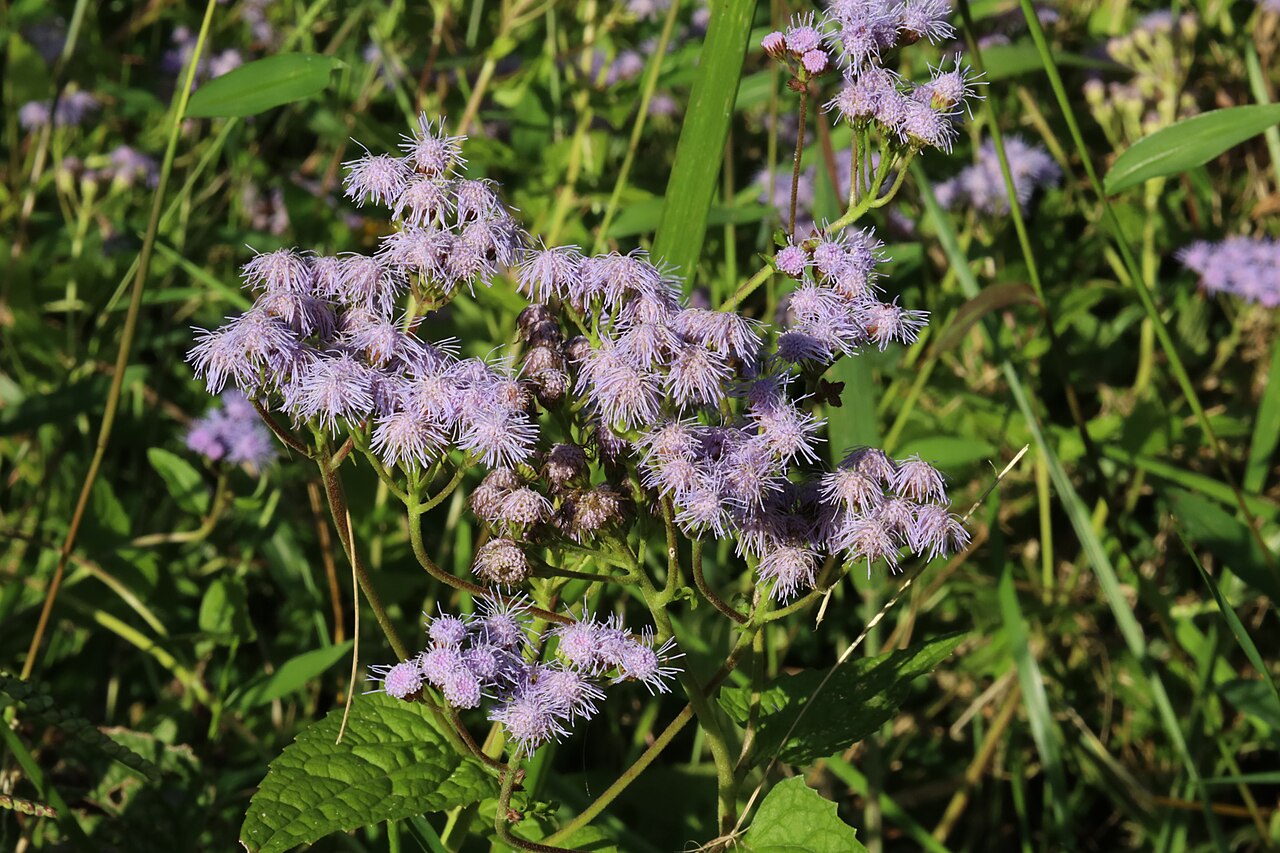
Blue mistflower gives you something few late-season natives do: soft blue flowers from late summer until frost, and a steady stream of butterflies.
It also spreads. North Carolina State Extension says plainly that it is not recommended for smaller planting areas because of its aggressive nature. That is a real warning, and this guide takes it seriously.
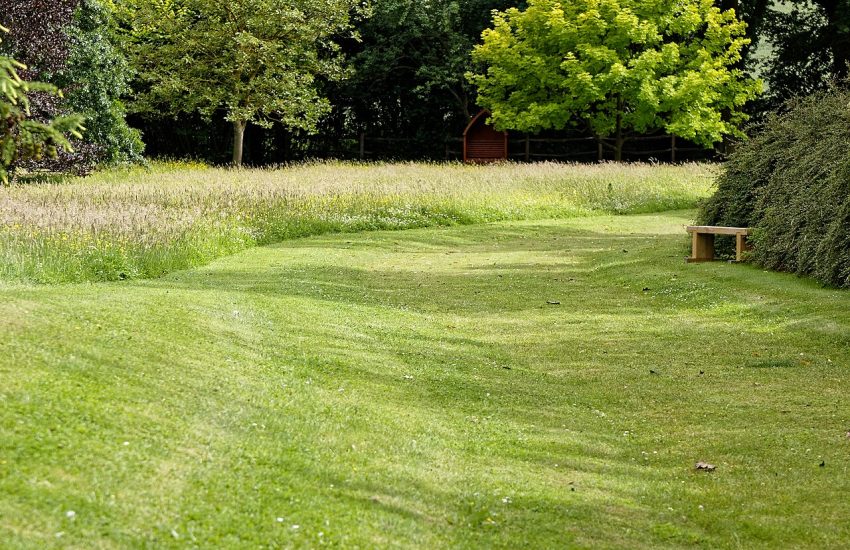
The answer is not to avoid the plant. It is to design the small garden around how mistflower behaves: give it a defined zone, surround it with neighbors that can hold their ground, and use edges that do the controlling for you.
Plan at a Glance
| Site | A bed edged by paving, a path, or mowed lawn on at least two sides. Avoid beds that run straight into other perennials. |
| Size | Works in a bed as small as roughly 6 by 10 feet if mistflower gets one bounded pocket, not the whole bed. |
| Sun | Full sun to partial shade. Afternoon shade helps in hot southern summers. |
| Soil | Moist, humus-rich loam or clay. Average soil slows the spread; constantly wet soil speeds it up. |
| Maintenance | Low to moderate: a spring edge check, a possible early-season cut-back, and thinning every few years. |
| Best regions | Within its native range, roughly New Jersey to southern Illinois and eastern Kansas, south to Florida and Texas. |
Start With an Honest Site Assessment
Mistflower spreads two ways. Its rhizomes creep outward underground, and its seeds carry tufts of hair that let the wind move them around, according to Illinois Wildflowers.
The same source notes that it can spread aggressively in moist open ground, while its drought tolerance is poor. In practice, soil moisture is your throttle. A bed that stays wet all summer will push the plant hard; a bed with average moisture slows it down.
Before you buy a plant, walk the space and note three things:
- Where the water goes. Low spots, downspout outlets and the bottom of a slope will be the fastest-growing part of the patch.
- What surrounds the bed. Paving and mowed lawn stop rhizomes cleanly. A neighboring perennial border does not.
- How much sun it gets. NC State lists full sun to partial shade. The Native Plant Society of Texas adds that it does better with afternoon shade in hot summers.
If your only open spot is a soggy corner that bleeds into the rest of your plantings, that is the wrong place for mistflower in a small garden. Pick a spot with hard edges, even if it is a little drier.
Give Mistflower a Pocket, Not the Whole Bed
The most useful design decision is to treat mistflower as a filler for one defined area. Think of it as a living groundcover inside a frame.
The Lady Bird Johnson Wildflower Center describes it as good either as a border plant or as a colonizing groundcover. In a small garden you want the border-plant version, so decide the size of the pocket before you plant and mark it.
A good pocket has at least one hard edge, such as a path, a patio or a bed edge you mow along. The other sides should face plants sturdy enough to hold their own, not delicate seedlings or short spring bloomers that disappear by June.
For the edge itself, our guide to keeping blue mistflower within a garden bed walks through edging options and the yearly spring trim along the boundary.
Layer the Bed Around a Spreading Middle
The Native Plant Society of Texas suggests using mistflower as a border plant or to fill space in front of taller plants. That gives you a simple three-layer plan.
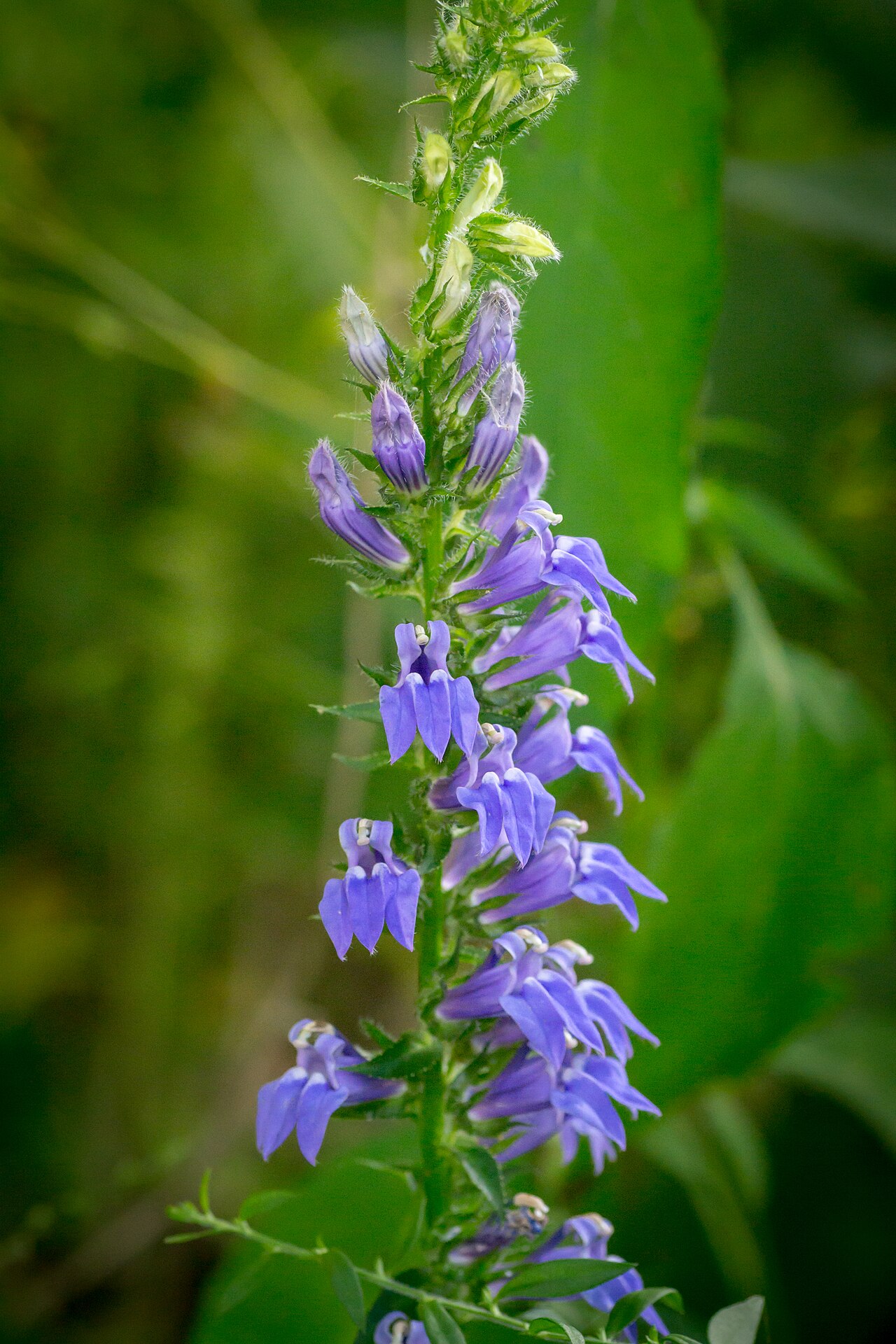
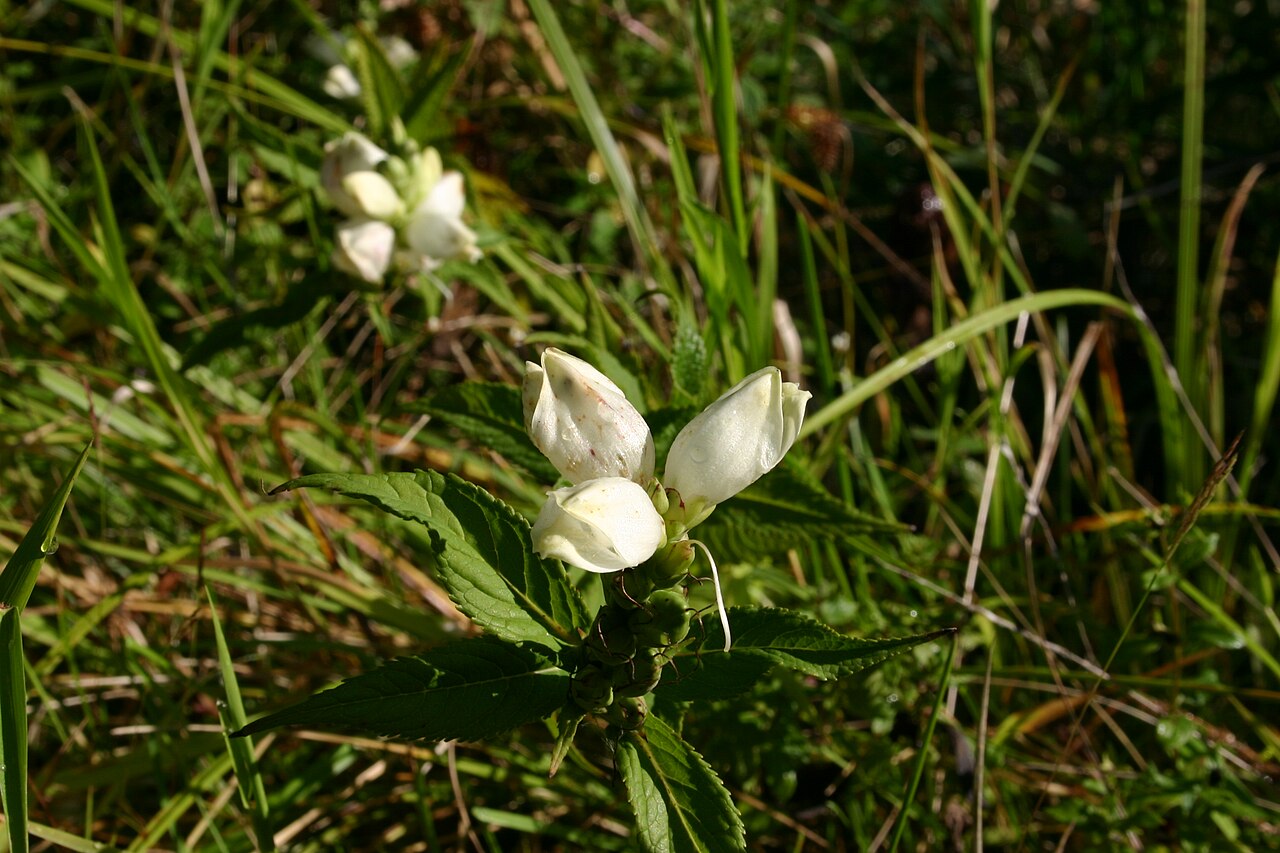
- Back layer: upright, clump-forming perennials such as turtlehead, great blue lobelia and foxglove beardtongue. Their stems rise above the mistflower and give the bed structure.
- Middle layer: mistflower, held in its pocket, where its low haze of blue fills gaps under the taller plants in fall.
- Front layer: a path or lawn edge, or a clump-former like orange coneflower that marks the front without being overrun.
Clump-formers matter because they hold their ground. A dense crown with its own root mass resists creeping rhizomes far better than a scattering of small plants.
Use Repetition, Not Variety, in a Small Space
Small gardens look busy when every plant is different. Pick four to six species and repeat them, rather than squeezing in one of everything.
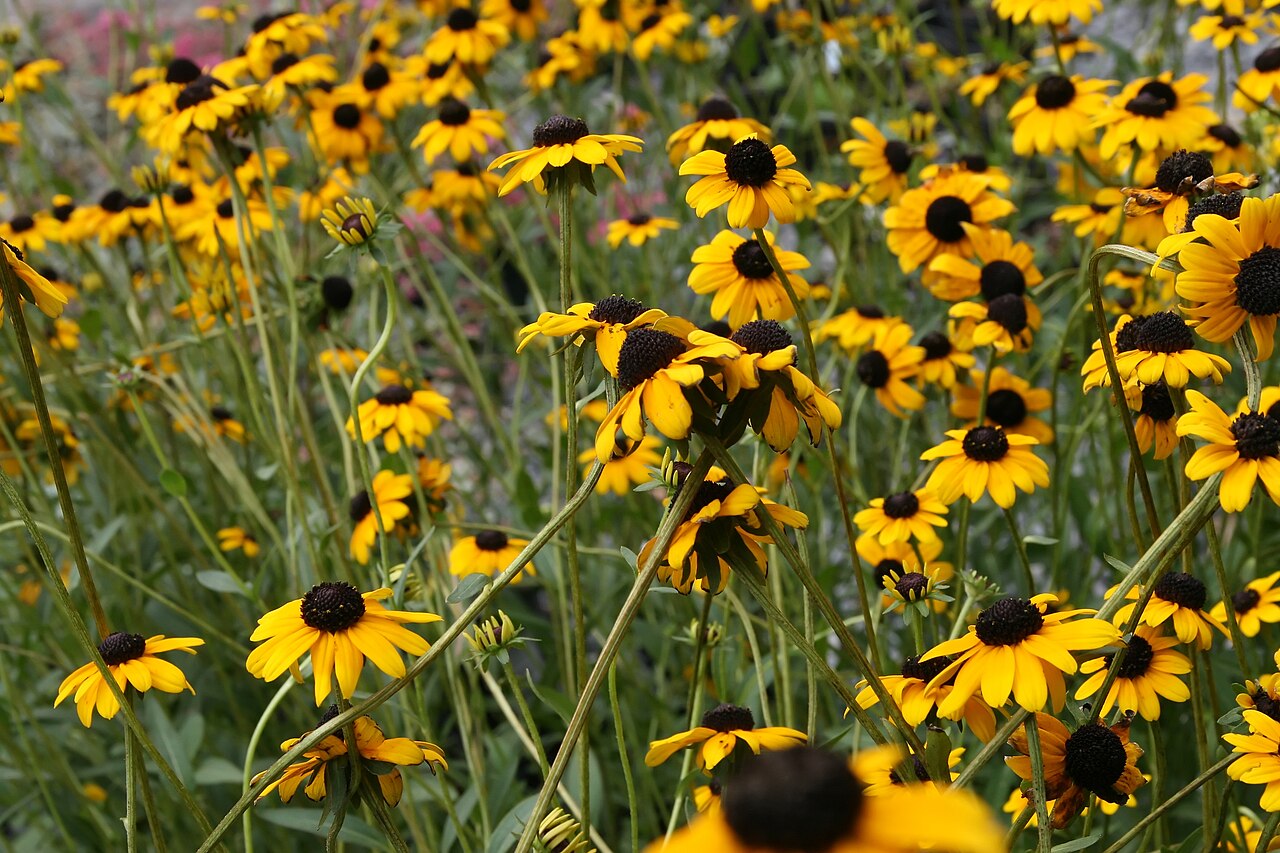
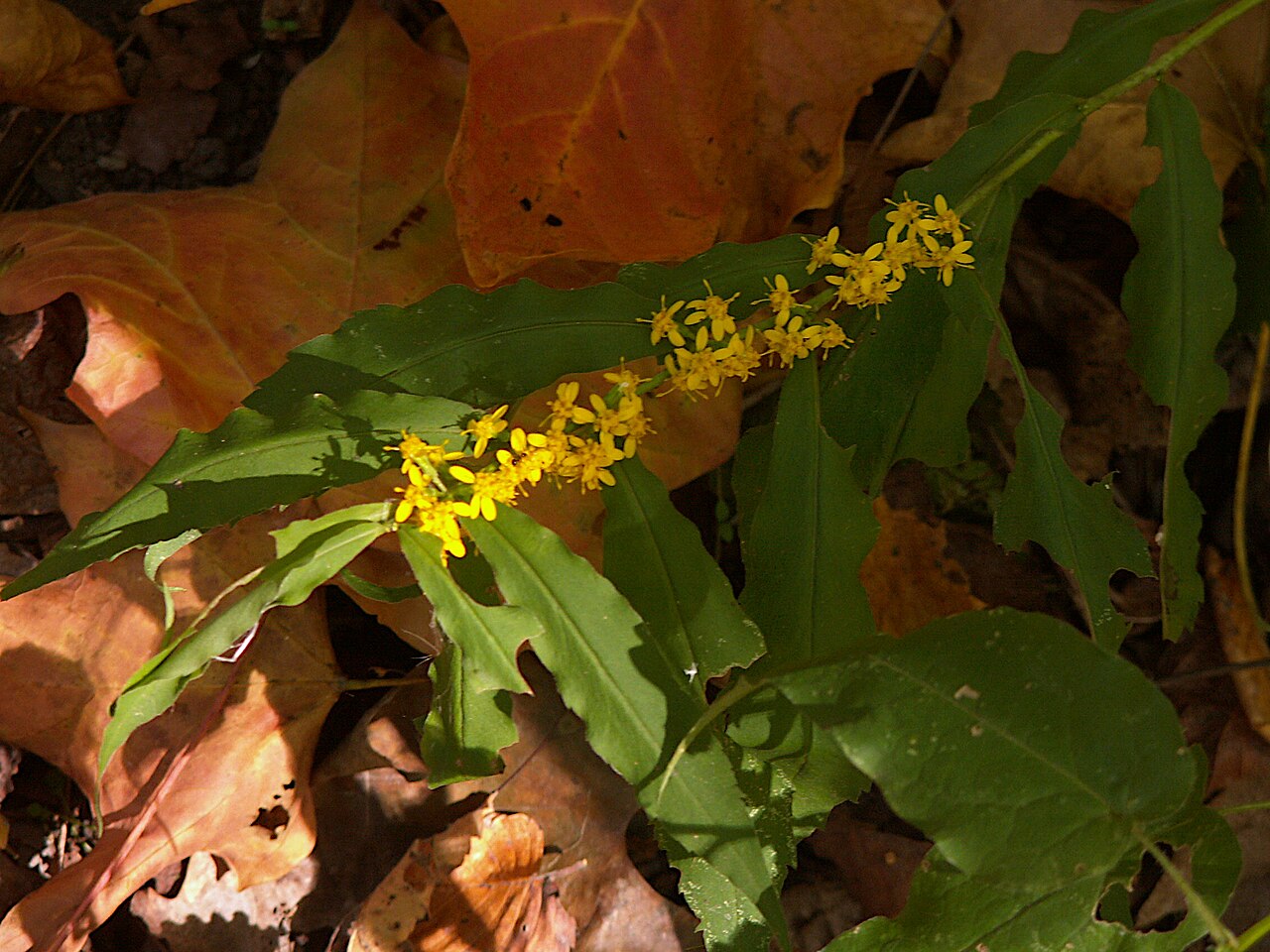
Blue and gold is the easiest color scheme with mistflower. Orange coneflower and wreath goldenrod overlap its bloom season, and the yellow makes the blue look brighter.
Repeat the gold on both sides of the mistflower pocket, and repeat one back-layer plant at least twice. That rhythm reads as a planned border even when the mistflower is filling in unevenly.
If you have room for a longer sunny border, our plan for blue mistflower and fall asters scales the same blue-and-gold idea up with native asters.
Paths and Edges That Do the Work
In a small garden, a path is both access and a control line. A stepping-stone path or a strip of mulch between the mistflower pocket and its neighbors gives you a place to stand while you pull stray shoots.
NPSOT notes that mistflower roots are shallow and easy to pull, which makes edge maintenance quick if you can reach it. Keep the pocket no deeper than you can reach comfortably from a path or the lawn edge.
Plant Palette
| Plant | Role | Height | Sun / moisture | Native range |
|---|---|---|---|---|
| Blue mistflower (Conoclinium coelestinum) | Fall filler in a bounded pocket | 1.5–3 ft | Sun to part shade; moist | NJ to s. IL and e. KS, south to FL and TX |
| Orange coneflower (Rudbeckia fulgida) | Gold front or side clump | 2–3 ft | Sun; moist to occasionally dry | NJ to IN, south to FL and e. TX |
| Great blue lobelia (Lobelia siphilitica) | Upright blue spikes, back layer | 1.5–4 ft | Sun to shade; moist to wet | CT to ND and WY, south to GA uplands, TX and CO |
| White turtlehead (Chelone glabra) | Sturdy back-layer clump | 1–3 ft | Sun to part shade; moist to wet | Newfoundland to MN, south to GA and ne. AR |
| Wreath goldenrod (Solidago caesia) | Fall gold, non-aggressive | 1–4 ft | Sun to part shade; average | Eastern U.S. from ME to FL, west to WI, OK and TX |
| Foxglove beardtongue (Penstemon digitalis) | Early-summer bloom, back layer | 2–4 ft | Sun to part shade; dry to moist | ME to MI and SD, south to VA, AL and e. TX |
Heights from the NC State Extension Plant Toolbox; ranges from the Lady Bird Johnson Wildflower Center. Check that each plant is native to your county before buying.
Great blue lobelia and turtlehead both like the same moist soil as mistflower, so they will not struggle in its pocket’s neighborhood. NC State lists great blue lobelia as poisonous, so site it away from spots where small children or pets graze on plants.
Sample Layout: A 6 × 10 Foot Bed
- Back (along a fence or wall): 2 turtlehead and 2 great blue lobelia, alternating, with 1 foxglove beardtongue at one end.
- Center pocket, about 3 × 4 feet: 1 to 2 blue mistflower plants. They will fill the pocket on their own.
- Each side of the pocket: 1 orange coneflower and 1 wreath goldenrod, repeated on both sides.
- Front: a stepping-stone or mulch strip along the lawn or path edge.
Space each clump-former by roughly its mature width so the crowns touch at maturity. The NC State Plant Toolbox lists mistflower at 1.5 to 3 feet wide, so starting small is safe.
Installation Steps
Step 1: Mark the pocket. Outline the mistflower area with a hose or marking paint before you dig. Check that you can reach the middle of it from an edge.
Step 2: Plant the clump-formers first. Set the back-layer and side plants in place so they get a head start on the mistflower.
Step 3: Plant mistflower last, toward the center of its pocket. Starting it in the middle gives the edges a season or two before you need to trim.
Step 4: Water through the first season. All of these plants prefer consistent moisture while their roots establish, and mistflower’s drought tolerance is poor.
Step 5: Mulch lightly between plants. A thin layer of shredded leaves keeps soil moist and makes stray shoots easy to spot and pull.
The First Three Years
Like many spreading perennials, mistflower often spends its first season settling in. The spread becomes obvious once roots are established, so plan the edge work for year two onward.
Three-Year Maintenance Calendar
| Year 1, spring–summer | Water during dry spells. Weed the pocket by hand so you learn what young mistflower looks like. |
| Year 1, fall | Enjoy the bloom. Leave stems standing over winter if you like the look and want cover for insects. |
| Year 2, early spring | Cut old stems. Walk the pocket edge and pull or slice off any shoots past the line. |
| Year 2, late spring | If last year’s plants flopped, cut them back to a shorter height. NC State suggests a spring cut-back for taller plants to prevent flopping. |
| Year 2, fall | Decide on seed heads: cut them off after bloom if seedlings were a problem, or leave some if you have room. |
| Year 3 and on, early spring | Repeat the edge check. If the center is crowded, divide or thin the clump, which NC State recommends doing in early spring. |
When it is time to thin, our step-by-step guide to dividing an established blue mistflower patch covers where to cut and what to replant.
If stems sprawl onto the path in fall, the causes are usually shade, crowding or very rich, wet soil. The checks in blue mistflower flopping over will help you sort out which one applies.
Mistakes to Avoid
- Planting it next to small spring perennials. A spreading patch can swamp low plants that go dormant by early summer.
- Siting it in the wettest spot without an edge. That is where its spread is fastest and hardest to stop.
- Pairing it with another spreader. Two running plants in one small bed means constant refereeing. Use clump-forming neighbors instead.
- Making the pocket too deep to reach. If you can’t reach the center from an edge, you won’t keep up with thinning.
- Pulling seedlings you can’t identify. Learn the difference first. Our guide to blue mistflower seedlings or weeds covers the leaf shapes.
- Confusing it with annual ageratum. NC State notes the resemblance. Buy plants labeled Conoclinium coelestinum, not bedding ageratum.
If Mistflower Isn’t Native Where You Garden
Mistflower’s native range runs from New Jersey to southern Illinois and eastern Kansas, south to Florida and Texas, according to the Lady Bird Johnson Wildflower Center. Outside that area, the same design ideas still apply with a different plant in the pocket.
- North of its range: great blue lobelia brings late-summer blue to moist soil and ranges from Connecticut to southeastern North Dakota and Wyoming, per the Wildflower Center.
- Central Texas: white mistflower (Ageratina havanensis) is native to the Edwards Plateau. It is a much larger, shrubby plant for dry woodland edges, so treat it as a back-layer shrub rather than a filler.
- Elsewhere: start from your regional native plant list and choose a late-blooming perennial with a similar moisture preference.
📋 More on this plant: read the full Mist Flower (Conoclinium coelestinum) profile, or see it in our native plant lists for Georgia, Alabama & Mississippi, Arkansas, Louisiana, Eastern Oklahoma & Eastern Texas, and Maryland, Virginia & West Virginia.
Frequently Asked Questions
Is blue mistflower too aggressive for a small garden?
It can be. NC State Extension does not recommend it for small planting areas. It works when you give it one bounded pocket with hard edges and clump-forming neighbors, and check the edges each spring.
How big does blue mistflower get?
NC State lists it at 1.5 to 3 feet tall and wide. The Lady Bird Johnson Wildflower Center notes it is often shorter but can occasionally reach 6 feet, so expect some variation with soil and moisture.
Can I grow blue mistflower in a container instead?
Yes. The Native Plant Society of Texas lists it as suitable for container gardens. A pot is the simplest way to enjoy it in a very small space, as long as you water it regularly.
What should I plant next to blue mistflower?
Choose clump-forming plants that like similar moist soil, such as turtlehead, great blue lobelia and orange coneflower. Avoid other spreaders and short spring perennials that it can grow over.
When does blue mistflower bloom?
NC State says it flowers from late summer until frost. The Wildflower Center lists bloom from July into November depending on location.
Sources
- North Carolina Extension Gardener Plant Toolbox, Conoclinium coelestinum: size, light, moisture, spring cut-back, division, small-space caution, resemblance to annual ageratum.
- Lady Bird Johnson Wildflower Center, Conoclinium coelestinum: native distribution, height, bloom months, border and groundcover use.
- Illinois Wildflowers, Mistflower: rhizomes, wind-dispersed seed, spread in moist open ground, poor drought tolerance.
- Native Plant Society of Texas, Conoclinium coelestinum: shallow roots, afternoon shade, use in front of taller plants, containers.
- North Carolina Extension Gardener Plant Toolbox, Rudbeckia fulgida, Lobelia siphilitica, Chelone glabra, Solidago caesia and Penstemon digitalis: companion heights, light and moisture.
- Lady Bird Johnson Wildflower Center plant database: native distribution of Rudbeckia fulgida, Lobelia siphilitica, Chelone glabra, Solidago caesia, Penstemon digitalis and Ageratina havanensis.