
American Barberry (Berberis canadensis)
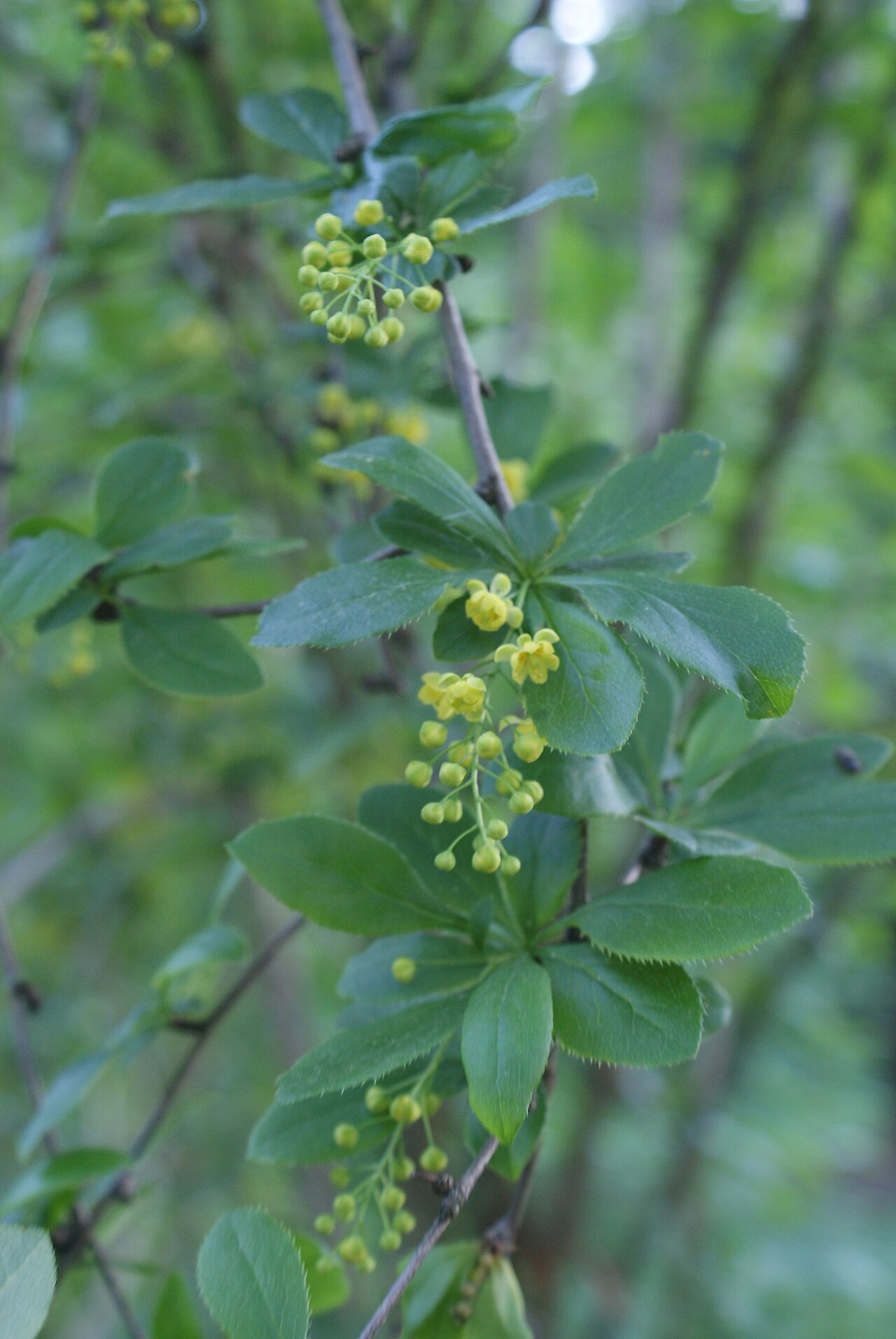
Berberis canadensis, American Barberry, also called Allegheny barberry, is the only deciduous barberry native to eastern North America. It is a small, spiny shrub, usually 2 to 6 feet tall, that spreads by underground stems into loose patches on rocky slopes, open woods, bluffs and river banks. In spring it hangs short clusters of bright yellow flowers among its leaves, and by late summer it carries scarlet, egg-shaped berries.
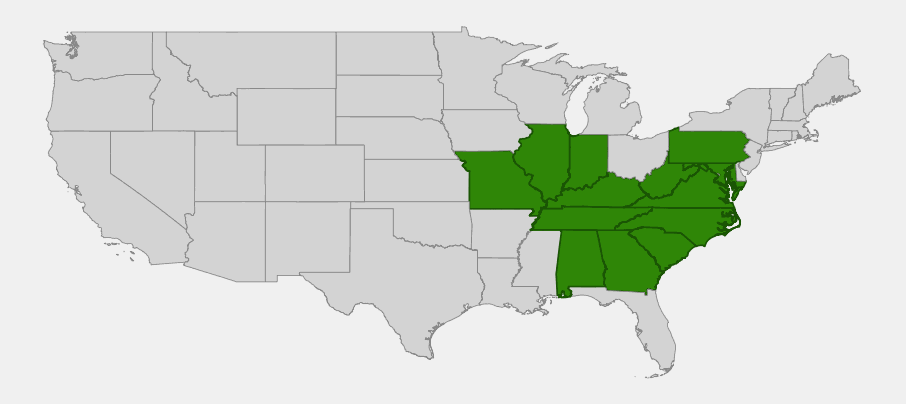
Despite its scientific name, it does not grow in Canada; the epithet reflects an old, loose use of “Canada” for much of eastern North America. American barberry is a southern Appalachian, Ohio Valley and Ozark plant, recorded from Pennsylvania and Maryland south to Georgia and Alabama and west to Missouri and Illinois. It is rare throughout its range. In several states it is known from only a handful of sites or only from historical records, and it is tracked as a species of conservation concern by many state natural heritage programs.
Part of its story is tied to wheat. American barberry, like the European common barberry, can host wheat stem rust, and during the 20th-century federal campaign to eradicate barberries from grain-growing regions, native stands were destroyed along with the introduced species. This guide covers how to tell it from the invasive Japanese and European barberries, where it grows, how to grow it responsibly, and its value to wildlife.
Identification
Three barberries are common in eastern woods, and two of them are invasive. Japanese barberry (B. thunbergii) has small leaves with smooth margins, single spines, and flowers in ones or small umbels. European barberry (B. vulgaris) has leaves with many fine, bristle-tipped teeth and long racemes of 10 to 20 flowers. American barberry falls between them.
Stems & Spines
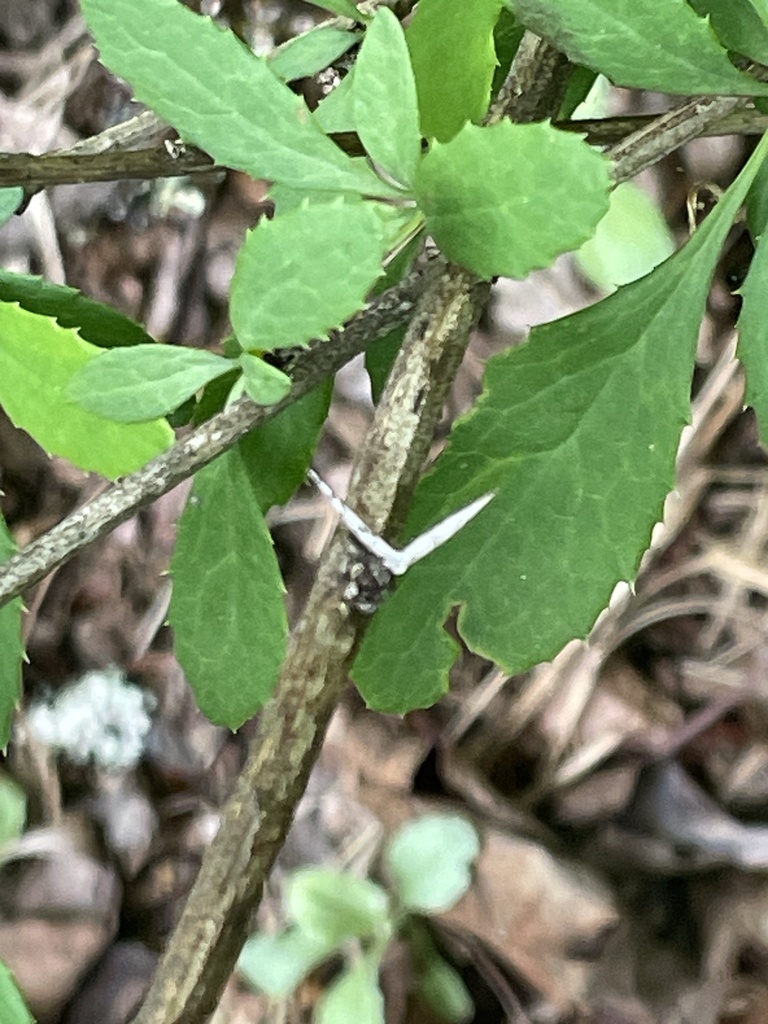
The shrub is low and open, usually 2 to 6 feet tall, with arching, reddish-brown to purplish-brown twigs and gray older stems. The inner bark and wood are bright yellow, as in all barberries. At each node there is a spine, usually three-parted, about ¼ to ¾ inch long. Plants spread by rhizomes, forming loose colonies.
Leaves
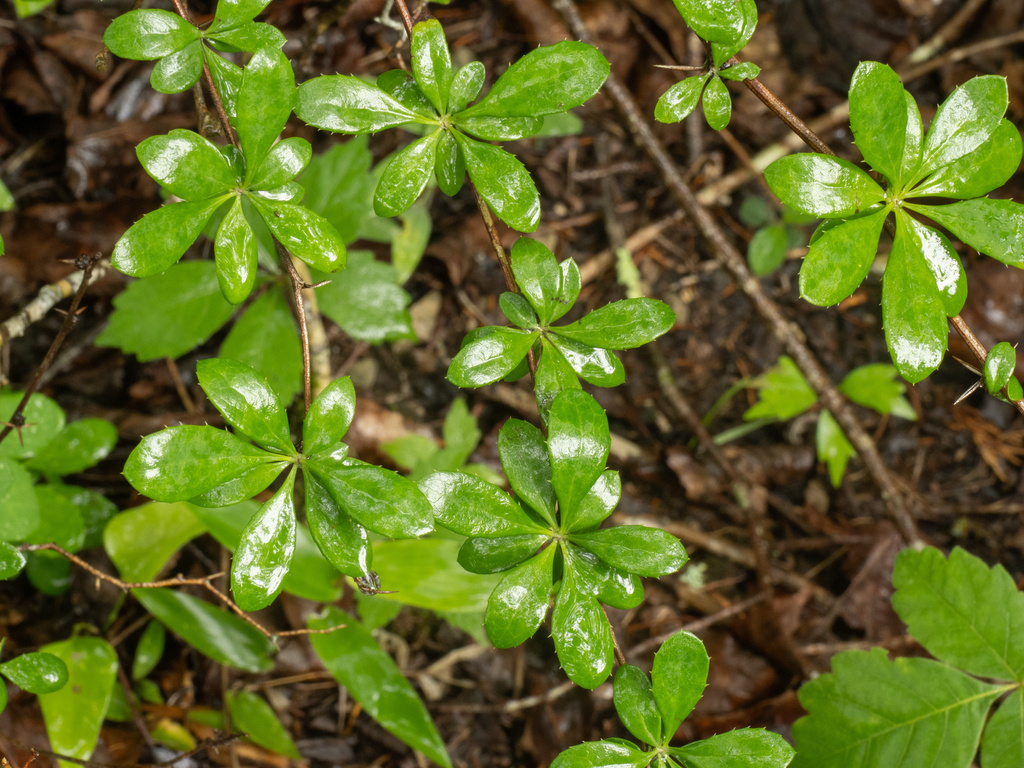
Leaves are clustered on short spur shoots, obovate to oblong-spatulate, about 1 to 3 inches long, tapering to a narrow base. The margins have a few widely spaced, spine-tipped teeth (sometimes nearly smooth), fewer and coarser than those of European barberry. They are thin, dull to slightly glossy green, and turn red, orange or purplish in fall.
Flowers
In April and May, short, drooping racemes of about 3 to 12 bright yellow flowers, each about ¼ inch across, hang from the spur shoots. The petals are notched at the tip. As in other barberries, the stamens snap inward against the pistil when touched by an insect.
Fruit
The fruit is a scarlet, ellipsoid to nearly round berry about ⅜ inch long, ripening in late summer and fall and often persisting into winter. Each holds one to a few seeds.
Quick Facts
| Scientific Name | Berberis canadensis |
| Family | Berberidaceae (barberry family) |
| Plant Type | Deciduous spiny shrub, colonial by rhizomes |
| Mature Height | 2–6 ft |
| Mature Spread | 3–6 ft; slowly forms loose colonies |
| Growth Rate | Slow to moderate |
| Sun Exposure | Full sun to part shade |
| Water Needs | Low to medium; drought tolerant once established |
| Soil Type | Rocky or gravelly, well-drained soils; often over limestone, dolomite or shale |
| Soil pH | About 5.5–8.0 |
| Bloom Time | April–May |
| Flower Color | Bright yellow |
| Fall Color | Red, orange or purplish |
| Fruit | Scarlet berry, late summer to winter |
| Deer Resistant | Yes; spiny and rarely browsed |
| USDA Hardiness Zones | 5–8 |
Native Range
American barberry is native to the eastern interior of the United States. USDA PLANTS records it from 13 states: Pennsylvania, Maryland, Virginia and West Virginia; North Carolina, South Carolina, Georgia and Alabama; and Kentucky, Tennessee, Indiana, Illinois and Missouri. Its strongholds are the Ridge and Valley and Blue Ridge provinces of Virginia, West Virginia, Tennessee and North Carolina, and the Ozarks of Missouri.
Across this range it is scattered and uncommon. Records toward the northern and western edges of its range represent very few sites, and some populations have not been seen in decades. The 20th-century barberry eradication program, which targeted all rust-susceptible barberries near grain fields, destroyed some native stands, and others have been lost to development, fire suppression and the shading of open woodlands.
It grows in open, often rocky places: dry to moist open woods, wooded slopes and bluffs, rocky river and stream banks, cedar glades and barrens, and woodland edges, frequently on soils derived from limestone, dolomite or shale.
📋 Regional plant lists featuring American Barberry: Alabama, Georgia & Mississippi · North & South Carolina · Maryland, Virginia & West Virginia · Kentucky & Tennessee · Illinois, Iowa & Missouri · Ohio & Indiana · New York, Pennsylvania & Northern New Jersey
Growing & Care Guide
American barberry is an attractive, tough shrub for dry, rocky sites and a much better choice than the invasive Japanese barberry. It is rarely available, however, and offered mainly by specialist native nurseries and arboreta. Never dig plants from the wild, since wild populations are rare; buy nursery-propagated stock. Because it is a host of wheat stem rust, barberry shipping and planting rules apply in some grain-growing states, so check your state’s regulations before buying or planting it.
Light
Full sun to part shade. It flowers and fruits best and has the best fall color in sun, and it tolerates the light shade of open woods.
Soil & Water
Grow it in well-drained soil, from rocky and gravelly to loamy. It tolerates both acidic and limestone soils and, once established, considerable drought. Avoid wet, poorly drained sites.
Planting Tips
Plant in spring or fall. Space plants 3 to 4 feet apart for a low informal hedge or barrier. Wear gloves; the spines are sharp. Water regularly through the first growing season.
Pruning & Maintenance
Little pruning is needed. Remove dead wood in late winter and cut out suckers if you want to limit spread. It has few pest problems.
Propagation
Sow cleaned seed outdoors in fall, or give it about 2 to 3 months of cold, moist stratification before spring sowing. Softwood or semi-hardwood cuttings taken in summer root with rooting hormone. Rooted suckers can also be separated from established nursery plants.
Landscape Uses
- Replacement for invasive barberries: a native alternative to Japanese and European barberry in dry, sunny beds and foundation plantings
- Barrier and informal hedges: low, spiny, and slowly colonial
- Rock gardens and dry slopes: thrives on thin, rocky, well-drained soils
- Wildlife gardens: spring flowers for bees and scarlet fruit for birds
- Conservation and botanical collections: an uncommon southeastern native worth preserving in cultivation
Wildlife & Ecological Value
American barberry is a small shrub, but its flowers, fruit and spiny cover all have value to wildlife.
For Pollinators
Its spring flowers produce nectar and pollen and are visited by native bees, especially early bumblebees, mining bees and sweat bees, as well as flies. The touch-sensitive stamens dust visiting insects with pollen.
For Birds
The scarlet berries are eaten by songbirds such as thrushes, mockingbirds, cedar waxwings and robins, and by wild turkeys and grouse. Because the fruit often hangs on into winter, it can be a useful late-season food. The dense, spiny stems provide protected cover and nesting sites for small birds.
For Mammals
Small mammals eat fallen fruit. The spiny stems are rarely browsed by deer.
Ecosystem Role
As an alternate host of wheat stem rust (Puccinia graminis), American barberry played a role in the rust’s life cycle, which is why it was targeted by eradication programs. In natural woodlands, its colonies help stabilize rocky slopes and stream banks.
Cultural & Historical Uses
Philip Miller described American barberry in 1768. Its yellow inner bark and roots contain berberine, the same yellow alkaloid found in other barberries and in goldenseal, and barberries have long been used as a source of yellow dye. Berberine is pharmacologically active, so the plant should not be used medicinally without expert guidance.
The connection between barberry and wheat stem rust was recognized by farmers long before scientists explained it, and some colonies passed laws against planting barberry near wheat as early as the 1700s. After a devastating rust epidemic in 1916, the U.S. Department of Agriculture launched a barberry eradication program in 1918 that removed hundreds of millions of barberry bushes across the grain states over the following decades. The campaign targeted mainly the introduced European barberry, but native American barberry was also destroyed where it was found.
Today American barberry has a different reputation: it is a rare native shrub that conservationists want to protect, while its invasive relative, Japanese barberry, is one of the most widespread problem shrubs in eastern forests. Planting the native species in place of Japanese barberry is a small way to help both.
Frequently Asked Questions
Is American barberry invasive?
No. It is a rare native shrub of the eastern United States. The invasive barberries are Japanese barberry (B. thunbergii) and European barberry (B. vulgaris).
How can I tell American barberry from Japanese barberry?
Japanese barberry has small, smooth-edged leaves, single spines and flowers borne singly or in small clusters. American barberry has larger leaves with a few spine-tipped teeth and usually three-parted spines, and its flowers hang in short drooping racemes.
Does American barberry grow in Canada?
No. The name canadensis is misleading. It grows from Pennsylvania south to Georgia and Alabama and west to Missouri.
Is American barberry related to wheat rust?
Yes. Like European barberry, it can serve as an alternate host for wheat stem rust, and it was destroyed along with European barberry in the 20th-century eradication program. Some states still regulate barberry planting, so check local rules.
Are American barberry berries edible?
The tart berries of barberries have been used in jams and drinks, but other parts of the plant contain berberine and should not be eaten. Given how rare this species is, leave wild fruit for birds.

Looking for a nursery that carries American Barberry?
Browse our native plant nursery directory: Alabama · Georgia · Illinois & Indiana · Kentucky, Maryland & Missouri · North Carolina · Pennsylvania, South Carolina, Tennessee & Virginia · West Virginia

