
Blue Waterleaf (Hydrolea ovata)
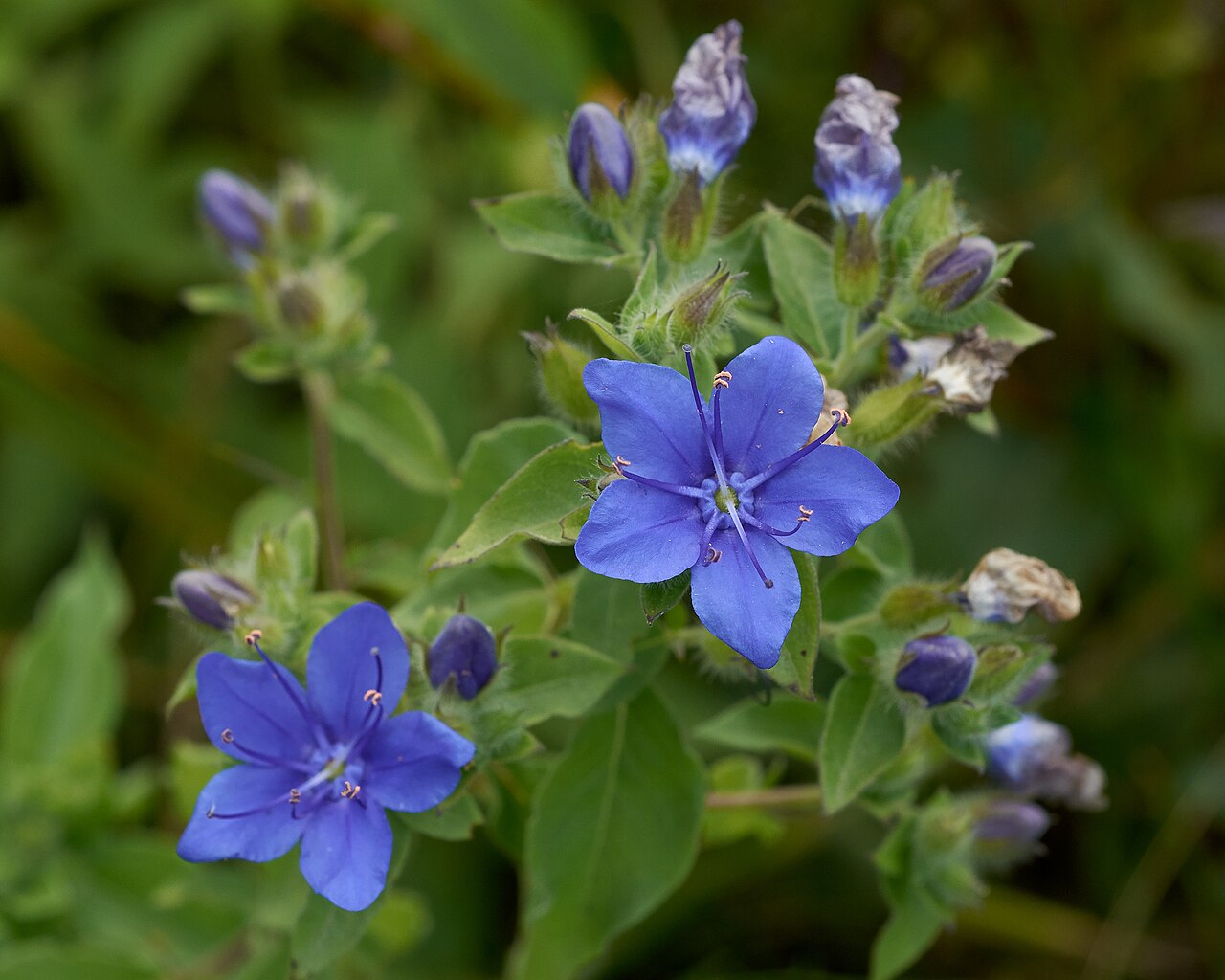
Hydrolea ovata, known as Blue Waterleaf, hairy hydrolea or ovate false fiddleleaf (the USDA name), is a showy wetland perennial of the southern United States. From late summer into fall it produces clusters of bright blue to blue-violet flowers about 1 inch across, with long purple stamens, on hairy, somewhat spiny stems up to about 3 feet tall. It often forms large colonies along the edges of lakes, ponds, sloughs and streams.
It belongs to the small genus Hydrolea, now placed in its own family, Hydroleaceae, although many references, including USDA PLANTS, still list it in the waterleaf family (Hydrophyllaceae). The genus name comes from the Greek hydor, water, a nod to its wet habitats, and ovata refers to its egg-shaped leaves.
Blue waterleaf grows from Texas and Oklahoma east to Georgia and the Florida Panhandle, and north in the Mississippi Valley to Missouri, Kentucky and Tennessee. Its intense blue flowers make it one of the best late-season plants for a rain garden, pond edge or bog garden in the South, and it is a favorite of bumblebees. This guide covers how to identify it, where it grows, how to grow it and its value to wildlife.
Identification
Blue waterleaf is easy to spot in bloom: look for patches of hairy, leafy stems standing in shallow water or wet soil, topped with clusters of vivid blue, cup-shaped flowers in late summer and fall.
Growth Habit
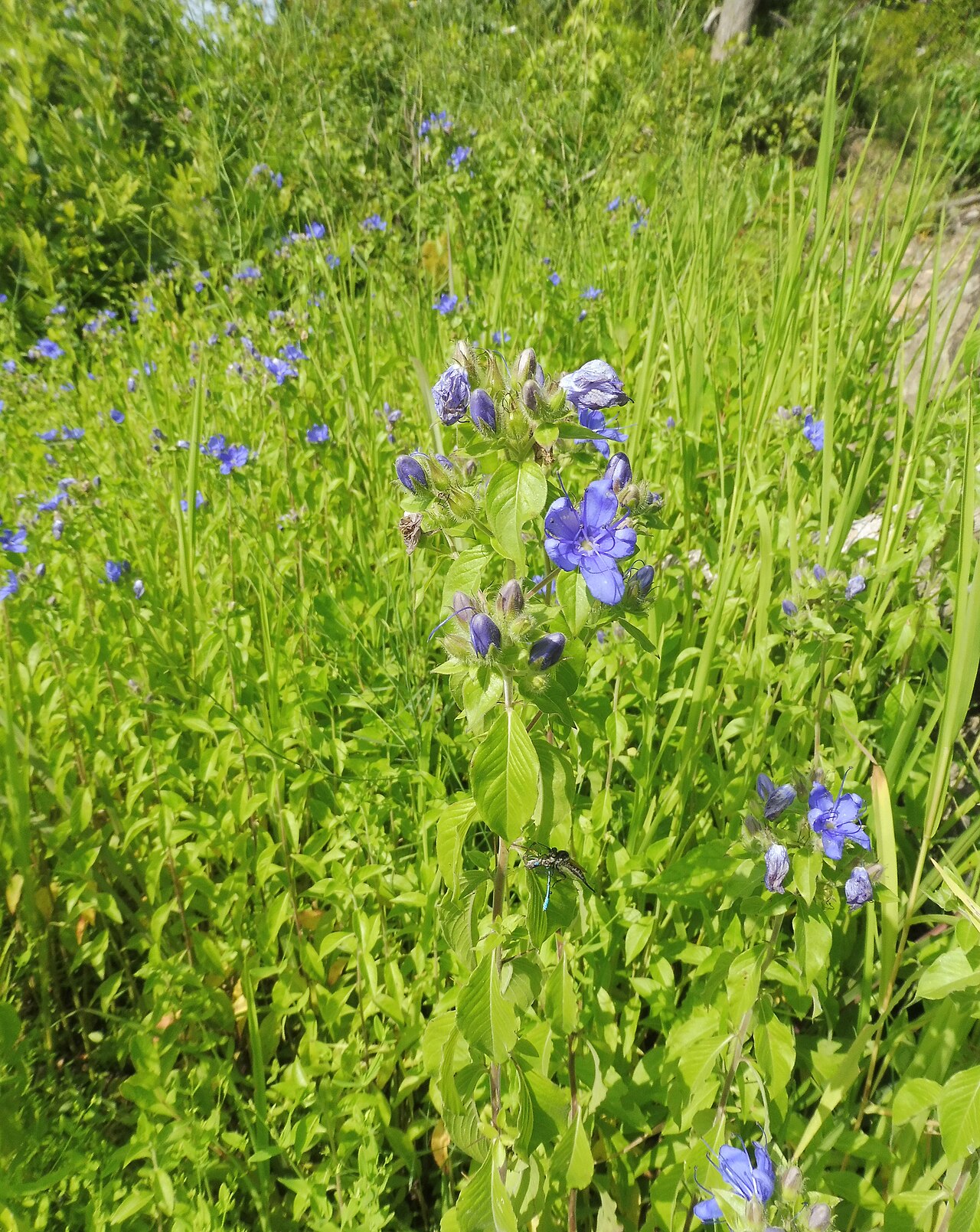
It is an herbaceous perennial, usually 1 to 3 feet tall, with several sturdy stems rising from a spreading base and branching in the upper part. The stems and leaves are covered with rough hairs, and the upper parts are glandular and somewhat sticky. It spreads by creeping rhizomes and can form dense, extensive colonies.
Leaves
The leaves are alternate, simple and unlobed, ovate to elliptic, about 1 to 2 1/2 inches long and up to 1 inch wide, and hairy on both sides. Many leaf axils have a short, sharp spine on the stem just below the leaf, a useful field mark.
Flowers
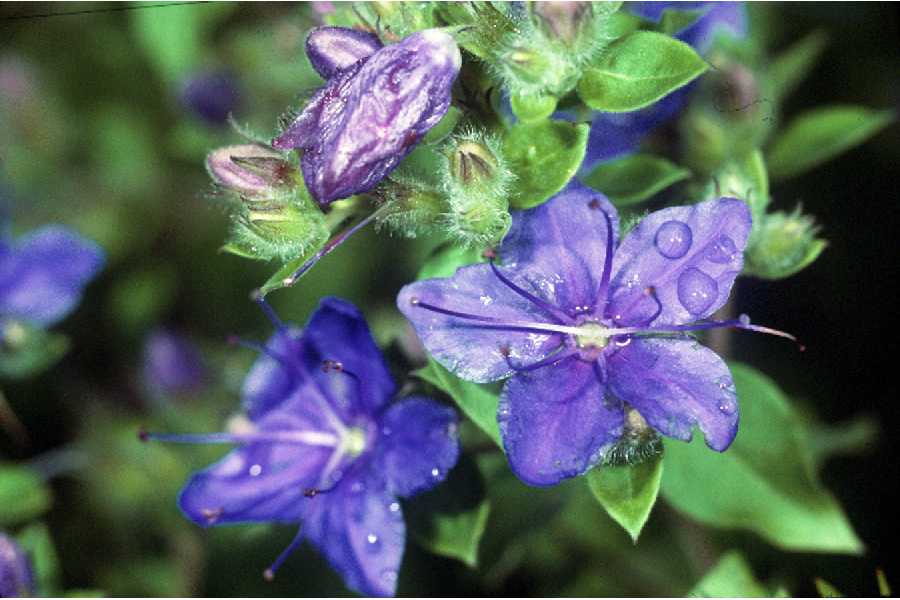
The flowers are borne in dense, leafy clusters at the ends of the stems. Each is about 1 inch across, broadly bell- to funnel-shaped, opening into five broad, bright blue to blue-violet lobes. The purple-filamented stamens stick out beyond the petals, and the sepals and buds are densely hairy. Bloom time is mainly July through October.
Fruit & Seeds
The fruit is a small, rounded capsule surrounded by the persistent hairy sepals. It splits irregularly when ripe and releases many tiny seeds, which can be carried by water.
Look-alikes
Other Hydrolea species share its blue flowers and wet habitats. Skyflower (Hydrolea corymbosa) of Florida, Georgia and South Carolina has narrow, smooth leaves and lacks the dense, glandular hairs, and waterpod (Hydrolea quadrivalvis) and oneflower false fiddleleaf (Hydrolea uniflora) have narrower leaves and smaller, fewer flowers. Blue waterleaf is recognized by its broad, ovate, hairy leaves, axillary spines and dense clusters of large flowers. The true waterleafs (Hydrophyllum) are woodland plants with lobed leaves and are not closely similar.
Quick Facts
| Scientific Name | Hydrolea ovata Nutt. ex Choisy |
| Family | Hydroleaceae (often placed in Hydrophyllaceae, waterleaf family) |
| Plant Type | Herbaceous perennial (wetland) |
| Mature Height | 1–3 ft |
| Mature Spread | 2–3 ft; spreads by rhizomes into colonies |
| Growth Rate | Moderate to fast |
| Sun Exposure | Full sun to part shade |
| Water Needs | High; wet soil to shallow standing water |
| Soil Type | Wet sandy, loamy or clay soils; tolerates seasonal flooding |
| Soil pH | Acidic to near neutral (about 5.0–7.0) |
| Bloom Time | July–October |
| Flower Color | Bright blue to blue-violet |
| Fall Color | Blooms into fall; foliage not notable |
| Fruit | Small capsule with many tiny seeds |
| Deer Resistant | Yes, rated high (hairy, spiny foliage) |
| USDA Hardiness Zones | 6–9 |
Native Range
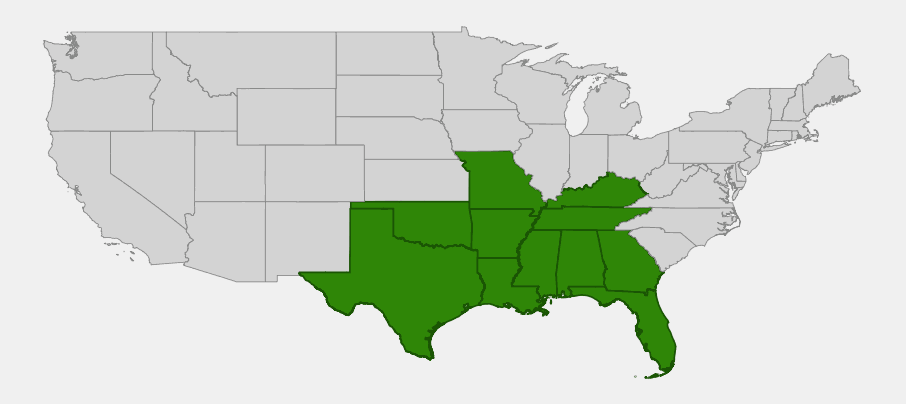
Blue waterleaf is native to the south-central and southeastern United States. USDA PLANTS lists it in Texas, Oklahoma, Arkansas, Louisiana, Mississippi, Alabama, Georgia, Florida, Tennessee, Kentucky and Missouri. The Atlas of Florida Plants lists it as native in Florida, where it is rare and known from the western Panhandle.
It is most common in the Gulf Coastal Plain and the Mississippi Embayment, especially in Louisiana, Arkansas and East Texas. In Texas it extends west to the Post Oak Savannah and south along the coastal plain and river valleys toward South Texas. In Oklahoma it occurs in the southeast. To the north it reaches southeastern Missouri, far western Kentucky and Tennessee, and to the east it is scattered in Alabama and southwestern Georgia.
It grows in open, wet places: the margins of ponds, lakes and oxbows, sloughs and swamps, river and stream banks, wet ditches, wet prairies and low, seasonally flooded fields. It tolerates standing water for weeks. It is a plant of low elevations, mostly below 1,000 feet.
📋 Regional plant lists featuring Blue Waterleaf: Kentucky & Tennessee · Illinois, Iowa & Missouri · Alabama, Georgia & Mississippi · North & South Florida · Arkansas, Louisiana, Eastern Oklahoma & Eastern Texas · South & West Texas
Growing & Care Guide
Blue waterleaf is an excellent choice for wet, sunny spots where many garden plants fail. It is occasionally sold by native plant nurseries in the South, especially in Texas and Louisiana, and is easy to grow if it gets enough water.
Light
Grow it in full sun for the most flowers. It tolerates part shade, but blooms less and may sprawl.
Soil & Water
It needs constantly moist to wet soil and does well in shallow standing water, up to a few inches deep, at the edge of a pond. Sandy, loamy and clay soils all work, ideally slightly acidic. It has low drought tolerance and should never dry out completely during the growing season.
Planting Tips
Plant it along pond margins, in rain gardens that stay wet, in bog gardens or in containers set in water features. Space plants about 2 feet apart; they will spread by rhizomes to fill in. Combine it with other wetland natives such as pickerelweed, cardinal flower, lizard’s tail and rosemallow for a long season of color. Wear gloves when handling it, since the stems are spiny and rough.
Pruning & Maintenance
Little care is needed. Cut back the old stems in late winter. In small water gardens, divide or remove spreading rhizomes every few years to keep it in bounds.
Propagation
Divide established clumps or rhizomes in spring. It can also be grown from seed, scattered on the surface of wet soil and kept moist, since the seeds are tiny. Pieces of rhizome with a shoot attached establish easily when pressed into wet mud.
Landscape Uses
- Pond and lake edges: vivid blue late-season color in shallow water
- Rain and bog gardens: thrives in soggy soil that drowns other perennials
- Pollinator gardens: late-summer nectar and pollen for bumblebees and butterflies
- Wetland restoration: stabilizes muddy shorelines and ditch banks with rhizomes
- Container water gardens: showy in pots set in water features
Wildlife & Ecological Value
Blue waterleaf blooms when many other wetland plants have finished, making it a valuable late-season resource for insects around southern ponds and swamps.
For Pollinators
The large, open flowers are highly attractive to bees, especially bumblebees, which collect the abundant pollen and nectar. Butterflies and other insects also visit for nectar.
For Birds
Its dense stands provide cover for wading birds, rails and other marsh birds along shorelines, and the insects it attracts are food for birds.
For Mammals
The hairy, spiny foliage is rarely browsed, and it is rated highly deer resistant. Its colonies give shelter to small wetland animals.
Ecosystem Role
As a colonial wetland perennial, blue waterleaf helps bind muddy shores and ditch banks, slows runoff and adds late-season flowers to southern wetlands. Its seeds and rhizome fragments are spread by water, helping it recolonize after floods.
Cultural & Historical Uses
The genus Hydrolea was named by Carl Linnaeus, and blue waterleaf was described from American material by Thomas Nuttall and later published by the Swiss botanist Jacques Denys Choisy, which is why its author citation reads “Nutt. ex Choisy”. The genus name refers to water, the habitat shared by nearly all of its species.
Its placement has changed over time. It was long included in the waterleaf family, Hydrophyllaceae, which is why it is called blue waterleaf, but DNA studies show that Hydrolea is more closely related to the nightshade and morning glory families. It is now usually placed in its own family, Hydroleaceae, in the order Solanales.
Southern gardeners and native plant societies have embraced it as one of the few showy blue-flowered plants for truly wet ground. It appears in bloom along roadside ditches and pond edges in late summer, often in vivid patches that are easy to see from a passing car.
Frequently Asked Questions
Is blue waterleaf a true waterleaf?
Not exactly. It was long placed in the waterleaf family, but it is now usually placed in its own family, Hydroleaceae. USDA PLANTS calls it ovate false fiddleleaf.
Where does blue waterleaf grow?
It grows in wet places from Texas and Oklahoma east to Georgia and the Florida Panhandle, and north to Missouri, Kentucky and Tennessee.
Can blue waterleaf grow in standing water?
Yes. It grows well in shallow water at pond edges and can stand in water for weeks without harm.
When does blue waterleaf bloom?
Mainly from July through October, with bright blue flowers about 1 inch across.
Is blue waterleaf good for pollinators?
Yes. Its flowers are very attractive to bees, especially bumblebees, and to butterflies, and it blooms late in the season.

Looking for a nursery that carries Blue Waterleaf?
Browse our native plant nursery directory: Alabama & Arkansas · Florida & Georgia · Kentucky, Louisiana, Mississippi & Missouri · Oklahoma · Tennessee & Texas

