
Canby’s Mountain-lover (Paxistima canbyi)
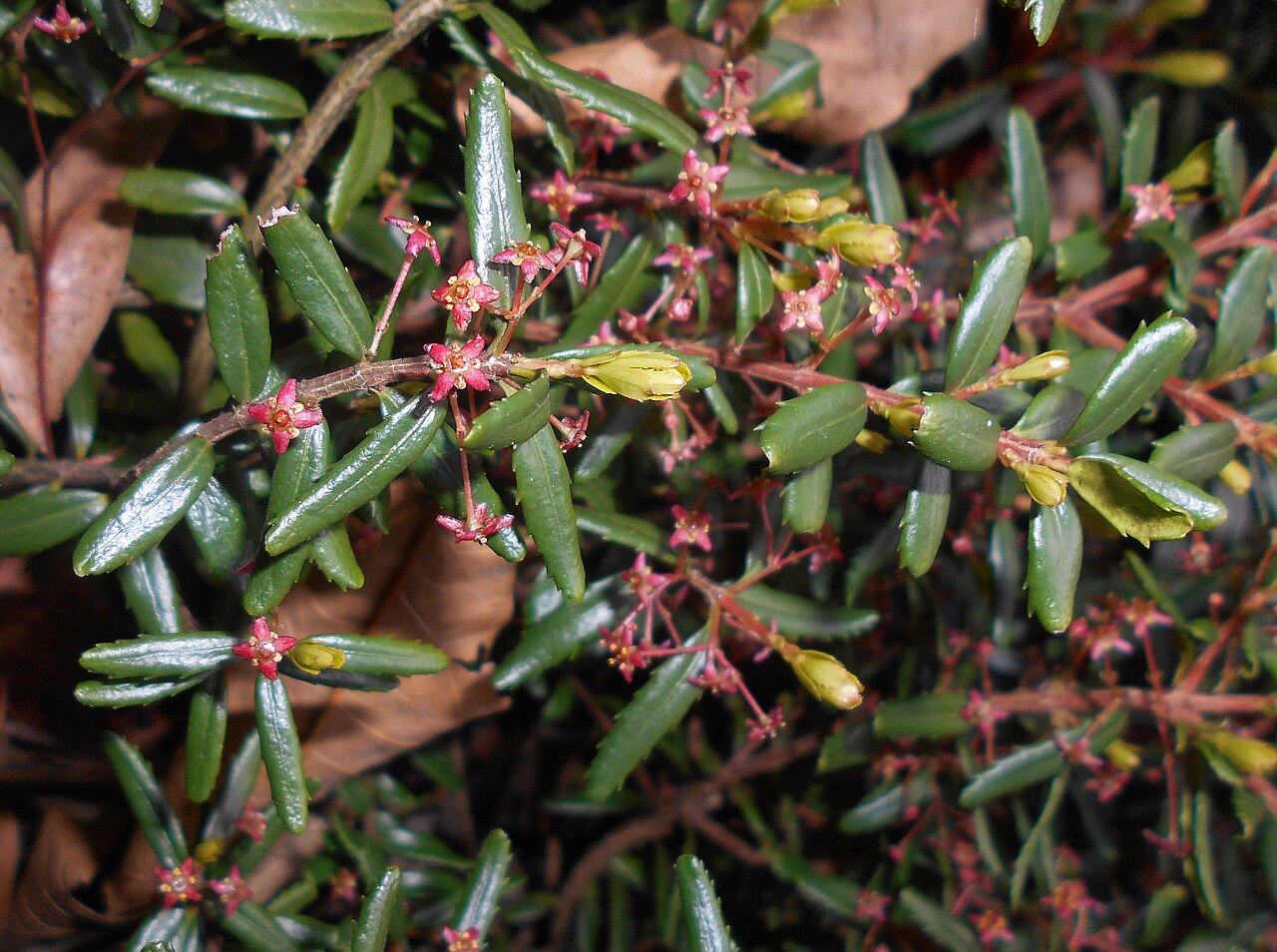
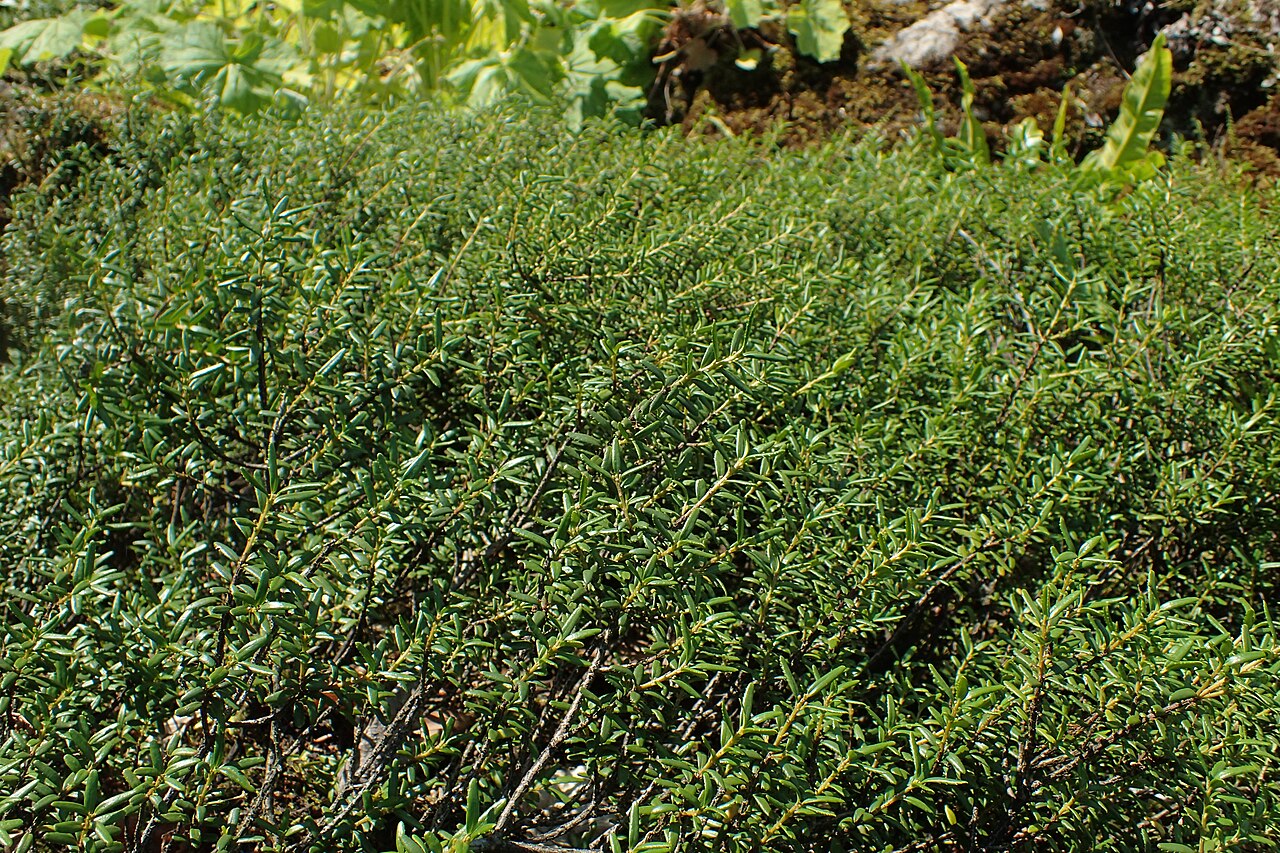
Paxistima canbyi, known as Canby’s Mountain-lover, cliff-green or Canby’s paxistima, is a low, creeping evergreen shrub of limestone and dolomite cliffs and bluffs in the central Appalachian region. It forms mats or low mounds, usually 8 to 16 inches tall, of narrow, glossy dark green leaves that turn bronze in winter, and in spring it bears tiny reddish flowers that few people notice.
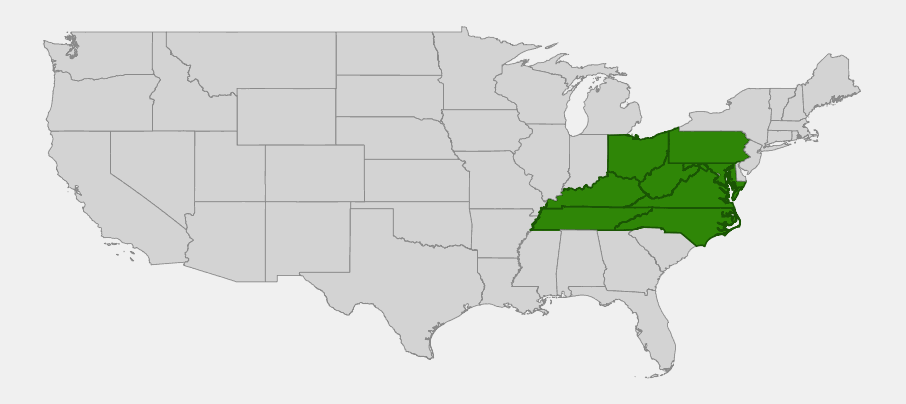
Although it is widely grown in botanical gardens and is sometimes sold as a fine-textured evergreen groundcover, Canby’s mountain-lover is rare in the wild. It is known from a limited number of sites from Pennsylvania and Ohio south to Kentucky, Tennessee, Virginia and North Carolina, and it is listed as rare, threatened or endangered by several of the states where it grows.
It belongs to the staff-tree family (Celastraceae), together with bittersweet and strawberry bush, and its only close relative is the western Oregon Boxwood (Paxistima myrsinites). This guide covers how to identify it, where it grows, and how to grow nursery-propagated plants responsibly.
Identification
Canby’s mountain-lover looks like a tiny, fine-textured boxwood or a creeping evergreen heather. Its narrow, opposite leaves with rolled edges are distinctive.
Growth Habit
A low, evergreen subshrub, usually 8 to 16 inches tall and occasionally up to 3 feet. The stems trail and branch freely and often root where they touch the ground, so a single plant gradually spreads into a dense mat several feet wide.
Leaves
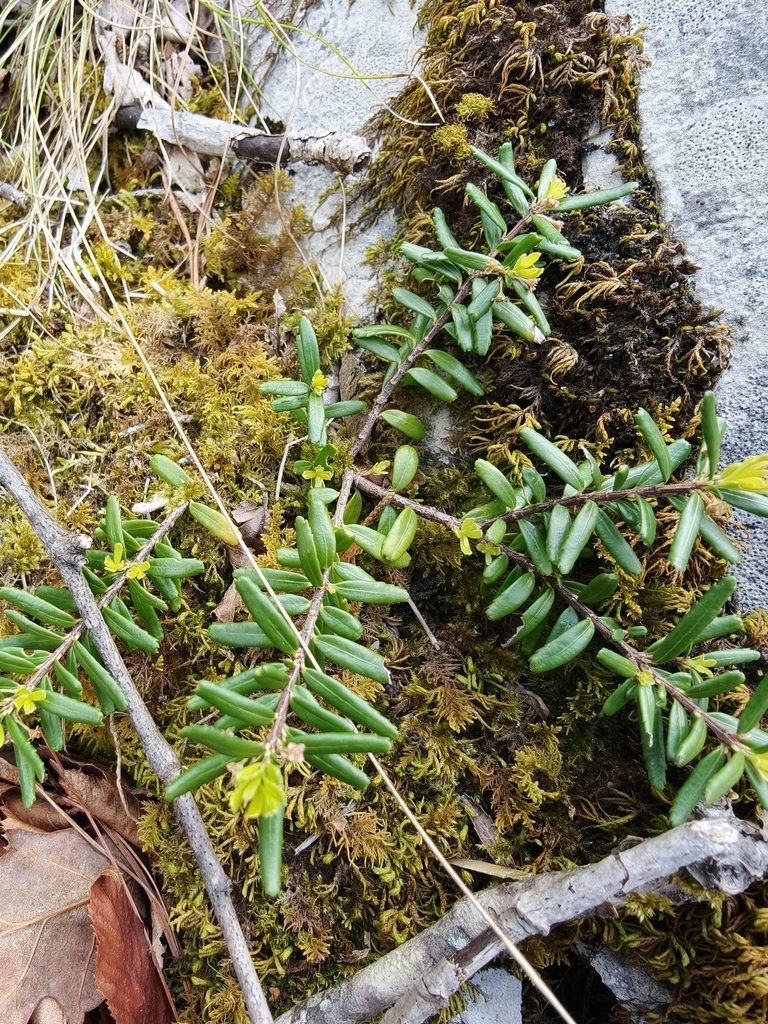
The leaves are opposite, simple, narrow and linear to oblong, about ¼ to 1 inch long and less than ¼ inch wide, with slightly rolled-under edges and a few small teeth near the tip. They are leathery, lustrous dark green in summer and often turn bronze or purplish in cold weather.
Flowers & Fruit
Tiny flowers, about 1/8 inch across, with four greenish to reddish petals, appear in the leaf axils in late April and May. The fruit is a tiny, leathery, two-valved capsule about 1/16 inch long containing one or two seeds with a white aril. Seed production in wild populations is often low, and most spread is vegetative.
Look-alikes
Oregon Boxwood is a western species with broader, more toothed leaves and grows in mountain forests of the West. Box huckleberry (Gaylussacia brachycera), another rare Appalachian groundcover, has alternate, oval leaves and blue berries. Low junipers have needle- or scale-like leaves.
Quick Facts
| Scientific Name | Paxistima canbyi (syn. Pachistima canbyi) |
| Family | Celastraceae (staff-tree family) |
| Plant Type | Low evergreen subshrub or groundcover |
| Mature Height | 8–16 in (rarely to 3 ft) |
| Mature Spread | 2–4 ft or more, by rooting stems |
| Growth Rate | Slow |
| Sun Exposure | Part shade to full sun |
| Water Needs | Medium; needs good drainage |
| Soil Type | Rocky, well-drained soil; calcareous rock in the wild |
| Soil pH | Neutral to alkaline in the wild; tolerates slightly acidic garden soil |
| Bloom Time | April–May |
| Flower Color | Greenish to reddish (tiny) |
| Fall Color | Evergreen; bronze to purplish in winter |
| Fruit | Tiny leathery capsule with arillate seeds |
| Deer Resistant | Moderately; occasionally browsed |
| USDA Hardiness Zones | 3–7 |
Native Range
Canby’s mountain-lover is native to the central Appalachian region of the eastern United States. USDA PLANTS lists it in Pennsylvania, Maryland, Ohio, West Virginia, Virginia, Kentucky, Tennessee and North Carolina. Many of its known sites are in the Ridge and Valley region of Virginia and West Virginia, with smaller numbers of sites in the surrounding states.
It is rare throughout its range, and many populations are small. Several states, including Kentucky and Maryland, list it as threatened or endangered, and it is tracked as a rare plant by natural heritage programs in the other states where it grows.
In the wild it grows on limestone, dolomite and calcareous shale cliffs, bluffs and rocky slopes, often above rivers and streams, and in thin soils at the edges of open, rocky woodlands. It typically grows on north- or east-facing slopes where it is shaded part of the day.
📋 Regional plant lists featuring Canby’s Mountain-lover: New York, Pennsylvania & Northern New Jersey · Maryland, Virginia & West Virginia · North & South Carolina · Kentucky & Tennessee · Ohio & Indiana
Growing & Care Guide
Canby’s mountain-lover is sold by some native and specialty nurseries as a fine-textured evergreen groundcover. Because it is rare in the wild, buy only nursery-propagated plants and never dig plants or take cuttings from wild populations. It can be slow and somewhat finicky to establish, but mature plants are long-lived.
Light
Part shade to full sun. It does best with morning sun and afternoon shade, or bright, dappled shade. In hot, humid lowland gardens, protection from afternoon sun helps.
Soil & Water
Good drainage is essential. Plant it in gritty, rocky or sandy loam, on a slope, a raised bed or among rocks. It tolerates neutral to slightly alkaline soil and grows well on limestone, but also adapts to slightly acidic, organic garden soil if it is well drained. Water during dry spells until established; it does not tolerate soggy soil.
Planting Tips
Plant in spring, 12 to 18 inches apart for a groundcover. It suits rock gardens, wall tops, slopes and the front of shady borders, and is a fine-textured native alternative to boxwood edging, euonymus or vinca.
Pruning & Maintenance
It needs little pruning. Trim lightly after flowering to keep it compact or tidy the edges. Mulch with fine gravel or leaf litter, and keep it free of competing weeds while it fills in.
Propagation
Take semi-hardwood cuttings from garden plants in summer, or layer stems by pinning them to the soil, where they root readily. Seeds are produced sparingly and germinate slowly.
Landscape Uses
- Evergreen groundcover: fine-textured mats for slopes and rock gardens
- Rock gardens and walls: for well-drained, rocky sites
- Native boxwood alternative: low edging with year-round foliage
- Conservation gardens: growing a rare Appalachian endemic from nursery stock
Wildlife & Ecological Value
Canby’s mountain-lover is a small but characteristic member of the cliff and bluff communities of the central Appalachians.
For Pollinators
Its tiny flowers are visited by small flies, bees and beetles in spring. They are inconspicuous, and the plant’s pollination biology has been little studied.
For Birds
The evergreen mats provide some cover for ground-dwelling birds, and the small arillate seeds may be eaten by birds, though it is not an important food source.
For Mammals
Deer and rabbits occasionally browse the evergreen foliage, especially in winter. Its cliffside habitat protects many wild populations from heavy browsing.
Ecosystem Role
It helps stabilize thin soils on calcareous cliffs and ledges, and is part of a distinctive community of lime-loving plants. Because it rarely sets much seed and spreads mostly by rooting stems, many wild populations consist of only a few genetic individuals, which makes them vulnerable to habitat loss.
Cultural & Historical Uses
Asa Gray described the species in the 1870s and named it for William Marriott Canby, a Delaware businessman and amateur botanist who collected widely in the eastern United States. The genus name is often spelled Pachistima in older books; Paxistima is now the accepted spelling.
The common name “mountain-lover” refers to its rocky mountain habitat. It is also listed as “ratstripper” or “rat-stripper” in some references, a name of uncertain origin.
Horticulturists have long valued it as a hardy, fine-textured evergreen groundcover, and it has been grown in European botanical gardens for many years. Its popularity in cultivation contrasts with its rarity in the wild, where it remains a conservation concern.
Frequently Asked Questions
Is Canby’s mountain-lover rare?
Yes. It is known from a limited number of sites in the central Appalachians and is listed as rare, threatened or endangered by several states. Buy only nursery-propagated plants and never collect it from the wild.
Is it evergreen?
Yes. Its narrow, glossy leaves stay on all year, turning bronze or purplish in cold weather.
Does it need limestone soil?
In the wild it grows on limestone and other calcareous rocks, but in gardens it adapts to neutral or slightly acidic soil as long as the drainage is very good.
Can it replace boxwood?
For low edging and groundcover, yes. It stays under about 16 inches and has a similar fine texture, though it grows slowly.
How do I propagate it?
Take cuttings or layer stems from garden plants. It produces little seed, and wild plants should never be dug or cut.

Looking for a nursery that carries Canby’s Mountain-lover?
Browse our native plant nursery directory: Kentucky & Maryland · North Carolina & Ohio · Pennsylvania, Tennessee & Virginia · West Virginia

